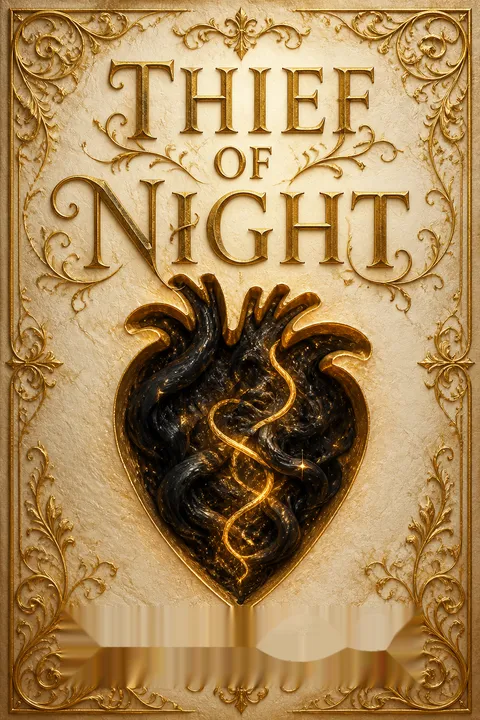


Plot Summary
Prologue
In Lionel Salt’s silent mansion, a self-aware shadow drifts through walls while Remy sleeps and Adeline tries to smother the sounds of the house. The shadow tests facts and comic-book heroes, searching for a name and a place in stories, but knows itself only as a thing assembled from other people’s pain. One night it finds a girl collapsed in the library and warns her not to look. It wants her to turn around anyway.
The opening gives the shadow an inner life before the plot gives it a stable identity. Its lists of facts and borrowed stories are attempts at self-construction: it can observe the world, but has no reliable memory or name with which to claim it. The girl in the library becomes the first person it hopes will see it, even as it warns her away. This tension between concealment and recognition governs Red’s relationship with Charlie, and makes the mansion’s violence a formative environment rather than mere backstory.
The Mill’s Hungry Shadow
Charlie Hall, a con artist newly appointed Hierophant by the Cabals, enters an abandoned Easthampton mill to hunt a rogue shadow. She finds a freshly killed drifter and is attacked by the blood-fed Blight before she can escape. Her onyx charms slow it, and a burning plank finally destroys it, but not before it claws her shoulder.
Charlie calls Red, the sentient shadow bound to her, only when the creature nearly overwhelms her. He arrives too late to fight, then drinks from her wound to restore their connection. Charlie collects the remains for her bounty, concealing her pain and her fear that Red may still be hungry.
The opening job establishes the novel’s practical stakes: shadow magic is work, and a mistake can leave a body behind. Charlie’s reluctance to summon Red is not simple pride. She has promised not to use him as the Cabals did, yet needs his power to survive. Their tether turns care into a dangerous exchange, since feeding him strengthens their bond while making her physically vulnerable. Charlie’s decision to keep hunting despite terror also defines her defense mechanism: she treats recklessness as competence because retreat would mean admitting how little control she has.
A Leash Called Hierophant
The Cabals made Charlie their Hierophant after she agreed to hunt Blights in exchange for keeping Red out of their chains. Their alterationist, Vicereine, removed a piece of Red’s shadow and sealed it in an onyx vial so the Cabals could track or punish him. Red woke from the binding without the memories that made him Vince, Charlie’s former boyfriend, and remembered only Salt’s mansion and Remy.
He rejects Charlie’s claim that she saved him out of love, while she fears he could turn the tether’s power against her. At home, Charlie’s sister Posey presses her to learn shadowcraft and protect herself. The sisters’ new apartment and tight finances leave Charlie needing every bounty she can earn.
The binding converts Charlie’s rescue into an institutionally controlled relationship. She has saved Red from immediate imprisonment, but the Cabals retain a piece of him and define the limits of his freedom. Both characters interpret the same tether through histories of coercion: Charlie distrusts promises, while Red expects kindness to conceal a command. Posey’s concern adds a second pressure, because Charlie’s refusal to become a gloamist is partly a principled rejection of power and partly fear of what power could demand. Their household makes these magical choices materially urgent.
Rapture’s Holiday Bruise
At Rapture, Charlie works a dealership holiday party while still sore from the mill fight. When an intoxicated customer grabs her wrist, Red materializes and pins him down, provoking complaints and phone cameras. The customer then swings at Red, passes straight through him, and hits Charlie in the face.
While she rests in the back room, a journalist calls about Edmund Carver, the wealthy young man presumed dead whose body was never found. Charlie realizes Adeline has encouraged reporters to contact her so she will bring Red into public life. Adeline wants him presented as Remy, but when Charlie reports the plan, Red insists that Remy is not who he is. The attention makes his erased identity a public problem.
The party makes Red’s protection both intimate and socially costly. He acts without Charlie’s command, a glimpse of care that neither can comfortably interpret, and his intangibility leaves her to absorb the human consequences. The journalist’s call then turns private identity into public property: Adeline can shape a story around Remy, while Charlie knows the person being described is not simply the dead man. Red’s rejection of the Remy label is a claim to personhood, but it also leaves him without the history, legal standing, or relationships that might protect him.
Mr. Punch’s Assignment
Cabal enforcers arrive at Charlie and Posey’s home before dawn and demand that Charlie meet the new puppeteer leader, Mr. Punch. He speaks through the bodies of several sleeping or unsuspecting people, demonstrating how completely he can control them. Mr. Punch assigns Charlie to investigate the massacre of twelve people at Grace Covenant Church in Hatfield, find the missing Cabal speaker Rooster Argent, and keep the Cabals out of the news.
He offers to help free Charlie and Red from the Hierophant role if she succeeds, but threatens to make Charlie harm the people she loves if she fails. Red warns that the victims were drained of far more blood than a Blight needs. Charlie accepts the job, with no safe way to refuse.
Mr. Punch’s method makes domination look like administration: he borrows ordinary bodies, gives orders, and treats the people he controls as disposable equipment. His bargain offers Charlie what she wants, freedom for Red, but makes her responsible for protecting the same institution that has restricted them. The massacre’s blood evidence immediately unsettles his convenient explanation, since it suggests a purpose beyond a rogue shadow’s hunger. Charlie accepts because she is skilled at finding angles, yet the assignment places that skill inside a coercive system. Her investigation begins as survival, not trust in the Cabals.
The Thief Returns
At Rapture, Balthazar Blades gives Charlie a map to the masks’ underground vault, where the Cabals keep the piece of Red’s shadow they removed. Recovering it might restore some of Red’s lost memories.
Before she can act on the lead, Mark, the thief who once loved her and helped shoot her, appears at the bar claiming that he wants to apologize. Charlie refuses him and tells him to leave. Their history explains why she distrusts the apology: she and Mark first met competing to steal the same book, then became partners and lovers.
When Mark tried to obtain a quickened shadow through a forbidden deal, Vicereine cut off the fingers of his right hand. He later blamed Charlie for the punishment and helped his brother shoot her. His sudden freedom makes him a threat she cannot dismiss.
The map offers Charlie a tangible repair for Red’s missing identity, but Mark’s return shows how often she mistakes intimacy for a bargain that can be managed. Their shared criminal skill once made them feel like equals; the same talent for deception turned their relationship into mutual sabotage. Charlie’s refusal to hear Mark out is not proof that she has escaped her past. His reappearance activates the old fear that every choice she makes for someone else will eventually be used against her. The two leads, Red’s lost shadow and Mark’s renewed presence, pull her toward opposite forms of risk.
Rose at the Window
A female shadow named Rose visits Red through Charlie’s bedroom window. She asks him to kill the gloamist controlling her, saying that the Cabals used her as they used him. Rose also offers to kill Charlie in return. Hidden outside, Charlie recognizes her as the shadow of Rose Allaband, the woman Remy was accused of killing. Red does not tell Charlie what was said.
Charlie discovers that Rose has slashed her pillow while she slept, a warning of how close the danger came. She follows their tether and hears enough to learn that Rose wants Red at a Greenfield convenience store within two days. Red’s silence leaves Charlie unsure whether he has accepted the murder plan or is trying to protect her.
Rose gives Red a mirror of his own predicament: a conscious shadow bound to someone else, seeking an escape that may require violence. Her offer tests whether Red can distinguish solidarity from obligation, while her threat to Charlie exposes the danger of treating him as a weapon or a prize. Charlie’s spying is itself a response to uncertainty. She has no guarantee that Red will tell her the truth, so she relies on the habits that have kept her alive: observation, inference, and contingency. The scene makes secrecy a practical danger within their bond, not only an emotional flaw.
Carver’s House of Ghosts
When Charlie and Red visit Salt’s mansion, Adeline gives Red legal papers and cards that would restore Remy Carver’s wealth, but the documents also grant her control over his finances and medical decisions. Red refuses those conditions and says he will take only what lets him obtain identification.
Adeline introduces Fiona, Remy’s grandmother, who remembers the boy she once cared for and regrets sending him to Salt. Red recalls her stories and birthday letters, yet cannot accept her as family without also confronting what Remy endured.
He takes a Porsche from the garage and drives away with Charlie rather than attend brunch. His refusal rejects Adeline’s attempt to make him a substitute for Remy, even as the inheritance remains a possible route to freedom.
The mansion concentrates the novel’s conflict between care and ownership. Adeline offers wealth as a gift that quietly carries legal control, while Fiona offers affection complicated by her failure to protect Remy. Red’s refusal is not a rejection of comfort alone; he resists being made legible only as someone else’s continuation. Charlie recognizes his personhood before he can fully claim it himself, but she cannot settle the question of what he owes the dead. The stolen Porsche is both an escape and a small reclamation of the property and privilege that have always belonged to the Carver family.
The Church’s Missing Shadow
Balthazar teaches Charlie that the tether can transfer energy and let a gloamist move through a shadow; Red briefly carries her aloft on shadow wings. He also explains that a shadow can drain its human partner if the energy flow is not blocked.
Charlie then tricks Grace Covenant’s office assistant into letting her inspect the basement, where she finds claw marks and hears that one victim had brought cookies before the meeting. A boy in the cemetery claims he saw a man surrounded by shadows.
Charlie spots a shadowless figure in the leaked crime-scene photographs and collects a matchbook beside cigarette butts near the churchyard. The clues point toward several coordinated shadows rather than one ordinary Blight, but Charlie still cannot identify their handler.
Charlie’s first experience of flight complicates her self-image as a fraud: she has spent her life manufacturing wonder for others, yet real magic feels neither safe nor false. The church investigation turns that wonder back into work. Her attention to claw marks, cigarette brands, and the absent shadow treats a supernatural crime as a material scene with evidence. The boy’s fairy-tale explanation may be mistaken, but it gives Charlie a pattern to test. Her reluctance to master shadowcraft is therefore challenged by practical necessity: refusing power does not prevent other people from using it.
Raven’s Hungry Visitor
Raven calls Charlie to her piercing studio when a Blight begins feeding on the small shadows she has attracted with blood. Red enters first and holds the creature long enough for Charlie to throw an onyx net over it. The animal-shaped shadow becomes a captive, and Charlie carries it to Rapture as payment for Balthazar’s lessons.
That night, Mr. Punch possesses Rachel, Odette’s assistant, and forces Charlie’s mouth to speak before Red drives him out. Adeline then arrives with Remy’s wealthy friends and insists Charlie join them. At a private club, Charlie drinks too much, punches Topher after his condescension, and walks into the cold. Red brings her back to Salt’s mansion, where she wakes the next morning in Remy’s room.
The captured Blight gives Charlie a brief, concrete success, but the evening quickly demonstrates how little control she has over the institutions and people around her. Mr. Punch’s possession of Rachel violates a safe workplace, and Adeline uses social pressure to draw Charlie into a world where money and pedigree dictate the terms. Charlie’s punch is both justified anger and self-sabotage, a familiar response when humiliation becomes unbearable. Red’s choice to bring her to the mansion exposes their intimacy to the history he has tried to keep separate from her.
Fiona Names the Wound
In the mansion, Charlie interrupts Adeline as she presses herself on Red, who is trying to push her away. Charlie gets him out of the room and persuades him to join Fiona for lunch. There, Red admits that Adeline treated him as an object and that Remy sometimes pushed unwanted feelings into him.
Fiona apologizes for leaving him with Salt, but Red tells her he loves her without being Remy. He dissolves into shadow, leaving Charlie to face Fiona’s alarm and then the consequences alone. The encounter gives Charlie a clearer account of Red’s past, including how he was made to carry Remy’s pain, but also shows that knowing his history cannot make the pain easy to repair.
Red’s confession reframes the boundary between him and Remy. Their shared memories do not make them interchangeable, especially when Remy used Red as a place to deposit what he could not bear. Fiona’s sincere affection cannot undo her earlier absence, and Red’s love for her coexists with his refusal to be mistaken for her grandson. Charlie’s intervention is protective, but she does not speak for Red when he leaves. The scene asks whether recognition can be offered without turning into another claim over someone’s identity.
Rooster’s Blackmail Folder
Charlie takes the captive Blight to Malhar, a graduate student studying shadows, and tests whether it can understand commands. Red proves it can by threatening it, unsettling Malhar’s assumptions. Charlie then traces Rooster Argent from his videos to an apartment registered under his former name, Dave Pugliese.
Inside, she and Red find recordings in a folder labeled as blackmail. One captures Mr. Punch ordering Rooster to acquire more shadows; another suggests Rooster is missing and Mr. Punch fears the consequences.
Charlie concludes Rooster is probably dead. Posey arrives at Malhar’s house, revealing that she has been spending nights there and has knowledge of the seeker community. Her evasiveness about the church murders makes Charlie suspect she knows more than she admits.
The recordings convert Mr. Punch’s vague assignment into evidence of a shadow market. Charlie’s method is characteristically mixed: digital research, trespassing, and careful listening all serve the same investigation. The captive creature also forces her to confront a distinction between a shadow’s apparent animal nature and its capacity to understand. Posey’s secrecy reverses the sisters’ usual roles. Charlie has spent years treating her as someone to protect, but Posey is now making independent choices that may place them both at risk. Their conflict is not simply about trust; it is about who gets to decide what danger another person can bear.
The Cut Tether
Red drugs Charlie with lorazepam and cuts their tether so he can follow Rose’s request without Charlie stopping him. She wakes in the van, finds the connection gone, and tracks him to a house where two residents have been murdered.
Red lies nearly insubstantial after fighting several shadows. Charlie feeds him her blood, then takes him to the masks’ tower and tricks Sally into escorting her to the vault. She steals the vial holding the piece of his shadow the Cabals removed and releases it into him.
Bellamy summons a healer, while Adeline arrives and offers blood to keep Red alive. She also tells Charlie that Salt used the blood of victims, including Rand, to strengthen Red. Charlie leaves the tower with Red alive but shaken by what she has learned.
The broken tether makes Charlie’s fear literal: without the line connecting them, she cannot locate Red or know whether he is alive. His decision to drug her is a genuine betrayal, even though he leaves her means to escape. Charlie responds by saving him through the same combination of coercion and ingenuity that he used to leave her behind. The stolen vial restores a part of Red but also revives the moral contamination of Salt’s household. Adeline’s revelation about Rand attacks Charlie’s deepest loyalty, making the rescue an act of care entangled with new distrust.
The Harvester’s Master
After Red recovers, Charlie visits the man behind Mr. Punch, a professor named Frank, and tells him that Rooster is dead and the church massacre was committed by a shadow harvester. Frank admits enough to confirm that stolen shadows were meant for wealthy clients at Solaluna, a high-end retreat. He offers Charlie money and a place in the operation, but she refuses to harvest people’s shadows.
Charlie reports Rooster’s hidden body to the police, then learns the retreat is still scheduled. She also discovers that Frank’s offer to free her and Red could be used as leverage against him. Charlie decides to enter Solaluna under Remy Carver’s name, hoping to disrupt the sale before another group of gloamists is stripped of its shadows.
Frank’s ordinary identity makes the shadow market more frightening, not less. The person arranging the trade can return to a respectable home and speak in the language of opportunity, while the costs fall on people whose bodies and magical identities become inventory. Charlie refuses the offer not because she is untouched by greed, but because this theft would remove a living person’s connection to their own shadow. Her decision to infiltrate Solaluna is both ethical resistance and criminal habit. She still thinks in cons, but now she is directing deception upward, toward people who believe money makes them immune.
The Hall Sisters’ Rupture
Posey demands to join the Solaluna plan and threatens to reveal Charlie’s old lie to their mother unless Charlie takes her. Charlie calls their mother herself and admits she had faked being a medium to help her escape an abusive marriage. Posey leaves after accusing Charlie of repeatedly sacrificing herself for men.
Red finds Charlie in the aftermath and explains that Rose’s visit felt suspicious, so he went to investigate, fought the attacking shadows, and sent Rose away rather than hand Charlie over. He apologizes for withholding the danger and drugging her. Charlie tells him how Rand recruited her into theft and admits she once used a fake spirit to win her mother’s attention. They agree to work together at Solaluna.
Charlie’s confession breaks a long-standing family arrangement in which she protected her mother through a lie and protected Posey through secrecy. Posey’s accusation lands because it identifies the cost of Charlie’s self-sacrifice: she often decides what others need without asking them. Red’s explanation does not erase his betrayal, but his apology names his choices rather than hiding behind his nature. Their shared histories of being recruited by older, more powerful people create recognition without making them identical. The decision to act together is a fragile alternative to both secrecy and control.
Solaluna’s Borrowed Faces
Charlie and Red check into Solaluna using Remy’s name, with Red showing the receptionist a news photograph instead of identification. They pose as a wealthy couple while scouting the grounds for the shadow exchange. Charlie spots Mark at dinner, but he leaves before she can follow him.
Their cover becomes more dangerous when Archie, the retreat organizer, introduces Malhar as Mr. Punch and brings Posey into the scheme. Malhar’s impersonation is meant to buy access to the Cabal operation, but Archie expects him to supply stolen shadows.
Posey admits she has joined the alterationists and helps search for where the shadows are stored. A message at her cottage points to room 210, giving Charlie a specific target while Mark’s presence signals that the killer is nearby.
Solaluna turns social performance into a weapon and a trap. Red can pass as a wealthy heir because he has lived inside that world, while Charlie must improvise the manners expected of his companion. Malhar and Posey’s deception expands the plan but also multiplies its points of failure. Archie mistakes status for authority and assumes that a Cabal leader will deliver whatever he has promised his clients. The retreat’s polished hospitality conceals a market in stolen shadows, making luxury part of the mechanism of exploitation rather than a neutral backdrop.
The Safe Behind the Bed
During the retreat’s first morning, Charlie and Red slip into Archie’s suite and discover that the hotel safe holds glass vials containing stolen shadows. They hide beneath the bed when Archie arrives with Sean, one of the puppeteers, and overhear Archie complain that he has fewer shadows than promised.
After the men leave, Charlie opens the safe by listening to the sounds of the keypad and takes the vials. Malhar begins his talk about dissociation and shadow quickening, while Charlie watches the hall for signs of pursuit.
Then a scream interrupts the lecture. Mark appears dragging Archie’s body, and his stolen shadows spread around him. He threatens Charlie, while the other shadows attack Red, Sean, and Posey. A shadow seizes Charlie by the necklace and smothers her into unconsciousness.
The heist succeeds because Charlie’s attention to small sounds and ordinary security defaults outmatches the confidence of a room full of powerful people. Yet the theft does not liberate the shadows in time to prevent violence. Malhar’s lecture offers a theory of how trauma can divide consciousness, while Mark embodies the grotesque outcome of trying to manufacture power through repeated harm. His attack collapses the retreat’s carefully managed spectacle into its real economy: bodies are injured so other people can acquire magic. Charlie’s capture moves the conflict from social manipulation to immediate survival.
The Nine-Shadow Man
Mark keeps Charlie captive with the shadows he stole and tells her he began harvesting for Rooster after Salt helped him escape prison. He used the shadows to gain power, then kept feeding them with blood until he believed he was becoming a god.
Mark cuts Charlie to feed them and orders her to lure Mr. Punch into an ambush. Charlie secretly breaks the seal on one stolen shadow’s vial and urges it to find Red. When Mark’s car fails, Charlie escapes and uses a lighter and body spray to drive the shadows back.
Red arrives with Rosalva and the freed shadows, having followed the one Charlie released. Charlie cuts Mark’s remaining tethers, choosing to let the shadows live free. They swarm him as Red leads her away; police later confirm Mark is dead.
The Nine-Shadow Man story becomes a model for Mark’s condition: power multiplies appetite until the person serving it loses the ability to direct it. Charlie does not defeat him through superior magic. She uses a hidden vial, a lighter, and her knowledge of how badly he wants an audience. The decisive choice is not to claim the captive shadows for herself or the Cabals, but to sever their bindings and accept the danger of what they may become. Red’s rescue depends on that same choice, as a shadow Charlie freed carries him to her.
The Cabals Collect
Charlie returns to the Cabal leaders and admits she released the shadows, while arguing that Red should no longer be forced into service. Vicereine agrees to let him remain a free Blight if Charlie continues as Hierophant.
Charlie exposes Mr. Punch’s role in the shadow trade, and the leaders accept her account after she reveals she had blackmailed him into helping her. Soon after, police arrest her for a drifter’s death at the mill and question her about the murders at Solaluna.
Charlie refuses to confess to a crime she did not commit, even when detectives use her presence at the scenes against her. In jail, she sees Red appear on television as Remy Carver, reclaiming his inheritance. He arrives in person and secures her release by accepting legal and financial responsibility.
Charlie gets part of what she has wanted: Red is no longer bound to her, and the Cabals cannot simply treat him as their property. But freedom is exchanged for another obligation, since she remains Hierophant under Vicereine’s threat. Her arrest exposes the weakness of her usual defense, the belief that she can always outtalk the powerful. The police mistake proximity for guilt, while Red uses the privilege of his inheritance to get her out. Their rescue reverses their earlier roles, but his public return as Remy also creates distance between the person Charlie knows and the identity the world recognizes.
A Mansion in Flames
After Charlie’s release, Red takes her home but returns to Salt’s mansion, leaving her to spend Christmas with her family without him. For New Year’s Eve, he invites her to his gala.
Charlie confronts Adeline privately and uses a recording of her admission that she helped people die to make her stop controlling Red through his identity and legal papers. Red tells Adeline he will remain in the mansion, and she leaves with Fiona rather than take him to New York.
Once the guests are gone, Red gives Charlie a heavy silver lighter and proposes burning the house where Salt imprisoned and used them. Charlie joins him as the fire consumes the mansion. The blaze ends their shared history there, while their relationship remains a choice neither has to make for the other.
The ending makes freedom less about escaping wealth than about choosing what wealth and inheritance mean. Red accepts the mansion because it is part of his childhood, not because he must perform Remy for Adeline. Charlie’s recording gives her leverage, but she uses it to remove Adeline’s control rather than claim Red as a reward. Burning the mansion is a shared act of authorship: they choose what happens to the place that shaped them. The fire does not erase their histories; it changes who gets to decide what those histories demand.
Analysis
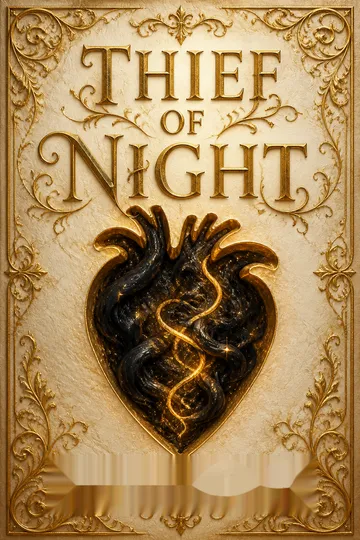
Thief of Night makes the question of personhood concrete by giving its central character a body that can be commanded, divided, fed, and sold. Red is not merely a supernatural danger. He is a person formed through Remy’s memories and Salt’s violence, then subjected to the Cabals’ legal and magical control. His struggle to claim a self is therefore inseparable from the institutions that benefit from treating shadows as property.
Charlie’s own talent is deception, but the novel distinguishes between deception used to evade power and deception used to reproduce it. She lies to enter a church, a home, and a luxury retreat; those cons expose exploitation or interrupt it. Mr. Punch and Mark also rely on secrecy, but they use it to make other people pay the cost. The moral difference is not that Charlie is honest. It is that she increasingly asks what her schemes do to the people caught inside them.
The novel also treats intimacy as a problem of consent, not a cure for harm. Charlie wants to save Red and often assumes she knows what safety requires. Red conceals danger and makes choices for her in turn. Their bond becomes more humane only when each begins to acknowledge the other’s agency, including the right to refuse, leave, or remain changed. The tether literalizes dependence, but emotional closeness cannot be reduced to magical connection.
Family and class provide parallel forms of inheritance. Posey and Charlie inherit secrecy and fear; Red inherits Remy’s memories, Salt’s fortune, and a house full of abuse. Wealth can secure a lawyer or a retreat, but it also disguises coercion as generosity. The final fire does not erase history. It lets Charlie and Red decide what to do with a home and a past that powerful people once controlled for them.
Review Summary
Thief of Night received mostly positive reviews, with an average rating of 4.21/5. Readers praised the character development, especially for Red, and the satisfying conclusion to the duology. Many found it an improvement over the first book, with engaging romance and mystery elements. Some criticism was directed at pacing issues and underdeveloped world-building. Fans of Holly Black's writing style and morally gray characters particularly enjoyed the book, while those who disliked the first installment may not find it appealing.
People Also Read





Characters
Charlie Hall
The crooked survivorCharlie is a Massachusetts bartender, thief, and practiced liar who becomes the Cabals’ Hierophant. She sees scams as a way to stay mobile in a world where money and authority belong to other people. Her sharp humor covers depression, shame, and a deep fear that being known will make her unlovable. She is fiercely protective of her sister Posey, though protection can become a form of control. Charlie’s relationship with Red forces her to distinguish rescue from ownership: she wants to save him, but must learn to respect his choices even when they hurt her. Her improvisational intelligence is real, as is her tendency to make danger worse by refusing to retreat.
Red
The shadow seeking a selfRed is a conscious shadow who once passed as Vince, Charlie’s boyfriend, and is bound to the memories and life of Remy Carver. He is powerful, observant, and often frightening, but he is also curious about ordinary human experiences such as food, sleep, and conversation. Years of being treated as a tool have taught him to expect that affection will become an order. He struggles to separate his own desires from Remy’s inherited memories and from the violence that made him. Charlie’s attention unsettles him because she sees him as a person without pretending he is human. His central need is to claim a self that is neither Remy’s echo nor Salt’s weapon.
Posey Hall
Charlie’s occultist sisterPosey is Charlie’s younger sister, a tarot reader and newly awakened gloamist whose curiosity about shadow magic has become a source of purpose. For a long time she struggled to leave home, and Charlie grew used to treating her as fragile. Posey resents that protective role and wants her knowledge and choices taken seriously. Her relationship with Malhar gives her a life beyond the family, while her work with the alterationists brings her closer to the Cabals Charlie distrusts. Posey and Charlie love each other through practical care, but they inherit a family habit of secrecy and leverage. Their conflict forces both sisters to admit that protection can become another way of deciding someone else’s life.
Adeline Salt
The heiress with a claimAdeline is Salt’s daughter and Remy’s cousin, raised alongside him in a wealthy household that taught her to treat money as both protection and influence. She is socially polished, quick to read other people’s needs, and accustomed to arranging outcomes before anyone realizes a decision has been made. Her attachment to Remy and Red is tangled with grief, possessiveness, and the loneliness of a childhood shaped by Salt. She can offer genuine affection, but often frames help in terms that preserve her control. Charlie recognizes in Adeline a more powerful version of the family’s familiar bargain: love is offered, but independence is expected to cost something.
Mark
Charlie’s dangerous exMark is a thief, musician, and former partner of Charlie’s whose charm once made their criminal partnership feel like an adventure. He prefers immediate pleasure and improvisation to long-term security, a contrast to Charlie’s plans for money, a home, and Posey’s future. His relationship with Charlie began with competition and attraction, so each knows how to recognize the other’s tricks. Mark is proud, resentful, and quick to turn injury into grievance. He represents the danger in Charlie’s belief that a shared appetite for risk can make two people trustworthy. His history with her continues to complicate how she assesses danger, loyalty, and responsibility.
Madurai Malhar Iyer
The shadow researcherMalhar is a graduate student studying Blights and shadow magic, and a close companion of Posey. His curiosity is methodical but not cold; he wants to understand how shadows develop without treating them as mere specimens. Red’s presence both fascinates and unsettles him, while his theories about dissociation help explain how shadows awaken. At Solaluna, Malhar risks impersonating a Cabal leader to help Charlie and Posey, even though he is not trained for that kind of deception.
Fiona Carver
Remy’s remorseful grandmotherFiona is Remy’s grandmother, an elegant woman with a philanthropic life and a long history with Salt. She remembers caring for Remy when he was young and regrets trusting Salt with him. Her affection for Red is sincere, but she initially struggles to separate him from the grandson she lost. Fiona’s compassion is complicated by the fact that regret cannot undo an earlier failure to act. Her encounters with Red test whether family love can make room for a person who carries another person’s memories without being that person.
Mr. Punch
The puppeteers’ leaderMr. Punch leads the puppeteers, a Cabal faction that uses shadows to control human bodies. He hides his identity and can speak through people he possesses, making even a private meeting feel like a room full of potential instruments. He is ambitious, politically calculating, and willing to threaten Charlie with harm to those she loves. His assignment to investigate the Hatfield massacre mixes a real need for answers with a demand that she protect the Cabals’ reputation. He treats secrecy as a source of power and information as leverage.
Balthazar Blades
The shadow-market brokerBalthazar runs a shadow parlor beneath Rapture and has long arranged jobs involving stolen books and magical knowledge. He is theatrical, self-interested, and rarely offers help without naming a price. Yet his bargains with Charlie also rest on an old familiarity that is more complicated than simple commerce. He provides her with training, information about the masks’ vault, and a place to bring a captured Blight. Balthazar understands the Cabals’ informal networks and knows how often people reveal secrets while trying to profit from them.
Vicereine
The alterationist leaderVicereine heads the alterationists, a Cabal faction able to reshape shadows and affect the people bound to them. She is pragmatic, formidable, and accustomed to making punishment sound like policy. She removes a piece of Red’s shadow during his binding and later warns Charlie that the Hierophant position remains a sentence as much as a job. Vicereine understands the Cabals’ need for order, but her methods show how quickly order becomes coercion when power is not answerable to anyone outside the organization.
Bellamy
The masks’ keeperBellamy leads the masks, the Cabal faction devoted to obscure theories and records of shadowcraft. He considers Red valuable as a subject of study and is willing to let Charlie negotiate for Red’s survival while maintaining control over the Cabals’ resources. His curiosity about Red coexists with a scholarly detachment that can reduce a person to an opportunity for research. Bellamy is not easily persuaded by sentiment, but he respects audacity and recognizes Charlie’s ability to make herself difficult to dismiss.
Rose Allaband
A shadow seeking escapeRose Allaband was a gloamist with a close connection to Remy, and her shadow survives her as a separate, speaking presence. The shadow calls herself Rosalva and carries Rose’s memories, loyalties, and unfinished needs without being identical to the woman who lived. Her request for Red’s help arises from her own binding and from the history she shares with him. She is frightening in her capacity for violence, yet her circumstances complicate the assumption that every dangerous shadow is simply evil.
Remy Carver
The life behind RedRemy is Salt’s grandson, the wealthy young man whose shadow became Red and whose memories shape Red’s identity. He grew up under Salt’s influence, with Fiona as an earlier source of warmth and Adeline as a constant companion. Remy’s emotions, habits, and experiences survive in Red in uneven ways, creating an intimate but unsettled relationship between them. His life matters to Red not only as a source of memories but as a history of love, complicity, and pain that Red is still trying to interpret.
Lionel Salt
The mansion’s tyrantSalt was a wealthy, controlling patriarch whose mansion housed Remy, Adeline, and the shadow that became Red. He used money, family loyalty, and shadow magic to get what he wanted, while presenting himself as a respectable man of influence. His household taught its young people that affection could be turned into leverage and that violence could be hidden behind privilege. Even after his death, his choices shape Charlie’s fear, Red’s identity, and the family’s struggle over what the inheritance means.
Rand
Charlie’s first con mentorRand taught Charlie how to steal, improvise identities, and read the desires of people with money. He made criminal work feel like a craft and gave Charlie a way to feel capable when her family life was unstable. Their relationship carried affection and danger together, since he was an older mentor who recruited a young girl into deception. Rand’s influence remains in Charlie’s habits: she looks for the angle in every conversation, even when honesty might serve her better.
Rooster Argent
The viral shadow instructorRooster is a popular online gloamist who makes videos about shadows and offers instruction to people hoping to awaken their own. His public persona makes shadow magic appear accessible and entertaining, while his ties to the Cabals place him inside a far more secretive world. Charlie follows his online trail to learn what happened at Grace Covenant Church. His popularity also makes him useful to people who want to recruit wealthy seekers or sell them access to magic.
Archie
The retreat’s ambitious hostArchie organizes the Umbral Elevation Retreat and builds relationships between wealthy seekers and the Cabals. He is energetic, sociable, and eager to turn an exclusive gathering into a profitable enterprise. His appetite for influence can make him careless about the people expected to provide the retreat’s promised magic. Archie’s confidence in his connections helps conceal how dependent his business is on secret arrangements he does not fully control.
Raven
The shadow-modification artistRaven is an alterationist who runs Eclipse Piercing and Shadow Modifications. She studies shadows as extensions of the people who carry them and disapproves of gloamists who cultivate independent, self-sufficient Blights. When a hungry shadow reaches her studio, she uses onyx dust and a hammer to protect herself until Charlie arrives. Raven’s knowledge is practical, shaped by a belief that magical power carries obligations toward whatever is created.
Odette
Rapture’s commanding ownerOdette owns Rapture and is a retired dominatrix with a keen sense of what people want but cannot say aloud. She protects her staff from entitled customers and treats consent as essential even in moments of playful provocation. Her blunt view of love challenges Charlie’s belief that people must earn affection by hiding every weakness. Odette provides Charlie with a rare workplace where her sharpness and competence are valued, even when her life outside the bar is in danger.
Don
The exacting bartenderDon is Charlie’s fellow bartender at Rapture. He is conscientious about service, critical of Charlie’s approach, and often convinced that he should be the one making decisions. His prickliness hides a private relationship life he struggles to discuss openly. Odette’s recognition of his unspoken wishes reveals that his need for conflict may be more complicated than simple hostility.
Rachel
Odette’s organized assistantRachel is Odette’s efficient personal assistant, known for colorful vintage-inspired clothes and an interest in the shadow parlor beneath Rapture. She is attentive to the club’s practical needs and moves comfortably among its unusual patrons. Her presence also shows how easily an ordinary workplace can become vulnerable when Cabal leaders treat other people’s bodies as tools.
Plot Devices
The shadow tether
Bond, leash, lifelineA tether joins a gloamist to a shadow, transmitting energy and sometimes emotion. Charlie’s connection to Red lets her summon him, sense his presence, and eventually learn to move through him, but it also exposes her to his hunger. The Cabals strengthen the bond with blood and can exploit it through commands or threats. When Red cuts the tether, Charlie loses the ability to locate him and must find him through ordinary clues. The device makes intimacy materially consequential: dependence can be mutual, but the person holding the bond may also hold power.
Blood and shadow energy
Fuel for magicBlood supplies energy that can strengthen a shadow and tighten its connection to a gloamist. The process can be intimate, pleasurable, frightening, or deadly, depending on how much is taken and whether the person feeding has consented. Salt used other people’s blood to make Red more powerful, and Mark feeds stolen shadows through repeated killings. Charlie also gives Red blood when he is close to disappearing. This repeated exchange links magical strength to questions of exploitation: the same substance can sustain a relationship or reveal the violence hidden inside it.
Onyx restraints and weapons
Make shadows tangibleOnyx can block, bind, or force shadows into a more solid form. Charlie wears onyx beads and carries a dagger because ordinary weapons cannot reliably wound a Blight. Nets threaded with onyx hold shadows long enough for capture, while onyx seals protect vials and vaults containing stolen pieces of shadow. The material turns abstract magic into a problem of equipment, access, and cost. Charlie’s limited supply repeatedly forces her to improvise, especially when she faces a stronger enemy than the Cabals’ standard gear was designed to handle.
Fire against Blights
Burn the shadow looseFire can destroy a Blight or sever the bonds that hold a shadow to a gloamist. Charlie uses a lighter and a piece of oil-soaked wood to defeat the mill creature, then later turns fire into a defense against Mark’s shadows. The threat is not effortless: Charlie can burn herself, and she has to get close enough to aim. Fire also becomes a deliberate choice in the novel’s ending, when Red and Charlie use it against Salt’s mansion. The same force that protects them from shadow magic becomes a way to mark their separation from Salt’s household.
The sealed shadow vials
Stolen magic in glassThe Cabals store severed pieces of shadow in sealed glass vials, using onyx stoppers to contain them. One vial holds the piece taken from Red, and restoring it helps him survive after his tether is cut. At Solaluna, Archie keeps a separate cache of vials intended for wealthy clients who want quickened shadows. Charlie steals those vials during the retreat, but the attack around her delays their use. The containers make shadow theft portable and profitable, exposing how a living connection can be treated as a collectible commodity.
The Charlatan Duology Series Series
About the Author
Other books by Holly Black



Download PDF
Download EPUB
.epub digital book format is ideal for reading ebooks on phones, tablets, and e-readers.








