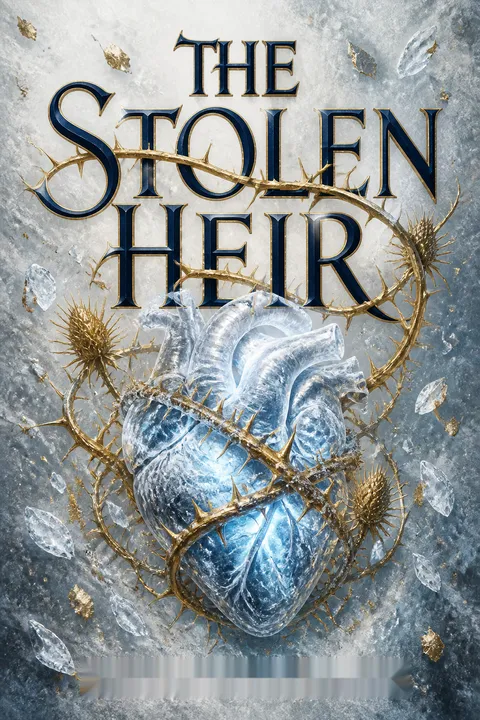


Plot Summary
Prologue
Found as a blue, starving toddler, Wren is adopted by a human family and grows up beside their daughter, Rebecca. At nine, three Folk break into her room and claim she is Suren, their own child, made by magic.
Their glamour makes her parents and sister see a monster instead of the girl they loved, and Lord Jarel threatens to kill them unless she leaves willingly. Wren goes with him to save them. Two years later, she escapes the Folk and disappears again, carrying the wound of a family that seemed to reject her.
The prologue makes the abduction more than a collision between human and faerie worlds. Wren’s deepest injury comes from watching enchantment turn familiar faces against her, leaving her unable to know whether love was real or merely manipulated. Her departure is an act of protection, but the Folk frame it as proof that she belongs to them. That coercive choice establishes the book’s central emotional bind: Wren longs to be claimed, yet every claim on her life has been used to control her.
A Queen in the Shadows
Four years after the Court of Teeth falls, Wren survives in the woods near her former home, watching her foster family from a distance. She also breaks a glaistig’s cruel bargain, freeing a desperate man from a spell that would have driven him to harm his family.
When the storm hag Bogdana appears near the house, Wren draws her away to protect the people inside. Prince Oak and his guard, Tiernan, arrive during the chase and seize Wren after she slashes Oak’s cheek.
They explain that her birth mother, Lady Nore, has stolen the remains of an ancient queen and is building an army of living wooden creatures. Wren knows the Citadel and can command Nore, so Oak asks her to join the northbound mission. With Bogdana still hunting her, Wren agrees.
Wren’s work among mortals is a form of reparative action: she cannot recover the childhood taken from her, but she can interrupt the bargains that turn desperation into violence. Her secrecy around her foster family shows that survival has not erased attachment; it has made attachment dangerous. Oak’s arrival converts private endurance into political obligation. The mission is compelling to Wren because it offers both revenge and a practical reason to face the people who shaped her, while the threat to her family makes withdrawal impossible.
The Foxes Between Them
As a child in the Court of Teeth, Wren first meets Oak when he brings her food while she is tied to a stake. They play a throwing game with silver fox pieces and wager secrets, then her freedom. Oak loses, but his knife cannot cut through her enchanted bonds before Lady Nore returns. The next night he comes back with his sister Jude’s sword, frees Wren, and hides her in his palace room.
She sleeps safely for the first time in months. After Lord Jarel dies and the Court of Teeth loses the war, Elfhame’s guards remove Wren and send her away, while Oak does not stop them. Years later, when Oak seeks refuge in Wren’s woods, she lets him share one night, then sends him home rather than risk his life beside her.
Their childhood bond begins in a small exchange of food and play, not in the courtly language of alliance. For Wren, the game creates a brief space where rules can be negotiated rather than imposed. Oak’s failure to prevent her removal leaves a lasting fracture: his kindness mattered, but it did not protect her. When she later sends him away, she repeats the logic of self-preservation, choosing distance before another attachment can become a vulnerability. The old debt between them is therefore emotional as well as magical.
Arrows in the Woods
Oak, Tiernan, and Wren leave her hidden camp with Hyacinthe, a former falcon soldier bound by a bridle, and travel toward the Court of Moths. Stick creatures attack as they depart, revealing that Lady Nore can build monsters from branches, stone, and human remains. Oak’s crossbow bolt ignites one attacker, but a poisoned arrow catches him above the shoulder.
Tiernan identifies the poison as deathsweet and treats him, while Wren helps keep the wounded horses moving. At a roadside motel, Oak recovers enough to travel, and Wren washes herself for the first time in years. Bogdana finds the room but does not attack. The group escapes on a kelpie, and Wren understands that Nore’s army threatens mortals as well as Elfhame.
The ambush turns Oak’s abstract warning into visible evidence: Nore’s magic does not merely threaten courtly rivals, it uses stolen human matter to manufacture obedient violence. Wren’s horror is sharpened by the resemblance between those creatures and her own monstrous appearance. Oak’s injury also shifts the group’s balance. The prince who recruited her becomes physically dependent on Tiernan and, briefly, on Wren, while her practical knowledge of the mortal world makes her useful in ways the court has never taught her to value.
The Host’s Hidden Terms
At the Court of Moths, Queen Annet grants the travelers shelter and a route through her swamp, but she recognizes Wren and probes Oak’s purpose. She reveals that he is risking himself to rescue Madoc, his foster father, whom Lady Nore has imprisoned. Oak had presented the journey chiefly as a mission for Elfhame, concealing how personal it was.
Wren resents being drawn into his private cause without knowing the terms, yet accepts that his desire to save Madoc does not cancel the need to stop Nore. During the revel, Oak teaches Wren a dance, and she kisses him to test whether his charm hides genuine interest. He kisses her back, leaving her more unsettled than reassured. She then slips away to learn what Hyacinthe knows.
Queen Annet’s hospitality is a political instrument: she can offer aid while making her guests conscious of the debt and danger attached to it. Her exposure of Oak’s motive repeats Wren’s lifelong fear that kindness conceals a price. Oak’s omission is not a simple lie, but in Faerie, selective truth can still direct another person’s choices. The kiss becomes Wren’s attempt to regain control of an uncertain intimacy. Its reciprocal warmth complicates her suspicion, but does not resolve it, because attraction cannot tell her whether she is being chosen or managed.
The Prison’s Three Riddles
Wren reaches the Court of Moths prison with help from Jack of the Lakes, who distracts the guards in exchange for her silver fox game piece. Inside, she finds Hyacinthe, a frightened mortal named Gwen, and a merrow left without enough water. Wren solves the stone riddles that open their cells, then risks absorbing Hyacinthe’s falcon curse into herself and destroys it.
His arm becomes whole, and he swears loyalty to Wren. She sends him, Gwen, and the merrow toward safety while staying behind to delay discovery. The guards soon realize the prisoners are missing. Wren returns to the revel, where Oak has just been punched by ogres after defending a cat-headed guest. Queen Annet’s soldiers identify Wren as the prison-breaker and take her away.
Wren’s decision to free the prisoners follows a moral rule she has made for herself: no one should be left helpless in a cage if she can intervene. That rule puts her at odds with both political strategy and her own safety. Breaking Hyacinthe’s curse proves the reach of her skill, but his immediate oath unsettles her because she knows how loyalty can harden into another form of captivity. Her rescue is therefore both an act of care and a new source of power she did not seek.
The Prince’s Bloody Duel
Queen Annet questions Wren and threatens to punish her for freeing the prisoners. Oak refuses to surrender her and chooses a duel against the queen’s champion, the ogre Noglan, rather than a contest of chance.
Noglan’s size makes the match seem hopeless, but Oak’s polished, foolish courtier persona gives way to precise lethal skill. He kills the ogre after warning him to yield. Annet then poses a verbal trap for Wren, offering death by either beheading or drowning according to whether her answer is false or true.
Wren escapes by naming a prediction that makes either punishment invalidate the other. Annet releases them, and Oak forgives Jack’s part in the escape. The travelers leave the Court of Moths and press onward toward the Thistlewitch.
Oak’s duel exposes the gap between appearance and capacity. His public frivolity is not evidence of harmlessness; it is a tactic that encourages others to underestimate him. Yet his victory is frightening because he has been trained to kill rather than perform. Wren’s answer to Annet’s riddle is a counteruse of the court’s own logic, showing that she can survive its verbal traps without becoming fluent in its values. Oak’s forgiveness of Jack also reveals a generosity that sits uneasily beside his calculated violence.
The Heart’s Price
The Thistlewitch tells Oak that Lady Nore stole Mab’s bones, which can fuel powerful acts of creation, but their magic will eventually fade without Mellith’s heart. That heart carries the opposing power of destruction and could make Nore far more dangerous.
Oak admits he knows where the bones are but needs the Thistlewitch to explain the heart and help locate it. In exchange for her guidance, he promises the first thing she requests if he becomes king.
Afterward, Oak decides Wren is too much of a risk to bring farther north, despite Tiernan’s objection that only she can command Nore. He offers her time to change his mind before they reach Undry Market. Wren remains with them, hurt by his rejection and suspicious of what he is still withholding.
The Thistlewitch’s account gives the quest a second, more unstable objective. The bones represent creation that can be spent, while the heart represents the capacity to undo what creation has made. Oak’s bargain shows how easily a future self can be pledged in exchange for present knowledge, a pattern that echoes Wren’s own history of other people deciding what her life is worth. His attempt to dismiss her may be protective or manipulative, but from Wren’s perspective the effect is the same: he again controls whether she gets to remain near him.
Bogdana’s Snow Tale
Bogdana finds Wren in the woods and says Lady Nore offered Madoc in exchange for the person Oak is bringing north. She tells Wren that she and Jarel fashioned a child from snow, blood, and magic, then offers to make Wren powerful if she abandons Oak. Bogdana also admits she warned Wren about Oak’s arrival and says Wren’s foster sister Bex has seen her.
Wren refuses the hag’s alliance and returns to camp, where Tiernan mistakes the meeting for betrayal. Fearing Oak will eventually trade her away or control her with the bridle, Wren steals the bridle and flees to a bus station. She calls Bex, who confirms she remembers her, but Wren boards before she can accept her foster mother’s offer of help.
Bogdana weaponizes Wren’s most painful uncertainties: whether she was truly loved, whether she is human, and whether Oak regards her as a person or an asset. Her story offers an explanation of Wren’s difference, but it is also an attempted claim over Wren’s identity. The call with Bex briefly challenges the belief that the mortal family erased her completely. Wren cannot yet risk returning to that love, so she chooses flight, preserving physical distance at the cost of another possible homecoming.
The Deer Heart Deception
Oak catches Wren at the bus station and returns the bridle, which he had secretly removed from her. When she confronts him, he agrees to answer through their childhood fox game. He explains that Lady Nore demanded Mellith’s heart in exchange for Madoc, not Wren; Bogdana had phrased the truth to make Wren believe she was the payment.
Oak has no heart, only a plan to substitute a deer heart in an enchanted reliquary. Wren accepts the correction but remains wary. At Undry Market, Oak buys a boat, provisions, and a new reliquary, sacrificing his circlet and Wren’s beloved hairpin to complete the trade. He tells her the deer heart will serve as a decoy, then they sail north toward the Citadel.
The fox game gives Wren a rare way to demand clarity without relying on Oak’s charm. His answer restores a crucial distinction between what Bogdana implied and what Lady Nore actually requested, but it cannot erase the fact that Wren had to discover the truth through a wager. The deer heart and reliquary turn deception into a practical survival tool. Wren’s surrendered hairpin is a small but telling cost: even as trust begins to return, the journey keeps converting personal attachments into currency.
A Sea Kiss for Passage
As the travelers cross the northern sea, Oak summons Loana, a mermaid he once loved, to ask for concealment from Lady Nore and Bogdana. Loana warns that the Undersea is unstable and agrees to help only if Oak kisses her. He accepts, but she tries to drag him below the waves; Wren’s rope keeps him from being pulled overboard. Loana then cloaks the boat from their pursuers.
During the voyage, Wren learns more of the Citadel’s layout and explains its entrances, guards, and translucent ice walls to Tiernan. The travelers land near the Hudson Strait and head toward the Stone Forest. Wren’s return to the place where she was imprisoned turns the coming rescue into a confrontation with the landscape of her childhood terror.
Loana’s bargain makes intimacy visibly transactional, which sharpens Wren’s unease about Oak’s affection and his history of romantic entanglements. Oak accepts danger to obtain passage, but Wren’s quick use of the rope prevents his courage from becoming another self-destructive gesture. Her knowledge of the Citadel gives her a role beyond being the person who can command Nore. As the group approaches, memory becomes operational knowledge: the place that once trapped Wren is also the place she can navigate better than anyone.
The Forest Takes Its Due
At the Stone Forest, the travelers find severed heads warning intruders away and discover that the trees’ curse can trap anyone who enters. Stick creatures drive them into the woods, where Oak and Tiernan fight while Wren senses the enchantment binding the trees and their two petrified troll kings.
She redirects the curse toward the attackers, splitting the earth and disrupting their pursuit. Trolls capture the trio, then offer shelter in their village. Wren recognizes the story of the kings as evidence that the forest keeps the trolls imprisoned.
Their speaker, Gorga, serves poisoned drinks. Oak swallows several doses to shield Wren and Tiernan, leaving himself incapacitated. Wren and Tiernan escape with him on a sled, resist the forest’s spell, and reach the Ice Needle Citadel.
Wren’s intervention marks a change in how she uses her magic. Rather than only undoing harm after it has been done, she can redirect an enchantment toward a new target, though the cost and limits remain uncertain. Oak’s decision to take the poison for his companions repeats his habit of making himself the shield against danger. Wren’s escape from the forest depends on her ability to recognize coercion in its magic, while Tiernan’s help makes clear that survival now rests on cooperation rather than solitary endurance.
The Citadel’s Red Room
Wren and Oak disguise themselves in stolen uniforms and climb into the Citadel through its aerial entrance while Tiernan waits outside with the reliquary. They find Lady Nore animating stick soldiers with fragments of Mab’s bones, then kill two guards and reach her bedroom. The reliquary is not there, and a hidden alarm in the bed exposes them.
Surrounded on the stairs, Oak gives up his sword when a guard holds Wren at knifepoint. In the throne room, Nore demands Mellith’s heart and tries to use an enchanted petal to force Wren to renounce her authority. Wren bites down to resist. Nore orders her tongue cut out, then uses a bone fragment to close the wound, leaving Wren alive but unable to speak.
The Citadel turns Wren’s remembered trauma into an active tactical obstacle. She knows the halls intimately, but familiarity cannot neutralize the power Nore now commands. The enchanted petal makes speech itself a weapon, and Wren’s refusal to surrender her authority costs her the organ needed to exercise it. Nore’s violence is not meant to kill her; it is meant to preserve control while humiliating her. The scene exposes how domination can target a person’s capacity to act, not merely their physical freedom.
Mellith Wakes Within Wren
Hyacinthe escorts Wren to the prison, where she finds Madoc and learns that he has arranged for her escape. A key hidden in her food opens the cell. Wren slips away through a passage she knew as a child and reaches the throne room, where she finds a shard of Mab’s bones. Using it to regrow her tongue shatters the hidden knot in her magic.
She confronts Nore and commands her through the oath Nore once swore. At the planned exchange, a troll arrow wounds Wren, and the shock unlocks memories of Bogdana’s lost daughter, Mellith. Wren understands that Mellith’s heart is within her. She destroys Nore with her unmaking power, breaks the stick soldiers’ enchantment, and gives Hurclaw an antidote after Oak’s decoy case poisons him.
Wren’s restored voice is inseparable from a radical change in what she understands herself to be. She does not gain power by becoming more like the court; she discovers that her capacity to unmake has been present beneath the identity imposed on her. The revelation reframes her history without softening its pain: she was made through another person’s violence and used by competing powers, yet her actions remain her own. Destroying Nore delivers justice, but the ease of it frightens Wren because anger has become capable of literal annihilation.
A Throne Made of Fear
After Nore falls, Wren takes command of the Citadel and offers Hurclaw a bargain: she will break the curse holding his people in the Stone Forest if he follows her. She releases the falcon soldiers from their binding, while Madoc, Tiernan, and the departing soldiers return toward Elfhame. Hyacinthe stays because he believes his oath to Wren is not yet fulfilled.
Wren orders Oak to his knees and fastens the bridle around him, keeping the heir as a hostage despite his insistence that he is not her enemy. She sends the others away and begins ruling in Nore’s place. Later, Oak calls to her from the prison, asking her to hear his explanation. Wren cannot answer and flees, still wanting the sound of him calling her name.
Wren’s victory does not resolve her hunger for love; it gives her the means to protect herself by controlling others. The bridle is the sharpest sign of this reversal, transforming the instrument once used against her into a tool she imposes on Oak. Her release of the falcons and offer to help Hurclaw show that she can use power for more than revenge, but her treatment of Oak reveals how fear still governs intimacy. The ending resists a simple triumph: Wren has claimed agency, yet she has not escaped the emotional habits forged by captivity.
Analysis
The Stolen Heir treats identity as a contested territory. Wren’s human family, faerie makers, political enemies, and would-be allies all supply different explanations for who she is, and each explanation carries a demand. The book makes that pressure concrete through glamour, names, oaths, and the bridle: power often begins by controlling what another person can say about themselves. Wren’s attempts to break enchantments are therefore also attempts to restore choice.
Her deepest vulnerability is not simply her unusual body or her magical capacity. It is her hunger for attachment, intensified by the childhood loss that taught her love can be withdrawn or falsified. That hunger does not make her foolish; it makes kindness consequential. Oak’s genuine warmth and habitual concealment can coexist, so Wren cannot sort him into safe or unsafe categories without risking either intimacy or self-protection. Their relationship is most compelling when neither trust nor suspicion can settle the matter.
The novel also refuses to equate power with moral repair. Wren’s ability to unmake Nore ends a real threat, but the ease with which anger can become annihilation frightens her. After escaping a life in which others controlled her, she takes the bridle and makes Oak her prisoner. That choice is not presented as uncomplicated justice. It shows how a person can reclaim agency and still reproduce the structure that injured them.
Creation and destruction mirror this political cycle. Mab’s bones make new life possible, while Mellith’s heart can undo what has been made. Wren’s story asks whether power can be used without turning people into instruments. Her final position offers no easy answer: she has secured a court and freed others from curses, but fear still governs her closest bond. The ending leaves agency real, costly, and unfinished.
Review Summary
The Stolen Heir received mixed reviews, with an overall rating of 3.95/5. Many readers enjoyed returning to Elfhame and appreciated the darker tone, complex characters, and plot twists. However, some felt it lacked the chemistry and tension of The Folk of the Air series. Opinions on Oak and Wren's characters and romance were divided. While some praised the writing and world-building, others found the pacing slow and characters underdeveloped. The ending left readers eager for the sequel, despite mixed feelings about the book overall.
People Also Read
Characters
Wren, also called Suren
The feral lost queenWren is a faerie child raised in the human world, stolen by the parents who made her and later driven into a solitary life. Her blue skin, sharp teeth, and rough voice make others read her as a threat before they learn her habits of care. She survives by hiding, foraging, and unraveling curses, often helping mortals even when they fear her. Beneath that hard competence is an intense longing to be loved and remembered. Her central conflict is not simply whether she can trust others, but whether she can act from desire without surrendering her judgment or letting old injuries dictate every choice.
Oak
The smiling heirOak is the young heir to Elfhame, a horned prince with a courtier’s ease and a talent for making danger look like a game. His charm can soothe, distract, or conceal, so even sincere gestures invite suspicion. Raised amid assassination attempts and family intrigue, he is both affectionate and strategic, with a habit of placing himself in harm’s way rather than asking others to take the risk. He loves his foster father despite knowing Madoc’s appetite for conquest. Oak’s wish to avoid the throne does not free him from its obligations, and his warmth toward Wren sits uneasily beside the secrets he keeps.
Tiernan
The guarded protectorTiernan is Oak’s bodyguard and a member of Elfhame’s spy network, trained to distrust people who might endanger the prince. His bluntness makes him a counterweight to Oak’s social agility, but beneath the discipline is a man shaped by regret and difficult loyalties. His past with Hyacinthe complicates his duty, especially because the two once loved each other and later stood on opposing sides. Tiernan’s protectiveness is genuine, though it can harden into suspicion and control.
Bogdana
The storm hagBogdana is an ancient, formidable hag who commands storms and has been connected to Wren’s life since its earliest days. She can be terrifyingly violent, yet Wren remembers moments when she seemed almost protective. That ambiguity makes her more dangerous than a simple pursuer: Wren cannot easily separate the hag’s care from her possessiveness. Bogdana speaks in stories and warnings, using the uncertainty around Wren’s origins to press her toward an alliance.
Lady Nore
The ambitious makerLady Nore is Wren’s birth mother and the former ruler of the Court of Teeth. Elegant, cruel, and fiercely proud, she treats affection as a means of possession and obedience as a child’s proper duty. Her ambition is tied to the humiliations she believes Elfhame inflicted on her, and she turns old magic toward building a new power base. Nore’s treatment of Wren exposes her capacity to confuse control with care, even when she believes she is acting in her daughter’s interest.
Madoc
The exiled generalMadoc is a redcap general, Oak’s foster father, and a tactician whose love for family coexists with a deep appetite for conflict. He raised Oak and remains important to him despite his role in Elfhame’s wars and political betrayals. Madoc understands ambition as something to seize rather than something one must earn, a principle that can sound liberating even when it comes from a ruthless source. His history gives Oak both a model of strategic thinking and a warning about what power can consume.
Hyacinthe
The cursed loyalistHyacinthe is a former soldier of Madoc’s army, cursed into a falcon’s form and later marked by a bridle that constrains his will. He is proud, suspicious, and deeply committed to the people and causes he has chosen, even when that loyalty costs him freedom. His past love for Tiernan makes their strained alliance personal as well as political. Hyacinthe’s desire for release makes him understand captivity, but his own history of vengeance keeps him from being an uncomplicated ally.
Bex
Wren’s foster sisterBex, formerly Rebecca, is the daughter of Wren’s human foster parents and the sister who shared her childhood. She is observant enough to notice Wren returning to the family home, but cautious about what she has seen and what it means. Her old affection survives the years of separation, though Wren’s fear makes reunion difficult. Bex represents a human bond Wren has not entirely lost, one that is built on shared memories rather than faerie bargains.
Gwen
The mortal captiveGwen is a human woman imprisoned in the Court of Moths after seeking a way to recover her missing boyfriend. Frightened but resourceful, she recognizes that Wren may be her only chance and bargains for help. Her escape gives Wren a concrete opportunity to act on her belief that mortals should not be abandoned to faerie cruelty.
Queen Annet
The calculating hostQueen Annet rules the Court of Moths and understands hospitality as both custom and leverage. She offers shelter while carefully testing what Oak wants, what he will risk, and how much trouble his companions bring to her court. Her pregnancy and her court’s violent revelry exist side by side, making her a ruler who is protective of her household yet willing to use danger to preserve her position.
The Thistlewitch
The swamp’s old oracleThe Thistlewitch is an ancient hag who lives in a dangerous swamp and can find lost things through her magic. She is skeptical of gifts and expects a price for knowledge, insisting that Oak make a binding promise before she reveals what he needs to know. Her account of Mab’s history turns the quest from a simple recovery mission into a struggle over creation and destruction.
Jack of the Lakes
The mercurial kelpieJack is a kelpie who carries the travelers swiftly and shifts between horse and human shape. His pride is easily bruised, and he enjoys turning other people’s assumptions into an opportunity for mischief. Wren recognizes that a small, carefully chosen offering can win his help, though his loyalties remain tied to his own sense of honor and grievance.
Jude
Oak’s formidable sisterJude is the High Queen of Elfhame and Oak’s older sister. Though she is largely absent from the journey, her rule shapes its risks: Oak knows that her court cannot openly rescue Madoc without appearing to reward his past treason. Wren remembers Jude as a mortal who survived Faerie’s violence and claimed political power, making her a distant but consequential presence.
Titch
The owl-faced scoutTitch is a hob who takes the shape of an owl and watches over Oak’s party. The creature scouts ahead, tracks danger, and helps keep the group from being surprised. Its watchfulness is practical, though its bright eyes also remind Wren that escape is rarely as private as she hopes.
Plot Devices
The Iron Bridle
A leash made of magicThe bridle is an enchanted instrument of control, capable of suppressing a faerie’s will and speech. Wren remembers wearing it under Lady Nore and Lord Jarel, and Hyacinthe bears its mark during the journey. Its presence turns trust into a physical question: whoever holds it can claim authority over another person. The bridle also gives Wren a concrete reason to fear Oak’s power, then becomes central to her attempt to protect herself and to her final choice about how to rule.
Mab’s Remains
Creation’s dangerous fuelMab’s preserved bones retain an ancient power that can animate and create. Lady Nore uses fragments of them to give life to soldiers assembled from sticks, stone, and stolen bodily parts. The bones make Nore’s threat more than a political grievance, because every new creature expands her ability to wage war. Their connection to Mellith’s heart introduces an opposing force, turning the search into a struggle over what can be made, what can be undone, and who has the right to wield either power.
Faerie Oaths and Bargains
Promises become binding trapsIn Faerie, a promise can carry consequences beyond the speaker’s intention. Wren and Oak’s childhood wager leaves Oak owing her a favor, while the Thistlewitch secures a future request from him in return for knowledge. Hyacinthe’s vow binds him to Wren, and Lady Nore’s oath gives Wren a means to command her. These bargains make language a form of infrastructure: characters must weigh not just what they want, but the exact shape of what they promise and who will control its meaning.
The Reliquary Decoy
A false heart buys timeOak commissions an enchanted reliquary and fills it with a deer heart, hoping Lady Nore will mistake it for the ancient heart she seeks. The device turns a bargain into a battlefield tactic and gives Oak leverage against Nore and King Hurclaw. Its design also carries a hidden danger, because the case itself is prepared to deliver poison if opened. The decoy depends on the truth and deception rules of Faerie: Oak can claim to have brought a heart north while concealing what kind of heart it is.
FAQ
Synopsis & Basic Details
What is The Stolen Heir about?
- Stolen child returns: Wren, a human girl with fae origins, is taken to Faerie as a child, then returns to the mortal world, only to be drawn back into the fae realm by Prince Oak.
- Political intrigue and quest: Wren and Oak embark on a dangerous quest to stop Lady Nore, a powerful faerie seeking to exploit ancient magic, while navigating complex political alliances.
- Identity and betrayal: Wren grapples with her identity, her past, and her growing feelings for Oak, all while facing betrayals and difficult choices that will shape her destiny.
Why should I read The Stolen Heir?
- Intricate fae world: Holly Black crafts a rich and complex fae world with compelling characters, political intrigue, and dangerous magic.
- Complex relationships: The story explores the complicated relationship between Wren and Oak, filled with tension, betrayal, and a hint of romance.
- Themes of identity and power: The book delves into themes of identity, belonging, and the corrupting nature of power, making it a thought-provoking read.
What is the background of The Stolen Heir?
- Post-war Elfhame: The story takes place after the events of "The Folk of the Air" series, with Elfhame still recovering from war and political upheaval.
- Court of Teeth remnants: The remnants of the Court of Teeth, a rebellious faction, continue to pose a threat, with Lady Nore seeking to reclaim power.
- Faerie and mortal worlds: The narrative blends elements of both the faerie and mortal worlds, highlighting the tensions and connections between them.
What are the most memorable quotes in The Stolen Heir?
- "You cannot outrun fate.": This quote, from Bogdana, foreshadows Wren's inescapable destiny and the challenges she must face.
- "I am always being poisoned. Alas, that it wasn't blusher mushroom.": This quote from Oak reveals his dark humor and acceptance of danger, hinting at his complex nature.
- "I am not under anyone's spell.": This quote from Wren highlights her fierce independence and determination to control her own destiny.
What writing style, narrative choices, and literary techniques does Holly Black use?
- First-person perspective: The story is told from Wren's perspective, allowing readers to experience her internal struggles and emotional journey.
- Foreshadowing and symbolism: Black uses subtle foreshadowing and recurring symbols to create suspense and add layers of meaning to the narrative.
- Intricate world-building: The author creates a detailed and immersive fae world with its own rules, politics, and history, drawing readers into the story.
Hidden Details & Subtle Connections
What are some minor details that add significant meaning?
- Wren's blue skin: Her bluish skin, described as "skimmed milk," is a constant reminder of her fae origins and her separation from the mortal world.
- The stuffed fox: Wren's stuffed fox, a remnant of her human life, symbolizes her longing for belonging and her connection to her past.
- The bridle: The bridle, used to control Wren in the Court of Teeth, becomes a symbol of power and manipulation, highlighting the dangers of unchecked authority.
What are some subtle foreshadowing and callbacks?
- The Devil's Tree: The hawthorn tree, where mortals make wishes, foreshadows the dangerous bargains and curses that Wren encounters throughout the story.
- Oak's stolen sword: Oak's theft of his sister's sword foreshadows his willingness to defy authority and his complex relationship with his family.
- The game of foxes: The game of foxes that Oak and Wren play as children foreshadows their later interactions, where they are both trying to outmaneuver each other.
What are some unexpected character connections?
- Tiernan and Hyacinthe: The past relationship between Tiernan and Hyacinthe adds a layer of complexity to their interactions and highlights the themes of loyalty and betrayal.
- Bogdana and Wren: Bogdana's role in Wren's creation and her cryptic warnings reveal a hidden connection between them, suggesting a shared destiny.
- Madoc and Oak: Madoc's influence on Oak's life and his desire to see his son on the throne reveal a complex relationship that shapes Oak's actions.
Who are the most significant supporting characters?
- Tiernan: As Oak's loyal guard, Tiernan provides a grounded perspective and challenges Oak's decisions, highlighting the complexities of loyalty and friendship.
- Hyacinthe: As a former soldier of the Court of Teeth, Hyacinthe's past and his relationship with Tiernan add depth to the story and reveal the consequences of war and betrayal.
- Bogdana: As the storm hag who helped create Wren, Bogdana's cryptic warnings and her own agenda add layers of mystery and danger to the narrative.
Psychological, Emotional, & Relational Analysis
What are some unspoken motivations of the characters?
- Oak's desire for his father's approval: Oak's actions are driven by a deep-seated need to gain his father's approval, even if it means putting himself in danger.
- Wren's longing for belonging: Wren's desire for belonging and acceptance drives her to seek connections, even when she knows they may be dangerous.
- Tiernan's internal conflict: Tiernan's internal conflict between his loyalty to Oak and his past relationship with Hyacinthe shapes his actions and decisions.
What psychological complexities do the characters exhibit?
- Oak's self-destructive tendencies: Oak's willingness to put himself in danger and his self-deprecating humor reveal a complex character with a hidden vulnerability.
- Wren's struggle with trust: Wren's past experiences with betrayal make it difficult for her to trust others, leading to internal conflict and emotional barriers.
- Lady Nore's obsession with power: Lady Nore's obsession with power and her desire for revenge reveal a deeply flawed character driven by past grievances.
What are the major emotional turning points?
- Wren's betrayal by Oak: The revelation of Oak's true intentions is a major emotional turning point for Wren, forcing her to confront her feelings and make difficult choices.
- Oak's near-death experience: Oak's poisoning and near-death experience reveal his vulnerability and the depth of his commitment to his quest.
- Wren's discovery of her power: Wren's realization of her true nature and the extent of her power is a transformative moment, shaping her identity and her future.
How do relationship dynamics evolve?
- Wren and Oak's shifting dynamic: The relationship between Wren and Oak evolves from one of mistrust and manipulation to one of grudging respect and a hint of attraction.
- Tiernan and Hyacinthe's complex past: The past relationship between Tiernan and Hyacinthe adds tension to their interactions and highlights the challenges of loyalty and forgiveness.
- Wren and Lady Nore's twisted connection: The complex relationship between Wren and Lady Nore is marked by a mix of fear, hatred, and a strange sense of connection, highlighting the themes of identity and power.
Interpretation & Debate
Which parts of the story remain ambiguous or open-ended?
- The true nature of Mellith's heart: The exact nature and power of Mellith's heart remain ambiguous, leaving room for future exploration and interpretation.
- The extent of Oak's manipulation: The extent to which Oak manipulated Wren and his true feelings for her remain open to debate, adding complexity to their relationship.
- The future of Elfhame: The future of Elfhame and the role that Wren will play in it remain uncertain, leaving readers to speculate about the long-term consequences of the events in the book.
What are some debatable, controversial scenes or moments in The Stolen Heir?
- Oak's use of Wren: Oak's manipulation of Wren and his willingness to use her as a pawn in his plans raise questions about his morality and his true intentions.
- Wren's use of power: Wren's decision to use her power to control Lady Nore and her subsequent actions raise questions about the corrupting nature of power and the morality of her choices.
- The ending: The ending, with Wren taking control of the Citadel and binding Oak, leaves readers to debate the implications of her actions and the future of their relationship.
The Stolen Heir Ending Explained: How It Ends & What It Means
- Wren's control: Wren takes control of the Ice Needle Citadel, using her power to command Lady Nore and her forces, marking a significant shift in power dynamics.
- Oak's binding: Oak is bound by Wren, highlighting the complex nature of their relationship and the consequences of his deception.
- Uncertain future: The ending leaves the future of Elfhame and the relationship between Wren and Oak uncertain, suggesting that their story is far from over.
Elfhame Series
About the Author
Other books by Holly Black


Download PDF
Download EPUB
.epub digital book format is ideal for reading ebooks on phones, tablets, and e-readers.








