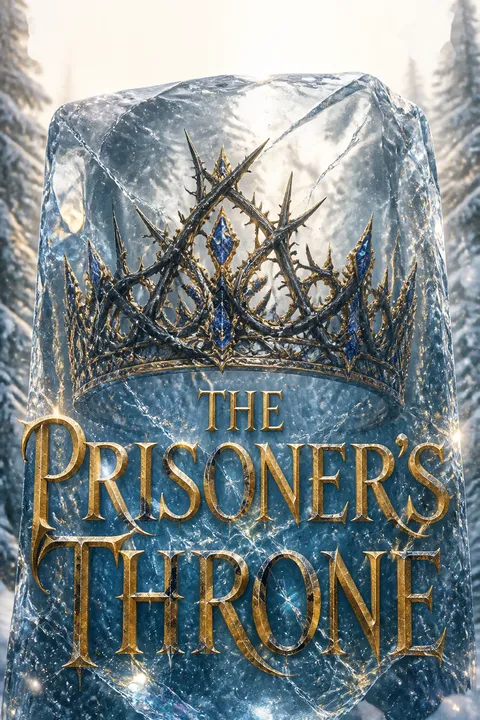


Plot Summary
The Heir Who Slips Away
At seventeen, Oak is formally named heir to Elfhame, though the crown feels more like a debt than a prize. He has been quietly courting Lady Elaine to uncover a conspiracy, hoping to expose its members without revealing how often he has risked himself to protect the throne.
At the celebration, he discovers that his sister Jude has secretly learned their father Madoc is being held by Lady Nore, who is building an army at the Ice Needle Citadel. An attack could kill Madoc, but waiting would give Lady Nore time to strengthen her forces. Oak knows Wren, Lady Nore’s daughter, can command her mother. Before his family can stop him, he leaves to find Wren and prevent a war.
Oak’s first decisive act is also a concealment: he takes responsibility without asking his family to trust him with it. His apparent fecklessness is a deliberate cover, but the habit has consequences. He treats danger as something he can privately absorb, preserving his loved ones’ image of him as protected while denying them the chance to choose with him. His unease about inheriting the throne comes from knowing how power has corrupted his bloodline. Yet his attempt to act outside that inheritance repeats its central mistake: he assumes that good intentions excuse controlling what others know.
The Prince in Iron
Oak’s rescue mission has already failed by the time the story settles beneath the Citadel. He has concealed from Wren that she carries Mellith’s heart, the key Lady Nore seeks, and Wren has imprisoned him behind iron bars with Grimsen’s obedience bridle on his face. From his cell he learns that she has gone to the Stone Forest and broken the ancient curse holding two troll kings underground.
The scale of her power leaves him unsure what she will do next. Then an enchanted metal snake brings his old ring and a warning that Elfhame’s forces will arrive in three days. Oak smashes the creature and finds poison inside. With its jewels as bait, he steals a guard’s key and escapes.
The dungeon converts Oak’s abstract knowledge of coercion into bodily experience. The bridle makes command physical, while the iron bars turn every attempt at movement into pain. His captivity also reverses the role he has often played: he must depend on the attention and choices of people with less power than he has. Breaking the snake shows that the prince’s first instinct is no longer merely to escape. He recognizes that the rescue message arrived in a vessel carrying poison, and that protecting Wren may require him to question even the help he has been waiting for.
A Queen at the Throne
Disguised in a stolen uniform, Oak slips into the Great Hall and sees Wren confront Bogdana, the storm hag who made her. Wren refuses to surrender her power, but her feverish appearance hints that using it has hurt her. Oak follows her to her room, where she wakes and uses the bridle to force him to kneel and crawl.
The humiliation makes him understand what he had never fully grasped about her captivity. When the guards arrive, Wren sends him back to the dungeon, promising punishment rather than an explanation. Oak learns that she is unsure why she keeps him, and he leaves frightened by her anger but still drawn to her. He has seen her power and her vulnerability at once.
Wren’s performance of sovereignty is not simple liberation. She can command a room and compel Oak, yet her body appears to be paying for the strength that keeps her authority intact. By using the bridle against him, she makes him feel the difference between understanding an object and living under its rule. Oak’s attraction persists, but it can no longer rest on the fantasy that he knows what Wren has endured. Their intimacy now has a moral cost: he must recognize her power without romanticizing the harm done to her.
The Interrogation Room
On the way back to his cell, the former general Valen diverts Oak into an interrogation room, kills the guard Bran, and uses an iron blade to burn the prince while demanding information about Elfhame. Oak tries his honeyed gancanagh voice on Valen, offering him power, but the enchantment falters and Valen beats him unconscious.
Later, Oak fights off guards who come to drag him away, only to learn they were meant to bring him to supper with Wren. Hyacinthe explains that Wren’s power is consuming her whenever she unmakes magic. At dinner, Oak cannot persuade her that his feelings are sincere, but she keeps him nearby. He realizes that Elfhame’s army is approaching and that a battle could destroy her.
Oak survives by improvising, but the tools he trusts are unstable. His charm cannot reliably protect him, and his combat reflexes threaten to take over when fear becomes overwhelming. Hyacinthe’s warning reframes Wren’s silence: what Oak interpreted as rejection may partly be illness and political self-protection. Their supper offers no easy reconciliation, because Wren suspects that any tenderness from Oak may be another tactic. Both characters have learned to treat vulnerability as a possible trap, leaving honest care difficult to distinguish from strategy.
A Ring Stops the Army
Hyacinthe agrees to remove Oak’s bridle if the prince will help discover who poisoned his mother, Liriope. Oak accepts, then faces Elfhame’s approaching army with no sure way to prevent an attack. He enters the Great Hall and announces that he and Wren are engaged, using the ring delivered by the metal snake to make the claim convincing.
Wren accepts the performance, and the visitors agree to return with her to Elfhame for treaty talks rather than begin a siege. Bogdana insists on joining them, despite her desire to destroy the Greenbriar family. Oak has bought time, not peace. Wren still doubts him, and the journey will carry her away from the defenses and allies that have made her newly powerful.
The engagement is both a political maneuver and an emotional gamble. Oak uses a public promise to prevent violence, but the gesture also places Wren inside a system that has repeatedly made her a bargaining piece. The scene lets the pair cooperate before they can fully trust each other. That cooperation matters, yet it is fragile: the same ring can signify affection, alliance, or constraint, depending on who controls the story around it. Oak’s solution delays the consequences of his secrecy rather than erasing them.
The Sea Takes Its Due
During the voyage home, merrows from the Undersea attack the ship with sharks and a many-tentacled creature called Sablecoil. Oak helps fight the boarders, but a tentacle drags Tiernan into the water. Hyacinthe dives after his beloved, and Oak hauls both men back aboard with a rope. When Sablecoil threatens Wren, she unbinds the monster, severing its tentacles, then collapses from the effort.
As Bogdana lifts the ship above the storm, Oak holds Wren and hears her question whether anyone truly loves him or merely responds to his gancanagh charm. The question wounds him because he cannot dismiss it. He sees how his habit of pleasing people may have made affection feel both effortless and unknowable.
The attack makes the book’s intimate danger literal: survival depends on relationships Oak cannot control. Tiernan and Hyacinthe risk themselves for one another, while Oak’s rescue binds him to both men’s choices. Wren’s power saves the ship but exacts a visible price, tying political strength to physical depletion. Her question about Oak’s charm cuts through his public persona. If desire can be magically encouraged, then being wanted is not the same as being known. His smiling mask, once a useful defense, now makes the possibility of genuine love harder for him to recognize.
Home Among Suspicious Eyes
At Insmire, Oak’s family welcomes him home but greets Wren with caution. She refuses the palace and uses a white walnut to conjure a pavilion for her retinue, preserving a measure of independence. Oak visits Mother Marrow, who explains that Wren’s power has been twisted: she can absorb and break magic, but each use harms her, and the curse cannot simply be removed.
Meanwhile, Oak’s family presses him about his reckless mission and his engagement. Madoc’s return from captivity reassures Oak, but does not erase his father’s influence over him. As court preparations begin, Oak realizes he must manage not only the conflict between Elfhame and the northern court, but also his family’s mistrust and Wren’s fear of being judged.
Homecoming does not restore Oak to his old life. His room and family remain familiar, but he returns with knowledge that makes their patterns harder to accept. Wren’s refusal of palace lodging is a concrete assertion of agency, not merely a display of pride. Mother Marrow’s account also changes the meaning of Wren’s victories: her magic is not an inexhaustible weapon but a damaged capacity that consumes its user. Oak’s challenge is therefore not to rescue her by taking control, but to understand the cost she bears while resisting the court’s impulse to reduce her to either threat or asset.
A Courtship Under Pressure
Wren privately asks Oak to end their engagement, arguing that a delayed wedding would let her return north without becoming permanently bound to him. He declares his love, but she distrusts how easily he seems to fall in love. Later, they meet in the gardens, confront the childhood hurt between them, and kiss.
Oak misses his planned meeting with Lady Elaine, who has been drawing him toward a conspiracy, then lets her abandon the plot rather than enchant her back into it. At the feast, Bogdana uses a promised boon to press for an immediate wedding. Jude offers a public test to delay it, and Oak agrees to pose Wren a question. During the gathering, Leander reveals that the Ghost shared his secret name with Madoc, unsettling Oak.
The romance advances through the same problem that threatens the politics: neither character can easily believe what the other means. Wren sees Oak’s fluency as a possible form of manipulation; Oak’s decision not to use his charm on Lady Elaine marks a rare refusal to make another person’s desire serve his plan. The childhood conversation gives their attraction a history of missed protection and mistaken rejection. Meanwhile, the revelation about the Ghost turns Oak’s family secrets into a present danger. Private trust and public conspiracy are no longer separate problems.
Poison at the Hunt
At the hunt, Oak accepts mead from the Ghost and soon recognizes blusher mushroom, the poison that killed his birth mother, Liriope. He believes the Ghost has poisoned him, but finds the spy dead in a clearing, his body slowed and hardened by the same substance. Cardan preserves the Ghost as a flowering tree, though no one knows whether he can recover.
Lady Elaine is then found dead from the poison as well. Oak publicly reveals that the Ghost was involved in Liriope’s murder and that his family concealed the truth. Wren does not deny the accusations against her, so Cardan orders her questioned and sends Tiernan to watch her. The revelations leave Oak poisoned, grieving, and uncertain whom to trust.
The poison collapses past and present into one substance. Blusher mushroom once targeted Oak before birth; now it incapacitates him and appears to take the life of the man who helped raise him. The discovery forces Oak to hold two truths together: the Ghost committed a grave wrong, and the Ghost later mattered to him. His family’s silence has protected its own stability at the cost of his ability to understand his history. Wren’s refusal to defend herself intensifies suspicion, but it also preserves the possibility that she is constrained by something Oak has not yet seen.
Randalin’s Knife
On Insear, Oak is summoned to a meeting with Jude, Cardan, and the council. Before he can explain his connection to Lady Elaine, hidden soldiers attack. Randalin, the Minister of Keys, stabs Cardan and reveals his plan to replace the rulers with Oak and Wren, backed by Bogdana’s storm.
Oak fights and kills Randalin’s guards, then helps his family survive the ambush. Cardan remains alive but badly wounded. The royal family still suspects Oak’s role in the conspiracy, and Oak admits that his secrecy helped create the opening Randalin exploited. When the storm isolates Insear, Oak leaves with Hyacinthe to find Wren, who has disappeared with Bogdana.
Randalin’s coup succeeds initially because he understands the court’s appetite for convenient stories. Oak’s feckless reputation and private schemes make him an ideal supposed beneficiary, even though he never sought the crown. The violence forces him to confront the damage caused by his secrecy: his family cannot distinguish his protective maneuvers from treason because he withheld the evidence that might have let them. His decision to leave despite their suspicion is not an escape from responsibility. It is an attempt to repair the crisis he helped make possible.
The Sister in the Nut
Oak and Hyacinthe cross the storm to Insmoor with Jack of the Lakes, a kelpie who can carry riders through the sea. Oak confronts Mother Marrow and guesses that she has hidden Wren’s mortal sister, Bex, inside one of the enchanted nuts used to make cottages. He opens the wrong nut first, then forces the bargain by threatening to destroy the others.
Mother Marrow traps Oak inside the correct nut, where he meets Bex and explains that Wren is being coerced through her safety. His friends break the spell and free them. When Bogdana arrives, Oak distracts her long enough for Jack and Hyacinthe to take Bex away, then surrenders so the storm hag will bring him to Wren.
The nut turns refuge into a prison: a charm designed to give Wren a portable home also conceals the person Bogdana uses to control her. Oak must solve the riddle without treating Bex as an object to be retrieved. He tells her enough to choose whether to cooperate, although his urgent handling of her still echoes the controlling habits he is trying to change. His surrender is a calculated risk, but it is also an act of trust in Jack and Hyacinthe. For once, Oak’s plan depends on other people acting freely after he steps into danger.
Wren Takes the Storm
On Insear, Jude and Wren face off as Bogdana prepares to kill the Greenbriars and take the islands. Oak reveals that Bex is safe, but Jude still cannot know whether to trust him or Wren. She challenges her brother to a duel; using their swords as cover, they move together until both blades point at Bogdana.
Wren orders her soldiers to lower their weapons, then catches a lightning bolt meant for Oak. She draws the storm into herself, stopping the weather but draining the magic that sustains her. Bogdana strikes her again, and Wren collapses without a heartbeat. Her sister is free, the coup is broken, but Oak kneels beside Wren believing she may be lost.
The duel between siblings is a performance with real stakes. Jude tests Oak’s loyalty while creating the opening needed to threaten Bogdana, and Oak accepts the risk rather than demanding trust he has not earned. Wren’s final act interrupts the inherited script of revenge: she saves the people around her by taking the storm into herself, not by claiming the throne Bogdana imagined for her. Yet the rescue is not clean triumph. The power that ends the siege also nearly destroys its bearer, exposing the cost of making one person’s body the instrument of collective survival.
A Future Chosen Together
Bex attempts to revive Wren while Oak recognizes that her stopped heart may be magical rather than human. He speaks honestly about how charm once let him confuse being desired with being known, and Wren wakes. Through the night her old body dries and splits; she emerges with wings, alive but changed.
Oak stays with her until she recovers, frees Tiernan from his service so he can choose his own life, and later finds that Wren has returned north with Bex. Her letter releases him from the marriage promise. Jude also gives Oak permission to abdicate, though Cardan asks him to remain heir during a diplomatic mission. Oak visits Wren in her new black-stone castle, offers marriage without coercion, and she asks him to stay.
The ending resolves the central emotional problem through a change in how Oak offers himself. He does not use charm to summon Wren back; he names what he has misunderstood and lets her choose whether to return. Her transformation suggests that survival need not mean restoration to an earlier self. Oak’s release of Tiernan and his willingness to relinquish the crown likewise replace obligation with consent. The novel closes not with power secured but with a shared decision: Wren can want without being owned, and Oak can love without trying to make himself irresistible.
Analysis
The novel makes inheritance feel less like receiving a crown than receiving unfinished damage. Oak inherits Dain’s blood, a persuasive magical voice, a family’s expectation that he will rule, and a history of secrets told in the name of protection. Wren inherits a heart bound to an old curse and a political identity others keep trying to write for her. Neither character can simply refuse inheritance, but each must decide what to do with the power it carries.
Their romance develops through contested knowledge. Oak’s charm can make people want him, while Wren’s experience has taught her that wanting someone may become a route to possession. Both therefore mistake control for safety: Oak hides information to spare others, and Wren conceals her danger because she fears what disclosure will cost. The story does not treat honesty as a magic cure. Truth arrives late, after imprisonment, betrayal, and bloodshed. Its value lies in making choice possible again.
The book also questions the heroic habit of turning one person into everyone else’s shield. Oak risks himself because he believes this is how he repays his family. Wren spends her magic because her people need protection. Their sacrifice is admirable, but the costs become destructive when nobody asks whether they consent to bear them. Oak’s decision to release Tiernan from duty and Wren’s choice to use power on her own terms move the story away from obedience as proof of love.
Finally, Faerie’s political theater is not a decorative backdrop. Courtly gestures, titles, engagements, and public displays of strength determine who may act without being punished. Oak’s staged engagement averts a battle, but also exposes how easily a private relationship becomes statecraft. The ending offers no promise of a harmless future. Instead, it imagines something more credible: two dangerous people choosing one another without pretending that love makes either of them safe, simple, or owned.
Review Summary
The Prisoner's Throne receives mixed reviews, with ratings ranging from 2 to 5 stars. Many readers appreciate Holly Black's writing style and the return to the Elfhame world. Some praise the political intrigue, character development, and Jude and Cardan's appearances. However, others criticize the pacing, lack of chemistry between Oak and Wren, and feel the book doesn't live up to the original trilogy. Despite differing opinions, most readers enjoy the magical atmosphere and complex family dynamics, making it a satisfying conclusion for many fans of the series.
People Also Read

Characters
Oak
The reluctant heirPrince of Elfhame and son of Liriope and Dain, Oak was raised by Oriana and Madoc alongside Jude, Taryn, and Vivi. He performs carelessness so others underestimate him, while quietly investigating threats to his family. His gancanagh inheritance makes him unusually persuasive, a gift he fears can blur the line between being loved and being obeyed. Oak wants to repay the people who protected him, but that wish often tempts him to make decisions on their behalf. His humor and appetite for risk conceal a serious capacity for violence, one he struggles to reconcile with his desire to be kind. His central conflict is learning that responsibility does not justify secrecy or control.
Wren
The winter queenAlso known as Suren, Wren is the young queen of the former Court of Teeth, stolen from her mortal family and raised amid cruelty. She is shy around crowds, sharp in judgment, and far more resilient than her guarded manner suggests. Her connection to an ancient hag inheritance gives her a frightening relationship to magic, but her deepest fear is not simply being seen as powerful. She worries that the people she loves will see only a monster. Wren values self-determination because others have repeatedly treated her as a tool, a child, or a political prize. Her bond with Oak carries both old tenderness and justified distrust.
Jude
The knife-edged queenJude is the mortal High Queen of Elfhame, Oak’s older sister and one of the people most fiercely committed to his safety. She relies on discipline, planning, and the credible threat of violence in a court that might otherwise dismiss her. Her protectiveness is genuine, but it can become another form of control when she keeps Oak away from dangerous truths. Jude is both a political ruler and a sister who remembers the child she helped shelter. Her relationship with Oak requires her to balance affection against the demands of sovereignty, especially when his choices put the court and their family at risk.
Cardan
The theatrical High KingCardan rules Elfhame beside Jude and is Oak’s brother-in-law. His flamboyant wit and cultivated idleness conceal a practiced understanding of power, performance, and betrayal. He knows how easily a court can mistake a mask for a person because he once depended on masks himself. Cardan’s teasing manner can irritate his family, but it also lets him puncture solemnity and test what others reveal under pressure. He cares deeply for Jude and takes the stability of their realm seriously, even when his language makes him seem unserious. His view of Oak mixes affection with suspicion born of political experience.
Bogdana
The storm hagBogdana is an ancient and powerful hag who helped shape Wren’s existence and later seeks to direct her future. She carries a grievance against the Greenbriar line and believes power and vengeance can restore what was denied to her. Her love for Wren is inseparable from possession: she wants her daughter close, but also wants her to fulfill a political destiny. Bogdana’s force is elemental, expressed through storms and threats, yet her greatest leverage comes from knowing what Wren fears losing. She is a formidable presence because she can make coercion sound like family loyalty.
Oriana
Oak’s vigilant motherOriana is Oak’s adoptive mother, a faerie who saved him as an infant and raised him with fierce devotion. Her protective instincts grew from the danger surrounding his birth, and she remains uncomfortable when he takes risks without her knowledge. She values etiquette and appearances, partly as tools for survival at court. Her affection for Oak is profound, though her anxiety can make his adulthood difficult to recognize. She also carries complicated loyalties within a family assembled through love, marriage, and political necessity.
Madoc
The exiled generalMadoc is a celebrated redcap general, Oak’s adoptive father, and father to Jude, Taryn, and Vivi. He sees politics as a contest of force and strategy, and he believes a person must be able to defend themselves. His love for his children is real but often expressed through tests, hard lessons, and ambitions they did not choose. Madoc’s history of using violence to solve problems makes him a source of both security and danger. Oak admires him while trying to decide which of his father’s lessons deserve to be carried forward.
Hyacinthe
The embittered falconHyacinthe is a former falcon of the Court of Teeth and a trusted commander to Wren. His bitterness toward Elfhame is tied to the death of his father and to years of anger he cannot easily set down. He is proud, brave, and often blunt, but his loyalty to Wren and his history with Tiernan complicate his hostility. Hyacinthe understands captivity from experience and can recognize when a prisoner deserves more mercy than he once received. He resists easy reconciliation, partly because anger has become a way to avoid grief.
Tiernan
Oak’s watchful guardTiernan is Oak’s bodyguard, a skilled and restrained man whose vigilance often places him between the prince and danger. He values duty, but his feelings for Hyacinthe pull against the loyalties demanded by his position. Tiernan rarely advertises his emotions, and his quiet manner can be mistaken for indifference. In truth, he has repeatedly made difficult choices for people he cares about. His relationship with Oak is built on years of protection and friendship, even when Oak’s recklessness makes that role painful.
Bex
Wren’s mortal sisterBex is Wren’s younger mortal sister, raised outside Faerie and wary of its dangers. Practical and observant, she carries iron and rowan as protection and does not assume a prince’s charm makes him trustworthy. Her family bond with Wren survives years of separation, though neither sister can simply return to the person she remembers. Bex’s mortal perspective gives her a directness that unsettles the courtly characters around her. She wants to understand what happened to Wren, not merely accept the explanations offered by powerful faeries.
Taryn
Jude’s twin sisterTaryn is Jude’s twin, Oak’s sister, and a mother to Leander. She often seeks security through social intelligence and carefully managed relationships, a strategy shaped by growing up in a violent court. Her gentler presentation does not make her passive; she can protect her family and pursue her own interests. Taryn’s history with Locke and her closeness to the Ghost place her among the family members most entangled in old secrets. She wants a life less brutal than the one Faerie offers, though that wish does not erase the choices she has made.
Leander
The curious nephewLeander is Taryn’s young son and Oak’s half-brother through his father, Locke. He is energetic, playful, and quick to turn an adult gathering into an opportunity for a game. His openness gives Oak a glimpse of the childhood his family tried to preserve for him. Leander notices more than the adults expect, and his small observations can unsettle their careful silences.
Garrett, the Ghost
The court’s quiet spyKnown by the code name Ghost, Garrett is a skilled spy who has trained Oak and worked closely with the royal family. He is observant, patient, and accustomed to withholding information until it can be used safely. His human ancestry makes him somewhat unusual among the Folk, while his professional reserve hides personal loyalties. Garrett serves as a mentor to Oak and has a close relationship with Taryn. His history reaches back into the family’s past, complicating the trust he has earned in the present.
Mother Marrow
The market’s old hagMother Marrow is a hag and merchant at Mandrake Market, known for her knowledge of magic, bargains, and enchanted objects. She offers advice selectively and expects debts to be remembered. Her ambitions extend beyond private profit to the standing of hags within Faerie, especially the possibility of one of their kind holding a throne. Mother Marrow can be hospitable and sharp in the same breath, making it difficult to know whether a favor is kindness or an investment.
Randalin
The Minister of KeysRandalin is an elderly member of Elfhame’s Living Council, responsible for courtly administration and accustomed to being underestimated. He is formal, vain about protocol, and adept at inserting himself into negotiations. His officious manner makes it easy for others to dismiss him as harmless. Beneath that manner sits a strong belief in the old order and in who deserves to rule. He treats political access as a form of power.
Lady Elaine
The courtly conspiratorLady Elaine is a beautiful courtier whose ambitions draw her toward Oak and the factions competing for influence in Elfhame. She believes intimacy can open doors that formal politics keeps shut. Her confidence in Oak’s charm makes her mistake his attention for shared purpose. Elaine is neither a simple romantic interest nor a mere political pawn; she is a participant trying to secure a place in a dangerous hierarchy.
Valen
The resentful former generalValen is a former general who resents Madoc’s authority and believes he was denied the standing he deserved. His ambition sharpens into hostility toward Oak, whom he associates with the throne and the sacrifices made in its name. He is disciplined enough to recognize an opportunity, but anger often outruns his judgment.
Straun
The ambitious prison guardStraun is a young falcon serving as a guard at the Ice Needle Citadel. He is eager to impress Wren and impatient with repetitive duties. His ambition makes him vulnerable to flattery and underestimation, especially when a prisoner appears careless. Oak recognizes that Straun’s vanity can be used, though the guard’s loyalties remain tied to the shifting politics of the Citadel.
Jack of the Lakes
The dangerous kelpieJack is a kelpie who can take the form of a horse and carry riders across land or water. He is capricious, sharp-tongued, and alert to bargains, yet he honors the obligations he chooses to accept. His appetite and his helpfulness exist uncomfortably close together. Oak treats him as a possible ally without forgetting the danger a kelpie poses to anyone who trusts too easily.
Dain
Oak’s birth fatherDain was a prince of the Greenbriar line and Oak’s biological father. He valued the throne and prepared for power through spies and political maneuvering. His decisions cast a long shadow over Oak’s understanding of inheritance, ambition, and what it means to resemble a parent.
Liriope
Oak’s absent first motherLiriope was Oak’s birth mother, a beautiful and persuasive faerie whose relationships entangled her with the royal family. Oak never knew her, but stories about her shape his fears about inherited charm and the difference between genuine affection and enchantment.
Grima Mog
Elfhame’s battle generalGrima Mog is a redcap general who commands Elfhame’s forces. Blunt, formidable, and impatient with diplomatic delay, she understands military strategy better than most courtiers. Her presence makes the threat of war concrete, even when she would prefer a battle to a negotiation.
Plot Devices
Grimsen’s bridle
A leash made magicalThe bridle is a cursed device that compels its wearer to obey commands. It was used to control Wren during her captivity, leaving scars on her cheeks and a lasting fear of forced obedience. When Wren places it on Oak, he experiences that coercion from the inside rather than as an observer. Its presence makes the couple’s arguments about trust and consent materially urgent: even a request made under its power cannot be freely refused. The bridle also links Oak’s escape to a practical political obstacle, since Elfhame’s forces may mistake him for Wren’s controlled prisoner.
Gancanagh charm
Desire as dangerous magicOak’s inherited gancanagh power lets him shape his words around what another person most wants to hear. He can use it to persuade, but cannot guarantee how far the enchantment will reach or what consequences it will create. The power helps him gather information and escape immediate danger, while making him doubt whether affection toward him is freely given. His mother warned him that becoming the answer to everyone else’s desires could make him lose track of himself. The story’s emotional resolution depends on Oak speaking honestly instead of using the charm to secure another person’s response.
Wren’s unmaking
Power with a bodily priceWren can absorb magic, break curses, and unmake enchanted things. The ability gives her political and military force, but it is a corrupted form of the creative power she might otherwise have inherited. Each major use harms her, so victories can leave her physically weakened and closer to collapse. The limitation prevents her from becoming an effortless solution to every conflict and makes her allies confront the cost of depending on her. It also shapes her fear of being loved only as a weapon or a means to someone else’s throne.
The white walnut
A cottage in a shellMother Marrow gives Wren a white walnut that can unfold into a stone cottage and collapse back into its shell. It offers a portable refuge for Wren and her followers, useful during travel and political uncertainty. The object’s smaller, hidden capacity becomes more sinister when enchanted nuts are used to conceal a person. This device ties Mother Marrow’s craft to the larger struggle over Wren’s freedom and makes Oak solve a literal hiding place rather than merely guess at a secret.
Blusher mushroom
Poison that slows lifeBlusher mushroom poison slows bodily movement and can eventually stop life. Oak’s unusual resistance makes him able to survive exposure that incapacitates others, but it does not spare him from dizziness and weakness. The poison links the plot’s present-day murders to the concealed circumstances of Oak’s birth. It also creates uncertainty because a victim may appear dead while the poison’s effects continue to unfold. Its recurrence turns an old family crime into evidence that can implicate people Oak has trusted.
FAQ
Synopsis & Basic Details
What is The Prisoner's Throne about?
- Heir Navigates Treachery: The story follows Prince Oak, heir to Elfhame, as he becomes entangled in a dangerous conspiracy threatening the High King and Queen, Cardan and Jude.
- Perilous Quest & Capture: His efforts to uncover the plot lead him on a perilous quest to the north, where he is captured and imprisoned by Queen Suren, formerly known as Wren, a figure from his past.
- Political Intrigue & Personal Stakes: Held captive amidst rising tensions between Elfhame and the northern court, Oak must navigate complex political maneuvers, confront hidden family secrets, and grapple with his complicated feelings for Wren to prevent war and protect those he loves.
Why should I read The Prisoner's Throne?
- Deep Dive into Faerie Politics: The novel offers an intricate look at the political machinations, power struggles, and treacherous court dynamics of Elfhame and its neighboring courts, expanding the world of The Folk of the Air series.
- Complex Character Arcs: Readers will find compelling character development, particularly in Oak and Wren, exploring their hidden depths, psychological complexities, and evolution under pressure.
- Rich Thematic Exploration: The book delves into themes of identity, destiny, the nature of power, the burden of secrets, and the messy, often contradictory, nature of love and loyalty within a fantastical setting.
What is the background of The Prisoner's Throne?
- Post-Conflict Elfhame: The story is set years after the events of The Queen of Nothing, with Cardan and Jude ruling Elfhame, but lingering tensions and exiled figures like Madoc and Lady Nore still pose threats.
- Northern Court Dynamics: It introduces the former Court of Teeth, now under Wren's rule, highlighting the harsh environment, the power dynamics among its inhabitants (falcons, trolls, hags), and the legacy of its previous cruel rulers, Lord Jarel and Lady Nore.
- Interconnected Histories: The narrative is deeply rooted in the shared, often violent, history of the characters, particularly Oak's complex parentage, Wren's traumatic past with Lady Nore and Bogdana, and the betrayals that shaped the current political landscape.
What are the most memorable quotes in The Prisoner's Throne?
- "You must inspire fear as well as love.": Oriana's early advice to Oak (Ch 1) encapsulates the harsh realities of ruling in Faerie and foreshadows the difficult balance Oak must strike, contrasting with his natural charm.
- "I am not your enemy, but if you can't help me, the next time we meet, I might be.": Wren's desperate warning to Oak (Ch 22) reveals the impossible bind she is in, highlighting the external forces manipulating her and the high stakes of their conflict.
- "I don't need safe... I want her.": Oak's internal declaration about Wren (Ch 18) cuts through his usual pretense and political maneuvering, revealing the depth of his feelings and his willingness to embrace danger for love, a key theme in The Prisoner's Throne.
What writing style, narrative choices, and literary techniques does Holly Black use?
- First-Person Perspective: The story is told primarily from Oak's first-person point of view, offering intimate access to his thoughts, feelings, and internal conflicts, often contrasting with his outward performance.
- Intricate Worldbuilding: Black continues to build upon the established Faerie world, introducing new locations like the Ice Needle Citadel and expanding on the nature of different Folk, including hags and kelpies, through vivid descriptions and cultural details.
- Subtle Foreshadowing & Symbolism: The narrative employs subtle hints, recurring motifs (games, masks, storms, specific objects like the walnut), and symbolic language to foreshadow events and deepen thematic resonance, often requiring careful reading to catch.
Hidden Details & Subtle Connections
What are some minor details that add significant meaning?
- Oak's Hooves as a Constraint: The recurring mention of Oak's hooves clattering on stone (Ch 1, 2) or being heavy (Ch 2) isn't just description; it highlights a physical difference that makes stealth difficult and serves as a constant reminder of his non-human heritage and the parts of himself he cannot hide or control, contrasting with his attempts at effortless charm.
- The Laundry Room as Sanctuary: Oak's choice to hide and bathe in the Citadel's laundry room (Ch 2) is a subtle detail revealing his need for cleansing and a moment of vulnerability amidst the political tension, finding temporary solace in a mundane, human-coded space within the cold, magical fortress.
- The Walnut's Shifting Purpose: Mother Marrow's gift of the white walnut (Ch 2) initially seems like a simple magical convenience (a portable cottage), but its later use to imprison Tiernan (Ch 22) and Bex (Ch 22) reveals its sinister potential and Mother Marrow's deeper, manipulative involvement with Bogdana's plans, connecting seemingly disparate plot points.
What are some subtle foreshadowing and callbacks?
- Cardan's Teasing About Biting: Cardan's playful remark about biting people (Ch 1) and Jude's response (Ch 1) subtly foreshadows Wren's later, more literal biting (Ch 6, 17) and the complex, dangerous nature of her physical interactions with Oak, hinting at the blend of affection and aggression in their dynamic.
- Oak's Dream of Locke: Oak's dream featuring Locke as a fox (Ch 5) serves as a potent callback to his half-brother's trickster nature and tragic end, foreshadowing Oak's own potential doom ("murdered by your own lover") and forcing him to confront the darker aspects of his inherited gancanagh power and manipulative tendencies.
- The Lake of Masks Reflection: The brief mention of the Lake of Masks showing reflections of the past and future (Ch 17, 20) is a subtle piece of worldbuilding that acts as foreshadowing, hinting at the characters' inability to escape their history and the potential for glimpses into their destiny, particularly relevant as Oak grapples with his identity and future choices.
What are some unexpected character connections?
- Mother Marrow's Link to Bogdana's Plan: Mother Marrow, initially presented as a helpful, albeit cryptic, source of information (Ch 2), is later revealed to be actively involved in Bogdana's scheme, holding Bex captive (Ch 22) and signaling the storm hag (Ch 22), demonstrating a deeper, more sinister connection than her initial appearance suggested.
- Valen's Resentment and Ambition: Valen, a seemingly minor guard (Ch 4), is revealed to be a former general under Madoc with deep-seated resentment over his past and current position (Ch 4), highlighting how secondary characters' personal histories and ambitions are interwoven with the main plot and contribute to the treacherous environment of the Citadel.
- Tatterfell's Unexpected Role: Tatterfell, a seemingly insignificant servant (Ch 19), is shown to be aware of Court politics ("farce on Insear") and potentially involved in arranging Oak's tent under Dain's crest (Ch 20), suggesting a deeper, perhaps spying, role beyond simple servitude, connecting her to the underlying conspiracies.
Who are the most significant supporting characters?
- Hyacinthe, the Conflicted Falcon: Hyacinthe serves as Wren's second-in-command and a key figure in the Citadel's military (Ch 10). His complex relationship with Tiernan (Ch 10, 11) and his own troubled past as a falcon under Lady Nore make him a conflicted but ultimately crucial ally to Oak, providing vital information about Wren's health (Ch 6) and helping facilitate Oak's escape and plans (Ch 9, 21).
- Bogdana, the Manipulative Hag: Bogdana is the primary antagonist, driven by vengeance against the Greenbriars and a twisted desire for power through Wren (Ch 4, 6). Her manipulation of Wren through Bex (Ch 22) and her control of the storm (Ch 21) make her a formidable and central threat, embodying the destructive potential of unchecked ambition and resentment.
- Mother Marrow, the Enigmatic Hag: Mother Marrow operates from Mandrake Market and possesses ancient hag magic (Ch 2, 17). Her cryptic advice, her connection to Bogdana's scheme (Ch 17, 22), and her knowledge of hag power and curses (Ch 17, 24) position her as a significant, morally ambiguous figure whose actions profoundly impact the plot and reveal deeper lore about the Folk.
Psychological, Emotional, & Relational Analysis
What are some unspoken motivations of the characters?
- Oak's Need for Validation: Beyond protecting his family, a deep unspoken motivation for Oak is the desire to prove his worth and capability, particularly to his sisters and mother who often treat him as fragile or foolish (Ch 1, 8, 15). His secret conspiracy-hunting and reckless actions stem partly from this need to measure up to their sacrifices and expectations.
- Wren's Desire for Acceptance: Despite her outward coldness and power, Wren's unspoken motivation is a profound longing for acceptance and belonging, particularly from her mortal family (Ch 14, 23) and, increasingly, from Oak (Ch 16, 17). Her actions, even the seemingly cruel ones like imprisonment, are often filtered through her fear of rejection and her traumatic past.
- Bogdana's Twisted Love: While driven by vengeance and power, Bogdana's motivation is also rooted in a twisted form of maternal desire for Wren (Ch 6, 10). She sees Wren as a second chance to achieve the status she wanted for Mellith, even if it means manipulating and hurting Wren in the process, highlighting the destructive nature of her "love."
What psychological complexities do the characters exhibit?
- Oak's Performance of Fecklessness: Oak exhibits the psychological complexity of performing a persona (the charming, irresponsible prince) so effectively that it becomes difficult to discern his true self, even for himself (Ch 1, 4, 16). This mask serves as both protection and a barrier, leading to internal conflict and difficulty in expressing genuine emotions or intentions.
- Wren's Trauma Response: Wren displays psychological complexities stemming from her severe trauma, manifesting as a struggle between vulnerability and a hardened, remote demeanor (Ch 2, 6, 14). Her power of unmaking is intrinsically linked to her past suffering, and her difficulty trusting others, particularly Oak after his betrayal, is a direct result of her experiences.
- Madoc's Contradictory Affection: Madoc presents the psychological complexity of genuinely loving his children while simultaneously being willing to manipulate and endanger them for his own ambitions (Ch 8, 15, 20). His inability to separate affection from strategic thinking creates a deeply unsettling dynamic, particularly with Oak, whom he both protects and pushes towards violence.
What are the major emotional turning points?
- Oak's Imprisonment and Humiliation: Being imprisoned and subjected to humiliation by Valen (Ch 4) is a major emotional turning point for Oak, stripping away his pretense of control and forcing him to confront his vulnerability and fear in a visceral way, leading him to consider using his full gancanagh power.
- Wren's Confession of Need: Wren's whispered confession to Oak in the gardens, "I want and I want and I want... I am hunger. I am need." (Ch 18), marks a significant emotional turning point, revealing the depth of her internal emptiness and desire, and allowing for a moment of raw honesty between them despite the surrounding deception.
- Oak's Realization of Family Secrets: Learning that the Ghost murdered his mother (Ch 19) and that his family knew (Ch 20) is a pivotal emotional turning point for Oak, shattering his perception of their protective love and forcing him to confront the layers of betrayal and hidden truths within his closest relationships, fueling his rage and subsequent actions.
How do relationship dynamics evolve?
- Oak and Wren's Shifting Trust: The dynamic between Oak and Wren evolves from childhood friends to wary allies on a quest, then to captor and prisoner, and finally to a complex relationship built on a foundation of betrayal, reluctant trust, and undeniable attraction, constantly shifting between antagonism and intimacy.
- Oak and His Family's Hidden Tensions: Oak's relationships with Jude, Cardan, and Oriana evolve as his secrets and capabilities are revealed. The initial dynamic of them protecting a seemingly naive Oak shifts to one where they must confront his hidden depths, leading to moments of conflict, fear, and grudging respect, exposing the underlying tensions created by years of secrets and sacrifices.
- Tiernan and Hyacinthe's Reconciliation: The strained and antagonistic relationship between Tiernan and Hyacinthe, born from past betrayals and conflicting loyalties, evolves towards a potential reconciliation (Ch 10, 11). Their shared danger and vulnerability, particularly during the sea monster attack (Ch 21), force them to confront their feelings and past hurts, hinting at a hopeful future for their bond.
Interpretation & Debate
Which parts of the story remain ambiguous or open-ended?
- The Full Extent of Wren's Power: While Wren's power of unmaking is demonstrated, the exact limits and long-term consequences of her absorbing magic remain somewhat ambiguous (Ch 24). It's unclear if her transformation fully healed her or if there are lingering vulnerabilities or unknown effects of her unique abilities.
- Mother Marrow's Ultimate Goals: Mother Marrow's motivations and the full scope of her involvement with Bogdana and the larger hag community remain open to interpretation (Ch 17, 22). While she aids Bogdana, her actions also seem to serve her own agenda related to hag power and status, leaving her true loyalties and future plans uncertain.
- The Future of Oak's Gancanagh Magic: The novel leaves the future of Oak's gancanagh power and his ability to control it open-ended (Ch 24, 25). Having embraced its use and seen its potential for both manipulation and genuine connection, his path forward in integrating or suppressing this aspect of himself is left for the reader to ponder.
What are some debatable, controversial scenes or moments in The Prisoner's Throne?
- Oak's Use of Gancanagh Charm: Oak's deliberate use of his gancanagh charm, particularly on Fernwaif (Ch 1) and Daggry (Ch 19), is debatable. While framed as necessary for escape or information, it raises questions about consent and manipulation, prompting readers to consider if his actions are justified or simply a continuation of the harmful aspects of his power.
- Wren's Imprisonment and Treatment of Oak: Wren's decision to imprison Oak (Ch 1) and her subsequent treatment of him, including using the bridle to command him (Ch 3), is controversial. Readers may debate whether her actions are a justified response to his betrayal or a cruel exercise of power, reflecting the trauma she endured while bridled herself.
- Jude's Offer to Sacrifice Oak: Jude's seemingly serious offer to give Oak's head to Bogdana (Ch 23) is a highly controversial moment. While Oak interprets it as a strategic bluff, the starkness of the offer and the underlying tensions it reveals about their relationship and Jude's capacity for ruthless decisions spark debate about the limits of her love and loyalty.
The Prisoner's Throne Ending Explained: How It Ends & What It Means
- Wren's Sacrifice and Rebirth: The climax sees Wren absorbing Bogdana's storm magic (Ch 23), seemingly killing herself in the process. However, this act of unmaking on a massive scale, combined with being struck by lightning, triggers a transformation (Ch 24). She sheds her old form, emerging with wings, reborn and seemingly healed from the curse that warped her power. This signifies her acceptance and integration of her hag nature, no longer solely defined by destruction but capable of creation (implied by the new castle).
- Oak's Emotional Breakthrough: Witnessing Wren's sacrifice and near-death prompts Oak to finally articulate his true feelings for her, moving beyond performance and acknowledging the depth of their connection (Ch 24). This emotional honesty, combined with his acceptance of his own complexities, marks a significant turning point in his character arc, allowing him to pursue a genuine relationship with Wren.
- A New Beginning, Not a Simple Ending: The ending is not a traditional "happily ever after." Wren leaves Elfhame with Bex to return north and learn to use her new, integrated power (Ch 25). Oak chooses to follow her, accepting her invitation to stay and build something new together. This signifies a choice for a future defined by mutual understanding and acceptance, rather than political obligation or past trauma, leaving them poised to rule the northern court together and explore the possibilities of Wren's transformed magic.
Elfhame Series
About the Author
Other books by Holly Black


Download PDF
Download EPUB
.epub digital book format is ideal for reading ebooks on phones, tablets, and e-readers.








