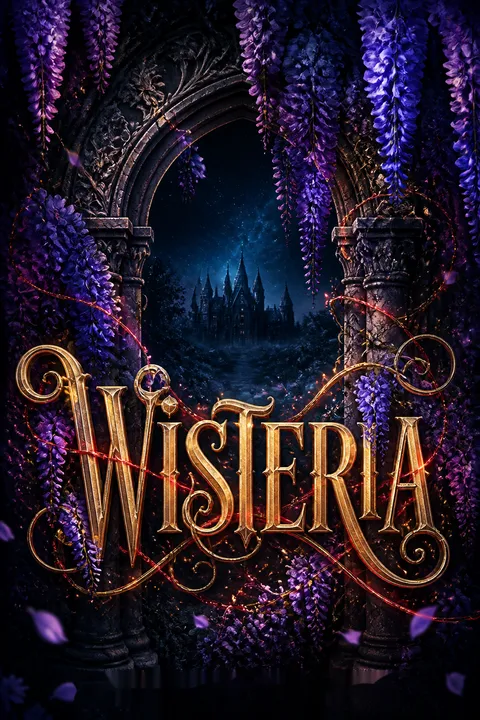


Plot Summary
Prologue
Beneath a wisteria tree, Life spends her final hours beside her husband, Fate, while he weaves human destinies. Death arrives to claim her, but Fate refuses to let his wife go. Though Life has accepted reincarnation, she fears a painful death will erase her memories and leave her unable to find him again.
Fate binds her with golden threads and bargains with Death for her life. His plea costs more than he understands: the world’s balance is endangered, and Life dies knowing that Fate has already lost her.
The opening makes love and possession dangerously difficult to distinguish. Fate’s refusal comes from genuine devotion, but it also denies Life the choice she has made about her own death. Her fear is not simply of dying; it is of surviving in a form that cannot remember the relationships that made her life meaningful. The bargain sets the novel’s moral machinery in motion: private grief becomes a force with public consequences. It also establishes the central contrast between Fate’s urge to hold on and Life’s understanding that endings are part of the world’s renewal.
A Wedding Made of Threads
Blythe Hawthorne reaches Aris Dryden’s wedding altar knowing that her marriage is the price of her father’s safety. Elijah was falsely accused of murder, and Blythe has bound herself to Aris, who is actually Fate, to prevent his execution. She refuses to let Aris dictate even the smallest details of the ceremony, arriving in green slippers and making him abandon his demand that she change.
Aris freezes the wedding party when her defiance strains his patience, but Signa’s binding prevents him from harming Blythe. They complete the vows with golden bands glowing beneath their wedding rings. Blythe leaves her family and the life she chose not to marry for, carrying the knowledge that the bond is no mere symbol.
Blythe’s choice is an act of agency made under coercion, not a romantic surrender. She decides that her father’s life matters more than her own freedom, while keeping control over the one arena still available to her: how she behaves within the bargain. The slippers are a small but pointed refusal to become a compliant bride. Aris’s power makes the marriage structurally unequal, yet Signa’s protection creates a limit he cannot simply override. From the start, the relationship is defined by competing kinds of power: Fate can constrain circumstances, but Blythe can still resist the person wielding them.
The House Rejects Its Bride
After the reception, Aris sends Blythe away in a carriage, intending to return her to Wisteria Gardens only after their guests have left. She refuses to leave Celadon, where her father lives, and insists she will not abandon him. Aris sends the carriage on without her, but it stops at the ruined garden behind Thorn Grove, where Blythe mourns her mother and brother.
A crimson petal appears, her ring burns, and she is suddenly transported back to Wisteria. Aris cannot enter the house either, until Blythe realizes their marriage bond demands that he carry her across its threshold. Once inside, she finds a cold, crumbling palace and an almost unlivable room. Her refusal to leave has trapped both of them there.
The house turns the marriage contract into a physical environment. Blythe cannot enter alone, Aris cannot enter alone, and their only passage forward requires a gesture traditionally associated with a husband welcoming his bride. The scene makes that convention strange and coercive: the ritual works, but neither character feels welcomed. Her visit to her mother’s ruined garden also connects marriage to accumulated loss. Blythe is not merely resisting a new husband; she is resisting another forced separation from the family and home that have shaped her.
Life Behind the Portrait
As Blythe explores Wisteria, the palace’s corridors steer her toward a forbidden door concealed behind a portrait of Life, Aris’s dead first wife. She later follows a pale figure and the rescued fox through a shifting hallway into Life’s abandoned suite, where portraits show a gentler Aris beside the silver haired woman.
Blythe takes an antique hand mirror from the room, though she cannot explain why it feels familiar. Back in the palace, she discovers that Aris weaves people’s futures as colored tapestries and dismisses an ordinary, peaceful life as dull.
When she questions his indifference, he admits that her own fate is an ugly mystery. Death eventually brings her to Foxglove, where Signa is absorbed in her mother’s journals. Aris follows Blythe through their bond and takes her back.
The hidden suite is both a memorial and an emotional trap. Aris has preserved the traces of his first marriage, but the empty room cannot restore the person he lost. Blythe’s unexplained attraction to the mirror suggests that memory can persist before conscious identity catches up. The tapestry conversation exposes a conflict in how the two understand human lives: Aris sees repetition and predictable endings, while Blythe finds worth in a modest life lived well. His description of her fate as unreadable quietly marks her as an exception to the system he believes he controls.
A Kingdom Built for Elijah
When Elijah writes that he plans to visit the imaginary kingdom Blythe has described in her letters, she refuses to let Aris erase his memory or dismiss the danger. She challenges him to make Verena real enough to fool her father, offering to travel with him if he succeeds and can promise regular visits home.
Aris accepts, and Blythe helps design the kingdom while he transforms Wisteria into a lavish winter palace, invents royal parents and populates the city with residents.
Elijah arrives, studies the glittering canals and tastes the local chocolate, then tours the streets with Blythe and Aris. He suspects that something is wrong but sees that his daughter is happy. During the visit, Aris defends Blythe’s right to make her own choices, and Elijah returns home reassured.
The invented kingdom begins as a deception, but its construction becomes their first sustained collaboration. Blythe makes Aris answer to a human need rather than his own pride: Elijah must feel that his daughter is safe, not merely be made to believe it. Aris’s magic can manufacture scenery and social roles, but it cannot manufacture Blythe’s happiness; that has to arise from her genuine delight in the place. By supporting her autonomy in front of Elijah, Aris starts to become more than the powerful antagonist she expected. His attention shifts from controlling Blythe to understanding what she values.
Doors Across the World
While Elijah stays in Verena, Aris and Blythe share meals, brave a dog sled through the snow, and talk about her father’s loneliness and his own isolation. Aris agrees to treat Elijah well, and the pair make a truce that allows Blythe to travel with him rather than remain imprisoned at Wisteria.
After Elijah leaves, Aris shows her that his house can open onto real places around the world, not just invented settings. Blythe is overwhelmed by the possibility of travel, but she still worries about leaving her father behind.
Aris promises she can visit him often. Their growing attraction surfaces in a secluded glade, where Blythe invites intimacy and Aris kisses her before abruptly stopping. Back at Wisteria, he finds Life’s mirror in Blythe’s room and withdraws in grief.
The truce changes the terms of their forced proximity. Aris offers access to the world, but Blythe’s hesitation shows that freedom is not simply the ability to travel; it also involves choosing which attachments to preserve. Their attraction grows inside that unresolved tension. Aris’s sudden retreat after finding the mirror reveals that intimacy is entangled with mourning, not just desire. For Blythe, the encounter makes his grief newly personal. She has touched an object that belongs to the woman he still loves, and she cannot yet know whether he sees her as herself or as a route back to the past.
The Garden Answers
After Aris disappears into his study, Blythe finds Wisteria’s front door will release her if she stops trying to force a particular destination. It opens onto her mother’s garden, now badly vandalized, with the gravestone shattered and the ground dug up.
Grief gives way to an impossible discovery: flowers spread beneath Blythe’s feet, a thorn wound heals, and a wisteria tree grows where she imagines it. She even watches dead frogs return to life. The powers she once assumed belonged to Signa are hers.
Blythe understands that she is Life, the soul Aris has searched for, reincarnated without her memories. The revelation explains her visions and the strange way Wisteria has responded to her, but it gives her no easy answer about what Aris will feel.
Blythe discovers her identity through an act of grief rather than a deliberate quest for power. She wants her mother’s garden restored, and the natural world answers before she understands that she has commanded it. This makes Life’s power feel intimate and dangerous at once: it emerges from attachment, but does not automatically obey ethical limits. The revelation also unsettles the romance. Blythe is not simply the woman Aris has lost, yet her connection to that woman is real. She must decide whether to claim an identity that explains her abilities without letting it erase the self she has built.
Chaos Comes Calling
At Thorn Grove, Blythe meets Solanine, a red haired stranger whose presence floods her mind with visions of death and ruin. Solanine identifies herself as the one who killed Rima, Signa’s mother, and mistakes Blythe for Rima’s daughter. She says Blythe has disturbed the world’s balance and must repair what she has done, but withholds what that means.
When Solanine tries to kill her, thorns erupt from Blythe’s skin and drive the attacker away. Soon after, someone breaks into the stables and tries to steal Mitra. At the Christmas ball, Blythe’s body begins sprouting ivy, and Signa helps her regain control. Signa explains that she had tried to warn Blythe but the marriage bond prevented her from speaking freely.
Solanine makes the cost of Blythe’s new power immediate: the gift that restores a garden can provoke an adversary who treats imbalance as a mandate for violence. Her visions are not ordinary threats but attempts to destabilize Blythe’s sense of safety and self. Signa’s inability to warn her adds another form of constraint, this time imposed by the bond rather than by personal choice. The ivy episode shows that Blythe’s power is not yet integrated with her emotions. She can restore and defend, but fear and anger can make her body a landscape she cannot control.
The Masked Prince Returns
At the ball, Diana Blackwater mocks Blythe’s absent husband and insults Elijah. Aris arrives, warns Diana away, and leads Blythe into a dance. Their kiss is no longer an experiment or a dare; both acknowledge their attraction, but Blythe collapses as the room spins and the vision of Solanine returns.
Aris carries her back to Wisteria, where he creates a library designed from Blythe’s imagination, giving her a place of her own inside his home. On a later visit to Hateno, he shows her a gifted singer whose fear keeps him from pursuing a public career.
Aris admits that his own fear has kept him from risking love again, and Blythe chooses him. Their intimacy deepens, while Signa’s journals suggest that Rima once brought someone back from death and thereby summoned Chaos.
This section turns private attraction into a chosen relationship, but danger remains present even in the dance that seems to confirm their bond. Aris’s library is significant because he does not merely offer Blythe access to his world; he gives her the power to design a room within it. His confession in Hateno reframes his earlier coldness as fear of repeating old grief, not an absence of feeling. Signa’s journal research then links the sisters’ present crisis to a prior violation of the boundary between life and death, transforming romance and family history into parts of the same danger.
A Horse Beyond Death
As Blythe grows sicker, she and Signa enter the stables at night with Death to test Solanine’s demand. Blythe approaches the foal she had once believed Signa revived, but understands now that her own power restored it. Death touches the horse and cannot claim it; Life’s blessing has made its continued existence part of the natural order.
Blythe retreats in panic and slips into a vision of someone struggling through the snow toward Thorn Grove. The vision pulls her toward a hidden entrance in her mother’s room. There she finds a hooded intruder, knocks him unconscious, and discovers that the man has been living inside the walls. When she sees his face, she recognizes her supposedly dead brother, Percy.
The foal clarifies that resurrection is not a temporary trick that Death can reverse. Blythe’s gift has changed the terms of the world, making the horse’s life protected even from the being who governs death. Her distress is therefore ethical as well as personal: she cannot simply undo the harm by choosing a replacement victim. The vision shifts the mystery from abstract cosmic balance to the Hawthorne family’s hidden history. Percy’s return links the consequences of Blythe’s power directly to the people she most wants to protect.
Percy Beneath Thorn Grove
Percy admits that he remembers dying but not how he returned, and Blythe confronts him about the poisoning that nearly killed her. She realizes that when Signa took Percy’s life to save her, the years Blythe gained came from his death. By reviving him, Blythe has restored the very life that had been exchanged for hers, and the imbalance is poisoning her again.
Despite Percy’s betrayal, she heals his frostbitten hands, and her own fingers turn gray as the cost transfers between them. Aris and Signa arrive before she can recover. Aris restrains Percy, while Signa urges Death to end the man’s life. Blythe stops them, unwilling to let Percy be killed again, even as her strength rapidly fades.
Percy’s return makes the cost of Blythe’s survival brutally concrete. Her life was not granted without consequence; it was extended through a transfer that she did not understand and now cannot simply reverse. Healing Percy repeats that exchange in miniature, as his body improves while hers weakens. Blythe’s decision to stop Aris and Signa from killing him is not forgiveness. It is a refusal to let fear dictate another death, even when that choice may cost her. The moment tests whether Life’s compassion can coexist with judgment of the person who harmed her.
Chaos Names the Price
Solanine appears as Percy’s attempted execution fails. She explains that Blythe’s blessing protects him, and that returning a year dead soul has disturbed the balance more deeply than saving the foal. A human life cannot repay the debt; Blythe’s own life is the price.
Signa tries to kill Percy with belladonna, but his silver glow confirms that Life’s protection cannot be undone by Death. Solanine leaves them with no remedy, treating their panic as entertainment.
Aris cannot save Blythe by killing her brother, so he pursues Percy and rewrites the young man’s fate instead: Percy will live, but be isolated from the Hawthornes and condemned to a life of misery. Aris returns to Blythe knowing he has no power to bargain away her debt without offering something greater.
Solanine’s rule exposes a limit that neither love nor authority can evade: a life once granted cannot be treated as currency to spend again. Signa’s failed attempt shows that even Death cannot overrule Life’s blessing. Aris’s punishment of Percy is a use of the power he does possess, but it is not a solution to Blythe’s illness. He can shape a future of consequences for the man who harmed her, yet he cannot alter the larger cost without sacrificing himself. The contrast makes the crisis less a contest of strength than a test of what each character is willing to lose.
Fate Pays With Himself
Blythe weakens until she asks Death to take her peacefully, while insisting that Elijah be protected and kept from the truth. Aris arrives, finally aware that Blythe is the Life he has searched for, but she refuses to let him turn that revelation into another attempt to control her death.
As she slips toward the afterlife, Aris offers his own immortal life to Death in exchange for hers. Death accepts, and the stars and wisteria surrounding Blythe dissolve as Aris’s body loses its power. Blythe awakens with life restored and finds Aris dead in her arms. His choice saves her, but it also removes the magic that made Wisteria vivid and carried them across the world.
Aris’s final bargain reverses the choice made in the prologue. There, his love compelled him to resist Life’s wishes and caused catastrophe; here, he offers himself rather than forcing Blythe to remain. The difference is not that he loves her less, but that he finally recognizes love as a willingness to relinquish control. Blythe’s survival is therefore inseparable from grief. She receives the life Aris gives her, but loses the person who made that life feel expansive. His sacrifice resolves the immediate imbalance while leaving their relationship suspended in the uncertainty of whether he can return.
The Palace Without Magic
After Aris’s death, Wisteria’s illusions vanish. Its rooms are bare stone again, and Blythe’s enchanted library disappears. For weeks she stays inside, grieving with the fox Beasty while Elijah visits each morning and leaves food at the door. He tells her stories about Lillian until Blythe can begin listening without being overwhelmed by loss.
Gradually she paints Wisteria back into a home, filling its walls with images of the garden and the places she remembers sharing with Aris. She eventually visits Signa and Death, asks what became of Solanine, and accepts that they cannot yet pursue her without endangering those they love. Blythe chooses instead to learn her powers, making grief a companion rather than the only thing she can feel.
Blythe’s recovery is deliberately domestic: food left at a door, stories about her mother, paint spread across a wall. None of these actions erases Aris’s absence, but they give grief a setting that is not merely the ruined palace he left behind. Elijah’s daily presence echoes the care Blythe once tried to provide him, while her choice to learn her power turns survival into a responsibility. The decision not to chase Solanine is not surrender so much as strategic restraint. Blythe begins to understand that protecting loved ones sometimes means refusing the dramatic confrontation an enemy wants.
Twenty-Seven Years of Waiting
Years pass, and Blythe remains young while living in Wisteria with her father, Signa, Death, and Beasty’s descendants. She builds briar mazes around the palace to discourage strangers who come seeking the ageless woman in local rumors. Though she travels and learns to use her powers, she continues to miss Aris and keeps his wedding ring.
One day a fox reacts to the front door, where a golden thread appears for the first time since his death. Blythe opens it onto Brude and sees a man marked by cuts from her thorns. His golden eyes are familiar, though his face is new. Aris has returned, and Blythe crosses the threshold to meet the husband she has waited for.
The long interval gives Blythe’s hope a cost. Waiting is not a passive pause; she builds a life, protects Wisteria, and develops relationships while refusing to treat Aris as replaceable. The single thread is powerful precisely because it does not promise certainty until the door opens. Aris returns in a different body, so reunion cannot simply restore the old arrangement. They must meet again across both memory and change. The ending answers the prologue’s fear of losing a beloved person by suggesting that connection can survive altered forms, though it cannot eliminate the pain or time between them.
Epilogue
Twenty-seven years after Aris gives his life for Blythe, she has turned Wisteria into a refuge hidden behind thorn mazes. She lives with Elijah, Signa, Death, and the foxes descended from Beasty, while continuing to hope that Aris will find his way back.
When a golden thread appears on the palace door, Blythe opens it onto Brude. A stranger with Aris’s golden eyes stands among the wisteria, cut by the thorns that guarded her home. His face is new, but his embrace is familiar. He has found her again.
The epilogue refuses a simple restoration. Aris returns after decades, but not in the body Blythe remembers, so reunion requires recognition rather than mere recovery. Her years of waiting have not been empty: she has made a home, protected it, and cultivated a family around the absence. The golden thread echoes the binding that once trapped the newlyweds, but now it functions as an invitation. The story turns the symbol of enforced proximity into a chosen passage. Their bond survives, yet the final reunion honors the time and loss that preceded it instead of pretending they never happened.
Analysis
Wisteria treats love as a force that can either enlarge another person’s life or try to possess it. Fate’s first response to losing Mila is to resist Death, and that refusal turns private grief into a threat to the world’s balance. Aris begins the novel repeating that impulse in a less cosmic form: he controls rooms, memories, appearances, and Blythe’s access to the world. Blythe’s resistance makes the ethical issue plain. Care that ignores another person’s wishes is still control, however beautiful its gestures.
The novel’s magic gives these psychological conflicts physical form. The marriage bond traps Blythe and Aris together, but their actual relationship changes only when Aris stops treating proximity as a right and begins listening to her priorities. His invented kingdom succeeds because Blythe helps shape it and because Elijah can experience his daughter’s happiness rather than merely be instructed to believe in it. The shared library marks a further shift: Aris makes room for Blythe’s imagination within his own house.
Blythe’s discovery that she is Life also complicates the familiar ideal of healing. Her capacity to restore growth is not automatically benevolent, since bringing back the dead violates a boundary with consequences for other lives. Her struggle is not simply to gain control of power, but to understand what care requires when desire and responsibility conflict. She refuses to kill Percy even after learning how his actions harmed her, and Aris ultimately chooses self sacrifice rather than repeating his earlier attempt to force Life to remain.
The ending extends that choice across time. Blythe does not recover Aris immediately; she builds a life in his absence and keeps faith without ceasing to live. His return in a new body offers renewal without erasing the years of grief. The novel’s most durable claim is that devotion is not proven by holding someone against loss. It is proven by honoring their agency, accepting consequences, and continuing to make a life after separation.
Review Summary
Wisteria receives mixed reviews, with an overall positive reception. Many readers praise the atmospheric writing, compelling romance, and satisfying conclusion to the series. The enemies-to-lovers dynamic between Blythe and Fate is widely appreciated. Some criticize the ending as rushed or disappointing. Readers enjoy the gothic setting and magical elements. The book is seen as a strong finale, though opinions vary on how it compares to previous installments. Some found inconsistencies in worldbuilding and character development. Despite critiques, many readers express emotional investment in the characters and story.
People Also Read




Characters
Blythe Hawthorne
Defiant heart of the storyBlythe is Elijah Hawthorne’s spirited daughter, a young woman who values independence, travel, and the freedom to choose her own life. Her sharp humor and refusal to be managed often disguise a deep loyalty to her family, especially her father. She is curious about people and places, but wary of social rules that reduce women to marriage prospects or objects of protection. Blythe’s instinct is to meet pressure with resistance, yet she is not untouched by grief or fear. Her defining tension is between fierce self reliance and the desire to belong without surrendering her identity.
Aris Dryden
Fate with an artist’s handAris is Fate, an immortal maker who weaves human futures and shapes his home through magic. He is exacting, proud, and devoted to beauty, art, food, and travel, yet his taste for vivid lives can make ordinary happiness seem inadequate to him. Beneath his polished arrogance lies an intense need to share what he creates and experiences. His history of loss has made him guarded, while his power encourages him to mistake control for care. His relationship with Blythe challenges both habits: she refuses to admire him blindly, and her insistence on her own choices forces him to reconsider what devotion requires.
Signa Farrow
Blythe’s steadfast cousinSigna is Blythe’s cousin and closest confidante, a thoughtful young woman whose unusual life has made her comfortable among spirits and the supernatural. She is observant, persistent, and driven to uncover the truth, particularly about her family’s past. Her love for Death sits alongside an investigative mind that can become consuming when a mystery takes hold. Signa cares deeply for Blythe, but circumstances sometimes keep her from explaining what she knows. Her presence gives Blythe both emotional grounding and a model of how loyalty can coexist with a life that defies ordinary expectations.
Sylas
The reaper beside SignaKnown as Death, Sylas is Aris’s brother and Signa’s devoted partner. He guides souls onward and carries the authority to end mortal lives, but his reserve conceals a capacity for tenderness and remorse. His history with Aris is marked by an old conflict over whether love can justify defying death. Sylas takes his role seriously, yet his affection for Signa and his regard for Blythe complicate the distance he tries to maintain. He is often the figure who names the limits others would rather ignore, even when he knows those limits will cause pain.
Elijah Hawthorne
Blythe’s devoted fatherElijah is Blythe’s father, a perceptive man whose protectiveness grows from love and the losses his family has endured. He is wary of society’s judgments and suspicious of easy explanations, but he wants his daughter to have a life larger than the one he can safeguard for her. His affection appears through practical gestures, from arranging a knife for her journey to asking for regular letters. Elijah can be stubborn about danger, yet he respects Blythe’s spirit and understands that protecting her does not mean deciding everything on her behalf.
Mila
Life remembered by FateMila is Life’s chosen human name and Aris’s first wife. She values the ordinary conditions that let people flourish, including rest, health, family, and the calm pleasures of the natural world. Her gentle outlook challenges Aris’s fascination with intense passions and dramatic stories. Mila’s memories and presence shape the emotional history of Wisteria, giving Blythe a glimpse of the love and conflict that preceded her own marriage.
Solanine
A force of upheavalSolanine is an unnervingly playful and dangerous woman whose attention brings visions of ruin. She enjoys provoking emotional reactions and treats human conflict as a spectacle, moving quickly from one disruption to another. Her cheerfulness makes her more frightening rather than less, because she does not share ordinary limits of empathy or patience. Solanine’s connection to Signa’s family history gives her reasons to watch Blythe and the others, though her aims remain difficult to read.
Percy Hawthorne
Blythe’s troubled brotherPercy is Blythe’s brother, a proud and ambitious member of the Hawthorne family. He cares intensely about status and inheritance, and resentment can narrow his view of what he is owed. His relationships with Blythe and their father are shaped by family expectations and unresolved grievances. Percy’s presence draws attention to the ways private ambition can injure the people closest to it.
Lillian Hawthorne
Blythe’s garden loving motherLillian is Blythe’s late mother and Elijah’s beloved wife. She tended the family garden herself, finding care and meaning in the patient work of helping living things grow. Blythe remembers her through the garden, old family stories, and the comfort of shared routines. Lillian’s affection for the natural world echoes through the novel’s treatment of Life as both power and responsibility.
Rima Farrow
Signa’s elusive motherRima is Signa’s mother, whose journals preserve a version of her younger self that Signa is still trying to understand. She appears curious about the world and drawn into relationships and events that do not fit the family stories passed down to her daughter. Her papers become a source of questions rather than simple answers, linking personal history to the supernatural forces surrounding the present.
Beasty
Wisteria’s sharp toothed foxBeasty is the black fox Aris rescued as a kit. She is stubborn, wary of Blythe, and more interested in warmth and comfort than in gratitude. Her repeated presence gives the lonely palace a small, unpredictable life of its own, while her attachment to Aris offers Blythe another way to understand the softer loyalties he rarely admits.
Warwick
The Hawthorne household’s anchorWarwick is a longtime member of the Hawthorne household and a trusted presence for Blythe. He is practical and protective, willing to challenge her when she puts herself at risk, while remaining loyal to the family through years of upheaval.
Diana Blackwater
A sharp tongued social rivalDiana is a society acquaintance who measures people by status and public approval. Her polished manners conceal a competitive streak, and she uses gossip to test others’ social standing. Her clashes with Blythe reveal how closely the ton watches women’s marriages and reputations.
Olivia Wheaton
Blythe’s attentive companionOlivia is appointed to attend Blythe during the stay in Verena. She provides practical help with clothing and daily routines, bringing a measure of ordinary companionship into Aris’s magically constructed royal household.
Plot Devices
The wedding rings
A bond that enforces proximityThe golden bands beneath Blythe and Aris’s wedding rings embody the bargain that binds them. They shape what each can do, resist separation, and sometimes guide Blythe toward truths she does not yet understand. The rings make their marriage materially consequential rather than a social performance: the couple cannot simply end the arrangement when it becomes uncomfortable. Their changing warmth and light also register shifts in their connection, turning an external magical constraint into a measure of emotional closeness.
Fate’s tapestries
Lives rendered as woven futuresAris creates tapestries that embody the lives he foresees, with colors representing emotional patterns and the shape of a person’s journey. They reveal the limits and assumptions of his role, while Blythe’s unreadable tapestry signals that her life has escaped his usual ability to predict it. Later, the strange silver weaving helps connect the illness and disturbances at Thorn Grove to the power of Life. The tapestries make destiny visible, but their irregularities show that Fate does not understand every story he touches.
Wisteria Gardens
A house that opens worldsWisteria is both Aris’s home and an extension of his magic. Its rooms can become elaborate imagined spaces, and its doors can lead to distant real places. The palace reflects Aris’s inner state: when his power recedes, the grandeur vanishes and its bare, damaged structure is exposed. Blythe eventually receives a room she can shape herself, making the house a site of negotiation rather than only a monument to Aris’s control. Its doors also provide the story’s recurring threshold between captivity, travel, memory, and return.
Life’s restoring power
Creation with a dangerous boundaryBlythe’s power can encourage growth, heal injuries, and restore living forms. At first she cannot distinguish her own acts from Signa’s, so the ability arrives as a series of baffling events: a garden blooms, wounds close, and the foal bears a silver radiance. The power is not an unlimited gift. Restoring a life that has already ended upsets the natural balance and carries consequences that cannot be undone by simply asking Death to reclaim it. This device forces Blythe to confront the difference between compassion and control.
The balance of life and death
A cosmic debt with human costThe novel’s supernatural order depends on Life, Fate, and Death each performing a distinct role. When someone is returned after death, the disturbance invites Chaos and creates consequences that extend beyond the individual saved. The rule is foreshadowed by Mila’s story, then becomes immediate through the foal and Percy. The balance is not a tidy system that rewards virtue; it can demand painful choices from people who acted out of love or desperation. Its function is to make the characters weigh the lives they want to preserve against the harm caused by refusing an ending.
FAQ
Synopsis & Basic Details
What is Wisteria about?
- Bound by a bargain: Blythe Hawthorne is forced into a marriage with the deity Fate, Aris Dryden, to save her father.
- Unraveling a mystery: As Blythe navigates her unwanted marriage, she uncovers secrets about her connection to Fate and her own hidden powers.
- A battle of wills: The story explores the complex relationship between Blythe and Aris, as they struggle against their forced union and their own desires.
Why should I read Wisteria?
- Intriguing characters: The story features complex characters with hidden motivations and evolving relationships, particularly Blythe and Aris.
- Magical world-building: Adalyn Grace creates a world filled with magic, illusions, and a blend of gothic and fantastical elements.
- Exploration of themes: The book delves into themes of fate, free will, love, sacrifice, and the balance between life and death.
What is the background of Wisteria?
- Magical realism: The story blends elements of fantasy with a realistic setting, creating a world where magic is both wondrous and dangerous.
- Gothic undertones: The setting of Wisteria Gardens and Thorn Grove evokes a sense of gothic mystery and foreboding.
- Focus on fate and destiny: The narrative explores the concept of predetermined paths and the struggle to defy them, with characters like Fate and Life playing key roles.
What are the most memorable quotes in Wisteria?
- "I will wait out the rest of my life rooted in this spot if it means besting you.": This quote highlights Blythe's defiant nature and her determination to challenge Aris.
- "For a life such as hers, everything may just be the cost.": This quote underscores the high stakes and sacrifices made in the story, particularly by Fate.
- "I will not lose you.": This quote, spoken by Fate to Life, encapsulates his desperate love and his determination to defy death.
What writing style, narrative choices, and literary techniques does Adalyn Grace use?
- Dual perspectives: The story is told from Blythe's point of view, but also includes glimpses into the thoughts and feelings of other characters, particularly through dialogue and actions.
- Foreshadowing and symbolism: Grace uses subtle foreshadowing and recurring symbols, such as the wisteria vine and the color red, to hint at future events and deeper themes.
- Rich sensory language: The author employs vivid descriptions and sensory details to create a rich and immersive reading experience, particularly in the descriptions of magical settings and emotional states.
Hidden Details & Subtle Connections
What are some minor details that add significant meaning?
- Blythe's green velvet slippers: Her choice of footwear at her wedding is a symbol of her defiance and her refusal to conform to societal expectations.
- The recurring image of wisteria: The wisteria vine, a symbol of immortality, is a constant reminder of the cyclical nature of life and death, and the intertwined destinies of the characters.
- The color red: The color red, often associated with Fate, symbolizes passion, desire, and the intensity of emotions that drive the characters' actions.
What are some subtle foreshadowing and callbacks?
- Life's wish for more blue in the tapestries: This foreshadows Blythe's desire for peace and her eventual role in bringing balance to the world.
- Aris's comment about building his bed atop Blythe's bones: This seemingly throwaway line foreshadows the depth of his obsession and his inability to let go of the past.
- The mention of Verena: The fictional kingdom of Verena, initially presented as a real place, foreshadows the illusory nature of Aris's world and his attempts to control reality.
What are some unexpected character connections?
- Blythe and Life: The connection between Blythe and Life is more than just a reincarnation; they share a deep bond that transcends time and space, influencing Blythe's actions and desires.
- Aris and Death: The complex relationship between Aris and Death, as brothers, reveals the interconnectedness of life and death and the shared burden of their roles.
- Signa and Life: Signa's connection to Life is not just a reincarnation, but a shared history and a bond that influences her choices and her relationship with Death.
Who are the most significant supporting characters?
- Elijah Hawthorne: Blythe's father, Elijah, serves as a grounding force in her life, offering her a sense of home and reminding her of her own strength.
- Signa Farrow: Blythe's cousin, Signa, is a complex character with her own secrets and a unique connection to the supernatural, serving as both a confidante and a foil to Blythe.
- Death (Sylas): As Fate's brother, Death plays a crucial role in the story, challenging Fate's actions and offering a different perspective on the balance between life and death.
Psychological, Emotional, & Relational Analysis
What are some unspoken motivations of the characters?
- Aris's desire for control: Aris's actions are driven by a deep-seated need to control his own fate and the fates of others, stemming from his past loss and his role as Fate.
- Blythe's fear of vulnerability: Blythe's defiance and sarcasm mask a deep-seated fear of vulnerability and a desire to protect herself from further pain.
- Death's longing for connection: Death's actions are often driven by a longing for connection and a desire to understand the human experience, particularly through his relationship with Signa.
What psychological complexities do the characters exhibit?
- Aris's grief and obsession: Aris is haunted by the loss of Life, leading to an obsession with finding her reincarnation and a struggle to accept his own fate.
- Blythe's identity crisis: Blythe grapples with her identity as she discovers her connection to Life and her own hidden powers, questioning her place in the world.
- Signa's internal conflict: Signa is torn between her love for Death and her desire to protect Blythe, struggling with her own powers and the weight of her responsibilities.
What are the major emotional turning points?
- Blythe's realization of her connection to Life: This moment forces Blythe to confront her own identity and the weight of her destiny.
- Aris's sacrifice for Blythe: This act reveals the depth of his love and his willingness to defy fate for her sake.
- Blythe's acceptance of her powers: This turning point marks her transition from a reluctant participant to a powerful force in her own right.
How do relationship dynamics evolve?
- Blythe and Aris's forced marriage: Their relationship evolves from mutual disdain to a complex bond of love, respect, and shared sacrifice.
- Blythe and Signa's cousinhood: Their relationship is tested by secrets and conflicting loyalties, but ultimately strengthened by their shared experiences and mutual understanding.
- Aris and Death's brotherhood: Their relationship is marked by conflict and tension, but also by a deep-seated bond of loyalty and shared responsibility.
Interpretation & Debate
Which parts of the story remain ambiguous or open-ended?
- The true nature of Life's reincarnation: The story leaves open the question of whether Signa is truly Life's reincarnation or if Blythe is the true inheritor of her legacy.
- The extent of Chaos's influence: The motivations and goals of Chaos remain ambiguous, leaving the reader to wonder about the true nature of her power and her connection to the characters.
- The future of Blythe and Aris's relationship: The ending leaves the reader to ponder the possibility of their reunion and the nature of their love beyond the boundaries of life and death.
What are some debatable, controversial scenes or moments in Wisteria?
- Aris's manipulation of others: Aris's use of his powers to control and manipulate others raises questions about the ethics of power and the consequences of such actions.
- Blythe's initial acceptance of her forced marriage: Blythe's decision to marry Aris, despite her disdain for him, sparks debate about the nature of sacrifice and the limitations of free will.
- The ending and Aris's sacrifice: The ending, with Aris's sacrifice, is open to interpretation, with some readers questioning whether it was a necessary act or a tragic waste.
Wisteria Ending Explained: How It Ends & What It Means
- Aris's sacrifice: Aris sacrifices his own life to save Blythe from the effects of Chaos's poison, demonstrating the depth of his love and his willingness to defy fate.
- Blythe's transformation: Blythe embraces her role as Life, accepting her powers and her responsibility to maintain the balance of the world.
- A bittersweet conclusion: The ending is both tragic and hopeful, as Blythe is left to navigate a world without Aris, but with the knowledge that their love transcends time and space.
Belladonna Series



About the Author
Other books by Adalyn Grace

Download PDF
Download EPUB
.epub digital book format is ideal for reading ebooks on phones, tablets, and e-readers.








