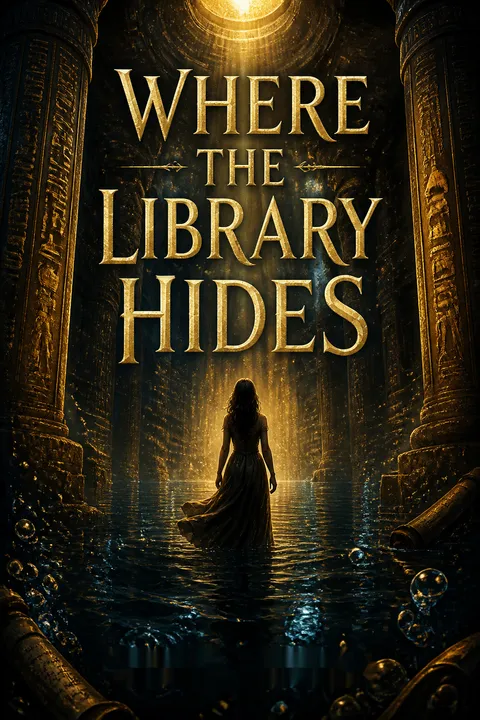


Plot Summary
Prologue
After Elvira’s murder, Inez is trying to absorb Whit’s startling proposal while preparing to leave Egypt. He wants her to marry him, but grief and suspicion make it hard to trust the offer, even though she loves him.
Marriage could keep her in the country, free her from her uncle’s guardianship, and let her search for her missing father and confront her mother. Whit leaves before she answers. The story then returns to the previous morning, when Inez still has to decide whether his proposal is an act of love, a practical escape, or both.
The proposal frames marriage as a choice made under pressure, not a simple romantic reward. Inez’s grief for Elvira and fear of being abandoned again make intimacy feel dangerous, while the legal independence marriage might provide gives the offer material stakes. Her hesitation is also a test of her own judgment: after her mother’s deceptions, she doubts her ability to distinguish love from manipulation. The book opens by placing that uncertainty beside her longing, establishing that Inez’s central struggle is not whether she can feel deeply, but whether she can choose without surrendering herself.
Egypt or the Wedding
At Shepheard’s Hotel in Cairo, Inez’s uncle, Ricardo, gives her a one-way train ticket to Alexandria and passage back to Argentina. He wants her away from Egypt after Elvira’s death, but Inez is determined to find her missing father and hold her mother accountable. Whit, Ricardo’s aide and Inez’s closest companion, has offered marriage as a way to keep her in Egypt and free her from guardianship.
On the hotel terrace, he explains that he is choosing her rather than the wealthy woman his parents expect him to marry. Inez accepts, still unsure how much of his decision is love and how much is necessity. They have three days to arrange a legal ceremony before her departure.
Inez’s choice is both emotional and juridical. Her inheritance, travel, and freedom are controlled by family structures that treat her future as something to administer, so marriage becomes a way to seize agency even as it binds her to another person. Whit’s proposal is appealing because it aligns with her own aims, but that practical fit also makes it difficult to know what he feels. The tension is not romance versus duty; it is the harder question of whether a choice made for survival can also be freely chosen.
Black Dress, No Rings
Whit secures a chaplain and persuades his former army friend Leo to witness the marriage, despite being thrown out of the British sporting club by officers who despise his discharge. He later gets the required license, and Inez reaches the Hanging Church in black, expecting for a time that Whit will not come.
They exchange vows without rings, then return to Shepheard’s and consummate the marriage by mutual choice. The next morning, they tell Ricardo, who punches Whit and threatens an annulment.
Before the argument can settle, a telegram arrives from Abdullah, Ricardo’s business partner, reporting disaster at their excavation on Philae. Ricardo and Whit leave at once. Inez stays behind, but Whit secretly asks her to search Ricardo’s room for clues about her mother.
The ceremony turns a plan into a legal and intimate fact, but its rushed, improvised form refuses the fantasy of a perfect beginning. Inez chooses the marriage while grieving the wedding she once imagined, and her vows insist on mutual respect rather than obedience. The argument with Ricardo exposes how little protection a private decision offers from family authority. Then the telegram redirects the story outward: the marriage may give Inez independence, but it immediately binds her to the consequences of other people’s dangerous work.
Philae Without Its Dead
At Philae, Whit and the injured Ricardo find the excavation camp ransacked, its workers gone and blood staining the sand. Abdullah, battered and exhausted, explains that Charles Fincastle, the hired weapons expert, attacked the camp and stole Cleopatra’s mummy, artifacts, and every roll of parchment.
Abdullah collapses, and Whit carries both injured men away for care. Ricardo grieves that the attackers may have taken the Chrysopoeia of Cleopatra, a legendary sheet said to explain how to make the philosopher’s stone.
Whit admits he had searched for the sheet before the raid but never found it. Back in Cairo, Inez discovers her mother’s hidden journal among Ricardo’s belongings. The entries reveal that Lourdes had studied Cleopatra’s history long before the excavation.
The desecrated camp converts archaeological discovery into an immediate human and ethical crisis. The missing objects are not simply valuables: their removal erases the record Ricardo and Abdullah hoped to preserve, while the violence makes the costs visible in injured bodies and abandoned workers. Whit’s admission that he was already hunting the Chrysopoeia complicates his role before Inez knows why he wants it. Meanwhile, the journal makes Lourdes’s betrayal feel planned across years, linking private family history to the public theft of Egypt’s past.
Another Daughter Arrives
Isadora Fincastle arrives at Inez’s cramped hotel room hungry, exhausted, and frightened. She says her father led the attack on Philae and that he had locked her in the temple after she refused to help him. Then she reveals that Lourdes is her mother too, the secret of a long affair between Lourdes and Charles Fincastle. Isadora had only recently learned that Inez existed.
Inez welcomes her, despite Whit’s immediate suspicion. Together, the women compare what they know of Lourdes, while the journal’s old sketches and references to Cleopatra’s ancestry support Whit’s theory that Lourdes has long sought the Chrysopoeia. Isadora, who wants to find her father before he is killed or imprisoned, agrees to help Inez trace their mother.
The revelation offers Inez a new family connection at the exact moment she is mourning the one she has lost. That makes her welcome both generous and psychologically charged: she is not only responding to Isadora, but reaching for the belonging that Elvira’s death has torn away. Whit’s suspicion is not baseless, yet it also exposes his habit of treating uncertainty as evidence of danger. The sisters’ shared mother does not make them alike in every way, but it gives Inez a chance to build kinship through chosen loyalty rather than inherited obligation.
Every Shilling Gone
Whit’s older brother, Porter, arrives in Cairo with news that their parents’ debts have put Whit’s younger sister, Arabella, at risk of being married to an elderly man. Whit has already sent Inez’s entire inheritance to England to rescue her. Inez learns this at the bank and confronts him in the street; he confirms the transfer and says he could not risk asking her because she might have seen him as a fortune hunter.
She is devastated less by the lost money than by the marriage that now feels like a deception. She refuses divorce, which would return her to Ricardo’s guardianship, but agrees to work with Whit on conditions: no more lies, no leaving her behind, no kisses, and a divorce when their search ends.
Whit’s act is morally intelligible and relationally catastrophic. He protects Arabella from a coercive marriage by exercising the same legal power over Inez that she had married to escape. His motive does not erase the breach; it sharpens it, because he assumes he knows what she would choose and denies her the chance to choose it. Inez’s conditions are an attempt to keep practical cooperation from being mistaken for restored trust. She can understand his sacrifice without accepting the cost he imposed on her.
The Gate Changes Address
Inez and Isadora learn that the black-market auction known as Tradesman’s Gate moves between locations, and Farida, Abdullah’s photographer granddaughter, offers to help them document it. Her camera can photograph through certain stone walls, while Lourdes’s magic-touched scarf can shrink the device for concealment.
Before they can act, Inez’s aunt Lorena and cousin Amaranta arrive to mourn Elvira. Soon after, Egypt’s antiquities director, Gaston Maspero, arrests Ricardo and Abdullah for failing to report Cleopatra’s tomb and losing its contents.
The group decides the auction may reveal where the stolen objects are moving. Isadora obtains its next location and time through one of her father’s contacts. With Ricardo and Abdullah imprisoned, finding Lourdes becomes the only credible path to proving who robbed the site.
The investigation becomes collective precisely when Inez’s private resources have collapsed. Farida contributes a tool, Isadora a contact, and Lorena and Amaranta bring the grief that Inez had been carrying mostly alone. The arrest also exposes a political contradiction: Ricardo and Abdullah’s secrecy has made them vulnerable to official blame, even though someone else violently stripped the site. The plot’s alliances are therefore pragmatic but emotionally consequential. Each person joins not because trust is complete, but because their different kinds of knowledge may prevent a false account from becoming the official one.
Bidding on the Asp
At the ruined government building hosting the auction, three armed men attack Inez, Isadora, and Farida before Whit arrives and knocks them down. Inside, Farida photographs the masked buyers while Inez recognizes a blue asp statuette from her drawings of Cleopatra’s tomb. She bids an extravagant sum to attract attention, while Whit disguises himself as an auction worker and takes the statue to learn where its payment will be sent.
The founder summons Inez, who recognizes him as Basil Sterling, an antiquities agent she has encountered before. Sterling returns the golden ring her father had sent her, then lets her leave. Whit has secured an address in Alexandria, and Inez believes Lourdes may be tracking the payment there.
Inez uses the auction’s own appetite for spectacle against it: the bid is not a purchase she can afford, but a deliberate signal that forces the market to notice her. Whit’s theft of the asp mirrors the theft they are trying to expose, though he uses it to gather evidence rather than profit. Sterling’s appearance brings the hidden network into focus without making it transparent. The returned ring is a personal object and a clue, but Inez does not yet understand that its magic connects her to a much larger history.
Alexandria’s Blank Account
On the train to Alexandria, Inez copies an image from her mother’s journal: a three-headed dog that may mark an ancient site. At a bank near the address from the auction, she pretends to be Lourdes Fincastle and asks to update an account. The clerk refuses to reveal the file without her husband, but Whit knocks him unconscious and searches the records.
They leave with a residential address. Outside, they see Lourdes approaching the bank, then retreating after a warning whistle. Whit suspects Isadora alerted her; Inez believes Charles Fincastle is a likelier source. At the residence, they find Lourdes’s home empty, but its crowded shelves and papers suggest she has been gathering magic-touched objects and studying Alexandria’s past.
Inez’s performance as Lourdes is an experiment in understanding her mother from the inside. She imitates the name and social confidence, but the bank’s gendered rules expose the limits of that borrowed authority. Whit responds to obstruction with force, a method that gets them access but also increases their risk. Their disagreement over the warning whistle reveals how damaged trust distorts evidence: Whit reads Isadora through suspicion, while Inez tries to protect the relationship she has only just found.
Sterling Takes the House
At Lourdes’s empty residence, Inez, Whit, and Isadora search the rooms for evidence. Basil Sterling arrives with armed men, confiscates the papers and enchanted objects, and pressures Inez to join him. He gives her a magic-linked calling card, which she refuses to use.
Sterling’s men leave with the household’s contents, but Whit secretly follows them to their headquarters in Turkish Town. There he watches Sterling’s associate Graves murder a young courier, then later steals a box of Lourdes’s papers and returns to the hotel.
Farida’s telegram reports that Ricardo and Abdullah are being abused in prison, though Kareem has smuggled them food and water. Her photographs and Lourdes’s maps offer a new route: Serapis, Cerberus, and the lighthouse.
Sterling’s power rests on controlling both objects and information. By stripping the house, he turns the investigators’ own evidence into his property, while the murdered courier shows what happens when someone fails to serve his network. Whit’s decision to shadow him produces a partial counter-move, but not a clean victory. The prison telegram shifts urgency from abstract pursuit to bodily harm: Ricardo and Abdullah are suffering now. Farida’s images and the maps matter because they offer a way to investigate without relying on Sterling’s account.
Maps Beneath Alexandria
Farida’s pictures reveal details of the stolen collection and Lourdes’s earlier work. In her papers, Inez and Whit find maps of ancient Alexandria, drawings of the lighthouse, and a three-headed dog marked near the old Serapeum. Inez’s golden ring gives her visions of Cleopatra searching for a scroll and moving secretly through the city.
Abdullah, reached through Lorena’s enchanted teacup, explains that Alexandria once had underground canals connected to cisterns and that a hidden library may have been linked to the Serapeum. The clues draw the group to the lighthouse, where a carving of Serapis and Cerberus matches the maps. Inez’s visions suggest Cleopatra carried the Chrysopoeia through the underground waterways.
The city’s hidden infrastructure becomes a model for the novel’s method of discovery: history is not absent, but buried beneath later streets, official narratives, and damaged records. Inez’s visions make her a witness to the past, yet they do not hand her a complete answer; she needs Abdullah’s scholarship and Farida’s images to interpret them. The collaboration matters because no single person can read the evidence alone. The secret library is both a physical destination and a challenge to the assumption that what has been lost is truly gone.
Isadora Turns Her Gun
At the lighthouse, Inez sees Cleopatra moving through underground passages and realizes the memories connect to Alexandria’s cisterns. Isadora suddenly shoots at Inez and Whit, revealing that she had been helping Lourdes protect their mother’s plans. She says she wants Inez out of the way and attacks her on the crumbling stairs. Whit is shot while shielding Inez.
Inez knocks Isadora’s gun away, but the weakened stone gives way; Isadora falls beneath the collapsing steps. Inez gets Whit to a boat and rows him back to Alexandria. A physician removes the bullet but warns that infection may kill him. Inez remembers a magic-touched ink bottle from Lourdes’s house and pours it into Whit’s wound, helping his body heal.
Isadora’s betrayal strikes at Inez’s deepest vulnerability: the hope that a sister could replace some of what she has lost. Her violence is not merely a twist but a revelation of how badly the desire for family can be exploited. Whit’s injury changes the balance between them; Inez must act without the dependable protector she has relied on. The healing ink turns an ordinary object into life-saving care, but it cannot undo the loss or restore trust. Survival here is physical and emotional, neither simple nor complete.
Love, Ink, and Cisterns
As Whit fights his fever, Inez tends him through the night and uses the magic-touched ink to close his wound. He tells her he loves her and explains that he first pursued the Chrysopoeia to escape the marriage his family arranged, but now wants it to repair the future he damaged with her. Inez forgives him and destroys Sterling’s calling card rather than seek the broker’s help.
Once Whit is strong enough to sit up, they contact Abdullah through Lorena’s enchanted teacup. Abdullah identifies the underground waterways as Alexandria’s ancient cistern network and recalls the legend of a secret library connected to the Serapeum. The clue gives them a new route toward Lourdes and the scroll.
The reconciliation is earned through vulnerability and action, not through the mere fact that Whit nearly dies. His confession gives motive to the theft but does not erase the harm; Inez chooses to forgive while retaining the memory of what he did. Her decision to destroy the card is a rejection of an easy alliance with coercive power. Abdullah’s knowledge then makes intimacy productive rather than isolating: the couple’s renewed trust becomes part of a larger network of shared expertise.
The Father Behind Sterling
Before Inez can act on Abdullah’s discovery, Graves corners her at the hotel and forces her into Sterling’s carriage at gunpoint. Whit sees her leave but cannot stop the abduction. At Sterling’s office, the broker removes his disguise and reveals himself as Cayo Olivera, Inez’s supposedly missing father.
He admits that he built Tradesman’s Gate, first as a response to corruption in the antiquities trade and later as a criminal empire. He says he sent Inez to Egypt to hurt Lourdes and test whether she could become his heir. He is also unsure whether Inez is biologically his daughter. Cayo uses the Chrysopoeia’s location as leverage, then takes her into the underground cisterns toward the hidden library.
The revelation destroys the distinction Inez has relied on between a loving father and a criminal stranger. Cayo’s disguise is literal, but the deeper disguise is the moral story he tells about turning corruption into a business of his own. His uncertainty about Inez’s parentage weaponizes her oldest fear of not belonging. Yet the inheritance he offers is not simply wealth; it is a demand that she accept his values and continue his empire.
Library Under the Nile
Cayo leads Inez across dangerous walkways above the cisterns and into the hidden library beneath the Serapeum. Whit has secretly joined the armed group, but stays close without exposing himself until they reach the entrance. Cayo takes Inez hostage while his men overwhelm the library’s few occupants. Lourdes and Charles Fincastle are captured with their weapons and explosives.
When Fincastle lunges for a gun, he kills Graves; Lourdes then shoots Fincastle as he threatens Inez. Cayo demands that Inez choose between her parents. She refuses their war and chooses herself. An explosion shakes the library, and a vision of Cleopatra shows Inez where the Chrysopoeia is hidden, inside a protected inner chamber.
The secret library gathers the book’s competing forms of inheritance into one endangered place: royal knowledge, archaeological labor, criminal appetite, and family history. Cayo and Lourdes both treat Inez as leverage, while she rejects the role of prize in their feud. Her choice of herself is not withdrawal from responsibility; it is refusal to let either parent define what she owes. Cleopatra’s vision offers a route to the scroll, but the collapsing library makes knowledge inseparable from the danger of possessing it.
Fire Carries Them Out
Inez finds the Chrysopoeia in Cleopatra’s hidden chamber and gives the scroll and golden ring to Cayo in exchange for Lourdes’s release. Before the parents can escape the burning library together, Lourdes triggers an enchanted charm and attacks Cayo. Whit leads Inez through a second exit into the underground waterway; they jump into the current as the library collapses.
In the harbor, they find Lourdes alive and bring her ashore. Farida’s photographs, including an image of Lourdes holding a Tradesman’s Gate invitation, give Maspero evidence to arrest her. As Lourdes is taken away, she secretly passes the Chrysopoeia to Whit. Cayo does not emerge from the collapse and is presumed lost.
Inez’s bargain prioritizes a human life over the treasure, even though the scroll could have answered the financial and historical questions driving the search. Lourdes’s survival does not absolve her, and her arrest prevents rescue from becoming reconciliation by default. The photographs matter because they convert private suspicion into evidence that can be used publicly. Cayo’s apparent death leaves Inez with grief rather than closure, but his final absence also ends his immediate claim over her future.
Egypt Becomes Their Home
Two weeks later, the family gathers at Shepheard’s for a farewell dinner. Maspero reports that Lourdes has revealed where Cleopatra and the stolen cache are hidden; she is placed under house arrest, while Ricardo and Abdullah are released and cleared of the theft. Inez announces that she and Whit will remain in Egypt and support the excavations.
Lourdes’s earlier attempt to send her home has failed, but Inez’s decision is no longer an escape from guardianship: it is a life she has chosen. Whit keeps the Chrysopoeia and studies its instructions. Later, he uses its alchemical process to turn lead into gold. The couple begin their life together in Egypt, with their future no longer organized around flight or coercion.
The ending does not restore the old family, nor does it pretend that legal justice cures every injury. Lourdes remains confined, Cayo is absent, and Elvira cannot be returned. What changes is Inez’s relation to choice: she stays in Egypt because it has become her home, not because marriage is her only shield. Whit’s use of the Chrysopoeia shifts the scroll from a prize that divides people into knowledge he can practice responsibly. The future opens through shared work rather than inherited control.
Epilogue
The epilogue traces the lives that grow from Inez and Whit’s decision to stay in Egypt. They raise twins named Elvira and Porter, while Ricardo and Abdullah continue excavating and eventually discover more famous tombs. Farida opens a photography studio; Amaranta marries Ernesto, and her youngest daughter becomes an Egyptologist.
Arabella eventually runs away to Egypt for an adventure of her own. The book also records the later careers of Maspero and Sir Evelyn Baring, and the eventual destruction of Shepheard’s Hotel during Cairo’s political unrest.
The epilogue turns the novel’s losses into a family record without pretending that later happiness cancels them. Naming the twins Elvira and Porter lets memory remain active inside a new generation, while Farida’s photography and the excavation partnership extend the work of preserving what might otherwise disappear. The futures are not all identical: Arabella chooses her own adventure, and Amaranta’s daughter inherits a vocation she once might have resisted. By including the hotel’s eventual destruction and the colonial officials’ legacies, the book places private lives inside a history that continues to change around them.
Analysis
The novel’s deepest conflict concerns who gets to claim the past and who gets to determine a young woman’s future. Cleopatra’s tomb is treated by the antiquities market as wealth, by Ricardo and Abdullah as a discovery to document, and by Inez as a source of history that deserves to survive its owners. Those positions are not morally equivalent, but the book complicates official authority: Maspero’s department can arrest the wrong people, while British power may decide what counts as justice. Preservation is therefore not automatically ethical simply because it is legal.
Inez’s family story gives that political conflict its emotional shape. Her mother and father both present control as protection, and each tries to make Inez a tool in a private struggle. Whit repeats the pattern when he transfers her inheritance without asking, despite believing he is saving Arabella. His act is loving in motive and coercive in form. The novel’s romance becomes credible only when Inez can name the injury, establish conditions, and decide whether to forgive. Love is not proven by sacrifice alone; it also requires letting the other person choose.
The magical objects embody this tension between knowledge and possession. The ring grants access to Cleopatra’s memories, but interpretation depends on other people’s expertise. The scarf and camera help women move through systems that would restrict them, turning small, domestic objects into tools of agency. The hidden library extends the same idea into architecture: knowledge survives by being protected, but secrecy can also hide exploitation. By the end, Inez does not inherit a clean family or an uncontested history. She chooses Egypt, shared archaeological work, and a future with Whit while refusing to let either parent dictate what that future means.
Review Summary
Where the Library Hides receives mixed reviews (3.81/5). Many readers praised the Egyptian setting, adventure elements, and romance between Inez and Whit, finding it an entertaining conclusion to the duology. However, significant criticisms emerged: the protagonist Inez is frequently described as naive and impulsive despite being portrayed as intelligent; the titular library appears too late in the story; pacing issues and predictable plot twists disappointed many; Whit's betrayal regarding Inez's finances was poorly handled; and the writing felt overly simplistic. Some enjoyed the dramatic, telenovela-style storytelling, while others found it frustrating and tonally inconsistent.
People Also Read


Characters
Inez Olivera
Restless Egyptian antiquarianInez is a curious, impulsive young woman from Buenos Aires who comes to Egypt seeking answers about her absent parents. She sketches artifacts, follows questions wherever they lead, and often acts before she has measured the danger. Her longing for family makes her generous, but also vulnerable to people who present control as protection. Beneath her boldness is a sharp observer who learns to test what she is told and to trust her own judgment. Egypt draws out a more self-directed version of Inez: one who wants meaningful work, chosen relationships, and a life not arranged by someone else.
Whitford Hayes
Cynical loyalistWhit is Ricardo’s aide-de-camp, a former soldier with a quick wit, a talent for strategy, and a habit of hiding pain behind cynicism. He is deeply loyal to the few people he allows close, especially his siblings, but tends to make decisions for others when he believes time is short. His resourcefulness serves Inez’s investigations, while his secrecy repeatedly damages their trust. Whit’s central conflict is between the self-protective distance he has learned to maintain and the genuine care that makes him risk himself for others. He wants to be honorable, even when he struggles to believe he is.
Lourdes Olivera
Absent, magnetic motherLourdes is Inez’s mother, a cultivated and resourceful woman whose long absences have shaped Inez’s childhood. She enjoys beauty, travel, and independence, and has built a life beyond the limits expected of a respectable wife and mother. Her charm can soften suspicion, while her strategic mind keeps her several steps ahead of those around her. Inez’s struggle to understand Lourdes is also a struggle to separate love from approval: she wants the mother she remembers, but must reckon with a woman whose choices have consequences for many people.
Cayo Olivera
Missing, book-loving fatherCayo is Inez’s father, an excavator and devoted reader whose letters and absence leave her searching for the truth about his fate. He shares her curiosity and love of stories, and Inez remembers him as patient and intellectually generous. His long periods away in Egypt helped define her childhood, making his attention especially precious to her. Because Inez has so little reliable information about what became of him, memory and longing shape her image of him as strongly as fact.
Isadora Fincastle
Composed young marksmanIsadora is Charles Fincastle’s daughter, a well-mannered young woman who is also capable with a pistol and accustomed to adapting to difficult situations. Her polished bearing can conceal exhaustion and private uncertainty. She wants to understand the adults who have shaped her life and to decide what responsibility she bears for their choices. Her relationship with Inez begins with an unusual mixture of caution and kinship, giving both women the possibility of a bond beyond the adults’ secrets.
Ricardo Marqués
Protective, stubborn guardianRicardo is Inez’s uncle and guardian, an excavator who works closely with Abdullah. He is blunt, suspicious, and inclined to treat danger as a reason to make decisions for Inez. His gruffness hides real affection and fear for her safety. Ricardo’s commitment to archaeology is bound to a desire to document discoveries carefully, even when his methods conflict with official rules. He respects competence, though he can be slow to recognize it in the people he loves.
Abdullah Salah
Patient excavation partnerAbdullah is Ricardo’s business partner and brother-in-law, a steady excavator whose knowledge of Egypt’s history and underground architecture proves invaluable. He is thoughtful where Ricardo is irascible, and his calm makes him a trusted source of practical and scholarly guidance. Abdullah cares deeply for his granddaughter, Farida, and values the preservation of discoveries as much as the excitement of finding them.
Farida Salah
Photographer with a magic cameraFarida is Abdullah’s granddaughter and an aspiring photographer. Observant and inventive, she uses her camera to document the excavation and looks for ways her images can help others. Her curiosity is paired with loyalty to her grandfather, but she is not simply a helper: she thinks independently and willingly takes risks when her evidence may matter. Photography gives Farida a way to turn careful attention into action.
Elvira Montenegro
Inez’s beloved cousinElvira is Inez’s favorite cousin and closest confidante, remembered for her mischief, storytelling, and instinct for seeing the best in Inez. She shares Inez’s appetite for adventure and refuses to be contained by the rules around her. Her absence shapes Inez’s grief and her determination to confront the people responsible for the family’s suffering.
Amaranta Montenegro
Severe, grieving cousinAmaranta is Inez’s less-favored cousin and Elvira’s sister. She is disciplined, sharp-tongued, and protective of her mother, often expressing emotion through control and criticism rather than open vulnerability. Her anger gives her a hard edge, but it is rooted in loyalty and grief. She expects Inez to take responsibility for the harm surrounding their family.
Tía Lorena
Grieving family anchorLorena is Inez’s aunt and the mother of Elvira and Amaranta. She values propriety and family bonds, yet her strong feelings frequently overcome her composure. Her grief makes her vulnerable, but she is also capable of offering practical help and unexpected generosity. She uses a collection of magic-touched objects with enthusiasm, even when their effects are inconvenient.
Porter Hayes
Practical older brotherPorter is Whit’s older brother, measured and pragmatic where Whit is impulsive. He arrives with urgent family news and understands how their parents’ debts threaten their younger sister. Porter is not demonstrative, but he carries responsibility seriously and expects Whit to face obligations he might rather avoid.
Arabella Hayes
Artistic younger sisterArabella is Whit’s younger sister, a watercolor artist with a gentle, lively presence. Her kindness eases tension around her, though she is not merely delicate or passive. Whit and Porter’s protectiveness reflects the narrow choices available to her within their family’s financial troubles. She values art, animals, and the freedom to shape her own future.
Charles Fincastle
Armed excavation guardCharles is Isadora’s father and a weapons expert hired to protect Ricardo and Abdullah’s excavation. He is forceful, suspicious, and used to commanding both people and situations. His professional competence makes him valuable to an expedition, but his intensity creates unease among the workers. Isadora’s complicated relationship with him shapes her understanding of trust and family.
Basil Sterling
Powerful antiquities agentSterling is an influential figure in Egypt’s antiquities world, with access to buyers, officials, and hired men. He is polished, calculating, and accustomed to treating information as leverage. His confidence rests on his ability to manipulate both institutions and individuals, making him a dangerous presence in Inez’s search. His interest in the stolen collection connects private family conflict to a much larger trade in historical objects.
Gaston Maspero
Director of antiquitiesMaspero directs Egypt’s antiquities administration and is responsible for enforcing the rules around archaeological discoveries. He is forceful and protective of his department’s authority, sometimes acting before he has the full story. His choices place the investigators in conflict with the official system, even as his role becomes important to the recovery of the stolen collection.
Sir Evelyn Baring
British consul generalBaring is the powerful British consul general in Egypt. His authority and political influence shape what officials can do, while his imperial assumptions make him an unreliable source of justice for the people around him.
Leo Lopez
Whit’s soldier friendLeo is Whit’s former military friend and a fellow soldier. His easy familiarity with Whit comes from a shared past marked by risk and loyalty. Though he can be sardonic and fond of drink, he is willing to help Whit when it matters.
Kareem Ali
Resourceful camp handKareem works as an assistant cook and field hand on the Philae excavation. Practical and quick-thinking, he finds ways to help the people he cares about, even when official channels fail them.
Henry Poole
Sociable army chaplainHenry is an army chaplain who enjoys the bustle of Shepheard’s bar more than Whit expects. His genial nature and willingness to help make him an unlikely participant in Whit and Inez’s hurried wedding.
Sallam Ahmed
Shepheard’s hotel managerSallam manages Shepheard’s Hotel and helps Inez navigate the practical arrangements of her stay. His calm service provides a steady counterpoint to the hotel’s crowded, shifting dramas.
Ernesto
Amaranta’s approved suitorErnesto is a young caballero favored by Inez’s aunt as a suitable match for Inez. He represents the settled life and conventional future that Inez was expected to accept.
Plot Devices
The Chrysopoeia of Cleopatra
A map to impossible wealthThe Chrysopoeia is a legendary sheet said to contain instructions for producing the philosopher’s stone and turning lead into gold. Its rumored presence in Cleopatra’s tomb attracts Whit, Lourdes, Sterling, and others for different reasons. The hunt links the excavation plot to Alexandria’s hidden history, while the final discovery makes the sheet more than a valuable artifact: it is knowledge that could either enable responsible study or extend someone’s power.
The Golden Ring
A doorway into Cleopatra’s memoriesThe ring connects Inez to memories of Cleopatra, giving her images of a scroll, the city, and secret routes beneath Alexandria. Its magic provides clues but not explanations, so Inez must combine the visions with maps, Farida’s photographs, and Abdullah’s scholarship. The ring also carries a link between its former and current owners, allowing another person to track it. Its power makes a personal keepsake both a source of knowledge and a vulnerability.
Lourdes’s Shrinking Scarf
A pocket-sized concealment spellLourdes’s patterned scarf can shrink certain objects, allowing Inez to hide artifacts and Farida to conceal her camera during the illegal auction. The scarf’s usefulness keeps Inez tied to her mother even when she wants to reject everything Lourdes represents. Its magic is practical rather than abstract: it lets the women carry evidence into spaces where an ordinary camera or object would attract attention.
Tradesman’s Gate
A market that never stays putTradesman’s Gate is an underground auction for stolen antiquities whose location changes from one event to the next. Its secrecy protects sellers and buyers, but its rules and payment trail give Inez and Whit a way to follow the stolen cache. The masked auction allows the investigators to move through a room full of criminals without knowing who they are, making observation and disguise as important as force.
Farida’s Magic Camera
Evidence beyond the wallFarida’s camera can reveal what lies behind certain stone, rock, and ancient masonry walls. She uses it to document auction attendees, storage rooms, and details that ordinary photographs could not capture. The camera gives the group a way to turn suspicion into usable evidence, especially when the authorities demand proof. Its limits matter too: masks, motion, and hidden identities still complicate what the images can establish.
Secrets of the Nile Series


Download PDF
Download EPUB
.epub digital book format is ideal for reading ebooks on phones, tablets, and e-readers.








