



Plot Summary
Two Thrones, One Trap
In Kesath, Regent Gaheris3 orders his son, Emperor Alaric,2 to bring Talasyn1 back to the Citadel after she helps stop the coming Voidfell. He intends to use the Lightweaver1 as leverage over Nenavar, and a captured sariman bird may help his Enchanters strip away her magic. Far away, Talasyn1 visits an ancient shrine, where the Light Sever shows her a memory of a court nurse leaving an infant at an orphanage on the Great Steppe.
Talasyn1 recognizes herself as that child, Alunsina,1 but cannot understand why she was taken so far from Nenavar. Border officer Yanme Rapat13 adds that her mother,11 Hanan,11 rejected Queen Urduja’s4 succession plans, deepening Talasyn’s1 suspicion that her family has kept crucial truths from her.
The opening sets private identity against public use. Gaheris sees Talasyn as a weapon and bargaining chip, while Talasyn’s first instinct is to recover a past that other people have controlled for her. The sariman establishes that even magic can be politically confiscated. Rapat’s warning complicates the idea of a rightful home: Nenavar may be Talasyn’s birthplace, but its royal family has never given her an uncomplicated claim to belonging.
A Pact Beneath the Treaty
Before sailing to Kesath for her coronation, Talasyn1 meets Ideth Vela,6 the exiled commander of the Sardovian resistance, and Surakwel Mantes,9 a Nenavarene lord who helps them move unseen.
Vela6 reports that the resistance is repairing captured vessels and seeking foreign allies, because Nenavar cannot openly break its treaty with Kesath yet. Talasyn1 agrees that the alliance must wait until after the Moonless Dark, when she and Alaric2 will attempt to stop the Voidfell.
Meanwhile, Alaric2 tells his closest friend, Sevraim,7 that Gaheris3 has a sariman and intends to use it against Talasyn.1 He asks Sevraim7 to keep the bird’s properties secret. Both spouses are heading toward the same crisis with divided loyalties, and neither knows how much the other is concealing.
The marriage treaty is designed to postpone war, not end it. Talasyn’s secret meeting makes her both a bridge between nations and a potential breach in the alliance. Alaric’s confidence in Sevraim offers a rare pocket of trust inside Gaheris’s regime, but his secrecy also repeats the habits that make political intimacy difficult. Each protagonist hopes to control the timing of betrayal, mistaking delay for safety.
The Citadel's Cold Welcome
Talasyn1 reaches the Citadel with Queen Urduja,4 her father Elagbi,5 and her lady-in-waiting Jie.8 Alaric2 greets her in battle armor, while his twin guards insult her Sardovian past until she insists they recognize her coming imperial rank.
Urduja4 notices that the delegation has been lodged in an isolated wing and warns Talasyn1 that Alaric’s2 court is withholding something. At the pre-coronation reception, Talasyn1 confronts Commodore Darius,15 a former Sardovian officer now serving Kesath.
His remarks make her fear that he suspects Vela6 survived and is organizing the resistance. Gaheris3 does not appear, and the gathering is conspicuously small. The ceremony proceeds under the pressure of old enmities, guarded hospitality, and the knowledge that neither court considers the marriage a final peace.
The Citadel turns hospitality into a security procedure. Its restricted quarters and carefully limited guest list reveal that the treaty has joined the rulers without making their states trust one another. Talasyn’s insistence on being addressed as an empress is a small act of political self-definition, but Darius’s presence shows how unstable identity becomes after defeat: former comrades can now occupy the enemy’s uniform.
The Chiton Falls
As Alaric2 crowns Talasyn,1 the Sardovian stormship Chiton appears over the Citadel and attacks with lightning cannons. The ceremony collapses into a battle. Talasyn1 runs toward her family, then tries to reach the rebels, including the young fighter Hiras,17 hoping to stop them from wasting their lives on a doomed assault.
Hiras17 instead calls her a traitor and turns his crossbow on her. When four attackers corner her, her Lightweave erupts beyond her control and kills them.
She then kills another rebel to stop him striking Alaric2 from behind, while Alaric2 spares Hiras17 when Talasyn1 begs him to. Gaheris3 summons a vast stampede of shadow chimeras that tears the Chiton apart. The surviving rebels are captured, and Talasyn1 is left alive but horrified by the lives she took.
The battle makes Talasyn’s divided allegiance bodily rather than theoretical. Her former comrades interpret her marriage as betrayal, while her new husband’s survival depends on her violence. The uncontrolled Lightweave shows that protective intent does not guarantee harmless consequences. Alaric’s decision to stop his weapon at her request offers a fragile counterexample to Gaheris’s rule, but the cost is borne by people neither spouse can save.
Wounds Behind the Gala
The surviving delegation asks to leave immediately, but Alaric2 insists that Talasyn1 attend the postponed coronation gala so the attack will not make Kesath and Nenavar appear divided. During the celebration, Talasyn1 learns that General Vim has been bragging about the rebels’ prison wing and its defenses.
Alaric2 is summoned away to Gaheris.3 The Regent3 blames him for failing to prevent the attack and lashes him with shadow magic until Alaric’s2 own power briefly surges against him. Later, Talasyn1 finds her husband2 bleeding in his rooms.
He admits that his father3 punished him, and she cleans and bandages his wounds, staying when he panics at the thought of being left alone. His vulnerability unsettles her more than the battle did, because it reveals the same childhood loneliness she recognizes in herself.
Gaheris treats pain as an instrument of rule, training his heir to associate suffering with competence and protection. Talasyn’s care interrupts that lesson without magically undoing it. Her compassion is not yet a political conversion, but it gives Alaric an experience his father has denied him: being injured without being judged as a failure. Their shared histories create intimacy while leaving the larger conflict intact.
A Refusal in the Mangroves
After returning to Nenavar, Talasyn1 reports the failed uprising to Vela6 in the hidden Sardovian settlement at the Storm God’s Eye. She offers to help free Hiras17 and the other captured rebels, having learned where they are held, but Vela6 refuses.
A prison break would reveal that the resistance commander is alive and risk the movement’s remaining ships and allies. Vela6 tells Talasyn1 that the dead and prisoners cannot be rescued without endangering Sardovia’s future.
Talasyn1 also explains that Alaric2 spared Hiras17 and was beaten by Gaheris3 for it. Vela6 reveals that she once saw Gaheris3 brutalize the young Alaric2 and understands the abuse, yet warns Talasyn1 not to mistake a moment of mercy for a reason to trust him. Talasyn1 leaves without a rescue plan.
Vela’s refusal forces Talasyn to confront the arithmetic of resistance: a commander may preserve a cause by abandoning individuals who deserve rescue. That logic resembles the imperial calculus Talasyn opposes, making her loyalty morally costly rather than pure. Vela’s childhood memory of Alaric complicates his image but does not erase his responsibility. Talasyn begins to distinguish understanding someone from being able to change them.
Refugees Reach Iantas
A month later, Alaric2 arrives in Nenavar and Talasyn1 diverts him from Iantas to a village devastated by an early Voidfell eruption. The magic has blackened crops, killed livestock, and left more than twenty villagers dead.
Talasyn1 promises the survivors shelter at Iantas, using the castle she received as dowry without waiting for Urduja’s4 approval. Alaric2 accepts the plan and helps carry animals and supplies aboard his own shallop. At the castle, the displaced families fill the previously lonely halls.
Talasyn1 and Alaric2 share a quiet moment after the work, then meet an ancient sea dragon that has come ashore to bask. When they touch its scales together, they feel their magic flow in a shared current, suggesting their powers can connect without either being erased.
The village crisis tests the treaty in material terms: food, shelter, transport, and grief matter more than ceremonial promises. Talasyn governs by acting before permission arrives; Alaric chooses fairness over the convenience of keeping the refugees elsewhere. The dragon’s shared current offers a physical image of cooperation that neither empire’s doctrine can explain. Their alliance becomes credible through labor, not declarations.
Hanan's Buried Story
While visiting the beach, Talasyn1 asks her father5 about her mother11 and the civil war. Elagbi5 explains that his brother Sintan12 manipulated Hanan11 by appealing to her sympathy for the Lightweavers on the Continent. Hanan11 was not a court schemer, and Sintan12 used her actions as a pretext to challenge Urduja.4
Talasyn1 suspects that the nursemaid Indusa, who carried her away as an infant, followed Sintan’s12 cause. Elagbi5 cannot prove it, and Urduja4 has refused to reopen the past. Nearby, a dragon returns to shore for the first time since the civil war.
Alaric2 admits that Commodore Mathire, not he, ordered the earlier attack on a Nenavarene dragon. Talasyn1 lets go of some anger and guides Alaric’s2 hand to the creature, where their aethermancy again seems to answer one another.
Talasyn’s parentage is not a simple restoration of royal identity. Hanan’s story suggests that love and political manipulation can occupy the same act, while Elagbi’s grief preserves a family history Urduja would prefer to erase. The dragon’s return links damaged political memory to the natural world. Talasyn’s choice to hear Alaric’s account of the attack is not forgiveness; it is a deliberate effort to judge responsibility accurately.
The Shield Burns
During an eclipse, Talasyn1 and Alaric2 test an amplified shield made from Lightweave and Shadowgate. It forms only when they work together, but the modified aether cores destabilize after half an hour.
Talasyn1 overheats while Alaric2 turns icy cold; their touch restores them, alarming the Enchanters who designed the device. Later, Alaric2 and Sevraim7 attack Talasyn’s1 shield in training, and an accidental strike cuts Alaric’s2 cheek. Neither can hide how disturbed they are by hurting the other.
Talasyn1 then leaves for the Belian shrine without warning him, while Alaric,2 stung by her departure and desperate to commune with a Shadow Sever, travels alone to the storm-exposed island of Chal. Their magical connection has become both a defense and a new danger.
The experiment makes intimacy a physical risk: their powers regulate one another, yet amplification turns that dependence into injury. The same problem appears in their training, where familiar combat moves now carry emotional consequences. Talasyn’s flight and Alaric’s solitary journey are parallel defenses against vulnerability. Each treats distance as control, though both are moving toward a crisis that will require trust rather than retreat.
The Sever Shows Hanan
At Belian, the Light Sever gives Talasyn1 a fuller memory of Hanan11 and Sintan.12 Hanan11 asks her brother to protect the infant Alunsina1 if anything happens to her, while refusing to have her daughter named heir before she can choose for herself. In a later memory, Hanan,11 gravely ill during the civil war, holds her child and promises they will find one another again.
The revelation gives Talasyn1 no certainty about why Indusa took her to the Great Steppe, but it confirms that her mother11 intended her to survive and retain her own choice. A message from Jie8 then reports that Alaric2 has gone alone to Chal as a monsoon approaches. Talasyn1 abandons her shrine camp and races across the islands to reach him before the storm cuts him off.
The memory answers an emotional question more than a logistical one. Hanan’s final intent was not to secure a throne but to leave her daughter a future not wholly chosen by the court. That inheritance gives Talasyn a model of maternal love different from dynastic possession. The urgent message immediately tests whether she can honor that freedom in her own life, as she risks herself to reach Alaric.
The Mouth of Night
Talasyn1 reaches Chal as the monsoon breaks, rappels down a cliff with a light-woven grapnel, and searches the flooded cave around the Shadow Sever. A surge sweeps her into an underground lake, where Alaric2 hauls her out. Rising water traps them in a grotto, and Alaric2 gives her dry clothes and food.
He also tells her that Khaede,10 Talasyn’s1 missing comrade, escaped after the battle of Lasthaven and may still be alive with her child. Relief overwhelms Talasyn.1 When the storm recedes, Alaric’s2 jealousy and fear of being abandoned surface in their argument. He admits he wants their next kiss to be remembered. Talasyn1 kisses him willingly, and the quarrel gives way to a new intimacy neither can dismiss as an accident.
The cave strips away courtly roles and leaves the pair with immediate needs: warmth, food, and a way out. Khaede’s uncertain survival reopens Talasyn’s capacity for hope, while Alaric’s confession exposes how strongly he experiences her departures. Their kiss is a choice made after conflict, not a byproduct of a ceremony or injury. That distinction deepens the bond and raises the cost of the secrets they still keep.
The Bed Between Them
Back at Iantas, Talasyn1 and Alaric2 begin a physical relationship, then struggle to keep it separate from their political duties. Talasyn’s father5 catches them nearly kissing in the library and warns her that the coming war will demand a choice.
Later, Alaric2 drinks rum with Elagbi5 and reveals that he refused to flee with his mother when she escaped Kesath, believing duty would make her stay. Talasyn1 tells him that drunken authority figures at her childhood orphanage taught her to fear sudden movements.
Their confessions explain why abandonment and violence unsettle them so deeply. Before Alaric2 returns to Kesath, they continue their affair, but neither promises a future. Talasyn1 secretly writes to Vela6 and asks the resistance to spare Alaric2 if it defeats the Night Empire.
Their intimacy does not dissolve their political conflict; it gives each person a more precise understanding of what the other has survived. Alaric’s obedience failed to keep his mother, while Talasyn’s early abuse has made ordinary gestures carry danger. Elagbi’s warning recognizes that affection can alter judgment, but Talasyn’s private condition to Vela shows her trying to protect a life without abandoning Sardovia. Care becomes an act of political dissent.
A Shield That Leaves Scars
Before Alaric’s2 departure, the final trial of the amplifiers holds the combined shield for a full hour against repeated void blasts. Near the end, light and shadow burn and freeze the couple’s arms, but Talasyn1 refuses to stop before they know whether the defense can last.
Their blisters fade, though the experiment has altered their magical connection. Alaric2 returns to Kesath to organize evacuations and challenge Gaheris3 over villages barred from imperial ships. He also persuades his father3 to let him care for the weakened sariman, removing it from repeated blood extraction.
During Alaric’s2 month away, Talasyn1 visits Vela6 and argues that killing the emperor2 after he saves the world would invite another war. She makes his survival a condition of her cooperation, then waits for him to return.
The trial reframes courage as informed persistence: Talasyn continues not because the danger is unreal, but because the test is necessary to protect everyone. The scars record a cost that victory cannot simply erase. Meanwhile, both protagonists resist Gaheris in limited ways, Alaric through evacuation and care for the bird, Talasyn through her insistence that a postwar peace must include his life. Neither has yet escaped the systems they oppose.
Bakun Wakes Beneath Aktamasok
On the sevenfold eclipse, Talasyn1 and Alaric2 raise the amplified sphere around Aktamasok as the Voidfell erupts from its crater. They hold back its force for an hour, though a fragment scars Alaric’s2 face and the strain marks Talasyn’s1 arm.
Then the magic withdraws before the eclipse ends. A colossal white dragon, Bakun the World-Eater, rises from the volcano and attacks the smaller dragons and their ship. Talasyn1 recognizes an ancestral memory of the first Zahiya-lachis, Iyaram, riding the creature before her death.
Rather than let Alaric2 attack, she approaches Bakun and urges it to return to sleep. The amplifiers break as it takes flight, but Talasyn’s1 words calm its grief. Alaric2 pulls her from its horn as Bakun descends into the crater, and the moons return.
The apparent catastrophe is not a conventional monster to defeat. Bakun’s violence carries grief across a thousand years, and Talasyn’s ancestral memories let her recognize the loss beneath the threat. She risks trusting a creature that could destroy the world, while Alaric chooses to follow her rather than control her. Their success depends on joining force with interpretation, and on treating the Voidfell as a symptom of unresolved history.
The Masquerade After Midnight
After the Voidfell recedes, Talasyn1 and Alaric2 return to Iantas scarred but alive. At council, the Enchanter Ishan14 warns that their amplified magic may have permanently linked their bloodlines; the court discusses producing heirs to preserve the ability to stop a future Dead Season.
Talasyn1 and Alaric2 agree to wait until the Continent is stable. At a masquerade celebrating survival, Alaric2 grows jealous as Talasyn1 dances with other nobles, especially Surakwel.9 He admits his jealousy, apologizes, and they reconcile in private.
When they return to the party, Talasyn1 receives public support from nobles who had opposed the throne. The celebration briefly suggests that their marriage can be more than a treaty, even as Talasyn1 knows she has promised Vela6 that the resistance will still act.
The court tries to convert survival into dynastic continuity, turning a dangerous magical experiment into a question of future heirs. Talasyn’s poised response shows how quickly she has learned to manage public scrutiny, even when her private loyalties remain divided. Alaric’s jealousy is not simply romantic insecurity: he fears losing a person who has become a source of safety. Their reconciliation matters, but it does not undo Talasyn’s political promise.
The Butterfly Goes Dark
During the masquerade, Kesathese legionnaires Sevraim7 and Ileis arrive with news that Sardovian rebels have broken the Citadel prisoners out during the Moonless Dark. Before Alaric2 can leave, ceramic explosives shatter Iantas’s ballroom windows.
Armed attackers enter carrying void muskets, while sariman cages amplified around the room suppress aethermancy. Talasyn1 hides Jie8 and several noblewomen, then fights with a stolen musket beside Alaric.2 Her guards evacuate Elagbi5 and other guests, but Rajan Wempuq is killed.
Talasyn1 follows the grieving Oryal16 into a hallway, where the young noblewoman shocks her with lightning and injects a mixture of sariman blood and rain magic. The Lightweave drains away as Talasyn1 collapses. The novel ends with her unconscious and powerless, while Alaric2 remains in the battle.
The attack turns the celebration’s political symbolism inside out: the court that survived a cosmic threat is vulnerable to a conspiracy within its own walls. Talasyn’s magic, once the basis of her authority, can be removed through technology and intimate deception. Her instinct to comfort Oryal exposes the ethical risk of kindness in a war where trust is weaponized. The ending leaves both the marriage and the alliance in immediate danger.
Analysis
A Monsoon Rising treats political marriage as a structure that can delay violence without healing its causes. Talasyn1 and Alaric2 begin by believing that each can use the other while protecting their own people. Their growing intimacy does not erase that calculation; instead, it makes the consequences of betrayal more personal. Their central conflict is therefore not whether they feel affection, but whether affection can survive the systems that have taught them to equate safety with domination.
The novel’s magic gives this problem a physical form. Light and shadow can combine into a shield, but amplification makes the bodies using it burn and freeze. Cooperation is not presented as effortless harmony. It requires attention, shared technique, and a willingness to bear costs that neither side fully understands. Talasyn’s1 decision to speak to Bakun extends this logic: the greatest threat is not defeated by greater force, but by recognizing grief that has become destructive.
Memory also functions as a political resource. Hanan’s11 story complicates royal inheritance, while Talasyn’s1 memories help her see Bakun as more than a weapon. Against this, Gaheris3 treats history as proof that violence must continue, and Vela6 treats sacrifice as a price resistance cannot avoid. The book does not make either position trivial. It asks what kind of future can emerge when leaders refuse to distinguish protection from control, or victory from justice.
The ending sharpens that question rather than settling it. The Moonless Dark is survived, but a new attack removes Talasyn’s1 magic and leaves her fate uncertain. A cosmic disaster has passed; political violence has not. The final reversal insists that saving the world is only one part of peace. The people who survive must still decide who gets power, whose testimony is trusted, and whether old wounds will be used to build another war.
Review Summary
People Also Read



Characters
Talasyn, also Alunsina
Exiled Lightweaver heirBorn Alunsina Ivralis, Talasyn grows up poor and orphaned on the Great Steppe before discovering her Nenavarene royal identity and her Lightweaving power. Her training as a Sardovian soldier makes her resourceful, suspicious, and quick to act, while years of court life teach her to read motive and manage appearances. She wants to protect the people caught between empires, but her marriage to Alaric2 forces her to confront the difference between caring for an enemy and trusting him. Her deepest struggle is not simply choosing a nation. It is deciding whether she can make moral choices for herself when family, rebellion, and royalty all claim authority over her.
Alaric Ossinast
Weapon-shaped emperorAlaric is the Night Emperor of Kesath and commander of the Shadowforged Legion. He has been trained to treat power as the only reliable defense for his people, and his restraint often conceals fear, loneliness, and a fierce sense of duty. His relationship with his father3 has shaped him into a disciplined ruler who struggles to distinguish loyalty from obedience. Talasyn1 challenges the assumptions that govern his decisions, while his friendship with Sevraim7 offers a rare space for candor. Alaric’s desire to protect Kesath is genuine, but the methods he inherits threaten the very future he hopes to build.
Gaheris
Regent of the Night EmpireGaheris is Alaric’s father2 and the former ruler whose shadow still governs Kesath. He believes the empire can survive only by striking first and controlling every possible threat, especially Lightweavers. His fear of vulnerability has hardened into paranoia, and he uses pain and secrecy to keep both his son and his officers obedient. Gaheris is not indifferent to Kesath’s safety; he is convinced that his methods are the price of it. That conviction makes him difficult to challenge, because every act of cruelty can be framed as necessary protection.
Urduja Silim
Dragon Queen of NenavarUrduja is Talasyn’s grandmother1 and the reigning Zahiya-lachis of Nenavar. A brilliant political strategist, she anticipates threats, controls information, and expects others to understand the costs of ruling. Her care for her people is expressed through competence and attention rather than warmth. Talasyn1 admires her ability to command a room but resists being treated as a piece on the board. Urduja’s long experience has taught her to place stability above sentiment, a principle that protects the Dominion while sometimes narrowing the choices available to her family.
Elagbi Silim
Talasyn's devoted fatherElagbi is Talasyn’s father1, a prince of Nenavar, and a gentler counterweight to Urduja’s4 courtly severity. He carries grief for his wife11 and brother12, as well as the memory of losing his infant daughter. His affection is open and physical, which gives Talasyn1 a kind of family tenderness she did not experience growing up. Elagbi can be politically perceptive, but he often prioritizes his daughter’s well-being over strategic calculation. His loyalty to Talasyn1 does not make him blind to danger; it makes him fear what she may have to endure.
Ideth Vela
Commander of the resistanceVela, known to her soldiers as the Amirante, leads the Sardovian resistance after the Night Empire’s conquest. She is disciplined, pragmatic, and accustomed to making decisions where every option carries a human cost. Her history with Talasyn1 is both protective and demanding: she gave the young soldier a place in the struggle and expects her to remain loyal to it. Vela understands that compassion can endanger a movement, yet her hard choices leave Talasyn1 questioning whether survival without mercy is enough to justify victory.
Sevraim
Alaric's irreverent confidantSevraim is Alaric’s2 longtime friend and a trusted Shadowforged officer. His humor needles Alaric2 out of silence, but it also conceals a soldier’s sharp awareness of danger and loyalty. Having grown up beside the emperor2, he understands the difference between Alaric’s2 public authority and private uncertainty. Sevraim offers companionship without demanding that Alaric2 perform strength every moment.
Jie
Talasyn's quick-witted attendantJie is Talasyn’s1 young lady-in-waiting and cousin, accompanying her from Nenavar’s court into the stark world of the Citadel. She is funny, perceptive, and more courageous than her sheltered upbringing initially suggests. Her loyalty appears in practical warnings and in the decision to remain with Talasyn1 during the crisis. Jie helps make the royal household feel like a family rather than a formal retinue.
Surakwel Mantes
Sardovian ally in NenavarSurakwel is a Nenavarene lord who sympathizes with the Sardovian cause and helps Talasyn1 meet Vela6. Proud, teasing, and politically engaged, he can be both a useful ally and a source of friction. His attachment to Daya Niamha Langsoune20 reveals a more vulnerable side, particularly when family obligations restrict what he can openly pursue.
Khaede
Missing Sardovian helmsmanKhaede is Talasyn’s1 friend and one of the most skilled helmsmen in the Sardovian forces. Her disappearance after Lasthaven leaves Talasyn1 with an unresolved fear, complicated by the knowledge that Khaede was carrying a child. For Talasyn1, Khaede represents the individual lives that wars reduce to rumors, casualty lists, and unanswered questions.
Hanan Ivralis
Talasyn's absent motherHanan was a Nenavarene court noble and Talasyn’s mother1. She disliked political maneuvering and wanted her daughter to have the freedom to choose her own future. Her connection to Sintan12 and the civil war places her between private loyalty and public conflict. Talasyn’s1 scattered memories of her become a source of identity, but also of grief for a relationship she was too young to remember clearly.
Sintan Silim
Prince behind the civil warSintan is Urduja’s4 elder son, Elagbi’s brother5, and Hanan’s brother11. Intelligent and persuasive, he uses political grievances to build support for his challenge to the Nenavarene throne. Elagbi5 remembers the protective older brother he once knew, making Sintan’s later ambition a personal wound as well as a national crisis.
Yanme Rapat
Keeper of Hanan's historyRapat is a Nenavarene border officer who once commanded the defenses of Eskaya. His military failure during the civil war cost him his former position, but he remains devoted to the Dragon Throne. As one of Hanan’s11 confidants, he gives Talasyn1 a rare account of her mother11 that is not filtered through her immediate family.
Ishan Vaikar
Inventor of the amplifiersIshan is an Ahimsan Enchanter who designs the devices that help Talasyn1 and Alaric2 combine their magic. Curious and inventive, she approaches danger as a problem to be studied, though her experiments sometimes reveal risks only after they have begun. Her work gives the protagonists a practical chance against the Voidfell while underscoring how little anyone understands the forces they are manipulating.
Commodore Darius
Officer with a Sardovian pastDarius once served among the Sardovians and now holds rank in Kesath’s military. His history with Talasyn1 and Vela6 makes his presence at the Citadel a reminder that wartime survival can carry people across enemy lines. He is controlled, observant, and difficult for Talasyn1 to read.
Oryal Wempuq
Welcoming Nenavarene nobleOryal is the daughter of Rajan Wempuq and one of the young Nenavarene nobles who approaches Talasyn1 with warmth. Soft-spoken and socially attentive, she belongs to a court where hospitality and political calculation often share the same polished surface. Her family ties connect her to the wider network of island rulers.
Hiras
Young Sardovian fighterHiras is a young Sardovian cadet whom Talasyn1 once saved during the war. He joins the attack on the Citadel believing Talasyn1 has abandoned their cause. His anger shows how little the resistance fighters know about the secret agreement behind her marriage.
Commodore Lisu
Ambitious Kesathese officerLisu is a shrewd member of Kesath’s High Command who questions Alaric’s2 judgment and pursues greater military authority. His polished manners make his ambition harder to challenge directly, and his presence reflects the pressure Alaric2 faces from officers who favor Gaheris’s3 harder rule.
Nalam Gao
Captain of the royal guardGao leads Talasyn’s1 Lachis-dalo, the Nenavarene royal guard. She is disciplined and protective, balancing personal concern for Talasyn1 with the demands of military duty. Her loyalty is tested whenever Talasyn1 orders her to protect others first.
Daya Niamha Langsoune
Courtly matchmaker and allyNiamha is a Nenavarene noblewoman who befriends Talasyn1 and offers frank advice about courtship, influence, and manners. Her connection with Surakwel9 is constrained by a family arrangement, giving her playful confidence an undercurrent of private frustration.
Plot Devices
Light and Shadow Severs
Magic's ancient anchor pointsLightweavers and Shadowforged draw power from different nexus points called Severs. Communing with a Sever can deepen an aethermancer’s abilities and reveal memory carried through aetherspace. Talasyn’s1 visits to the Light Sever help her develop new forms of defense and uncover fragments of her early life. Alaric’s2 journeys to the Shadow Sever serve a similar purpose for his magic. Because the Severs are fixed places, control of them also has strategic value, and their influence gives the protagonists a way to grow beyond the techniques their armies taught them.
Sariman Birds
Aethermancy's living countermeasureSarimans project fields that suppress aethermancy, making them effective safeguards against both Lightweavers and Shadowforged. Gaheris’s3 acquisition of one gives him a possible method for stripping Talasyn1 of her power, while the bird’s blood becomes part of the experimental amplifiers. The creature also exposes a conflict between military utility and living cost: repeated extractions weaken it, and Alaric2 eventually argues for its care. In the final attack, amplified sariman effects help leave Talasyn1 without her magic.
The Voidfell
Death spreading from AktamasokThe Voidfell is a deadly surge of amethyst magic that spreads outward from the crater at Aktamasok, killing living things and leaving land barren. Its increasing activity threatens both Nenavar and the Continent, forcing Talasyn1 and Alaric2 to cooperate despite their nations’ hostility. The novel gradually connects its recurring eruptions to an ancient source beneath the volcano. The threat creates the deadline around which the marriage treaty, the evacuations, and the resistance’s plans are organized.
The Eclipse Amplifiers
Two magics become one shieldIshan Vaikar’s14 configuration combines sariman blood, rain magic, and Tempestroad lightning to extend the range of Talasyn1 and Alaric’s2 joint aethermancy. When they stand together, Lightweave and Shadowgate form a protective sphere capable of holding back the Voidfell. The tests reveal that the shield can also overheat or freeze its wielders, damage their bodies, and intensify their magical connection. Its technical promise therefore arrives with unpredictable physical and political consequences.
Aether and Ancestral Memory
The past enters the presentTalasyn’s1 contact with the Light Sever brings memories into view, first as isolated images of her childhood and later as scenes involving Hanan11 and the Nenavarene civil war. During the final eclipse, the same capacity lets Talasyn1 recognize the grief beneath the World-Eater’s violence. Memory is not merely background information: it changes what she believes is possible in the present. It also creates a link among family history, magical inheritance, and the choices that may spare or endanger entire nations.
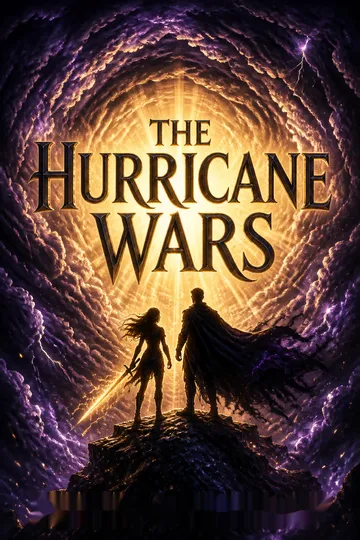
The Hurricane Wars Series


Download PDF
Download EPUB
.epub digital book format is ideal for reading ebooks on phones, tablets, and e-readers.








