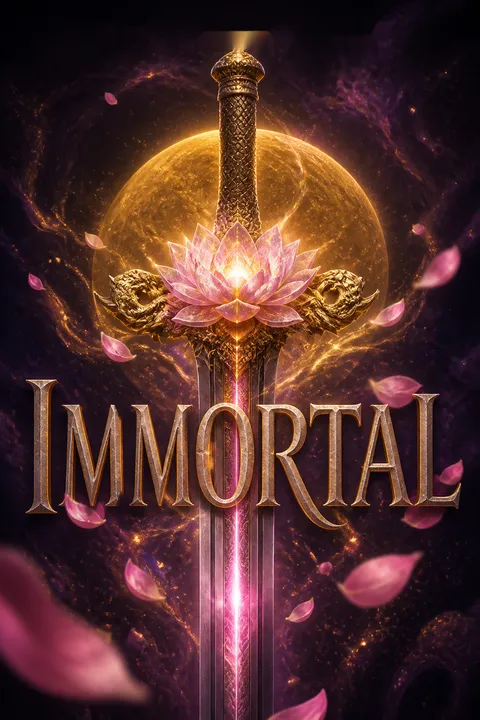


Plot Summary
Lotus in the Flames
Immortals set fire to the palace of Tianxia after its ruler, Zhao Likang, fails to surrender the Divine Pearl Lotus to Queen Caihong. His granddaughter Liyen, poisoned by the deadly waters of the Wangchuan River, can barely walk. Knowing the flower is her only cure, Zhao Likang gives it to her, though the magic leaves her temporarily unable to move or speak.
Aunt Shou and her son Chengyin carry Liyen toward safety while Zhao Likang stays behind to face the queen. He confesses that the lotus was stolen, then collapses from his failing heart and dies before the God of War can help him. As Liyen escapes, she inherits the throne, his seal, and his unfinished hope of freeing Tianxia.
The opening binds private survival to public cost. Liyen does not choose the theft, but she accepts its benefit, and the resulting guilt becomes inseparable from her new authority. Zhao Likang’s death is not a simple execution: his heart fails under fear and strain, leaving Liyen with grief that cannot be assigned to one hand alone. His sacrifice also gives her a political inheritance, not merely a crown. The conflict begins with a cruel asymmetry: immortals can impose consequences on mortals, while mortals must absorb them and decide what kind of ruler to become.
The God at the Shrine
As the lotus’s effects fade, Liyen discovers that her illness has lifted, but a new scar marks her chest. At Tianxia’s wall, Winged Devils attack her, Aunt Shou, and Chengyin. Liyen scatters incense and offerings at a shrine to draw the immortals’ attention, then stabs one creature with her dagger.
The God of War arrives in a blaze of fire and kills the attackers, though Liyen sees no reason to trust the warrior who burned her home. He heals her wounds, investigates the devils’ connection to the Wuxin, and orders Liyen to travel to Queen Caihong’s realm within a month to receive the mandate that will confirm her rule. Before leaving, he gives her an immortal sword for protection.
Liyen’s first encounter with Zhangwei is structured around conflicting evidence. He is both the power that terrorized her home and the force that saves her from a second attack. Her distrust is not an irrational obstacle to romance; it is a response to political reality, where rescue does not erase the violence that made rescue necessary. The immortal sword complicates her position further. It is protection from supernatural threats, but also a gift from the representative of the regime she intends to challenge. Gratitude becomes a debt she must decide how to use.
A Throne Behind Walls
In the weeks after Zhao Likang’s funeral, Liyen holds court despite ministers who doubt her health and try to dictate her marriage. She rebukes Minister Guo for promoting relatives as suitors, then spends the day hearing petitions to prove she can bear the throne’s work.
In her grandfather’s desk, she finds a history of Tianxia’s treaty: the immortals built the encircling wall with the kingdom’s Shield of Rivers and Mountains, promising to return it once the Wuxin were defeated. With Aunt Shou and Chengyin, Liyen decides to seek the shield rather than pledge Tianxia to another generation of service. She also learns that the Wuxin feed on grief, a danger that makes her kingdom’s history more than a distant legend.
Liyen’s political education begins through competing forms of evidence: the courtiers’ behavior in public and the suppressed history hidden in Zhao Likang’s desk. She gains authority not by imitating his temperament, but by refusing to let others define the limits of her office. The treaty reframes the wall as a debt withheld, not merely a protection granted. Her discovery also makes history actionable. The Wuxin’s hunger for sorrow links private bereavement to geopolitical vulnerability, and it foreshadows why Tianxia’s suffering can be exploited by powers beyond its borders.
The Forbidden South Court
When Zhangwei escorts Liyen into the Immortal Realm, a palace attack forces him to house her at Silver Willow Manor instead of Queen Caihong’s residence. Liyen explores the manor, finds its library, and learns that Zhangwei has argued for better weapons for Tianxia’s soldiers.
His forbidden South Courtyard becomes her next target. After slipping into his private rooms and stealing the jade key from his belt, she opens the courtyard and finds an immaculate chamber filled with fine clothes, ornaments, and a qin, but no obvious weapon or shield.
Touching a lotus makes the garden’s vines attack her. Queen Caihong catches Liyen there and orders her seized. Zhangwei intervenes, accepts punishment in her place, and is sentenced to four strikes on the Dragon Platform.
Liyen’s trespass exposes the limits of her strategy. She treats information as a resource to steal, but the private quarters she enters are not an armory. The room’s carefully preserved beauty suggests grief rather than leverage, though she cannot yet read it that way. The queen’s punishment also establishes the cost of Zhangwei’s protection: his power does not free him from hierarchy, and his loyalty can be used against him. Liyen’s guilt begins to compete with her suspicion, making their relationship harder to reduce to a simple bargain.
The Lotus Betrayal
At the Dragon Platform, Liyen watches Zhangwei endure the queen’s punishment, then takes a strike herself and asks Caihong to spare him the last blow. During her recovery, she and Zhangwei grow closer. He promises to support Tianxia’s request for the Shield and an end to the wall’s service, while she gives him a lock of hair as a personal token.
At the pledging ceremony, however, Zhangwei restrains Liyen and reveals that he and Caihong knew she carried the lotus. The hair was meant to help him claim its remaining power and cure an old Wuxin wound. He wounds her with a dagger, but the transfer fails because Liyen does not freely give the flower. Winged Devils storm the palace; she escapes with Zhangwei’s sword on a qilin.
The betrayal works because the intimacy was partly strategic on both sides, but not equally. Liyen hoped to gain political support without deliberately harming Zhangwei; he used her real feelings to obtain the lotus. The failed ritual draws a sharp distinction between compliance and consent: an emotional bond cannot be converted into ownership merely because one party needs it. Her escape does not resolve the hurt. It gives her agency again, but also leaves her with the person she trusted now pursuing the cure she still controls.
A Bargain Under Fire
Back in Tianxia, Liyen conceals her failed pledge and the lotus betrayal from the court, treating flood relief and political stability as immediate duties. When Zhangwei arrives, she refuses to surrender either the lotus or his sword without a firm return: Tianxia must regain its shield, its freedom, and protection from Queen Caihong.
Zhangwei admits that a Wuxin curse is killing him, but Liyen still refuses to trust his promises without safeguards. She agrees to train with him, learning sword stances and how to read an opponent, while pretending that her growing attraction is only useful diplomacy.
Chengyin helps her manage the court and becomes the subject of a sham betrothal that frustrates Zhangwei. Their intimacy deepens, but Liyen insists her kingdom must not pay for a romance.
The pact replaces a failed transfer of power with negotiation, but neither character arrives free of leverage. Liyen holds the lotus and sword; Zhangwei holds the knowledge and force that could protect Tianxia. Their arrangement makes trust procedural before it becomes emotional: terms, limits, and reciprocal obligations come first. The false engagement to Chengyin is an act of political self-defense and a test of Zhangwei’s feelings, while training gives Liyen practical competence rather than dependence. Their attraction grows inside a structure that continually asks whether care can survive being used.
The Riverbank Kiss
During a balance exercise on a river rock, Liyen falls into the water. Zhangwei dives after her, although he cannot swim, and she turns back to pull him up. Once they reach the bank, he kisses her; she returns the kiss before fear of their unequal lifespans makes her stop. Their argument is interrupted when an unfamiliar magic ripples across the sky and Zhangwei senses an approaching enemy.
Queen Caihong’s soldiers arrive with orders for him to return, but four are killed by fiery projectiles before they can leave. Zhangwei mourns his friend Lieutenant Yang and the other soldiers, then discovers that a forbidden spell has sealed the skies. With no way to summon help, he and Liyen are trapped in Tianxia as the Wuxin threat closes in.
The river scene shifts their intimacy from calculated proximity to mutual risk. Liyen saves Zhangwei without knowing whether he is genuinely helpless, and his kiss reveals that physical vulnerability can unsettle even an immortal warrior. Her refusal afterward is not a denial of desire so much as a demand for a future that does not diminish her. The deaths of Yang and the soldiers abruptly widen the scene’s emotional scale. Zhangwei’s grief makes mortality legible across species, while the sealed sky turns their private relationship into a partnership under siege.
Four Comets Fall
The Wuxin enter Liyen’s palace alongside the Winged Devils, searching for her and the power she carries. Zhangwei warns her that their creatures feed on misery, then tries to lead her away; Liyen refuses to abandon her people.
When Wuxin Captain Rao kills a young Tianxia soldier in front of her, she attacks with Zhangwei’s immortal sword. Its blade wounds the Winged Devils, unlike the mortal weapons around them. Zhangwei arrives and fights Rao while shielding the soldiers.
Liyen channels the lotus’s warmth through their joined hands, restoring enough of Zhangwei’s strength to make the invaders retreat. The victory is temporary: the skies remain closed, the Wuxin are still loose, and Liyen’s power has become a beacon that draws danger toward her.
The battle changes Liyen from protected guest into an active participant in defense. Her refusal to flee is morally costly, especially when the young soldier dies for her, and the sword’s effectiveness proves that tools and preparation can alter an unequal fight. Sharing the lotus’s strength with Zhangwei is an early experiment in reciprocal power: she does not surrender her life or agency, but chooses to help him. Still, the victory cannot be mistaken for control. Their bond helps them survive one encounter while making Liyen more visible to enemies who understand the magic she carries.
Kunlun's False Guards
Liyen and Zhangwei travel to Kunlun to inspect the sealed route to the Netherworld and seek help from the Ancient Grandmaster. At the lake formed by the ancient dragon and phoenix pearl, they discover the Divine Pearl Lotus’s empty stalk and a weakened place in the gateway.
Guards who approach them are actually Wuxin in disguise. A serpent rises from the lake as the impostors attack, and Liyen escapes by diving into the water. She rescues an injured boy on the way to shore, only to learn that he is the Ancient Grandmaster testing her conduct under pressure.
He welcomes her and grants her a protective blessing from the Tree of Everlasting Life. Zhangwei later finds her, but she overhears him asking the Grandmaster to remove something from her, and her hard-won trust falters again.
Kunlun turns the story’s mythology into a physical landscape. The missing lotus stalk connects Liyen’s survival to the integrity of the gateway, while the disguised guards show how easily familiar appearances can be weaponized. Her rescue of the boy matters because she acts compassionately without knowing who he is or what reward might follow. The Grandmaster’s blessing is therefore both protection and recognition. Yet even this sanctuary cannot resolve the central relational problem: Zhangwei withholds a reason for his request, and Liyen’s history has taught her that secrecy often precedes control.
Aunt Shou Unmasked
Wuxin disguised as guards attack Liyen and Zhangwei at the lake, and Liyen jumps into the water rather than be captured. After escaping the serpent and surviving the Grandmaster’s test, she is separated from Zhangwei. A Wuxin who has taken Chengyin’s appearance approaches her, but a detail in the old scar on his wrist exposes the disguise.
The impostor overpowers Liyen and takes her to the Netherworld, where Lord Dalian rules. Dalian uses Chengyin’s body as a hostage and threatens to injure him whenever Liyen resists. At a banquet, Liyen sees Aunt Shou with white hair and Wuxin eyes. Shou admits she poisoned Liyen with Wangchuan water to force Zhao Likang to give her the lotus, though she regrets his death.
The capture weaponizes intimacy twice: Lord Dalian wears Chengyin’s face, and Aunt Shou’s familiar presence is recast as a concealed political identity. The scar that reveals the impostor is a small but earned detail, showing that attention to a loved one’s history can resist supernatural deception. Shou’s confession complicates the betrayal without canceling it. Her motive grew from grief and fear for her people, but she chose to make Liyen and Zhao Likang bear the cost. The Netherworld thus mirrors Tianxia’s court, where private loyalties and public power repeatedly collide.
Two Futures in Water
Lord Dalian sends Liyen into the Temple of the Crimson Moon under the pretense that she can purify a pond and restore the Wangchuan River. The water instead reveals her as a Wuxin and begins to strip away her sense of self. The Tree of Everlasting Life’s blessing protects her spirit, allowing the Mirror of Destiny to explain that she was born immortal, the daughter of Queen Caihong, and made mortal after the Wuxin cursed her during the war.
The Wangchuan water was intended to complete her transformation into one of them. The mirror shows two futures: Liyen joining the Wuxin and destroying Tianxia, or returning to immortal life through a bloody war. She rejects both and chooses to recover her memories without accepting either fate.
The revelation revises Liyen’s identity without invalidating the life she has lived. The mirror insists that her mortal family and grief remain real, even if her origin is different from what she believed. This distinction prevents a hidden birth from erasing earned attachments. The two futures are not neutral possibilities: each offers belonging through the destruction of people Liyen loves. Her refusal is an act of authorship, but not an easy escape from consequence. She accepts uncertainty rather than allowing ancestry, prophecy, or coercion to decide what she must become.
The Memory He Kept
Liyen returns from the temple pretending Dalian’s transformation worked, while secretly regaining fragments of her immortal memories and magic. She learns that Dalian intends to open the gateway and seize the Mortal Realm because he claims the Wangchuan is failing.
Zhangwei slips into the Netherworld and finds her. As they compare what they remember, Liyen learns they were lovers before she descended to become mortal, hoping the lotus would save them both from the Wuxin curse. She also learns that her father died protecting Caihong during that war.
The recollections explain why Zhangwei’s affection seemed older than their brief courtship, but they do not erase his earlier deception. Liyen and Zhangwei renew their commitment to rescue Chengyin and stop Dalian without opening the gateway.
Recovered memory gives the romance a past, but the story does not treat memory as sufficient proof of trust. Zhangwei’s long attachment explains his urgency, yet Liyen still evaluates what he does now. The revelation that her father died protecting Caihong deepens the family history behind the war, linking her parentage to the conflict she has been trying to escape. Their decision to work together is grounded in present choices: save Chengyin, preserve the gateway, and prevent another invasion. Love becomes meaningful here because it accepts limits rather than demanding that Liyen surrender them.
The River's Hungry Court
To keep Dalian from suspecting that her transformation failed, Liyen accepts his tests and pretends to support his plans. Wuxin Miss Lin quietly reveals that many fear the invasion and distrust Dalian’s control of the Wangchuan River.
Liyen discovers that the river’s power is rationed through bells, with Dalian reserving the greatest share for himself and his favored soldiers. When Dalian announces that the fleet will sail that night, she cannot delay him.
He leads her and Aunt Shou toward the gateway while the rest of his army crosses the river and approaches through the mountains. Liyen recognizes that Dalian’s promises to leave Tianxia untouched are worthless. She agrees outwardly to help him, intending to wait for a chance to free Chengyin and prevent the invasion.
Liyen’s deception now serves a broader political purpose than personal escape. She listens for fractures among the Wuxin, recognizing that Dalian’s rule depends on controlling access to a resource his people need. The bells make scarcity visible and institutional: hunger is not simply a natural disaster but a condition that can be administered to preserve obedience. Lin’s dissent suggests that the Wuxin are not a unified enemy, though shared suffering does not automatically make them allies. Liyen’s outward agreement is strategic patience, the kind of compromise that preserves a chance to act.
The Gateway's Last Choice
At the gateway, Liyen weakens its vines and uses the lethal arch to destroy many of Dalian’s soldiers, creating an opening for Zhangwei, Lin, and Mei to fight back. Zhangwei frees Liyen from Captain Rao, and the pair expose Dalian’s deception to the arriving commanders.
Chengyin wrests control of his body from Dalian by stabbing himself, giving Liyen the chance to heal him and send him through the gateway with Aunt Shou. Dalian drains the strength of his own soldiers, then unleashes power that begins destroying the Wangchuan and collapsing the gateway.
Liyen refuses to flee. She and Zhangwei combine fire and ice magic to shatter the restrictive barriers and restore the river’s flow, but the gateway to Tianxia collapses. Dalian dies, and Liyen remains in the Netherworld with Zhangwei.
The climax forces Liyen to choose between a safe return and the lives of people who have harmed her. She does not confuse compassion with absolution: Dalian’s violence must be stopped, but the Wuxin population should not die for his ambition. Chengyin’s self-wounding turns his captivity into an act of resistance, while Liyen’s healing repays the loyalty that made his sacrifice possible. The restored river breaks Dalian’s system of scarcity, but it costs the protagonists their route home. Their victory is therefore ethical rather than clean: they save a people and lose a world they hoped to rejoin.
The Boatman's Price
After Dalian’s death, Wuxin leaders ask Aunt Shou to guide their people through the unsettled transition. She accepts interim rule and insists that future leadership should be chosen by merit and the people’s wishes, not inherited automatically.
With Chengyin safe beyond the gateway, Liyen and Zhangwei ask the Eternal Boatman to carry them to the Mortal Realm. His price is a drink from the Wangchuan that erases memories. Liyen and Zhangwei refuse to lose the experiences that shaped them.
Aunt Shou offers to pay a favor in exchange for passage, and the Boatman allows her, Lin, Mei, and other Wuxin to share the cost by taking small sips. Their sacrifice fills the required measure, and Liyen and Zhangwei board the golden boat without surrendering their memories.
The Boatman’s bargain turns memory into a material cost, forcing the characters to decide whether painful experience can be separated from identity. Liyen and Zhangwei refuse an easy return because forgetting would sever the relationships that make home meaningful. Aunt Shou’s offer is a distinct act from her earlier manipulation: instead of arranging another person’s sacrifice, she volunteers her own and accepts help from others. The Wuxin’s shared payment also shows that reconciliation need not depend on pretending past harm never occurred. They cooperate because each has something to lose and something worth preserving.
A Daughter Comes Home
After returning to Tianxia, Liyen experiences a dreamlike reunion with Queen Caihong in the Golden Desert. She apologizes for forgetting her mother, but Caihong admits that her earlier distance came from fear of losing her again, not hatred.
Liyen explains that she refused the mirror’s violent futures and chose to save the Wuxin rather than avenge her father through another massacre. Caihong tells her she is proud of the different path she has made.
Their reconciliation does not settle their political conflict: Liyen presses for Tianxia’s shield, the removal of its wall, and rules that protect mortals from immortal retaliation. Caihong says she must negotiate with the Celestial Emperor before Liyen can return to the skies, leaving the future unresolved but no longer emotionally estranged.
The mother-daughter scene separates love from agreement. Caihong’s affection does not automatically grant Liyen political freedom, and Liyen’s respect does not require her to accept her mother’s old priorities. Their reunion repairs a private absence while leaving structural questions open. Liyen’s refusal to avenge her father marks a break with inherited expectations, but she does not renounce justice or her people’s claim to autonomy. The scene’s dreamlike quality suits an emotional truth that has not yet become a practical settlement: reconciliation is real, while the work of changing power remains.
The Shield Returns
Back in Tianxia, Liyen strengthens her rule, removes Minister Guo after he leads efforts to undermine her, and appoints ministers for ability rather than family influence. Chengyin recovers from captivity and remains her trusted adviser.
Zhangwei is absent for more than a month while he negotiates with Caihong, leaving Liyen uncertain until he arrives in full armor during court. He presents the Shield of Rivers and Mountains and confirms that Tianxia will be released from service, its wall brought down, and its soldiers supplied with immortal weapons to guard Kunlun.
Then he asks Liyen to marry him. She accepts, but makes clear that her political work and uncertain place between mortal and immortal worlds still matter. Zhangwei offers to build a home wherever she chooses, and Liyen claims a future shaped by all her identities.
The resolution answers the opening’s political wound with an actual transfer of power, not a sentimental promise. The shield returns, the wall becomes a choice rather than a prison, and Tianxia gains weapons without surrendering its right to self-rule. Liyen’s domestic future is similarly negotiated: Zhangwei’s proposal does not require her to abandon the mortal kingdom or become a simpler version of herself. Her identity remains plural, shaped by birth, care, grief, and choice. The ending makes lasting love compatible with political independence, rather than treating romance as a reward for giving independence up.
Analysis
Immortal turns the fantasy romance into a sustained argument about who gets to define another person’s future. Liyen’s predicament is repeatedly framed as a choice between powers that claim to protect her: her grandfather’s sacrifice, the immortals’ treaty, Zhangwei’s devotion, Dalian’s promises, and the Mirror’s possible destinies. Each can become coercive when it treats her as an instrument rather than a person. The lotus makes this conflict literal. Its power cannot be transferred through force alone, so consent is not decorative language but a rule that changes the outcome.
The novel also refuses to make political justice equivalent to revenge. Liyen has ample reason to hate the immortals and the Wuxin, yet the mirror’s futures show that triumph through either side’s total victory would devastate the people she means to protect. She chooses a harder course: preserve the Wuxin’s river, challenge Dalian’s rule, and still demand Tianxia’s autonomy from Caihong. Compassion here is not reconciliation without accountability. It is the refusal to let a ruler’s wrongdoing define an entire population.
Mortality gives Liyen a political and emotional acuity that immortals often lack. She notices hunger, bereavement, and the finite cost of a ruined harvest because a mortal life cannot wait centuries for benevolence. Her experience also changes Zhangwei, whose protective instinct initially leads him to conceal and control. Their romance succeeds only when its terms shift from manipulation toward honest risk and mutual choice.
The ending preserves uncertainty rather than solving every divide. Liyen is not simply restored to an old identity, and Tianxia’s freedom requires continued negotiation. Her final claim is that belonging can be plural: daughter, ruler, mortal-raised heir, and beloved need not cancel one another. The novel locates immortality’s deepest meaning not in endless duration, but in accepting responsibility for how one uses power and time.
Review Summary
Immortal received mixed reviews, with many praising its lush world-building, romantic elements, and engaging plot twists. Readers appreciated the strong character development, especially for the protagonists Liyen and Zhangwei. The book's themes of love, duty, and self-discovery resonated with fans. However, some critics found the pacing inconsistent and the romance rushed. While many enjoyed the standalone nature of the story set in the Celestial Kingdom universe, others felt it lacked depth compared to the author's previous works. Overall, the novel's blend of fantasy and romance garnered a mostly positive response.
People Also Read






Characters
Zhao Liyen
Tianxia's stubborn heirLiyen begins as a chronically weak young heir who depends on her grandfather’s care, then inherits a kingdom hemmed in by immortal rule. She is observant, proud, and quick to turn fear into action, though her temper can make her reckless. Her deepest motive is not simply revenge for Zhao Likang, but the conviction that Tianxia should choose its own future. She treats affection cautiously because she knows how readily power can disguise itself as kindness. As a ruler, she learns to combine strategic deception with concrete responsibility to her people. Her compassion does not make her passive: she challenges courts, fights when needed, and refuses futures imposed by either prophecy or political authority.
Zhangwei
The guarded God of WarZhangwei is the Golden Desert’s formidable general, known for decisive violence and unwavering loyalty to Queen Caihong. Beneath that reputation, he is a careful strategist, a devoted friend, and a man who carries the physical and emotional cost of war. His instinct is to protect others, sometimes by withholding information or making choices for them, which can turn care into control. Liyen’s refusal to accept his authority forces him to confront that flaw. He respects skill and resolve more than rank, and his love for her is inseparable from his willingness to support her ambitions. His challenge is to protect without taking away the agency he claims to honor.
Zhao Likang
Liyen's devoted grandfatherThe Lord of Tianxia raises Liyen after her parents die and teaches her that a ruler’s first duty is to understand ordinary people’s needs. He is patient with her weakness and unyielding when courtiers question her right to inherit. His caution around the immortals comes from long service under a power that rarely treats mortals as equals. He values honesty but understands that rulers sometimes need to conceal the truth to protect others. His tenderness toward Liyen shapes both her grief and her standards for leadership.
Chengyin
Liyen's irreverent closest friendChengyin is Aunt Shou’s adopted son and Liyen’s oldest friend. His humor and lack of deference let her speak freely when court life demands a mask. He is loyal without being blindly obedient, and his quick wit often reveals the insecurity beneath Liyen’s formal confidence. Chengyin wants a life chosen for himself, including the possibility of love, rather than merely serving as a political instrument. His affection for Liyen is familial and steadfast. He balances her seriousness with warmth while taking her responsibilities seriously when danger threatens.
Aunt Shou
Aunt and courtwise guardianAunt Shou is Liyen’s trusted guardian, a longtime friend of Zhao Likang, and Chengyin’s mother. She offers practical counsel shaped by her own bereavement and understands the emotional cost of ruling. Her protectiveness can make her withholding, and her fear of losing those she loves colors her judgment. She believes survival requires compromise, but she also values compassion and responsible leadership. Her long familiarity with Liyen gives her unusual insight into the young ruler’s strengths and blind spots.
Queen Caihong
The Golden Desert's sovereignCaihong rules the Golden Desert with formidable magic and expects loyalty from the territories under her protection. She is politically ambitious and can be volatile, especially when grief or threat disturbs her judgment. Her power has helped hold the realms together, but its consequences fall unevenly on mortals who cannot shield themselves from her anger. She is both a monarch accustomed to command and a mother whose private losses shape her public decisions. Liyen’s insistence on accountability challenges her to consider what protection means when it is imposed without consent.
Lord Dalian
The Netherworld's iron rulerDalian rules the Wuxin from the Netherworld and presents expansion as the only answer to his people’s insecurity. He is forceful, suspicious, and skilled at turning scarcity into obedience. His need to dominate grows from old family wounds and a fear that others will judge him unworthy, but he channels that fear into coercion rather than trust. He expects loyalty while offering little reciprocity, and he sees people primarily through their usefulness. His political vision makes him dangerous even when his stated aim is his people’s survival.
The Ancient Grandmaster
Keeper of the life treeAn ancient immortal who lives in seclusion near Kunlun, the Grandmaster devotes himself to the Tree of Everlasting Life. He tests visitors through situations that reveal their instincts, then offers help according to his own priorities rather than political pressure. His stillness can seem indifferent, but he understands the value of mortal feeling precisely because it is brief. He offers Liyen protection without claiming ownership of her choices.
Miss Lin
A wary Wuxin guardLin serves Lord Dalian but questions his appetite for violence and his preparations for war. She is observant, disciplined, and cautious about challenging authority directly. Her concern for her people does not blind her to the danger of the ruler they serve. She recognizes that Liyen’s actions are guided by responsibility rather than self-interest, creating the possibility of cooperation across enemy lines.
Captain Rao
Dalian's brutal enforcerRao is an aggressive Wuxin commander who treats violence as proof of strength. He relishes intimidation and views restraint as weakness, making him a powerful instrument for a ruler who governs through fear. His loyalty is bound to ambition and advantage more than shared duty. He embodies the danger of a military culture in which cruelty is rewarded as competence.
Mingwen
A kind palace attendantMingwen is a Wuxin attendant who quietly treats Liyen’s injuries despite the risk of displeasing her ruler. Her modest kindness complicates Liyen’s inherited image of the Wuxin as a single, monstrous enemy. She is practical rather than idealistic, but still chooses to help someone vulnerable.
Captain Li
Tianxia's steady patrol leaderCaptain Li commands Tianxia’s night patrol and helps train Liyen in basic combat. She is disciplined, brave, and proud of her soldiers’ ability to defend their home. Her directness reminds Liyen that leadership also means learning from people below the throne.
Lieutenant Yang
Zhangwei's trusted army friendYang is a capable immortal soldier and one of Zhangwei’s few close friends. He treats Liyen with unusual courtesy and eases tense moments with humor. His respect is earned through service rather than spectacle, and his friendship reveals the private bonds that sustain Zhangwei beyond his public title.
Yifei
Liyen's attentive attendantYifei is Liyen’s personal attendant, attentive to her health after the poisoning and reliable in the routines of palace life. Her quiet care gives Liyen a small measure of steadiness amid court pressure.
Minister Guo
A grasping court rivalGuo is an ambitious minister who tries to steer Liyen’s marriage and diminish her authority. He treats the throne as an opportunity for factional gain, mistaking her youth and former illness for weakness.
Minister Hu
A cautious loyal counselorHu is an experienced minister whose loyalty is not easily bought. He supports Liyen’s judgments while offering the practical perspective of a seasoned courtier.
Red Storm
Liyen's loyal qilinRed Storm is a powerful qilin whose intelligence and loyalty make her more than a mount. She responds to Liyen with trust, offering aid when the young ruler has been abandoned by safer routes.
General Fang
A Wuxin army commanderFang commands Wuxin forces and values the promises made to their allies. His willingness to question Dalian reflects a sense of duty that extends beyond obedience.
Captain Lai
A principled Wuxin officerLai is an officer who resists being used to enforce Dalian’s ambitions. She believes a ruler’s authority carries obligations, including keeping promises to allies.
The Eternal Boatman
Ferryman between realmsThe Boatman carries passengers between realms but obeys an ancient rule: passage requires a payment in memories. He is neither cruel nor comforting, only exact about the cost of crossing.
Plot Devices
Divine Pearl Lotus
Cure and contested powerThe rare lotus grows at Kunlun and can counter the deadly Wangchuan water poisoning Liyen. Zhao Likang gives it to her before the immortals can claim it, and its power bonds to her rather than remaining an object that can simply be stolen. Zhangwei needs its remaining strength to survive a Wuxin curse. The flower therefore makes Liyen both a person with a cure and the center of competing political plans. Its rules distinguish coercion from willing gift, allowing the story to test whether love can be used as a key without becoming ownership.
Shield of Rivers and Mountains
Tianxia's withheld freedomThe sacred shield is surrendered to Queen Caihong under the old treaty, and its magic enables the wall that encloses Tianxia. The agreement promises the shield and the wall’s removal once the Wuxin threat is defeated, but the immortals continue to hold both. Liyen’s search for the shield gives her political goal a concrete object and a legal history. Its return can make freedom possible, while a continued guard at Kunlun preserves a negotiated duty without forcing the whole kingdom into isolation.
Wangchuan River
Memory, hunger, and dangerThe river lies in the Netherworld and supplies the Wuxin with the emotions and strength they need to retain physical form. Its waters are also dangerous to mortals and can erase memories from immortals. Liyen’s poisoning by those waters creates the crisis that leads Zhao Likang to steal the lotus. Later, Dalian’s control of access to the river lets him manufacture scarcity and keep his people obedient. The river connects personal vulnerability, political coercion, and the possibility of crossing between realms.
Mirror and Life Tree
Choice against imposed fateThe Mirror of Destiny shows Liyen two possible futures after revealing the truth of her origin. One future makes her a weapon of the Wuxin, the other draws her into an immortal war that destroys Tianxia. The Tree of Everlasting Life has already blessed her spirit, preventing the Wuxin from overwriting her identity. Together, the mirror and tree turn revelation into a question of agency: Liyen can learn what she was without accepting either future as inevitable.
Paired Immortal Swords
Protection and recognitionZhangwei gives Liyen an immortal sword so she can defend herself against creatures that mortal weapons cannot injure. The blade is made for her, and it recognizes her when others cannot identify her true nature. Its paired design with Zhangwei’s sword makes their shared history tangible before Liyen remembers it. In battle, the weapons give mortals a means to resist supernatural force, while their limits remind Liyen that power must be handled with care.
FAQ
Basic Details
What is Immortal about?
- A Mortal's Ascent: Immortal follows Liyen, the frail Lady of Tianxia, whose life is upended when her home is attacked by the God of War, Zhangwei. Poisoned and dying, she receives the Divine Pearl Lotus from her grandfather, a treasure coveted by the immortal Queen Caihong, thrusting her into a world of celestial politics and ancient feuds.
- Navigating Treachery: As Liyen grapples with her grandfather's death and the weight of her new responsibilities, she finds herself entangled with Zhangwei, who is both her enemy and an unexpected protector. Their complex relationship unfolds against a backdrop of a looming war with the Wuxin, ancient adversaries seeking to reclaim their power.
- Forging a New Destiny: Liyen's journey takes her from the mortal realm to the celestial kingdom and the treacherous Netherworld, where she uncovers hidden truths about her own identity and the true nature of the conflict. She must make difficult choices that will determine the fate of her kingdom and challenge the very concept of destiny, ultimately fighting for freedom and peace for her people.
Why should I read Immortal?
- Rich World-Building: Readers seeking immersive fantasy will be captivated by Sue Lynn Tan's intricate world-building, blending celestial mythology with a unique political landscape. The novel offers a fresh take on immortal realms, complete with diverse kingdoms, magical creatures like phoenixes and qilins, and a vivid sense of place, from the Golden Desert to the eerie Netherworld.
- Complex Character Dynamics: The story excels in its nuanced portrayal of relationships, particularly the evolving bond between Liyen and Zhangwei. Their journey from animosity to a deep, complicated love is filled with emotional depth, moral ambiguities, and compelling dialogue, appealing to fans of character-driven fantasy romance.
- Themes of Agency and Sacrifice: Immortal delves into profound themes of free will versus destiny, the true cost of power, and the sacrifices made for love and duty. Liyen's struggle to define her own path and protect her people, even when faced with overwhelming odds, offers a powerful narrative about resilience and the courage to challenge established orders.
What is the background of Immortal?
- Celestial Kingdom Duology Context: Immortal is set within the broader universe of Sue Lynn Tan's Celestial Kingdom Duology, building upon its established lore of immortal realms, ancient wars, and powerful deities. While it introduces new characters and conflicts, it draws from the rich mythological tapestry previously woven, offering both new readers and existing fans a deeper dive into this fantastical world.
- Ancient Conflict's Echoes: The narrative is deeply rooted in the aftermath of a devastating war between the Golden Desert immortals and the Wuxin, a conflict that shaped the current political landscape and Liyen's mortal kingdom, Tianxia. This historical backdrop explains the immortals' dominion over Tianxia and the lingering animosity that fuels the story's central tensions.
- Cultural and Magical Foundations: The story is steeped in a blend of East Asian-inspired mythology, featuring elements like the Wangchuan River (a river of forgetfulness in Chinese mythology), celestial beings, and elemental magic. The concept of a "lifeforce" as the root of immortal power and the unique properties of artifacts like the Divine Pearl Lotus and the Mirror of Destiny are integral to the magical system and plot.
What are the most memorable quotes in Immortal?
- "We cannot help how the dice fall, but it's our choice whether to keep playing.": This quote from Liyen's grandfather (Chapter 1) encapsulates a core theme of agency and resilience in Immortal. It defines Liyen's journey, emphasizing that while fate may deal a difficult hand, one always retains the power to choose how to respond, shaping their own destiny despite adversity.
- "What is war if not suffering and death? Who would want to be the harbinger of such strife?": Spoken by Zhangwei, the God of War (Chapter 3), this quote offers a profound insight into his character, subverting the typical glorification of a warrior. It reveals his deep-seated weariness with conflict and his true nature, hinting at the hidden depths beneath his formidable exterior and challenging Liyen's initial prejudices.
- "Love is the greatest freedom in the world, but you have to be capable of yielding it, to grasp its true meaning.": Liyen's powerful retort to Dalian (Chapter 44) crystallizes the novel's exploration of love as a force of liberation, not a chain. It contrasts Dalian's manipulative view of love with Liyen's hard-won understanding, highlighting her growth and the transformative power of genuine connection.
What writing style, narrative choices, and literary techniques does Sue Lynn Tan use?
- First-Person Perspective & Emotional Depth: The novel is primarily told from Liyen's first-person perspective, offering intimate access to her thoughts, fears, and evolving emotions. This narrative choice allows readers to deeply connect with her internal struggles, particularly her journey of self-discovery and her conflicted feelings towards Zhangwei, enhancing the psychological and emotional analysis.
- Symbolism and Motif Integration: Tan masterfully weaves symbolism throughout the narrative, using recurring motifs like fire (destruction, passion, purification), water (memory, forgetfulness, healing), and specific objects like the Divine Pearl Lotus and the God of War's sword. These elements are not merely decorative but serve to deepen thematic resonance and foreshadow key plot developments, enriching the Immortal symbolism explained.
- Foreshadowing and Narrative Misdirection: The author employs subtle foreshadowing, often through seemingly innocuous dialogue or environmental descriptions, to hint at future revelations (e.g., Zhangwei's cold skin, Aunt Shou's unusual knowledge). She also uses narrative misdirection, particularly in the early portrayal of characters like Zhangwei and Aunt Shou, to challenge reader assumptions and create impactful plot twists, driving the Immortal plot analysis.
Hidden Details & Subtle Connections
What are some minor details that add significant meaning?
- Zhangwei's Cold Skin and Hidden Wounds: Early in the narrative, Liyen repeatedly notes Zhangwei's "ice-cold" skin (Chapter 5, 8, 10) and his dismissive attitude towards his own injuries, stating "there is a cost to magic" (Chapter 7). This seemingly minor detail subtly foreshadows his deep-seated Wuxin curse, which drains his lifeforce and causes his constant chill, making the Divine Pearl Lotus his only cure. It transforms his initial aloofness into a sign of his hidden suffering, deepening Zhangwei's motivations explained.
- The Imperial Seal's Dual Significance: Liyen's grandfather gives her the imperial seal, "the yellow jade carved with a round shield, said to be a sacred relic of our kingdom" (Chapter 1). Later, Liyen discovers the "Shield of Rivers and Mountains" was surrendered to the immortals (Chapter 4). The imperial seal is not just a symbol of her lineage but a direct, miniature representation of the lost artifact, subtly linking Liyen's personal identity and her grandfather's legacy to the larger quest for Tianxia's freedom and the return of its sacred treasure.
- Aunt Shou's Unwavering Knowledge of Immortals: From the outset, Aunt Shou displays an unusual depth of knowledge about immortal customs, weaknesses, and even the specific properties of the Divine Pearl Lotus (Chapter 1, 4). Her seemingly casual remarks, like "The gods ignore these humble, well-intentioned offerings" (Chapter 2), hint at a familiarity that goes beyond a mortal's understanding, subtly foreshadowing her true identity as a Wuxin and her deep-seated resentment towards the Golden Desert immortals. This detail is crucial for understanding Aunt Shou's betrayal analysis.
What are some subtle foreshadowing and callbacks?
- The Wangchuan River's Early Mention: The soothsayer's claim that Liyen's illness is caused by "drinking the waters of the Wangchuan River in the Netherworld" (Chapter 1) is initially dismissed as impossible. This early, seemingly fantastical detail directly foreshadows Liyen's true heritage and the Wuxin's plot to transform her, revealing that her poisoning was not a random act but a calculated step in a larger scheme. It also sets up the river's later significance as a source of power and forgetfulness in the Netherworld, crucial for Immortal symbolism explained.
- Zhangwei's Qin Music and Emotional Depth: Liyen initially dismisses Zhangwei as a "brutal killer" (Chapter 6), but when she hears him play the qin, she notes the "achingly poignant" melody, whispering "of a reverence for life, a sensitivity that a brutal killer could not possess" (Chapter 8). This moment subtly foreshadows Zhangwei's true nature and his deep capacity for emotion, hinting at his hidden pain and his role as Liyen's former lover. It's a callback to their shared past as students, where he played for her, revealing the depth of Zhangwei's character analysis.
- The Qilin's Unexplained Affection: When Liyen and Zhangwei are chased by the qilin in the Phoenix Kingdom, Zhangwei states, "The qilin have little interest in accepting riders" (Chapter 13). Yet, later, when Liyen is fleeing the Wuxin, the same qilin appears and "nudged my shoulders, brushing its forehead against mine" (Chapter 15), then allows her to ride it to safety. This unexplained connection subtly foreshadows Liyen's immortal identity and her past bond with the qilin, Red Storm, revealing that the creature recognized its true rider, a detail only fully understood once Liyen regains her memories.
What are some unexpected character connections?
- Aunt Shou as Lord Dalian's Mother: The revelation that Aunt Shou, Liyen's nurturing guardian, is actually Lord Dalian's mother and a Wuxin leader (Chapter 33) is a profound and unexpected connection. This twist recontextualizes her entire character, explaining her deep knowledge of immortals, her subtle manipulations regarding the Divine Pearl Lotus, and her conflicted loyalties, adding immense depth to Aunt Shou's motivations explained.
- Liyen as Queen Caihong's Daughter: The Mirror of Destiny reveals that Liyen is not merely a mortal but the immortal daughter of Queen Caihong (Chapter 34). This connection completely reshapes Liyen's understanding of her past, her illness, and the war, transforming her relationship with the queen from one of resentment to a complex bond of familial love and shared history. It also explains why the Wuxin targeted her, making her a central figure in the celestial conflict.
- Zhangwei and Liyen's Shared Past and Destiny: Beyond their mortal encounter, Liyen and Zhangwei are revealed to have been lovers and intellectual rivals in their immortal lives, with a deep, intertwined history (Chapter 37). Their matched swords, his unwavering devotion despite her mortal amnesia, and their shared sacrifice for the Divine Pearl Lotus all point to a destiny they chose together, making their reunion a powerful culmination of their Immortal romance analysis.
Who are the most significant supporting characters?
- Chengyin: Liyen's loyal best friend and First Advisor, Chengyin serves as her moral compass and steadfast support. His unwavering loyalty, even when facing the God of War's wrath or Dalian's possession, highlights themes of true friendship and self-sacrifice. His role as a hostage under Dalian's control becomes a crucial plot driver, forcing Liyen to make difficult choices and revealing the depths of her affection for him. His character provides a grounding human element amidst the celestial drama, offering a contrast to the immortals' often detached perspectives.
- Aunt Shou: Initially portrayed as Liyen's kind and wise guardian, Aunt Shou's true identity as a Wuxin leader and Lord Dalian's mother makes her one of the most complex and significant supporting characters. Her internal conflict between her Wuxin loyalties and her genuine affection for Liyen and Chengyin drives much of the narrative's emotional tension. Her ultimate act of sacrifice for Liyen's freedom underscores themes of redemption and the enduring power of love, even across enemy lines, making her Aunt Shou's character analysis pivotal.
- The Ancient Grandmaster: This ancient and enigmatic immortal, guardian of the Tree of Everlasting Life, plays a crucial, albeit brief, role. His wisdom and tests of Liyen's character are instrumental in her journey of self-discovery, leading to the revelation of her immortal past and the blessing that protects her from the Wuxin's full transformation. He represents a neutral, ancient power, offering guidance and protection without direct interference in the war, highlighting the subtle forces at play in the celestial realms.
Psychological, Emotional, & Relational Analysis
What are some unspoken motivations of the characters?
- Queen Caihong's Hidden Grief and Protective Instincts: While Queen Caihong appears ruthless and demanding, her harshness towards Liyen and her obsession with the Divine Pearl Lotus are subtly driven by profound, unspoken grief. The death of her consort (Liyen's father) and Liyen's subsequent disappearance (her mortal transformation) left her deeply wounded. Her seemingly cruel actions are a desperate attempt to protect her remaining heir and prevent further loss, masking her vulnerability with a facade of unyielding power. This explains Queen Caihong's motivations explained beyond simple ambition.
- Lord Dalian's Deep-Seated Insecurity and Envy: Lord Dalian's ambition and cruelty are explicitly stated, but his unspoken motivation stems from a deep-seated insecurity and envy of his deceased sister, Damei, who was the favored heir. His mother's grief and relinquishment of the throne to him, coupled with his own role in Damei's death, fuel his need for absolute power and validation. He seeks to prove his worth by dominating others and avenging past slights, believing it will finally earn him the respect he craves, making his Lord Dalian character analysis more tragic than purely villainous.
- Zhangwei's Calculated Vulnerability: Zhangwei's initial interactions with Liyen, particularly his willingness to bear her punishment on the Dragon Platform and his seemingly genuine concern, are not entirely selfless. While he genuinely cares for her, his actions are also a calculated strategy to win her trust and affection, knowing that the Divine Pearl Lotus can only be "gifted through a willing heart." His "vulnerability" is a carefully deployed tactic to break through Liyen's defenses and secure the cure he desperately needs, highlighting the complex layers of Zhangwei's motivations.
What psychological complexities do the characters exhibit?
- Liyen's Identity Crisis and Moral Ambiguity: Liyen grapples with a profound psychological complexity as she navigates her dual identity—first as a frail mortal heir, then as a powerful immortal with fragmented memories. Her journey is marked by moral ambiguity, as she is forced to lie, manipulate, and even cause harm (e.g., sacrificing the Wuxin soldiers at the gateway) for the greater good of her people. This internal conflict, balancing her innate compassion with the ruthless demands of leadership, showcases her psychological depth and the burden of her choices, central to Liyen's character analysis.
- Aunt Shou's Guilt and Conflicted Loyalty: Aunt Shou's character is a study in psychological complexity, driven by deep-seated guilt over her daughter's death and her role in the Wuxin's exile. Her loyalty is profoundly conflicted: she genuinely loves Liyen and Chengyin, yet she actively participates in Dalian's schemes, believing it will secure her people's future and avenge past wrongs. Her eventual act of sacrifice is a culmination of this internal struggle, a desperate attempt to atone and reclaim her moral compass, making her Aunt Shou's psychological analysis compelling.
- Zhangwei's Burden of Power and Emotional Suppression: As the God of War, Zhangwei carries the psychological burden of immense power and the constant expectation of ruthlessness. He suppresses his emotions, particularly his grief and vulnerability, believing it makes him a more effective protector. His cold demeanor is a coping mechanism, a shield against the suffering he witnesses and inflicts. His struggle to reconnect with his emotional self, particularly through his love for Liyen, reveals the psychological toll of his role and the yearning for genuine connection, a key aspect of Zhangwei's emotional analysis.
What are the major emotional turning points?
- Liyen's Grandfather's Death and the Birth of Vengeance: The immediate aftermath of Liyen's grandfather's death (Chapter 1) is a pivotal emotional turning point. Her initial grief quickly hardens into a fierce desire for vengeance against the immortals: "If they hurt my family . . . they would pay." This moment marks her transition from a passive, ailing girl to a determined leader, fueling her initial defiance and shaping her early interactions with Zhangwei and Queen Caihong. This is a crucial moment in Liyen's emotional journey.
- Zhangwei Bearing Liyen's Punishment: Zhangwei's decision to bear Liyen's punishment on the Dragon Platform (Chapter 9-11), enduring brutal strikes for her transgression, is a significant emotional turning point for Liyen. Despite her initial hatred, witnessing his suffering and his unwavering protection softens her heart, creating an "unwanted obligation" and blurring the lines of her animosity. This act of self-sacrifice begins to chip away at her prejudice, laying the groundwork for their deeper connection and challenging her perception of the "heartless" God of War.
- Liyen's Choice at the Mirror of Destiny: Liyen's refusal to accept either of the two destructive destinies presented by the Mirror of Destiny (Chapter 35) is the ultimate emotional turning point. It signifies her complete embrace of agency and her rejection of predetermined fates. This moment is not just a logical decision but a profound emotional declaration of her commitment to a path of peace and self-determination, driven by her love for her people and her refusal to cause further suffering, defining Liyen's destiny explained.
How do relationship dynamics evolve?
- Liyen and Zhangwei: From Adversaries to Fated Lovers: Their relationship undergoes the most dramatic evolution. Initially, Liyen views Zhangwei as the "God of War" responsible for her grandfather's death and the destruction of her home, filled with "resentment and loathing." Through shared dangers, his unexpected protection, and his calculated vulnerability, Liyen's feelings shift to reluctant trust, then a deep, undeniable love. The revelation of their shared immortal past and their fated connection transforms their dynamic into one of profound partnership and mutual sacrifice, central to Immortal romance analysis.
- Liyen and Aunt Shou: From Nurturer to Betrayer to Redeemed Ally: Liyen's relationship with Aunt Shou begins as one of deep affection and trust, with Aunt Shou acting as a maternal figure and confidante. The revelation of Aunt Shou's Wuxin identity and her role in Liyen's poisoning shatters this trust, turning her into a betrayer. However, Aunt Shou's genuine love for Chengyin and Liyen, coupled with her disillusionment with Dalian, leads to her eventual redemption. Her sacrifice for Liyen's freedom transforms their dynamic into a complex bond of forgiveness and understanding, highlighting the nuances of Aunt Shou's character arc.
- Liyen and Queen Caihong: From Resentful Subject to Reunited Daughter: Liyen initially harbors deep resentment towards Queen Caihong, blaming her for Tianxia's subjugation and her grandfather's death. The queen's seemingly cold demeanor reinforces this perception. The revelation that Queen Caihong is Liyen's immortal mother, and that her actions were driven by grief and a desperate attempt to protect Liyen, completely recontextualizes their relationship. Their reunion is marked by a poignant blend of past hurt and newfound understanding, evolving into a bond of mutual respect and love, crucial for Queen Caihong's relationship with Liyen.
Interpretation & Debate
Which
The Celestial Kingdom Series

About the Author
Other books by Sue Lynn Tan
Download PDF
Download EPUB
.epub digital book format is ideal for reading ebooks on phones, tablets, and e-readers.








