

Plot Summary
Prologue
On Hazel’s1 birthday, her godfather Merrick2 retells the bargain that shaped her life. When her parents22 faced the prospect of a thirteenth child they could not feed, the Holy First offered to raise the baby in devotion, and the Divided Ones promised wealth and power. Hazel’s father22 refused both.
Merrick,2 the Dreaded End, offered instead to make the child a healer and give her a life beyond ordinary mortal limits. Her parents22 accepted, but Merrick2 left the newborn with them. Years later, Hazel1 still loves him, though his familiar birthday ritual reminds her how long she waited for him to return.
The bedtime tale works as both family history and a quiet warning. Merrick tells it as a story about a foolish huntsman, but Hazel hears the terms of her own life being negotiated before she could consent. The other gods offer recognizable forms of security, status, and religious belonging; Merrick offers extraordinary time and purpose, but leaves the child to grow up without him. His affection is real, yet the story’s warmth cannot erase the asymmetry between a god who sets the terms and a girl who must live inside them. The birthday ritual therefore carries tenderness and injury together.
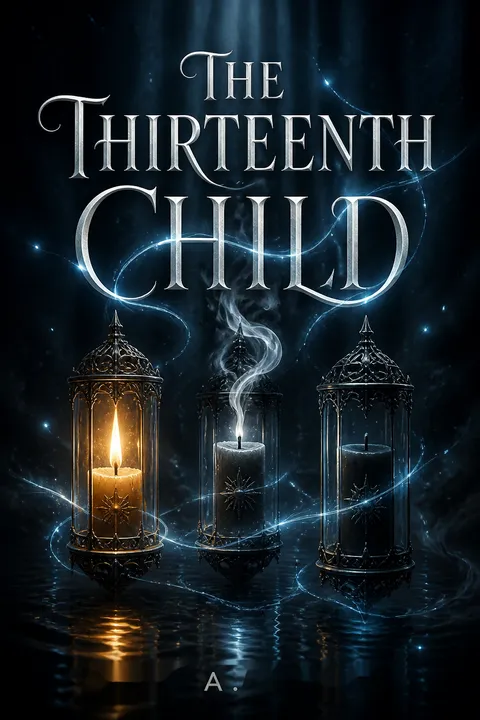
The Thirteenth Child
At eight, Hazel1 is the unwanted youngest in a poor family22 that counts every meal. On her birthday, her mother22 serves cake to everyone else, and her father22 sends her back to chores. During King Marnaigne’s9 pilgrimage through Rouxbouillet, Hazel1 argues with Crown Prince Leopold3 after he mocks her poverty and freckles; the coins he throws scatter beneath a panicked crowd.
Later, her parents22 bring their children to the temple of the Divided Ones to pay her father’s22 debts. Hazel’s mother22 offers her as payment, but the temple chooses Bertie,5 Hazel’s1 protective older brother. Men drag him away in chains while Hazel1 watches, and the family22 blames her for the loss.
Hazel’s childhood establishes exclusion as an active family practice, not merely a lack of affection. Food, schooling, sleeping space, and even her birthday are rationed in ways that teach her to expect less than her siblings. Bertie’s defense briefly interrupts that pattern, making his seizure especially formative: Hazel is not only abandoned by adults, she is left with the belief that her presence costs others their freedom. The encounter with Leopold introduces a second hierarchy, royal privilege, that Hazel challenges before she has power to change it. Her anger is already a form of moral perception, but the people around her punish rather than reward it.
Merrick Comes Back
Four years later, Hazel1 has become the family’s22 unpaid laborer, sleeping in the barn while her siblings leave home one by one. On her twelfth birthday, her drunken mother22 briefly treats her with tenderness, then Merrick2 appears. He gives Hazel1 a gold necklace and answers her mother’s22 demand for payment by showering the yard with coins.
Her mother22 accepts the fortune and lets Hazel1 go without a proper goodbye. Merrick2 takes Hazel1 through the Between, a barren realm between life and death, and creates a flowering orchard when she asks for a tree. He explains that she will become a healer, grants her the power to perceive what a patient needs, and leaves her in a cottage filled with books.
The departure is both rescue and transaction. Merrick gives Hazel safety and attention, but the coins make painfully explicit that her parents regard her as a burden whose care can be reimbursed. Hazel’s mother’s moment of tenderness complicates her anger without repairing the history between them. In the Between, Merrick’s creation of an orchard answers Hazel’s loneliness with abundance, yet his sudden departure repeats the original wound in a more luxurious setting. The scene establishes a central tension in their bond: Merrick can provide everything a child needs materially while failing to understand that presence, not provision, is what she has been missing.
A Year of Books
Hazel’s1 new gift does not spare her the work of becoming a healer. Merrick2 expects her to master the library before treating patients, then leaves her alone for a year. When she tries to escape the cottage, the Between’s storm drives her back. The Divided Ones visit, explain that thirteenth children are rare and potentially powerful, and refuse to contact Merrick2 or help Hazel1 find her brother.5
She returns to her studies, eventually learning anatomy, botany, remedies, and surgical practice. As her knowledge grows, a garden, laboratory tools, and supplies appear around her. On her thirteenth birthday, she finishes the last book and finds Merrick2 waiting with a cake, ready to take her to a real village.
The year of study makes knowledge a hard-won counterweight to Hazel’s divinely bestowed insight. Merrick’s gift can reveal a cure, but Hazel gradually understands that recognition alone cannot set a bone or prepare a medicine. Her education also resembles the childhood labor she once performed: she is expected to become useful, this time through scholarship rather than chores. The Divided Ones’ visit offers no rescue, only a glimpse of how the gods regard mortal children as rare instruments. Hazel’s decision to resume reading despite disappointment marks a shift from waiting for affection to developing competence she can carry into the world.
The Rye Field Diagnosis
Merrick2 takes Hazel1 to a cottage near Alletois and tells her that her training must now meet real illness. Kieron,4 a local boy, arrives seeking help for his uncle Reynard,18 who is feverish, vomiting, hallucinating, and losing his toes to gangrene. Hazel1 initially recoils from the filth and suffering, but Merrick2 makes her examine the man rather than retreat.
Her gift reveals grain around Reynard’s18 body; remembering contaminated flour and a nearby rye crop, Hazel1 finds purple ergot growths in the field. She diagnoses ergot poisoning, treats what can still be treated, and orders the crop burned. Reynard18 survives, and Hazel1 begins building a practice as Alletois’s healer.
Hazel’s first case turns the abstract promise of healing into a decision made under pressure. Her instinct is not fearless; she wants to flee and worries that the disease will infect her. Merrick’s insistence forces her to distinguish disgust from incapacity, while the diagnostic vision becomes useful only when joined to memory and observation. The rye field matters because illness is not isolated inside one body: food production has made a whole community vulnerable. Hazel’s order to burn the crop shows that healing sometimes requires removing the source of harm, not simply comforting the patient. Her work begins with uncertainty, not effortless mastery.
The Parents’ Last Illness
Two years into her work in Alletois, Merrick2 brings Hazel1 back to her childhood cabin. Her parents22 have spent his payment on alcohol, and the house has collapsed into filth, hunger, and sickness. Hazel1 tries to care for them, but her gift shows a deathshead rather than a remedy.
Merrick2 explains that they will die soon and that their illness will spread to Hazel’s1 returning brother Remy and the people at his wedding celebration. With no treatment able to save them, Hazel1 uses her medical knowledge to prepare a lethal tea that will spare them a more brutal death and prevent contagion. Afterward, their ghosts begin following her, and salt becomes her defense against their attacks.
Hazel’s return destroys the fantasy that distance might have transformed her family. The money that could have repaired their home instead accelerates its decay, leaving her to confront both the consequences of her parents’ choices and the limits of her own skill. Merrick frames killing them as a compassionate medical intervention, but the decision also gives Hazel responsibility for deaths she cannot emotionally reduce to clinical necessity. The ghosts make that responsibility persistent: the dead remain present, and the memories they pull from Hazel turn mercy into an ongoing wound. Her healing vocation begins to include the painful recognition that care cannot always mean cure.
Kieron’s Candle
At sixteen, Hazel1 has fallen in love with Kieron,4 who plans to elope with her. Before they can leave Alletois, he strikes his head while chopping wood and develops a severe brain injury. Hazel1 performs trepanation to relieve the pressure, but the deathshead appears over him.
Merrick2 takes her to a cavern where every mortal life burns as a candle and reveals that Hazel1 has three lifetimes, secured through a bargain with the Holy First. Kieron’s4 candle is melting into neighboring flames, threatening other lives. Merrick2 argues that Kieron4 will eventually harm others because of his brain damage. Hazel1 extinguishes his candle, ending his life, then retreats to the Between to grieve.
The candle cavern turns Hazel’s private love into a problem of consequence and scale. Her surgery is medically skilled, yet it cannot reverse the damage that would make Kieron dangerous; technical competence does not guarantee that the desired future is possible. Merrick’s vision of spreading wax gives Hazel a rationale for choosing other lives over the one person she most wants to save. But the choice also exposes the cost of treating people as risks to be managed. Hazel does not emerge with certainty or peace. She leaves with grief, an enlarged sense of responsibility, and the knowledge that even a merciful decision can feel like betrayal.
The King’s Summons
After two years in the Between, Hazel1 decides she can no longer hide from the living. She returns to her cottage in Alletois, where royal guards soon summon her to treat King René Marnaigne,9 who is suffering from a mysterious disease called the Shivers. The journey to Châtellerault brings Hazel1 face to face with the ghosts she had escaped, including Kieron’s.4
At the palace, the king’s9 skin leaks a strange gold fluid, his muscles twitch, and repeated healers have failed him. Hazel1 also meets Aloysius,15 the king’s9 guarded valet, and sees Prince Leopold3 again, now older but still capable of cruelty. Hazel1 begins examining the illness despite the palace’s mistrust and the danger of treating a monarch.
Hazel’s return to society is not a simple recovery from grief; it is a choice to risk renewed attachment and responsibility. The palace makes that choice difficult by surrounding her with wealth, secrecy, and political urgency. The ghosts return as evidence that her past cannot be escaped merely by changing location, while Leopold’s presence revives an old encounter shaped by class and humiliation. The king’s condition also challenges the limits of Hazel’s confidence: unlike familiar injuries, the Shivers has no established treatment and carries national consequences. She enters court not because she feels ready, but because her knowledge and gift make refusal costly.
Bertie at the Rift
Hazel1 faints after seeing the king’s9 deathshead and wakes at the Rift, a temple of the Divided Ones. There she recognizes three orphaned girls as her nieces, children of her sisters, who died during the northern violence. She also reunites with Bertie,5 now a scarred and fervent religious devotee who had believed Hazel1 dead.
Bertie5 urges her to save the king9 because the kingdom needs a leader against Baudouin’s12 advancing army. He summons the Divided Ones, who confirm that the king’s9 deathshead means Hazel1 is meant to end his life, while offering no clear answer about whether she should obey. Leopold3 then arrives and takes Hazel1 back to the palace, apologizing for the childhood insult that first separated them.
The reunion with Bertie reveals how radically the siblings have been shaped by separation. Hazel remembers a boy who once defended her; the adult before her has made bodily devotion into proof of belonging. His certainty contrasts with her painful ambivalence about the king, whose survival might protect children like her nieces. The scene also introduces political stakes that are not abstract: war has already orphaned Hazel’s family. The gods’ refusal to resolve her dilemma leaves moral judgment with Hazel, while Leopold’s apology offers a more human form of repair. His acknowledgment cannot undo the past, but it begins a relationship grounded in attention rather than rank.
The Failed Perfume Cure
A stable boy20 tells Hazel1 that Delia,21 a palace maid who once had the Shivers, survived after a perfume bottle broke over her during an attack. Hazel1 searches Princess Bellatrice’s10 preserved dress and asks Margaux,6 the court’s oracle, to help identify the scent. They isolate geranium and Hazel1 prepares an oil treatment for the king,9 but the Brilliance darkens and René9 suffers a seizure.
With the king9 barely alive, Hazel1 calls the Divided Ones and accepts their suggestion to transfer one of her spare candles to him. The king9 recovers, though Hazel1 has lost one of her three lives. The incident deepens her distrust of the gods’ instructions and gives her a reason to keep searching for a true cure.
The failed treatment exposes the danger of acting on a plausible clue before the evidence is strong enough. Hazel’s reasoning is careful, but the perfume’s scent leads her toward a soothing ingredient rather than the actual cause of the disease. When René collapses, she must choose between allowing the deathshead to take him and sacrificing part of her own future. The Divided Ones make that sacrifice possible, but their help is not neutral: it entangles Hazel further in a divine conflict she does not understand. The loss also changes the scale of her choices. Her life is no longer an abstractly long gift; it is a finite resource she can spend.
Black Agar Breakthrough
Hazel1 keeps investigating Delia’s21 survival, but the geranium mixture does not explain it. At court, Leopold3 identifies the dark resin in his mother’s13 cologne as black agar, the incense burned at the Rift when Delia21 was treated. Hazel1 tests the resin and finds that it destroys the Brilliance in her samples. She prepares the remedy and distributes it through the kingdom, stopping the Shivers from spreading.
René9 appoints her court healer and promises her the means to continue the work. Meanwhile, the northern war grows more dangerous. Leopold3 takes Hazel’s1 earlier criticism seriously, leaves court to serve as a soldier, and returns months later with new discipline but lingering habits of mockery and self-protection.
The cure emerges through a collaboration that joins Hazel’s medical practice with Leopold’s unusually attentive memory. His knowledge of scent is not a grand heroic revelation; it is a detail gathered from family life, grief, and time spent noticing what others overlook. Black agar works where geranium fails because Hazel tests rather than clings to her first theory. Yet success brings a new burden: the king’s appointment turns a local healer into a public instrument expected to save the country. Leopold’s enlistment suggests that criticism can provoke change, but his return shows that transformation is uneven. One better decision does not erase the social habits that made him careless.
Bertie’s Executioner’s Axe
As the Shivers recedes, Hazel1 reconnects with Bertie5 and learns that the northern rebellion has destroyed villages, including those where her nieces lived. René9 tells Hazel1 he may spare his half-brother Baudouin,12 and she believes the execution ceremony will end in clemency. Instead, the king9 brings Baudouin’s12 wife and young son onto the platform and orders the child executed first.
Bertie,5 now serving the temple’s high priest, wields the axe. The crowd celebrates as the family is killed. Hazel1 flees in horror, and Leopold3 stays with her, caring for her after she collapses. The massacre shows that René’s9 recovery has not restored his judgment, and that royal power can turn a staged display into irreversible violence.
The execution shatters Hazel’s hope that healing the king would restore the moral order around him. René’s public performance of mercy becomes a trap, and the child’s death makes political strategy brutally intimate. Bertie’s role is especially painful: the brother who once protected Hazel now carries out an authority’s violence under the language of religious service. The crowd’s celebration further complicates the idea that order and justice are the same. Leopold’s care for Hazel offers a small act of human solidarity amid spectacle, but neither his tenderness nor Hazel’s medical success can undo the deaths. The scene forces her to acknowledge that saving a ruler may empower the very harm she hoped to prevent.
Euphemia’s Sudden Sickness
At the masquerade that follows the executions, Hazel1 notices gold on her hands after dancing with the youngest princess, Euphemia.11 The child is soon feverish, twitching, and leaking Brilliance. René9 rages at Hazel,1 interprets the illness as a divine message about Baudouin’s12 surviving family, and threatens Bellatrice,10 whose parentage he doubts.
He locks Hazel1 in Euphemia’s11 room and demands a cure, offering Leopold3 and the crown as rewards. Hazel1 sees a deathshead over the child and prepares to kill her rather than let the king’s9 guards intervene. Margaux6 arrives with Hazel’s1 medicines, claiming the Holy First has shown her that Euphemia11 will recover. Hazel1 realizes the oracle’s story cannot be trusted.
Euphemia’s illness compresses Hazel’s entire moral history into one room. She is again asked to decide whether mercy means preserving a life or ending suffering, but this time the patient is a child who trusts her. René’s offer of marriage and power exposes how readily he treats people as instruments, even while insisting his daughter must be saved. Hazel’s willingness to prepare a pillow reveals the terrible cost of accepting the deathshead as unquestionable authority. Margaux’s arrival interrupts the act, but her convenient prophecy creates suspicion rather than comfort. The scene turns care into a contest over who controls the account of what the gods want.
Margaux’s Hidden Allegiance
Hazel1 questions how Margaux6 knew Euphemia11 was ill and spots a bronze charm beneath the oracle’s robes. When Hazel1 exposes the scars hidden on Margaux’s6 body, Margaux6 admits she was once a Fractured devotee of the Divided Ones and resented Hazel1 for being chosen by Merrick2 and promised extra lives. Calamité8 appears, controlling the shared body while Félicité7 remains unresponsive.
Margaux6 confesses that she poisoned Queen Aurélie,13 engineered the Shivers in Baudouin’s12 province, and manipulated the rebellion to create chaos for Calamité.8 She also admits she meant to poison Leopold,3 but Euphemia11 drank the flask instead. Leopold3 enters through a secret passage and hears the confession, turning Margaux’s6 private scheme into an immediate threat.
Margaux’s betrayal grows from a recognizable wound, the conviction that another child received the attention and destiny she deserved. That history explains her resentment without excusing the mass violence she chooses to create. Her supposed prophetic authority has allowed her to convert private grievance into political control, because the court treats divine messages as beyond verification. Calamité’s exploitation of her ambition reveals a second layer: the god wants independence from the other gods and feeds on human disorder. Leopold’s arrival matters because it introduces a witness outside the divine bargain. The revelation shifts the story’s central question from whether Hazel should obey fate to whether anyone can distinguish fate from a powerful person’s manipulation.
The Candle Cavern
Félicité7 regains control of the Divided Ones and grants Hazel1 the godsight, sending her and Leopold3 to Merrick’s2 cavern of candles. Hazel1 sees lives as the gods do and locates René’s9 flame, but it melts and goes out before she can snuff it herself. Through the candle, she witnesses Margaux6 stab the king9 as guards close in; they kill Margaux6 in the struggle.
Euphemia11 remains gravely ill, and Hazel1 has only one unused candle left. Leopold3 offers his own life for his sister,11 while Hazel1 argues that her remaining lifetime should save the child. They wrestle over the candles in the dark, each trying to sacrifice themselves, until a wick goes out and another flame sparks to life.
The cavern makes divine knowledge overwhelming rather than liberating. Hazel can see possible lives and political consequences, but greater vision does not produce a clean answer; it magnifies the burden of choosing. René’s death occurs through Margaux’s violence, not Hazel’s intervention, showing that a candle can reveal a life without making its ending controllable. The final struggle between Hazel and Leopold reverses the earlier logic of sacrifice: each believes their own life should be spent to protect someone else. Their conflict is an act of love, but also a refusal to treat either person as expendable. The new flame suspends resolution for a moment, making survival feel newly made rather than predetermined.
Epilogue
At ninety-nine, Hazel1 sits beside her husband, Leopold,3 on her birthday. Her hands are too frail for surgery, but she still tends her garden and holds her family close. She remembers the ordinary moments that made up their long life together, including the return from the Between, when Leopold’s3 life was carried in her candle and Euphemia’s11 burned safely in his.
As Hazel’s1 own flame nears its end, Merrick2 finally appears. He stays beside her in the dark, admits his pride and love, and promises not to leave before her life is finished.
The epilogue answers the novel’s fear of endless bereavement not by erasing mortality but by giving Hazel a life shared with someone who chooses her in return. The ordinary memories she values most correct the grand scale of Merrick’s plans: a long life gains meaning through meals, jokes, weather, children, and small acts of care. Merrick’s late arrival cannot restore the years when Hazel waited for him, but his willingness to sit beside her changes the meaning of the final darkness. The ending completes the birthday frame with a different kind of gift. Hazel is no longer a child waiting to be claimed; she can ask for presence and receive it.
Analysis
The novel treats care as a practice of judgment rather than a guarantee of rescue. Hazel’s1 healing gift can reveal what a body needs, but it cannot decide what a life is worth, whether a patient’s survival will harm others, or whether a god’s command deserves obedience. Those decisions remain with Hazel,1 who repeatedly learns that competence does not remove uncertainty. The deathshead and the candles make mortality visible, yet visibility is not the same as moral clarity. Merrick2 can show Hazel1 the consequences he sees, but his knowledge arrives through a divine perspective that discounts the emotional weight of particular lives. Hazel’s1 resistance insists that one person’s grief is not made trivial by the existence of future centuries.
The story also contrasts forms of power. Royal authority, religious authority, medical expertise, and divine power all claim the right to shape other people’s futures. René9 uses the crown to control his family and stage violence as justice. Margaux6 turns spiritual credibility into political leverage, while Calamité8 treats disorder as nourishment. Merrick’s2 love is gentler, but it too becomes controlling when he plans Hazel’s1 life before she can choose it. Hazel’s1 growth depends on using knowledge without surrendering judgment to the institutions that confer it.
The ending’s emotional answer is neither immortality nor the abolition of loss. Hazel’s1 long life matters because she fills it with chosen relationships and ordinary acts of attention. The epilogue’s remembered meals, weather, jokes, and family moments challenge the gods’ appetite for grand designs. A life is not valuable because it lasts for centuries or serves a kingdom; it becomes meaningful through the specific people who share it. Hazel’s1 final request that Merrick2 stay beside her completes her childhood longing in modest, human terms: not another gift, but presence.
Review Summary
People Also Read









Characters
Hazel Trépas
Death’s chosen healerHazel is observant, stubborn, and more compassionate than the neglect she grows up with might seem to permit. As a thirteenth child, she is marked out by the gods before she can understand what that distinction will cost. Her gift lets her perceive illness and its treatment, but she also has to acquire the knowledge and judgment to act responsibly. Hazel’s instinct is to help, yet she is not serenely selfless: she wants affection, belonging, and a say in the life others have planned for her. Her central struggle is learning that care cannot be reduced to obedience, and that she must sometimes question the divine authorities who claim to know what is best.
Merrick
Godfather of endingsMerrick is the Dreaded End, a god who governs death and the passage of mortal lives. He loves Hazel1 with genuine tenderness, but his divine scale makes him slow to recognize the ordinary needs that shape a child’s life. He offers safety, extraordinary time, and a vocation, then repeatedly assumes that providing for Hazel1 is equivalent to being present for her. His elaborate birthdays and cakes reveal a desire for intimacy that he does not know how to sustain. Merrick is neither a simple villain nor an uncomplicated protector: he can be affectionate and controlling in the same gesture, and his difficulty accepting limits is part of what Hazel1 must confront.
Leopold
Restless crown princeLeopold is the crown prince of Martissienes, raised amid privilege and trained to perform confidence before he has found a purpose of his own. As a boy, he uses his status to belittle Hazel1; as he grows older, grief, war, and her blunt criticism force him to consider what his life might mean beyond charm and inheritance. He remains witty, vain, and capable of thoughtless cruelty, but he also notices details others miss and can respond to shame with real self-examination. His relationship with Hazel1 develops through candor and care rather than rescue. He is drawn to her because she refuses to treat his title as proof of character.
Kieron
Hazel’s first loveKieron is a farmer’s son from Alletois who first seeks Hazel’s1 help for his sick uncle18. He is warm, practical, and attentive, offering the companionship Hazel1 has lacked since childhood. Their friendship grows through visits, shared games, and workaday kindness, then becomes romantic as they imagine a life beyond the village. Kieron’s grounded presence contrasts with the gods’ vast plans and the court’s elaborate performances. He treats Hazel1 as a person rather than a duty or resource, giving her a glimpse of a future built through mutual choice. His importance lies in the tenderness and ordinary promise he brings into her life.
Bertie Lafitte, later Bertrand
Hazel’s devout brotherBertie is Hazel’s1 older brother and the sibling who most clearly recognizes her loneliness when they are children. After the Divided Ones take him from the family, he builds his identity around religious service and bodily devotion. As an adult, he is cheerful, fervent, and sincere, but his faith can make him accept violence as sacred duty. Hazel’s1 affection for him persists even when his beliefs and choices become difficult for her to understand. His character explores how a search for belonging can offer purpose while also narrowing a person’s capacity to question the institutions that claim to provide it.
Margaux Toussaint
The court’s spiritual adviserMargaux is a young woman attached to the royal household as a companion to the princesses10 and an adviser on religious matters. She presents herself as gentle, pious, and perceptive, and her warmth makes it easy for Hazel1 to trust her. Beneath that composed presence is a sharp awareness of status, recognition, and the way powerful people use belief to shape decisions. Margaux’s history as a thirteenth child gives her a point of comparison with Hazel1, though the two women respond differently to being singled out. She is a character whose desire to be seen becomes inseparable from the influence she seeks.
Félicité
Goddess of good fortuneFélicité is one of the dominant gods within the Divided Ones, associated with good fortune and favorable outcomes. She is often more measured and compassionate than her counterpart8, but she remains a deity whose understanding of mortal pain is distant and authoritative. Her interventions can alter Hazel’s1 circumstances, yet she does not promise that a difficult choice will become easy. Félicité represents the comfort and danger of appealing to divine order: she may help, but she does not remove the moral responsibility of the person who must act.
Calamité
Lord of chaosCalamité is Félicité’s7 counterpart within the Divided Ones and the god of misfortune, upheaval, and chaos. He is clever, irreverent, and fond of treating mortal crises as intrigues to observe or exploit. His humor can make him seem approachable, but it masks a self-serving appetite for disorder. Calamité understands the leverage of divine gifts and knows how resentment can be turned into action. He is a useful contrast to Merrick2: both gods care about Hazel1 in their own fashion, but neither naturally respects the limits mortals need.
René Marnaigne
The ailing kingRené Marnaigne rules Martissienes and is father to Bellatrice10, Leopold3, and Euphemia11. He is proud, politically conscious, and accustomed to having others manage both his needs and his public image. His illness strips away some of the ceremony that protects him, but it does not automatically make him wiser or kinder. René can show affection toward his children and seek comfort from Hazel1, yet he is also volatile and invested in appearing strong. His character exposes the difference between being medically saved and becoming morally sound. The crown gives him the power to turn private fear into public policy.
Bellatrice
The guarded eldest princessBellatrice is René’s9 eldest daughter, elegant, sharp-tongued, and highly practiced in the rituals of court. She understands that beauty, marriage, and status are tools women are expected to use, even as she resents the narrowness of those choices. Her grief for her mother13 is concealed beneath wit and polished clothes, and her loyalty to her younger sister11 is stronger than her brittle manner first suggests. Bellatrice recognizes the danger of being trapped in her father’s9 household and longs for a future she can choose herself. Hazel1 becomes a confidante because she listens without confusing royal rank with emotional invulnerability.
Euphemia
The youngest royal childEuphemia is the youngest of René’s9 children, a bright and affectionate girl who misses her mother13 and wants to remain close to her father9. She makes pictures, asks direct questions, and believes in the possibility that adults can make things right. Her openness draws Hazel1 into the royal family’s emotional life, where the adults’ political calculations often obscure the simple needs of a child. Euphemia’s trust is not a symbol to her; it is a daily relationship built through stories, dancing, and shared attention. She helps Hazel1 see that the consequences of political choices are carried by people too young to understand them.
Baudouin
The rival royal uncleBaudouin is René’s9 older half-brother, a former court figure whose claim to the throne and long-standing resentment help fuel the northern uprising. He was once educated and treated as a possible heir, then displaced when René9 was born. That history does not excuse the violence of his rebellion, but it gives his grievance a personal and political origin. Baudouin’s presence forces the royal family to confront how inherited rank creates both entitlement and injury. His conflict with René9 is also shaped by their shared past and by the children caught in the consequences.
Aurélie
The late queen and motherAurélie was René’s9 queen and the mother of Bellatrice10, Leopold3, and Euphemia11. She is remembered through the children’s grief, her gifts, and the habits of affection she left behind. Bellatrice10 particularly treasures a perfume bottle Aurélie gave her, while Leopold3 recalls her birthday traditions and her attempts to shape his public identity. Aurélie’s absence affects each child differently, leaving them to manage sorrow within a palace that expects appearances to remain composed. Her memory anchors the siblings’ private family life against the ceremonies and political ambitions surrounding them.
Celeste Alarie
The forest herbalistCeleste is an elderly woman who lives deep in the Gravia Forest and knows the medicinal uses of its plants. Hazel1 first helps her after she injures her ankle, then begins completing errands in exchange for coins and instruction. Celeste’s practical knowledge gives Hazel1 an early model of healing that is hands-on, attentive, and rooted in observation rather than prestige. She treats Hazel’s1 abilities as something worth cultivating, offering encouragement that the girl rarely receives at home. Celeste’s influence helps prepare Hazel1 for a vocation before Merrick2 formally names it.
Aloysius Clément
The king’s exacting valetAloysius is René’s9 long-serving valet and the keeper of the palace’s routines, information, and guarded thresholds. He is formal, skeptical of Hazel’s1 country manners, and protective of the king9, but his brusqueness is partly the discipline of someone who has watched too many court crises unfold. He knows how to manage access to the royal family and how little truth is shared beyond its inner rooms. His gradual willingness to assist Hazel1 shows that loyalty can coexist with caution, especially when a person’s health and the kingdom’s stability are at stake.
Amandine
A caretaker at the RiftAmandine is a priestess of the Divided Ones who helps care for children orphaned by the northern violence. She is practical and compassionate, organizing shelter and comfort in a temple increasingly crowded with displaced families. Her concern for the king’s9 health is also political, since she believes his leadership could help protect the country. Amandine’s mixture of spiritual faith and direct service gives Hazel1 a glimpse of devotion expressed through work rather than display. She is one of the people trying to meet immediate needs while larger powers argue over destiny.
Sister Ines
The temple’s selecting priestessSister Ines is a priestess who evaluates Hazel’s family22 at the temple of the Divided Ones. Her formal authority makes the family’s22 debt transaction possible, and her choice of Bertie5 changes both siblings’ lives. She represents the religious institutions that can offer service and belonging while also treating children as assets to be assigned.
Reynard LeCompte
Hazel’s first village patientReynard is Kieron’s4 uncle, a widowed farmer whose severe illness becomes Hazel’s1 first real test as a healer. His symptoms reveal the danger of contaminated rye, linking one man’s suffering to a crop and a community. His case gives Hazel1 the first proof that careful observation can turn her studies into practical help.
Mathéo
Bellatrice’s soldier suitorMathéo is a soldier who returns to court with Leopold’s3 companions and attracts Bellatrice’s10 attention. His military service and confidence appeal to her wish for a life beyond the palace, though their connection remains shaped by courtship and social opportunity.
Benj
The observant stable boyBenj works in the palace stables and looks after Hazel’s1 dog, Cosmos23. He is friendly, curious, and unusually well informed about palace gossip through his aunt. His account of Delia’s21 illness gives Hazel1 the clue that redirects her search for the Shivers cure.
Delia
The surviving palace maidDelia is a maid who once served Bellatrice10 and is the only member of her family known to survive the Shivers. Her accidental exposure to a broken perfume bottle gives Hazel1 an important lead. Delia’s experience shows that a cure may be hidden in an ordinary incident that court observers dismiss as an inconvenience.
Hazel’s parents
The indebted forest familyHazel’s1 unnamed parents are a poor couple struggling to feed thirteen children. Her father’s debts and drinking, and her mother’s resentment of another mouth to feed, shape Hazel’s1 childhood. They are not simply cruel figures: poverty and exhaustion narrow their choices, but their treatment of Hazel1 leaves lasting harm. Their relationship with her is defined by a bargain made before her birth and by their failure to make her feel wanted.
Cosmos
Hazel’s loyal black dogCosmos is the large black puppy Merrick2 gives Hazel1 on her birthday. He becomes her companion through village life, travel, grief, and court. His exuberance provides Hazel1 with uncomplicated affection in a world where nearly every human bond carries history, obligation, or danger.
Plot Devices
The Deathshead
A fatal diagnosisHazel’s1 gift from Merrick2 lets her perceive what a patient needs, but sometimes her vision shows a skull instead of a cure. The deathshead signals that a person is meant to die and that their death may prevent wider harm. Hazel1 must decide whether this vision is an instruction, a warning, or a burden she can refuse. It drives her most painful choices, from the deaths of her parents22 and Kieron4 to her conflict over the king9 and Euphemia11. The device makes healing ethically unstable: Hazel1 can relieve suffering, but she cannot always preserve the life she wants to save.
The Life Candles
Lives made visibleIn Merrick’s2 cavern, each mortal life burns as a candle, while the gods’ lives appear as lights above them. A candle’s size and condition indicate the life it represents, and its flame can be extinguished or transferred. Hazel1 discovers that she has three lifetimes, a consequence of Merrick’s2 bargain with the Holy First. The candles turn questions of mortality into physical choices, allowing the gods to make Hazel’s1 life seem spendable while giving her a way to save others. Their presence also makes the limits of divine power concrete: even gods cannot simply rewrite every life as they wish.
The Black Agar Cure
A scent becomes medicineHazel1 begins investigating the Shivers after learning that a maid survived an attack when perfume spilled over her. A first attempt with geranium fails, and the king9 nearly dies. Leopold3 recognizes black agar in his mother’s13 cologne, connecting the perfume clue to incense at the Rift. Hazel1 tests the resin, discovers that it destroys the Brilliance, and turns it into a treatment that can be distributed across the kingdom. The cure is built from observation, memory, and experimentation rather than a miraculous revelation. It also shows how an apparently trivial detail can carry life-saving information.
Salt Wards
A barrier against ghostsThe ghosts of people Hazel1 has killed follow her and try to consume her memories of them. Salt repels them, so Hazel1 keeps it in vials and lays lines around doors, windows, and rooms. The wards offer practical protection but never erase her guilt or make her past disappear; they can weaken, be crossed, or fail when she is distracted. Salt therefore serves both as a supernatural defense and as a visible measure of Hazel’s1 effort to keep grief at a tolerable distance. Its recurring use also links domestic spaces, such as her cottage and palace room, to the violence she carries with her.
The Thirteenth Child
A mark of divine interestHazel’s1 place as the thirteenth child makes her rare in the eyes of the gods. The Holy First, the Divided Ones, and Merrick2 each consider claiming her, while her family22 experiences her as another mouth to feed. This designation explains why the gods take such interest in Hazel1, but it does not tell her what she should want or how she should use her gifts. Margaux6 is also a thirteenth child, making their divergent responses to divine attention a quiet point of comparison. The device links birth order, scarcity, and the longing to be recognized without reducing Hazel’s1 choices to fate.
About the Author
Other books by Erin A. Craig



Download PDF
Download EPUB
.epub digital book format is ideal for reading ebooks on phones, tablets, and e-readers.








