

Plot Summary
Blood Gives Her Away
A week after the battle that freed the fae prince, Ivy Morgan lies injured in her New Orleans apartment and learns why he spared her. Tink, the brownie she has sheltered for years, admits he sensed fae blood in her from the start: Ivy is a halfling, part human and part fae.
The prince tasted her blood, binding himself to her so he can track her wherever she goes. A child conceived with him could hold the gates between worlds open permanently, bringing the fae into the human realm. The Order would kill Ivy if it learned what she was, and Ren, the hunter she loves, has a duty to do the same. She decides to hide the truth and stay.
The revelation does not merely change Ivy’s ancestry; it makes her body the site of a political crisis. Her blood gives the prince access to her, while the Order’s rules turn her own allies into potential executioners. Tink’s confession compounds the shock: Ivy’s familiar household has depended on a relationship in which she was not given the whole truth. Her decision to remain with Ren is both an act of attachment and a refusal to let danger dictate every choice. The novel begins by making identity inseparable from bodily autonomy.
The Life She Won't Leave
Ivy stays home to recover, but the quiet makes it harder to keep her discovery from swallowing her. She withdraws from her Loyola classes after missing too much school, then clings to the parts of herself that still feel ordinary: her apartment, her food rituals, and Ren’s nightly presence. When Ren discusses the hunt for Val, Ivy’s closest friend, he and Order leader David suspect Val may be the halfling.
Ivy knows the suspicion is wrong, but cannot correct it without exposing herself. Tink urges her to leave Ren and disappear; she refuses, knowing the prince can track her and unwilling to abandon the relationship. Once her injuries fade, Ivy resolves to return to the streets and look for Val herself.
Ivy’s withdrawal from school gives concrete form to the cost of her hidden life: even before the supernatural crisis peaks, ordinary plans become impossible to maintain. Her insistence that she is still herself is not denial so much as an effort to preserve continuity under pressure. The secret also creates an ethical trap. Correcting the Order’s theory could save Val’s family, but it would place Ivy directly in danger. Choosing Ren over flight is emotionally honest, though strategically reckless, and establishes the conflict between self-protection and intimacy.
Jackson Square Confrontation
On her first outing, Ivy heads toward Cafe Du Monde and finds the prince waiting for her. He forces her to sit with him in Jackson Square by compelling a young waiter to step into traffic, then threatening the people around them if she refuses. He explains that the Otherworld is dying and that he intends to reopen its gates by fathering a child with Ivy.
She rejects his offer and makes clear that neither threats nor magic can create her consent. He already knows about Ren and hints that he could use Ivy’s love against her. The prince leaves without taking her, but Ivy understands that his patience is another form of danger. She goes to Order headquarters, yet keeps their encounter secret.
The prince’s coercion exposes the gap between formal consent and meaningful freedom. He cannot force the conception he wants, but he can make refusal carry a public cost, using strangers as leverage. Ivy’s defiance is therefore not evidence that she feels safe; it is a deliberate refusal to let fear become permission. His account of a dying world offers a motive without absolution. The scene makes the conflict more difficult than a simple struggle against an irrational villain: his desperation is legible, while his chosen means remain monstrous.
Merle's Buried History
At headquarters, Ivy learns that the Order has taken Val’s parents into custody because it believes they may have fathered or hidden the halfling. Miles makes clear that the Order may treat them as threats despite their denials, and Ivy realizes she has waited too long to intervene.
Later, Val’s acquaintance Reggie cannot say where she has gone. Ivy then visits Brighton, the daughter of Merle, an older Order member whose experiences with the fae left her mentally fragile.
Merle has vanished, leaving journals that record decades of cooperation between Order hunters and fae who refused to feed on humans. The records suggest that such communities still exist. Ren reads the evidence but has never heard of them, so he and Ivy decide to question Jerome, a retired hunter.
The journals challenge the Order’s worldview not through abstract argument but through a record of shared work: investigations, rescues, and names written down across decades. Their disappearance from institutional memory suggests that the Order’s identity has been curated, not simply inherited. Ivy’s guilt over Val’s parents sharpens the stakes of silence; knowledge withheld for safety can still have lethal consequences. Merle’s absence turns the archive into both evidence and a map toward an alternative alliance, while Ren’s ignorance shows that even his elite status has not granted him access to the full history.
Tink's Unmasked Power
That night, an ancient fae knight breaks into Ivy’s apartment while Ren is there. The knight repeatedly throws Ivy away from the fight and concentrates on Ren, making it clear that the attack is aimed at her partner. Tink rushes in, abandons his tiny form, and appears as a tall, fully grown brownie. He kills the knight by taking off his head, then explains that his small appearance is a chosen disguise, not his true size.
Ivy is furious that he concealed so much, but his intervention has saved them. She and Ren carry the danger back to headquarters, where Colorado Elite members Kyle and Henry arrive. Kyle argues that Val cannot be the halfling, leaving Ivy with fewer safe explanations and less time before the Order looks elsewhere.
Tink’s transformation makes the apartment itself feel newly uncertain: Ivy had built trust around the version of him she could see, while his hidden capacity had always been present. His secrecy has understandable roots in self-protection, yet it repeats the book’s central injury, the withholding of truths by people who claim to care. The knight’s selective attack also escalates the threat from pursuit to targeted removal of Ren. Ivy’s private danger is now entangled with the Order’s investigation, raising the cost of every delay.
Val on the Rooftop
After Kyle dismisses Val as the halfling, Ivy spots her on Bourbon Street and chases her onto a hotel roof. Val admits that an ancient named Marlon first spared her after cornering her on a hunt, then recruited her to help locate the Order’s gate guards. She says she continued cooperating because she preferred the fae’s power and the safety of joining the side she expected to win.
Ivy confronts her about the deaths and the betrayal of their friendship. Val reveals she knew Ivy was the halfling and had meant to bring her to the prince. Before Ivy can decide what to do with her, the prince arrives, calls Val expendable, and throws her from the roof. Ivy sees her body on a car below and reports her death to David.
Val’s explanation refuses a clean distinction between coercion and choice. Her initial bargain begins under threat, but she describes continuing for pleasure, security, and conviction that resistance will fail. Ivy’s anger is strongest where the betrayal becomes personal: Val did not merely serve an enemy, she accepted Ivy’s life as currency. The prince’s casual killing then strips Val of the safety she thought she had purchased. Her death leaves Ivy with grief that does not cancel outrage, illustrating how attachment survives the collapse of trust.
Love Meets the Order
After Ren reaches her on Bourbon Street, Ivy tries once more to be honest. She tells him she is the halfling, then cuts her palm with a thorn stake so he can see her blood bubble unnaturally. Ren is shocked and cannot reconcile the woman he loves with the creature his training says the Order must destroy.
He leaves to report the earlier knight attack, and Ivy spends the night walking alone, waiting for him to call. The next day, she visits Jerome, who confirms that the humane fae communities once existed but says they were destroyed and warns her not to ask further. David then tells Ivy that Ren has failed to report in. Her private confession has become a wider crisis, and she has no way to reach him.
Ivy’s disclosure is an attempt to preserve the relationship through truth, even though truth may end it. Ren’s retreat is painful precisely because it is not simple hatred; his training and affection collide before he can choose between them. Jerome’s guarded account offers a grim correction to the hope raised by Merle’s journals: an alliance once existed, but its history includes suppression and destruction. Ren’s disappearance converts emotional uncertainty into physical danger, leaving Ivy unable to know whether his silence is a choice or an emergency.
The Dead at Flux
Searching for Ren, Ivy checks the garage where he parked and finds two fae there. One kills the other, then the survivor runs onto Ivy’s iron dagger and vanishes. At headquarters, Kyle reveals that Ren had asked about fae who do not feed on humans, information Ivy keeps to herself. David sends a team to investigate Flux, and Ivy follows them inside.
The club is filled with dead staff and patrons, some hanging from the ceiling, all drained by fae feeding. The scale of the slaughter makes the prince’s plans feel immediate rather than theoretical. Ivy leaves shaken, unable to stop imagining Ren among the victims. The next morning, she goes to Jackson Square, hoping the prince will appear and give her a lead.
The two events at the garage and the club make violence feel less like a contest between hunters and monsters and more like a social order collapsing in public. The fae who kills another fae hints at conflicts Ivy cannot yet interpret, while the massacre at Flux demonstrates the lethal reach of those who feed without restraint. Her concealment of Ren’s question protects Brighton and Merle’s discovery, but also deepens her isolation. The bodies turn the prince’s proposal into a visible forecast of what his promised world would cost.
Ren's Face, Drake's Trap
In the park, Ren appears and tells Ivy that he accepts what she is. Desperate to believe him, she follows him to his apartment. Henry arrives demanding an explanation for Ren’s absence, and the man Ivy believes is Ren snaps Henry’s neck. His indifference, his dislike of beignets, and his formal manner finally expose the impostor: the prince, Drake, has taken Ren’s appearance.
Drake admits he has been using what he learned while feeding on Ren to imitate him. Ivy attacks, but he overpowers her, removes her protective clover necklace, and feeds on her until she loses consciousness. She wakes imprisoned in his estate, stripped of weapons and confined by a chain.
The deception works because it exploits Ivy’s most urgent hope: that Ren can accept her without hesitation. The small discrepancies she notices are not failures of intelligence so much as the cost of wanting the reunion to be real. Drake’s impersonation turns intimacy into a weapon, making the familiar body of her lover a source of danger. The broken necklace removes a practical defense as well as a symbol of protection. Captivity begins with Ivy’s trust being used against her, not with an open battle.
Three Weeks for Ren
At Drake’s estate, Ivy finds Ren chained and badly weakened from repeated feeding and Breena’s attention. Drake offers to release him if Ivy agrees to be with him. She bargains for three weeks before the prince can claim her, and he promises Ren will leave unharmed. After Ren is removed, Drake keeps Ivy captive, chains her, and uses his power to compel her to feed on human prisoners.
The feeding leaves her euphoric, then exhausted and ashamed; Faye warns that Ivy may become addicted. Breena taunts Ivy about Ren, while Drake argues that the two human prisoners and the prince’s own desires are proof she does not understand herself. Ivy resists, but her control over her body and memory steadily erodes.
The bargain is a coerced exchange dressed in the language of choice. Ivy gains time and Ren’s release, but Drake controls the conditions under which she can keep that promise. His forced feeding attacks her self-conception as a protector, producing guilt for acts performed under compulsion. The danger is not only physical captivity but the erosion of trust in her own memory and appetite. Faye’s warning introduces addiction as a further mechanism of control, complicating the simple hope that escape alone will restore Ivy’s agency.
Escape Through the Bayou
With Drake away, Faye unlocks Ivy’s collar and gives her an iron dagger, explaining that she is acting against the prince because the gates must stay closed. They fight their way out of the estate and flee into the surrounding woods. When the ancient Valor catches them, Ivy wounds his face and throat, but he pins her down and begins choking her.
A thorn stake pierces his chest before he can kill her. Ren has arrived with Tink and two fae allies, and the group carries Ivy away in a waiting SUV. She is too shaken to trust what she sees at first, but Tink’s embrace and Ren’s presence confirm that she is finally beyond Drake’s reach.
Escape does not restore Ivy to her former self in a single stroke. She has to act while carrying physical injury, exhaustion, and the aftereffects of coercion, and the bayou confrontation nearly ends in her death. Faye’s help matters because it comes from inside the prince’s household, showing that refusal can survive even within a violent system. Ren’s arrival is both rescue and emotional shock: Ivy wants to trust him, yet has learned that appearances can be weaponized. Tink’s recognition supplies the immediate anchor she needs.
The Haven Beneath the Ruins
Ren, Tink, and Faye bring Ivy to the abandoned power plant, which conceals a thriving sanctuary for fae who refuse to feed on humans. Merle and Brighton are safe there, and the residents confirm that their communities have survived by hiding from both the prince and the Order.
Ren tells Ivy he loves her and does not blame her for being forced to feed; she breaks down in his arms, grieving Val, the woman she harmed, and what captivity took from her. The group then reveals a way to send Drake back: they need a powerful crystal held by the prince, royal blood, Ivy’s blood, and access to the Otherworld. The rescue has given Ivy allies and room to recover, but the final confrontation remains ahead.
The sanctuary revises Ivy’s map of the world without pretending that reconciliation is easy. The fae are not a single moral category, and the Order’s historical omissions have helped make violence seem inevitable. Ren’s acceptance gives Ivy a relationship in which her actions under compulsion can be understood without being erased. Yet the group’s plan still requires entering the Otherworld and confronting the prince, so the ending offers neither safety nor closure. Its hope is practical: hidden allies, recovered trust, and a route toward resistance.
Analysis
Torn makes the question of who counts as human a matter of power, inheritance, and institutional control. Ivy’s halfling blood gives the prince a reason to claim her, while the Order’s doctrine converts the same fact into grounds for execution. Neither group initially treats her identity as something she can define for herself. The central conflict is therefore not simply whether Ivy can defeat Drake, but whether she can retain moral agency when everyone around her assigns meaning to her body.
The novel repeatedly contrasts formal choice with actual freedom. Drake insists that Ivy must consent to conceive a child, yet he threatens bystanders, impersonates Ren, removes her protective charm, and compels her to feed. His language of bargains conceals the coercion that makes those bargains possible. Ivy’s guilt after feeding shows how effectively this control works: she judges herself by actions imposed on her, even though her values remain opposed to them. Ren’s insistence that compulsion matters helps separate responsibility from shame without pretending the harm did not occur.
The hidden sanctuary complicates the Order’s binary account of the fae. Its residents demonstrate that ethical difference exists within the species, while the erased record of their alliance with hunters shows how institutions preserve themselves by narrowing what can be remembered. Ivy’s willingness to trust them is not naïveté; she has evidence in Merle’s journals and in Faye’s actions. Yet trust remains provisional because the sanctuary, like the Order, must protect its people.
The ending offers recovery as a beginning rather than a cure. Ivy is reunited with Ren and supported by Tink, but she remains wounded, and the plan to stop Drake requires entering the very world from which the threat emerged. Love does not solve the political crisis. It gives Ivy a place from which to face it without surrendering her sense of self.
Review Summary
Torn received mostly positive reviews, with readers praising the engaging plot, character development, and humor. Many enjoyed the relationships between Ivy, Ren, and Tink, as well as the fae world-building. Some found it predictable or similar to the author's other works, but overall, fans were eager for the next installment. The book's romantic elements and action scenes were highlights for many readers. Some criticism focused on pacing issues and explicit content, but most reviewers found it an entertaining and quick read.
People Also Read

Characters
Ivy Morgan
Order's defiant hunterIvy is a New Orleans hunter raised inside the Order, trained to protect humans from fae. She is quick to act, irreverent under pressure, and deeply loyal to the people she lets close. Her instinct to rescue others often outruns her instinct for self-preservation, while her ordinary ambitions, including college, reveal a longing for a life beyond the Order. Ivy’s central struggle is to hold on to her own moral identity when the institutions and relationships she trusts are built on incomplete truths. She is courageous, but not invulnerable: grief and shame shape her choices as powerfully as anger.
Ren
Elite hunter and loverRen is a skilled member of the Order’s hidden Elite, a group entrusted with the most dangerous fae threats. He is disciplined and physically formidable, yet warmer and more openly affectionate than the Order’s hard-edged culture encourages. His loyalty to his duty is complicated by a history of loss and by his growing attachment to Ivy. Ren protects through action, sometimes deciding too quickly what someone else needs, but his tenderness makes him capable of questioning the rules that formed him. His relationship with Ivy asks whether love can survive the collision between personal knowledge and institutional doctrine.
Tink
Ivy's irreverent brownieTink is the brownie Ivy rescued and brought into her home. He is funny, acquisitive, devoted to online shopping and television, and seemingly incapable of staying quiet when a joke is available. Beneath his comic habits is a creature shaped by displacement and fear of the human world. His affection for Ivy is genuine, even when his secrecy damages her trust. Tink uses humor to deflect vulnerability, but his loyalty becomes clearest when Ivy is in danger. His unusual perspective also unsettles the Order’s assumption that every being from the Otherworld is an enemy.
Drake
Winter's ruthless princeDrake is the ancient prince of the fae, beautiful, powerful, and practiced at treating people as pieces in a larger calculation. He wants to save the dying Otherworld by opening the gates permanently, and sees Ivy as essential to that plan. His motive gives his ambition a desperate context, but it does not soften his willingness to threaten, deceive, and control. Drake speaks of bargains and promises as if their formal terms settle questions of fairness. His cold certainty makes him dangerous not only because of his strength, but because he mistakes the limits of other people’s consent for obstacles he can negotiate away.
Val
Ivy's closest friendVal is Ivy’s closest friend within the Order, vivid in style and direct in temperament. She is socially confident and more willing than Ivy to question the narrow life the Order assigns its members. Their friendship gives Ivy a rare sense of ordinary companionship amid constant danger. Val’s ambition and dissatisfaction make her difficult to reduce to a simple role, and her closeness to Ivy intensifies the stakes whenever their loyalties are tested.
Faye
A compassionate fae allyFaye is a fae woman whose quiet manner contrasts with the cruelty surrounding the prince’s court. She is observant, controlled, and guided by a moral code that places limits on what she will do, even when violence would be easier. Her cautious kindness does not make her naïve; she understands the danger of opposing powerful fae and chooses her moments carefully. Faye embodies the possibility of resistance from within a community Ivy has been taught to fear.
Brighton
Merle's determined daughterBrighton is Merle’s daughter and a member of the Order who has spent years caring for her mother after the fae damaged Merle’s mental health. She is anxious but persistent, especially when protecting the person she loves. Brighton’s patience with Merle allows her to notice that her mother’s unusual observations may contain knowledge others have dismissed. She becomes a crucial link between private family history and the Order’s erased past.
Merle
Order's haunted archivistMerle is an older Order member whose past encounter with the fae left lasting psychological wounds. She is perceptive, intensely protective of her daughter, and willing to preserve information the Order would rather forget. Her journals show a meticulous mind working through fear by recording names, dates, and events. Others may mistake her fragmented behavior for confusion, but Merle’s memories contain a history that challenges the assumptions of the people around her.
David
New Orleans sect leaderDavid leads the New Orleans branch of the Order. He is stern, practical, and accustomed to making decisions under pressure, especially after the branch suffers heavy losses. His blunt manner can make compassion difficult to see, but he takes Ivy’s recovery seriously and tries to keep the remaining hunters organized. David represents an institution built around survival, with all the discipline and moral rigidity that such a history can produce.
Jerome
Retired hunter with secretsJerome is a retired Order hunter who ran the organization’s New Orleans gift shop as a front. Grumpy, guarded, and hard to impress, he knows more about the Order’s history than he is willing to share. His reluctance reflects the danger of reopening old conflicts, but also the cost of protecting a truth by burying it. Even his ordinary habits suggest a survivor who has learned to distrust easy questions.
Kyle
Elite investigator from ColoradoKyle is a Colorado Elite operative sent to New Orleans to investigate the halfling and the fae incursion. He is confident, analytical, and willing to challenge assumptions that local hunters have accepted. His history with Ren gives his presence a personal charge, though he presents himself as an agent of the Order’s larger mission. Kyle’s certainty can sharpen an investigation, but it can also narrow the range of possibilities he is prepared to consider.
Henry
Kyle's Elite partnerHenry is Kyle’s partner, an Elite operative who treats assignments as commands rather than invitations. He is impatient with Ren’s independence and openly judgmental of Ivy. His bluntness makes him a source of friction whenever personal loyalties interfere with the team’s plans.
Miles
Order's watchful secondMiles is a senior figure in the New Orleans Order, closely involved in security and operations. He is controlled, suspicious, and attentive to inconsistencies in other people’s behavior. His reserve makes his motives difficult to read, especially when the branch is under strain.
Breena
Drake's favored courtierBreena is a beautiful fae woman at the prince’s court who uses charm and provocation as tools of influence. She enjoys testing the limits of other people’s composure and understands how jealousy can be turned into leverage. Her confidence makes her a formidable presence in the household.
Tanner
Sanctuary's measured leaderTanner leads the hidden fae sanctuary. Older and visibly aging, he carries himself with calm authority and speaks carefully about the community’s principles. He is willing to welcome unexpected allies, but makes clear that the sanctuary’s safety depends on trust and discretion.
Plot Devices
The Halfling Prophecy
Makes Ivy the hingeThe prince believes a child conceived with a halfling can keep the gates between the human world and the Otherworld permanently open. This prophecy makes Ivy valuable to him and dangerous to the Order, whose response to halflings is lethal. Its consent requirement gives Ivy one crucial form of resistance, but Drake uses threats, deception, and magical coercion to make that freedom increasingly fragile. The prophecy drives the plot while forcing the story to distinguish physical power from genuine consent.
The Blood Bond
Turns escape into pursuitAfter the prince tastes Ivy’s blood, he becomes permanently connected to her and can sense her location. Tink explains that distance will not protect her, removing the possibility of simply fleeing New Orleans. The bond makes Ivy’s choice to stay with Ren more than romantic stubbornness: leaving would not make her safe, and it could expose others to danger. The device also gives the prince a persistent advantage even when he is not physically present.
The Clover Necklace
Shields against fae controlIvy wears a preserved four-leaf clover set in a necklace, a protective charm that prevents fae from manipulating her. It is a practical safeguard and a marker of her life as an Order hunter. When Drake removes it, Ivy becomes vulnerable to the same kind of coercion that can control other humans. Its return after her escape offers tangible relief, though it cannot erase what happened while she was without it.
The Royal Crystal
Provides a route to banishmentA powerful crystal once taken from the fae king’s throne can send Drake back to the Otherworld. The Order possesses the crystal without understanding its full history, and Val’s removal of it connects her betrayal to the possibility of stopping the prince. The sanctuary’s ritual requires the crystal, royal blood, Ivy’s blood, and access to the Otherworld itself. By the novel’s end, the crystal is a possible answer, not a completed solution.
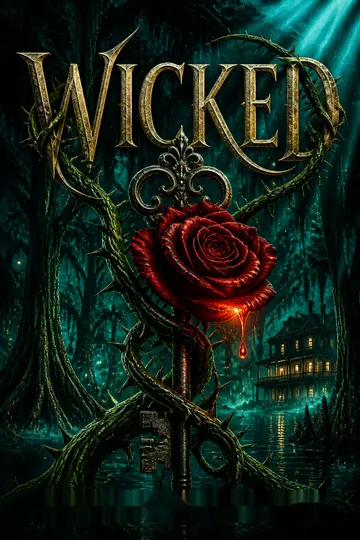
A Wicked Trilogy Series
About the Author
Other books by Jennifer L. Armentrout


Download PDF
Download EPUB
.epub digital book format is ideal for reading ebooks on phones, tablets, and e-readers.








