

Plot Summary
Prologue
Newly crowned Cethin watches a ship cross the black fog surrounding Avonleya, a passage no vessel has made in centuries. His people believe the Wards protect them by sealing the kingdom from the world; Cethin knows they are also a prison, and he has spent years trying to open a way through.
He conceals the methods behind this arrival, even from those closest to him. The ship brings strangers, including Fae, into a kingdom already losing its Fae to unexplained deaths. Cethin has succeeded in changing Avonleya’s isolation, but the first sign of freedom arrives carrying dangers he has not yet understood.
The opening makes Cethin’s kingship a problem of concealed responsibility before it becomes a romance or a battlefield story. The ship is both a practical success and a moral liability: he has changed the conditions of the kingdom without telling the people who will bear the consequences. His secrecy is not simple vanity. He believes that governing requires acting before consent is possible, a conviction that can look like courage from the throne and coercion from below. By making the ship’s arrival precede the main action, the novel plants a causal question that will later connect political rescue, blood magic, and the Fae deaths.
Valric Falls at Shira
Three seasons after the first ship reaches Avonleya, Razik Greybane and the Cadre confront pale, identical phantoms near Shira Forest. Ordinary weapons and magic pass through them; their golden blades do not.
When Valric dies, Razik cannot even Travel him to a healer because the creatures have sealed movement through space. King Cethin arrives and becomes the phantoms’ clear target, but his dark power cannot stop them either. Razik and Commander Tybalt combine their dragon fire to burn the attackers, nearly exhausting themselves.
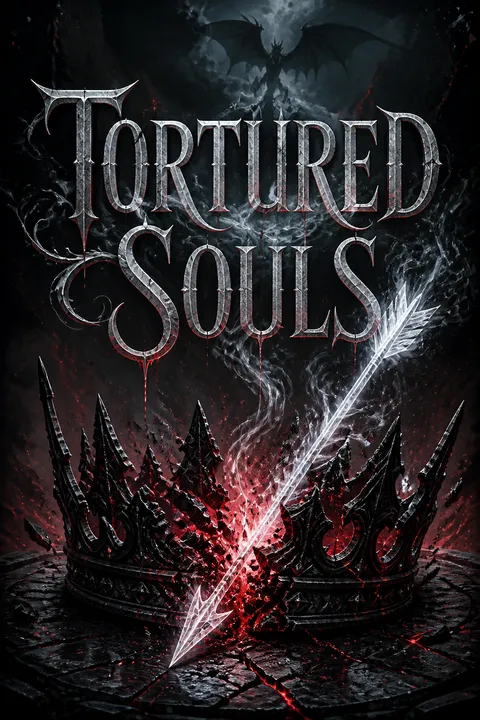
Just as the last phantom corners Cethin, a barefoot Ash Rider appears through smoke and kills it with an arrow. She vanishes before anyone can question her, leaving the survivors with a weapon and a stranger they cannot explain.
The battle establishes the kingdom’s vulnerability through specific failures: travel is blocked, familiar weapons are useless, and Cethin’s royal magic cannot solve the threat. Razik’s dragon fire works, but its cost makes it an emergency measure rather than a stable defense. Kailia’s intervention therefore changes the military problem before anyone knows her name or motive. Valric’s death also prevents the danger from remaining abstract. The Cadre’s grief and exhaustion turn the search for a solution into a matter of responsibility, while Cethin’s arrival as a target hints that the phantoms are pursuing more than a random campaign against Avonleya.
An Arrow in the Castle
Two days after the battle, Cethin is still studying the strange arrowhead when a scream draws him into a castle corridor. He finds Lady Nessira dead and a phantom advancing on Paesha, a frightened member of the staff. Cethin sends Paesha for help, but his own dark magic cannot stop the attacker. He drives the arrowhead into its side, making it dissolve into ash and light.
Razik and Tybalt arrive to find Cethin alive, another murder, and proof that Kailia’s weapon can kill what dragon fire can. Paesha’s account confirms the phantom cut Nessira’s throat. Cethin keeps the surviving arrowhead and decides the missing Ash Rider must be found, even as Razik questions whether the king is turning her into another political tool.
The castle attack collapses the comforting distinction between battlefield and home. Wards, guards, and royal security fail to prevent a phantom from reaching an advisor, so Cethin’s authority cannot be equated with safety. The arrowhead works, but its use also makes Kailia’s absence politically consequential: her weapon is now a resource the crown wants to locate. Paesha’s fear matters because it offers a human witness to a supernatural attack, yet Cethin’s immediate focus shifts toward the missing archer. His interest is strategic, but it also begins a pattern in which his desire to protect the kingdom gives him permission to control the person who may help him do it.
The King Gets Stabbed
At the Spring Esbat Festival, Kailia enters Aimonway disguised among the cloaked crowd. She has spent months watching Cethin from smoke and ashes, but when he catches her arm after she stumbles, her reflexes take over and her dagger cuts him.
Only after he climbs the festival platform does she realize she has stabbed the king. Cethin turns the injury into a joke, then addresses the Fae about the killings. At dawn, Kailia approaches him for the arrowhead she needs.
He refuses to return it unless she visits the castle, and the argument ends with him forcibly Traveling her there. In the gardens, she explains that her power is failing, then accepts a blood-marked bargain: their next meeting will end with either his marriage proposal or her attempt to stab him.
Their first meeting is built from reciprocal misreading. Kailia interprets touch as danger and answers it with a blade; Cethin interprets her weapon as both threat and opportunity. His public charm hides a private willingness to use royal power to keep her close, while her demand for the arrowhead conceals how much the weapon matters to her. The bargain is not courtship but a negotiated trap, with each party believing they understand the terms better than the other. Kailia’s unusual honesty about her weakening magic appears to give Cethin leverage, while the blood-mark formalizes a future encounter neither can easily avoid.
Pulled Into Battle
Soon after leaving the castle, Kailia tries to return to her own life, but her malfunctioning magic drags her to a battlefield beside Lake Noctus. She finds Cethin and Razik fighting the phantoms and releases arrows that kill them. She gives arrowheads to two Cadre fighters, allowing them to help as Razik forms a ring of dragon fire around the surviving warriors.
Once the battle ends, Cethin reaches toward the crystal necklace at Kailia’s throat. She takes his dagger and drives it into his thigh. Razik carries her away when her panic becomes violent, and Niara uses a sleeping spell to calm her. Cethin places her in a cell, then offers a new bargain: marriage will spare her trial and execution and give her protection.
The battle makes Kailia’s usefulness impossible to deny, but the aftermath refuses to turn usefulness into trust. She protects Cethin’s people, then wounds Cethin himself when his attention shifts to the necklace and the closeness it implies. Her violent panic is not a simple contradiction of her skill; it shows how quickly imposed touch can overwhelm the control she relies on in combat. Cethin responds by converting her peril into another contract. The bargain offers real protection, but only through a marriage she has little freedom to refuse. The scene’s central tension is therefore not whether she can save the kingdom, but who gets to decide what her saving it will cost.
A Queen by Bargain
Cethin’s terms make Kailia his future wife and queen, with her arrow returned after their union and a pardon for stabbing him. He announces the betrothal to the advisory council, claiming a destined connection, while privately admitting she will initially rule in title only.
When a lord speaks crudely about her, Cethin uses his power to make the man suffer until he apologizes. Tybalt assigns Razik as Kailia’s personal guard, despite Cethin’s objections. Razik accepts the post after weighing whether a new duty might give his restless dragon a purpose.
Kailia, surrounded by unfamiliar faces and expectations, agrees to Razik’s appointment rather than create more conflict. Her marriage has become public policy, but neither the council nor the Cadre knows how much of the arrangement rests on coercion.
The public announcement turns private coercion into a political performance. Cethin presents the betrothal as fate, giving the council a story that makes a sudden marriage seem legitimate, while Kailia must play along without understanding the social rules she is expected to embody. His punishment of the lord signals protection, but it also displays how readily he uses force to control a room. Razik’s appointment unsettles Cethin because it gives Kailia a companion whose loyalty is not easily purchased by the king. Razik’s own acceptance is similarly double-edged: he gains a defined role, yet the role draws him closer to the ruler he has resented for centuries.
The Hunt Turns Bloody
At the Beltane Hunt, Kailia rides into Shira Forest with Cethin, Razik, Wren, and the Cadre. She shoots game with startling accuracy and wins the group’s informal competition, but she eventually leaves the others to stalk a stag alone. A group of Avonleyans attacks her, using fire, thorns, and water to restrain and injure her.
She kills them, then falls into a frantic panic when Cethin tries to carry her. She stabs him twice before he suppresses her magic long enough to get her home. Niara treats their wounds, and the discovery that the attackers belonged to the Elder Clan raises the stakes. Cethin moves the union sooner, arguing that a queen’s title will offer Kailia added protection.
The hunt begins as a rare setting where Kailia’s instincts and competence are celebrated, then exposes the cost of a body trained to survive by resisting restraint. Her attackers use precisely the combination of bindings and fire that her past has taught her to fear; Cethin’s attempt to rescue her repeats the danger of being held, even though his intention is care. His decision to advance the union reflects both genuine concern and his continuing belief that status can solve vulnerability. The Elder Clan’s involvement also widens the conflict beyond the phantoms. What looks like a royal security measure now sits inside a deeper political struggle over old powers, old agreements, and Kailia’s safety.
The Moon Marks Them
Kailia agrees to an earlier ceremony partly because the queen’s role gives her a purpose she has rarely been allowed to choose. At Lunae Falls, Niara performs a private rite beneath the full moon.
Cethin and Kailia bind their hands with a cord representing their bloodlines, speak vows, and merge their magic as moonlit Marks appear on their palms and Cethin’s chest. The ceremony is a Lunar Marriage, an unusually powerful union rather than a standard, more easily dissolved bond. Afterward, Cethin returns Kailia’s arrowhead.
She accepts it but privately knows her claim that she needed it to repair her power was untrue. The marriage protects her and binds her to Cethin, while she keeps the real reason for her arrival and the depth of her plans hidden.
The ceremony transforms a coerced political agreement into a metaphysical bond, but it does not erase the coercion that brought Kailia there. The rite’s secrecy is intimate in appearance and dangerous in consequence: a private choice carries public and possibly permanent weight. Kailia’s decision to accept the crown’s responsibility reflects a long deprivation of agency; a constrained role can still feel like the first purpose she has been permitted to choose. Her concealed lie about the arrow also establishes that consent and deception are not cleanly separated here. Cethin believes he is securing an ally, while Kailia is measuring how much power the union may give her.
Shadowfen’s False Home
Kailia asks Cethin to take her to Shadowfen, the town he has chosen as her supposed origin for public use. There, she sees the dark streets and hidden population but cannot find the belonging she lacks. At an inn, she reveals she crossed the Edria Sea and lived in several places, though she withholds her full history.
Phantoms appear in the streets, and Kailia kills them with her arrows while Razik uses dragon fire. Her magic still cannot carry her away. Back at an old Sutara estate, Cethin stays beside her instead of retreating to his hidden study. He eventually shares her bed, placing a pillow between them, and their uneasy intimacy begins to depend on small, chosen acts rather than royal demands.
Shadowfen’s role as a fabricated hometown gives Cethin a practical cover story, but the visit also demonstrates how little a plausible origin can provide Kailia emotionally. She can move through the town and survive its dangers, yet she cannot claim it as home. The phantom attack forces the trio into cooperation without resolving their personal distrust. Cethin’s decision to stay in the bedroom matters less as romance than as a response to Kailia’s fear of waking alone; the pillow preserves a boundary while making proximity possible. Their relationship advances through negotiated degrees of safety, not sudden transformation.
The Celebration Breaks
At the public Union Celebration, Kailia dances with Cethin, Razik, and a few people she knows, fighting the discomfort of a packed hall. When phantoms enter and panic sends guests rushing through the room, she crawls through the crowd to reach a clear line for her bow. She distributes arrows and arrowheads so the Cadre can fight.
Cethin shields the people with darkness while Razik surrounds them with dragon fire, and Kailia kills the attackers before one escapes with a warning. The battle turns the celebration into evidence of her value to Avonleya. Later, as Cethin helps her recover from the noise and touch, she begins to recognize that his restraint and permission can make intimacy feel different from the violence she has known.
The celebration forces Kailia to inhabit the public role she has been resisting, then strips away its ceremonial surface in minutes. Her first response to danger is not to protect her image but to find a firing lane and arm other fighters. Cethin and Razik provide complementary protection, but the decisive advantage is Kailia’s weapon. Her emerging trust in Cethin grows from the contrast between a crowded hall that overwhelms her and a private space where he asks before moving closer. The narrative links political recognition to bodily agency: the same queen who is displayed before a crowd must also be allowed to set the terms of touch.
The Cliffs Return
After drinking too much ale during an outing with Razik, Kailia wakes from a nightmare of the enchanted Cliffs where she grew up. She tells Cethin and Razik that the colony trained its residents for their powers and punished failures by chaining them while a fire wielder burned them. The Baroness controlled the colony, whose residents were treated as sources of powerful bloodlines.
A figure known as the Reaper eventually gave Kailia a way out, and she has since hunted people connected to the Cliffs. The disclosure changes how Cethin understands her touch aversion and why she refuses to rely on others. He promises to help her find those responsible, while Razik warns that someone may now be hunting her in return.
Kailia’s account turns her touch aversion from an eccentric obstacle into a survival strategy shaped by institutional abuse. The Cliffs used both social language of protection and physical coercion to make exploitation appear necessary. Her habit of self-reliance is therefore not a refusal of connection in the abstract; it is a learned safeguard against people who offer care as a prelude to control. Cethin’s promise to help is emotionally significant but also risks repeating his tendency to decide what protection means. Razik’s warning adds a present danger to the memory: the past is not merely haunting Kailia, it may be actively pursuing her.
Everfall Offers No Evidence
Tybalt reports that twenty-five Fae have been found dead near Everfall, far from the recent killings around Aimonway. Cethin travels there with Kailia and Razik, but Lord Corveth Astor can show them only a clearing where a sheep farmer discovered the bodies. There is no blood, no abandoned weapon, and no obvious sign of struggle.
Kailia suggests the Fae may be collateral damage rather than the direct target. Later, phantoms attack in town, forcing her and Razik to fight while Cethin shields nearby people. Back in their rooms, Kailia asks whether Cethin himself is drawing danger toward the kingdom and whether he would sacrifice her to stop it. He answers that he would give up anything, but not her.
Everfall frustrates investigation by offering a mass death without physical evidence, while the attack that follows demonstrates that the phantoms and the Fae killings may be distinct threats. Kailia’s collateral-damage theory is an important shift: she asks whether the apparent victims are part of a larger cost rather than the center of the plot. Her question about being sacrificed presses Cethin’s political duty against his growing attachment, forcing him to answer in personal terms. The episode also places Corveth within the governing circle as a helpful local lord, making his access to royal movements seem ordinary rather than suspicious.
Kailia Takes the Crown
After months as queen in name only, Kailia attends an advisory council meeting where the lords and ladies vote on her authority. Corveth supports her because he has seen her risk herself for others; the other advisors agree. Tybalt lets Razik’s judgment count as his own, placing Razik in an uncomfortable position, and Razik votes yes.
Kailia now shares the responsibility of ruling rather than merely representing Cethin. Around this time, she confides more about her broken magic and her past, and Cethin begins to ask before touching her. Their physical intimacy grows slowly, with Kailia choosing where his hand may rest. She experiences pleasure and safety together for the first time, then falls asleep with her palm on his chest.
The council vote gives Kailia institutional agency, but it also makes her answerable for a kingdom she has only recently entered. Corveth’s support is grounded in observed conduct, while Razik’s vote reveals how personal loyalty and political judgment have become entangled. The parallel shift in intimacy follows the same logic: Kailia gains control not by pretending her fear has vanished, but by directing contact herself. Her bodily choices become a model for the political role she has just acquired. Yet the scene remains unstable, because the trust she offers Cethin is built on information he is still withholding.
Razik Names the Betrayal
At the training arena, Razik notices Cethin’s magic clinging to Kailia’s hair and confronts the king. He learns Cethin has been entering Kailia’s dreams and has interfered with her power, then tells her rather than protecting the king’s secret. Cethin removes Razik as her guard, and Kailia agrees, leaving Razik to believe their connection has ended.
Wren tells Razik she plans to build a life with Bram; he responds cruelly and retreats to his hidden cave. There he realizes Kailia has been gathering information about the kingdom and may want the throne for reasons of her own. Meanwhile, Cethin summons Kailia to the shore, where she confirms his dream-walking and the enchantment that has been drawing her magic back to him.
This turning point makes secrecy itself the breach in the romance. Cethin frames dream-walking as protection, but because he entered Kailia’s private mental refuge without consent, his stated motive cannot repair the violation. Razik’s disclosure is ethically clearer, yet his anger and possessiveness over Wren damage a relationship he hoped to control through caution. His later deduction that Kailia is gathering political intelligence also reveals his own blind spot: he has mistaken intimacy for evidence that he fully understands her. The competing betrayals leave every bond under pressure, while the enchanted crystal makes Cethin’s control of Kailia’s power materially undeniable.
Corveth’s Other Face
Cethin takes Kailia and members of the Cadre into the Olwen Mountains to subdue awakened stryx, enormous, horned, owl-like creatures guarding an ancient site. He uses his power to return one to its nest, but Kailia questions whether the creatures are imprisoned. Before they can leave, Lord Corveth appears and kills Draven by reaching into his body with an Ash Rider’s hand.
He calls Kailia his sister. She tells Cethin that the Cliffs were created to produce powerful beings for the prince and that she came to Avonleya to find her brother and the king responsible. She also accuses Cethin’s blood magic of bringing ships through the Wards at the cost of Fae lives. Corveth marks her crystal, freeing her magic from Cethin’s enchantment.
The revelation fuses the book’s political, magical, and personal conflicts. Corveth’s trusted role as a helpful lord makes the violence feel like the unveiling of a deliberately cultivated disguise, not a sudden new enemy. Kailia’s history of being bred and trained for power now connects to Cethin’s secret experiments, making their marriage a meeting between two people shaped by systems of extraction. Her accusation about the Fae deaths reframes Cethin’s attempts at rescue as a practice that has imposed costs on others. The stryx also sharpen the moral question: ancient power may be dangerous, but containment can resemble captivity even when rulers call it protection.
The King’s Last Arrow
As Razik arrives in dragon form and a stryx attacks him, Kailia releases a golden-headed arrow into Cethin’s chest. The phantom weapon suppresses his magic and brings him to his knees. Corveth cuts Cethin’s palm, while Kailia explains that she came to avenge the Cliffs, find her brother, and take power from the king she believes sacrificed his people.
She has mistaken Cethin’s secrecy for proof that he knowingly caused every Fae death, but she acts before the truth can be tested. Cethin dies beneath her hand, urging her to treat the people as her own. Kailia takes the crown and leaves with Corveth, while Razik remains caught in the fight above. Her victory grants her freedom and rule, but the kingdom’s future is now uncertain.
The climax resolves Kailia’s long pursuit of vengeance by giving her the throne she has secretly sought, but the resolution is morally unstable. She acts on evidence that Cethin brought ships through the Wards and on her belief that he knowingly traded Fae lives for political rescue. His final appeal to treat Avonleyans as her people complicates the revenge she has achieved without disproving her central accusation. The arrow is especially consequential because it ends the conflict through the very kind of power Cethin tried to control. Kailia wins the crown, yet the battle leaves Razik and the stryx unresolved, and her new authority begins in blood rather than consent.
Epilogue
On a distant shore, the goddess Saylah receives a message from her Guardian and learns her son has refused her again. She also learns that Cethin is in danger. Saylah releases Shirina, the panther bound to her, so the spirit animal may one day serve another, then prepares a vial of blood to cross the Wards.
Once known in Avonleya as Queen Selinya, she turns toward the kingdom and her son. The book ends with the goddess moving to intervene, even as the crown has already passed to Kailia and Cethin’s fate is sealed.
The epilogue widens the consequences of Kailia’s victory without undoing it. Saylah’s decision to release Shirina turns a centuries-old bond into an act of preparation for someone else, while her attempt to cross the Wards suggests that the boundary Cethin struggled to breach will soon be crossed by a power with a personal claim on him. Her identity as Selinya also recasts the royal family’s history as a divine entanglement rather than a closed political past. The final movement offers no rescue or absolution; it promises that the consequences of Cethin’s death will reach beyond the people who witnessed it.
Analysis
Tortured Souls organizes its central conflict around a difficult distinction: protection can resemble captivity when the protected person has no control over its terms. Cethin’s willingness to risk himself for Avonleya is real, but so is his willingness to manipulate Kailia, hide the cost of his blood magic, and treat consent as something he can postpone. Kailia’s history makes that distinction bodily. Touch is not an abstract metaphor for trust; it is a stimulus tied to restraint, fire, and remembered danger. Her gradual ability to choose contact matters because the choice, rather than the touch itself, changes its meaning.
The book also makes political legitimacy personal. Cethin inherits authority by blood, but spends much of the story trying to prove he deserves it. Kailia wants a purpose and a share in governing, yet her growing investment in Avonleya does not erase her independent agenda. Their political and romantic movements therefore remain entangled: each begins by trying to use the other, and each discovers that the other is more difficult to reduce to a tool than expected. Razik’s role sharpens the question of loyalty. His refusal to protect Cethin’s secrets can be principled, but his protectiveness toward Wren also reveals how easily care can become control.
The ending refuses the comfort of a clean conversion. Kailia gains the crown and freedom from Cethin’s enchantment, but she reaches that outcome through mistaken certainty about his responsibility for the Fae deaths. Cethin’s death does not settle the truth of his sacrifices, the danger to Avonleya, or the wider conflict with the gods and ancient creatures. The novel’s final movement suggests that revenge may free its agent from one form of captivity while making her responsible for everything the fallen ruler leaves behind.
Review Summary
Characters
Kailia
The ash-born huntressKailia is an Ash Rider whose magic lets her travel through smoke and ashes and create lethal weapons. Raised in a place that trained and exploited people for their abilities, she trusts observation, preparation, and self-reliance more than promises. Unexpected touch can trigger panic, but her precision in a fight is formidable. She reads people closely, though social cues and ordinary intimacy often leave her uncertain. Her hunger for purpose and justice makes her capable of accepting responsibility, yet she guards the reasons behind her choices with the same care she gives her weapons. Her relationship with Cethin tests whether protection can be separated from control, while Razik offers a more blunt, less demanding kind of companionship.
Cethin
The burdened kingCethin is the newly crowned ruler of Avonleya, a disciplined strategist with immense, difficult-to-control dark magic. He believes the king must act decisively to protect his people, even when others would call his choices reckless or unethical. The death of his father and the demands of the throne have narrowed his life into duty, leaving him hungry for distraction and connection. His patience with Kailia grows as he learns that gentleness requires asking rather than taking, but his secrecy reveals how readily he confuses care with the right to decide for someone else. His rivalry with Razik is rooted in old family expectations and unresolved resentment.
Razik
The brooding dragon guardRazik is a dragon-blooded member of the Cadre, renowned for his combat skill, dragon fire, and guarded intelligence. Abandoned in Avonleya as a child, he resists bonds and obligations that seem imposed by blood or destiny. His connection to Wren as her Source is practical and protective, though it does not make him her partner. He hides vulnerability behind bluntness and deliberate indifference, but his sense of responsibility is strong. Assigned to protect Kailia, he becomes a source of frank advice and an increasingly invested ally. His loyalty to his uncle Tybalt and his hostility toward Cethin repeatedly collide with his own desire to choose his purpose.
Tybalt
The commander and guardianTybalt commands Avonleya’s forces and acts as a father figure to Razik, whom he raised after the child’s parents left him behind. He is also close to Cethin’s royal family, which forces him to balance affection with military duty. Patient and strategic, he believes old traditions can provide stability, but his attempts to guide Razik sometimes become another form of pressure. He wants both young men to accept responsibilities without destroying themselves or the kingdom.
Wren
Razik’s Fae SourceWren is a Fae who voluntarily bonds with Razik as his Source, restoring his magic while receiving his protection. Warm, sociable, and quick to reassure others, she balances Razik’s reserved nature. Her kindness is not passivity: she sets boundaries and expects their bond to remain an equal arrangement. Her growing connection to Bram forces Razik to confront the difference between protecting someone and making decisions for them.
Corveth Astor
The helpful young lordCorveth earns a seat on the advisory council through his reputation for service in Everfall. He is modest about his position, spends time helping local families and businesses, and treats Kailia as a person rather than a symbol. His ease in conversation contrasts with the formality of the older nobles. He is an observant figure whose place in the kingdom’s politics gives him access to the people and places around the royal family.
Niara
The healer and High WitchNiara is Avonleya’s most trusted healer and the High Witch, though she prefers her apothecary and her craft to political duties. Her manner is calm, direct, and difficult to intimidate. She treats Cethin, Kailia, and the Cadre without indulging their disputes, and her healing work often gives them the pause they refuse to take for themselves.
Jarek
The Cadre’s blunt warriorJarek is a longtime member of the Cadre and a close friend to Razik. He is perceptive about the group’s tensions and willing to tease powerful people when they behave badly. When offered a council position, he values his life as a warrior over political advancement, revealing a strong sense of identity and an unwillingness to accept a role simply because it is prestigious.
Fallon
The Cadre’s fierce fighterFallon is one of the Cadre’s most capable fighters, skilled in battle and direct in her judgments. She often tries to mediate the group’s conflicts without pretending they are harmless. Her confidence and speed make her a natural partner in combat, while her loyalty to the Cadre keeps her attentive to the costs of losing one of their own.
Ariadne
The Cadre’s steady fighterAriadne is a Cadre warrior trusted to lead investigations and manage dangerous sites. She remains practical under pressure and can judge when a mission requires caution rather than bravado. Her combat ability and reliability make her a vital member of the force, particularly when the king’s attention is fixed elsewhere.
Bram
The persistent Cadre memberBram is one of the Cadre’s younger members, a skilled warrior who is willing to challenge Razik’s assumptions. His interest in Wren develops beyond flirtation, and he tries to make space for a future with her while remaining committed to the Cadre. He is bold, sometimes provoking, but earnest when the stakes become personal.
Draven
The newest Cadre warriorDraven joins the Cadre after Valric’s death. He is an experienced soldier, but must learn the close signals and habits of a unit whose members have fought together for centuries.
Zayan
The king’s HandZayan has served as Hand of the King for generations and remains in the role after Cethin inherits the throne. He understands court custom and the council’s priorities, but his wish to preserve royal succession can make him press Cethin toward marriage and heirs rather than hear the king’s objections.
King Tethys
Cethin’s late fatherTethys ruled Avonleya before Cethin and is remembered as a powerful, measured king. His death leaves his son with the throne and its burdens, while his history with Tybalt and the royal family continues to shape their expectations.
Queen Selinya
Cethin’s royal motherSelinya is remembered as a formidable queen whose influence extended into the government and the royal household. Her choices around Razik and the traditions of Cethin’s bloodline remain a source of tension, even after she is no longer present to explain them.
The Reaper
The Cliffs’ feared liberatorThe Reaper is a whispered figure associated with the enchanted Cliffs and the people trapped there. To Kailia, the name belongs to someone whose actions changed the course of her life. His reputation combines vengeance with the possibility of escape.
Saylah
The night goddessSaylah is the goddess associated with night and shadows, a divine presence whose choices connect the royal family to older powers. Her influence is felt through spirit animals, ancient bonds, and the history of Avonleya.
Plot Devices
The Wards
A sealed kingdom’s boundaryThe Wards surround Avonleya and have kept its people from leaving or receiving visitors for centuries. They are defended as protection, but function as a prison that limits contact, resources, and political freedom. Cethin secretly tries to breach them, and the ships that sometimes cross bring new Fae while deepening the danger to the kingdom. The Wards make the isolation of Avonleya a political condition rather than mere scenery: every attempt to change it carries consequences for people who never consented to the experiment.
Ash Rider weapons
The phantoms’ rare weaknessKailia can move through smoke and ashes and create arrows and blades from her power. Her enchanted arrows are one of the few weapons that can kill the translucent phantoms, alongside dragon fire. This makes her valuable to Cethin’s defense of Avonleya, while her skill allows her to fight independently rather than simply supply weapons to others. Her difficulty moving through her ashes becomes a central mystery, affecting her freedom and sense of self.
Source bonds and blood
Magic restored through consentAvonleyans can restore depleted power by drawing blood and magic from a Fae Source. A Source bond is intended to be consensual and reciprocal, providing the Fae protection in exchange for the Avonleyan’s restored strength. Abuse of Fae blood can instead trigger a curse that turns an Avonleyan into a Night Child. Razik’s bond with Wren gives the story a concrete example of mutual dependence, while Cethin’s lack of a Source and his use of other means to replenish power become important to the political crisis.
Bargain and Lunar Marriage
A contract becomes an eternal bondBlood-marked bargains make agreements difficult to break, and Cethin uses one to force Kailia toward marriage after she repeatedly demands her arrow back. Their eventual ceremony is a Lunar Marriage, a more permanent rite than an ordinary union. Its private ritual and visible Marks signify that their connection is not merely a public arrangement. The bond shapes their growing intimacy and makes the conflict between trust and coercion more consequential.
The crystal necklace
A hidden tether to CethinA merchant gives Kailia a blue kyanite necklace that she accepts as a kindness. Its apparent meaning is personal comfort and self-worth, but it also has an enchantment connected to Cethin’s dream-walking. The crystal helps draw Kailia’s smoke and ashes back toward him, limiting her ability to travel through her own magic. It turns a seemingly harmless gift into evidence that Cethin has been controlling her power without her knowledge.
Download PDF
Download EPUB
.epub digital book format is ideal for reading ebooks on phones, tablets, and e-readers.








