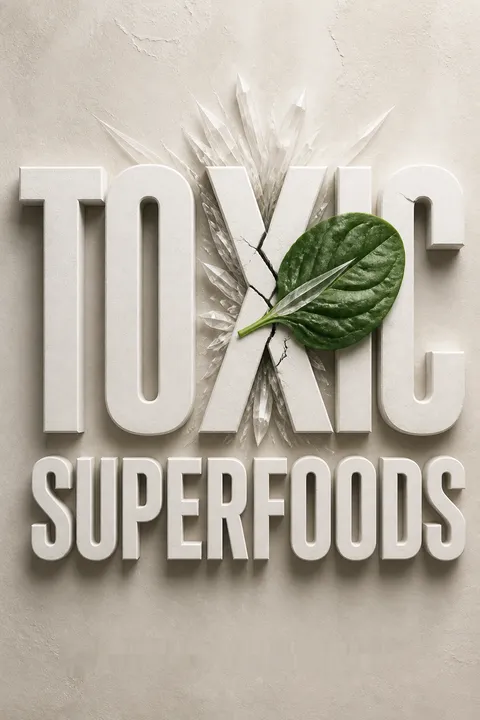


Key Takeaways
A “superfood” label tells you nothing about its oxalate dose
The hidden ingredient. Oxalates are compounds made by many plants. Norton argues that concentrated servings of spinach, almonds, and other fashionable health foods can deliver far more than eaters expect. She opens with actor Liam Hemsworth’s account of a kidney stone after regularly drinking smoothies made with large amounts of spinach and almond products. Medical case reports in the book describe acute kidney injuries linked to extreme juicing or smoothie regimens, including in people with added vulnerabilities.
A warning, not a verdict. These cases make a credible point: a food’s healthy reputation does not guarantee that every quantity or preparation is safe for everyone. They do not show that ordinary servings of spinach cause widespread illness. Norton also recounts her own years of fatigue, pain, and sleep problems, followed by improvement after changing her diet, a personal story that motivates her investigation but cannot establish cause by itself.
The useful shift is from judging foods by their halo to asking about dose, preparation, and individual susceptibility. That is standard exposure-science reasoning: a substance’s effects depend on how much reaches the body and under what conditions. Case reports are valuable early warnings, especially for unusual, severe outcomes, but they cannot estimate how common those outcomes are. The distinction matters here because a striking kidney-injury case supports caution about extreme intake, not a blanket conclusion that a particular food is broadly dangerous.
Count concentrated servings, not health-food labels, when estimating oxalate exposure
Small habits add up. Norton estimates that a typical daily intake is roughly 150 to 200 milligrams of oxalate, while she classifies 250 milligrams or more as high and over 600 milligrams as extremely high. Her food estimates show how quickly a menu can climb: a serving of raw spinach can contain about 450 milligrams, a small portion of almonds around 120 milligrams, and a quarter cup of chia seeds about 260 milligrams. The exact values vary, and the book stresses that its numbers are approximations.
Modern formats concentrate exposure. Smoothies, nut milks, seed bars, chips, and frequent snacks can turn several modest-looking choices into a large daily total. In Norton’s example, two menus that look similarly wholesome differ by a factor of ten because one includes high-oxalate greens and other concentrated foods.
This is a practical form of nutritional accounting: the relevant unit is not “vegetable” or “snack,” but the actual serving and how often it appears. It also exposes a limitation in health advice based on broad food categories. Two leafy greens can differ dramatically, just as whole nuts and a drink made from processed nuts need not behave identically. The book’s estimates are too variable to support false precision, but they can still flag major sources worth checking, especially when the same foods recur daily.
Understand oxalate as plant-defense chemistry, not a nutrient
Plants have defenses. Oxalate is part of how plants manage minerals and deter predators. It occurs as soluble compounds and as crystals, including needle-shaped crystals called raphides. Some plants use these crystals with other irritants to damage or discourage animals that eat them. In people, Norton describes soluble oxalate as able to bind minerals such as calcium and magnesium, while crystals may irritate tissues.
Preparation changes exposure. The book warns that blending or juicing breaks plant cells open and may make their contents more available. Cooking does not destroy oxalate, though boiling can reduce some soluble oxalate if the cooking water is discarded. This is not a universal fix: spinach and chard can remain high even after cooking. The author also notes that variety, ripeness, growing conditions, and serving size complicate food estimates.
The plant-defense framing corrects a common blind spot: edible does not mean chemically inert. It is also a useful counterweight to the simplistic idea that “natural” automatically means harmless. At the same time, a plant’s defensive function does not by itself establish meaningful harm at ordinary human doses. That requires evidence about the amount absorbed, the body’s capacity to handle it, and actual health outcomes. The book is strongest when it uses plant chemistry to prompt better questions, rather than treating the existence of a toxin as proof of routine toxicity.
Separate kidney evidence from claims of body-wide oxalate disease
The established concern. Calcium oxalate is a major component of many kidney stones, and medical reports describe kidney injury after unusually high oxalate exposure, particularly in people with kidney disease or impaired absorption. Norton argues that oxalate may also accumulate in other tissues and contribute to fatigue, pain, digestive problems, neurological symptoms, and inflammation.
The evidence is uneven. The book connects these proposed effects to two “engines of illness”: disrupted cellular energy and repair, and persistent immune activation. It draws on cell and animal studies, cases of rare inherited primary hyperoxaluria, acute poisonings, and personal recovery stories. Those sources support biological plausibility and concern, but they do not establish that everyday dietary oxalate causes the broad range of chronic conditions the book discusses.
A mechanism can explain how damage might occur without showing how often it does, or whether it explains a particular person’s symptoms. That distinction is central to reading this book fairly. The kidney-stone and acute-nephropathy material has a firmer clinical footing than the proposed links to many common, multisystem disorders. Keeping those evidence levels separate preserves the book’s valuable warning about overlooked exposure while resisting the temptation to turn one possible cause into an all-purpose explanation.
Treat tests as incomplete snapshots, not verdicts about oxalate burden
Measurement has limits. Norton says urinary oxalate can fluctuate with meals and over time, while blood levels may be low when tested after fasting. She argues that a normal result may not reveal what is retained in tissue, and that a single urine collection can miss variation. The book also emphasizes that food oxalate data are incomplete and imprecise, making personal exposure difficult to calculate exactly.
Risk depends on context. The author highlights factors that may raise concern, including a history of kidney stones, bariatric surgery, intestinal inflammation or malabsorption, and diets built around high-oxalate staples with little calcium. These factors are not a diagnosis. The book’s key point is that symptoms, diet, medical history, and appropriate clinical testing need to be considered together, rather than treating one measurement as a complete answer.
The broader lesson is sound: biological measurements are time-bound observations, not perfect readouts of an entire system. But uncertainty cuts both ways. A test can miss a problem, and an inconclusive test does not prove that a hidden problem exists. When symptoms are diverse and nonspecific, that distinction protects people from both premature dismissal and premature self-diagnosis. Kidney symptoms, a stone history, or malabsorption deserve clinical evaluation; the book’s proposed systemic burden cannot be confirmed by its symptom checklist alone.
Replace high-dose staples without treating every vegetable as suspect
Choose by evidence and portion. Norton identifies spinach, chard, beet greens, many nuts and seeds, quinoa, buckwheat, and some teas as foods that can contribute substantial oxalate. She contrasts them with lower-oxalate choices such as romaine, arugula, cabbage, cauliflower, and turnips. The book argues that a low-oxalate pattern need not mean avoiding all plants, though it says a plant-heavy eater may need to pay closer attention to portions and food data.
Swap, do not simply subtract. Suggested changes include romaine or arugula instead of spinach, cauliflower or turnips instead of potatoes, and pumpkin seeds instead of almonds. Food tables should be treated as rough guides: the book notes that ripeness and processing can shift levels, while untested foods are harder to assess. Boiling and discarding water may help with some vegetables, but does not make every high-oxalate food low in oxalate.
This is the most usable part of the program: it turns a controversial theory into specific, reversible substitutions rather than a demand to fear an entire food group. The author’s own tables also reveal why simple labels fail: “greens” are not one nutritional category. Still, swapping foods should preserve adequate energy and essential nutrients, especially for children, pregnant people, and anyone with a restrictive diet. The book’s criticism of plant-centric eating is broader than its oxalate case can prove; its narrower advice to notice unusually concentrated staples is more persuasive.
Lower intake in stages, not with a sudden plunge to zero
Two phases, according to Norton. The first phase is to reduce a very high intake toward what the author calls a normal range, roughly 150 to 200 milligrams per day, and allow time for adjustment. The second is to move lower, with under 60 milligrams per day presented as a therapeutic target for people seeking further reduction. These numbers are the author’s practical estimates, not precise thresholds that can be calculated with certainty for every person.
Ron’s gradual change. In the book, Ron had been eating large amounts of dark chocolate and peanut butter. He first reduced his intake as household meals changed, then gave up those two daily snacks; his thumb pain improved and playing piano became easier. Norton uses his experience to illustrate a gradual transition. She cautions that abrupt changes may be difficult, especially for people with kidney or other health problems.
The phased approach has a behavioral advantage even where its proposed biology remains uncertain: it reduces the burden of changing a familiar diet all at once and creates space to notice what is happening. That is preferable to an all-or-nothing response to a complicated health claim. The numerical zones, however, should not be mistaken for universal medical cutoffs. Food measurements are fuzzy, individual absorption varies, and people with kidney disease or malabsorption need individualized guidance rather than a self-directed target.
Track symptoms, but don’t mistake a flare for proof of detox
Improvement can be uneven. Norton describes “oxalate clearing” as the proposed release and removal of accumulated oxalate after dietary intake falls. She says some people report temporary changes in pain, sleep, mood, digestion, skin, or urine during this process. Her own story includes early improvement followed by the return of fatigue and joint pain, which she initially misread before resuming the diet more consistently. She also tells Gwen’s story of significant symptoms after an abrupt change.
Keep other explanations open. The book recommends gradual changes and symptom notes, but its interpretation of new symptoms as clearing is not a validated diagnostic test. A rash, pain, urinary change, or heart symptom may have many causes. Severe or persistent symptoms should not be waved away as detox, and a symptom flare alone cannot show that oxalate is leaving the body.
A symptom diary can improve recall and help reveal patterns, especially when changes are gradual and multiple foods are involved. The danger is interpretive: once “clearing” becomes the default explanation, worsening symptoms can seem to confirm the theory and discourage appropriate care. This is a familiar problem in self-experimentation, where a compelling narrative can absorb both improvement and deterioration. A safer approach treats symptom tracking as observation, not diagnosis, and gives medical red flags priority over any dietary explanation.
Use a dietary trial to test a theory, not declare a cure
Make the experiment legible. Norton suggests a consistent three-month reduction in high-oxalate foods, with notes on intake and symptoms. She presents the trial as a way to see whether particular problems improve and discusses reintroducing oxalate as a challenge. Because that challenge can provoke symptoms and is not a validated diagnostic procedure, it should not be treated as a do-it-yourself test, especially for someone with kidney disease or a history of stones.
Support is not a substitute for care. The book also discusses rest, food adequacy, and supplements such as calcium, magnesium, potassium, citrate, and B vitamins. These recommendations are extensive and depend on health status; the book itself warns that kidney problems require medical oversight. Its most defensible practical message is to identify concentrated sources, change deliberately, and seek qualified care for significant symptoms rather than assuming a supplement or diet resolves them.
A well-kept dietary trial can generate useful personal evidence, but it is not the same as a controlled clinical study. Changes in expectation, meal quality, medication use, sleep, and other foods can all influence how someone feels. Reversibility and careful record-keeping improve the experiment, while medical guidance helps prevent risky restriction or unsupervised supplementation. The strongest outcome is not certainty that oxalate explains everything; it is a clearer, safer conversation about exposure, symptoms, and plausible alternatives.
Analysis
Toxic Superfoods is a memoir-backed nutrition argument, a survey of scattered toxicology, and a self-help program. Its narrative engine is the author’s reversal: years of trying to eat healthfully while feeling unwell, followed by improvement after reducing oxalate-rich staples. Stories of kidney injury and readers’ symptom relief make the hidden-exposure thesis vivid. The practical center is narrower and more useful than the book’s most expansive claims: concentrated foods can contain unexpectedly high oxalate, food values vary, and extreme intake may be dangerous, especially when kidney function or intestinal absorption is impaired.
The book also asks readers to accept a much larger proposition: routine dietary exposure may accumulate throughout the body and explain many common chronic symptoms. It assembles mechanisms, animal experiments, rare inherited disease, acute poisoning cases, and testimonials. These sources can generate hypotheses, but they cannot establish that everyday eating causes the book’s extensive list of disorders. Evidence that crystals can injure tissue is not equivalent to evidence that they explain fatigue, mood problems, arthritis, or autoimmune conditions in a given person. The author acknowledges gaps in testing and human intervention research, even as the narrative sometimes speaks more confidently than those gaps warrant.
The central tension is therefore between a sensible exposure audit and a potentially overbroad diagnosis. The food tables, preparation discussion, and gradual substitutions help readers notice doses that conventional food labels do not display. But the proposed intake zones are approximate, and symptom changes during a self-directed trial cannot isolate oxalate as the cause. Readers should give the book most weight where established kidney risks and unusually high exposures are involved, and treat its body-wide disease theory as provisional. For anyone with stones, kidney impairment, malabsorption, serious symptoms, or a restrictive diet, dietary changes and supplements belong in a conversation with a qualified clinician. The book is most valuable as a prompt for informed questions, not as a replacement diagnostic system.
Review Summary
Toxic Superfoods by Sally K. Norton receives mixed reviews. Many readers praise it for providing valuable information about oxalates and their potential health impacts, citing personal experiences of improved health after reducing oxalate intake. Critics argue the book lacks sufficient scientific evidence and may promote unnecessary dietary restrictions. Some find the writing style challenging or overly anecdotal. Despite divided opinions, many readers appreciate the book for raising awareness about a lesser-known dietary concern and offering practical advice for implementing changes.
People Also Read





Glossary
Oxalate overload
Excess oxalate exposureNorton’s term for a state in which dietary and internally produced oxalate exceed what a person can comfortably process and excrete. She argues that excess may contribute to kidney stones and, in some people, wider tissue and symptom problems. The broader systemic interpretation is the book’s hypothesis, not a standard diagnosis established by the summary’s evidence.
Hyperoxaluria
High urinary oxalateA medical term for an unusually high amount of oxalate in the urine. It may arise from inherited metabolic disorders, kidney or intestinal conditions, or dietary exposure. The book emphasizes that urinary results vary and may not fully represent oxalate retained in tissues, but testing remains part of clinical assessment rather than something to dismiss.
Oxalosis
Oxalate deposited in tissuesThe accumulation of oxalate, often as calcium oxalate crystals, in body tissues. It is recognized in severe conditions such as advanced primary hyperoxaluria and some cases of kidney failure or poisoning. Norton uses tissue-deposition research to support a broader dietary theory, but deposits in severe disease do not by themselves prove common dietary oxalosis.
Oxalic acid syndrome
Historical symptom clusterA historical label for a varied group of digestive, urinary, musculoskeletal, fatigue, and mood complaints attributed to excessive oxalate. The book notes that this proposed syndrome lost clinical standing, in part because symptoms are nonspecific and reliable diagnostic methods were lacking. It is not presented as a routinely recognized modern diagnosis.
Raphides
Needle-shaped plant crystalsFine, needle-shaped crystals, commonly made of calcium oxalate, that occur in some plants. Norton describes them as part of plant defense and notes that they can irritate tissues in the mouth or digestive tract. Their presence and effects vary by plant; the term does not mean that every oxalate-containing food mechanically injures people.
Trigger-maintenance model
Spike starts, moderate intake sustainsA model discussed in the book in which a large oxalate exposure initiates crystal deposits and continued moderate exposure allows them to persist or grow. Norton draws on animal research to propose that reducing intake after a trigger could permit deposits to clear. The model is not established as a universal rule for human dietary intake.
Oxalate clearing
Proposed release and removalNorton’s term for the proposed mobilization and elimination of oxalate deposits after dietary intake is reduced. She associates this process with intermittent symptoms, but the mechanism and symptom pattern are not validated ways to diagnose clearance. New or worsening symptoms should not automatically be interpreted as evidence that oxalate is leaving the body.
Two engines of illness
Energy disruption and immune activationNorton’s framework for organizing her proposed effects of oxalate. The first engine is disrupted cellular energy production and tissue repair. The second is persistent immune activity responding to crystals or tissue injury. The framework links several biological mechanisms into one account, but it does not independently establish that dietary oxalate causes each chronic illness associated with those mechanisms.
Oxalate intake zones
Approximate exposure rangesNorton’s practical scheme for relating daily oxalate intake to proposed accumulation or removal. It includes ranges she labels Danger, Trigger, Maintenance, Homeostasis, and Remove, with lower intake intended to reduce exposure and potentially allow deposits to clear. The ranges are explicitly approximate; food testing, serving sizes, and individual responses are too variable for exact personal thresholds.
Oxalobacter formigenes
Oxalate-processing gut bacteriumA bacterium that uses oxalate and may influence how the intestine handles it. The book says detectable colonies are uncommon in many American adults and cautions against assuming that probiotics can reliably restore them or make high-oxalate diets harmless. Its role is a research topic, not a guarantee of protection from dietary exposure.
FAQ
What is Toxic Superfoods by Sally K. Norton about?
- Focus on oxalate overload: The book investigates how oxalates, natural toxins found in many plant-based "superfoods," can cause a wide range of health issues.
- Personal and scientific approach: Sally K. Norton combines her personal experience with oxalate toxicity and extensive scientific research to explain the mechanisms and consequences of oxalate overload.
- Comprehensive structure: The book is divided into two parts: the first explains oxalate toxicity and its overlooked role in chronic illness, while the second offers practical strategies for recovery and dietary change.
Why should I read Toxic Superfoods by Sally K. Norton?
- Uncover hidden health risks: The book reveals how common "healthy" foods like spinach, almonds, and turmeric may be causing unexplained symptoms due to their high oxalate content.
- Practical recovery guidance: Norton provides actionable advice on identifying, reducing, and managing oxalate intake, including recipes and meal plans.
- Challenge nutrition myths: The book encourages readers to question mainstream dietary advice and empowers them to make informed, personalized health choices.
What are the key takeaways from Toxic Superfoods by Sally K. Norton?
- Oxalate overload is common: Many people unknowingly consume excessive oxalates, leading to chronic symptoms and diseases.
- Symptoms are wide-ranging: Oxalate toxicity can manifest as digestive issues, joint pain, fatigue, neurological problems, and more.
- Recovery is possible: A gradual, low-oxalate diet, combined with targeted supplements and lifestyle changes, can support healing and symptom relief.
What are oxalates, and why does Toxic Superfoods by Sally K. Norton consider them harmful?
- Plant defense chemicals: Oxalates are natural toxins produced by plants to deter predators, including humans.
- Cellular and tissue damage: They bind to minerals like calcium and magnesium, forming crystals that damage tissues, disrupt energy production, and cause inflammation.
- Chronic health consequences: Over time, oxalate accumulation can lead to mineral deficiencies, kidney stones, joint pain, and contribute to diseases such as osteoporosis and neurological disorders.
How much oxalate is too much, according to Toxic Superfoods by Sally K. Norton?
- Safe intake levels: A normal, safe oxalate intake is about 150–200 mg per day; exceeding 250 mg daily is considered high and potentially harmful.
- High-oxalate foods: Foods like spinach, almonds, and sweet potatoes can easily push intake into the high or extremely high range (over 600 mg).
- Meal impact: Even a single meal with 60 mg or more oxalate can trigger crystal accumulation, making portion control and meal composition important.
What symptoms and health problems are linked to oxalate overload in Toxic Superfoods by Sally K. Norton?
- Wide symptom range: Oxalate overload can cause digestive distress, joint pain, fatigue, brain fog, mood disorders, skin issues, and urinary problems.
- Chronic diseases: It is associated with kidney stones, arthritis, fibromyalgia, autoimmune conditions, vascular inflammation, and neurological disorders like Parkinson’s and dementia.
- Invisible damage: Symptoms can be subtle, delayed, or misdiagnosed, making oxalate toxicity difficult to identify without awareness.
Why is oxalate overload often overlooked by doctors and nutritionists, according to Toxic Superfoods by Sally K. Norton?
- Lack of awareness: The medical and nutrition fields have largely ignored oxalate toxicity, focusing instead on test-based diagnoses and compartmentalized specialties.
- Inadequate testing: Standard urine and blood tests are unreliable for detecting oxalate burden, and tissue deposits are hard to identify.
- Cultural bias: Prevailing nutrition dogma promotes plant-based diets, overlooking the potential harm of plant toxins like oxalates.
How does oxalate accumulate in the body, and what are the consequences, as explained in Toxic Superfoods by Sally K. Norton?
- Incomplete excretion: The body cannot eliminate all oxalate efficiently, leading to deposits in bones, joints, blood vessels, and organs.
- Trigger and maintenance doses: Occasional high-oxalate meals combined with moderate daily intake promote chronic accumulation.
- Inflammation and tissue damage: Deposited oxalate crystals provoke immune responses, chronic inflammation, and fibrosis, contributing to a range of health problems.
What is the two-phase low-oxalate diet program recommended in Toxic Superfoods by Sally K. Norton?
- Phase One – Reduce danger: Gradually lower oxalate intake from high to moderate levels (150–200 mg/day) to halt further accumulation and allow the body to adjust.
- Phase Two – Repair health: Further reduce intake to under 60–100 mg/day to promote safe clearing of oxalate deposits and manage detox symptoms.
- Emphasis on gradual change: The program stresses slow, deliberate dietary adjustments to minimize symptoms and support long-term recovery.
What are the recommended mineral supplements and their dosing in Toxic Superfoods by Sally K. Norton?
- Calcium citrate: Start with 400 mg per day, increasing to 1,000–1,600 mg daily, taken without vitamin D and before meals to bind oxalate in the gut.
- Magnesium: Begin with ~200 mg daily, increasing to ~600 mg as tolerated, using forms like citrate, malate, or chloride to support energy and prevent crystallization.
- Potassium: Start with 800 mg per day, increasing to ~2,500 mg in divided doses with food, using potassium citrate or bicarbonate for muscle and bone health.
What myths about minerals and supplements does Toxic Superfoods by Sally K. Norton debunk?
- Calcium supplements and calcifications: The book clarifies that calcium supplementation does not cause harmful deposits and is actually protective during oxalate clearance.
- Vitamin D with calcium: Norton advises against combining vitamin D with calcium supplements, as vitamin D increases calcium absorption, reducing its availability to bind oxalate.
- Probiotics and oxalate: Most probiotics are ineffective for oxalate management; the key oxalate-degrading bacteria cannot be reliably restored through supplements.
What lifestyle and supportive strategies does Toxic Superfoods by Sally K. Norton recommend for recovery from oxalate overload?
- Rest and stress reduction: Prioritize adequate rest, mindfulness, and creative activities to support emotional and spiritual healing.
- Heat and cold therapies: Use sauna, mineral baths, hot packs, and cold showers to relieve pain and promote detoxification.
- Avoid harmful substances: Limit NSAIDs and excessive antioxidant supplements, focusing instead on natural, supportive approaches and building a strong support network for lasting recovery.
Download PDF
Download EPUB
.epub digital book format is ideal for reading ebooks on phones, tablets, and e-readers.








