

Key Takeaways
Treat trading like a profession, not a shortcut to easy market money
Skill takes deliberate practice. Tharp argues that opening an account is easy, but trading consistently well requires years of study, testing, and practice. Reading stock tips or recognizing chart patterns is no substitute for a prepared method. The book frames trading as a human-performance discipline: results depend on the market, the system, and the trader’s ability to carry out the plan. Its three broad stages move from learning sound trading principles, to changing psychological habits, to developing deeper present-moment awareness.
Losses expose the gap. Trader David Witkin began with research, options, and conviction, but lacked clear exits and risk limits. After the 2000 to 2002 downturn erased much of his savings, he recognized that knowledge alone had not prepared him to trade. The book’s central invitation is to examine the rules and assumptions that shape both trading and the trader.
What's striking is the contrast between trading’s low barrier to entry and its high demand for disciplined decision-making. That gap resembles other skilled professions, where access to the tools is not evidence of competence. Deliberate practice matters most when it includes feedback, careful record-keeping, and correction of errors, rather than mere repetition. The 10,000-hour comparison is a useful warning against expecting instant mastery, not a reliable timetable for success. Markets change, and hours spent practicing a fragile strategy can reinforce the wrong lessons.
Position sizing can turn identical trades into radically different outcomes
The bet changes the result. Position sizing is the decision about how much capital to expose on a trade. Tharp uses a comparison among 25 accounts taking the same automated trades: reported annual gains ranged from 4 to 95 percent, while one account endured a 65 percent drawdown. The difference came from each trader’s risk choices and objectives, not from better entries. Small risks favored smaller fluctuations and gains; larger, more aggressive exposure could magnify both.
Start with the objective. A trader seeking modest growth and limited drawdowns needs a different sizing approach from one willing to accept severe losses for a chance at faster growth. The book’s marble game makes this visible: everyone draws the same winning or losing outcomes, but chooses the size of each bet. The lesson is not that a particular risk level guarantees returns, but that sizing can dominate the effect of identical signals.
This is the book’s most consequential technical insight because it shifts attention from prediction to exposure. Portfolio theory and risk-of-ruin analysis likewise show that a positive edge can still destroy capital when bets are too large. Yet the wide account results are an illustration, not a controlled demonstration that a sizing rule will reliably deliver a chosen return. The sequence of wins and losses matters, as do fees, slippage, liquidity, and changing market behavior. Risk must be sized for survival, not merely for an attractive backtest.
Measure each trade against initial risk, not your batting average
Normalize wins and losses. An R-multiple expresses a trade’s result relative to its initial risk, called 1R. If a trader risks $500 and loses $500, the result is minus 1R; a $1,500 gain is plus 3R. This measure makes different trades easier to compare and directs attention to the size of wins and losses, not just how often a trader is right.
Win less, earn more. Witkin reported winning only about 30 percent of his trades in a year when his account rose more than 130 percent, with a maximum drawdown below 20 percent. His larger winners outweighed frequent small losses. In the marble example, there are more losing outcomes than winning ones, but the larger potential wins can still produce positive expectancy. Expectancy is the average R result across many trades; it must be positive, and the trader must survive the losing streaks long enough to realize it.
R-multiples are useful because they provide a common unit for evaluating a system and its execution. The underlying mathematics is straightforward: a low hit rate can be profitable when gains are sufficiently larger than losses. But expectancy is an estimate, not a promise. Small samples, shifting market conditions, and rare extreme losses can make historical averages misleading. A trader should pair the average with variability, drawdown estimates, and tests that challenge the strategy, rather than treating one favorable year as proof of a durable edge.
Build separate playbooks for distinct market climates
Markets are not one condition. Tharp distinguishes six broad market types by combining direction, up, sideways, or down, with volatility, quiet or volatile. A strategy that works in a quiet bull market may fail in a volatile bear market. The book recommends gathering trade results under the conditions in which a system is intended to operate, then deciding when to activate, reduce, or stop using it.
Test the conditions, not just the idea. Laurens Bensdorp developed multiple systems for different environments, tested them across thousands of U.S. and Canadian stocks, and used automation to reduce execution errors. Another trader, Martin Horsey, changed the strategies and risk he used as markets shifted from volatile declines to quieter advances. These accounts illustrate adaptation, not certainty: historical samples can help estimate likely behavior, but cannot guarantee how a system will perform next.
The market-type framework is a practical application of conditional reasoning: a strategy’s performance depends on the environment in which it is used. It also guards against the common error of treating a method’s past results as universal. The hard part is classification. Market regimes do not announce clean transitions, and a system can appear broken simply because it is in a normal losing patch. Robust practice requires predefined criteria, adequate samples, and humility about how quickly apparent patterns can decay.
Judge yourself by rule-following, then price every mistake
A mistake is a rule violation. In Tharp’s vocabulary, a losing trade is not automatically a mistake if it followed the plan. A profitable trade can still be a mistake if it broke the rules. This reframes success around execution, which can be reviewed, rather than the unknowable outcome of any single trade.
Record the cost in R. The book gives examples of traders who exit early, ignore stops, take tips outside their system, or skip valid trades after becoming upset. Some rule breaks make money, but that does not make them sound decisions. Their impact can be measured against the result the plan would have produced. The author’s program uses 95 percent execution efficiency as a graduation standard, meaning no more than one mistake in 20 trades. Logs and daily reviews help identify recurring errors and their causes.
Separating process quality from outcome quality is central to sound decisions under uncertainty. In statistics, one event cannot tell whether a decision was good; repeated decisions and their distributions are more informative. A mistake log can therefore reveal whether poor performance comes from a weak system or inconsistent execution. The framework still needs care: rules can be badly designed, and rigid adherence to a flawed plan is not competence. Review both whether the trader followed the rules and whether the evidence still supports the rules.
Set objectives first, then choose systems and risk to match
Know what winning means. Tharp says objectives should specify both a desired gain and an acceptable drawdown, because “make as much as possible” gives no practical guidance. Position sizing is then chosen to pursue those objectives while limiting the chance of ruin. The same trading system can suit one person and be intolerable to another, depending on temperament, schedule, beliefs, and capacity to withstand losses.
Build a business, not a tip sheet. The book recommends a personal trading handbook covering objectives, market assumptions, systems, contingencies, record-keeping, and decision rules. Rick Freeman left commercial banking after building a plan and investment income that exceeded expenses, a definition the book uses for financial freedom. His account is a personal example, not a general forecast. The practical lesson is to design trading around a life and risk budget, rather than letting the pursuit of returns dictate both.
Objectives make risk preferences explicit, which is valuable because people often overestimate how much loss they can tolerate. A written plan can also reduce decision fatigue by settling recurring questions before capital is at stake. The book’s notion of financial freedom, passive income greater than expenses, is a useful accounting threshold, though real-life security also depends on inflation, taxes, healthcare, and income stability. A plan should be revisited when circumstances change, while resisting the temptation to rewrite it after every losing streak.
Trade your market model, so inspect the beliefs filtering what you see
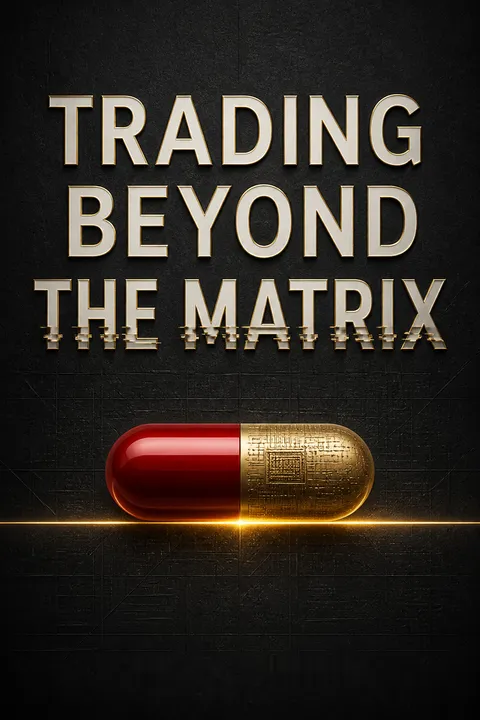
Beliefs shape interpretation. Tharp’s “Matrix” is the collection of assumptions through which a trader interprets prices, risk, and personal success. Two traders can view the same chart and reach different conclusions because they use different timeframes, indicators, and definitions. The book’s point is not that prices are imaginary, but that decisions are made from a model of prices, never from unfiltered access to every market fact.
Question the model. The Belief Examination Paradigm asks the trader to identify a belief, consider where it came from, examine what it leads toward and away from, and judge whether it is useful. Emotional charge may make a belief difficult to change. For example, the belief that one must be right can turn an ordinary stopped trade into a personal failure, encouraging the trader to ignore the next stop or change the system impulsively.
The Matrix metaphor captures a genuine problem in perception: attention is selective, and expectations influence what people notice and remember. In behavioral finance, confirmation bias and overconfidence can distort how investors interpret evidence. A structured belief audit can make hidden assumptions testable. Still, usefulness is not the same as truth. A belief that feels empowering may remain inaccurate, so trading beliefs should be checked against documented outcomes and competing explanations, not judged solely by whether they provide confidence.
Feel difficult emotions without letting them place the trade
Notice the inner conflict. The book describes “parts” as internal roles or impulses, such as a risk-averse protector, an excitement-seeker, or a perfectionist. Each may be trying to help, yet their competing aims can produce inconsistent decisions. Parts negotiation is an exercise in identifying the conflicting motives and finding a way for them to work together, rather than letting one impulse seize control.
Allow feelings without obeying them. One contributor describes repeatedly sitting with feelings of inadequacy instead of suppressing them. He reports that the feelings became less intense and stopped dictating his behavior. The book calls this feeling release. In trading, the aim is not to eliminate all emotion, but to notice fear, frustration, or shame before it turns into revenge trading, premature exits, or avoidance. The techniques are presented as personal practices, not guaranteed cures.
The practical value here is emotional labeling and response separation: noticing an impulse creates room to choose rather than react. This is compatible with contemporary approaches that treat thoughts and feelings as experiences, not commands. The parts metaphor can make conflicting motives easier to discuss, but it should not be mistaken for a literal map of the mind. Intense or persistent distress may need professional care. Emotional work can support disciplined execution, but it cannot substitute for a tested system or sound financial safeguards.
Use calm awareness to execute a tested edge, not replace one
The deepest transformation is presence. Tharp describes a progression from changing trading practices, to examining beliefs and emotions, to developing greater awareness. He calls the final stage trading in the now: observing the market with less internal chatter and acting according to a plan. Several contributors describe meditation, spiritual practice, or a personal Inner Guidance as central to their progress.
A striking but exceptional case. Thanh Nguyen reported making 132.5R across 152 trades in one month, with 81.58 percent winning trades and no recorded execution mistakes. She attributed her focused trading to intensive meditation and mindfulness practice. The book presents this as a personal transformation, not proof that meditation predicts prices or that spiritual guidance can replace risk controls. Its grounded application is to cultivate attention while keeping decisions accountable to tested rules.
Mindfulness can plausibly help traders notice distraction and regulate impulsive reactions, benefits that matter in any high-pressure task. But a calm state does not reveal future prices, and extraordinary single-month performance cannot establish a repeatable advantage. The reported result is best read as an account of focused execution, not a benchmark. The useful combination is contemplative practice for attention, statistical testing for the trading edge, and strict risk limits for the possibility that both judgment and models can fail.
Analysis
Trading Beyond the Matrix is an unusual hybrid: part trading manual, part psychology workbook, and part spiritual memoir. Its strongest, most transferable argument is technical and behavioral. Traders should define objectives, quantify results relative to initial risk, size positions deliberately, match systems to market conditions, and track rule violations. The stories give those ideas a human arc. Witkin moves from research-heavy confidence to large losses, then reports a 130 percent year after adopting risk limits. Horsey replaces hurried, discretionary trading with written rules and risk measures. Thanh’s account illustrates the book’s more ambitious claim that inner stillness can change performance.
The architecture is cumulative. Level I changes how the trading game is designed. Level II examines beliefs, emotions, and conflicting internal motives. Level III describes expanded awareness, often through explicitly spiritual practices. This progression makes sense as a coaching narrative: better plans are difficult to execute when fear or impulsiveness repeatedly overrides them. The book’s useful distinction between a losing trade and a mistake is especially sharp. One is an outcome; the other is a decision process that can be audited.
The evidence, however, is uneven. Trading outcomes are largely self-reported stories from selected students, alongside workshop samples and historical testing. They can illustrate methods, but do not establish that the program caused the returns or that typical readers can reproduce them. The stated levels of consciousness, Hawkins’s numerical scale, manifestation, and claims about blessings changing the brain are presented as spiritual interpretations, not demonstrated trading mechanisms. They should not be conflated with the more testable claims about risk and execution.
The book’s language of total responsibility can motivate honest review, but it needs a boundary: traders control their preparation and choices, not every market event or life circumstance. Used carefully, its central metaphor is productive. A trader cannot see the market without a model, but can inspect that model, test it, and manage the risk of being wrong. The red pill is not certainty. It is disciplined awareness of uncertainty.
Review Summary
Trading Beyond the Matrix receives mixed reviews. Some readers find it transformative, praising its focus on psychology and spirituality in trading. They appreciate the personal development insights and practical exercises. However, others criticize it as overly religious, irrelevant to trading, and a sales pitch for expensive courses. Critics call it "garbage" and a "ripoff," while supporters consider it life-changing. The book's unconventional approach, blending trading with spiritual concepts, polarizes readers. Overall, opinions vary widely, with some finding great value and others seeing it as useless.
People Also Read










Glossary
Tharp Think
Trading principles from modelingTharp’s name for a collection of principles drawn from studying successful traders. The approach emphasizes preparation, personal responsibility, clear objectives, position sizing, reward relative to risk, statistical evaluation, and adapting systems to market conditions. The book presents these ideas as a combined way of thinking, rather than as a single entry signal or ready-made trading system.
R-multiple
Result relative to initial riskA way to express a trade’s profit or loss as a multiple of the initial amount at risk, called 1R. If a trader risks $500 and loses $500, the result is minus 1R; a $1,500 gain is plus 3R. Describing trades this way allows results from different positions to be compared and supports estimates of system expectancy.
position sizing strategy
How much capital to riskThe rules or calculations that determine the size of a position or the amount of capital exposed to a trade. In Tharp’s framework, position sizing is chosen in relation to the trader’s objectives, risk tolerance, and the system’s distribution of results. The same entries and exits can produce very different gains and drawdowns under different sizing methods.
expectancy
Average R per tradeThe average result of a trading system across a sample of trades, expressed in R-multiples. Positive expectancy means the sample has produced a positive average relative to initial risk. It does not guarantee that future trades will be profitable, and its usefulness depends on the quality and relevance of the sample, including whether it represents the market conditions in which the system will be used.
market type
Direction and volatility conditionsA broad classification of market conditions based on direction and volatility. The book describes six combinations: bullish, sideways, or bearish markets, each under quiet or volatile conditions. The framework is used to evaluate which environments suit a particular system, rather than assuming one strategy will perform equally well in every market.
System Quality Number
A system quality measureUsually abbreviated SQN, this measure uses the mean and variability of a system’s R-multiples, together with the number of trades, to assess its quality. In the book’s framework, a higher SQN suggests that position sizing may make it easier to pursue objectives with that system. It is a statistical summary, not a guarantee of future profitability.
Belief Examination Paradigm
Questions for testing beliefsA process for examining whether a belief is useful. The trader identifies the belief, considers where it came from, asks what it leads into and what it helps avoid, and evaluates its usefulness. If a belief is emotionally charged, the book suggests working with the associated feeling before trying to replace it. The method is intended to reveal assumptions that shape decisions.
parts negotiation
Reconciling competing inner motivesAn exercise for addressing conflict between internal roles or impulses, such as wanting trading profits while fearing losses. The person identifies each part’s positive intention, then looks for a practical arrangement that serves both intentions. The book treats parts as psychological constructs, not separate literal people, and presents the technique as a way to reduce inconsistent behavior.
Transformational Meditation
Parts work with spiritual guidanceA technique developed by Libby Adams that combines an internal-parts exercise with a Higher Self or personal spiritual guide. A person brings a troubling part into dialogue with that guiding presence, then seeks integration or release. Contributors describe it as helping them examine emotional blocks. The book presents it as a personal development practice, not as a validated method for predicting markets.
FAQ
What's Trading Beyond the Matrix about?
- Focus on Transformation: The book emphasizes the transformation of traders and investors through psychological and spiritual growth, using trading as a metaphor for personal development.
- Tharp Think Principles: It introduces "Tharp Think," a set of principles guiding traders to understand their beliefs, emotions, and behaviors in trading.
- Three Levels of Transformation: The author outlines three levels: transformation of the trading game, psychological transformations, and moving beyond the matrix by changing one’s level of consciousness.
Why should I read Trading Beyond the Matrix?
- Personal Growth: The book offers insights into personal development and self-awareness, applicable to various life aspects beyond trading.
- Proven Strategies: Van K. Tharp shares strategies that have helped many traders achieve financial success and improve psychological well-being.
- Unique Perspective: It combines technical analysis with psychological and spiritual insights, making it a comprehensive guide for traders and investors.
What are the key takeaways of Trading Beyond the Matrix?
- Understanding Beliefs: "You never trade the market itself; you trade your beliefs about the market," highlighting the importance of self-awareness in trading.
- Position Sizing Strategies: Emphasizes that "you meet your objectives through position sizing strategies," crucial for managing risk and achieving financial goals.
- Psychological Mastery: Trading success is largely psychological, and understanding one’s emotions and beliefs is essential for consistent performance.
What is Tharp Think, and why is it important?
- Core Principles: Tharp Think focuses on understanding oneself as a trader, including beliefs, emotions, and psychological aspects.
- Framework for Success: Provides a framework for traders to analyze performance and make informed decisions based on objectives and risk tolerance.
- Transformational Journey: Guides traders through a transformational journey, helping them overcome psychological barriers and achieve greater success.
How does Trading Beyond the Matrix integrate spiritual and trading elements?
- Spiritual and Trading Integration: Combines trading psychology with spiritual growth, emphasizing understanding oneself and one’s beliefs for successful trading.
- Oneness and Inner Guidance: Introduces concepts from the Oneness Movement, encouraging connection with Inner Guidance to enhance trading performance.
- Holistic Approach: Encourages viewing trading as a path to self-mastery rather than just a financial endeavor.
What is the Belief Examination Paradigm in Trading Beyond the Matrix?
- Definition: A structured approach to evaluate beliefs influencing trading and life, involving questions about origin, utility, and emotional charge.
- Steps Involved: Key questions include "Who gave it to me?" and "Is it useful?" to identify nonuseful beliefs sabotaging success.
- Transformative Power: Systematically examining and replacing limiting beliefs enhances performance and overall happiness.
How does the Oneness Movement influence trading in Trading Beyond the Matrix?
- Spiritual Connection: Teaches connection with higher consciousness, guiding trading decisions and leading to profound self and market understanding.
- Transformational Blessings: Discusses Oneness Blessings, facilitating personal transformation and enhancing trading effectiveness.
- Holistic Trading Approach: Integrates spiritual practices with trading strategies, encouraging self-mastery.
What is Transformational Meditation (TfM) as described in Trading Beyond the Matrix?
- Definition: A technique developed by Libby Adams focusing on resolving internal conflicts and releasing negative emotions.
- Process: Involves dialoguing with different parts of oneself to achieve greater self-awareness and healing.
- Benefits: Leads to significant personal transformations, confronting and releasing fears and negative emotions hindering trading success.
What are some personal transformation stories shared in Trading Beyond the Matrix?
- Kim Andersson's Journey: Overcame self-sabotage and fear of failure, finding purpose and happiness through the Super Trader program.
- Curtis Wee's Transformation: Shifted from trading out of fear to trading from happiness and peace, emphasizing personal responsibility.
- Thanh Nguyen's Experience: Transitioned from a stressed, unprofitable trader to a serene, successful day trader through meditative techniques.
What are the psychological rules of Tharp Think outlined in Trading Beyond the Matrix?
- Personal Responsibility: Traders are responsible for their results, emphasizing self-awareness and accountability in trading decisions.
- Beliefs Shape Reality: Beliefs significantly influence trading outcomes; understanding and transforming them is crucial for success.
- Emotional Management: Managing emotions effectively is essential, as emotional states impact trading performance.
What is the significance of the happiness scale in Trading Beyond the Matrix?
- Measuring Progress: Developed by David Hawkins, it gauges consciousness and well-being, reflecting personal growth.
- Correlation with Trading Success: Higher happiness levels are linked to better trading performance, as acceptance and peace lead to sound decisions.
- Personal Reflection: Serves as a tool for self-reflection, identifying improvement areas and tracking progress.
What are the best quotes from Trading Beyond the Matrix and what do they mean?
- "You never trade the market itself; you trade your beliefs about the market.": Emphasizes self-awareness and understanding personal beliefs in trading decisions.
- "You meet your objectives through position sizing strategies.": Highlights the critical role of position sizing in achieving financial goals and managing risk.
- "Everything has the meaning you give it.": Reflects the idea that perceptions and interpretations shape reality, underscoring conscious awareness in trading and life.
About the Author
Other books by Van K. Tharp
Download PDF
Download EPUB
.epub digital book format is ideal for reading ebooks on phones, tablets, and e-readers.








