

Key Takeaways
Self-actualization is a bridge to serving something larger than yourself.
Maslow’s unfinished idea. Abraham Maslow is famous for a pyramid that he never actually drew. His later work argued that becoming more fully yourself is not the final destination. A strong identity and fulfilled basic needs can make it easier to care about justice, beauty, and other people beyond your immediate circle. Near the end of his life, after a heart attack made mortality impossible to ignore, Maslow described a shift in what felt important: status and competition seemed smaller, while the world beyond the self became more precious. Kaufman rebuilds the theory around that paradox: personal growth can prepare a person to move beyond self-preoccupation, not deepen it.
A life, not a trophy. The goal is not to become a flawless, permanently fulfilled person. It is to develop your capacities in a way that also benefits others. A musician’s talent, for example, can be both a personal source of vitality and a gift to an audience.
What's striking is how this reframes ambition without condemning it. A developed self can become the instrument of contribution, much as a well-trained musician needs both individual technique and an ensemble. The claim is strongest when self-development is treated as a possibility, not a moral guarantee: confidence and success can serve generosity, but they can also serve domination. The book's emphasis on conditions, relationships, and social benefit helps prevent self-actualization from becoming another status badge. Its challenge is practical: judge growth not only by how capable a person feels, but also by what their capabilities make possible for others.
Build a sturdy inner boat, then raise the sail toward growth.
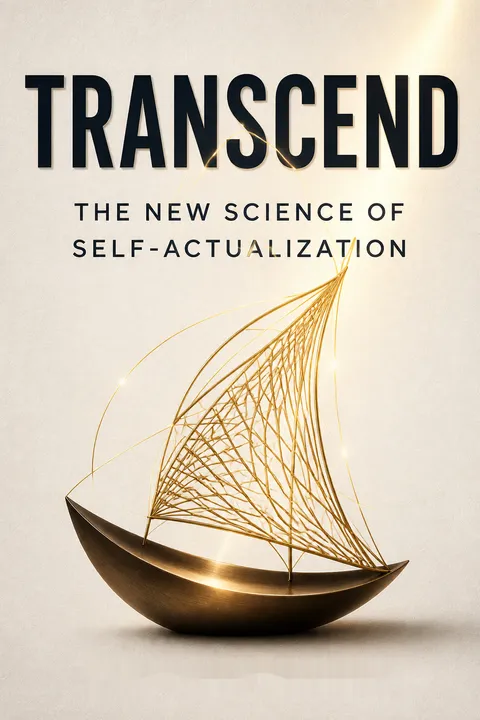
Needs work together. Kaufman replaces the familiar staircase with a sailboat. Its hull represents security needs: safety, connection, and self-esteem. Its sail represents growth needs: exploration, love, and purpose. Transcendence is not another rung above them, but a wider perspective made possible when the whole system works together. A boat with a weak hull is vulnerable to every wave; a sound hull without a sail can stay protected but go nowhere.
No level is permanently cleared. Needs overlap, rise and fall, and differ among people and cultures. A person pursuing a meaningful cause may still need belonging, confidence, or physical safety. The book calls unmet needs the D-realm, in which attention is pulled toward repairing a felt lack. The B-realm is a more open mode of being, where a person can perceive and appreciate life beyond immediate deficiency. Healthy development moves between these modes rather than graduating from one forever.
The sailboat is useful because it makes security and growth complementary rather than rival philosophies. In control theory, a system needs both stability and flexibility: stability keeps it oriented, while flexibility lets it respond to changing conditions. That is a better model of development than a one-way ladder. The metaphor also has limits. A boat can suggest that individuals control their own voyage, while poverty, discrimination, and violence can constrain the available routes. The book partly corrects for this by insisting that social conditions matter, but the metaphor works best when paired with attention to both personal agency and structural barriers.
Reduce chaos enough to explore, without waiting for perfect security.
Uncertainty consumes attention. Kaufman uses psychological entropy to describe the distress and mental disorder that rise when the world feels unpredictable. The brain tries to make events coherent and regain control; when threats persist, attention narrows toward survival and away from long-range aims. Hunger illustrates the point. Research on food deprivation found increases in irritability, anxiety, and impulsive behavior, with many responses easing when participants were fed again. Such behavior can be an adaptation to scarcity, not evidence of a defective character.
Context can change behavior. In a study described in the book, children on a reservation received casino royalties that lifted families out of poverty. By the fourth year, their psychiatric symptom levels matched those of children who had never been poor, with the strongest changes in aggression and hostility. This does not mean hardship disappears instantly, but it shows why safety cannot be reduced to a personal attitude. Work on security and growth can proceed together, even when life remains imperfect.
This section's most important move is from moral judgment to causal explanation. Scarcity is not merely a smaller bank balance; it can make the future feel less controllable and tilt attention toward immediate needs. That perspective can improve responses in schools, workplaces, and public policy by asking what conditions make constructive behavior feasible. It should not be turned into a claim that every harmful act is caused by deprivation, or that people in hardship lack agency. The stronger conclusion is narrower and more humane: behavior is partly shaped by perceived constraints, and changing those constraints can expand the choices people can realistically make.
Earn self-respect through competence and connection, not constant applause.
Self-esteem has two parts. Kaufman distinguishes self-worth, the sense that you matter, from mastery, the sense that you can act effectively. These can support each other, but neither is identical to status or praise. Healthy self-esteem grows through real accomplishment, close relationships, and continued development. By contrast, narcissism can become a defensive attempt to regulate an uncertain sense of worth. Grandiose narcissism seeks superiority and acclaim; vulnerable narcissism is more guarded, shame-sensitive, and hungry for reassurance.
Confidence is not domination. The book traces Maslow’s distinction between quiet confidence and compensatory dominance, where aggressive or arrogant behavior covers insecurity. It also notes that parental warmth is more closely linked to children’s self-esteem, while exaggerated praise and claims of specialness are more associated with narcissism. A practical test is whether success makes a person more capable of honest relationships and useful work, or more dependent on being treated as exceptional.
The distinction between self-worth and mastery clarifies why blanket reassurance often falls flat. People need both a sense of basic human value and evidence that their actions can affect the world. This echoes a broader developmental principle: dependable care can provide a base from which competence is tested and earned. The account also avoids equating confidence with selfishness, an important correction in cultures that sometimes praise self-erasure as virtue. Still, labels such as narcissism should be used cautiously. Traits vary by situation, and a behavior that looks entitled in one context may reflect fear or past mistreatment in another.
Use curiosity to meet uncertainty, but pair exploration with judgment.
Explore to grow. Exploration is the drive to seek and understand new, challenging, or uncertain experiences. Kaufman presents it as a foundation for growth, not just a taste for thrills. Alex Honnold, the climber who free-soloed Yosemite’s El Capitan without ropes, described his motivation as curiosity and testing his abilities, not chasing an adrenaline rush. His year of preparation shows that meaningful risk can involve careful practice and clear-eyed choices, not impulsiveness.
Openness needs discernment. The book also links exploration with learning from adversity. Posttraumatic growth means positive change that can emerge through struggling with major hardship, such as a new purpose or deeper relationships. It is not a reason to romanticize trauma: survivors may prefer that the event had never happened, and growth is not guaranteed. Curiosity, support, and a willingness to face painful thoughts can help people make sense of hardship. Avoiding every difficult feeling, by contrast, can shrink opportunities to learn and adapt.
This account usefully separates novelty seeking from recklessness. In research on learning, challenge can deepen understanding when it is demanding but manageable; overwhelming threat can instead impair attention and memory. Honnold illustrates how expertise can change what feels possible, but his extraordinary risk tolerance is not a sensible template for everyone. The transferable lesson is to choose uncertainty deliberately and prepare for it. The trauma discussion also benefits from a vital ethical boundary: meaning-making may follow suffering, but suffering is not thereby made necessary or beneficial. Respecting survivors includes leaving room for resilience without prescribing it.
Let love become an outward practice, not a bid for approval.
Connection is more than inclusion. The book separates belonging, the need to be accepted, from intimacy, the need for mutual, trusting closeness. A crowd of acquaintances cannot automatically replace a few relationships in which people feel seen. Research reviewed here links loneliness with serious health risks, while the Greek island of Ikaria offers a contrasting picture: residents share food, keep older people involved, and organize much of life around community.
Love can be given, too. Maslow’s B-love is love for another person’s being, rather than a strategy to fill one’s own emotional deficit. Kaufman’s Light Triad describes a beneficent orientation that includes treating people as valuable, appreciating their successes, and expecting basic fairness. This does not require self-neglect. Healthy self-love includes boundaries, rest, and the ability to say no. In close relationships, the aim is to support another person’s growth without surrendering your own identity.
What's valuable here is the refusal to treat popularity as proof of connection. Relationships are not interchangeable units; their quality depends on responsiveness, mutuality, and the freedom to be known. The distinction between compassion and self-sacrifice also matters in care work, where limitless availability can produce exhaustion rather than sustained generosity. At the same time, loving orientation should not be confused with trusting everyone equally. Context, power, and a person's behavior matter. A mature practice of care can remain open-hearted while setting boundaries and noticing when reciprocity is absent.
Choose a calling that fits, and release goals that no longer do.
Purpose must fit the person. A purpose is an overarching aspiration that gives effort direction and significance. Kaufman distinguishes a job, pursued mainly for income, from a career pursued for advancement, and a calling experienced as meaningful work that contributes to the world. A calling is more sustainable when it reflects personal values and interests, not only pressure from family, status, or guilt. Breaking an aspiration into specific, measurable, achievable, relevant, and time-limited steps makes progress easier to assess.
Persistence needs flexibility. Grit helps people stay with valued goals through setbacks, but rigid persistence can waste a life on an unreachable aim. Hope, as used here, combines energy for a goal with the ability to imagine alternate routes. Maslow also argued that worthwhile work can benefit both the individual and the wider community. Where the work environment permits, people can reshape tasks to use their strengths and create more meaning. When a goal no longer serves growth, disengaging can free attention for a better one.
This section avoids two common traps: assuming that passion must arrive fully formed, and assuming that persistence is always virtuous. Motivation research distinguishes personally endorsed goals from goals pursued mainly to avoid guilt or win approval. That distinction helps explain why an impressive objective can feel deadening while a less prestigious one can energize sustained effort. The book's focus on fit is especially useful when work cannot simply be abandoned; small changes in tasks or relationships may restore some agency. Yet calling language can also pressure people to turn every job into a vocation. Meaningful work is valuable, but survival work deserves dignity too.
Seek transcendence in integrated living, not escape from ordinary life.
A wider point of view. Kaufman presents Theory Z as Maslow’s account of people motivated by values beyond personal growth, including truth, beauty, justice, and wholeness. Healthy transcendence means integrating the whole self in service of a better society, not denying ordinary needs or claiming superiority. A peak experience is a brief, intense episode of absorption, awe, or unity. A plateau experience is a steadier appreciation of the extraordinary within everyday life. Maslow’s confrontation with mortality helped him notice beauty in ordinary things with new force.
Experience needs integration. Awe can arise from a landscape, music, childbirth, or another person’s courage. Such moments may widen attention and loosen self-absorption, but intensity alone does not make an experience wise or true. The book discusses psychedelic research while emphasizing preparation, safety, and integration into daily life. Its practical invitation is more modest: seek art, nature, quiet, and deliberate attention, then carry any insight into how you treat people and participate in the world.
The distinction between an intense peak and a quieter plateau keeps transcendence from becoming a contest in spectacular experiences. The more durable measure is whether expanded perspective changes ordinary conduct: how attention is given, how disagreements are handled, and whether other people are treated as ends rather than instruments. This resembles contemplative traditions that connect insight with ethical practice, without requiring a particular religious belief. There is also an important epistemic caution. An experience can feel exceptionally real and still leave its interpretation open to testing. Humility preserves the value of awe without treating private certainty as public proof.
Analysis
Transcend is best understood as both a reconstruction of Maslow and an argument about what human potential is for. Its organizing image, the sailboat, repairs the textbook pyramid by making security a base for movement rather than a sequence of levels to clear. The model becomes more compelling when the needs are treated as interacting systems: threat can narrow attention, connection can restore courage, exploration can create new options, and purpose can organize effort beyond immediate reward. That architecture also explains the book's moral center. Self-actualization is not simply personal achievement; healthy development joins agency with care for other people and the wider world.
The book's narrative strategy supports that argument. Maslow's childhood, fieldwork among the Blackfoot, professional disappointments, and late-life confrontation with mortality show a thinker revising his own theory through experience. His final shift toward appreciating ordinary existence gives the discussion of transcendence emotional weight without requiring supernatural claims. The many studies and examples make humanistic psychology legible within contemporary research, especially around attachment, motivation, personality, and well-being.
The framework is a map, not a diagnostic instrument or universal law. Much of the evidence cited is correlational, and some constructs, including self-actualization and transcendence, remain difficult to define independently of the values used to measure them. The account of poverty and trauma usefully challenges individual blame, but its emphasis on personal growth can still be misread as an expectation that adversity should produce wisdom. Nor does every person need to pursue a grand calling or frequent peak experiences. The most defensible takeaway is more modest: people flourish when basic security, chosen challenge, meaningful connection, and contribution can be brought into workable balance, under conditions that allow real choice.
Review Summary
Transcend received mostly positive reviews, with readers praising its comprehensive exploration of Maslow's theories and humanistic psychology. Many found the book insightful and thought-provoking, appreciating Kaufman's updated perspective on self-actualization and personal growth. The sailboat metaphor was highlighted as a valuable alternative to the traditional hierarchy pyramid. Some critics felt the book was overly academic or self-helpy, while others found certain sections less engaging. Overall, readers valued the book's blend of psychological research, practical advice, and reflections on human potential.
People Also Read







Glossary
D-needs
Needs driven by lackMaslow’s term for needs activated by perceived deficiency, including needs related to physical survival, safety, affection, belonging, and esteem. When a D-need is strongly unmet, it can dominate attention and shape how a person interprets other people and the future. Meeting these needs does not end development; it can provide a firmer basis for growth.
B-realm
Open, growth-oriented experienceMaslow’s name for a mode of experience organized around Being rather than repairing a deficiency. In the B-realm, attention can become less defensive and more receptive to reality, beauty, and other people as they are. It does not replace security needs. The book treats it as part of an integrated life in which security supports growth.
psychological entropy
Distress from unpredictabilityA term used to describe the anxiety and mental disorder that arise when events violate expectations and the environment feels difficult to predict or control. In this state, the mind works to restore coherence, often narrowing attention toward immediate threats. Some uncertainty is unavoidable and can support learning, but persistent insecurity can crowd out longer-term aims.
B-love
Love for another’s beingMaslow’s term for loving another person as a person, rather than chiefly seeking that person to satisfy one’s own unmet needs. B-love involves appreciation and care that are not primarily transactional. It can grow from a secure foundation of connection, while still allowing boundaries, individual identity, and care for one’s own needs.
Light Triad
Beneficent social orientationA personality framework developed by Kaufman and colleagues to describe three tendencies opposed to exploitative social strategies: treating people as valuable in themselves, recognizing their humanity, and retaining faith that people are generally good. The framework is not simply the inverse of dark personality traits. A person can show both light and dark tendencies in different degrees.
self-concordant goals
Goals aligned with personal valuesGoals that fit a person's enduring interests, values, and sense of self, rather than being pursued mainly because of outside pressure, guilt, or insecurity. The book links these goals with stronger effort and a greater likelihood of progress. Their importance lies not only in what a person seeks, but also in why that aim feels worth pursuing.
Theory Z
Transcendence-oriented human developmentMaslow’s proposed account of people who have developed beyond personal growth as their highest motivation and are also guided by Being-values such as truth, beauty, justice, and wholeness. These people still have ordinary needs and identities, but can view them within a broader concern for humanity. Kaufman presents healthy transcendence as the integrated use of the whole self for a better society.
plateau experience
Sustained appreciation of ordinary lifeMaslow’s term for a relatively enduring, calm form of heightened awareness in which ordinary life is experienced as remarkable or sacred. Unlike a peak experience, which is intense and brief, a plateau experience involves ongoing appreciation and a changed way of seeing. Maslow believed it could be deliberately cultivated through attention, reflection, and contact with beauty.
FAQ
What's Transcend: The New Science of Self-Actualization about?
- Exploration of Self-Actualization: The book delves into the concept of self-actualization, expanding on Abraham Maslow's theories to include modern psychological insights.
- New Hierarchy of Needs: Kaufman proposes a revised hierarchy that includes security, connection, self-esteem, growth, and transcendence, aiming to help individuals understand their motivations.
- Integration of Science and Psychology: It combines contemporary psychological research with Maslow's humanistic psychology, offering a modern perspective on achieving one's full potential.
Why should I read Transcend: The New Science of Self-Actualization?
- Comprehensive Understanding: The book provides a thorough exploration of self-actualization and its relevance in today's world, challenging common misconceptions.
- Practical Guidance: It includes practical exercises and insights that readers can apply to their own lives, encouraging self-discovery and growth.
- Timely Relevance: In a materialistic world, it addresses the need for connection, meaning, and transcendence, offering a refreshing perspective on living a fulfilling life.
What are the key takeaways of Transcend: The New Science of Self-Actualization?
- Self-Actualization as a Journey: It is portrayed as an ongoing process involving continuous growth and exploration of one's potential.
- Importance of Connection: Fulfilling relationships and a sense of belonging are crucial for personal growth and self-actualization.
- Transcendence Beyond Self: True fulfillment comes from transcending the self and contributing to the well-being of others.
How does Scott Barry Kaufman redefine Maslow's hierarchy of needs in Transcend?
- Integrated Hierarchy: Kaufman presents a new hierarchy that integrates both deficiency needs and growth needs, emphasizing their interconnectedness.
- Sailboat Metaphor: He uses this metaphor to illustrate how security and growth work together for personal development.
- Focus on Transcendence: The hierarchy culminates in transcendence, involving connection with something greater than oneself.
What is the significance of connection in Transcend: The New Science of Self-Actualization?
- Fundamental Human Need: Connection encompasses both belonging and intimacy, essential for personal growth and well-being.
- Impact on Well-Being: Fulfilling relationships enhance overall life satisfaction and reduce loneliness.
- High-Quality Connections: These involve mutual awareness and social interaction, fostering personal growth and fulfillment.
What role does self-esteem play in Transcend: The New Science of Self-Actualization?
- Two Faces of Self-Esteem: Kaufman distinguishes between healthy self-esteem and unhealthy expressions like narcissism.
- Foundation for Growth: A stable sense of self-worth provides a foundation for personal growth and fulfillment.
- Avoiding Narcissism: True self-esteem is tied to genuine accomplishments and connections, not superiority over others.
How does Transcend: The New Science of Self-Actualization address trauma and growth?
- Post-Traumatic Growth: Kaufman discusses how individuals can experience positive changes following trauma.
- Coping Strategies: Emphasizes cognitive exploration and problem-focused coping strategies for growth after trauma.
- Resilience: Highlights the remarkable human capacity for resilience and thriving despite traumatic experiences.
What is the significance of self-transcendence in Transcend: The New Science of Self-Actualization?
- Beyond Self-Actualization: Self-transcendence involves connecting with something greater than oneself, such as community or humanity.
- Fostering Compassion and Altruism: Leads to greater compassion and altruistic behavior, enhancing well-being.
- Integration of Experiences: Allows individuals to find deeper meaning in life, contributing to a profound sense of purpose.
What are some practical exercises in Transcend: The New Science of Self-Actualization?
- Assertiveness Practice: Encourages identifying situations where assertiveness is challenging and developing communication strategies.
- Unplug Challenge: Suggests disconnecting from devices to engage in meaningful activities, enhancing present-moment awareness.
- Ditching Perfectionism: Involves reflecting on perfectionist tendencies and embracing "good enough" to foster growth.
How does curiosity play a role in Transcend: The New Science of Self-Actualization?
- Curiosity as a Strength: It fosters personal growth and exploration, encouraging new experiences and knowledge.
- Social Curiosity: Involves a genuine interest in others, leading to deeper connections and improved relationships.
- Encouraging Lifelong Learning: Cultivating curiosity throughout life maintains engagement and fulfillment.
What are the best quotes from Transcend: The New Science of Self-Actualization and what do they mean?
- "What a man can be, he must be.": Emphasizes the inherent drive to realize one's full potential.
- "The good life is a process, not a state of being.": Reflects the idea that fulfillment comes from the journey of growth.
- "Love is the only sane and satisfactory answer to the problem of human existence.": Highlights the significance of love and connection for a meaningful life.
How can I apply the concepts from Transcend: The New Science of Self-Actualization in my daily life?
- Set Personal Growth Goals: Identify areas for growth and set achievable goals based on personal values.
- Practice Mindfulness and Presence: Engage in mindfulness practices to enhance awareness and appreciation of life's moments.
- Cultivate Meaningful Relationships: Invest in relationships and foster connections to enhance emotional health and belonging.
Download PDF
Download EPUB
.epub digital book format is ideal for reading ebooks on phones, tablets, and e-readers.








