

Key Takeaways
Trauma is a wound, and a fight over whose story society believes
Silence has a history. Herman begins with an unsettling pattern: serious study of trauma repeatedly flourishes, then disappears when its findings threaten powerful interests. In the late 19th century, doctors including Pierre Janet and Sigmund Freud connected hysterical symptoms to traumatic experience. Freud later abandoned that explanation as it implied sexual abuse was widespread in respectable families. After World War I, shell shock was treated as cowardice by some authorities; after Vietnam, veterans organized peer groups and forced public recognition of lasting psychological injury. In the 1970s, feminist organizing made violence in domestic and sexual life harder to dismiss.
Witnesses need allies. Bertha Pappenheim, known in Breuer’s case history as Anna O, helped develop what became talk-based treatment, then became a prominent advocate for women and children. The arc shows that truth-telling needs both individual courage and a social setting willing to listen.
What's striking is that the book treats knowledge itself as socially vulnerable. A clinical observation may be accurate and still fail to become accepted knowledge if the people it implicates control institutions, reputations, and public language. That insight applies beyond trauma: institutions often recognize harms only after affected people organize enough to make denial costly. Yet political support is not a substitute for careful evidence. The most durable response combines solidarity with disciplined inquiry, so that listening to survivors does not become either reflexive disbelief or uncritical certainty.
Read alarm, flashbacks, and numbness as survival systems stuck on
Danger changes the system. Trauma occurs when overwhelming threat defeats the ordinary options of resistance or escape. The body may remain on alert, memories may return as if the event is happening now, or awareness may narrow into numbness and detachment. Herman calls this last kind of mental separation dissociation: experiences, feelings, bodily sensations, or memories become disconnected from ordinary awareness. These reactions once helped a person endure what could not be escaped, but can persist when danger has passed.
Three patterns clarify the picture. Hyperarousal is continuing readiness for danger, often seen in startle, irritability, and poor sleep. Intrusion is the return of the event through nightmares, flashbacks, or sensory reminders. Constriction is emotional numbing, narrowed awareness, and withdrawal. Robert Graves, a World War I veteran, described civilian landscapes as potential battlefields, showing how the past can color the present.
This model replaces moral judgment with a functional question: what did the response help the person survive, and why is it still being activated? That shift resembles learning theory, where a response shaped by one environment can persist after the environment changes. The framework also explains why a survivor may alternate between intense feeling and apparent indifference rather than display one consistent reaction. It should not, however, turn every distressing symptom into proof of a particular trauma. Symptoms guide careful inquiry; they do not independently establish a history.
Prolonged captivity can fracture identity, not merely leave frightening memories
Control wears the self down. Herman uses captivity broadly: it includes prisons and political terror, but also abusive homes where children depend on adults and partners face economic, social, or physical barriers to leaving. Perpetrators may use threats, unpredictable punishment, intermittent kindness, and isolation to make victims dependent. A person may comply or appear passive not because abuse is desired, but because resistance carries danger and choices have been systematically narrowed.
Chronic harm has a wider profile. Herman proposes complex post-traumatic stress disorder for the lasting effects of prolonged, repeated abuse. Alongside alarm, intrusive memories, and numbing, survivors may struggle with emotion regulation, self-blame, identity, trust, and relationships. The book reports that 50-60 percent of psychiatric inpatients and 40-60 percent of outpatients in cited studies disclosed childhood abuse histories. Mislabeling these adaptations as inherent defects can hide their origins and reproduce the original experience of being disbelieved.
The captivity lens makes behavior intelligible in context. What looks like indecision or dependence from outside may be an adaptation to a relationship where small acts of resistance invite punishment. This is a useful corrective to explanations that locate an abusive situation primarily in the victim’s personality. It also calls for precision: a proposed diagnosis can organize care, but it should not become a new totalizing label. The individual history, present safety, and actual constraints matter more than a checklist applied without context.
Disbelief can deepen trauma; build witnesses and institutions that recognize harm
The response matters. Trauma damages trust and connection, so the reactions of family, professionals, and the wider community can either support recovery or compound the injury. A survivor may face blame, pressure to stay silent, or an institution more concerned with its reputation than with protecting those harmed. Herman calls harm caused by a trusted institution’s actions or inaction institutional betrayal. This is especially devastating when the institution controls the survivor’s safety, education, employment, or access to justice.
Recognition must have consequences. After Vietnam, the memorial wall listing the dead gave veterans a public place to grieve without turning war into a story of uncomplicated glory. In sexual violence, by contrast, Herman describes legal systems that often force survivors to defend their credibility. Her 2015 discussion argues that acknowledgment, accountability, and practical protection help restore a sense of justice; sympathy without action can leave the survivor isolated.
The argument links psychological repair to procedural justice. A person who has been harmed by someone powerful needs more than reassurance that the event was wrong; the surrounding community must show that its rules apply to the powerful too. Institutional betrayal helps explain why an organization’s response can become part of the injury itself. At the same time, accountability processes must be fair and evidence-conscious. A system that protects institutions through denial is damaging, but one that abandons reliable procedures risks creating new injustices rather than repairing old ones.
Start recovery by restoring safety and choice, not demanding disclosure
Control comes before excavation. Herman’s recovery model moves through three broad tasks: establish present safety, integrate the traumatic past, then rebuild connection with ordinary life. These tasks are not a rigid staircase; survivors may revisit them. The first task may take weeks after a single event and much longer after chronic abuse. Safety includes bodily care, sleep, self-harm, housing, money, protection from an abuser, and supportive relationships.
Choice is part of treatment. The survivor should direct decisions wherever possible, including whether to involve family, report a crime, take medication, or begin detailed trauma work. In one case, a teenager’s symptoms worsened while relatives argued over whether she should report a rape. They improved when she could move to a safer home without being pressured to testify. Herman warns that a rapid return to outward functioning is not the same as full recovery.
The sequence recognizes that people cannot reflect freely while danger remains active. It also treats autonomy as a therapeutic ingredient, not a reward granted once someone is well. This matters because helping professionals can unintentionally repeat coercion by deciding what a survivor must disclose or do. The model is strongest when safety is defined concretely, rather than used as a vague reason to delay difficult work indefinitely. Collaborative review helps distinguish genuine preparation from avoidance and keeps care responsive to the person’s changing circumstances.
Help survivors narrate the past without forcing certainty or catharsis
A memory needs context. In the second broad task of recovery, the survivor gradually turns fragmented sensations and images into a story that includes what happened, what was felt, and what the event came to mean. Herman describes this as integration, not erasure. The pace matters: avoiding the past can preserve disconnection, while pushing into overwhelming detail too quickly can intensify distress. The therapist’s role is to listen, help organize the account, and keep the survivor anchored in the present.
Grief is part of the work. Survivors may need to mourn safety, relationships, or a childhood that cannot be restored. Fantasies of revenge, instant forgiveness, or compensation can keep recovery tied to the perpetrator’s actions. Justice remains important, but healing cannot depend on receiving an apology. Herman also cautions therapists not to act as detectives or declare uncertain memories proven; accounts may develop, and uncertainty must be tolerated.
Story-making can reconnect emotion, memory, and personal history, giving an experience a place in the past instead of letting it intrude without context. The book’s caution against forced certainty is essential: supportive listening should create room for testimony, not manufacture it. That distinction protects survivors as well as the integrity of clinical work. Mourning also has a social dimension. When a loss has no accepted ritual or public recognition, therapy may need to provide a setting where grief can be witnessed without being rushed toward a tidy resolution.
Recovery means reclaiming ordinary life, relationships, and chosen purpose
Freedom can feel unfamiliar. Reconnection means building a self and future that include the trauma without being governed by it. Survivors may practice physical self-defense, set boundaries, resume neglected ambitions, or relearn how to trust selectively. A woman trained in self-defense described gradually becoming more comfortable meeting people’s eyes and moving through public space. Such practice is not about eliminating fear; it is about regaining a wider range of responses to it.
Purpose is an option, not a requirement. Some survivors turn experience into work supporting others, educating the public, or seeking justice. Herman calls this a survivor mission: using social action to create connection and reduce the chance that others will be harmed. The book also values quieter forms of recovery, including friendship, intimacy, play, and everyday pleasure. Symptoms may return at major life transitions, so recurrence does not automatically mean treatment has failed.
The return to ordinary life is a more demanding goal than symptom reduction alone. It asks whether a person can choose where attention goes, form reciprocal relationships, and pursue aims not organized around danger. Social action can give suffering public meaning, but it should remain voluntary. Requiring survivors to become advocates would turn one route to agency into another obligation. The strongest account of recovery therefore leaves room for both public contribution and a private life in which the trauma is real but no longer the central subject.
Match support groups to readiness, or shared stories can overwhelm
Groups need different jobs. A group can relieve isolation by bringing survivors into contact with people who recognize their experience. But shared history alone does not guarantee safety. Early groups should focus on practical coping, information, and present-day protection rather than detailed trauma stories. When a survivor is ready to explore the past, Herman recommends carefully screened, structured groups with clear goals and a defined duration. Groups aimed at present-day relationships can later offer practice in trust, disagreement, and mutuality.
Belonging helps, but does not cure everything. Members of incest-survivor groups reported reduced shame and isolation and greater ability to protect themselves. Some also found family or sexual relationships more difficult because they had stopped suppressing their own needs. Combat veterans in group treatment often felt less alone, though flashbacks and nightmares could persist. Group support complements individual care; it is not a universal substitute for it.
The group models show that social connection is not merely a warm atmosphere. Structure, membership, leadership, and timing determine whether a group supports agency or recreates pressure and exposure. The distinction between coping-focused and trauma-focused groups is especially useful: people can benefit from belonging without being ready to narrate their worst experiences. The reported improvements also resist a simplistic success metric. A relationship becoming more conflictual may reflect healthier boundaries, while continuing symptoms may mean a group helped one dimension of recovery but not another.
Prevent trauma by repairing attachment early and confronting institutional betrayal
Early relationships shape later safety. The 2015 epilogue connects trauma research with attachment and prevention. In a long-running study, home visits supported at-risk mothers and infants through practical help and guidance in responsive care. At 18 months, insecure attachment was observed in 32 percent of children whose families received the visits, compared with 60 percent in the comparison group. The figures suggest that early relational support can alter developmental pathways, though they do not make every outcome predictable.
Adversity has long shadows. The Adverse Childhood Experiences study, involving more than 17,000 patients, found that higher childhood adversity scores correlated with worse health outcomes. People reporting five categories of adversity were ten times as likely to have attempted suicide as those reporting none. Herman links these findings to the need for prevention, accessible care, and institutions willing to protect those who depend on them rather than conceal abuse.
The prevention argument shifts attention from repairing damage to changing the conditions that produce it. The home-visiting example is compelling because it combines material assistance with a stable, caring relationship, rather than treating parenting as an information deficit. The ACE findings are powerful associations, not proof that each adversity independently causes a particular illness; poverty, access to care, and other conditions can shape both exposure and outcome. Their practical force remains clear: early support and accountable institutions are public health measures, not merely private kindness.
Analysis
Herman’s central contribution is not simply a theory of post-traumatic symptoms. It is an account of how trauma disrupts connection at several scales at once: bodily regulation, personal memory, intimate trust, and membership in a community. The book’s historical opening gives that clinical argument political force. When societies deny violence, symptoms become the survivor’s only available testimony; when witnesses listen and institutions respond, private suffering can enter shared reality.
The structure of the recovery model follows this logic. Safety restores some control over the present. Telling and mourning give the past a narrative and moral place. Reconnection makes a future imaginable. The sequence is persuasive because it does not reduce healing to insight or symptom suppression. A coherent account of an event may ease intrusive distress, yet it cannot by itself repair isolation, establish safe housing, or create justice. Conversely, activism and peer support may restore belonging without resolving every physiological symptom.
The model’s ethical strength is also its practical challenge. Empowerment requires real choices, but danger, financial dependence, and family control can make those choices sharply constrained. Caregivers must support autonomy without pretending the survivor is unconstrained, and they must take immediate threats seriously without assuming control of the person’s life. Similarly, witnessing requires belief in the survivor’s right to speak, but responsible clinical inquiry cannot turn symptoms into proof or certainty into a condition of care.
The epilogue broadens the frame from treatment to prevention. Attachment studies and adversity research suggest that early relational environments are consequential, while institutional betrayal shows how organizations can magnify harm through concealment or inaction. These claims support investment in prevention and accountability, but correlation should not be mistaken for destiny. The deepest lesson is therefore both clinical and civic: repair requires reliable relationships, accurate language, and systems that do not ask injured people to carry alone the burden of making their suffering believable.
Review Summary
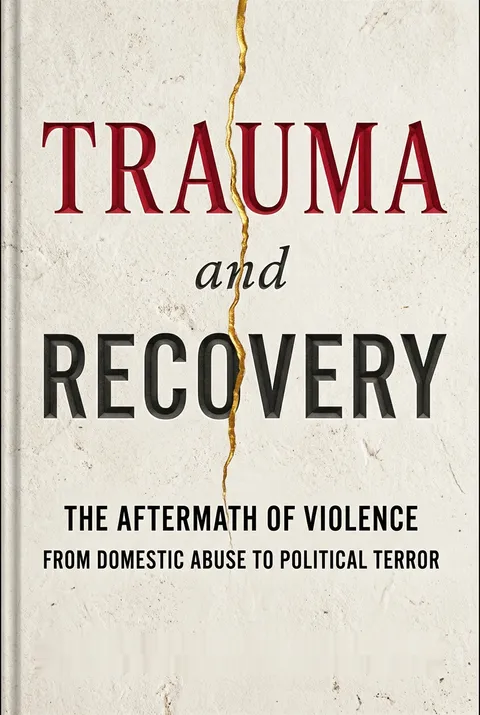
Trauma and Recovery is widely praised as a groundbreaking, comprehensive work on psychological trauma. Readers appreciate Herman's feminist perspective, accessible writing style, and thorough exploration of various trauma sources. The book is considered essential reading for mental health professionals and survivors alike. While some find certain aspects dated, many still regard it as highly relevant and impactful. Reviewers particularly value Herman's insights on the political nature of trauma, the stages of recovery, and the importance of community support in healing.
People Also Read







Glossary
Dissociation
Disconnection within awarenessA disruption in the usual integration of memory, emotion, perception, bodily experience, or identity. During overwhelming danger, dissociation can help a person endure what cannot be escaped. It may later appear as gaps in memory, detachment from one’s body, or experiences that feel unreal, making the event harder to integrate into an ordinary life narrative.
Hyperarousal
Persistent readiness for dangerA trauma response in which the body and attention remain unusually alert after the threat has passed. It can include exaggerated startle, irritability, vigilance, difficulty concentrating, and disturbed sleep. Herman describes it as the survival system continuing to anticipate danger, even in settings that are objectively safer.
Intrusion
The past re-entering the presentThe involuntary return of traumatic experience through flashbacks, nightmares, sensory images, or intense reactions to reminders. These experiences can feel immediate rather than like ordinary recollection. Herman connects intrusion to traumatic memories that have not been organized into a verbal, contextual account of the event.
Constriction
Numbing and narrowed engagementA trauma response involving restricted awareness, emotional numbing, detachment, or withdrawal from activities and relationships. In a moment of inescapable danger, this narrowing can reduce unbearable pain or fear. When it persists after danger ends, it may limit initiative, planning, intimacy, and ordinary enjoyment.
Complex Post-Traumatic Stress Disorder
Effects of prolonged repeated traumaHerman’s proposed term for the broad and lasting effects of prolonged, repeated trauma, especially under conditions of captivity or coercive control. It includes post-traumatic symptoms alongside difficulties with emotion regulation, identity, self-perception, relationships, and systems of meaning. The concept aims to distinguish these effects from reactions to a single circumscribed traumatic event.
Dialectic of trauma
Oscillation between reliving and numbingHerman’s description of the opposing reactions that shape traumatic experience: vivid reliving and intense emotion on one side, and numbing, avoidance, or disconnection on the other. Neither response alone integrates the event. Their alternation can make the survivor feel unpredictable and trapped between too much feeling and too little.
Traumatic bonding
Attachment under coercive controlAn intense attachment that can develop between a captive or abused person and the person controlling them. Isolation, dependence, terror, and intermittent kindness can make the perpetrator seem like both the source of danger and the only source of relief. The bond helps explain why leaving or rejecting an abuser can be psychologically difficult.
Institutional betrayal
Harm by a trusted institutionA breach of trust in which an institution harms people who depend on it through its actions or failures to act. In Herman’s epilogue, examples include organizations that tolerate abuse, discredit complainants, or protect their own reputations instead of safeguarding those affected. Such responses can compound the original trauma by repeating abandonment and disbelief.
FAQ
What's Trauma and Recovery about?
- Exploration of trauma's impact: The book examines the psychological effects of trauma, focusing on individuals who have experienced violence in both personal and political contexts.
- Connection between personal and public trauma: Judith Lewis Herman links domestic abuse to larger societal issues, showing that both personal and political violence can lead to similar psychological outcomes.
- Stages of recovery: Herman outlines a framework for recovery, detailing stages such as establishing safety, reconstructing the trauma narrative, and reconnecting with the community.
Why should I read Trauma and Recovery?
- Insightful understanding of trauma: The book provides a comprehensive analysis of trauma, essential for understanding the psychological effects of violence and abuse.
- Practical recovery framework: Herman offers a structured approach to recovery, beneficial for survivors, therapists, and advocates in mental health and social justice.
- Feminist perspective: Rooted in feminist theory, the book is critical for those interested in gender studies, psychology, and social justice movements.
What are the key takeaways of Trauma and Recovery?
- Dialectic of trauma: Herman introduces the "dialectic of trauma," describing the conflict between denying traumatic events and the need to acknowledge and process them.
- Importance of social context: Trauma does not occur in isolation; societal and relational contexts play a crucial role in both the experience of trauma and the recovery process.
- Stages of recovery: Essential stages include establishing safety, remembrance and mourning, and reconnection, which are vital for healing from trauma.
What are the best quotes from Trauma and Recovery and what do they mean?
- “The ordinary response to atrocities is to banish them from consciousness.”: Highlights the human tendency to avoid confronting painful truths, hindering recovery from trauma.
- “Remembering and telling the truth about terrible events are prerequisites both for the restoration of the social order and for the healing of individual victims.”: Emphasizes the necessity of acknowledging trauma for personal and social healing.
- “Trauma and Recovery represents the fruits of two decades of research and clinical work with victims of sexual and domestic violence.”: Underscores the book's foundation in extensive research and real-world experiences, lending credibility to its insights.
What is complex post-traumatic stress disorder (C-PTSD) as defined in Trauma and Recovery?
- Definition of C-PTSD: A syndrome arising from prolonged, repeated trauma, particularly in childhood, with symptoms differing from simple PTSD.
- Symptoms of C-PTSD: Includes persistent dysphoria, alterations in consciousness, and difficulties in self-perception and relationships.
- Need for new diagnosis: Herman argues for recognizing C-PTSD as a distinct diagnosis, as existing categories do not capture the complexities of prolonged trauma.
What are the stages of recovery outlined in Trauma and Recovery?
- Establishing safety: Focuses on creating a safe environment for the survivor, addressing both physical and emotional safety.
- Remembrance and mourning: Involves reconstructing the trauma narrative and processing grief associated with the loss of safety, trust, and innocence.
- Reconnection with ordinary life: Emphasizes rebuilding relationships and engaging with the world, allowing the survivor to reclaim their identity and sense of agency.
How does Trauma and Recovery address the relationship between trauma and gender?
- Feminist framework: Herman's analysis critiques societal norms and power dynamics contributing to trauma prevalence, particularly for women.
- Linking personal and political: Argues that traumas experienced by women in domestic settings reflect broader societal issues like patriarchy and systemic violence.
- Empowerment through understanding: By framing trauma within a gendered context, Herman empowers survivors to reclaim their narratives and seek justice and healing.
How does Trauma and Recovery define trauma?
- Definition of trauma: An event overwhelming an individual's ability to cope, leading to feelings of helplessness and disconnection.
- Types of trauma: Distinguishes between acute trauma (single event) and chronic trauma (repeated exposure), highlighting different psychological impacts.
- Psychological consequences: Discusses how trauma disrupts normal psychological functioning, leading to symptoms like dissociation, hyperarousal, and intrusive memories.
What role does social support play in recovery according to Trauma and Recovery?
- Importance of community: Social support is crucial for recovery, helping survivors rebuild trust and a sense of belonging.
- Impact of negative responses: Negative or dismissive responses from family and friends can exacerbate feelings of isolation and shame in survivors.
- Healing through connection: Positive social interactions and community engagement are essential for survivors to process their trauma and regain a sense of agency.
What therapeutic approaches does Trauma and Recovery recommend for survivors?
- Empowerment-focused therapy: Advocates for approaches prioritizing the survivor's autonomy and agency, allowing them to control their healing process.
- Narrative therapy: Reconstruction of the trauma narrative helps survivors integrate their experiences into their life stories, allowing for emotional processing.
- Supportive relationships: Emphasizes building supportive relationships within therapy and the survivor's broader social network, vital for fostering healing and resilience.
How does Trauma and Recovery address the concept of memory?
- Trauma and memory fragmentation: Traumatic experiences can lead to fragmented memories, making it difficult for survivors to process their experiences fully.
- Importance of narrative: Constructing a coherent narrative around traumatic experiences helps survivors integrate their memories and facilitate healing.
- Reclaiming memories: Confronting and sharing their stories allows survivors to heal from trauma effects and regain a sense of agency.
What are the implications of Trauma and Recovery for mental health professionals?
- Understanding trauma's complexity: Encourages recognizing the multifaceted nature of trauma and its effects, informing therapeutic approaches.
- Emphasizing safety and support: Stresses creating safe therapeutic environments where survivors feel secure, prioritizing trust and safety.
- Advocacy for systemic change: Calls on professionals to engage in advocacy efforts addressing broader social and political issues surrounding trauma.
About the Author
Other books by Judith Lewis Herman
Download PDF
Download EPUB
.epub digital book format is ideal for reading ebooks on phones, tablets, and e-readers.








