

Key Takeaways
Stop chasing laps until you can breathe, float, and move straight
Start with the struggle. Gesell describes his first triathlon training swim as 14 pool lengths in an hour, with frequent stops, choking, and breathlessness. He had assumed childhood swimming would come back naturally. Instead, after years of frustration, he rebuilt his skills from the beginning and eventually completed long open-water swims and regularly exited races among the fastest 10 percent of participants. His point is not that every beginner will reach those results, but that a poor first swim is not a verdict on ability.
Technique is the starting point. The book argues that beginners gain more from learning to manage breathing, body position, and direction than from piling up unstructured laps. These skills make swimming feel less like an emergency and create a foundation for efficient training.
What's striking is the shift from an identity problem to a learning problem. The beginner is not inherently a bad swimmer; the task combines unfamiliar breathing, balance, and movement in a medium that resists every motion. That reframing matters because shame often pushes novices toward harder workouts when they need simpler, better-controlled practice. The claim that technique should lead is persuasive for beginners, though fitness and technique are not permanent alternatives. Once a swimmer can move comfortably, endurance still matters, especially across long triathlon distances.
Exhale underwater, then take frequent, small breaths
Break the breath-holding reflex. Many new swimmers instinctively hold air while their faces are submerged, then try to inhale when they turn to the side. The book explains that holding the breath allows carbon dioxide to build up, intensifying the urge to breathe. Add the stress of an unfamiliar environment and an irregular breathing pattern, and a manageable swim can feel like a crisis.
Make breathing routine. The recommended pattern is to breathe out continuously underwater, turn the head without lifting it, and take a small breath every two strokes. Swimmers can practice breathing to both sides by changing sides from one pool length to the next, rather than waiting three strokes between breaths. The early drills begin with simple bubble blowing and gradually add floating, turning, and swimming movement.
This advice treats breathing as a motor skill, not merely a measure of lung capacity. That distinction is useful: a swimmer can have ample aerobic fitness on land and still struggle to coordinate exhaling underwater with a timed head turn. In skill learning, reducing the task's complexity can lower anxiety enough for repetition to become productive. The suggested breathing rhythm is a starting pattern, not a universal law. Pace, comfort, and individual needs vary, so the useful principle is continuous exhalation and calm access to air, rather than rigidly counting every stroke.
Use your kick to lift your legs, not to power the race
Make the kick do less. The book presents the kick primarily as a way to keep the legs near the surface, not as the main source of forward speed. It estimates that kicking supplies only 0-5 percent of propulsion for many age-group triathletes, while using large leg muscles that will also be needed on the bike and run. A frantic kick can consume energy without solving the underlying position problem.
Build a narrower body line. The swimmer looks down, keeps the back of the head, hips, and heels near the surface, and uses a gentle, compact kick. A slight downward press through the chest helps counter the tendency for the upper body to float while the legs drop. The goal is not to eliminate kicking, but to use just enough to reduce drag and maintain balance.
The distinction between propulsion and stabilization is a valuable way to think about movement. A small action can matter greatly when its job is to prevent a larger inefficiency, even if it contributes little direct force. That idea appears in many forms of athletic technique: control and alignment can outperform raw effort. The book's low estimate for kick propulsion should not be mistaken for a general rule across swimmers or race conditions. Its practical case is narrower: beginners who burn their legs with a wide, forceful kick may benefit more from balance than from kick power.
Keep each stroke inside a narrow lane to cut drag and wandering
Aim force forward. After breathing and body position become more reliable, the book asks swimmers to reduce side-to-side movement. A hand that crosses over the body's center line can make the body and legs compensate in the opposite direction. A hand that pushes water outward also sends effort away from forward motion.
Use a simple arm path. The hand should enter between the edge of the head and the outside of the shoulder, then pull roughly within that same channel. Keep the body aligned, and turn the head to breathe rather than lifting it. The author argues that beginners do not need to master every fine point of elite stroke mechanics before they can swim effectively. His own video analysis found his arm pull was limited, yet good alignment and a straight course still supported a capable triathlon swim.
This is a strong example of simplifying technique around the demands of the event. An open-water age-group swimmer needs a repeatable stroke that survives fatigue and interference, not necessarily a pool sprinter's idealized form. The same principle appears in interface design and emergency training: a simple procedure is often more robust under pressure than a sequence of intricate adjustments. Simplicity does not make feedback unnecessary, however. Because swimmers cannot easily see their own hand path, occasional video or knowledgeable observation can catch errors that internal sensations miss.
Practice skills in short, frequent steps, then carry each into swimming
Progress by manageable stages. The book's central training sequence moves from breathing practice to body position and then to a controlled stroke. For swimmers unable to complete 400 yards or meters comfortably, it recommends temporarily setting aside regular workouts for short technique sessions. Those sessions can last 10-15 minutes, three to five times a week. The author estimates that a new drill or piece of equipment may take about 10 workouts to feel familiar.
Connect drills to the real task. More comfortable swimmers can add a few minutes of drills to the warm-up and then swim immediately, trying to preserve the same body position or breathing sensation. This transition matters: getting good at a drill is not the same as using the skill during a full stroke. In the book's schedule, three sessions a week take about 14 weeks to complete the full progression.
The method reflects a basic principle of motor learning: practice should be challenging enough to teach, but not so complex that the learner reverts to panic or poor form. Short, frequent sessions also create more opportunities to revisit a skill than one exhausting weekly workout. The drill-to-swim transition is particularly important because practice can become detached from performance if the learner never rehearses the target movement. Still, the suggested 10-workout timeline is an estimate, not a guarantee. Progress depends on the swimmer, the quality of feedback, and whether the drills are performed correctly.
Choose triathlon-specific coaching over inherited pool-sprint dogma
Match the method to the event. The author cautions that advice designed for elite pool swimmers may not suit adult triathletes. Elite swimmers can have exceptional flexibility, train many times each week, and race over much shorter distances. Triathletes may swim for up to two hours, then continue cycling and running, often in unpredictable open water. A drill or stroke pattern that works for a specialist is not automatically the right choice for a beginner with different needs.
Volume is not a substitute for direction. Gesell recounts swimming 20,000 meters or more each week with a group for two years while making little progress. He also describes professional triathlete Jimmy Seear training at roughly half the weekly volume of some competitors while focusing on selected improvements. These stories support purposeful training, not the claim that less swimming always produces better results.
The deeper lesson is about expertise transfer. Knowledge built in one environment can fail when the population, constraints, and goal change. A short-course pool swimmer and a novice preparing for a long open-water event share basic physics, but not necessarily the same training priorities. This is a useful prompt for evaluating coaching: does the coach understand the target event and the athlete's current capacity? At the same time, the book's anecdotes cannot establish that a particular drill is useless for every triathlete. The sound conclusion is to ask why a practice fits, rather than reject it solely because it came from pool swimming.
Use swim tools to reveal technique, not disguise its flaws
Let equipment support learning. Fins can make position drills easier by helping the legs stay near the surface. A center-mounted snorkel lets a swimmer focus on alignment without turning to breathe. The author recommends choosing fins that support a fluid kick without being so short that they demand an already strong kick, or so long that they slow it down.
Avoid false confidence. A pull buoy can lift the hips and make body position seem better than it is. The book recommends pairing it with an ankle strap, often alongside a snorkel, to encourage the swimmer to hold the body as one aligned unit. Neoprene shorts can also mask weak positioning if relied on too often. A wetsuit may add buoyancy and warmth in a race, but it should not replace learning to maintain a stable body line.
Equipment is most useful when it changes what a learner can notice. A snorkel can remove a distracting coordination demand; a buoy can expose what happens when the legs are not artificially supported. This is similar to a diagnostic tool that isolates one variable rather than solving the whole problem. The warning against crutches is sensible, but the purpose of a training aid should remain explicit: temporary support can build confidence and permit practice, while permanent dependence may hide a weakness. Gear recommendations are also less important than fit, safety, and the skill the tool is meant to develop.
Train open-water calm before the start gun, not during the panic
Rehearse the race environment. Pool comfort alone does not prepare a swimmer for cold, waves, poor visibility, sighting, and contact with other athletes. The book recommends getting into the water before the race when permitted, ideally for a 5-10 minute warm-up. If that is not possible, it suggests activating the swimming muscles with elastic bands and splashing water on the face and inside the wetsuit to reduce the shock of entry.
Choose a start that fits confidence. Less confident swimmers can begin at the edge of a mass start or wait a few seconds for the main pack to move ahead. The time lost may be small compared with the cost of being jostled into a stop. Faster swimmers who can navigate reliably may seek a draft, but should still sight rather than blindly follow someone who may be off course. The author advises against a hard kick at the swim's end.
Race preparation here is a form of stress inoculation: encountering manageable versions of race conditions in advance can make the real event less novel. The pacing advice also recognizes that a theoretically faster choice, such as drafting, can be slower in practice if it increases collisions or navigation errors. This is a useful decision rule: optimize for the swimmer's actual control, not the abstract advantage of a tactic. Open-water conditions and race rules vary, so warm-ups, start positions, and equipment choices must follow event instructions and the swimmer's own comfort.
Measure comfort as well as speed, because technique gains may arrive first
Expect the awkward middle. Technique-focused training can make a swimmer feel more coordinated before it makes the clock move faster. Gesell describes a winter when his ordinary 100- and 200-yard swims slowed, even as his drills and body position improved. After returning to more regular swimming, he became faster and could sustain the pace more easily. He presents this as a temporary step backward that can precede better performance, not a guaranteed pattern for everyone.
Track more than splits. The book suggests recording a 100-yard or meter time, a continuous 1,000 time or distance, and three words that describe the swimmer's feelings about swimming. Repeating the check after the technique program captures both performance and confidence. Other useful signs of progress include breathing without panic, keeping the legs near the surface, and feeling less side-to-side movement.
This approach avoids reducing learning to a single visible output. A stopwatch measures speed, but not whether a swimmer can maintain form, stay calm, or finish with enough energy for the rest of a triathlon. Tracking subjective experience alongside times can make hidden progress legible and help sustain practice. It also guards against a common measurement error: changing training and judging it too soon by a metric that may respond slowly. Still, perceived ease and improved technique should eventually be tested against race-relevant outcomes, including sustained pace and open-water navigation.
Analysis
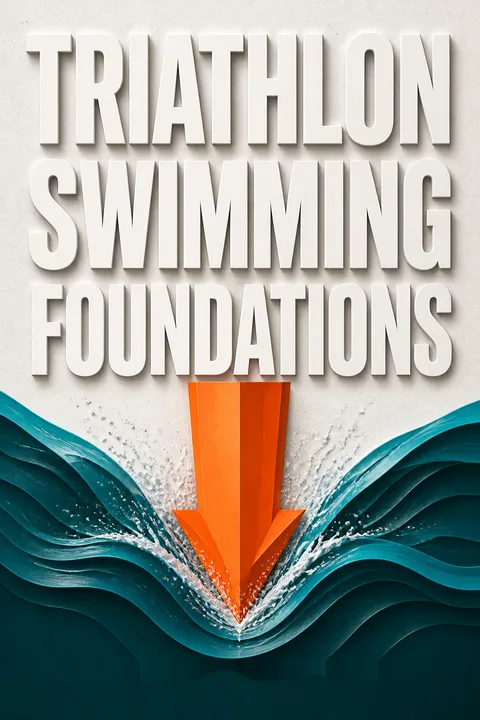
Triathlon Swimming Foundations is a practical coaching guide built around one central correction: beginners often respond to swimming difficulty by adding effort, when the first need is to learn how to function calmly and efficiently in water. Its narrative earns that argument through Gesell's own reversal, from a novice who could barely manage a pool length to a confident long-distance swimmer. The book then turns that experience into a staged progression: regulate breathing, establish a stable body line, and direct the stroke forward. The most valuable feature is not any single drill, but the repeated insistence that practice should transfer into full swimming. The guidance is unusually specific to the age-group triathlete, whose swim must conserve energy for two later disciplines and cope with open-water uncertainty. That event-specific focus also explains its skepticism toward training conventions inherited from elite pool swimming. The adaptation should not mistake this useful critique for proof that conventional drills or higher training volume are inherently wrong. Much of the book's evidence is personal experience, coaching anecdotes, and reported observations, rather than controlled comparisons. Some physiological explanations and broad prescriptions are presented more confidently than the evidence in the text can independently establish. The practical system is best treated as a structured starting point, with individual feedback and adjustment, rather than a universal formula. Its strongest contribution is a change in what counts as progress: calm breathing, a higher and steadier body position, and a straighter course matter before speed. That reframing can prevent beginners from rehearsing inefficient movement for thousands of yards. It also makes the book's larger promise plausible without making it automatic: a triathlete does not need elite technique to become capable, but does need deliberate practice suited to the actual swim.
Review Summary
Triathlon Swimming Foundations receives mostly positive reviews, with readers praising its clear, straightforward advice for beginners. Many found the drills and breathing techniques particularly helpful in improving their swimming skills and confidence. Some experienced significant progress in a short time. A few criticisms include that the content is similar to the author's YouTube videos and that it may be too basic for experienced swimmers. Overall, readers appreciate the book's methodical approach and practical exercises for developing a solid swimming foundation.
People Also Read









Glossary
Breathe Like a Dolphin
Calm breathing practiceThe book's name for its first foundational skill: learning to exhale continuously while the face is underwater, turn the head slightly to breathe, and take a small breath without panic. The accompanying drills gradually build comfort and breathing coordination before the swimmer adds a full stroke.
Float Like a Log
Stable surface positionThe book's term for maintaining a streamlined body position near the water's surface. The swimmer looks downward, keeps the back of the head, hips, and heels near the surface, and uses a small, narrow kick to prevent the legs from sinking and creating drag.
Race Like an Arrow
Straight swimming techniqueThe book's name for keeping the body and stroke directed forward rather than swaying or crossing over. The head, hips, and feet remain aligned, while each hand enters and pulls within a channel between the edge of the head and the outside of the shoulder.
Arm channel
Path for the handThe lane beside the swimmer's body, from the edge of the head to the outside of the shoulder. The book advises that the hand enter and travel roughly within this channel during the stroke, helping avoid crossover and sideways movement that can disrupt alignment.
Deck-up
Swim-to-standing practiceA training exercise in which a swimmer finishes a swim interval, quickly climbs out of the pool, and stands or jogs on deck. The book uses it to rehearse the transition from horizontal swimming to upright movement, which can otherwise feel awkward and raise effort at the start of the bike.
Trainiac Swimming System
Three-skill swim progressionGesell's beginner-focused approach to triathlon swimming. It organizes practice around comfortable breathing, a stable body position near the surface, and a straight, controlled stroke. Drills progress gradually toward full swimming, with frequent practice and attention to whether each skill carries over into ordinary strokes.
Download PDF
Download EPUB
.epub digital book format is ideal for reading ebooks on phones, tablets, and e-readers.








