

Key Takeaways
Read the martyrs as evidence of conviction, not proof that suffering always wins.
A faith under fire. The book opens with the Roman fire of AD 64. Emperor Nero blamed Christians, and some were executed in public spectacles. Paul’s travels and likely death in Rome represent the first generation’s costly expansion, while later accounts of Polycarp and Perpetua show believers refusing to renounce their faith under threat of death. The pattern matters: Christianity began without imperial protection, and its early adherents often paid dearly for belonging to it.
Not one unbroken campaign. Persecution varied by place and ruler. The Roman governor Pliny asked Emperor Trajan how to handle Christians, evidence that there was no single, consistent prosecution policy. Bennett’s central story is endurance through recurring danger, not an uninterrupted empire-wide hunt.
What's striking is how martyrdom can give a scattered movement a shared memory and a public measure of its commitments. In social movement research, costly participation can signal sincerity because it carries real risks. Yet the surviving martyr narratives were often written to instruct and inspire, not to provide detached reporting. They reveal how Christians understood suffering, but cannot alone show how often persecution occurred or how much it caused Christianity to grow.
Build communities where poverty, sex, and birth do not set human worth.
A different social promise. Bennett argues that Christianity appealed to the classical world because its message crossed ethnic, class, and gender boundaries. It taught that human worth came from being made by God, and that salvation depended on divine grace rather than status, education, or cultivated virtue. Early Christian communities cared for the poor and treated marriage and sexual conduct as matters of mutual responsibility, challenging Roman norms that gave men broad sexual license.
Women in the community. The book points to Christian women who became patrons, teachers, and martyrs, including Perpetua, a young mother who refused to renounce her faith. Such examples suggest why a community with new forms of belonging could attract people poorly served by older social arrangements.
The account usefully distinguishes a community’s stated moral ideals from the status quo around it. Shared worship and care for vulnerable people can create belonging across lines that ordinarily divide a society. The historical claim about improved conditions for women, however, needs care: evidence of influential women and protective teachings does not mean equality in every setting. The strongest point is comparative and specific: Christian norms challenged some familiar forms of Roman sexual privilege and social exclusion.
A movement survives by deciding which teachings and texts define it.
Drawing boundaries. In the second century, teachers such as Marcion rejected the Old Testament and used a narrowed collection of Christian writings. Gnostic groups claimed special knowledge and often treated physical matter as evil. Irenaeus opposed these views by insisting on continuity between the Old and New Testaments and on a shared public teaching rooted in the apostles. Justin Martyr, meanwhile, argued that Christianity could answer philosophical and civic questions, not merely offer private spiritual insight.
A canon takes shape. Churches read apostolic writings in worship, but agreement about every New Testament book developed gradually. The process was not settled by one council. Irenaeus helped clarify which Gospels and teachings churches recognized, while leaders also appealed to inherited teaching and the authority of bishops.
What's striking is that a growing movement needs more than enthusiasm. Shared texts and interpretive practices let communities coordinate across distance and resist charismatic teachers who claim exclusive access to truth. That process also concentrates authority: deciding what counts as authentic can protect a tradition while excluding rivals. The book makes the institutional stakes visible, though its account is primarily from the perspective of leaders who defined orthodoxy, rather than communities whose beliefs lost that contest.
Imperial protection ended persecution but made church unity a political prize.
A sudden reversal. After Diocletian’s Great Persecution, Constantine’s victory over rivals changed the church’s public position. The Edict of Milan in 313 granted Christians freedom to worship and return confiscated property. Constantine also funded churches and called the Council of Nicaea in 325 to settle the dispute over Arius, who denied that Christ was fully equal and eternal with the Father. The council produced the Nicene Creed, a statement of shared belief that remains influential.
Unity under pressure. Constantine wanted religious peace partly because he believed it would strengthen the empire. He later intervened in the Donatist dispute over whether clergy who had compromised under persecution could validly administer sacraments. His involvement showed the bargain: imperial favor gave the church resources and security, but rulers also claimed a role in defining its unity.
The shift from illegal minority to favored institution is a powerful example of how state sponsorship changes an organization’s incentives. Protection can support buildings, education, and wider participation, while inviting rulers to treat doctrinal agreement as a tool of public order. The Council of Nicaea was a theological gathering, but it also unfolded under imperial authority. Its history cautions against treating either religious conviction or political calculation as the sole explanation.
Give moral authority enough independence to confront rulers, even Christian ones.
A bishop confronts an emperor. In 390, Theodosius ordered a violent reprisal after unrest in Thessalonica. Thousands of civilians were reportedly killed. Ambrose, bishop of Milan, refused to let the emperor enter the church or receive communion until he repented. Theodosius accepted the public discipline, submitted to penance, and agreed to constraints on future death sentences. The episode gave the church a visible, if contested, authority that could challenge imperial power.
Reformers pay a price. John Chrysostom also criticized wealthy Christians and powerful officials. As bishop of Constantinople, he redirected church spending toward a hospital and rebuked conspicuous luxury. His enemies helped secure his exile. In both cases, public influence gave church leaders leverage, but speaking against the powerful could carry personal and institutional costs.
These episodes show why institutions need credible standards that apply to their leaders as well as their members. Ambrose’s intervention mattered because he did not treat imperial status as moral innocence. Yet the scene also raises a hard question: who checks the checker? Church leaders could resist rulers, but they could also use authority coercively or pursue factional interests. Accountability works best when it rests on consistent principles, not simply on a rival center of power.
Make disciplined community a refuge from disorder, not an escape from responsibility.
From solitude to shared life. As Christianity gained imperial favor, some believers feared that popularity was diluting commitment. Anthony of Egypt withdrew to the desert and became an influential model for ascetic monasticism. Pachomius developed a different approach: monks lived together under a common rule, prayed, worked, and obeyed an abbot. Women also formed communities, and writers such as Ephrem combined religious devotion with service to people in need.
Work alongside prayer. Monasteries organized daily life around worship, study, and manual labor. Their disciplined routines offered an alternative to public ambition, while communal houses could serve travelers and the poor. The monastic impulse was not uniform: hermits sought solitude, while communal orders made shared obligations central.
Monastic life makes discipline tangible by embedding it in schedules, shared work, and mutual expectations. That structure can protect attention from status competition and make service habitual rather than occasional. It also carries risks: withdrawal can become contempt for ordinary life, and strict rules can turn discipline into control. The variety in these early communities matters. Solitude, common labor, hospitality, and teaching were different answers to the same concern about how to live faithfully.
Preserve books and teach literacy when political systems collapse.
The church as a storehouse. As western Roman government weakened, churchmen and monasteries helped preserve texts and learning. Cassiodorus encouraged monks to copy both Christian and classical works. Isidore of Seville assembled the Etymologies, an encyclopedia that gathered material across many subjects. The books were not all reliable by modern standards, but collecting them kept older knowledge in circulation.
Literacy becomes infrastructure. Under Charlemagne, Alcuin of York helped train clergy and improve copying. Carolingian minuscule, a clearer script with spaces between words, made manuscripts easier to read and reproduce. This work strengthened church education and helped transmit texts through a period of political fragmentation. The book presents preservation not as passive storage, but as deliberate labor by teachers, scribes, and religious communities.
The preservation story is a reminder that knowledge survives through institutions and repetitive work, not merely because a text is important. Copying, teaching, and improving scripts create the conditions for ideas to travel across generations. But preservation is selective: communities decide what deserves attention, and what they copy shapes what later readers can know. The church’s role was consequential, while the learning it transmitted also drew on traditions beyond Christianity.
Royal conversion can redraw a map before hearts have changed.
Rulers set the direction. The Franks’ conversion under Clovis helped bring their kingdom into the orbit of Catholic Christianity. Later, Gregory the Great sent Augustine to England, where King Ethelbert allowed missionaries to preach and eventually converted. In central Europe, Boniface combined missionary work with efforts to reform church organization. These cases show how royal decisions could open territory to new institutions, clergy, and forms of education.
Belief is not a decree. The book also recounts forced conversions, including Charlemagne’s campaigns against the Saxons and coercive Christianization in Scandinavia. Prince Vladimir’s adoption of Byzantine Christianity led to mass baptism among the Rus’, but political pressure was part of the process. A ruler could change the public religion quickly; deep understanding and personal conviction were slower and less certain.
Political conversion can accelerate the spread of schools, worship, and shared institutions, but it is a poor proxy for individual belief. The difference between a king’s decision and a population’s understanding is essential to interpreting medieval accounts of mass conversion. Bennett’s stories make that gap visible, especially where baptism followed threats or conquest. The distinction also matters beyond religion: institutional change can be real before people have accepted the ideas meant to support it.
Study conquest and coexistence together when tracing Islam's first centuries.
A changing frontier. After Muhammad’s death in 632, Muslim armies expanded across Byzantine and Persian territories, including Syria, Egypt, and parts of the Mediterranean. Christian writers described destruction and persecution, while the book also notes that some Christians served as officials, teachers, and artists under Muslim rulers. The conditions varied across regions and periods.
Unequal accommodation. The Pact of Umar, as presented in the book, allowed Christians and Jews to remain in Muslim-ruled lands as protected non-Muslims, but imposed taxes and restrictions on public religious life. Bennett describes both coercion and practical coexistence, including Christian communities that endured for centuries. The Battle of Tours in 732 halted a major Muslim advance into Frankish territory, though the book cautions that Charles Martel’s immediate aim was defending his own realm.
This chapter is best read with attention to both its evidence and its framing. Christian chronicles offer valuable testimony about conquest and pressure, but they are not neutral accounts of Muslim rule. Conditions for non-Muslims could differ by ruler, locality, and circumstance, so neither a story of universal tolerance nor one of uniform persecution fits every case. Separating military expansion, legal status, and daily interaction produces a clearer history than treating them as one phenomenon.
Small disputes over authority, language, and worship can harden into schism.
Difference becomes division. Eastern and Western churches disagreed over practices such as clerical marriage, the use of images, and who could settle church disputes. The filioque, a Western addition meaning that the Holy Spirit proceeds from the Father and the Son, became a flashpoint because the East objected to changing a shared creed without common authority. Iconoclast emperors in Byzantium also persecuted Christians who venerated sacred images.
A formal break. In 1054, disputes over church custom and authority culminated in mutual excommunications between Rome and Constantinople. The split reflected more than a single theological argument: language, geography, politics, and competing claims to leadership had accumulated over centuries. The result was a lasting separation between the Latin Catholic and Eastern Orthodox churches.
The schism shows how practices that seem local can become symbols of group identity. A dispute about wording or worship may carry deeper questions about who has authority to define tradition. Once each side sees compromise as surrendering its legitimacy, technical disagreement becomes institutional separation. The account also resists a tidy explanation: no single phrase or council caused the break. Language and political distance helped make theological differences harder to resolve.
Analysis
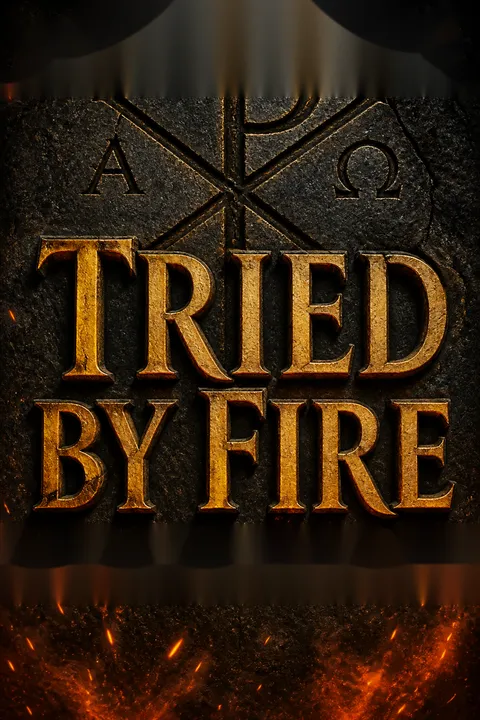
Tried by Fire is a biographical history organized around a durable tension: the church survives external pressure, then struggles with the power and prestige that survival brings. Its first movement follows small Christian communities through sporadic Roman persecution, theological disputes, and the creation of shared texts and leadership. Constantine’s conversion changes the setting. Imperial toleration gives the church public resources, but also makes doctrine useful to rulers seeking political unity. Later, monasteries, missionaries, and scholars carry Christianity into communities beyond the old Roman center, while the growing division between Rome and Constantinople supplies the book’s closing arc.
Biography gives the narrative its strongest human scale. Paul, Perpetua, Athanasius, Ambrose, Augustine, and others make institutional history legible as a sequence of choices under pressure. The book also links developments that are often treated separately: martyr narratives create communal memory, councils define belief, monasteries organize discipline, and copying manuscripts preserves learning. This makes the first millennium feel less like a parade of dates and more like a contested process of building institutions.
The method has limits. The martyr stories are often devotional accounts, and the book sometimes presents disputed traditions with more confidence than their evidence warrants. Its Christian perspective is explicit, particularly in comparisons with Islam and in judgments about orthodoxy. A careful reader should distinguish what a source reports from what the author concludes, and should notice that the surviving record favors literate clerics and rulers over ordinary believers. The account also gives less space to how religious authority could exclude or coerce, even as it documents those costs.
The central historical insight remains strong: Christianity was neither simply a persecuted minority nor simply an empire’s instrument. It was a network of communities repeatedly reshaped by violence, debate, patronage, and migration. Its endurance depended not only on conviction, but on institutions capable of teaching, organizing, remembering, and adapting. The same institutions could preserve a tradition and distort it. That double capacity is the book’s most useful lens for understanding how a small movement became a civilization-spanning church.
Review Summary
Tried by Fire receives generally positive reviews, averaging 4.05 out of 5. Readers appreciate Bennett's accessible, engaging writing style and comprehensive coverage of Christianity's first millennium, from the martyrs through the Great Schism. Many praise it as an excellent primer for those new to church history. Common criticisms include its superficial treatment of complex topics, an overwhelming number of names and dates, and a perceived pro-Catholic bias. Most agree it serves well as an introductory overview, though serious scholars may find it lacking in depth and rigor.
Glossary
Arianism
A disputed view of ChristA fourth-century teaching associated with Arius that held Christ was created by God and was not co-eternal or of the same substance as the Father. The Council of Nicaea rejected this position in 325 and affirmed Christ’s full divinity. The dispute continued for generations and shaped conflicts between emperors, bishops, and Christian communities.
Gnosticism
Salvation through secret knowledgeA broad family of ancient religious teachings whose groups claimed special knowledge as the route to spiritual understanding. Many Gnostic systems treated physical matter as corrupt and the spiritual realm as pure. Early Christian writers opposed teachings they considered incompatible with apostolic belief, though the groups described as Gnostic did not share one uniform system.
apostolic succession
Leadership traced to apostlesThe belief that church authority and teaching pass from the apostles to later leaders through an enduring line of bishops. Early writers such as Irenaeus used this idea to argue that bishops in established churches could preserve and interpret Christian teaching, especially against teachers who claimed different or private sources of authority.
canon
Recognized books of ScriptureThe collection of writings a religious community recognizes as authoritative Scripture. In the early church, Christians read apostolic writings alongside the Old Testament, but agreement about the full New Testament collection developed over time. Writers including Irenaeus helped identify accepted books, while debates over works such as Revelation continued.
the lapsed
Christians who renounced faithChristians who, under persecution, denied their faith or performed required sacrifices to Roman gods. The term covered different actions, from obtaining false certificates to openly sacrificing. Their return to church membership became a major controversy: some leaders demanded permanent exclusion, while others allowed repentance and readmission.
cenobitic monasticism
Monks living in communityA form of monastic life in which monks live together under a shared rule, rather than pursuing solitude as hermits. Pachomius helped establish this model in Egypt. Its routines joined prayer, work, obedience, and communal meals, creating a disciplined religious community that differed from the solitary life of early desert ascetics.
caesaropapism
Emperor controls church affairsA political arrangement in which a ruler holds extensive authority over both the state and religious institutions. The book uses the term particularly for Byzantine imperial practice, especially under Justinian, who asserted legal and practical control over church matters in pursuit of religious and political unity.
ex opere operato
Sacrament works through its riteA theological principle, associated in the book with Augustine’s argument against the Donatists, that a sacrament’s validity does not depend on the moral worthiness of the person administering it. The clergy act as agents of the sacrament, so the recipient is not deprived of it by the minister’s personal failings.
filioque
And from the SonA Latin phrase meaning and from the Son, added to the Western form of the Nicene Creed to state that the Holy Spirit proceeds from both the Father and the Son. Eastern Christians objected that the West had altered a shared creed without agreement. The dispute became a significant point of division between the churches.
dhimmi
Protected non-Muslim subjectA non-Muslim living under Muslim rule with a recognized, subordinate legal status. In the account of the Pact of Umar, Christians and Jews could retain their religion but faced taxes and restrictions on public worship and religious expression. The actual conditions described in the book varied across places and periods.
iconoclasm
Opposition to sacred imagesThe rejection or destruction of religious images, especially images of Christ, Mary, and the saints. The Byzantine controversy concerned whether icons could properly support Christian devotion or risked becoming objects of worship themselves. Imperial policy shifted over time, producing repeated persecution before icon veneration was restored.
Download PDF
Download EPUB
.epub digital book format is ideal for reading ebooks on phones, tablets, and e-readers.








