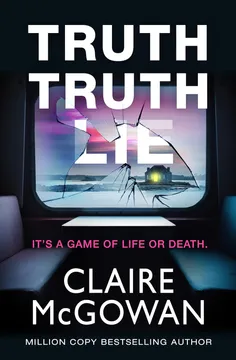


Plot Summary
Mallacht's First Bodies
On Sunday morning, island sergeant Mhairi Douglas crosses to Mallacht with boatman Arthur McCann after he reports finding bodies. The rental house stands dark and deserted, its guests’ phones abandoned and blood smeared across the living-room walls. In an outhouse, Mhairi finds a man and a woman wrapped in tarpaulins.
The adults and three children who came for a birthday weekend are nowhere to be found. The emergency radio is missing, the power is off, and a bloody knife lies near the fire pit. Arthur has no explanation for the bodies or the empty island. To understand how a private celebration became a crime scene, the story turns back to Friday, when the group first arrived.
The opening makes absence as threatening as violence. Mhairi has bodies but no witnesses, blood without a sequence, and children missing from a place where the nearest help requires a boat. Her procedural habits give the reader a foothold, but the island withholds the ordinary comforts of investigation: communication, backup, even a clear account of who belongs there. The backward jump then turns the question from who is dead to how this particular group became vulnerable. The crime scene is not merely remote; it is built from relationships whose history will prove harder to map than the island.
The Group Crosses Over
Two days earlier, Amira travels north with her teacher husband, Paddy, for the joint fortieth birthday of Vicky Franks and her twin brother, Jonathan Capeman. Vicky has organised the weekend on Mallacht, the island her family once owned.
The gathering includes Vicky’s unreliable, heavy-drinking husband Daniel, Jonathan’s estranged wife Fiona and their fifteen-year-old daughter Darcy, and Jonathan’s new influencer girlfriend, Rachel. Louise, a humanitarian worker newly back in Britain, completes the old university circle.
Amira feels like an outsider among their money, shared memories, and effortless intimacy. She also privately suspects she may be pregnant, though she has promised Paddy they will stop trying for a child. The ferry and the final boat carry the group away from ordinary contact, leaving their old tensions in a confined place.
Amira’s private hope gives the trip an emotional stake before the thriller supplies its external danger. She is already reading the group as a hierarchy, measuring her worth against Vicky’s ease, Louise’s moral authority, and the history she shares with Paddy. The island intensifies that insecurity by removing the small exits of ordinary life: phones, errands, separate friends. Vicky’s careful planning appears to promise control, but the group’s arrangements expose the opposite. Each guest arrives with a different expectation of the weekend, and no one has taken responsibility for the emotional cost of putting them together.
A Lie in the Box
At the renovated house, Vicky allocates bedrooms and explains that the group must rely on a radio because there is no phone reception or Wi-Fi. After dinner, Daniel’s party game asks everyone to submit two truths and a lie.
The answers expose old grudges and private embarrassments, but one extra slip warns that the guests are trapped and face a choice between killing and being killed. Nobody claims it. Darcy spots that it was written with a different pen, yet the adults cannot decide whether it came from a guest or someone outside.
Their unease sharpens when they realise the emergency radio is gone. On a search, Amira and Paddy find an old rowing boat beneath the jetty, a possible route to safety, but they cannot yet tell whether it is seaworthy.
The game turns friendship into evidence. Its rules invite each person to reveal something while pretending that disclosure is harmless, a structure that fits a group accustomed to managing appearances. The extra slip breaks that contract: it is not a playful lie but a claim about shared guilt and physical confinement. The different pen suggests an intruder, while the group’s inability to trust one another makes that explanation feel plausible. Even the boat offers only conditional hope. The scene’s suspense comes from a moral trap disguised as a logistical one: they cannot know whether to fear a stranger, a friend, or the stories they have kept from each other.
The Morning Turns Fatal
The next morning, the adults search the island but, with no radio, decide to carry on while they look for a way off. Fiona takes Darcy into the freezing sea for a brief swim. When the teenager disappears under the waves, Amira wades in despite being unable to swim; Jonathan pulls Darcy out, and both survive.
Back at the house, Rachel is found dead on her bedroom floor, her luggage scattered as if she searched desperately for her EpiPen. Fiona recognises a likely allergic reaction, and Jonathan confirms Rachel normally carried the injector. Amira had seen it in Rachel’s washbag the night before, but now it is missing. A plate with birthday cake remains in the room. The group’s first death makes the warning feel less like a joke.
Amira’s plunge into the sea is a sharp reversal of her self-image. She is frightened of water, yet acts because Darcy is in danger; the group barely registers her risk once Jonathan has rescued his daughter. The second emergency then exposes how quickly care can become suspicion. Rachel’s allergy offers an apparent medical explanation, but the missing injector and cake prevent anyone from accepting it as simple bad luck. The same people who have just failed to notice Amira’s courage must now judge one another’s intentions. The novel makes vulnerability concrete: a body can be lost through cold water, an absent device, or a moment of neglect.
Daniel in the Hot Tub
While Vicky, Paddy, and the others try to leave in the old boat, Louise discovers Daniel submerged in a wood-fired hot tub, its heavy lid covering him. The water has scalded him fatally. The group cannot tell whether he slipped while drunk or someone trapped him there.
They move his body beside Rachel’s in the outhouse, then launch the remaining paddleboards to search for Jonathan and reach the mainland. Vicky learns that Daniel had planned a private chef for her birthday, but the promised rescue does not appear.
His death also reopens the group’s financial history: Daniel’s unsafe baby cot business collapsed after an infant died, costing Paddy his inheritance and Vicky’s family its island. The search now runs alongside a sharper question: who had reason to hate Daniel?
Daniel’s death changes the group’s problem from escape to culpability. His body in the tub looks like an accident that could have happened to a drunk man, but the lid turns an ordinary mishap into a possible act. His past business failure complicates sympathy: the guests are grieving and frightened, yet some know that a child died after Daniel ignored a safety warning. The empty promise of a chef also shows how privilege can become a liability. Daniel planned a spectacle instead of securing basic arrangements, and the group is left with the same fragile infrastructure that has already failed them.
Amira Leaves Jonathan
On her paddleboard, Amira circles the island looking for Jonathan. She finds him alive, clinging to the sinking boat, but the board is too small to carry them both safely.
When Jonathan tries to climb aboard, Amira strikes his fingers with her paddle and leaves him in the water, telling herself she will return with another board. She does not find him again. Alone at sea, she notices blood and understands that her period has begun; the pregnancy she had secretly hoped for is not happening.
Her marriage feels just as precarious. Paddy has grown distant, and the sight of him racing ahead on his board makes her feel abandoned. She reaches the shore carrying two unbearable possibilities: Jonathan may be dead, and she has chosen not to save him.
This is Amira’s most consequential choice, made inside a crisis that gives her no clean option. She fears drowning and knows she cannot support Jonathan, but the act of pushing him away still leaves her with responsibility she cannot neatly excuse. Her body’s bleeding compounds the loss: the imagined child that had quietly sustained her through the weekend disappears at the same time as her confidence in Paddy. The scene refuses to separate moral fear from personal grief. Amira is not only weighing who deserves rescue; she is confronting the possibility that her own longing and self-preservation can coexist with harm.
Clippings Become Accusations
While Amira is away, the twins rummage through Louise’s room, and Darcy finds a bundle of news clippings about deaths connected to the guests. The stories point to Daniel’s unsafe cot, Fiona’s missed diagnosis, Amira’s child-protection case, Paddy’s school-trip accident, Vicky’s collision with a cyclist, and Jonathan’s cameraman dying during a dangerous shoot.
Other pages implicate Rachel’s online promotion of a risky clinic and Louise’s decision to send a junior colleague into danger. Darcy also finds the article about Kira, a bullied classmate who had asked her for help.
The documents make the game’s accusation seem deliberate and researched. When Louise returns through a hidden passage, Vicky confronts her. Their argument turns physical, and Vicky stabs Louise in the stomach.
The clippings flatten different kinds of responsibility into a single accusation. A negligent business decision, a professional error, a failed intervention, and a child’s hesitation are placed side by side as if they were morally interchangeable. That is why Darcy’s inclusion is so damaging: the evidence does not distinguish adult power from adolescent fear. Vicky reads the files not as an invitation to examine guilt but as proof that Louise is hunting her family. In the pressure of the moment, the distinction between an accuser and an attacker collapses, and the group’s attempt to make responsibility visible produces another act of violence.
Paddy Names the Prank
Paddy climbs out of the passage beneath the house and learns that Vicky has stabbed Louise. He admits that he and Louise planted the threatening note and collected the clippings to frighten the group into facing its past. They planned to reveal themselves and leave with the chef, not kill anyone.
Their anger came from years of watching Daniel escape consequences, including the loss of Paddy’s inheritance. Paddy also reveals the secret from the group’s first summer on Mallacht: Vicky and Jonathan chose to rescue Jonathan after he and local teenager Fergus McCann fell from a boat, leaving Fergus in the water.
The others never openly challenged that choice. Vicky now sees Paddy as dangerous and orders him and Amira to sleep in the boatshed. Amira takes the missing radio from his bag.
Paddy’s confession complicates the easy division between victims and perpetrators. He and Louise intended intimidation, not murder, but deliberately placed frightened people in isolation and withheld the means to summon help. Their moral protest borrows the language of accountability while repeating the group’s old habit of deciding that other people can bear the risk. Fergus’s story reveals the original wound beneath the weekend: Vicky and Jonathan were protected by wealth and family authority, while the local boy’s loss became a private shame rather than a public reckoning. Amira’s decision to take the radio is a small, practical return of agency.
Mhairi Finds Another Body
As the group fractures, Mhairi and Arthur search Mallacht. They find Louise’s bloodied body on the southern shore, a damaged paddleboard, signs that someone climbed down toward the caves, and the small life jacket that belonged to one of the children. The evidence suggests people have been moving between the cliffs, the house, and the beaches, but Mhairi still cannot locate the living guests.
Her deputy discovers that the property company and the local caretaker had no booking for the weekend. The celebrated chef never sailed over either, because Daniel’s payment failed. Mhairi now has a fake rental, missing people, and a crime scene she cannot secure before dark. Arthur’s connection to the island’s earlier tragedy remains unknown to her.
Mhairi’s investigation supplies a counterpoint to the guests’ increasingly distorted theories. She treats each object as evidence, but even careful observation cannot yet identify who moved it or why. The failed booking and absent chef strip away the illusion that the weekend was a legitimate rental arranged by Vicky. At the same time, the life jacket makes the children’s absence newly frightening. Arthur’s restraint matters: he knows the island’s history but offers no explanation that would help Mhairi connect the present deaths to it. The official investigation approaches truth through material traces, while the guests approach it through memory and accusation.
Mallacht Goes Dark
In the boatshed, Amira and Paddy hear footsteps before the generator fails and the island plunges into darkness. At the house, the television and other appliances switch on by themselves, displaying Daniel’s birthday slideshow.
The pictures move from old university celebrations to images of the people connected to the group’s past deaths, including Fergus. Vicky recognises that the display is more than Paddy and Louise’s prank. Fireworks then explode across the island. In the confusion, Toby vanishes from the house.
Vicky searches the bedrooms and finds Rachel’s EpiPen among the things he has collected, suggesting he took it without understanding what it was. The discovery offers a possible explanation for Rachel’s inability to treat her allergy, but leaves the sesame in the cake unexplained.
The slideshow transforms private memory into a public indictment. It begins like a birthday tribute, then forces the living to look at the people their polished family histories omit. The power failure makes the island feel actively hostile, though the later explanation will be less supernatural than the guests fear. Toby’s role sharpens the tragedy: a child’s curiosity may have removed Rachel’s only protection, without any understanding of consequence. But the EpiPen does not settle the question of how the reaction began. Each apparent answer arrives carrying a new gap, keeping grief and suspicion entangled.
A Confession at the Turbine
Jonathan, alive after the boat capsized, returns in a fury and pursues Amira up the island’s wind turbine. He accuses her of abandoning him at sea and tries to force her over the platform’s edge. Vicky, Fiona, and Darcy arrive as Amira escapes down the ladder. To loosen Jonathan’s grip on her, Vicky reveals that their father intended the island for her alone and regarded his disabled son with shame.
Paddy uses Jonathan’s moment of shock to shove him away from Amira. Jonathan falls among Daniel’s fireworks, which detonate beneath him and leave him dead. Vicky has already killed Louise; Paddy’s intervention now adds Jonathan to the toll. The surviving adults finally see how the warning has become real through their own desperate choices.
The confrontation makes truth both weapon and rescue. Vicky uses a long-buried family wound to interrupt Jonathan’s attack, exposing how inheritance and parental favoritism shaped their rivalry. The revelation saves Amira only by destabilising Jonathan at the worst possible moment. Paddy’s shove is protective, but the fireworks turn protection into another fatal act. By now the group’s fear has become self-fulfilling: they were warned that they would kill or be killed, then treated one another as threats until the prediction acquired bodies. The scene does not erase the unknown hand behind the setup; it shows how little force that hand needed once old resentments were activated.
Four Bodies, Four Survivors
At dawn, Vicky, Fiona, Amira, and Paddy gather the children and patch the old rowing boat with supplies from the island. After hours of cold, uneven rowing, a fishing boat spots them and brings them to safety. Mhairi returns to Tarne believing four adults and three children remain missing, then learns the survivors have been found.
The four deaths are Rachel, Daniel, Louise, and Jonathan. Amira tells Paddy she had thought she was pregnant and admits she lied; she does not take his offered hand, but does not pull away either. Vicky is left with her children and the knowledge that she killed Louise. Fiona shelters Darcy, while the group’s histories and the island’s aftermath pass into police hands.
Survival here is physical before it is emotional. The patched boat gets the children off Mallacht, but it cannot restore the marriages, friendships, or self-images broken there. Amira’s refusal to grasp Paddy’s hand is neither reconciliation nor final separation; it preserves the uncertainty their marriage has earned. Vicky’s motherhood remains a motive for her violence, not an absolution from it. Mhairi’s news that the survivors are found closes the immediate search while opening a longer process of testimony and judgment. The island releases them, but the choices made there will travel with them.
Jane's Final Account
At Tarne harbour, Arthur’s daughter Joan watches Mhairi return and understands that her plan has gone badly wrong. Disguised as a rental contact named Jane, she had lured the group back to Mallacht, arranged the slideshow, and inserted a photograph of her brother Fergus.
She wanted the Capemans to face the old drowning, not to cause the deaths that followed. Joan had noticed the rowing boat’s hole and let the guests take it anyway, believing the risk poetic justice.
Arthur quietly slips her the DVD, keeping her connection from the police for the moment. On the rescue boat, Fiona privately remembers drizzling sesame oil onto Rachel’s cake in anger. With Rachel dead and Toby’s theft of the EpiPen offering an explanation, Fiona decides not to confess.
The ending refuses a single clean culprit. Joan engineered the isolation and knowingly left a dangerous boat available, but her stated purpose was confrontation, not murder. Fiona’s act is smaller in scale and closer to the first death: she used a known allergen to wound Rachel emotionally, then lets circumstance blur her intent. Both women rely on a distinction between what they meant and what happened, while the survivors must live with consequences that intention cannot undo. The title’s promise of truth and lies lands not as a final solution but as an ethical problem: people can tell themselves accurate fragments and still conceal the part that matters most.
Analysis
Truth Truth Lie is built around the difference between causing harm and intending it, then shows how badly people want that difference to settle the question of guilt. The group’s old incidents are not morally equivalent. Daniel ignores a safety warning; Vicky and Jonathan make a choice during a drowning; Amira and Fiona face professional decisions under pressure; Darcy is a teenager who fails to help a classmate. Yet the clippings make them look like one category of person. That compression creates the thriller’s central danger: once everyone is called a killer, suspicion can replace judgment.
The novel also asks whether remorse has moral value when it changes nothing for the person harmed. Amira carries Liam’s name as a private accusation, while Vicky keeps her own past compartmentalised and continues to present herself as capable and polished. Paddy and Louise want to force recognition, but their prank reproduces the coercion they condemn. Their aim is to make others feel exposed, and they achieve that by removing consent, communication, and safety. The book’s critique of privilege is therefore not simply that wealthy characters own more. They have learned to treat consequences as negotiable, often because money, reputation, or family protection has softened the aftermath.
The island makes those habits visible by removing the structures that usually contain them. There is no phone to summon help, no public audience to manage, and no easy exit from a confrontation. But isolation does not reveal a single hidden truth; it creates competing versions, each shaped by fear. Joan’s revenge plan, Fiona’s concealed act, Toby’s innocent theft, and the group’s escalating violence show how intention can be sincere and still fail to protect anyone. The ending leaves accountability unfinished. The survivors escape, but they cannot return to the self-explanations that made their earlier lives comfortable.
Review Summary
Truth Truth Lie receives mostly positive reviews, averaging 3.81/5. Readers praise its tense, fast-paced plot set on a remote Scottish island, where a group of university friends celebrating a joint 40th birthday play a game that turns deadly sinister. Many highlight the clever twists, atmospheric setting, and locked-room thriller elements. Common criticisms include an overwhelming number of characters, a rushed ending, and some finding the plot far-fetched. The audiobook narration also receives particular praise. Most thriller fans consider it a gripping, entertaining read.
Characters
Amira
The watchful outsiderAmira is a London social worker married to Paddy, and the least established member of his old university circle. She is observant about other people’s needs, partly because her work has trained her to notice danger, but she is also painfully alert to signs that she is unwanted. Her wish for a child shapes the private calculations she brings to the weekend, while her fear of water and heights makes the island feel designed to expose her limits. Amira often tries to earn affection through helpfulness and restraint. Her deepest struggle is learning that being overlooked does not make her powerless, and that a morally difficult choice cannot be made harmless by silence.
Vicky
The polished organiserVicky is Jonathan’s twin sister, Daniel’s wife, and the mother of five-year-old twins. She has spent years making family life appear orderly, from travel plans to birthday details, and expects competence from herself as well as from everyone around her. Her confidence is genuine but carefully maintained; she dislikes surprises because they threaten the image of control that helps her function. Vicky loves her children fiercely and has a long, intimate history with the friends gathered on Mallacht. Her relationships are shaped by loyalty, competition, and a need to keep painful memories contained. The more control she tries to exert, the more the group sees what her composure conceals.
Paddy
The dependable teacherPaddy is Amira’s husband and a secondary-school teacher who once shared Oxford friendships with Vicky, Jonathan, Fiona, and Louise. He presents as gentle, sensible, and considerate, the person who remembers maps, food, and practical needs. Beneath that steadiness sits a long history of financial disappointment and professional blame, which he rarely discusses directly. His recent discipline around exercise and alcohol signals a man trying to remake himself, though those changes also unsettle Amira. Paddy wants fairness, but he can confuse moral criticism with permission to manipulate others. His conflict between loyalty to old friends and resentment at their privilege makes him both reassuring and difficult to read.
Louise
The field-hardened idealistLouise is a Welsh humanitarian worker whose years in conflict and aid settings have given her a practical, unsentimental manner. She returns to Britain to help her ill mother and reconnects with friends she has not seen for years. Unlike the group’s more affluent members, she has little interest in luxury or social performance, and her experience of deprivation makes waste feel personal to her. Louise is capable, independent, and guarded about her private life. Her competence can look like emotional distance, but it also carries a deep sensitivity to preventable suffering. She judges people by the consequences of their choices, sometimes more harshly than she judges herself.
Jonathan
The celebrated survivalistJonathan is Vicky’s twin brother, Fiona’s estranged husband, and Darcy’s father. A television survivalist and disability advocate, he has built a public identity around determination and competence despite cerebral palsy affecting one arm. His charisma makes people eager to follow him, while his drive to prove himself can shade into recklessness. He is accustomed to being watched and admired, and the distance between his public image and private behaviour is an important source of tension. Jonathan remains deeply connected to his family, even as fame, a new relationship, and separation from Fiona alter the old group’s balance.
Fiona
The dutiful doctorFiona is a GP, Jonathan’s estranged wife, Darcy’s mother, and Vicky’s closest friend. She is practical, competitive, and trained to act when others freeze. Her medical work gives her a clear sense of responsibility, but also exposes her to mistakes and outcomes she cannot control. In private, Fiona works hard to maintain the role of good sport: the reasonable ex-wife, attentive mother, reliable friend. That performance costs her, especially as she watches Jonathan build a life beyond their marriage. She wants to protect Darcy without turning her daughter’s pain into a lifelong identity, and she can be both compassionate and sharply judgmental.
Mhairi Douglas
The island sergeantMhairi is Tarne’s police sergeant, transferred from Glasgow and accustomed to local troubles rather than a mass-casualty investigation. She is capable, dryly practical, and conscious of the limits imposed by distance, weather, and a small police force. The crisis on Mallacht forces her to preserve a scene with little backup and to make decisions while fearing for the missing children. Mhairi’s grounded perspective provides a counterweight to the guests’ suspicions, though even careful police work cannot immediately explain the island’s layered evidence.
Joan McCann
The harbour-side daughterJoan is Arthur’s daughter, a technically skilled woman who has returned to Tarne after building a career away from the island. She is shaped by family grief and by the way outsiders can move on while a local family remains in the place where loss occurred. Joan is private, patient, and comfortable using digital tools to observe people from a distance. Her decision to return home has kept her close to her father, but it has also kept old history within reach.
Arthur McCann
The weathered boatmanArthur is a Tarne boatman who has worked the dangerous local waters for decades. He is stoical, observant, and sparing with words, trusting practical experience more than the assumptions of visitors. His familiarity with Mallacht and its currents makes him valuable when the guests need transport, while his own family history gives him a personal connection to the island’s past. Arthur’s loyalty to Tarne is expressed through work and silence rather than speeches.
Daniel Franks
The careless financierDaniel is Vicky’s husband and a successful financier who once founded a baby-products company with Paddy. He is sociable, boastful, and generous with expensive gestures, but less reliable when a task requires sustained attention or care. Drinking helps him dominate a room and avoid awkwardness. Daniel’s instinct is to keep a good impression and move past inconvenient facts, a habit that has damaged both his friendships and family life.
Rachel Solenado
The image-conscious influencerRachel is Jonathan’s new girlfriend, a social-media influencer whose work depends on polished images, brand partnerships, and constant access to her audience. She arrives at the island with glamorous clothes and a strong need to remain connected online. Her self-presentation can make her seem shallow, but it also reflects a job in which visibility is currency. Rachel is new to the group and has little understanding of the histories that govern its loyalties.
Darcy Capeman
The uneasy teenagerDarcy is Fiona and Jonathan’s fifteen-year-old daughter. She is navigating her parents’ separation while trying to hold on to the ordinary freedoms of school, friends, and her phone. Her guardedness is often mistaken for indifference, though she is alert to the emotional strain around her. Darcy wants adults to trust her with the truth, yet she is still young enough to need protection from what they ask her to carry.
Toby Franks
Vicky's curious sonToby is one of Vicky and Daniel’s five-year-old twins. He is energetic, impulsive, and fascinated by objects adults would prefer him to leave alone. He and his sister rely on routines and familiar comforts, while the grown-ups around them argue over how much freedom and screen time they should have.
Genevieve Franks
Vicky's watchful daughterGenevieve is Toby’s twin sister and Vicky and Daniel’s five-year-old daughter. She is affectionate and observant, often tracking the adults’ moods even when she cannot understand their explanations. Her attachment to her mother and her stuffed dog gives her a small sense of safety amid the adults’ shifting plans.
Fergus McCann
The local boat-loving teenFergus is Arthur’s son, a confident Tarne teenager drawn to boats, local life, and the arrival of visitors from the private island. He is eager to make an impression and proud of his familiarity with the water.
Liam
Amira's vulnerable young clientLiam is a toddler whose family becomes one of the most difficult cases in Amira’s social-work career. His situation gives her a lasting example of the uncertainty and responsibility built into child protection.
Kira Lonzo
Darcy's isolated classmateKira is a bright, working-class student at Darcy’s school who endures daily bullying. She wants a friend to notice what is happening without making her vulnerability another spectacle.
Pete Anderson
Jonathan's trusted cameramanPete is an experienced camera operator who has worked with Jonathan in demanding locations. He is skilled and adventurous, but becoming a father makes him more attentive to the risks his work can impose on others.
Lola Carlisle
A child in Daniel's business historyLola is an infant whose experience becomes associated with the safety of the cot sold by Daniel’s company. Her story marks the human stakes hidden beneath the company’s branding and financial decisions.
Melissa Hunt
Rachel's trusting followerMelissa is a young woman who follows Rachel’s online content and trusts its recommendations. She represents the real-world vulnerability of audiences who treat sponsored influence as informed guidance.
Loretta Marsh
Fiona's former patientLoretta is a patient from Fiona’s early medical career whose symptoms test the limits of a hurried consultation. Her case remains part of Fiona’s private reckoning with professional responsibility.
Marco
Paddy's troubled pupilMarco is a teenager on one of Paddy’s school trips. He is restless and struggling to find his place among classmates, while Paddy hopes a change of setting might help him.
Gabby Perez
Louise's junior colleagueGabby is a junior aid worker from Colombia, keen to gain field experience and advance in humanitarian work. She trusts Louise’s judgment when an unexpected assignment arrives.
Tomasz Kazinsky
The careful London cyclistTomasz is a Polish-born London commuter who takes pride in cycling carefully and planning for a future with his girlfriend. His everyday routines place him near Vicky’s family life.
Elizabeth Dennings
Julia's independent motherElizabeth is Julia’s mother and a fit, independent woman who treasures time with her young grandson. Her family’s experience during the pandemic becomes part of the twins’ wider social history.
Plot Devices
Two Truths and a Lie
The friendship interrogatorDaniel’s party game gives every guest a socially acceptable reason to reveal private facts. Its structure changes when an unclaimed extra slip appears, warning that the group is trapped and linking them to deaths. The game becomes a mechanism for bringing buried guilt into the open, but it cannot distinguish deliberate harm from error, professional limitation, or a child’s failure to act. Paddy and Louise exploit the game to frighten their friends, while later evidence makes the warning seem to come from a larger plan. The device turns the group’s familiar playfulness into an unstable test of trust.
Mallacht Island
The sealed pressure chamberThe small island is reachable only by boat and has no phone reception. Its guests depend on a radio, a fragile rowing boat, paddleboards, and a generator. Each failure narrows the choices available to them and gives ordinary disagreements immediate physical stakes. The house’s renovated appearance also contrasts with its hidden passage, old boat, and forgotten family history. Mallacht is not simply a remote setting: its isolation makes concealment possible, while its geography forces characters with decades of resentment into unavoidable contact.
The Death Clippings
A paper trail of guiltArticles about past deaths connect the guests to events they have privately explained, minimised, or never disclosed. Their stories range from professional decisions and business negligence to accidents and a teenager’s failure to intervene. The collection presents them as a single indictment, which pressures the characters to confess but also encourages them to suspect one another. The clippings are both evidence and manipulation: they make the group’s guilt legible while stripping away the context that would help judge it fairly. Their presence also gives the mystery a concrete trail to follow beyond the anonymous note.
The Hidden Passage
A secret route through historyA concealed way between the old coal cellar and the caves allows movement into and out of the house without using the front door. The passage explains how Louise can reappear after going missing and leaves open the possibility that someone else has been moving through the island unseen. Its route was known from childhood to the Capeman family, making it part of the place’s buried history as well as a practical escape path. The passage keeps suspicion alive even after the group identifies the authors of the note.
Download PDF
Download EPUB
.epub digital book format is ideal for reading ebooks on phones, tablets, and e-readers.








