


Plot Summary
The Funeral She Interrupts
Lara Lington arrives at her great-aunt Sadie’s funeral already struggling: her new recruitment business is failing, her partner has vanished to Goa, and she still hopes her ex-boyfriend Josh will return. She has never met Sadie, and her family can barely remember anything about the woman they have gathered to bury.
During the service, Lara hears a young woman demanding a missing necklace. The ghost identifies herself as Sadie, though the family knows her only as a frail 105-year-old. When Sadie begs Lara to stop the cremation, Lara invents a murder accusation so the funeral must pause. Her relatives leave in alarm, and Lara is left alone with a ghost who wants her keepsake found.
The first disruption links Lara’s private evasions to her family’s larger failure of attention. She lies to her parents about money and heartbreak, while the family’s neglect has reduced Sadie to an age and a photograph. The ghost’s youthful appearance challenges the assumption that a person’s final, diminished body tells the whole story. Lara’s false murder claim is both comic panic and an improvised act of care: she cannot explain what she sees, but she refuses to let Sadie vanish unheard. The book begins when Lara’s self-protective habits collide with a demand she cannot dismiss.
The Ghost's Last Keepsake
At the police station, Lara struggles to support her accusation and invents a story about nursing-home staff plotting with poison. Sadie supplies the home’s name and explains that she wants her necklace, a gift from her parents that made her feel beautiful. An old schoolmate, now a police sketch artist, draws it from Sadie’s description: two rows of pale beads, rhinestones, and a dragonfly pendant.
Lara tries to leave the search behind, but Sadie insists that nobody else can hear or help her. Lara agrees to look, on the condition that Sadie will leave if the necklace cannot be found. The bargain turns a bizarre encounter into a shared task, though Lara still doubts the ghost is real.
The necklace gives grief a practical shape. Lara cannot yet mourn someone she never knew, but she can understand a request with a clear object and a clear consequence. Her invented police story reveals how quickly she reaches for performance when frightened, a habit that will complicate both her work and relationships. Sadie’s insistence on the necklace is not simple greed: it preserves a feeling of beauty and continuity that her long decline erased. Their bargain also establishes a fragile structure for intimacy. Lara offers help in exchange for control, while Sadie accepts terms neither can fully predict.
A Recruitment Lunch Implodes
The next day, Lara’s office gives her no refuge. Natalie’s absence has left her unprepared to serve their largest client, and the candidates she has managed to find are unsuitable. At an extravagant lunch, a promising sports-marketing executive walks out after Lara appears to argue with someone who is not there. Sadie has returned, still preoccupied with her necklace, and Lara blames her for ruining the meeting.
Yet the embarrassment also forces Lara to accept that Sadie is not an ordinary stress-induced vision. Sadie says she needs Lara’s help, and Lara decides to investigate the necklace rather than pretend nothing happened. Her professional insecurity and the ghost’s unmet need now occupy the same small, chaotic life.
Lara’s professional crisis is more than a comic subplot. She entered recruitment believing that enthusiasm and friendship could substitute for expertise, then discovers that the work requires judgment she has not yet developed. Sadie’s reappearance makes that incompetence visible in public, but also offers a form of companionship Lara lacks elsewhere. Their mutual dependence begins in irritation rather than tenderness. Lara wants Sadie to stop disrupting her life; Sadie wants Lara to treat her mission as urgent. The scene makes their partnership transactional at first, then gradually reveals that both women are trying to recover agency in circumstances they did not choose.
Sixty-Seven Leads
At Fairside Nursing Home, nurse Ginny confirms that Sadie wore the dragonfly necklace often, but it is missing from the box of belongings left behind. Staff suspect it may have been swept into a charity jumble sale, so Lara takes a list of sixty-seven people who attended and starts calling them.
She also learns how little the family visited: Sadie’s treasured memories of birthdays and attentive nurses contrast sharply with the bare funeral Lara witnessed.
When the police contact Fairside after Lara’s accusation, she panics and adds an imaginary bearded man to her story rather than confessing outright. The detectives close the case for lack of evidence, leaving Lara two weeks before the funeral is rescheduled and no clear path to the necklace.
Fairside complicates Lara’s initial picture of Sadie as an abandoned stranger. The home’s staff remember her with affection, while her relatives treated her belongings and history as someone else’s responsibility. The vanished necklace becomes evidence of a wider pattern: a life can be misplaced through small, ordinary acts of neglect. Lara’s phone campaign is laborious rather than magical, and her attempt to protect Sadie by lying only creates new moral risks. Her guilt begins to move beyond sentiment into action. She is no longer merely sorry that she failed to know her aunt; she is trying to repair a specific failure.
The Dog Behind the Rules
Lara also has a client crisis: Shireen, a candidate she placed, threatens to withdraw because her new employer refuses to let her bring her dog to work. Lara suspects the company is hiding an exception, but has no way to prove it. Sadie slips through the building and finds a Pekingese kept beneath an employee’s desk, allowing Lara to secure permission for Shireen’s dog and save the placement.
The success gives Lara confidence in her more humane approach to recruitment. It also leads her and Sadie into a consulting firm, where Sadie becomes fascinated by the stern American executive Ed Harrison. Pressured by Sadie, Lara asks Ed to go out with her, and he agrees after hearing Sadie’s forceful whisper.
The dog dispute shows what kind of recruiter Lara might become when she listens instead of applying pressure. Her solution is not a clever sales tactic but a refusal to dismiss a candidate’s practical needs. Sadie’s invisible access turns that empathy into evidence, creating an unusual alliance between supernatural knowledge and everyday labor. Yet the same power becomes ethically unstable when Sadie influences Ed’s answer. Lara’s growing capability is paired with an unresolved question: does getting the desired outcome matter if another person’s choice has been bent? The episode plants the central distinction between helping someone see a possibility and deciding for them.
Josh's Table for Two
Still convinced that Josh’s breakup must have a fixable explanation, Lara hides in Bistro Martin while he meets Marie, using a toy spy microphone to listen. Sadie interrupts their conversation until Josh admits that Lara’s constant relationship analysis, cluttered bathroom, repetitive singing, and limited interest in his photography had worn him down.
He also recalls her energy and warmth, but Marie leaves when he keeps praising his former girlfriend. Lara reads the scene as proof that Josh remains emotionally attached, rather than recognizing how little his affection guarantees.
At home, she resolves to change herself into the partner she thinks he wanted. Her investigation produces information, but she treats it as a repair manual instead of evidence that the relationship may be over.
The surveillance turns Lara’s desire for closure into a breach of privacy, but the deeper problem is interpretive. She hears Josh’s grievances as solvable defects because that conclusion preserves her hope of reunion. His praise of her feels like confirmation, although it also shows that fond memories and present commitment are different things. Lara’s response is self-editing: she tidies, suppresses her singing, and prepares to imitate interests she has not chosen. The scene exposes the cost of making love into a puzzle with a correct answer. Knowledge cannot guarantee control over another person’s desire, especially when Lara uses it to avoid that fact.
A Flapper's Borrowed Date
Sadie insists that Lara wear a genuine 1920s flapper dress to meet Ed, complete with antique makeup and carefully waved hair. At the bar, Sadie supplies old-fashioned mannerisms and pushes the mortified Ed to dance, but the ghost’s excitement gradually gives way to Lara and Ed’s own conversation. Ed reveals how little he has explored London since a fiancée ended their engagement, and Lara sees loneliness beneath his controlled manner.
Before leaving, he invites her to the Business People dinner. Later, Sadie helps Lara notice a homeless magazine seller whom customers have ignored, then quietly persuades them to buy from him. The evening makes the ghost’s appetite for pleasure and her capacity for kindness visible beyond the necklace hunt.
The date begins as ventriloquism, with Lara acting as Sadie’s body and Ed reacting to pressure he cannot explain. Its emotional value emerges when the performance loosens and Lara speaks in her own voice. Ed’s isolation mirrors Lara’s tendency to retreat into familiar stories, while Sadie’s exuberance pushes both of them toward contact with the present. The charity-seller episode adds an important counterweight: Sadie’s influence can redirect attention toward someone overlooked, not only manipulate romance. Still, the scene does not absolve her of coercion. It asks whether a benevolent result can excuse interference, a question that will become personal for Lara.
Bill's Locked Dressing Room
After the police warn Lara and close the case, she returns to the jumble-sale list and calls Fairside for more information. A nurse remembers that a visitor named Charles Reece looked remarkably like Lara’s uncle Bill Lington. Lara secures an appointment at Bill’s mansion, where he admits visiting Sadie under an alias but denies knowing anything about the necklace.
Sadie searches the house and spots it on a dressing table. Lara sneaks back through the grounds, but a maid locks her outside before she can take it. She then overhears Bill accuse his daughter Diamanté of entering his safe and stealing the necklace. Diamanté escapes in her Porsche with it, leaving Lara with a new suspect and the keepsake farther from reach.
The discovery of Bill’s secret visit shifts the mystery from accidental loss toward family concealment. His public image rests on control and generosity, yet he has hidden even a private act of attention to Sadie. Lara’s break-in is a comic mirror of her earlier police lies: she is willing to cross boundaries when she believes the cause is just. But the necklace remains outside her control, now caught between Bill’s authority and Diamanté’s rebellion. The family’s wealth does not create intimacy; it creates locks, assistants, and private spaces. Lara’s growing persistence begins to challenge the assumption that celebrity status makes Bill’s version of events the only one that matters.
A Reunion on Borrowed Words
Rather than wait for Diamanté to return the necklace, Lara focuses on the relationship she has always wanted back. She approaches Josh near his office, apologizes for her messages, and performs the changes she thinks he wants, from a tidier bathroom to new enthusiasm for travel. Their conversation warms over shared memories, and Sadie urges him to admit he still loves Lara.
Josh does so, and the photograph of them on his phone convinces Lara that their reunion is real. She tells her family the news with triumph. The reconciliation gives her temporary relief, but it rests on Sadie’s supernatural pressure and Lara’s carefully staged self-improvement, not on a clear, mutual understanding of why they separated.
Lara’s return to Josh is driven by more than affection. She wants the reunion to validate her original belief that the breakup was a mistake, and she turns private knowledge into a strategy for producing that result. Sadie’s intervention makes the declaration feel emotionally authentic, but also obscures the difference between a person’s words and their unprompted choice. The photograph matters because it offers Lara an object she can read as proof, even though it cannot establish what Josh wants now. The episode shows how confirmation bias can borrow the appearance of romance: each sign is interpreted to protect the conclusion Lara has already chosen.
Letters Lost in France
While Lara celebrates being back with Josh, Sadie explains why she mistrusts waiting for love. As a young woman in Archbury, she secretly posed for a painter named Stephen Nettleton, whose family discovered their relationship and sent him to France. Sadie wrote him repeated letters but heard nothing, believing that he had used her and forgotten her.
In response, she married a man chosen by her parents and later travelled abroad. She hid Stephen’s painting in the family cellar, but thought it had burned when Archbury House was destroyed. Sadie’s bravado about casual romance cracks as she admits that she spent years without knowing whether Stephen had loved her. Lara hears the warning but remains unwilling to apply it to Josh.
Sadie’s history gives her advice a wound rather than a doctrine. Her skepticism about commitment grew from a silence she interpreted as rejection, while pride prevented her from pursuing an answer directly. Marriage and travel became ways to move forward without resolving the original loss. The story also exposes how social authority shaped her choices: parents, class expectations, and a wartime world narrowed the routes available to a young woman. Lara recognizes the parallel but resists it because she believes her own story will end differently. Their intimacy deepens through disclosure, even as each woman sees the other’s danger more clearly than her own.
The Great Lara's Dinner
At the Business People dinner, Ed helps Lara navigate the room, where she learns that Natalie was fired from her previous recruitment firm after misleading clients. Lara is shaken, but Sadie overhears Clare Fortescue, an award-winning marketing director unhappy at work, and brings her to Lara.
Clare agrees to consider the sports-company role, giving Lara a genuine lead. Meanwhile, Sadie helps Lara perform astonishing mind-reading tricks by watching guests write their answers.
When Sadie leaves after Lara keeps performing instead of dancing, Lara nearly escapes by climbing a dangerously unstable stack of chairs. Ed steadies her and helps her turn the failed finale into comedy. The night brings professional possibility, exposes Natalie’s history, and deepens Lara’s bond with Ed.
The dinner briefly lets Lara’s social gifts and ethical instincts operate together. She does not win Clare through manipulation; she listens to what makes the candidate dissatisfied and offers a fitting possibility. By contrast, the mind-reading act depends on Sadie’s invisible labor, and Lara’s delight in applause makes her forget the promise that the evening was meant for Sadie. Her near-fall is a physical consequence of trying to escape the expectations she helped create. Ed’s practical support matters because he helps her recover without pretending she has magical mastery. The event tests whether Lara can value recognition without letting it displace the people who helped her earn it.
The Necklace Leaves London
Diamanté invites Lara backstage at her fashion show, where the models wear so many layered necklaces that finding one particular piece seems impossible. She is drunk and angry at her father, yet agrees that Lara can have the dragonfly necklace after the show. Lara spots it only when a model wears it wound around her ankle.
Bill is watching from the front row, and Lara rushes backstage after the show, but the model, Flora, has already left for Paris with the necklace. Diamanté arranges for Flora to send it after a ball, but cannot give a firm date. Lara is left waiting again, while Sadie has watched the object she needs disappear beyond their reach for a second time.
The fashion show turns the necklace into a literal needle in a haystack, surrounded by borrowed adornment and commercial spectacle. Diamanté’s promise is sincere enough to matter, but her impulsiveness and the fashion industry’s churn carry the object away before Lara can secure it. The scene also complicates Diamanté, whose anger at Bill is not merely teenage vanity; she resents being treated as a project while still benefiting from his money. Lara’s search has become a contest between care and possession. She wants to restore the necklace to Sadie, but every delay makes the possibility of losing Sadie feel more immediate.
Two Breakups, One Office
At lunch with Josh, Sadie demonstrates how easily she can steer him by making him talk about moving to Switzerland, retraining in astrophysics, and opening a zoo. Lara realizes that his declaration of love came from the same outside pressure, not from renewed conviction, and ends the relationship for good.
At work, Natalie returns from Goa, claims credit for Lara’s successful placement, and treats her as an inexperienced assistant. Lara also learns that Natalie has called Ed and suggested Lara used him for recruitment contacts.
Ed believes the accusation and rejects Lara’s explanation. Rather than continue in the partnership, Lara confronts Natalie about her dishonesty and leaves. In a single stretch, Lara loses the romance and business she had been trying to salvage.
The paired collapses force Lara to stop mistaking persistence for proof. Josh’s absurd future plans reveal the mechanism behind his reunion, while Natalie’s return exposes the business partnership as built on unequal information from the start. Lara’s decision to leave both situations is not a triumphant escape; it costs her income, status, and Ed’s trust. Yet she finally acts from her own judgment rather than trying to win approval through compliance. The contrast matters: she ends the romance because its promises are not freely grounded, and leaves the company because its methods violate what she values. Failure becomes a source of discernment.
The London Eye's Witness
After leaving the business, Lara spends a Sunday showing Ed the London she has accused him of ignoring. They explore the Tower of London and ride the London Eye, where Ed admits that meeting Lara jolted him out of a life stalled by his former fiancée’s betrayal. They kiss, but Sadie sees them and flees.
Lara, still raw from the breakup with Josh, snaps at Sadie that she is dead and must move on. Sadie reveals that she heard the family dismiss her at the funeral as an insignificant old woman, then disappears over Waterloo Bridge. Bystanders think Lara has witnessed a suicide, but no one has fallen. Lara is left with guilt and no way to call her friend back.
The kiss is the first major moment Lara experiences without trying to engineer its outcome, which makes Sadie’s reaction especially painful. Sadie has helped create the connection, yet she cannot participate in it as an equal. Lara’s cruel retort repeats the family’s original dismissal and strikes at Sadie’s deepest fear: that a long life left no trace. The apparent leap from the bridge transforms emotional rupture into a public misunderstanding, emphasizing how invisible Sadie remains to everyone but Lara. Their separation exposes the limit of Lara’s growing self-awareness. She can recognize manipulation in others before she can control the harm in her own anger.
Home to Archbury
Lara searches for Sadie through cinemas, the nursing home, and finally Archbury, the village where Sadie grew up. At the old vicarage, now a museum to the painter Cecil Malory, she learns that Malory was Stephen Nettleton, the man Sadie loved. A portrait called Girl with a Necklace shows Sadie at twenty-three, wearing the missing dragonfly piece.
Gallery archives also hold Stephen’s letters, which reveal that he continued writing to her from France. The letters had not reached Sadie, so she spent her life believing he had abandoned her. Lara now has proof that the silence between them was not the whole truth, and she returns to London determined to find Sadie and tell her.
The painting transforms the necklace from a private keepsake into the visible center of a suppressed history. Sadie had been remembered by the world only as an old resident, while art preserved the young woman she felt herself to be. The letters reframe her romantic loss without erasing its consequences: Stephen loved her, but she lived without knowing it. That distinction resists a simple happy-ending correction. Truth arrives too late to repair their shared life, yet it can alter the meaning Sadie assigned to it. Lara’s search also becomes an act of historical recovery, bringing private experience into public record.
Sadie Sees Herself
Lara finds Sadie dancing alone at an outdoor jazz festival and tells her that Stephen’s painting and letters prove he loved her. She brings Sadie to the London Portrait Gallery, where Sadie sees the portrait and the miniature reflection Stephen hid inside a painted bead. The gallery’s acquisition file names Bill as the seller, who received half a million pounds in 1982.
Lara connects the sale to the year he launched Lingtons Coffee and built his Two Little Coins legend. Bill had sold Sadie’s painting without telling the family, then concealed the real source of his start-up money. The discovery turns Lara’s personal search into a confrontation over ownership, family history, and a public deception.
Recognition arrives in two forms: Sadie sees her own image as art, and Lara sees her uncle’s success story as a carefully managed fiction. The hidden self-portrait within the necklace links private love to public achievement, while the acquisition record reveals how money can erase the person whose property made it possible. The coincidence of the 1982 sale and the business launch gives Lara evidence, not merely suspicion. Sadie’s response remains restrained; she is more moved by seeing herself than by the prospect of revenge. Lara, by contrast, is furious. Their difference shows that recovering truth and seeking punishment are related but not identical needs.
Two Coins, Half a Million
Lara travels to Bill’s villa in France and confronts him with the portrait’s sale record. He initially denies wrongdoing, but the evidence leaves little room to hide behind his polished public image. Lara demands that he correct the story and credit Sadie rather than continue selling the myth that two coins alone launched his empire.
Bill gives a public interview admitting the half-million-pound payment and naming Sadie as the source of his opportunity. The revelation turns his celebrated business book into a national joke, while the portrait draws crowds to the gallery. Bill’s success is not undone, but its origin can no longer be separated from the woman whose painting he sold and whose existence he concealed.
Lara’s confrontation is a reversal of the family hierarchy. The niece once embarrassed by Bill’s refusal to help her now controls the facts that can reshape his reputation. Her aim is not simply to expose a lie; she insists that Sadie receive the recognition and ownership denied to her. The public correction matters because Bill’s myth was built for public consumption, so private remorse alone would not repair the harm. At the same time, the scandal does not magically equalize the family. Bill retains wealth and influence, while Lara’s leverage comes from evidence, persistence, and the moral force of a story he tried to bury.
The Necklace Comes Home
While the scandal spreads, Lara starts a new recruitment firm, Magic Search, with Kate and builds it around matching people to work that suits them. Ed supports her and stays close, though the two are still learning how to trust one another. Flora eventually sends Sadie’s necklace from Paris.
Lara brings it to the funeral parlor and places it around Sadie’s body, the first time she can touch her aunt’s real form. When Lara returns outside, Sadie has disappeared. The necklace was not a magical key that could keep her indefinitely; it gave her back the keepsake she had asked for and the truth she had been denied. Lara waits, then accepts that her friend has moved on.
The long pursuit ends not with possession but release. Lara can finally place the necklace where it belongs, yet cannot use the act to bargain for more time. That distinction completes the emotional lesson of her earlier romances: love is not secured by arranging another person’s choices. Sadie’s disappearance is painful precisely because their bond has become real, but it is also her decision, not another abandonment imposed by circumstance. Lara’s new business offers a parallel resolution. She builds work around fit and mutual understanding rather than the coercive tactics Natalie practiced, carrying the relationship’s lessons into her livelihood.
A Name Beneath the Portrait
Lara organizes a memorial service for Sadie in a church filled with art lovers, Fairside residents, family, and people dressed in 1920s clothes. She tells the story of Sadie’s wit, daring, and love for Stephen, then establishes a foundation supporting older people, dance organizations, Fairside, and the gallery.
Bill publicly pledges ten million pounds to the foundation, a promise Lara makes before a crowd so he cannot quietly withdraw it. Lara’s parents and sister acknowledge how deeply Bill’s shadow shaped the family, while her new firm begins attracting clients. Ed remains beside her, and Lara lets herself hope Sadie saw the honor she had earned, even if she cannot hear a reply.
The memorial reverses the empty funeral that began the story. Sadie is no longer measured by the number of relatives who knew her; strangers arrive because her portrait and Lara’s account have made her life legible. The foundation turns remembrance into institutional care, especially for the people who might otherwise be reduced to age and need. Lara’s public handling of Bill’s pledge prevents apology from remaining a private performance. Yet the ending preserves uncertainty: Lara cannot confirm that Sadie witnesses the ceremony. The emotional resolution depends less on supernatural proof than on the living choosing to act as though an overlooked life deserves a place in history.
Analysis
Twenties Girl makes recognition its central action. Lara begins by misreading the people closest to her: she presents her business as healthy, interprets Josh’s silence as hidden devotion, and accepts Natalie’s confidence as proof of integrity. Sadie’s ghost disrupts those interpretations, but does not simply provide supernatural answers. Her interventions can expose facts while also manufacturing consent, especially when she pushes Josh and Ed to act. Lara must learn that information and influence are not the same as understanding.
The novel’s treatment of age is unusually concrete. Sadie’s youthful ghost is not a denial of her 105 years; it reveals the insufficiency of seeing a person only through the body and social role that remain at the end of life. The nursing home photograph, the portrait, the necklace, and the packed memorial each offer competing records of who Sadie was. Her relatives remember almost nothing, while the painting preserves her face but misnames her. Lara’s work is therefore both emotional and archival: she reconnects an object, a portrait, letters, and a family history that others had allowed to disappear.
The parallel romances sharpen the book’s distinction between desire and reciprocity. Lara treats persistence as evidence that she and Josh belong together, while Sadie’s own history shows how years of waiting can harden into a mistaken story. Ed becomes meaningful not because he is a replacement, but because their connection grows through attention, shared humor, and honest disagreement. The same ethical shift shapes Lara’s career. She leaves a partnership built on concealment and creates a firm organized around fitting people to work rather than pushing them toward commission.
The ending does not undo the years Sadie lost or make Bill’s concealment harmless. It changes what the family and public can say about her, then turns recognition into a foundation serving older people, dance, and the gallery. Lara’s final achievement is not that she can keep Sadie present. It is that she learns to honor a person without controlling her, and to let truth alter the living world even when it arrives too late to repair the past.
Review Summary
Twenties Girl received mostly positive reviews, with readers praising its humor, heartwarming story, and unique ghost element. Many found the friendship between Lara and Sadie endearing, while others appreciated the mystery and romance subplots. Some readers criticized the main character's initial behavior and found parts of the story unrealistic. Overall, fans of Sophie Kinsella's writing style enjoyed the book, considering it a fun, light-hearted read with unexpected depth and character development.
People Also Read
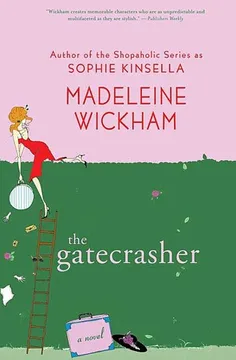



Characters
Lara Lington
The searching great-nieceLara is a 27-year-old former marketing worker who has launched a recruitment business with her confident best friend, Natalie. She wants a career that helps people find work suited to them, but her idealism coexists with financial avoidance, impulsive decisions, and a strong need to be proved right in love. Her family sees her as emotional and unreliable, a judgment she partly confirms by lying when frightened. Lara is also attentive to other people’s practical needs, even when she overlooks their boundaries. Her central tension is between care and control: she wants to help, but often assumes that enough effort can make another person choose what she hopes for.
Sadie Lancaster
The rebellious great-auntSadie is Lara’s great-aunt, a forceful woman whose youth was shaped by the restrictive expectations of early twentieth-century England. She values freedom, glamour, dancing, and the right to make a life beyond her parents’ rules. Her teasing confidence often conceals old grief and a fear that her life amounted to nothing. She resists solemnity and dislikes being defined by age, yet she carries memories that she cannot easily face. With Lara, she is demanding, funny, and unexpectedly generous. Sadie’s appetite for pleasure is not mere frivolity; it is a declaration that a person remains more than the role or body others assign to her.
Ed Harrison
The guarded AmericanEd is an American business consultant working in London, disciplined and sharp-eyed, with a dry sense of humor beneath his formal manner. A painful romantic disappointment has narrowed his daily life to work and familiar routines. He is not easily impressed by status, and he tends to investigate what people say rather than accept their self-presentation at face value. Lara’s energy unsettles him, but he also recognizes her sincerity and her talent for connecting people with opportunities. Ed’s defining conflict is between self-protection and engagement: he has reasons to remain emotionally cautious, yet he still wants a life that is larger than his work and old hurt.
Josh Barrett
Lara's unresolved exJosh is Lara’s former boyfriend, an easygoing advertising professional whose relaxed manner once seemed to Lara like proof of perfect compatibility. He enjoys photography, travel, and uncomplicated company, but tends to avoid difficult conversations until frustrations have accumulated. His affection for Lara is real, yet affection alone does not make them suited to one another. Josh also represents the difference between the person Lara knows and the idealized partner she constructs in her mind.
Natalie Masser
The glossy business partnerNatalie is Lara’s longtime friend and business partner, a polished recruiter who thrives on confidence, networking, and decisive sales tactics. She has a forceful professional style that can win clients, but she is comfortable withholding information and treating candidates primarily as opportunities for commission. Lara admires Natalie’s competence and social ease, which makes it difficult for her to question the partnership. Their conflict exposes the difference between wanting a successful business and agreeing on what success should cost.
Bill Lington
The celebrated uncleBill is Lara’s wealthy uncle, founder of the international Lingtons Coffee chain and a public figure who presents himself as a self-made business visionary. He is disciplined about his image, skilled at commanding a room, and convinced that ambition can be taught through simple principles. His success places him at the center of the family while leaving his quieter older brother in his shadow. Bill’s faith in his own legend makes him both an admired mentor and a source of pressure for relatives trying to define achievement on their own terms.
Michael Lington
Lara's steady fatherMichael is Lara’s father and Bill’s older brother, an accountant whose thoughtful, modest nature contrasts with Bill’s celebrity. He wants Lara to be safe but tries not to impose his own definition of a successful life. His instinct is to preserve family harmony and search for the good in people, even when that generosity risks minimizing real harm. He is a supportive presence whose quiet self-respect helps Lara understand that achievement need not look like an empire.
Pippa Lington
The anxious motherPippa is Lara’s mother, a caring worrier who imagines danger in unpaid bills, malfunctioning phones, and family uncertainty. She tries to protect Lara through advice and practical gestures, though her anxiety can make ordinary problems feel catastrophic. Her relationship with Lara is affectionate but strained by their shared tendency to conceal distress rather than discuss it directly. Beneath her nervousness is a capacity for moral clarity that becomes more visible when the family must respond to Bill’s choices.
Tonya
The blunt older sisterTonya is Lara’s older sister, a former office manager now raising twin boys and managing a household with the same commanding energy she once brought to work. She can be intrusive and tactless, especially when Lara is vulnerable, and sometimes disguises curiosity as concern. Yet her bluntness is not only cruelty; when the family faces an uncomfortable truth, she is capable of saying plainly what others hesitate to admit.
Diamanté
The privileged young designerDiamanté is Bill’s teenage daughter and Lara’s cousin, a wealthy aspiring fashion designer whose label and lifestyle are funded by her father. She is theatrical, impatient, and often dismissive of people outside her social world. Her dependence on Bill sits uneasily beside her desire to be taken seriously as a creative person. She is more perceptive about family hypocrisy than her polished image suggests, though she has not yet learned how to turn that perception into independence.
Kate
The loyal office assistantKate is the efficient assistant at Lara and Natalie’s small recruitment firm. She brings warmth and enthusiasm to a precarious office, backing Lara even when the company has little money and less structure. Kate is observant enough to see that Lara’s humane approach is not a weakness, and loyal enough to support her through a difficult professional break. Her practical support gives Lara a glimpse of the workplace culture she wants to build.
Stephen Nettleton
The young village painterStephen is the son of Archbury’s vicar and a painter whose artistic ambition places him at odds with his family’s respectable plans for him. He is drawn to Sadie’s beauty and independence, and their relationship develops in secret under the pressure of family disapproval. Stephen’s story belongs to an earlier generation, but the silence surrounding him shapes Sadie’s understanding of love and loss.
Ginny
Sadie's attentive nurseGinny is a senior nurse at Fairside Nursing Home. She remembers Sadie with warmth, preserves details about her birthdays, and helps Lara search the home’s records and belongings. Her care contrasts with the family’s long absence.
Clare Fortescue
The overlooked marketing leaderClare is an accomplished marketing director who has won professional recognition but feels undervalued in her current position. She is cautious about changing jobs and insists on finding the right situation, making her a strong match for Lara’s more personal style of recruiting.
Shireen Moore
The dog-loving candidateShireen is a candidate Lara has placed as an operations director. Bright and intense, she expects her new workplace to accommodate her dog, Flash, and is ready to withdraw when the company denies an exception. Her dispute gives Lara an early chance to show that she will advocate for a person after the placement is made.
Plot Devices
Sadie's ghostly presence
An unseen second perspectiveSadie can move through spaces and observe people, but Lara is the only person who can communicate with her normally. By shouting directly into someone’s ear, Sadie can sometimes make herself faintly heard, a power that allows her to influence Ed and Josh. The device drives both comedy and ethical tension: it helps Lara uncover information and solve practical problems, but it can also distort another person’s choices. Sadie’s invisibility makes her dependence on Lara literal, while her ability to leave and return preserves her independence. The ghost is not simply a supernatural helper; she is a person with motives, limitations, pride, and unresolved history.
The dragonfly necklace
A keepsake carrying historySadie’s necklace is described as pale glass beads, rhinestones, and a dragonfly pendant. It begins as the object she believes she needs in order to move on, sending Lara from Fairside to jumble-sale callers, Bill’s mansion, and Diamanté’s fashion show. Its importance grows as Lara discovers it in Stephen’s portrait of Sadie and recognizes it as a link between Sadie’s private life and the public artwork. The necklace gathers together memory, beauty, ownership, and the cost of being forgotten. Its eventual return matters not because it magically solves grief, but because Lara fulfills a promise and gives Sadie back something that was hers.
Girl with a Necklace
A portrait that restores identityStephen’s portrait preserves Sadie at the age she feels herself to be, rather than in the frail body remembered by her relatives. The painting includes the dragonfly necklace and a miniature reflection of the painter hidden in one bead. For years, the gallery and public believe the sitter is a woman named Mabel, leaving Sadie’s identity and story obscure. Lara’s discovery of the portrait changes the search from an attempt to recover a trinket into an investigation of family history and rightful ownership. The painting makes love visible, but does not erase the years Sadie spent without knowing the truth.
Two Little Coins
A success myth under scrutinyBill’s business book and seminars present his rise as a story of humble beginnings, ambition, and simple principles. Lara once attends a seminar hoping to learn how to make her own company succeed. The phrase becomes a public brand, complete with merchandise and plans for a film, until evidence links Bill’s 1982 start-up to the sale of Sadie’s painting for half a million pounds. The device contrasts the clean story a successful person tells about himself with the hidden resources and other people that may have made success possible. Its exposure also forces Lara’s family to reconsider the shadow Bill’s reputation has cast over them.
Recruitment as matchmaking
Lara's ethical compassLara understands recruitment as finding a person and a job that suit each other, rather than simply securing a fee. Her belief is tested by Natalie’s aggressive methods, the failing sports-company search, Shireen’s workplace conflict, and Clare’s interest in a new role. Sadie’s ability to overhear conversations gives Lara access to candidates others might miss, but the decisive skill remains Lara’s willingness to listen. The device connects her professional growth to her emotional education: a good match cannot be forced, and a person’s needs matter as much as the outcome. It also gives Lara a basis for rebuilding her career after leaving Natalie.
FAQ
Synopsis & Basic Details
What is Twenties Girl about?
- A young woman's journey: Lara Lington, a struggling entrepreneur, is haunted by the ghost of her great-aunt Sadie, a flapper from the 1920s, who needs help finding a lost necklace.
- A blend of genres: The story combines elements of chick-lit, mystery, and the supernatural, creating a unique and engaging narrative.
- A quest for self-discovery: As Lara helps Sadie, she also confronts her own personal and professional challenges, learning valuable lessons about love, family, and self-worth.
Why should I read Twenties Girl?
- Unique premise: The blend of a modern woman with a 1920s ghost offers a fresh and entertaining take on the chick-lit genre.
- Humorous and heartfelt: Sophie Kinsella's signature wit and humor are balanced with emotional depth, making for a compelling and enjoyable read.
- Themes of self-discovery: The story explores relatable themes of finding one's path, overcoming obstacles, and the importance of family and legacy.
What is the background of Twenties Girl?
- Cultural contrast: The story juxtaposes the modern world with the Roaring Twenties, highlighting the differences in social norms, fashion, and attitudes.
- Family dynamics: The novel explores the complexities of family relationships, including the pressures of expectations and the impact of secrets.
- Business world: The challenges of starting a business and navigating the competitive world of headhunting provide a contemporary backdrop to the story.
What are the most memorable quotes in Twenties Girl?
- "The thing about lying to your parents is, you have to do it to protect them. It's for their own good.": This opening line establishes Lara's character and her tendency to bend the truth, setting the tone for the story.
- "When you break up with someone, it's easy to look backward and think life would be perfect if you got back together.": This quote highlights Lara's romantic idealism and her struggle to move on from her past relationship.
- "Family is the rock we all stand on.": This quote, spoken by Uncle Bill, is ironic given his own actions and highlights the theme of family and its importance, or lack thereof, in the story.
What writing style, narrative choices, and literary techniques does Sophie Kinsella use?
- First-person perspective: The story is told from Lara's point of view, allowing readers to connect with her thoughts, feelings, and humorous observations.
- Witty and conversational tone: Kinsella's writing style is light, engaging, and full of witty banter, making the story easy and enjoyable to read.
- Use of irony and humor: The novel employs irony and humor to explore serious themes, creating a balance between lightheartedness and emotional depth.
Hidden Details & Subtle Connections
What are some minor details that add significant meaning?
- The recurring mention of "Things": Lara's parents' euphemism for her ex-boyfriend, Josh, highlights their avoidance of painful topics and their attempts to protect Lara, while also showing how much Josh still affects her.
- The description of the funeral: The lack of flowers and attendees at Sadie's funeral underscores the family's neglect and lack of connection to her, making Lara's quest to honor her even more meaningful.
- The Post-it notes on Natalie's desk: The business mantras on Natalie's desk reveal her approach to headhunting, which contrasts with Lara's more people-focused approach.
What are some subtle foreshadowing and callbacks?
- The mention of the "Two Little Coins" seminar: This foreshadows the later revelation of Uncle Bill's deceit and the source of his wealth.
- Lara's comment about the "Agatha Christie" ending: This foreshadows the mystery element of the story and Lara's desire for closure, which she eventually finds with Sadie.
- The recurring image of the necklace: The necklace, initially a simple object, becomes a symbol of Sadie's past, her identity, and the connection between the past and present.
What are some unexpected character connections?
- The connection between Sadie and Uncle Bill: The revelation that Uncle Bill visited Sadie in the nursing home under a false name adds a layer of complexity to his character and his relationship with his family.
- The connection between Sadie and Stephen Nettleton: The discovery that Stephen Nettleton was the famous painter Cecil Malory reveals a hidden love story and adds depth to Sadie's character.
- The connection between Lara and Ed: Their initial awkward date evolves into a genuine connection, highlighting the unexpected ways in which relationships can form.
Who are the most significant supporting characters?
- Kate: Lara's assistant, who provides support and comic relief, and also serves as a foil to Natalie's more ruthless approach to business.
- Mum and Dad: Lara's parents, who represent the complexities of family relationships and the challenges of balancing support with personal growth.
- Malcolm Gledhill: The collections manager at the London Portrait Gallery, who helps Lara uncover the truth about Sadie's painting and its history.
Psychological, Emotional, & Relational Analysis
What are some unspoken motivations of the characters?
- Uncle Bill's desire for control: His need to maintain his image and control his narrative is evident in his attempts to suppress the truth about Sadie and his past.
- Sadie's longing for recognition: Her desire for her necklace is not just about the object itself, but about her need to be remembered and acknowledged for who she was.
- Lara's need for validation: Her initial obsession with Josh stems from a need for validation and a fear of being alone, which she eventually overcomes.
What psychological complexities do the characters exhibit?
- Lara's internal conflict: She struggles with her romantic idealism and her desire for success, often feeling torn between her heart and her head.
- Sadie's fear of oblivion: Despite her vibrant personality, Sadie is haunted by the fear of being forgotten, which drives her quest for her necklace.
- Ed's emotional guardedness: He hides his vulnerability behind a facade of professionalism, revealing his past heartbreak and his fear of being hurt again.
What are the major emotional turning points?
- Lara's realization about Josh: The moment she understands that Josh doesn't truly love her marks a turning point in her emotional journey, allowing her to move on.
- Sadie's discovery of her portrait: Seeing her portrait and realizing that Stephen loved her deeply brings her a sense of peace and closure.
- Lara's decision to leave Natalie: This moment signifies Lara's growing self-confidence and her willingness to prioritize her own values over success.
How do relationship dynamics evolve?
- Lara and Sadie's bond: Their relationship evolves from a reluctant partnership to a deep friendship, as they learn from each other and help each other grow.
- Lara and Ed's connection: Their relationship develops from an awkward date to a genuine connection, based on mutual respect and understanding.
- Lara and her family: Her relationship with her parents evolves as she becomes more independent and assertive, while also appreciating their support and love.
Interpretation & Debate
Which parts of the story remain ambiguous or open-ended?
- The nature of Sadie's ghost: The story leaves it open to interpretation whether Sadie is a true ghost or a figment of Lara's imagination, allowing for a more nuanced reading.
- The extent of Sadie's influence: The degree to which Sadie influences events and people's actions is left ambiguous, raising questions about free will and destiny.
- The future of Lara's business: While Lara starts a new company, the long-term success of Magic Search is left open-ended, allowing for further interpretation.
What are some debatable, controversial scenes or moments in Twenties Girl?
- Lara's initial treatment of Sadie: Some readers may find Lara's initial reluctance to help Sadie and her dismissive attitude towards her ghost problematic.
- Lara's decision to use Sadie to spy on Josh: This action raises ethical questions about the use of supernatural abilities for personal gain.
- The ending of Lara's relationship with Josh: Some readers may find the ending of Lara's relationship with Josh unsatisfying, as it doesn't provide a clear resolution or closure.
Twenties Girl Ending Explained: How It Ends & What It Means
- Sadie finds peace: By finding her necklace and having her story told, Sadie is finally able to move on, achieving a sense of closure and peace.
- Lara's self-discovery: Lara's journey with Sadie leads her to a greater understanding of herself, her values, and her path in life.
- A new beginning: The ending emphasizes the importance of embracing the present and moving forward, with Lara starting a new business and finding love with Ed.
About the Author



Download PDF
Download EPUB
.epub digital book format is ideal for reading ebooks on phones, tablets, and e-readers.








