

Plot Summary
The Dolly Reaches Nukuheva
After months without land, fresh food, or relief from the Pacific, Tommo and the other sailors aboard the whaler Dolly reach Nukuheva. The French have occupied the Marquesas, their warships looming over the island’s green bay. Local people swarm aboard the Dolly, but the sailors answer their welcome with drunkenness and sexual exploitation.
Tommo sees the damage European visitors bring, while his own ship offers no refuge: Captain Vangs rules through violence, neglects the sick, and rations poor food. The voyage has lasted fifteen months, with no clear end in sight. Tommo begins considering escape, not because he knows what awaits ashore, but because the familiar danger of the ship has become less bearable than the unknown.
The opening makes escape a choice between forms of danger, not a simple flight from danger into safety. The French occupation and the sailors’ conduct also complicate the narrator’s later contrast between island life and European civilization: the first Europeans we see are not teachers or protectors but armed occupiers and predatory guests. Tommo’s viewpoint is vivid but self-interested. He wants freedom from a cruel captain, and that need shapes how he judges every alternative. The story begins with a body exhausted by shipboard discipline, which makes the desire for land both physical and moral.
Toby Joins the Flight
Tommo secretly resolves to desert and studies the valleys and ridges around the bay. He hopes to hide in the mountains until the Dolly sails, then decide what to do. Toby, a reserved and volatile shipmate who shares Tommo’s hatred of the vessel, agrees to go with him. When their watch receives shore leave, they conceal food, tobacco, and cloth beneath their jackets, then slip away from the other sailors while the party shelters from heavy rain.
The downpour keeps the islanders indoors as the pair cross a grove and climb toward the ridge they had marked from the ship. Their escape begins as a carefully planned concealment, but the rain, tangled growth, and steep terrain quickly turn it into a struggle for survival.
Toby’s decision changes a solitary act of self-preservation into a partnership. Tommo plans cautiously, but he also imagines escape as a picturesque retreat, a fantasy the mountain will soon correct. Their concealment depends on weather and on the sailors’ indifference, while their limited supplies reveal how little control they truly possess. Toby’s guardedness and Tommo’s confidence make a useful pair: one man’s improvisation keeps the other moving. Yet their shared flight is built on incomplete knowledge. They know where they want to get away from, but not what kind of world lies beyond the ridge.
The Mountain Gives Nothing
Beyond the ridge, Tommo and Toby find no broad valley or easy supply of fruit, only empty slopes, ravines, and a trail that leads them to a dark cataract. Their bread has dissolved into a damp paste, so they divide what remains into tiny daily portions. After a night soaked beside the falls, Tommo develops a fever and a painful swelling in his leg.
A glimpse through the foliage reveals a settled valley far below, but they cannot tell whether it belongs to the friendly Happars or the dreaded Typees. Toby urges them toward the prospect of food, and they follow the stream through steep gorges, clambering down dangerous falls. After five days, they reach the valley’s head, too hungry and exhausted to turn back.
The journey strips away the romantic image that first drew Tommo toward the islands. Terrain becomes a sequence of bodily limits: food spoils, water chills rather than comforts, and the leg injury makes every further step costly. The pair’s choice to descend toward an unknown tribe is therefore not an uncomplicated act of curiosity. It is the narrow option left by hunger and exhaustion. Melville makes landscape exert pressure on judgment; the travelers do not enter Typee because they confidently choose it, but because physical necessity steadily removes the alternatives.
Typee Opens Its Door
In the thick growth, Tommo and Toby find a boy and girl who lead them toward a house. The pair insist they are among the Happars, though their uneasy manner leaves Tommo doubtful. When the surrounding villagers gather in alarm, Tommo chooses to name the Typees as good rather than insult them, and the chiefs welcome the strangers.
Mehevi, a powerful leader, accepts their names and arranges food, mats, and shelter. Tommo’s swollen leg draws the attention of a local healer, while Kory-Kory is assigned to attend him. The visitors had expected to be attacked or eaten; instead, they are received with warmth. Their welcome does not answer whether they are free to leave, but it gives two nearly starving men a reason to stay.
The first meeting turns a cultural label into a life-or-death gamble. Tommo’s decision to praise the Typees is partly instinctive, partly tactical, and immediately changes the crowd’s response. Hospitality is real, but it does not erase the imbalance between hosts and guests: Tommo and Toby cannot speak well enough to explain themselves or understand the rules around them. Mehevi’s influence and Kory-Kory’s practical care create safety through relationships rather than through any contract the sailors can read. The scene asks readers to notice how fear has prepared the newcomers to misinterpret kindness, while leaving the question of consent unresolved.
Toby Returns Bloodied
Tommo’s leg worsens despite the islanders’ remedies, and he asks Toby to seek medicine in Nukuheva. The Typees resist letting their guest go, but eventually a guide escorts Toby toward the neighboring heights. On the mountain, three Happar warriors challenge him, strike his head with a weapon, and chase him with spears. He escapes downhill, bleeding and faint, and villagers carry him back to Tommo.
The attack confirms that the valleys are divided by more than geography: crossing from Typee into Happar territory can provoke violence. Toby’s return briefly reassures Tommo, but it also makes a land route to the ship seem far more dangerous. Tommo remains dependent on the people whose hospitality he still cannot fully trust.
Toby’s injury gives physical form to the island’s political boundaries. The mountains that looked like obstacles during the escape are also borders between communities with old hostilities. Tommo’s reliance on local care deepens even as his suspicion persists, a tension that refuses the easy categories of safe host and dangerous stranger. The episode also changes the pair’s practical options: a route toward Nukuheva has been tested and found perilous. Tommo’s illness magnifies that constraint, since even a possible opening is useless if he cannot travel.
The Beach Is Forbidden
When news spreads that boats have arrived, the valley empties as people hurry to the shore with fruit and goods to trade. Tommo is too lame to join them, while Toby goes with the crowd, promising to return after seeking help. He never comes back. The villagers give Tommo conflicting explanations, and his fear shifts between imagining Toby’s death and accusing him of abandoning their friendship.
Later, when Tommo hears that boats may again be near, he rushes to leave the Ti, but Mehevi orders him to sit and the chiefs block his way. Tommo finally understands that the Typees intend to keep him in the valley. Their care continues, yet he is no longer free to mistake kindness for permission to go.
Toby’s absence is the emotional hinge of Tommo’s stay. Because he has no reliable information, Tommo turns uncertainty into competing stories about betrayal, death, and captivity. The villagers’ evasions may protect him from distress, but they also deprive him of the knowledge needed to act. Mehevi’s command at the Ti makes the underlying power relation unmistakable: hospitality has become confinement. The episode’s force lies in the contradiction between genuine affection and restricted freedom. Tommo can be cherished and held at the same time, a fact that his earlier categories could not accommodate.
A Valley Like a World
As Tommo’s leg improves, Kory-Kory carries him through the valley and Fayaway sits beside him, easing his loneliness with quiet attention. He learns the people’s routines, joins their meals, watches their dances, and sees how Mehevi’s authority rests on communal respect rather than European ceremony. At the Feast of Calabashes, Mehevi’s prominence reveals that he is the valley’s king.
Tommo also discovers the taboo’s reach when a canoe on the lake drives the young women away; he persuades the chiefs to make a special exception so Fayaway can join him aboard. These pleasures make Typee feel almost self-contained. Yet Tommo’s travels remain watched, the sea remains out of reach, and beauty cannot make captivity disappear.
The valley’s pleasures do not simply distract Tommo; they revise his assumptions about what counts as order and well-being. Shared food, leisure, and mutual regard challenge his expectation that society requires European institutions. But his access to this world is conditional. The canoe episode reveals both the force of taboo and Tommo’s ability, as a favored outsider, to negotiate an exception unavailable to others. His attachment to Fayaway and the valley grows beside his awareness that he cannot move freely through them. Pleasure becomes emotionally restorative without becoming proof of liberty.
Marnoo Cannot Free Him
Marnoo arrives from another valley, speaking enough English to give Tommo his first chance at a private conversation. He explains that his protected status allows him to travel among hostile communities, then listens as Tommo asks for help reaching Nukuheva. Marnoo tries to raise the request with Mehevi, but the chiefs react angrily and insist that he stop.
To preserve his own protection, Marnoo withdraws and warns Tommo not to press the matter. His visit gives Tommo a clearer account of how the taboo can shield a traveler, but no route out. When the stranger leaves, Tommo understands that even someone trusted across tribal lines cannot challenge the Typees’ decision to retain him.
Marnoo offers language where Tommo has mostly relied on gesture, but understanding does not equal power. His status as a protected traveler depends on staying within strict limits, and his failed intervention shows that the taboo is not a universal right to cross boundaries or change another group’s decisions. The encounter sharpens Tommo’s knowledge while narrowing his hope. He now understands that his confinement is deliberate, yet he still cannot learn why. This is a psychologically difficult form of captivity: not only are his movements controlled, his explanations remain incomplete.
The Heads Above His Mat
Pressure to accept tattooing intensifies, and Tommo’s leg pain returns, leaving him more dependent and anxious. One day he catches the household examining three preserved heads, including the head of a white man. The islanders claim the heads belonged to Happar warriors, but Tommo suspects the pale face belonged to a murdered sailor.
After another skirmish, Typee fighters bring back three wrapped bodies, and the chiefs exclude Tommo from the gathering at the Ti. Later, he glimpses fresh human bones in a covered vessel; Kory-Kory tries to pass them off as pig remains. Tommo can no longer treat cannibalism as a sailors’ rumor. The discovery makes his comfortable daily life feel like a fragile interval before a fate he cannot predict.
The preserved heads and hidden bones alter the meaning of every earlier meal and gesture of care. Tommo cannot establish exactly whose remains he sees, so uncertainty remains, but the denial itself becomes evidence of how little he can know. His fear is not based solely on a sensational custom; it is sharpened by his captivity, the white man’s head, and the unexplained disappearance of Toby. The scene also exposes the limits of the narrator’s cultural judgment. He sees a horrifying practice, but he does not know its rules or context, and his terror fills that gap with the worst possible future.
Marnoo Shows a Night Route
Marnoo returns and tells Tommo that the Typees will not release him. He suggests that Tommo slip away at night and reach Marnoo’s own valley, where the people would not harm him. Tommo watches Marnoo’s departure, then tries to leave the house after the others sleep. Each time he opens the entrance, someone wakes and closes it again.
Kory-Kory begins placing water beside his mat, apparently anticipating the excuse Tommo uses to get outside. Weak from his recurring illness and watched even while he rests, Tommo cannot gain the head start he needs. His hope narrows to waiting for a chance the household cannot control, while Marheyo’s quiet sympathy offers comfort but no clear way out.
Marnoo’s proposed route converts escape from a wish into a plan, and the household’s vigilance defeats it through small, repeated acts rather than open violence. Tommo’s failed departures show how surveillance can work through intimacy: Kory-Kory’s attention is caring, but it also prevents privacy. Physical weakness reinforces this loss of agency. Marheyo’s compassion matters because it reveals that individual kindness exists within the same system that confines Tommo, though it cannot yet overcome it. The section sustains suspense through a simple question: can the prisoner find one unobserved moment?
The Shore Becomes a Battleground
Mow-Mow reports that Toby has reached the shore, and the Typees carry Tommo toward the sea. There is no Toby. Instead, Tommo sees Karakoee, a protected islander from Nukuheva, trying to bargain for his release with cloth, powder, and a musket. When the chiefs refuse and force Karakoee into the surf, Tommo’s captors argue among themselves.
Marheyo finally helps Kory-Kory carry him onward, while Fayaway follows in tears. At the waterline, Tommo reaches the rescue boat and boards it. Mow-Mow and other warriors rush after the boat; Tommo knocks Mow-Mow beneath the surface with a boat hook as the rowers fight through the waves. The boat escapes the spears, and Tommo collapses from exhaustion.
The escape depends not on Tommo overpowering his captors but on a fracture within their group. The false report brings him to the shore, Karakoee’s attempted bargain creates an immediate focal point, and the dispute gives Tommo a brief opening. Marheyo’s help and Fayaway’s grief make the departure emotionally costly, not a clean triumph over villains. Tommo’s blow against Mow-Mow marks how survival forces him into violence against people who have also fed and cared for him. Freedom arrives as a precarious passage through surf, divided loyalties, and physical danger.
Toby Takes the Long Way Home
Aboard the Australian whaler Julia, Tommo receives care, but his illness takes three months to mend. He still does not know whether Toby escaped or died. The appended account of Toby’s experience supplies the missing answer: after leaving the valley, Toby trusts the sailor Jimmy’s promise that Tommo will follow the next day.
Jimmy takes him to a ship, and the captain sails before the promised rescue can happen. Toby leaves that vessel in New Zealand and eventually returns home in less than two years. He has believed Tommo dead; Tommo, for his part, has believed Toby lost. The book closes by revealing that the two friends do meet again, turning a long silence into a reunion without resolving every mystery of Typee.
The sequel repairs the narrative’s central wound without pretending that the friends’ separation was a misunderstanding they could easily prevent. Toby’s trust in Jimmy and the ship’s departure extend the forces that have shaped the story: promises made by people with more control over movement determine who gets to leave. The delayed reunion restores a human connection that the main narrative could only imagine as lost. Yet Tommo’s recovery and Toby’s return do not erase their experiences or explain the Typees’ motives. Closure comes through reunion, not complete knowledge.
Analysis
Typee builds its adventure around a contradiction that Tommo cannot resolve: the people who feed, heal, and comfort him also restrict his movement, while the Europeans who claim superiority arrive through violence, exploitation, and armed occupation. The novel repeatedly makes moral judgment depend on who holds power. Tommo’s early image of the Typees is shaped by sailor lore; his lived experience complicates that image, then the preserved remains and guarded beach restore the fear without making the community legible to him. The result is not a simple reversal in which one society is good and another bad, but a test of how quickly a traveler turns partial evidence into certainty.
Tommo’s first-person narration is especially important. He is observant about food, housing, social customs, and the landscape, yet his account is filtered through illness, isolation, desire, and the practical need to escape. His admiration of Fayaway is tender but also shaped by the conventions of a male European traveler describing a woman he cannot fully know. His claims about the valley’s ease and social harmony likewise reveal as much about what he longs to leave behind as about the community itself. The reader must attend to both the detail he records and the limits of his interpretation.
The book’s central emotional movement is from exhaustion, to wonder, to attachment, and finally to fear sharpened by captivity. Tommo does not leave because his affection for Fayaway or the household vanishes; he leaves because care cannot substitute for consent. Toby’s delayed account completes the structure by showing that separation is produced not by a single villainous choice but by unreliable promises, competing interests, and the control others exert over travel. Even the reunion offers only partial closure. The friends recover one another, but Typee remains a place they have experienced more vividly than they can explain.
Review Summary
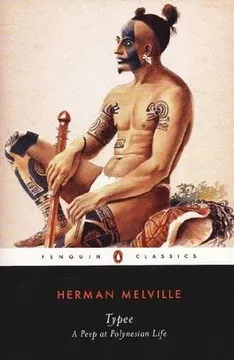
Typee is Melville's first novel, a semi-autobiographical adventure story set in the Marquesas Islands. Readers appreciate its vivid descriptions of Polynesian culture and criticisms of Western colonialism, though some find the pacing slow and the anthropological details excessive. The book's authenticity is debated, but it was a bestseller in its time. Melville's writing style and philosophical musings are praised, though some find the narrative less compelling than his later works. Overall, it's considered an impressive debut that foreshadows Melville's future literary achievements.
People Also Read


Characters
Tommo
Restless sailor and witnessAn American sailor aboard the whaler Dolly, Tommo enters the story worn down by an abusive captain and a voyage with no end in sight. Curiosity makes him attentive to the Marquesan landscape and customs, while fear makes him quick to imagine danger and slow to trust what he cannot understand. In the Typee valley, his dependence on others unsettles his sense of himself as an independent observer. He is drawn to Fayaway’s company and to the community’s ease, yet remains intent on recovering his freedom. His account combines sharp observation with personal bias, so readers see both the people he encounters and the limits imposed by his isolation, illness, and incomplete knowledge.
Toby
Tommo’s daring shipmateToby is a young sailor who conceals his real name and past, keeping much of himself at a distance from the crew. He is brave, quick to act, and capable of dark humor, but his melancholy hints at a private history he does not share. His bond with Tommo grows through long watches and mutual resentment of the Dolly’s captain. On the island, Toby’s impatience with delay contrasts with Tommo’s caution, and his willingness to take risks repeatedly changes what the pair can attempt. He is not simply a sidekick: his absence shapes Tommo’s emotional and practical life, while the sequel gives his choices their own weight.
Mehevi
Typee leader and hostMehevi is a commanding chief whose authority appears less through ceremony than through the respect and obedience of the people around him. He welcomes Tommo and Toby, arranges care for Tommo’s injured leg, and repeatedly makes decisions that shape their stay. His hospitality is personal and generous, but he also guards the valley’s boundaries and expects his decisions to be obeyed. Tommo’s changing view of Mehevi reflects the novel’s larger uncertainty: a host can be warm without being permissive, and a leader can be affable while exercising real power. His character is defined by that combination of welcome, pride, and control.
Kory-Kory
Devoted attendant and guideAssigned to care for Tommo, Kory-Kory becomes his constant attendant, carrying him when his leg hurts, bringing food, and helping him navigate the valley. His attention is practical, affectionate, and sometimes overwhelming to Tommo, who often resists being treated as helpless. Kory-Kory also tries to explain local customs through gesture and speech, though their language gap leaves much unclear. He is both an intimate companion and an agent of the valley’s rules: his devotion comforts Tommo, while his watchfulness makes escape more difficult. Through him, care and control occupy the same space rather than appearing as opposites.
Fayaway
Tommo’s gentle companionFayaway is a young woman of the Typee valley whose intelligence, liveliness, and tenderness distinguish her in Tommo’s eyes. She shows sympathy for his pain and homesickness, shares his time by the stream and lake, and helps make daily life feel less alien. Her warmth is not reducible to the narrator’s admiration of her beauty: she notices his distress and responds to it with care. Fayaway also lives within the rules of her community, including restrictions that shape where women may go. Her relationship with Tommo deepens his attachment to the valley while reminding him that affection cannot make him belong there.
Marnoo
Protected traveler and interpreterMarnoo is a Marquesan traveler who has spent time among Europeans and speaks enough English to communicate with Tommo. His protected status allows him to move among valleys whose inhabitants are otherwise hostile to one another. He is quick-witted, socially gifted, and aware of how carefully he must respect the limits of that protection. For Tommo, Marnoo is a rare source of direct information and a possible link to freedom. His caution reveals the risks of challenging the Typee chiefs, even for someone who can cross boundaries that remain closed to others.
Marheyo
Kindly elder of the householdMarheyo is Kory-Kory’s aging father and one of the elders in the household that shelters Tommo. He is eccentric, often absorbed in slow domestic projects, but his manner toward Tommo is paternal and compassionate. He offers the narrator an example of kindness that is quieter than Mehevi’s authority or Kory-Kory’s constant service. Marheyo’s attachment to his household and its traditions gives him a steady presence in the valley. Tommo’s regard for him grows from small acts of attention rather than from any clear understanding of the elder’s thoughts.
Tinor
Household caretaker and healerTinor, Kory-Kory’s mother, keeps the household supplied and attends to its daily needs. She prepares food, gathers useful plants, and offers remedies for Tommo’s painful leg. Her labor contrasts with the ease Tommo observes among many others in the valley, giving domestic life its practical foundation. She treats him with a warmth he associates with maternal care, even when the limits of her remedies leave his illness unresolved. Tinor’s presence helps make the household feel lived in rather than merely picturesque.
Jimmy
Sailor and island interpreterJimmy is an older sailor settled among the Nukuheva people, where his knowledge of the language and local relationships makes him useful to visiting crews. He moves between European ships and island communities, presenting himself as a practical intermediary. His familiarity with both worlds gives him influence, but Tommo and Toby have little way to assess his motives. Jimmy’s role highlights the precarious position of people who trade in information, favors, and access across cultural boundaries.
Karakoee
Protected rescuer from NukuhevaKarakoee is an islander from Oahu who has a protected status permitting him to travel through valleys that are otherwise hostile to outsiders. He has encountered Tommo before at Nukuheva and becomes a practical link between the captive sailor and the outside world. His willingness to approach the Typees with goods and a boat crew places him at risk. Karakoee’s presence shows how the taboo can create narrow channels of movement where ordinary routes are closed.
Mow-Mow
One-eyed Typee warriorMow-Mow is a powerful, one-eyed chief associated with the more forceful side of Typee leadership. His imposing appearance and direct manner make him a figure Tommo watches carefully. He participates in events at the shore where the competing wishes of the chiefs become visible. Mow-Mow helps embody the physical strength and martial readiness that coexist with the valley’s hospitality.
Captain Vangs
Cruel master of the DollyCaptain Vangs commands the Dolly and subjects the crew to harsh discipline, scant provisions, and neglect of the sick. His violence leaves the sailors with little hope of redress and makes desertion seem preferable to continued service. He represents the shipboard authority Tommo is trying to escape, not a complicated rival in the later island narrative.
The tattoo artist
Insistent village artisanThe tattoo artist is a skilled practitioner whose work carries social and religious meaning in the valley. He is eager to mark Tommo and repeatedly pursues the opportunity, while Tommo fears that the design will permanently alter his face. Their encounters show how an ordinary craft can become a source of pressure when the visitor cannot freely refuse.
Plot Devices
The taboo
Rules that close and open pathsThe taboo is a shifting system of restrictions and protections that governs objects, places, and people. It keeps women from using canoes, marks sacred groves, and can grant a traveler safe passage among communities that are otherwise hostile. Tommo repeatedly encounters its effects without fully understanding who sets its rules or why. The taboo helps explain why the valley’s social life has boundaries outsiders cannot easily cross, and why certain islanders can travel where Tommo cannot. It is not simply a magical escape mechanism: protection is conditional, and the rules do not give Tommo control over his own departure.
The mountain passages
Landscape as barrier and routeRidges, ravines, and waterfalls determine what Tommo and Toby can do at every stage. They escape the ship by climbing toward the mountains, reach Typee by following a stream down steep gorges, and find that the neighboring valleys are separated by dangerous routes and hostile boundaries. Later, those same heights make an overland return to Nukuheva seem nearly impossible. The geography is both physical hazard and social map: it shelters communities from one another, limits travel, and shapes the sailors’ decisions before they understand the people who live there.
Tommo’s leg illness
A body that limits escapeTommo’s swollen, painful leg first makes the journey into the valley harder, then requires him to depend on the Typees for care. The injury improves enough for him to walk about, but later returns, weakening him when he most wants to escape. It gives the islanders a reason to nurse him and gives Tommo a reason to seek medicine beyond the valley. The illness is never clearly diagnosed in the narrative, which preserves the sense of helplessness: Tommo cannot tell whether he is recovering, relapsing, or losing the chance to leave.
Signals and exchanged goods
News becomes a narrow openingThe islanders pass news through a vocal signal chain, allowing reports of boats to travel from the shore deep into the valley. Such news gathers the population and eventually brings Tommo toward the sea. Exchanges of cloth, tobacco, fruit, weapons, and powder also shape encounters between sailors and islanders. Tommo uses gifts to seek goodwill, while Karakoee offers trade goods in an effort to bargain for his release. These channels do not guarantee rescue, but they connect communities that otherwise remain separated by distance, language, and custom.
The preserved remains
Rumor becomes evidenceThe Typees’ reputation for cannibalism begins as a frightening story told by sailors and Nukuheva islanders. Tommo’s glimpses of preserved heads, including one belonging to a white man, and of human bones in a covered vessel make the threat immediate without clarifying every detail. The islanders conceal or misidentify what he sees, leaving him unable to know who died or what happened to Toby. These remains transform the mood of his stay and make the comforts of the valley feel less secure.
About the Author


Download PDF
Download EPUB
.epub digital book format is ideal for reading ebooks on phones, tablets, and e-readers.








