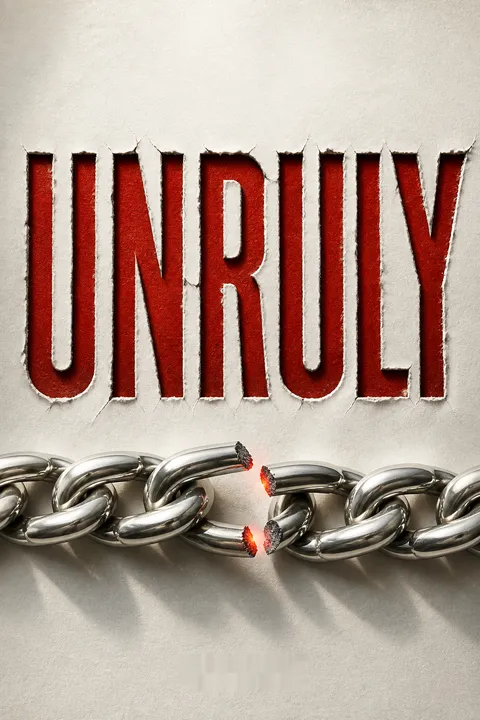


Key Takeaways
Reject racist expectations without using them to excuse your choices.
An insult becomes a test. In prison, a corrections officer tells Ja Rule that his children will help keep the officer's family employed, implying that Black men will keep returning to prison. Ja Rule feels the racial contempt in the remark, but also recognizes that his own decisions helped put him behind bars. He answers that his children will not follow his path, turning the moment into a demand on himself, not just a rebuttal to the officer.
Agency is not innocence. The memoir holds two truths together: institutions can stereotype and constrain Black men, and individuals remain responsible for the harms they cause. Ja Rule rejects the idea that his children are destined to repeat his mistakes, while admitting that his life has given them reason to worry.
What's powerful is the refusal of a false choice between structural racism and personal accountability. The officer's remark reduces a family to a predictable supply of future inmates; Ja Rule's answer insists that children are not an inherited sentence. Yet individual resolve cannot by itself reform biased institutions or undo unequal conditions. The scene works best as a personal commitment, not a complete solution to a social problem. Its force comes from making the commitment concrete: a parent's conduct becomes part of what the next generation has to resist, or can build upon.
Treat inherited wounds as explanations, not instructions.
The pattern starts at home. Ja Rule remembers his father as a man who beat his mother and left when he was young. His father was also struggling with drugs, and Ja Rule later sees how addiction and abandonment shaped the man who hurt his family. That history helps explain the damage, but it does not make the damage harmless. As a child, Ja Rule carries the absence into adolescence, alongside grief over a sister who was stillborn.
Recognition comes late. He notices that his own temper resembles his father's, and that he had spent years trying to become different while repeating some of the same behavior. The memoir's recurring question is whether a painful family pattern must be repeated simply because it is familiar. Ja Rule's answer is no, though changing it requires more than a promise.
The story treats family history as a source of both injury and information. Understanding that an absent parent was shaped by his own deprivation can soften a child's certainty that the abandonment was personal, but explanation is not absolution. This distinction matters because people often inherit behaviors without inheriting a clear account of where those behaviors came from. Naming the pattern creates a chance to interrupt it. The account also resists a tidy cure: insight can reveal what needs to change, but it cannot restore the childhood that was lost.
Build stability without confusing provision, punishment, and belonging.
A roof can have a cost. After Ja Rule's father leaves, his grandparents take him in and provide a more stable home while his mother works to support them. His grandfather holds several jobs and makes sure the household has what it needs, giving Ja Rule an early example of a man caring for a family. But this stability comes with harsh discipline, including beatings, and strict religious rules.
Belonging proves conditional. When Ja Rule's mother tells the Jehovah's Witness elders she no longer wants to follow the congregation's rules, she is disfellowshipped. Her family distances itself from her, and Ja Rule chooses to stand with his mother. He has seen structure protect a household, but also seen rules fracture one. Reliable care and unquestioning obedience are not the same thing.
This account is valuable because it does not flatten the grandfather into either hero or villain. His labor provides security, while his violence makes that security frightening. The religious rupture adds another distinction: a community can offer structure and still make acceptance conditional on conformity. These experiences help explain why Ja Rule values family commitment yet resists religious authority. The tension is worth keeping visible. Stability is not merely a fixed address or a provider's paycheck; it also depends on whether people can disagree without losing their place in the family.
When school seems irrelevant, street money charges interest in lives.
Quick cash looks like rescue. After eviction threatens his mother's home, Ja Rule wants to help and begins hustling. He recalls how a rap video about a young person choosing drugs over a low-paying job seemed to describe the choices around him. Selling first became a way to make money; soon he was skipping school, earning roughly a thousand dollars a week, and treating that income as proof that education was unnecessary.
The damage was visible. He saw customers lose their health, homes, and family ties to crack, yet continued selling. He also became involved with guns and was arrested as a teenager. His account does not present the street as an easy choice made in comfort: poverty and limited options shape the decision. But he also acknowledges that his work helped deepen other people's suffering.
The memoir captures how immediate rewards can make long-term costs feel unreal. A young person facing eviction can understandably privilege cash that solves today's crisis over schooling whose payoff seems distant. That logic deserves empathy, not romanticization. Ja Rule's most uncomfortable insight is that recognizing customers' desperation did not automatically stop him from profiting from it. The story therefore avoids a simple morality play about bad influences. Scarcity shapes the field of choices, but choices still distribute harm, often beyond the person making them.
Protect creative opportunity before a group contract traps your future.
A talent needs a route. Ja Rule's first recording opportunity grows from writing rhymes while hustling. He joins Cash Money Click with friends, and the group signs a deal with TVT Records. The advance is small, and the arrangement ties the members' careers together. When one member is imprisoned, the group project stalls, leaving Ja Rule unable to record freely even as new opportunities appear.
Persistence meets paperwork. He and producer Irv Gotti promote a video by repeatedly requesting it on The Box, a cable program where viewers could call in to choose music videos. The tactic draws attention from Def Jam, but the TVT contract still blocks a clean move. The episode shows why creative ambition needs business knowledge: a deal can open a door and also determine who is able to walk through it.
The episode complicates the familiar story that talent plus persistence guarantees a breakthrough. Ja Rule's hustle matters, but so do contract terms, timing, and the power of labels to control access. His success in generating attention does not erase the legal limits created by an earlier group deal. The practical lesson is not to avoid collaboration; the group gave him community and a first platform. It is to understand how shared rights and individual rights interact before commitments are signed, especially when members' circumstances may diverge.
Fame can finance a family while making you absent from it.
Success changes the scale. Ja Rule moves from struggling in Queens to chart success, major tours, and a rented Los Angeles mansion costing tens of thousands of dollars a month. He can provide homes and comforts for relatives, and believes his work is for his wife, Aisha, and their daughter. At the same time, he parties, uses drugs, and lets days pass without calling home. Aisha cannot reliably reach him, even when she is worried about their child.
Provision is not presence. The songs he writes about relationships become a way to communicate feelings that he struggles to express directly. Aisha, meanwhile, experiences his success as distance, public infidelity, and broken promises. The memoir does not deny the material help he provided. It shows how easily financial support can become a justification for neglecting the attention and reliability a family also needs.
What's striking is that success does not simply solve the insecurity that drove Ja Rule to work. It gives him more resources while amplifying the forces pulling him away from home: performance, access, partying, and the belief that absence is temporary because it serves a larger goal. Money can reduce real hardship, so dismissing provision would be glib. But material care and relational care answer different needs. The account suggests that families can receive the benefits of a career and still bear its costs, especially when the worker controls the definition of what the sacrifice is for.
Don't let wounded pride turn every slight into a fight.
Status makes conflict personal. As Ja Rule's music rises, he describes rivalries with DMX and 50 Cent, including accusations of copying and a diss track aimed at him. Instead of limiting the dispute to music, he recounts escalating arguments into physical assaults. He and his associates beat 50 Cent on two occasions, and Ja Rule later describes a separate club fight that ended with a man seriously hurt and a settlement of $150,000.
The response has a price. Ja Rule believes he is defending his reputation and the work he created. But the consequences reach beyond the rivalries: legal trouble, danger to others, strain on family, and a public identity increasingly shaped by violence. His account makes clear that being provoked, or feeling disrespected, does not make an assault less consequential.
The memoir shows how a reputation built on toughness can become a trap: backing away may feel like surrender, while escalation appears to prove strength. But once physical force enters a dispute, the costs are borne by people who may have had little power over the original insult. Ja Rule's candor about his actions is important, though the rivalries are told from his perspective and should not be treated as a complete account of everyone involved. The larger lesson is not that competition is avoidable, but that pride can make a manageable conflict irreversible.
Let consequences expose you, but don't mistake punishment for change.
Prison removes the distractions. Ja Rule enters custody after years of legal trouble, including a weapons case and a tax filing conviction. He describes racist treatment, cramped cells, long transfers between facilities, and the pain of missing birthdays and family visits. He also uses the time to work, exercise, read, and earn his GED, which he had not completed after leaving school in eleventh grade.
Reflection requires a response. He looks back at decisions that could have led to a much longer sentence and recognizes how often he had treated danger as normal. Prison gives him enforced distance from drugs and the street, but the memoir does not suggest that incarceration itself repairs the harm. His changed routines and renewed attention to family are choices made within confinement, not automatic gifts of the institution.
The prison chapters distinguish a personal turning point from a claim that punishment is a reliable route to rehabilitation. Confinement creates time for reflection, but it also separates people from the relationships and responsibilities that can help sustain change. Ja Rule's GED is a particularly concrete marker: he can finish an educational task he once dismissed, yet feels shame that it took prison to do so. That contradiction makes the achievement more meaningful, while also underlining how much earlier support and opportunity might have mattered.
Forgiveness can clarify a father's damage without erasing its cost.
A reunion cannot restore childhood. As an adult, Ja Rule reconnects with his father after years of estrangement. They speak privately about the beatings, the abandonment, and the drugs that consumed his father's attention. His father apologizes and describes having been neglected by his own father. Ja Rule understands the family pattern more clearly, and the two begin to build a relationship through occasional calls.
Understanding has limits. Ja Rule does not claim the explanation makes the past acceptable. He still names the harm: his father hit his mother and left his son. Their renewed bond matters, but it comes late, and his father dies before they can build the fuller relationship both might have wanted. Forgiveness helps Ja Rule see the person behind the injury; it cannot return the years they did not share.
This is a careful portrait of forgiveness as a change in understanding, not a declaration that everything is settled. Learning that his father inherited abandonment makes the cycle legible, while Ja Rule's memory preserves the child's experience of being left. Both realities can coexist. The late reconnection also shows why reconciliation should not be treated as a universal obligation: this relationship becomes possible because both men participate, and even then it remains incomplete. Its value lies partly in that incompleteness, which avoids turning an apology into a magical ending.
Build a better legacy through presence, education, and owning harm.
Fatherhood demands ordinary work. In prison, Ja Rule measures the cost of his choices in missed birthdays, visits, and everyday moments with his children. He worries about his daughter, Brittney, and recognizes that his sons watch how he handles anger. When his oldest son is suspected of stealing a watch at a sleepover, he feels the additional pain of being absent while his child faces suspicion as the only Black boy there.
The return is concrete. Ja Rule earns his GED, speaks more directly with his children about the risks he knows, and returns home in time to see Brittney graduate. He wants his children to avoid prison and to receive the education he neglected. His idea of breaking a cycle rests less on public success than on what he does as a father, and what his children can build from it.
The book's measure of legacy is deliberately domestic: who is present, what children learn by watching, and whether a parent takes responsibility for the example already set. The episode involving Ja Rule's son also prevents a purely individual account of family change. A father's effort cannot protect a child from racial suspicion or erase the systems that shape opportunity. Still, showing up and supporting education matter because they give children resources their parent lacked. The memoir's strongest claim is modest but demanding: a better future begins with a different pattern at home.
Analysis
Unruly is a memoir of becoming a father before becoming a reliable adult. Its structure makes that tension visible: it opens in prison, moves back through childhood, street life, and fame, then returns to confinement as a forced reckoning. Dated journal entries interrupt the chronology, giving the reader both the older narrator's interpretation and the imprisoned man's immediate frustration. The result is less a smooth redemption arc than a contest between the person Ja Rule wanted to be and the person his choices repeatedly made him.
The book's richest material comes from contradictions it does not entirely resolve. Ja Rule condemns racial stereotypes while describing his own role in crime; he loves his family while neglecting them; he recognizes the violence of his father while repeating some of his temper. Those tensions make the memoir more useful than a simple account of success or victimhood. Its strongest recurring measure of manhood is not wealth, toughness, or celebrity, but whether a man stays accountable to the people affected by him.
The account also has limits inherent to a first-person memoir. Stories about business disputes, rivals, and law enforcement are shaped by the narrator's memory and loyalties, and some claims about other people cannot be independently evaluated from this text. That does not erase the value of the self-criticism, but it matters when separating personal testimony from a complete public history. Ultimately, the book is most persuasive when it narrows its focus to what Ja Rule can know directly: the damage his absence caused, the choices he regrets, and the work of returning to family life. His transformation is not presented as completed or guaranteed. It is a decision to stop treating inherited pain, fame, or provocation as permission to repeat the past.
Review Summary
Unruly receives mixed reviews, with ratings ranging from 1 to 5 stars. Readers appreciate Ja Rule's candidness about his upbringing, career, and personal struggles. Many find the book entertaining and insightful, particularly regarding hip-hop culture and the music industry. However, critics note issues with grammar, structure, and depth. Some readers feel the narrative is disjointed and lacks detail in crucial areas. The book's portrayal of women and violence is controversial, with some finding it problematic. Overall, fans of Ja Rule and hip-hop enthusiasts are more likely to enjoy the memoir.
People Also Read

Glossary
Jack the Box
Repeated video requestsA promotional tactic Ja Rule and Irv Gotti used to draw attention to a music video on The Box, a cable program that let viewers call in to request videos. They coordinated repeated requests so their video would appear after a popular one, increasing its exposure to industry figures watching the program.
Hip-Hop Task Force
NYPD group monitoring artistsThe name Ja Rule gives to a New York Police Department intelligence group that he says was formed in 2003 to monitor hip-hop artists and their entourages. In the memoir, he identifies the group as connected to his arrest after a traffic stop. This definition reflects his account, rather than independently establishing the group's mandate.
Download PDF
Download EPUB
.epub digital book format is ideal for reading ebooks on phones, tablets, and e-readers.








