

Key Takeaways
Question the life template before it quietly spends your decades
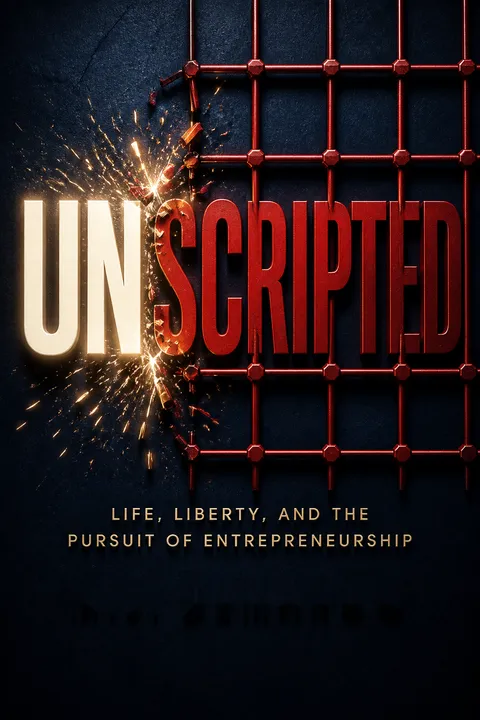
Name the pattern. DeMarco calls the default social route the SCRIPT: inherited expectations that people should get credentials, find a job, borrow for a lifestyle, and postpone freedom until retirement. His opening Monday-morning portrait follows a worker from alarm clock to traffic to a cubicle, where a colleague’s dismissal adds unpaid work. The point is not that every job is a prison. It is that a life can become automatic before its owner asks whether the trade-offs are worthwhile.
Treat it as a lens. The book urges readers to examine who benefits from familiar advice and whether that advice fits their own goals. Family, school, employers, media, and financial institutions can all repeat norms without sharing the same motives. The practical test is whether a chosen path builds the life its follower actually wants.
The SCRIPT is most persuasive as a prompt for auditing defaults, not as proof of a coordinated scheme. Social norms can constrain people, but they also transmit useful knowledge and help societies coordinate. The important question is therefore not whether a choice is conventional, but whether it is examined and freely endorsed. This distinction preserves the book’s challenge to autopilot without treating every institution, credential, or job as an enemy. A reader can keep a stable career and still reject the idea that retirement is the only legitimate destination.
Treat every purchase as a claim on future hours
Count the hidden price. DeMarco calls the habit of subordinating time to money temporal prostitution. A purchase costs more than its price when it requires future work, debt payments, or time spent maintaining it. As a teenager earning five dollars an hour at a department store, he realized that a five-hundred-dollar amplifier represented one hundred hours under a supervisor he disliked. The calculation changed how attractive the purchase seemed.
Protect free time. The book contrasts time someone else controls, such as work, commuting, and debt repayment, with time the person can direct. Consumer borrowing can make a present reward feel cheap while binding future choices. The alternative is not necessarily extreme frugality. It is to notice when a car, home, or status purchase narrows the ability to leave a bad job, pursue a project, or spend time with family.
Pricing decisions in hours is a useful behavioral tool because money is abstract while time is finite and personal. It also exposes costs that standard budgeting may miss, such as commuting, upkeep, and the stress of debt. Yet the comparison is not always simple: a home or a reliable vehicle can expand safety and opportunity, while some work is meaningful rather than merely indentured. The strongest application is not to condemn spending, but to ask whether a purchase buys a valued experience or quietly sells options the buyer may need.
Replace self-protective beliefs with small, repeated evidence
Inspect the inner story. The book groups beliefs, biases, and personal excuses as the 3(B)s, the mental rules that shape action before a person notices them. A belief that entrepreneurship is too risky can prevent even a small test; a belief that talent is fixed can turn early difficulty into a reason to stop. DeMarco draws on Carol Dweck’s study of fifth graders: after praise for intelligence, 67 percent chose an easier test, while 92 percent praised for effort chose a harder one.
Build proof through practice. Instead of waiting to feel naturally capable, the reader is urged to pursue incremental improvement and measure repeated action. The book calls this the Kaizen Principle: small improvements aimed at mastery rather than merely appearing successful. Its gym example makes the point plainly. One workout changes little; repeated sessions can change strength and skill.
This section joins cognitive self-examination to practical learning. A person who treats ability as improvable is more likely to interpret struggle as information rather than a verdict, and repeated practice gives that belief observable support. The nuance is that mindset alone cannot overcome every structural barrier, disability, or lack of resources. Effort praise also works best when it is specific and truthful, not empty applause. The useful synthesis is modest: question the story that blocks action, then test a manageable behavior and let evidence revise the story.
Solve a customer’s problem before chasing money or passion
Start with another person’s need. DeMarco argues that money is not something an entrepreneur can reliably hunt directly. It follows perceived value: a customer believes an offer is worth paying for, then receives the promised benefit. He calls the stored measure of that exchange value-vouchers. This reframes business from asking which product makes money to asking what people need, want, or find frustrating enough to pay to improve.
Improve what exists. A successful idea need not be unprecedented. The book favors finding a weakness in an existing offer and improving its value, such as convenience, quality, trust, or service. DeMarco’s own early ventures followed his interests but failed to distinguish themselves or meet a clear market need. Passion may help sustain effort, but it cannot substitute for demand. A buyer judges the usefulness of the offer, not the founder’s private enthusiasm.
The move from self-focused ambition to customer value is a strong corrective to business advice that treats revenue as a prize detached from usefulness. It also gives aspiring founders a practical way to search: observe complaints, workarounds, and recurring inconvenience. Still, markets do not reward value in a perfectly fair or transparent way. Distribution, timing, regulation, and bargaining power affect which solutions succeed. Nor does serving customers require abandoning personal interests. The most durable ventures often arise where a founder’s capabilities meet a real need, rather than where either one is pursued alone.
Choose businesses you can control, improve, and replicate
Screen the business structure. DeMarco’s CENTS framework is a way to judge whether a venture can create both income and autonomy. In practical terms, ask: Does the founder control critical assets and customer relationships? Is the problem difficult enough to discourage copycats? Is there demonstrated demand? Can delivery become less dependent on the founder’s hours? Can profitable results be repeated across customers, locations, or channels?
Prefer durable leverage. A seller whose entire business depends on one platform risks being shut down by that platform’s decision. A local service may be difficult to scale, but repeating a proven model through additional locations or partners can widen its reach. The book calls a business that attracts repeat buyers and recommendations a productocracy. Its ideal is not a flashy launch, but an offer strong enough that customers return and tell others.
These tests connect entrepreneurship to risk management and operating design. Control limits dependence on a single gatekeeper, while repeatable delivery creates room for growth beyond personal labor. The framework is especially useful because it asks about the structure of a business, not merely the appeal of its idea. Its limitation is that total control is impossible: suppliers, platforms, employees, and regulations always matter. The realistic goal is resilience through diversified channels and customer loyalty, not independence from every outside force. Scale should also follow proof, rather than outrun it.
Let customer behavior, not a polished plan, guide the next move
Test reality early. Kinetic execution means taking a practical step, observing what happens, and changing course in response. The book argues that a detailed forecast cannot predict how customers will react to a product, its price, or its presentation. Before investing heavily, an entrepreneur can seek soft proof through interviews, search behavior, competitor reviews, or a landing page. A sale or preorder is stronger evidence because it shows willingness to pay.
Read silence carefully. DeMarco’s first book attracted repeated criticism of its cover. He replaced it, and the complaints stopped as sales grew. The lesson is not that every criticism deserves obedience. It is to look for patterns and distinguish a product failure from weak targeting, insufficient reach, or an unclear offer. One small advertising test may be too little evidence to condemn an idea.
This iterative approach resembles experimental design: make a bounded intervention, define what response would count as evidence, and revise rather than defend the original assumption. It can reduce the cost of being wrong. The caution is that early customer signals are noisy. Compliments are not purchases, clicks are not retention, and one vocal user may not represent a market. Good testing therefore needs clear measures and enough observations. The book’s emphasis on acting before certainty is valuable when paired with disciplined measurement, ethical testing, and a willingness to stop when evidence stays weak.
Use purpose to endure work that passion alone cannot sustain
Find a durable reason. DeMarco describes a fuck-this event, or FTE, as a painful realization that the current way of life is no longer acceptable. His arrived during a blizzard after a long day driving a limousine, when he confronted how far his daily routine had drifted from his ambitions. The book presents such a moment as a source of commitment, not a business plan. A strong meaning and purpose supplies the reason to continue through criticism, uncertainty, and delayed results.
Let results reinforce effort. DeMarco challenges the advice to choose work solely because it feels like a passion. An activity can become less enjoyable when turned into a job, while work that creates useful results can become satisfying. A business may begin with months of little response, then gain momentum when customers value the offer. That feedback can strengthen motivation and help effort persist.
The distinction between an enduring reason and momentary enthusiasm is psychologically useful. Long projects often include repetitive, unpleasant tasks, so a broader purpose can keep attention on the outcome rather than the mood of the day. The FTE story also shows how a crisis can clarify priorities, though crisis is not a prerequisite for change and should not be romanticized. Purpose can be discovered through gradual experimentation, relationships, or service. And feedback is not the only source of motivation: craft, identity, and intrinsic interest can sustain effort even before the market responds.
Convert business gains into lasting choices, then guard them
Separate earning from keeping. DeMarco’s final discipline is to turn business income into durable autonomy rather than automatically upgrading every expense. He recommends saving deliberately, reducing debt, limiting lifestyle growth as income rises, and considering the consequences of risky decisions. His end-state is a money system: capital placed in income-producing assets that can cover living costs, making work optional. The business, in this model, creates the capital; investments provide income rather than serving as the primary route to rapid wealth.
Keep the plan personal. The book describes three possible pools: liquid money for choices and opportunities, a home owned without a mortgage, and investments that produce income. Its investment examples and yield assumptions reflect the author’s own approach and the period discussed. They are not guarantees. The broader lesson is to protect principal, avoid spending future income in advance, and seek qualified advice before making financial decisions.
The key contribution is behavioral: entrepreneurial success does not automatically create freedom if spending rises just as quickly or one reckless choice destroys accumulated gains. Separating capital creation from capital preservation makes that risk easier to see. The investment claims require particular caution, however. Income assets carry market, credit, inflation, and liquidity risks, and no yield is assured simply because it appears regular. Autonomy can also come from lower fixed costs, diversified income, and strong social support. The sensible aim is resilience, not a promise that any portfolio can guarantee lifelong independence.
Analysis
Unscripted is part memoir, part polemic, and part business manual. Its narrative begins with an ordinary workweek that feels strangely borrowed, then expands that unease into a social diagnosis, and finally offers entrepreneurship as a route toward greater control of time. The book’s strongest through-line is not simply that business can make money. It is that wealth matters when it creates options: the ability to leave a bad arrangement, choose meaningful work, and spend time deliberately.
Its most useful practical ideas are less ideological than its rhetoric. Treat time as a real cost. Distinguish activity from progress. Look for demonstrated customer need. Test an offer, learn from response, and improve it. Build a business that does not rely entirely on the founder’s hours, then avoid letting new income become new obligations. These principles connect mindset, market behavior, and financial discipline in a way that gives the book its unusual breadth.
The same breadth creates risk. DeMarco often divides the world into a conformist majority and an entrepreneurial minority, and his sharp criticism can make ordinary employment, education, or investing sound inherently foolish. Those paths can provide security, expertise, and meaningful work; entrepreneurship can also produce debt, volatile income, and failure. The author’s own success and selected forum stories illustrate possibilities, not typical outcomes. His strongest criticism of conventional investing also exceeds what the text establishes. Compound growth is mathematically real, while actual returns, fees, inflation, taxes, and timing remain uncertain. It is not a guaranteed route to wealth, but neither is it simply a scam.
A balanced reading treats the SCRIPT as a metaphor for unexamined defaults, not a literal conspiracy, and treats entrepreneurship as one powerful option rather than a universal escape hatch. The book’s challenge survives that qualification: choose a life deliberately, create something others value, learn from the market, and protect the freedom that success is supposed to buy.
Review Summary
UNSCRIPTED receives mixed reviews, with many praising its paradigm-shifting ideas on entrepreneurship and wealth-building. Readers appreciate DeMarco's unconventional approach to financial freedom, emphasizing value creation and automated business systems. Critics find the book repetitive, overly long, and sometimes obnoxious in tone. Some appreciate the author's blunt style, while others find it off-putting. Despite polarizing opinions, many readers consider it a must-read for aspiring entrepreneurs, offering valuable insights on breaking free from traditional career paths.
People Also Read








Glossary
The SCRIPT
Inherited life expectationsDeMarco’s term for a socially transmitted default path, commonly involving education, employment, consumption, debt, and retirement. He argues that people often accept this sequence without examining whether it fits their goals. The term functions primarily as a metaphor for conformity and unexamined assumptions, rather than a description of a single coordinated institution.
Temporal prostitution
Trading time for moneyThe book’s term for subordinating personal time to income, especially when present freedom is sacrificed for consumption or a distant promise of retirement. It emphasizes that work, commuting, debt repayment, and maintenance consume finite life hours. The concept asks readers to account for time, not just money, when judging purchases and career choices.
3(B)s
Beliefs, biases, and excusesA shorthand for the internal mental patterns DeMarco says can reinforce conventional choices: beliefs treated as facts, biases that protect those beliefs, and self-serving narratives or excuses. The framework is intended as a diagnostic tool. By questioning these patterns, a person may notice why they avoid a goal, misread an opportunity, or repeat an unhelpful action.
CENTS
Business-quality screening testsDeMarco’s framework for evaluating whether a business could produce profit and greater independence. It considers founder control, difficulty of entry, customer need, reduced dependence on the founder’s time, and potential to scale. The framework is a set of strategic questions, not a guarantee of success or a substitute for testing demand and financial viability.
Productocracy
Growth through product valueA business condition in which customers return and recommend an offering because they value the product or service. DeMarco contrasts this with businesses that depend heavily on advertising to replace dissatisfied buyers. A productocracy can support organic growth, but it still requires reliable operations, customer communication, and appropriate distribution.
FTE
A decisive dissatisfaction pointShort for fuck-this event, an emotionally powerful moment when the pain of staying in an unwanted situation feels greater than the anticipated cost of changing it. DeMarco distinguishes a lasting commitment from a temporary complaint. The event may clarify a need for change, but it does not itself provide the skills, resources, or plan to make change succeed.
TUNEF
Entrepreneurial life frameworkThe acronym for The Unscripted Entrepreneurial Framework. It combines a decisive commitment to change, revised mental assumptions, meaning and purpose, business design, execution, and personal discipline. DeMarco presents these elements as mutually reinforcing parts of an entrepreneurial route to greater autonomy, rather than as a single tactical recipe.
Kinetic execution
Action guided by feedbackDeMarco’s method of making meaningful progress before every answer is known. An entrepreneur takes a practical action, assesses the response from the market, and adjusts the approach. The method rejects endless preparation and rigid forecasts, while still relying on deliberate tests, useful evidence, and thoughtful changes rather than random activity.
Legacy value system
Value that outlasts laborA business asset or system that continues to deliver value without requiring the founder’s direct time for every transaction. Examples in the book include books, software, products, rental assets, and organized services. Such systems can create income across time, although they still require substantial creation, maintenance, distribution, or oversight.
Value-vouchers
Money as stored exchange valueDeMarco’s reframing of money as a record of perceived value exchanged between people. A customer pays when an offer appears valuable, and the seller earns trust by delivering the promised benefit. The term encourages entrepreneurs to focus on creating, communicating, and delivering value rather than treating money as prey to hunt.
FAQ
What's Unscripted: Life, Liberty, and the Pursuit of Entrepreneurship about?
- Focus on Entrepreneurship: The book emphasizes entrepreneurship as a path to financial freedom and personal fulfillment, challenging traditional employment paths.
- Critique of Conventional Wisdom: It critiques societal norms, referred to as the "SCRIPT," which often lead to a life of mediocrity and dissatisfaction.
- Framework for Success: M.J. DeMarco introduces frameworks like the UNSCRIPTED model and CENTS framework to guide aspiring entrepreneurs.
Why should I read Unscripted by M.J. DeMarco?
- Transformative Insights: The book offers a fresh perspective on breaking free from societal expectations to pursue a life of passion and purpose.
- Practical Advice: DeMarco provides actionable insights and strategies applicable to real-world business scenarios.
- Empowerment: It empowers readers to challenge their beliefs, take risks, and pursue their dreams without fear of failure.
What are the key takeaways of Unscripted?
- Reject the SCRIPT: The book encourages rejecting societal norms that lead to dissatisfaction and embracing entrepreneurship for personal fulfillment.
- Value Creation: Emphasizes creating value in the marketplace as the path to true wealth, rather than merely chasing money.
- Discipline and Execution: Highlights the importance of discipline and taking consistent action towards achieving one's goals.
What is the "SCRIPT" in Unscripted?
- Cultural Conditioning: The "SCRIPT" refers to societal norms dictating a conventional life path, often leading to mediocrity.
- Involuntary Slavery: Described as a form of involuntary slavery, where individuals work jobs they dislike for financial security.
- Awareness and Rejection: Encourages readers to become aware of the SCRIPT and actively reject it to pursue their own dreams.
What is the "UNSCRIPTED Entrepreneurial Framework"?
- Five Phases of Action: It consists of five phases guiding individuals in their entrepreneurial journey, focusing on mindset and actions.
- Intersection of Concepts: Combines beliefs, biases, and entrepreneurship processes for a comprehensive approach to an UNSCRIPTED life.
- Path to Self-Actualization: Aims to lead individuals to self-actualization, aligning their lives with true values and desires.
What is the CENTS framework in Unscripted?
- Control: Emphasizes having control over business and financial decisions, advocating for autonomy and flexibility.
- Entry: Focuses on identifying opportunities with minimal competition and high success potential.
- Need: Highlights the necessity of fulfilling real market needs, building businesses on solving genuine problems.
How does M.J. DeMarco define entrepreneurship in Unscripted?
- Problem Solving: Entrepreneurship is about identifying problems and creating solutions to address market needs.
- Value Creation: It's not just about making money but creating value for others, leading to sustainable success.
- Freedom and Independence: Seen as a pathway to personal freedom, allowing individuals to live life on their own terms.
What are the "5 'Fuck You' Freedoms" mentioned in Unscripted?
- Freedom from Work: Allows individuals to choose whether or not to work, not being bound by job necessity.
- Freedom from Scarcity: Represents living without financial constraints, free from debt or obligations.
- Freedom from Hyperrealistic Influence: Being immune to societal pressures that derail focus on personal goals.
What are the "8 Belief Scams" in Unscripted?
- Shortcut Scam: Belief in achieving extraordinary results through shortcuts rather than hard work.
- Special Scam: Notion that some are inherently talented, leading to a fixed mindset.
- Consumption Scam: Idea that consumption is independent of production, ignoring true spending costs.
How does Unscripted address the concept of passive income?
- Passive Income Definition: Defined as income generated without direct involvement, emphasizing system creation for ongoing revenue.
- Money Systems: Discusses investing in assets that produce regular income, crucial for financial independence.
- Long-Term Strategy: Building passive income requires upfront effort but provides long-term financial security.
What is kinetic execution in Unscripted?
- Action-Oriented Approach: Involves taking meaningful action before having all answers, learning through experience.
- Act, Assess, Adjust: Process of acting on ideas, assessing results, and adjusting strategies based on feedback.
- Incremental Problem Solving: Focuses on solving one problem at a time, building towards larger solutions.
How can I start living an UNSCRIPTED life according to M.J. DeMarco?
- Identify Your FTE: Recognize your "fuck this" event, compelling you to change your situation and pursue dreams.
- Challenge Your Beliefs: Reflect on societal norms shaping your life and actively work to reprogram them.
- Take Action: Implement the UNSCRIPTED Entrepreneurial Framework by setting goals, creating a plan, and taking consistent action.
About the Author
Other books by M.J. DeMarco



Download PDF
Download EPUB
.epub digital book format is ideal for reading ebooks on phones, tablets, and e-readers.








