

Plot Summary
Prologue
In 1932, young archaeologist Van Keane reaches the hidden Temple of Venus with his friend Atlas and four of the five pieces of the legendary Vase already in hand. Once Atlas leaves to fetch a shard, Van secretly fits the complete set together.
The pottery glows, then vanishes, and marble spreads over Van’s body until his heart is stone. The opening makes the Vase more than a buried prize: its magic can alter a person, while the last thing Van knows is that he has acted alone.
Van’s transformation is the novel’s first lesson in the danger of treating a myth as a transaction. He wants wealth and renown, and assembles the Vase without waiting for Atlas or questioning what its promise requires. His isolation is literalized in stone: a living person becomes an object to be found, studied, and interpreted by others. The scene also plants the story’s central uncertainty. The Vase’s power is real, but its reward is not yet understood, so ambition and friendship both become vulnerable to competing interpretations of the same legend.
The Girl Who Wants the Vase
Nearly a century later, high school student Margot Rhodes arrives at a Pompeii excavation with Van’s journal and a shard she found hidden in her school library. She wants the Vase’s promised power because she believes being adored might finally make her father understand her.
At the dig, classmate Astrid Ashby ridicules Margot’s lack of experience and her fanciful application essay, while Dr. Hunt insists she has earned her place and pairs the rivals. Margot has barely begun when her father discovers she lied about traveling to New York and threatens to bring her home. Rather than surrender, she holds on to the journal and the shard, convinced that Van’s notes can lead her to the rest of the Vase.
Margot’s quest begins as a bid for recognition, not simply a taste for adventure. She imagines the Vase as a device that can repair the fracture between her and her father, turning an external achievement into proof that she is lovable. Astrid’s contempt gives that private fear a public voice, while Dr. Hunt offers a counterexample: Margot can belong before she has mastered the field. The shard matters because it makes Margot’s daydream materially consequential. Her first choice is to keep going despite humiliation, though she still measures success by other people’s approval.
A Statue Breathes Again
Margot sneaks out after midnight, steals a hotel scooter, and follows Van’s cryptic journal to a concealed temple beneath Pompeii. There she finds a statue carved in Van’s likeness and brushes its cracked face until gold light breaks through the marble. Van wakes confused and angry, still believing the Vase pieces have just disappeared.
Before they can settle the mystery, five stone guardians animate and shoot at them. Van fights while Margot finds the hidden exit, and together they evade the guards outside. Their escape does not make them partners: Van takes the scooter key and leaves Margot to walk back alone. By morning, she has learned that the romantic hero in her imagination is a difficult, frightened person with his own agenda.
The awakening punctures Margot’s romantic projection without extinguishing her hope. Van is not the polished hero she built from his photograph and journal; he is defensive, capable, and unwilling to trust her. Their first alliance is practical, forged under arrows and pursuit, then broken as soon as Van can leave on his own. That sequence establishes the novel’s recurring test of partnership: being useful in a crisis is not the same as being trusted. Margot’s decision to seek him again will require her to distinguish the person before her from the story she wants him to fulfill.
Water Claims the Nymphaeum
Using Van’s journal, Margot tracks him to a Roman storm drain and refuses to let him continue alone. She reveals that she has the first shard, and Van agrees to cooperate if she lets him claim the treasure. Their route leads to the Nymphaeum, an underground sanctuary whose water rises as they search for the second piece.
Van orders Margot to stay put while he swims toward it, but a violent current drags her away. She spots the hidden drain mechanism and opens it, sending both of them through a flooded passage into a McDonald’s. Van has rescued the second shard, and Margot has saved them from drowning. Back in Pompeii, he finally shares the fragment with her, though he still keeps emotional distance.
The Aqua trial gives Margot a concrete correction to Van’s judgment of her. Her impulsiveness creates danger, but her ability to notice the mechanism and act under pressure also saves them. The distinction matters: the story does not ask her to become less emotional or less imaginative, but to turn those traits into attention and action rather than treating them as defects. Van’s decision to place the second shard with her marks the first small transfer of trust. Their bargain remains unequal, yet each has now depended on the other’s skill to survive.
The Empty Aura Chest
In Pompeii, Van and Margot follow the journal to the House of Olea, an abandoned merchant’s residence tied to the trial of Aura. Five enormous pendulums guard a doorway, and Van cannot solve their timing because Atlas completed this test alone a century earlier. Margot studies the rolling counterweight and realizes they can stop the blades by taking turns on the pressure tiles.
They cross together, then open the stone chest beyond the maze and find it empty. Van believes the shard was once there and has since been taken. The failure sends them back toward Rome with no new piece, but it changes their working arrangement: Van has to follow Margot’s reasoning, and she proves she can contribute more than enthusiasm.
The empty chest is an important kind of failure because it separates competence from reward. Margot solves the physical problem, but the world does not immediately pay her back with the shard she wants. That keeps her from treating each successful trial as a simple merit badge. The contrast with Atlas is also revealing: a test completed alone has left Van without the knowledge needed to repeat it. Margot’s collaborative solution is not merely clever; it exposes the limitation of Van’s inherited model of achievement, in which independence is mistaken for strength.
The Museum’s Broken Soldier
During the class visit to Rome’s antiquities museum, Margot and Van are chased by a living Roman soldier statue through the galleries. They escape into the restricted archives and search acquisition ledgers, where Margot finds records of shipments made by Atlas Exploration Company after Van vanished.
The entries suggest Atlas knew where the missing Aura shard was and sent it to a private antiques gallery. The soldier catches Margot and grips her throat, but Van impales its arm with a lance, then severs its head.
Dr. Hunt helps keep the students from being blamed for the damage, which was already under repair. Margot and Van leave with the ledger evidence and a destination, while the museum’s animated statues hint that the shards’ magic is spreading.
This episode turns the supernatural threat into an archival investigation. Margot’s suggestion that the shard might have entered a collection becomes a workable lead, and the ledger gives material form to Van’s unresolved history with Atlas. The museum’s orderly display cases cannot contain the past: statues move, records become evidence, and the researchers themselves risk becoming part of the collection’s damage. Margot is no longer merely chasing a legend she has read about. She is interpreting documents, testing hypotheses, and helping Van confront a history he has treated as closed.
A Thief in the Gallery
With help from Suki’s connection to an underground antiques market, Margot and Van find the shard in La Galleria Bianchi. Enzo Bianchi, the market’s young gatekeeper, recognizes its value and attacks when Margot tries to take it. She uses a cooking pot to block his sword, grabs the real fragment, and escapes with Van through the crowded stalls.
Enzo cuts the strap of Margot’s backpack and gets away with it, including the shards they carried. Soon afterward, Van’s arm turns to marble where the fragments’ influence can no longer reach him. Margot learns that the Vase pieces are sustaining his human form, so recovering them becomes urgent for a reason beyond her own wish to complete the artifact.
The gallery shifts the quest from discovery to theft, forcing Margot to act inside a moral and physical risk she had previously imagined as romantic adventure. Her success comes through improvisation, not mastery, but the stolen backpack makes that victory costly. Van’s petrifying arm gives the artifact an intimate consequence: the shards are not just clues or prizes but a temporary tether to his life. Margot’s motive begins to change. She still wants the Vase, yet the thought of losing Van has entered the quest beside her longing for her father’s approval.
The Rooftop Before Naples
Margot chooses not to board her father’s scheduled flight home. On a Rome hotel rooftop, she and Van share wine and admit what has shaped them: he came to Italy seeking money and recognition, while she has spent years trying new pursuits after her mother left and her father became absorbed in work. Van tells her that the Vase cannot make her worthy of love, and she begins to believe him.
Their closeness is interrupted when Margot spots Enzo carrying her backpack. They pursue him through streets and a restaurant kitchen but lose him in the crowd. Later, Astrid helps Margot prepare for a date and warns that the completed Vase requires someone to become stone. The warning gives Margot a reason to question Van’s intentions.
The rooftop scene replaces fantasy with disclosure. Margot and Van recognize the same wound in different forms: each wants to be seen, but Van pursues visibility through money and achievement while Margot hopes to become impossible to reject. His reassurance challenges the premise of her quest, though it cannot erase her fear. The failed chase prevents intimacy from becoming an escape from the plot, and Astrid’s warning converts private vulnerability into suspicion. Margot must now weigh her growing trust in Van against the possibility that his need for the treasure could endanger her.
The Trial of Terra
In Naples, Van and Margot enter the Tomb of Virgil to face the trial of Terra. Margot reaches the shard first, but the tomb seals her inside as its stone walls begin closing around her. Van uses her phone and translation app to decode the Latin warning: she must remain still, prove loyalty, or return what is not hers.
Margot holds her ground until the walls stop, then emerges with the fragment. The inscription ends with the word for stone. She concludes that the final reward demands a human sacrifice and accuses Van of planning to let her take the curse. Van says he had hoped to find another way, but he takes the shard from her. Margot leaves him, feeling that his silence has made her a tool.
Terra makes Margot’s emotional regulation a survival skill without presenting it as emotional suppression. She cannot overpower the walls; she has to endure the fear long enough to interpret the test and choose stillness. The discovery that someone may be sacrificed turns the romance’s central uncertainty into a question of consent and trust. Van’s admission is incomplete, and his taking the shard confirms Margot’s worst interpretation even as his stated hope complicates it. Their separation is therefore not a misunderstanding that can be brushed aside; it follows from a real breach of information and agency.
Margot Comes Back
Margot rides back toward Pompeii convinced she should quit. A call with her father deepens the hurt: he dismisses the Vase as make-believe and assumes she will soon abandon another interest. At the hotel, Van’s handwritten apology reaches her, and Suki reminds her that she has been choosing for herself, not simply chasing approval.
The next day, Dr. Hunt takes Margot to a statue of Venus and explains that the goddess was valued for her forceful nature, not despite it. She affirms Margot’s writing and the merit of her application. Remembering that each Vase trial reflects a guardian, Margot identifies the untested trial of Mors and heads into Pompeii’s necropolis. This time, she goes because she wants to finish what she began.
Margot’s return is a decision about authorship. Her father’s dismissal repeats the old pattern of interpreting her intensity as a passing phase, while Dr. Hunt offers a different account: imagination and writing are genuine capacities, not substitutes for serious work. The Venus statue reframes the quality Margot fears most, her emotional force, as something that can coexist with judgment and courage. The key shift is not that Margot stops wanting love or approval. She moves toward the final trial because the choice belongs to her, not because she expects the Vase to make other people value her.
Charon Sets the Test
In the necropolis, Margot finds Enzo at a chamber of goblets guarded by Charon, the ferryman of the dead. Charon hides a coin beneath one cup, then shuffles the vessels; Margot notices her red lipstick on the cup she drank from and uses the stain to track it. She wins the fifth shard, but Enzo attacks her.
When she searches his backpack, she finds broken pieces of the hotel coffee mug, not the missing Vase fragments. Van arrives with Astrid, who reveals that she is Atlas’s great-granddaughter and has been working with Enzo to reclaim what she considers her family’s legacy. Astrid holds the other shards and demands the last pieces. She plans to make Margot the sacrifice, and Van agrees to lead them to the temple.
The Mors trial rewards observation rather than brute strength. Margot’s signature lipstick, once mocked as evidence that she does not belong at a dig, becomes the practical mark that lets her follow the hidden coin. The revelation about the decoy mug exposes how easily appearances have misled her: the object in Enzo’s bag resembles the evidence she expects but is only a substitute. Astrid’s claim of inheritance likewise turns archaeological discovery into a struggle over ownership. Margot’s return has not removed danger, but it has sharpened her capacity to read both artifacts and people.
Venus’s Guardians Awaken
Astrid brings Margot and Van back to Venus’s temple, where the guardians animate as soon as the shards arrive. They herd Astrid toward the altar while Margot and Van use misdirection to make the stone archers strike one another. Margot protects Astrid when Ignis corners her, even after Astrid has plotted against her. A fallen pillar damages the temple, and the guardians crumble in the fight.
Astrid gathers the scattered pottery and places it on the altar, but nothing happens. The roof begins to fail. Margot and Van shelter beneath the altar as the chamber collapses, while Astrid escapes with what she believes are the Vase pieces. Buried together, Margot reveals that she had kept the real shards hidden in her own backpack.
The battle tests Margot’s ethics as much as her nerve. She saves Astrid despite having every reason to let her face the danger alone, distinguishing courage from retaliation. The guardians’ attacks also transform the temple’s structure into an active threat, making their victory costly rather than clean. Astrid’s failed attempt to reunite the Vase shows the danger of treating inheritance as entitlement: possession without understanding cannot complete the ritual. Margot’s concealed swap is a practical use of the misdirection Van taught her, but the action also signals that she has become a strategic partner rather than a passenger in his plan.
The Last Choice
Under the rubble, Van explains that the temple offers only one remaining way out: Margot must rebuild the Vase, even though doing so will turn him to stone again. He stays in the ring of wilted myrtles and asks her to take the treasure and leave. Margot puts the five genuine shards together.
The artifact reforms in a flare of gold, and marble covers Van before she can reach him. Margot kisses his cold cheek and tells him she loves him, then breaks the completed Vase against the temple floor. She no longer wants its promised adoration if the price is Van’s life. The treasure door closes, leaving her trapped with his statue, but the broken pieces begin to glow.
This is the emotional climax because Margot finally refuses the bargain that began her journey. At the outset, she treated the Vase as a way to make herself universally lovable; now she destroys it rather than let its promise cost someone she loves. Van’s willingness to remain behind gives the choice real weight, but it does not turn his sacrifice into a romantic solution Margot must accept. Her grief is impulsive, yet it is also morally lucid: she rejects a system that converts love into possession and demands a human body as payment.
Stone Breaks, Love Returns
The broken Vase fragments send golden light into Van’s marble body, and he returns to life. With the artifact destroyed, its curse can no longer claim either of them. The treasure chamber door has shut, but Margot notices that pressure on the altar opens it, much like the mechanism in the House of Olea.
They use Mors’s severed skull as a weight on the altar and discover that Van must hold the door open while Margot runs through. He catches her by the jade bracelet on her wrist and pulls her clear just before the stone slab closes. Beyond it lies the treasure and, better still, a staircase back to the surface. They escape together, carrying neither the Vase nor its curse.
The reversal does not come from Margot finding a more powerful artifact; it comes from removing the artifact’s power over them. Breaking the Vase ends the curse, while the practical mechanism of the altar supplies a way out that the characters can solve together. The House of Olea has prepared this payoff: Margot and Van now recognize pressure, timing, and cooperation as tools more reliable than mythic promises. The bracelet, once a flirtatious gift and later a marker of their connection, becomes the physical means by which Van saves her. Their survival depends on trust expressed as coordinated action.
Pompeii Names Its Heroes
Margot and Van emerge as excavators and reporters swarm the newly exposed temple, believing they have found the Vase. Astrid and Enzo are also present, but Margot and Van receive the attention as the discoverers. In the crowd, Margot’s father has flown to Italy after she missed her flight and stopped answering him.
He admits that he mistook her independence for a threat and apologizes for not making room for the person she was becoming. Margot accepts his love without needing the Vase to secure it. Van gives his real name to the press, and he and Margot pose together before sharing a kiss. The public recognition matters, but Margot no longer needs it to prove she deserves to belong.
The resolution answers the opening wound without granting Margot the fantasy she began with. Her father’s arrival and apology repair part of their relationship, but the decisive change is that Margot no longer treats acclaim as the condition of being loved. The discovery brings reporters, cameras, and institutional recognition, yet those rewards are secondary to a more private acknowledgment: her father sees how his absence affected her. Van also steps out from behind the false student identity, choosing to be known rather than merely admired. The ending joins public history to personal recognition without confusing one for the other.
Epilogue
Several weeks later, Margot writes a new adventure story beneath the excavation tent while Van works in the newly opened temple. Her fictional archaeologist has begun to feel less like a borrowed identity and more like a way for Margot to discover her own voice.
Dr. Hunt’s recommendation has helped Van secure a place at Radcliffe, where he can continue his education alongside Margot. He gives her myrtle flowers and an acceptance letter, then produces a map that promises another puzzle. Margot follows him into the ruins, laughing as he runs ahead. She is no longer trying to become someone else before she can be loved.
The epilogue resolves Margot’s pattern of abandoning interests by giving her a commitment that grows from her own imagination. Writing is not another disguise she tries on; it is a practice through which she can make meaning without needing to become a flawless heroine. Van’s acceptance at Radcliffe reverses his earlier exclusion from ordinary life, while their shared education makes partnership practical as well as romantic. The myrtle flowers recall the temple and the Vase, but here they carry no supernatural bargain. The final map keeps adventure open-ended, while Margot’s new confidence rests in the present rather than in a promised transformation.
Analysis
Us in Ruins builds its adventure around a sharp question: what does it mean to be loved if the price is becoming an object for other people to admire? Margot begins by treating the Vase as a cure for rejection. If she can become extraordinary enough, she believes, her father will finally see her. Van has a parallel bargain in mind. He wants wealth and recognition because he learned early that being overlooked can mean having no security at all. Their motives make the romance more than a contrast between an optimist and a skeptic. Both are trying to solve loneliness through external proof.
The archaeological trials repeatedly challenge that strategy. Margot’s emotional intensity first appears to put her at risk, but it also helps her notice the counterweight in the Aura maze, the lipstick mark in Charon’s test, and the practical solution to the treasure door. The book does not present growth as Margot becoming calmer, more conventional, or less imaginative. She learns to give her instincts structure and to make choices without treating mistakes as evidence that she is fundamentally unworthy. Van’s arc moves in the other direction: his self-reliance keeps him competent, but it also makes trust feel dangerous. Their partnership works when neither person is reduced to the other’s tool.
The story’s treatment of legacy is equally pointed. Astrid inherits a history she considers hers, while Margot and Van must decide whether discovery grants ownership or obligation. The true treasure is not a simple prize, and the Vase’s promise is deliberately unsettling: admiration can preserve a person by erasing the living self beneath the image. Margot’s destruction of the Vase rejects that bargain. What saves the couple is not perfect behavior or a magical reward, but mutual recognition, concrete cooperation, and the willingness to risk being known as imperfect people. The ending grants them attention and treasure, but makes those things secondary to the relationships they choose to keep.
Review Summary
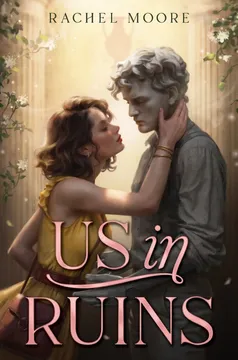
Us in Ruins receives mixed reviews, averaging 3.53/5. Many readers praise its adventurous, lighthearted blend of romance, mythology, and Italian archaeology, comparing it to The Mummy and Lizzie McGuire Movie. The gorgeous cover is nearly universally celebrated. Fans love the grumpy-sunshine dynamic between Margot and Van, and appreciate Margot's emotional, relatable character growth. Common criticisms include underdeveloped characters, an overly fast romance, excessive pop culture references, unrealistic plot elements, and writing that skews toward a younger YA audience. Despite flaws, most found it an enjoyable, fast-paced summer read.
Characters
Margot Rhodes
The story-chasing newcomerMargot is an imaginative Georgia teenager who arrives at an Italian archaeological dig with more curiosity than training and a long habit of throwing herself into new pursuits. Her parents’ divorce left her unsure where she belongs, and her father’s work-focused distance makes praise feel like something she must earn. She loves romance novels, keeps her red lipstick close, and experiences emotion intensely, often before she has time to interpret it. That intensity can make her reckless, but it also fuels her observation, improvisation, and loyalty. Margot’s central struggle is not whether she can become a conventional archaeologist; it is whether she can value her own gifts without asking an artifact or another person to certify her worth.
Van Keane
The stubborn young excavatorVan is an ambitious archaeologist from 1932, shaped by poverty, early loneliness, and a fierce desire to become visible in a world that has often overlooked him. Precise with clues and confident in physical danger, he relies on self-sufficiency because trusting someone once left him feeling betrayed. His dry manner conceals a more reflective person who records his uncertainties in a private journal. Margot unsettles his preference for control: she notices what he misses and insists that partnership means mutual responsibility. Van’s tension lies between wanting recognition and fearing dependence, which makes his guardedness both a survival strategy and an obstacle to intimacy.
Astrid Ashby
The polished rivalAstrid is a high-achieving Radcliffe student with a command of Latin, a carefully maintained image, and a strong investment in academic standing. She expects competence to be visible and measurable, so Margot’s unconventional essay and lack of field experience strike her as unfair advantages. Her sharpness often protects a deeper fear of losing control over the future she has planned. Astrid is ambitious, observant, and more complicated than her public contempt suggests. Her relationship with Margot tests the difference between professional competition and genuine regard, while her family’s archaeological history gives her ideas about legacy unusual force.
Suki Takeda
The openhearted connectorSuki is a confident, socially nimble student whose family has deep museum connections. She chooses people over status, refuses to let Astrid dictate her friendships, and uses humor to puncture tension without losing warmth. Her knowledge of Rome’s hidden antique scene gives Margot and Van access to a crucial lead. Suki also sees Margot’s loneliness more clearly than Margot expects and offers friendship without demanding that she perform competence. Her attraction to Fernanda and her easy self-possession provide Margot with a model of openness that does not depend on winning everyone’s approval.
Dr. Hunt
The perceptive teacherDr. Hunt leads Radcliffe Prep’s archaeology trip and balances professional standards with an instinct for what her students need. She pairs Margot and Astrid despite their hostility, keeps the group moving, and recognizes that Margot’s writing shows real intellectual promise. Rather than treating mistakes as proof that a student does not belong, she frames them as part of learning. Her conversation with Margot at the statue of Venus gives the teenager room to choose her next step for herself. Dr. Hunt’s authority is firm, but it is never merely punitive.
Rupert Rhodes
Margot’s worried fatherRupert is a successful real estate agent in Dogwood Hollow and Margot’s sole parent since his separation from her mother. He loves his daughter but often answers her uncertainty with rules, practical advice, or the assumption that her latest interest will fade. Work has become both his refuge and a barrier between them. His fear of losing Margot helps explain his attempt to control her choices, though it does not erase the hurt his distance causes. Rupert’s relationship with his daughter centers on the difficult shift from protecting her to recognizing her as an increasingly independent person.
Parker Rhodes
The adventurous absent motherParker is Margot’s mother, a lively woman who filled family life with stories, costumes, and spur-of-the-moment adventures. She left her marriage and their Georgia home when Margot was twelve, leaving her daughter with unanswered questions about whether love can survive separation. Margot inherits her imagination and appetite for possibility, but also fears repeating what she sees as her mother’s tendency to leave. Parker remains an important presence through the treasured romance novel she shared with Margot.
Atlas
Van’s wealthy expedition partnerAtlas is Van’s closest companion in the 1932 expedition and the son of a family with the resources to fund archaeological work. He documents the dig, handles the company’s public image, and has knowledge and advantages Van lacks. Their friendship gives Van shelter and access to the field, but also exposes the imbalance between the boy who pays and the boy who must prove his value. Atlas represents both the intimacy Van wants and the vulnerability that comes with relying on another person.
Enzo Bianchi
The guarded market guideEnzo is a young Italian man who controls access to La Galleria Bianchi, an underground antiques market concealed behind a lingerie shop. He is alert, charming when it serves him, and protective of the objects in his care. His knowledge of the gallery makes him a formidable obstacle for Margot and Van, who are unfamiliar with its rules and routes. Enzo’s confidence can shade into aggression, and his shifting alliances make it difficult for the newcomers to know how much of his friendliness is genuine.
Rex Yang
The easygoing classmateRex is an athletic student on the Pompeii trip and one of Suki’s close friends. His confidence and teasing manner help establish the group’s casual social world, where Margot initially feels like an outsider.
Topher Kitsch
The joking classmateTopher is one of the boys in Dr. Hunt’s archaeology group. He jokes with Rex and the others, and his early assumptions about Margot reflect the social judgments she must navigate before she feels accepted.
Calvin
The sunburned classmateCalvin is a fellow student on the excavation, recognizable by his red hair and frequent presence with Rex and Topher. He is part of the group whose established friendships make Margot feel new to the trip.
Giuseppe
The tired hotel conciergeGiuseppe works the front desk at Hotel Villa Minerva. His sleepy watchfulness makes Margot’s midnight scooter theft harder than she expects, and later he insists that she accept Van’s letter.
Fernanda
Suki’s market connectionFernanda is Suki’s friend and a contact who knows how to gain entry to La Galleria Bianchi. Her guarded manner protects the market’s secrecy, while her connection to Suki helps the group reach the next stage of its search.
Charon
The ferryman’s stone sentinelCharon is the mythic ferryman represented by a statue in the necropolis. He presides over the final trial, using a coin and shifting goblets to test whether a seeker can track what has been hidden.
Venus
Pompeii’s patron goddessVenus is the goddess whose worship and legends shape the novel’s archaeological mystery. The people of Pompeii honor her as a protector as well as a figure of love, and the stories surrounding her challenge Margot to rethink what it means to be admired.
Pasha Manikas
Astrid’s intended roommatePasha is a high-scoring student Astrid expected to partner with on the trip. Her absence from the excavation helps fuel Astrid’s resentment toward Margot, though Pasha herself remains outside the central action.
Plot Devices
The Vase of Venus Aurelia
The dangerous promiseThe legendary Vase is divided into five black-and-gold shards, each guarded by a trial associated with one of Venus’s protectors. Margot believes its promise of love can repair her strained relationship with her father, while Van expects wealth and recognition. The fragments also affect Van’s condition, making them more than archaeological prizes. Their meaning emerges through competing interpretations, and the final inscription turns the search into a choice about what kind of reward is worth accepting. The Vase links the external adventure to Margot’s internal need to feel valued.
Van’s Journal
A century-old trailVan’s handwritten journal preserves the route through his original search, including observations, dates, and cryptic directions. Margot uses it to locate the temple and follow the trials, but his poetic clues do not always match modern streets or altered buildings. The journal also lets her imagine Van before she meets him, creating a contrast between the person she has invented and the difficult young man who wakes in the temple. When the journal is damaged, Margot must rely increasingly on her own observations instead of treating his experience as a complete map.
The Five Trials
Tests of attention and trustThe trials of Ignis, Aqua, Terra, Aura, and Mors protect the Vase fragments through distinct dangers: stone guardians, rising water, closing walls, timed pendulums, and Charon’s shifting goblets. Each requires a different kind of response, from Margot’s improvisation and close observation to coordination between partners. Their order escalates the physical risk and gradually exposes how little either Margot or Van can accomplish alone. The trials turn archaeological clues into bodily choices, making every discovery depend on what the seekers notice and whom they trust.
Relics of the Heart
A romance-shaped mirrorThe novel Margot inherited from her mother follows rival archaeologists Isla Farrow and Reed Silvan as they search for the Vase and fall in love. Margot reads its adventures as a template for what her own journey should feel like, sometimes mistaking Van for the brooding hero she expects. The book carries memories of her mother and gives Margot a language for hope, but its imagined resolutions cannot tell her how to handle a real betrayal or danger. Its damaged pages also become a reminder that cherished stories can endure without dictating how life must unfold.
The Atlas Compass
A mark of old loyaltyVan’s compass is a practical navigation tool and a keepsake from the expedition company he once shared with Atlas. Its engraved emblem later appears on Enzo’s clothing and Astrid’s shovel, connecting the modern search to the company’s century-old history. The compass helps Van orient himself when the landscape has changed, while its mark gives Margot a clue that the present-day pursuit is tied to the earlier expedition. It also carries the emotional weight of Van’s friendship with Atlas, a relationship he struggles to discuss without returning to old feelings of betrayal.
Download PDF
Download EPUB
.epub digital book format is ideal for reading ebooks on phones, tablets, and e-readers.








