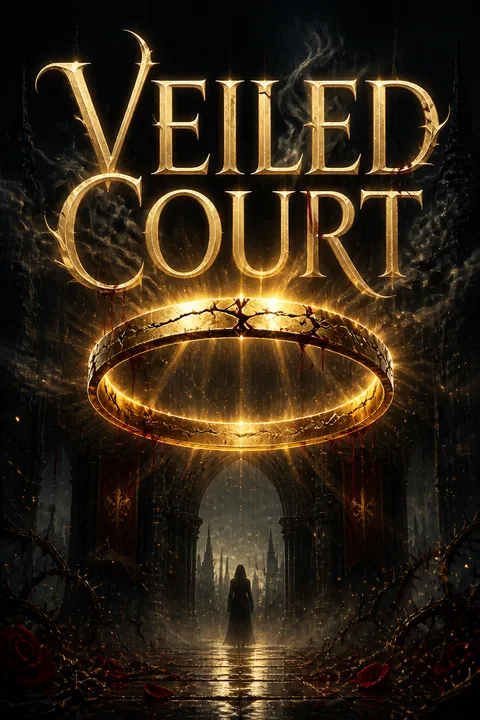


Plot Summary
The Tudor Window
Syn Malleore, a former Fey assassin living in London, discovers her boyfriend Owain in bed with Vicky, a young human he plans to take through the portal to Brocéliande. Syn had expected to flee with him and her gravely ill sister, Vero, whose River-Ague poisoning is slowly killing her. At St. Bartholomew-the-Great, Syn sends Vero and Vero’s friend Balin through a portal, promising to find the Grail, the only relic rumored to cure her.
Carrying the borrowed portal key toward the Tower of London, Syn encounters Iron Legion hunters attacking a visiting Fey baroness. She intervenes, knocks down two attackers, and escapes with the woman aboard a bus. The rescue saves the baroness from the hunters, but puts Syn beside a dangerous stranger.
Syn’s opening losses arrive together: romantic betrayal, a threatened homecoming, and the likely death of the sister she has spent years protecting. Her rescue of the baroness is not a clean return to heroism; it is a choice made under pressure by someone whose old combat instincts remain quicker than her damaged magic. The Grail gives her grief a practical direction. Rather than merely mourn the life with Owain she imagined, Syn converts care into a mission, preserving her capacity to act even as the world around her makes safety increasingly scarce.
A Halo for Murder
The baroness, Alis of Listenoise, reads Syn’s thoughts and attacks her for opposing a return to monarchy. Syn breaks Alis’s arm, smashes her head against a wall, and leaves her dead. At the Tower, Syn learns from her childhood friend Tristan that the dead baroness was meant to enter the Veiled Court, where aristocrats will choose a new ruler through lethal trials.
Killing Alis transfers her magical invitation to Syn, leaving her marked by a golden halo that attracts the Cloaked Ones, who burn unauthorized escapees. Since no one knows Alis’s appearance, Syn can impersonate her and search for the Grail from inside. She accepts, with Tristan posing as her servant, because remaining outside means being hunted and Vero still needs a cure.
The first irreversible choice is also the book’s central moral complication: Syn saves a stranger from human violence, then kills her when the encounter turns against her. The halo converts that private act into political access, but it does not absolve her. Instead, it makes her survival depend on inhabiting the social identity of someone she has killed. Syn’s willingness to exploit the invitation comes from a sincere desire to save Vero, yet her justifications echo the habits of her assassin training. The plot makes disguise less a clever costume than a dangerous continuation of the self she wants to escape.
The Court's First Sacrifice
Inside the Veiled Court, Syn meets Countess Elizabeth de Benoic, a lonely aristocrat eager for company, and learns that Rion du Lac, the feared High Lord of Tintagol, is among the contenders.
High Priestess Niniane declares that the nobles will choose a monarch through trials, while anyone who leaves without approval will be hunted by the Cloaked Ones. Lord Cador takes Syn and Elizabeth to be outfitted, and the tailor Jasper turns Syn’s shabby clothes into a striking black gown shaded like embers.
At the heraldic ceremony, magical animals assign the contenders their sigils. When the ravens condemn Lady Blythe as unfit, the dragon Goch burns her alive. Syn’s own ravens name her for Gloaming Tower, accepting the killer hidden beneath her borrowed title.
The court’s glamour and its violence are not opposites; the ritual makes brutality look like sacred procedure. By placing Blythe’s execution inside a ceremony of identity, Niniane presents political legitimacy as something the powerful can define and enforce at once. Syn survives not because the system recognizes her goodness, but because its old magic values qualities her former life has cultivated: ruthlessness, endurance, and the ability to act under threat. Her assignment to the Gloaming Tower gives her a place in the institution, while the death she witnesses makes clear that belonging will never mean safety.
The Locked Towers
Tristan arrives as Syn’s servant and begins retraining her for the coming combat trials, while she searches the fortress for clues to the Grail. Rion notices that her sword work is rigid and calls her instincts mortal, though he rescues her when Goch corners her in the Rhiannon Garden. Syn slips into a sealed room in Lyria Tower and discovers that it once belonged to King Emrys, a ruler destroyed by civil war.
An inscription in the room sends her to the Aether Tower, where she finds two princes’ skulls and another cryptic carving. In the garden, she uncovers a verse linking the Grail to a bridge, rival royal houses, and fire. Meanwhile, Cador exposes and burns a man who murdered a noble to steal his place.
The clues bind the court’s architecture to a history of kingship built from repetition: royal rooms preserve old failures, while the living court reenacts them as entertainment and law. Syn reads these traces as a spy, but also as someone whose knowledge of mortal history lets her see that Fey power is not uniquely divine. Rion’s rescue complicates her judgment of him without making him trustworthy. The section’s pressures converge on a question of access: who is allowed to approach the Grail, and what kinds of violence must a person perform before the court calls them worthy?
The Arena's Bloody Trial
In the first combat trial, the contenders fight in teams for scarce weapons. Duke Mabon uses necromancy to raise the dead, but Igraine defeats him and the nobles spare his life. In the next round, Rion kills Sir Dagonet, the strongest fighter on Syn’s team, then turns on Syn.
She blocks his fear magic long enough to realize that killing her would damage his standing with the watching nobles. To survive, she wraps herself around him and presents herself as a woman seeking love, turning their fight into a spectacle of desire.
Rion plays along, then demands her surrender. The nobles choose mercy, and Syn survives. Watching dozens die for aristocratic amusement changes her goal: she no longer wants only the Grail, but the power to prevent another king from ruling.
Syn’s performance succeeds because she recognizes that violence alone does not decide power in this arena. The nobles want a story they can enjoy, so she turns her apparent weakness into a public romance and forces Rion to choose between killing her and cultivating the crowd. This is tactical intelligence, but it also draws her into a role that threatens to blur performance and desire. The trial exposes the court’s moral economy: it celebrates slaughter, then calls its selective mercy a judgment of character. Syn’s political resolve grows from witnessing that machinery, not from abstract opposition to monarchy.
Avalon's Warning
Tristan smuggles Syn to Avalon Tower, where she meets Raphael, the agency’s seneschal, and Tana, its diviner. Tana’s reading predicts that Syn will destroy the world, though she also believes Syn may be necessary for renewal.
Raphael explains that Prince Talan and his betrothed, Nia, have disappeared, and Avalon Tower suspects someone in the Veiled Court is behind it. A damaged letter mentions the Order of the Green Knight, whose nature-linked magic matches a figure in Tana’s reading.
Syn agrees to investigate the order and identify its agent. The journey back is interrupted when Iron Legion gunmen ambush the group on a bridge. Tristan kills the attackers, but Raphael is badly wounded and Syn takes an iron bullet in her arm before she escapes through the portal.
The visit expands Syn’s mission from a personal rescue to a political investigation, but the prophecy makes her own agency feel suspect. Tana refuses the easy certainty of a literal apocalypse: destruction might mean the collapse of a regime or a world someone holds dear. That ambiguity matters because Syn has been trained to see herself as either useful or disposable. The armed ambush also shows that the human-Fey conflict has crossed into Avalon Tower itself. Her return to the court is therefore not a retreat from the larger crisis; it is a decision to carry new intelligence into the place where the danger is gathering.
Cador's Last Secret
Back in the Veiled Court, Syn is caught by Cador while opening a portal. He wounds her with magic and threatens to harm Vero if Syn resists. She turns his own torch against him, ignites his oiled hair, and stabs him before he can expose her. Rion arrives at the scene and recognizes that she is not Alis.
Rather than report her, he offers to hide her identity if she helps him win the trials by posing as his lover. He promises a title and land if he becomes king, while making clear that refusal could lead to Syn’s execution. Rion heals the wounds she brought back from Avalon Tower, and Syn discovers a family tree in his room that connects ancient rulers to Auberon, deepening her suspicion of his ambitions.
Cador’s threat turns Syn’s cover into a direct danger to the family she is trying to protect. She kills to prevent that threat from becoming reality, but the act leaves her with another body and a narrowing set of allies. Rion’s offer is coercive and useful at once: he can expose her, yet he also needs the public romance she has already shown she can perform. Their bargain rests on mutual suspicion rather than trust, which keeps attraction politically charged. The family tree suggests that Rion’s interest in the throne may reach beyond personal ambition, making Syn’s strategic partnership more perilous.
The Blade Over Fire
The second trial sends the contenders into a shifting valley to find the Grail. Igraine attacks Elizabeth on a narrow cliff path and knocks Syn over the edge. Syn survives a brutal fall into the river, and Rion pulls her from the water and heals her. The questing beast then hunts Syn by scenting her guilt, forcing her into a vision of the truth she has buried: as a child, she obeyed Auberon and executed her own parents, mistaking them for traitors.
Rion steadies her until the beast’s power passes. In a cave, Syn finds the Grail beyond two bridges, one blocked by Rion’s battle and the other a tilting sword above fire. She removes her armor and weapon, crosses barefoot, and reaches the relic first.
The trial makes Syn’s buried guilt an obstacle with physical consequences: the beast does not merely accuse her, it forces her to relive the memory that shaped her loss of magic and her fractured sense of childhood. Rion’s help is intimate but not uncomplicated; he steadies her, yet his own ambition remains in competition with hers. Syn wins by abandoning the armor and weapon that usually define her competence. The crossing asks her to rely on balance and timing rather than domination, offering a different model of strength from the court’s appetite for blood.
The Grail Reaches Vero
After winning the Grail, Syn secretly carries it through the fortress’s tunnels and reaches the cottage where Tristan has brought Vero. Vero is close to death, but water poured from the relic restores her breathing, color, and strength.
Syn returns to the court, where Tristan admits he is leaving to search for the missing prince. In the rain, they finally kiss, but Syn tells him she fears losing their friendship and does not want to mistake their shared trauma for a future together.
Tristan accepts her choice and reveals that her remembered childhood idyll was partly a child’s way of making poverty bearable. Soon afterward, Syn receives a lock of Vero’s hair and a threat demanding the Grail. The note sends her rushing back toward the dungeons.
Vero’s cure fulfills the promise that has organized Syn’s choices, yet it does not undo the damage those choices have caused or give Syn a simple return to happiness. The kiss with Tristan brings a second kind of reckoning: she must distinguish love from the safety he represented when both were children. His correction of her childhood memory is painful because it breaks the refuge she has constructed, but it also respects her as an adult capable of facing what happened. The kidnapping threat immediately tests whether healing Vero can make her safe. It cannot.
A Stolen Relic
In the dungeon, Rion catches Syn carrying the Grail and tries to stop her. Syn attacks him, then drives an iron dagger into his chest when he hesitates to kill her. At the third cell, she finds no Vero, only the masked man who took a piece of her sister’s hair. He admits he followed Syn to the cottage but failed to capture Vero because Balin drove him off.
Syn recognizes him as Aneirin, the bookish contender, and he escapes with the Grail using shadow magic. Syn breaks free and returns to find Rion alive but disoriented from the iron wound. His healing magic and hers stir desire, but Syn refuses to sleep with him and asks for time to recover the relic. Rion warns that losing it has put her in grave danger.
The false kidnapping threat works because it targets Syn’s deepest vulnerability and exploits the guilt she already carries about her family. Her choice to wound Rion is therefore both understandable and consequential: she protects the possibility of reaching Vero, but sacrifices the relic and damages the alliance she needs. Aneirin’s motives are not yet fully visible, and his escape turns a rescue mission into a pursuit. The encounter with Rion exposes how desire can become entangled with danger and healing. Syn refuses to let physical intensity substitute for trust, even while the line between the two grows harder to maintain.
The Kings' Hidden Rite
A bronze raven gift from the nobles leads Syn to a concealed book in the library. Its history reveals that the Grail, a sword, and a golden bough empower a monarch for one year, after which the ruler is killed in a ritual that renews the land. Tristan returns, confirms that Vero is safe, and flies with Syn to Castle Catreath to find Aneirin.
Aneirin says a benefactor from the Order of the Green Knight paid him to steal the Grail, then assaulted him and took it. Before Aneirin dies by his own shadow magic, he identifies the benefactor as Auberon, still alive, and reveals that Rion is Prince Lothyr, Auberon’s son, long presumed dead. The revelations recast the trial as a plan to restore Auberon’s claim.
The hidden ritual transforms the Grail from a medical miracle and prize into part of a political machine that consumes its ruler as well as empowering him. That discovery makes the court’s trials look less like a search for a lasting sovereign than a stage in a recurring exchange between authority and sacrifice. Aneirin’s desperation to escape debt and isolation makes him vulnerable to Auberon’s promises, showing how the monarch’s return depends on recruiting people whom the court has already neglected. The revelation about Rion’s lineage further complicates Syn’s alliance: the man she has been fighting and desiring is tied directly to the tyrant she wants stopped.
The Cloaked Ones Close In
Aneirin’s death draws the Cloaked Ones to Castle Catreath, and their magic begins burning Syn before she and Tristan can escape on a dragon. Back at the Veiled Court, Niniane accuses Syn of treason and threatens execution. Syn bargains for dismissal by claiming that Aneirin killed Cador, concealing her own role in both deaths.
The Cloaked Ones remove her halo, but Niniane’s anger makes clear that Syn has lost her chance to influence the trials. Tristan flies her away on the stolen dragon. The Grail remains with Auberon, and Avalon Tower’s infiltration has collapsed. Syn has saved Vero, but she is now outside the court, with no official access to the people gathering around the throne.
Syn’s escape is a genuine survival, but it is also a political defeat. She has spent the story entering the court under a borrowed identity; now she leaves by exchanging information for the removal of the mark that made her a target. Her lie about Cador protects her, yet continues the pattern of using concealment to survive systems that punish honesty selectively. The loss of the Grail to Auberon means that personal success and political failure coexist. Vero is alive, but the relics and the struggle over monarchy are beyond Syn’s reach for now.
Home Is Not Innocence
Syn reaches Vero’s cottage and finds her healthy, living with Balin in a home they have begun to make their own. Syn tells them Auberon survives and intends to reclaim the throne with the relics, then visits the abandoned cottage where she grew up.
The ruined garden and her father’s broken swing expose how poverty and violence shaped the childhood she remembered as idyllic. Syn begins rebuilding the cottage and hunting for food.
When Owain and Vicky pass through the forest, Syn declines their invitation to dinner and chooses her new life over the one she once expected. Then Rion, now openly identified as Prince Lothyr, finds her and asks her to return to the Veiled Court as his consort, since the nobles believe a monarch needs a fated mate.
The ending gives Syn a homecoming without pretending she can recover the childhood she lost. Vero’s health allows their relationship to shift from crisis care toward a future of choice, while Syn’s work on the ruined cottage turns memory into labor rather than fantasy. Seeing Owain and Vicky confirms that the life she once envied is not the only possible life, though it does not erase the ache of betrayal. Rion’s offer reopens the political conflict at the moment Syn has begun to build outside it. The invitation is both a chance to return and a new form of pressure, leaving her agency unresolved.
Analysis
Veiled Court asks what makes authority appear legitimate, then answers with a succession of manufactured proofs: bloodline, magical invitation, animal omen, public combat, and the nobles’ approval. Syn enters that system by inheriting a dead woman’s halo, a literal illustration of how power can transfer through violence while pretending to be ordained. Her skill at performing aristocracy helps her survive, but it also shows how social institutions reward the appearance of belonging more readily than justice.
The novel’s strongest conflict is between inherited trauma and chosen responsibility. Auberon taught Syn that obedience, speed, and emotional suppression were necessary for survival. Those lessons still save her, yet the questing beast exposes their cost: she has carried guilt for an act she committed under a tyrant’s lies. Her attempt to save Vero is not a simple redemption, because care cannot undo the past. It does give her a different reason to act, one grounded in another person’s future rather than a king’s command.
Romance follows the same unstable logic as politics. Syn’s public intimacy with Rion is a strategy, and her private attraction threatens to complicate it. Her bond with Tristan offers another possibility, but shared childhood suffering cannot by itself guarantee a healthy future. The novel resists treating desire as a cure for power or pain; trust remains a decision each character must make under pressure.
The relic ritual sharpens the book’s critique of monarchy. The sacred objects promise abundance and strength, yet the old order renews itself through the ruler’s death. Political continuity is revealed as a cycle of sacrifice, not a stable golden age. Syn’s victory saves Vero but fails to stop Auberon, leaving the ending deliberately unsettled. She has recovered the right to choose her next action, but the struggle over who may rule, and at what human cost, is only beginning.
Review Summary
Veiled Court is a fast-paced romantasy featuring Syn, a 35-year-old ex-assassin infiltrating deadly trials to save her sister and dismantle a corrupt monarchy. Readers praise the Hunger Games-inspired trials, slow-burn tension, and refreshing older FMC. The fake relationship and love triangle between Syn, Rion, and Tristan generate electric chemistry. Most reviewers flew through it in under 24 hours. Common critiques include thin worldbuilding for newcomers and occasionally flat pacing. The cliffhanger ending left readers desperate for book two. Overall rating: 4.24/5.
Characters
Syn Malleore
The reluctant assassinA half-Fey former assassin, Syn has spent years trying to survive outside the violence that shaped her. Her sharp historical knowledge, dry humor, and instinct to help people coexist with the cold skills imposed by King Auberon’s spy academy. She is driven most strongly by responsibility for Vero, whom she has protected since childhood, and her search for the Grail gives that devotion a concrete aim. Syn mistrusts inherited power because she has seen how monarchs turn obedience into law. Yet she also struggles to separate protection from control, and to distinguish a real memory from the comforting story she has made of her past. Her growth lies in acting from her own judgment rather than merely following a king, a lover, or an old command.
Rion du Lac
The dangerous warlordThe High Lord of Tintagol is a formidable fighter whose gold tattoos, dread magic, and reputation make him an object of both fear and fascination. Rion believes the Fey have lost something essential by adopting mortal restraint, and he urges Syn to trust instinct and desire rather than overthinking every move. His confidence can look like cruelty, especially when he treats violence as a tool of rule, but he is also capable of healing and of reading the vulnerabilities other people conceal. He wants the nobles’ approval as well as power, so his staged romance with Syn serves a political purpose. Their attraction never removes the danger between them. Rion is ambitious, self-controlled, and difficult to read, with the capacity to protect Syn and the power to make her choices narrower.
Tristan
Syn's oldest allySyn’s childhood companion and fellow survivor of Auberon’s Undercroft, Tristan is now an operative of Avalon Tower. His speed, skill, and familiarity with Syn’s training make him her most dependable tactical ally, while his concern for her often expresses itself through orders and practical care. He helps Syn infiltrate the Veiled Court, trains her for combat, and repeatedly takes risks to get her to safety. Their affection is rooted in a shared past, but that past also complicates their ability to imagine a life together. Tristan is restless, drawn to danger and purpose, and wary of intimacy because he associates closeness with the suffering of people he loves.
Vero
Syn's beloved sisterSyn’s younger sister is a demi-Fey survivor of the River-Ague, the poison King Auberon used against mixed-blood families. Vero’s illness has made her dependent on others for years, but it has not erased her humor, curiosity, or desire for an independent life. She trusts Syn deeply and can see through her sister’s attempts to hide pain behind jokes. Vero’s wish to read, write, learn practical skills, and make a home reflects a temperament that has been waiting for ordinary choices. Her relationship with Balin is rooted in long companionship, but her future is not defined solely by romance or illness. She represents the life Syn is trying to protect, not an abstract cause.
Auberon
The tyrant kingAuberon is the Fey monarch whose rule relied on terror, purges, and the deliberate scapegoating of demi-Fey. He trained Syn and Tristan as child spies, teaching them that hesitation invited death and that obedience mattered more than justice. His use of royal authority to punish dissent has shaped Syn’s hatred of monarchy and left her carrying guilt for the acts she committed under his command. Auberon’s political appeal rests on promises of order and grandeur, even when his rule produces famine and violence. He is a master of turning fear into loyalty, and his lasting influence persists in the habits and memories of those he trained.
Elizabeth de Benoic
The sheltered countessA countess long confined to her rooms by a controlling marriage, Elizabeth arrives at court hungry for conversation and new experiences. She is quick to laugh, curious about the mortal world, and unusually direct about men and power. Her initial social innocence does not make her foolish; she learns to recognize how the nobles use humiliation to weaken rivals before the trials. Elizabeth becomes Syn’s friend and companion, offering warmth without demanding that Syn reveal every secret. Her longing for freedom is expressed through small enthusiasms, from food and travel to simply being among people again.
Aneirin
The indebted scholarA bookish contender from Castle Catreath, Aneirin prefers poetry, history, and shadow magic to combat or rule. He is sociable in flashes, often self-deprecating, and more comfortable discussing stories than facing his own isolation. Debt and a neglected home leave him vulnerable to promises of status and belonging. His knowledge of old legends helps Syn interpret the court’s history, while his reluctance to become king sets him apart from many contestants. Aneirin’s intellectual life is genuine, but it does not protect him from political desperation.
Niniane
The monarchist priestessThe High Priestess of the Veiled Court directs the trials and presents monarchy as the remedy for a kingdom in disorder. Elegant and composed, Niniane uses sacred language, ancient ritual, and public spectacle to make aristocratic rule seem inevitable. Her authority depends on the court’s rituals being obeyed, and she treats challenges to those rituals as threats to the kingdom itself. Her belief in monarchy is not merely ceremonial: she is willing to sanction lethal punishment to preserve the institution she serves.
Balin
Vero's steadfast friendBalin is Vero’s close friend and a church sexton who helps Syn get her sister out of London. Patient and affectionate, he carries their heavy luggage, supports Vero when she cannot walk, and helps make a safe home possible. His loyalty is practical rather than grand: he stays beside Vero through illness and respects her need to regain independence. He also provides Syn with a connection to a future that does not depend on the Veiled Court or the spy life.
Raphael
Avalon's wary seneschalRaphael is Avalon Tower’s seneschal, responsible for assessing Syn and coordinating the agency’s response to the threats surrounding the court. He is cautious about political escalation and insists that Syn follow evidence rather than rush toward a convenient suspect. His conflict with Tristan reveals a commitment to procedure, especially when the Iron Legion’s attacks create pressure to retaliate. Raphael’s injury during the bridge ambush underscores the cost of trying to protect both Fey and human civilians in a war that refuses to stay contained.
Tana
Avalon's unsettling divinerTana reads tarot, tea leaves, and visions for Avalon Tower, but her predictions arrive in riddles rather than clear instructions. She sees disaster around Syn while also believing that Syn may be necessary for renewal. Tana is whimsical in manner, yet she takes her visions seriously and does not pretend that uncertainty can be removed from them. Her role is to complicate the agency’s decisions, forcing its members to consider that destruction may mean more than literal catastrophe.
Igraine
The ruthless countessA countess of Tintagol whose husband was killed during a political takeover, Igraine has built her identity around vengeance and protection of Fey power. She is an exceptionally fast and strong fighter, skilled at presenting herself as a disciplined candidate for the crown. Her hatred of demi-Fey and her possessive interest in Rion make her especially dangerous to Syn and Elizabeth. Igraine’s political arguments draw strength from genuine past losses, but she converts that suffering into a justification for further violence.
Mabon
The drunken necromancerA duke from Tintagol, Mabon is often drunk enough to seem ridiculous, but his necromancy makes him one of the most dangerous contenders. He can raise the dead to fight, a power that appears to take a toll on his mind. His affection for Igraine and his hunger for the crown coexist with insecurity about his status and lineage. Alcohol serves as a way to quiet the voices and pressures surrounding him, though it also obscures how much power he can wield.
Cador
The court's truth enforcerCador, the Squire of the Veil, guides new arrivals through the fortress and explains its customs. His courteous manner initially makes him seem like a benign steward, but he also uses magic to expose impostors and punish those he judges disloyal. He is closely connected to Niniane and helps maintain the court’s strict control over its contestants. Cador embodies the danger of a system in which hospitality and surveillance come from the same hand.
Owain
Syn's faithless former loverOwain is Syn’s Fey boyfriend in London, and she expects him to share her plan to return to Brocéliande. Instead, he has begun a relationship with Vicky and intends to take her through the portal. His betrayal exposes how little of their imagined future they truly shared. He is not presented as a grand villain, but as a self-interested man whose choices force Syn to face the fragility of a life she had taken for granted.
Vicky
Owain's mortal girlfriendVicky is a human relationship coach who believes people seek romance and escape amid a bleak world. Her relationship with Owain wounds Syn, but Vicky is not simply a rival: her confidence in romance later gives Syn a model for the performance that helps her survive the nobles’ arena. She represents the ordinary human life that has become newly possible in Brocéliande, even as Syn struggles to welcome that possibility when it arrives through her own heartbreak.
Alis of Listenoise
The murdered baronessAlis is a telepathic baroness from the isolated Waste Land, unfamiliar with the danger of entering London while the Iron Legion hunts Fey. Her aristocratic confidence and belief in monarchy make her sharply suspicious of Syn’s political convictions. She is a pivotal figure because her invitation gives Syn access to the Veiled Court, but her brief appearance also exposes the violence and assumptions that govern both human and Fey societies.
Jasper
The court's volatile tailorJasper is the Veiled Court’s gifted tailor, a theatrical and often insulting man who transforms Syn’s worn clothes into an outfit fit for public attention. His work shows how appearance can be manufactured into status, while his comments reveal the nobles’ appetite for novelty and spectacle. Beneath his drunkenness and sharp tongue, he understands how the crowd responds to a compelling story.
Goch
The court's red dragonGoch is the immense red dragon kept at the Veiled Court, used in ceremonies and as an instrument of execution. His presence makes the threat of death immediate, but he is not simply a weapon obeying human law. His reactions are unpredictable, and his attention to Syn gives her no reliable measure of whether she is safe.
Plot Devices
The Golden Halo
Invitation and death beaconA halo appears when an invited noble opens the magical invitation to the Veiled Court. If its bearer dies, the invitation transfers to the killer; if someone leaves without formal dismissal, the halo returns and marks them for the Cloaked Ones. This rule supplies Syn with a way into the court after Alis’s death, then makes escape dangerous. It also turns social status into visible magic: a light that grants access while exposing its bearer to anyone who wants to enforce the court’s rules.
The Three Relics
Power with a buried costThe Grail, a sword, and a golden bough are royal objects associated with the ancient Fey monarchy. The Grail is rumored to cure illness, giving Syn a reason to enter the trials, while its use in the court’s rituals makes it central to the rival claimants’ plans. The relics connect personal need to political ambition: one may heal Vero, but all three together can lend authority and power to a ruler. Their history complicates the assumption that royal magic is a benevolent gift.
The Veiled Court Trials
Aristocratic rule as spectacleThe hidden court gathers noble claimants to compete in combat, hunts, and other dangerous tests. The Council of Nobles watches through magical mirrors and awards standing, while those who fail can be dismissed and those who break the rules risk execution. The trials let Syn search for the Grail and keep her cover, but they also expose how the court converts bloodshed into public entertainment. Each contest tests not only strength, but also the ability to shape the nobles’ perception.
The Song of the Morrigan
Lost power tied to guiltThe Song is an ancient magic associated with the war goddess Morrigan, granting extraordinary speed and force to those who can wield it. Syn once possessed it, but her power has been absent for years, leaving her to rely on training, observation, and endurance. The Song remains important because she senses its faint return under extreme pressure, and another contender’s possession of it makes its value tangible. Its absence is also psychological: Syn’s magic is bound up with the past she has not yet faced.
The Questing Beast
Guilt made into a hunterA supernatural creature whose howl tracks guilt, the questing beast turns hidden remorse into a physical danger during the Grail trial. Its cry produces overwhelming visions, forcing Syn to confront a memory she has repressed. Earlier stories about the beast establish that guilt can make a person lose control and become vulnerable. It is both a trial obstacle and a narrative mechanism for revealing how Auberon shaped Syn through manipulation and violence.
Download PDF
Download EPUB
.epub digital book format is ideal for reading ebooks on phones, tablets, and e-readers.








