

Key Takeaways
Begin philosophy where religious consolation no longer feels credible.
Disappointment starts the inquiry. Critchley argues that modern philosophy begins when inherited religious answers stop persuading, but the questions they addressed remain urgent: what makes life matter, and how should people confront injustice? This is not a simple dismissal of religion. Augustine and Pascal matter because they take questions of ultimate value seriously, even when their answers cannot be accepted by a secular thinker.
Grief gives this problem a face. In the second-edition preface, Critchley recalls caring for his father as he died of cancer, and reading Beckett during pauses in the vigil. He arrived at the hospice shortly after his father’s death. Philosophy could not directly explain those minutes beside the body, but writing became an indirect effort to make sense of them.
What's striking is that the book treats bereavement not as an illustration appended to an argument, but as the pressure that makes the argument necessary. This keeps secular philosophy from confusing the absence of religious belief with emotional detachment. The distinction is useful beyond philosophy: a theory may help organize an experience without curing it or making it fair. The risk is that grief can be made to serve a sophisticated intellectual narrative. Critchley acknowledges that risk by presenting the effort to understand as necessarily incomplete.
Resist nihilism without installing another total explanation.
Meaning's old foundations crumble. Nihilism, in Critchley’s account of Nietzsche, is not merely the belief that nothing matters. It is the collapse of the transcendent grounds that once made values seem secure. Nietzsche’s complication is that Christianity helped create this crisis: its demand for truth eventually undermines its own account of a higher, truer world. In Turgenev’s novel Fathers and Sons, the nihilist Bazarov makes repudiation itself a principle, illustrating how rejection can become a creed of its own.
Avoid four false exits. One can deny the crisis, shrug it off, accept it passively, or try to destroy the existing order by force. Critchley proposes a fifth response: examine the limits of nihilism without claiming to escape it. In his reading of Heidegger and Adorno, thought keeps open the possibility that life could be otherwise, without promising a final rescue.
The argument makes an important distinction between losing a justification for values and losing every reason to act. That distinction helps explain why political criticism can survive religious disappointment. It also guards against a familiar pattern: replacing a failed certainty with a new, equally absolute story of progress or purity. Yet refusing final answers can become its own shelter from difficult decisions. A workable response needs both intellectual modesty and concrete judgments about suffering, responsibility, and justice.
Treat death as ungraspable, not as a project you can master.
Dying exceeds the self. Critchley challenges the idea that a person can fully possess death as a future possibility or turn it into a meaningful achievement. Blanchot distinguishes the event of death from the drawn-out condition of dying, which Critchley calls le mourir. A person may imagine choosing death, but cannot experience their own completed absence as an act under their control. The attempt to master death therefore cannot settle what death means.
Mourning has no clean finish. The death of another person is also not something the survivor can fully represent or complete through a prescribed process. Critchley rejects the hope that grief can simply be worked through until the dead person becomes a closed chapter. The book’s own act of mourning for Critchley’s father is therefore not a solution to loss. It is an effort that remains smaller than what it tries to understand.
This account usefully challenges fantasies of complete mastery, including the assumption that thinking clearly about mortality will make death emotionally manageable. It also makes room for grief that persists without being treated as personal failure. Still, the claim that mourning cannot be completed should not be converted into a rule about how everyone grieves. People find different forms of adaptation, and some experience a genuine shift in their relation to loss. The philosophical point is about limits, not a prescription to remain in pain.
Let literature expose what concepts cannot safely turn into meaning.
Writing approaches an impersonal night. Critchley reads Maurice Blanchot’s fiction and criticism as circling an experience that ordinary concepts cannot master. He uses Levinas’s term il y a for an impersonal presence that seems to remain when one imagines all particular beings gone. It is not a hidden object or a spiritual afterlife. Blanchot associates it with sleeplessness, when the familiar world no longer offers an easy exit into rest.
Desire both makes and undoes art. In Blanchot’s version of the Orpheus myth, the poet looks back toward Eurydice and loses her, even though the desire to see her is what inspires the song. The work’s origin cannot be captured as a finished meaning. Literature matters, for Critchley, partly because it stages that failure instead of smoothing it over with an explanatory conclusion.
This approach resembles phenomenology in its attention to experience before it is tidied into a theory, but it insists that some experiences resist full description. That can deepen reading: a text need not become a puzzle whose correct answer is waiting to be extracted. The counterweight is accessibility. Describing sleeplessness and impersonal existence in rarefied language can itself make ordinary distress sound exotic or desirable. The strongest reading preserves the work’s uncertainty without turning uncertainty into a badge of profundity.
Use fragments to keep thought open where a system would falsely close it.
Romanticism meets its limit. Critchley focuses on the Jena Romantics, especially Friedrich Schlegel and the journal Athenäum, published from 1798 to 1800. Their ambitious hope was to bring poetry and philosophy together in a new art for a secular age. They did not produce the complete, world-defining work they imagined. What they did develop was the fragment: a form that can feel complete on its own while remaining part of an unfinished field.
Failure becomes a method. Schlegel’s fragments combine wit, which joins distant ideas, with irony, which unsettles any claim to final unity. Their movement keeps making and undoing connections. Critchley calls this an unworked romanticism: its value lies not in a perfected system but in a conscious incompletion. Romantic attempts to make aesthetic ideals into a complete political order, however, risk mistaking artistic unity for a solution to real conflicts.
The fragment is a strong model for inquiry in which disagreement is not a defect to eliminate but a condition of learning. Its unfinished form can make room for voices that a single authoritative account would exclude. That is a useful connection to democratic deliberation, where conclusions should remain revisable. But fragmentation can also become an alibi for avoiding commitments or practical consequences. An open form is politically valuable only when it keeps questions alive without making accountability disappear.
Read Beckett's broken narratives as form, not as a hidden doctrine.
The story cannot finish its task. In Beckett’s Trilogy, including Molloy and Malone Dies, narrators tell stories while their bodies weaken and their accounts become increasingly uncertain. Malone lies in bed, trying to invent tales as he waits to die. The stories do not provide a secure identity or explain death; they repeatedly break down, yet the voice continues. In The Unnameable, even the narrator’s sense of who is speaking becomes unstable.
Interpretation must remain active. Critchley uses syntax of weakness for Beckett’s repeated reversals, hesitations, and self-corrections. The writing is not simply saying that life has no meaning. Its meaninglessness is an achievement produced by stripping away the easy explanations that readers might impose. Interpretation remains necessary, but it cannot turn the work’s refusal of a settled meaning into a new, positive doctrine.
This offers a practical discipline for reading difficult literature: notice how repetition, interruption, and voice work before assigning the text a philosophical label. It also connects literary form to the body, since Beckett’s faltering language makes dependence and physical decline impossible to ignore. The method has a limit: endless suspicion of interpretation can leave readers with no account of what the work does. A useful middle course describes the formal effects precisely while resisting the claim that they reveal one final message.
Notice how formal refusal can criticize society without slogans.
Politics can enter through form. Adorno argues that Beckett’s Endgame responds to the catastrophe of Auschwitz without naming the Holocaust or converting its victims’ suffering into a consoling lesson. For Critchley, the play’s refusal of positive meaning matters because it resists the impulse to make atrocity serve a redemptive narrative. Its bleak, broken dramatic form becomes a criticism of a society that presents itself as coherent and humane.
Autonomy is not indifference. The argument is that an artwork can criticize society by refusing its language and expectations, rather than by stating a political position directly. This gives art a possible glimpse of life less organized by domination, but not a plan for creating that life. Critchley emphasizes the tension: the work points toward change precisely by withholding an easy picture of reconciliation.
The distinction between a work’s political form and its explicit message helps explain why art can challenge assumptions that direct argument leaves intact. It also protects against treating moral seriousness as a matter of inserting the right slogans. Still, formal refusal cannot replace testimony, historical inquiry, or political action. Aesthetic silence around atrocity can be ethically powerful in one context and evasive in another. The question is not whether art should speak plainly, but what its choices make possible or obscure.
Let laughter puncture despair without pretending suffering is solved.
Beckett's comedy stays bodily. Critchley disputes Adorno’s tendency to read Beckett’s world as almost entirely bereft of laughter. Beckett’s humor comes from strained bodies, failed plans, and language that turns against its own seriousness. In one example, Molloy counts his involuntary bodily noises and discovers that the resulting arithmetic makes the supposedly shocking total seem almost ordinary. The joke does not remove discomfort; it changes how the reader can face it.
Comedy resists grandiosity. For Critchley, laughter can expose human pretensions to control and restore attention to our frailty. It is not the triumphant laughter of someone who has overcome death, nor proof that suffering is secretly good. It offers a small release from the demand that existence must resolve into either a grand purpose or total despair.
Incongruity often allows people to approach painful subjects without pretending they are harmless. Beckett’s humor makes that insight unusually concrete: the body is both a source of embarrassment and the ground of human vulnerability. The political claim that laughter resists domination is plausible, especially when it punctures authority. But humor does not automatically liberate; it can also humiliate or distract. Its value depends on what is being laughed at and whether the joke exposes power or simply shifts pain onto someone weaker.
Make imagination answer to reality instead of escaping it.
A singer orders a world. In Wallace Stevens’s poem The Idea of Order at Key West, a woman sings beside the sea while observers wonder whether the world is made by her song or exists independently of it. Stevens refuses a simple choice. The sea supplies the material, but the singer’s imagination gives it human form and significance. The poem treats poetic creation as a way of shaping experience, not as proof that the external world is unreal.
Poetry returns us changed. Critchley reads Stevens as arguing that imagination should not flee into fantasy. It must stay answerable to the world while making that world newly perceptible. The poem’s order is a human creation, not a divine guarantee, yet it can still help people inhabit reality. This makes poetry a fragile response to secular life, rather than a replacement religion that promises final salvation.
The account aligns with a basic insight from perception: attention does not passively record a world, it selects and organizes what becomes salient. Stevens’s singer makes that shaping power visible without claiming that the sea is merely a projection. The unresolved tension is productive, since neither imagination nor reality gets the last word. Yet a poetic ordering of experience does not establish which shared values are just. Art can renew perception, but public judgment still needs discussion and evidence.
Honor the small world left when grand redemption fails.
Almost nothing is still something. The book’s title names its central wager: once no transcendent answer can be trusted, the world does not vanish. It remains crowded with finite particulars: bodies, rooms, weather, objects, cities, and the people who matter to one another. Beckett’s plain things and Stevens’s everyday landscape resist the urge to inflate them into signs of a hidden cosmic plan.
Attention replaces salvation. Critchley calls this meaninglessness as an achievement, not a declaration that life is objectively worthless. The task is to loosen the grip of stories that promise ultimate rescue, then see ordinary existence without those guarantees. This is not necessarily cheerful, and it does not settle the problem of death or injustice. It leaves a limited world in which thought, tenderness, humor, and political demands remain possible.
This is a compelling alternative to the familiar choice between religious certainty and despair. It treats modest attention as a serious intellectual and ethical practice, not as a consolation prize. The political qualification matters: accepting human limits must not become acceptance of preventable harm. Critchley’s position is strongest when the finite world is seen clearly enough to motivate care, while remaining too open and fragile to be mistaken for a complete theory of how people should live.
Analysis
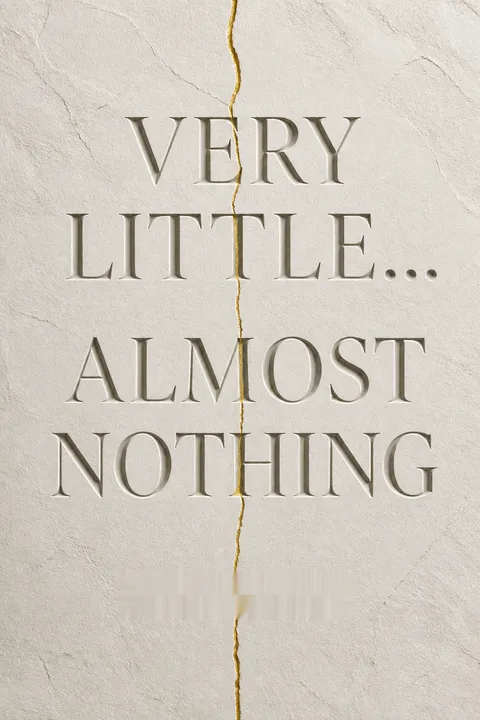
Very Little... Almost Nothing is an argument staged through encounters with literature. It begins in personal mourning, diagnoses the modern crisis as the loss of transcendent grounds for meaning, then asks what thought and art can do without rebuilding those grounds in secular disguise. Its answer is deliberately limited: resist nihilism not by conquering it, but by refusing both passive resignation and grand promises of redemption. Beckett supplies the hardest test, since his fiction makes interpretation necessary while defeating any attempt to turn it into a single reassuring message. Stevens supplies a more affirmative possibility: imagination can renew the world without pretending to create it from nothing.
The book’s form mirrors this claim. Its readings of Blanchot, Romantic fragments, Beckett, and Stevens repeatedly approach a meaning that cannot be fully possessed. This gives the argument coherence, but also creates a risk: specialized philosophical language can make the ordinary it praises difficult to see. The method depends on careful readers distinguishing productive ambiguity from mere obscurity.
A further tension concerns political consequence. Critchley is persuasive that aesthetic refusal can expose the violence hidden by neat stories of progress and reconciliation. But the refusal of positive visions does not itself tell societies how to distribute power, repair injury, or pursue justice. Nor can an artwork’s silence substitute for testimony about historical atrocity. The book is strongest as a warning against making political hope into a guarantee, not as a political program.
Its claim that philosophy and religious faith cannot coexist is also intentionally severe. It clarifies the author’s own secular predicament, but risks overlooking traditions in which faith remains questioning rather than conclusive. Still, the central insight survives that disagreement: inherited answers may fail without making the questions foolish. The title’s almost matters. Finite life offers no assured cosmic rescue, yet its particulars are not nothing. The reader is left with a demanding test: does an explanation help attend to suffering and ordinary life, or does it cover them with another story?
Review Summary
Readers find Very Little...Almost Nothing thought-provoking but challenging. They appreciate Critchley's non-condescending tone and exploration of meaning, nihilism, and the intersection of philosophy and literature. However, some criticize the book's organization, complex language, and perceived contradictions. Critchley's analysis of Blanchot, Levinas, Cavell, and Beckett receives mixed reactions. The book's central themes include finding meaning in a post-God world, the significance of death, and the role of literature in addressing contemporary nihilism. Overall, readers acknowledge the book's intellectual depth but struggle with its accessibility.
Glossary
Nihilism
collapse of inherited valuesIn Critchley’s account of Nietzsche, nihilism is the breakdown of a transcendent order that once grounded meaning and moral value. It is not simply the claim that nothing matters. The crisis arises when inherited values lose credibility, while people remain unable either to accept life without them or to restore them convincingly.
il y a
impersonal presence of existenceA term from Levinas that Critchley uses to describe an impersonal presence that seems to persist even when particular beings are imagined as absent. It is associated with the oppressive night of insomnia, when a person cannot master experience or withdraw from existence. Blanchot’s literature approaches this condition without converting it into a stable meaning.
le mourir
the unending process of dyingBlanchot’s term, used by Critchley, for dying as an ongoing and ungraspable condition, distinguished from death understood as a completed event. It names the way mortality exceeds the self’s ability to experience or control it. The distinction challenges the idea that a person can fully make death their own project.
désoeuvrement
the undoing of completed workA term Critchley uses, following Blanchot, for the worklessness that unsettles a literary work’s claim to completion. It does not mean mere inactivity or lack of craft. It describes how writing can expose what its finished form cannot capture, leaving meaning open, dispersed, and resistant to a final interpretation.
unworked romanticism
romanticism through unfinishednessCritchley’s name for an account of Romanticism that treats its failure to achieve a complete artistic or philosophical system as a source of insight. The fragment holds together a local sense of completion and a larger incompletion. Its value lies in keeping thought open, not in delivering the unified work that Romantic ambition imagined.
meaninglessness as an achievement
ordinary life without salvation storiesCritchley’s description of a practice, especially associated with Beckett, of reaching the ordinary by stripping away ready-made explanations that promise ultimate redemption. It does not mean that existence is simply worthless. Meaninglessness is achieved when attention can remain with finite things without forcing them to prove a cosmic purpose.
syntax of weakness
language that undoes itselfCritchley’s term for Beckett’s recurring use of hesitation, repetition, reversal, and self-correction. These patterns enact a speaker’s inability to express experience fully and inability simply to stop speaking. The phrase describes a deliberate literary technique that gives formal shape to bodily frailty and the limits of human control.
eventual everyday
ordinary life as an achievementA term from Stanley Cavell that Critchley uses to distinguish an achieved encounter with ordinary life from everyday experience taken for granted. The ordinary is not simply available by leaving philosophy behind or returning to common sense. It must be rediscovered through a change in how people perceive and inhabit their lives.
atheist transcendence
transcendence without a deityCritchley’s name for an experience of excess or otherness that does not depend on God or an afterlife. It refers to the impersonal depth of existence, mortality, and relation to others, which cannot be fully mastered by the self. It is not a supernatural realm beyond the world.
redemption from redemption
release from promised salvationCritchley’s description of Beckett’s refusal to offer a final redemptive meaning for suffering or existence. The phrase does not promise a different form of salvation. It names a release from the demand that life must be justified by a complete story of rescue, allowing attention to return to ordinary, finite experience.
Download PDF
Download EPUB
.epub digital book format is ideal for reading ebooks on phones, tablets, and e-readers.








