


Plot Summary
Melody's Last Easy Night
Before Ember enters his attention, Jaxton Marks has already made murder a private routine. He chooses Melody, a salon worker he has stalked for weeks, slips into her unlocked apartment, and kills her when the encounter fails to excite him. At the Mad Hatter afterward, he scans the bar for a woman unlike the polished, predictable women he usually selects.
Ember Thatcher catches his eye because she sits apart from the chatter, dressed plainly and seemingly indifferent to men. Her friend Josh walks her home after Jaxton's clumsy approach is rejected. Jaxton follows from a distance, less interested in her looks than in the resistance he thinks he has found. Melody's death leaves him bored; Ember's refusal gives his violence a new target.
Jaxton's boredom is not remorse; it is frustration that his violence has become predictable to him. Melody registers as a failed experience rather than a person, exposing the emotional vacancy beneath his cultivated control. Ember's refusal disrupts that pattern because it denies him the instant access he expects. His fixation begins not with mutual recognition but with the fantasy that resistance is an invitation to pursue. That distinction matters: the story's romantic charge grows from a dangerous misreading, while the reader can see that Jaxton's desire initially treats another person's independence as a challenge to conquer.
A Skeleton at Her Door
Ember reaches her apartment building with pepper spray ready, then sees the skeleton-masked man waiting beyond the glass. She locks herself inside, but his laughter turns a scare into a promise of pursuit.
Jaxton watches her window and becomes aroused by her fear, then slips away when Rose, an older neighbor carrying a taser, confronts him at the keypad. The next morning Rose warns Ember that a suspicious, clean-cut man had claimed to be her friend. Ember recognizes the description but tries to dismiss it.
Alone, Jaxton takes a call from Darcy, his abusive, alcoholic mother, whose insults reopen memories of childhood violence. He resents the inheritance that ties him to his dead father and turns old helplessness into control over strangers.
The first pursuit makes the difference between Ember's and Jaxton's interpretations unmistakable. She treats the mask as evidence of danger and reaches for a practical defense; he treats her fear as proof that he has found the stimulation missing from his routine. Rose briefly interrupts his private theater, showing that Ember's neighborhood contains people capable of noticing and resisting him. Jaxton's call with Darcy supplies context for his hostility, but it does not excuse it. His past helps explain how he learned to confuse power with safety; his present choices show that he has made that confusion into a method of harming others.
The Bookstore Stranger
At Hidden Books, where Ember works for Rich, a tattooed customer named Xander buys romantic novels for his mother and flirts with her; Ember is attracted but assumes he is out of reach. Later, the skeleton-masked watcher appears outside the shop, and Rich chases him off.
Jaxton is the customer: after a therapy session he has used to deflect questions about his past, he searches Ember's online traces and picks her lock while she is out. He studies her cramped apartment, steals a locket, removes photographs of her male friends, and hides in her closet when she returns. Ember prepares for a blind date, finds her underwear inexplicably stained, and leaves without knowing he has watched her change.
The bookstore lets Jaxton cross from threatening shadow into ordinary social life. By adopting a courteous manner and presenting himself as a son buying a gift, he briefly appears to be the kind of man Ember might welcome. His break-in exposes the coercion beneath that performance: he rearranges her belongings and removes reminders of her relationships as though her private life already belongs to him. Ember's discovery of the stained underwear gives her concrete evidence, but she still has no name for the intruder. Her uncertainty is not foolishness; it is the psychological cost of an attacker who keeps making genuine violation look like something she might have imagined.
The Dance Turns Dangerous
At the club, Ember's blind date Dylan proves condescending, so she escapes to the dance floor. Jaxton, masked, catches her there and presses her into a dance that mixes alarm with an attraction she cannot explain. When Josh and Rich search for her, Jaxton slips away, then follows Dylan into a restroom and beats him unconscious rather than killing him.
He reaches Ember's apartment after Josh has helped her inside. Ember responds to his touch and climaxes, then recoils when he claims her and threatens to haunt her. He leaves, and she is left unsure whether to call the encounter assault, desire, or both. Jaxton discovers that wanting her has unsettled his usual pattern, but he still treats the danger he poses as part of their game.
The dance makes Ember's desire and fear coexist without resolving their contradiction. Her bodily response does not erase the stalking, threats, or unequal power that shape the encounter; the narrative keeps those facts in view even as attraction complicates her reaction. Jaxton, meanwhile, mistakes her response for permission to claim a future with her. His decision to spare Dylan is not yet a moral awakening. It is a sign that Ember has begun to alter his habits while he remains unwilling to question the entitlement driving them. The unease of this episode comes from the gap between sensation, consent, and the story each character tells about what happened.
Xander's Daylight Face
The next morning, Jaxton approaches Ember as Xander, the bookstore customer, and invites her for coffee. She accepts, drawn to his warmth without knowing he is the masked man who entered her apartment. When she has to leave, he lets her go, then secures a job at Josh's bar, where Ember has also agreed to work for extra money.
Their daytime connection gives Jaxton access to her daily life under a false name. At the bar, Ember learns that Josh has banned Jaxton Marks, a wealthy customer accused of following women home and previously charged with rape. The warning sharpens her fear, but she still does not connect the name to Xander. That night she sees the skeleton-masked watcher outside the pub.
Jaxton's alias creates the novel's central intimacy trap: Ember can feel safe with a man who is, in fact, the source of her danger. Coffee and employment are not neutral settings here. They let him build familiarity through routines that resemble courtship while withholding the information Ember would need to judge him. Josh's list offers a partial counterweight, placing a public record of Jaxton's behavior beside Xander's appealing presentation. Yet the name alone cannot break the deception. The episode asks whether affection can be meaningful when one person controls the facts, and answers by making the imbalance itself a source of suspense.
Glass Against the Throat
After a week away, Jaxton slips into Ember's apartment again. This time she admits she wants him, and he begins sex with her agreement, but then tightens his hands around her throat and turns the encounter into an attempted killing. Ember grabs a shard from the broken picture frame beside her bed and drives it into his side.
As his grip loosens, she escapes naked into Rose's apartment, where Rose calls the police and helps tend her cut hand. Officers find signs of a struggle and take Ember to the hospital; later, they tell her that evidence matches a serial killer's DNA. Jaxton seals his wound and hides what happened, while Ember confronts the fact that desire did not protect her from the danger she had chosen to approach.
This is the sharpest collision between erotic consent and physical threat. Ember's initial willingness is real, but it cannot make Jaxton's later attempt to kill her consensual; the scene refuses the easy fiction that desire cancels danger. The broken frame, previously a discarded trace of her family life, becomes the object that saves her. Her survival depends on action, not on the hope that Jaxton will stop. The police evidence also shifts the threat from a private nightmare to a recognizable pattern of violence. For Jaxton, the wound is more than a physical setback: Ember has resisted him, and his usual control has failed.
A Penthouse Refuge
After a therapist challenges him about the attack, Jaxton admits that his mother abused him and that his father died from an overdose she caused. He still avoids taking responsibility for his own violence, but Ember's call pulls him away from reflection: she needs somewhere else to stay while police investigate.
Jaxton offers his penthouse, concealing that the injury she gave him came from his own attempt to kill her. Ember accepts and moves in with only a few bags, relieved by the space and the first secure sleep she has had in days. Jaxton presents himself as a considerate host, and she begins working at the bar again. When he drives her there, Josh sees them together and turns his concern into jealousy.
The penthouse changes the physical conditions of Ember's life, but it does not make the relationship transparent. She gains shelter from a neighborhood where she was attacked, yet the person providing it is the attacker she cannot identify. Jaxton's invitation can be read as care, possession, or both, and his concealed wound makes that ambiguity consequential rather than merely symbolic. His therapy offers a possible language for understanding his childhood, but he still uses disclosure selectively. The chapter's quiet domesticity is therefore unstable: comfort is genuine for Ember, while the foundation of that comfort is a lie that gives Jaxton control over her choices.
Josh Crosses the Line
At the bar, Josh confronts Ember over her closeness with Xander and resents that she has accepted help from another man. When they are alone, he pins her against the counter and tries to force himself on her. Ember fights free, tears her shirt escaping, and runs to a coffee shop, where Xander finds her.
She tells him what happened and admits that she had also slept with the masked stalker; instead of condemning her, he reassures her. He takes her back to the bookstore, then goes to the bar and confronts Josh. Wearing the skeleton mask, Jaxton shoots Josh and kills him. He calls his uncle Roman afterward, choosing the violent response he has long treated as instinctive protection.
Josh's betrayal overturns Ember's assumption that a long friendship guarantees safety. His language of protection has concealed a belief that he is entitled to her, and his assault makes that entitlement physical. Ember's escape is a decisive act of self-preservation, even though she still relies on Xander for support. Jaxton's response appears protective from Ember's perspective, but it is also an execution carried out under the mask that has defined his predation. The episode deliberately entangles rescue with violence: the man who comforts her is also someone who decides, without her consent, that lethal revenge is the answer.
The Mask Comes Off
After Josh's death, Ember learns the news from Megan and questions Xander about his real name and his connection to Roman Marks's criminal family. He confirms that his name is Jaxton Alexander Marks and that he has inherited money, though he denies working in the drug business.
At lunch, Roman proposes that Jaxton join the family operation, and Ember accepts the possibility despite knowing it involves lethal work. Back at the penthouse, she finds the skeleton mask and Jaxton's hidden hoodies.
She confronts him; he admits that he is the stalker, that he has killed women, and that he tried to kill her. Ember does not mistake the admission for innocence. Instead, she chooses to continue with him on her own terms, asking him to put the mask back on.
The revelation forces Ember to distinguish between knowing Jaxton's tenderness and knowing what he has done. His confession cannot undo the attempted killing or restore the trust he stole through the Xander identity. Her choice is therefore not a conventional rescue or absolution. It is a decision made with the central facts finally visible, though the danger remains. Roman's offer places their future inside a criminal structure, extending the story's question about whether violence can be domesticated by loyalty. Jaxton's mask shifts from an instrument of hidden control to an acknowledged part of their shared erotic life, but that transformation does not erase its history.
Epilogue
Three years later, Jaxton works for Roman, killing a debtor who failed to repay a loan, then returns to the penthouse expecting Ember. They are married, and she has embraced the private roleplay that once grew out of his stalking.
After their encounter, Jaxton admits he wants to expand their family. Ember reveals a positive pregnancy test. He treats the news as the second great turning point of his life, after finding her, and they face parenthood together while his work remains violent.
The epilogue makes the romance's bargain explicit: Jaxton does not leave violence behind, but redirects it into Roman's criminal business while treating Ember as the center of his private life. Marriage and pregnancy supply the conventional signs of permanence, yet they coexist with a killing that opens the scene. The result is not a moral conversion so much as a stable arrangement built around shared desire and selective boundaries. Ember's pregnancy suggests a future beyond the couple's erotic rituals, while Jaxton's unchanged work leaves an unresolved question about whether intimacy has transformed his violence or simply given it a home to return to.
Analysis
Vicious Little Darling builds its romance around a contradiction it does not fully resolve: Ember wants the masked stranger who terrifies her, while Jaxton's desire begins in a pattern of stalking, coercion, and murder. The distinction between arousal and consent matters most when Jaxton turns sex into an attempt to kill her. Ember survives by acting, not by discovering that his violence was secretly harmless. The frame shard makes that point physically: a remnant of her private past becomes the tool that breaks his control.
The novel also gives Jaxton a history of abuse without making that history a moral exemption. Darcy's cruelty, his father's death, and his resistance to therapy illuminate how he learned to equate power with safety. They do not cause every later choice automatically; Jaxton continues to make choices, and his manipulation of Ember depends on those choices. His Xander identity dramatizes the asymmetry between them: he knows who she is, while she must respond to a curated version of him.
Ember's independence is not simple self-sufficiency. She resists Josh's money and management because she wants to be treated as capable, yet she also accepts help when danger makes it necessary. The story contrasts Josh's possessive claim to protection with Jaxton's more seductive version of the same control, then reveals that neither man is safe simply because he claims to care. Ember's final choice is informed, but not conventionally redemptive. She knows Jaxton's history and chooses a life with him anyway, while he redirects rather than relinquishes violence through Roman's business. The ending offers emotional commitment, marriage, and pregnancy, but leaves its moral tension intact: love changes Jaxton's priorities, not his relationship to harm.
Review Summary
Vicious Little Darling receives mixed reviews, with an average rating of 4.40/5. Many readers praise its dark, thrilling storyline and steamy romance. The book follows Ember, a hardworking woman, and Jaxton, a serial killer who becomes obsessed with her. Some readers appreciate the morally grey characters and intense plot, while others find the MMC's actions too disturbing. The novel is described as fast-paced, spicy, and gripping, though it comes with trigger warnings for its dark themes and violence.
Characters
Ember Thatcher
Stubborn bookstore romanticEmber works at Hidden Books and lives on a tight budget, defending her independence even when her best friend Josh offers money, a safer home, or a job. Her tattoos, worn clothes, and love of romance novels make her an easy person for others to underestimate, but she is observant and capable of acting under pressure. She wants affection without being treated as a project or possession. That tension shapes her relationships: she resists Josh's protective control while responding to the danger and attention surrounding Jaxton. Ember's appeal lies not in fearlessness but in her insistence that she should still be able to choose, even when fear and desire complicate what choosing means.
Jaxton Alexander Marks
Restless heir with violenceJaxton is wealthy, physically imposing, and skilled at presenting a polished exterior. His mother Darcy's abuse and his father's death have left him hostile to dependence and suspicious of tenderness, while his long-standing violent compulsions give him a sense of control he cannot find elsewhere. He attends therapy but often treats it as an obligation rather than an invitation to change. Around Ember, his usual detachment falters, though his first instinct is still to confuse desire with possession. His capacity for charm and his capacity for harm occupy the same body, making him difficult to trust even when he appears sincere. The alias Xander is one of the ways he manages that divided self.
Josh
Protective college best friendJosh has known Ember since college and owns the Golden Dog, a bar supported by his wealthy parents. He offers her work, money, rides, and a place to live, often believing that care means taking charge. His feelings for Ember are stronger than he admits, and her determination to rely on herself frustrates him. Josh can be warm and generous, but his protective habits carry an expectation that Ember should accept his help and understand his devotion on his terms.
Roman Marks
Criminal-family uncleRoman is Jaxton's uncle and the head of a criminal enterprise involving drugs and other illegal work. He helped care for Jaxton and his mother, and he continues to monitor Jaxton's choices, including his therapy and his violent behavior. Roman speaks to him with the familiarity of family but also views his skills as useful to the business. His affection does not make him harmless: he offers Jaxton a place in a world where violence is organized, compensated, and treated as practical.
Rose
Armed apartment watchdogRose is Ember's older neighbor, sharp-eyed and openly suspicious of strangers near their apartment building. She carries a taser and does not hesitate to confront Jaxton when he tries to enter. Her bluntness can sound judgmental, but her attention proves useful when Ember needs immediate help. Rose embodies a kind of imperfect community protection: she cannot prevent every danger, yet she notices when something is wrong and acts rather than waiting for someone else to do it.
Darcy
Abusive, alcoholic motherDarcy is Jaxton's mother, an alcoholic who calls him for emotional and financial support while also insulting him. Her history of abuse helps explain his resentment and his difficulty trusting intimacy. She frequently frames herself as the injured party, making contact with her another exercise in boundary-setting for Jaxton. The relationship leaves him caught between anger at her and the old pull of family obligation.
Dr. Pitman
Jaxton's wary therapistDr. Pitman has treated Jaxton for years and recognizes that his sarcasm and hostility conceal more than he is willing to discuss. He pushes Jaxton to consider work, boundaries with Darcy, and the origins of his behavior, while refusing to mistake attendance for progress. His patience provides a rare structure in Jaxton's life, though he cannot make Jaxton accept insight or change simply by naming the problem.
Rich
Bookstore owner and mentorRich owns Hidden Books, where Ember works alongside Megan. He treats Ember with the warmth of an older brother, encourages her interests, and tries to improve the struggling store through new marketing ideas. His financial limits affect the hours and pay he can offer, but he remains attentive when Ember seems distressed. Rich's support is genuine, even when he cannot recognize the full danger she faces.
Megan
Ember's candid confidanteMegan is Ember's friend and coworker at Hidden Books, recognizable by her vivid red hair and blunt sense of humor. She talks openly about relationships and is willing to challenge Ember's assumptions, especially about Josh. Her directness can be intrusive, but it comes from wanting Ember to see what others may notice before she does. Megan provides companionship without trying to manage Ember's whole life.
Melody
The salon workerMelody is a salon worker whose ordinary routines first reveal Jaxton's pattern of stalking. She is presented through his dismissive perspective, which exposes how completely he reduces the women he targets to sources of stimulation.
Dylan
The blind dateDylan is the man Rich arranges for Ember to meet. He takes her to a costly club and makes her feel judged rather than at ease, quickly confirming that a socially suitable match is not necessarily a compatible one.
Major
Josh's new bartenderMajor is one of the bartenders Josh hires for the Golden Dog. He is an old high-school acquaintance of Josh and helps staff the bar as Ember and Xander begin working there.
Plot Devices
The skeleton mask
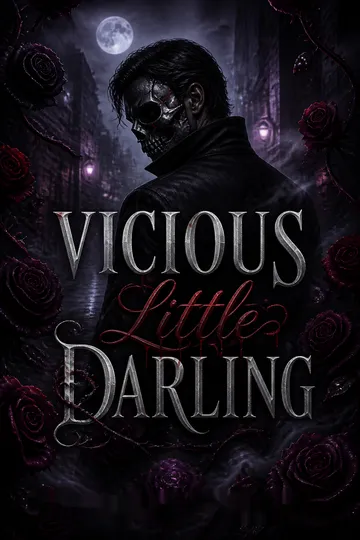
A face for hidden violenceJaxton's skeleton mask hides his features while making his presence unmistakable to Ember. He uses it to stalk her, frighten her, and separate his public identity from his violent one. The mask also lets the story stage a sharp contrast between the stranger Ember fears and the courteous man she meets as Xander. Once Ember discovers it, the object changes meaning: it can no longer preserve Jaxton's secret, but it remains part of the couple's chosen erotic play. Its emotional charge depends on both its history as a tool of threat and their later decision to use it knowingly.
The Xander alias
A counterfeit courtshipJaxton introduces himself to Ember as Xander, then uses that name to approach her in daylight, meet for coffee, and work at Josh's bar. The alias gives him access to ordinary intimacy without revealing the stalking that preceded it. This double identity creates dramatic irony: readers know the man Ember is beginning to trust is the same man who has entered her apartment. The deception makes their connection feel both tender and compromised, because her growing attachment is real but formed without the information needed for informed trust.
The broken picture frame
A domestic object becomes defenseEmber keeps a broken photograph of herself with her mother beneath the bed, and Jaxton finds it while searching her room. Later, after he attacks her, she grabs a shard from the frame and wounds him enough to escape. The object connects a private family memory to a moment of immediate survival. It also undercuts Jaxton's belief that he can control the setting and the outcome of every encounter. What he reads as a sign of Ember's past becomes, in her hands, a means of protecting her future.
The DNA match
A private threat gains a patternAfter Ember escapes, police tell her that evidence from the attack matches DNA associated with a serial killer. The information confirms that her assailant is not merely a local creep and raises the stakes beyond her apartment. It does not immediately identify Jaxton to Ember, so the clue produces dread rather than resolution. The match also gives Jaxton reason to fear that his past crimes may be connected to this investigation. It is a procedural thread that tightens the story while leaving the central identity secret intact.
Roman's criminal network
Violence becomes a family tradeRoman's criminal enterprise offers Jaxton a route from inherited wealth and aimlessness into organized work. It also creates a world in which his violent impulses can be redirected toward paid assignments rather than presented as a problem to be overcome. Roman's influence helps explain the resources and protection surrounding Jaxton, but it complicates the idea that he is changing. The business can give him routine and purpose without requiring him to abandon violence. Its role is central to the ending's uneasy compromise between domestic stability and ongoing harm.
Love So Cruel Series

Download PDF
Download EPUB
.epub digital book format is ideal for reading ebooks on phones, tablets, and e-readers.








