

Plot Summary
Prologue
In 1934, orphan Herman Plunkett hides in an outhouse after bullying and jealousy drive him to lie about hurting another boy. A green meteor strikes St. Alban’s orphanage. Trapper Johnny Noble runs into the flames and lifts the collapsed roof, while Herman watches Eileen and the other children rise with new powers.
Decades later, now an elderly resident of Mountain View Home, Herman finds a newspaper report that the Witch Fire Comet is returning. For the first time in years, the news gives him reason to smile.
The prologue makes Herman’s defining wound visible before the present-day plot reveals its scale. As a child, he wants to be seen as brave and loved, but retreats into hiding and uses lies to protect himself from shame. Johnny’s rescue and Eileen’s flight turn that private failure into a lifelong comparison: other people receive the extraordinary future Herman believes should have been his. The returning comet reconnects that childhood humiliation to the novel’s central danger. His later ambition is not simply hunger for power; it is an attempt to revise the moment he first felt powerless.
The Bridge Gives Way
Fourteen-year-old Daniel Corrigan is repeating summer history after spending the previous year fighting the Shroud, the power-stealing villain Herman Plunkett. His friend Mollie Lee, a super-fast flier, is struggling to focus as her speed grows, so Daniel begins tutoring her. At Tangle Creek, a mocking laugh sounds just before Daniel falls from a high platform and nearly drowns.
Mollie rescues him, but insists she never pushed him. Rohan hears several heartbeats vanish from the nearby woods, and Michael spots smoke rising from the Supers’ tree fort. The fire destroys their hidden gathering place. The fall and the blaze suggest that someone knows the group’s private haunts and is attacking them deliberately.
The opening threat targets more than bodies. The bridge attack turns Daniel’s ordinary trust in his friends into suspicion, while the fire destroys a place where the Supers had kept their history and belonging. Their powers once made them a secret family; now those same abilities make them visible in a town newly crowded with other powered children. Daniel also begins in a familiar contradiction: he feels peripheral because he lacks powers, yet his attention to evidence is what allows the group to recognize a pattern. His friendship with Mollie gives him practical support, but her increasing speed hints that growing up may make even a gift harder to live with.
Nobles Claim the Town
Daniel and Mollie search the junkyard hideout of bullies Clay and Bud, hoping to connect them to the attacks. Instead, they meet academy students Drake, Skye, Hunter, and Mutt, who call ordinary people peasants and treat their powers as proof they deserve to rule. Mollie humiliates Mutt when he threatens them, and Drake lets them leave.
Soon Mr. Lemon’s ice cream shop is wrecked, then the high school is devastated by superhuman force. Herman appears at the school, feigns remorse, then blames uncontrolled young Supers for the damage. As curfews and fear spread, the academy offers families tuition-free places and stipends. Daniel’s friends choose infiltration: Eric and Rohan enroll to gather evidence against Drake’s group.
The Nobles turn adolescent insecurity into a political program. Drake’s gang makes superiority feel like belonging, offering status to students who may otherwise feel defined by their powers. Their contempt for ordinary people echoes the town’s growing suspicion, so the conflict is not simply good children against bad ones; it is a struggle over who gets to name danger. Herman exploits the same uncertainty from the opposite direction. By linking vandalism to all Supers, he converts individual wrongdoing into collective blame, while the academy’s recruitment offer makes fear seem like a problem that can be managed by separating children from the wider community.
Johnny Behind the Gate
Theo Plunkett, Herman’s grandnephew, drives Daniel and Mollie to the academy, whose glass buildings and specialized classes impress them despite their doubts. During the tour, Theo distracts public-relations officer Mandy Starr with a fake urgent message, giving the three a chance to wander beyond the official route.
They encounter Drake and his friends, then the principal, Jonathan Noble. Daniel recognizes Johnny as the century-old hero who rescued the St. Alban’s orphans, but resents him for staying hidden while Herman preyed on children.
In private, Johnny admits he has come to guide and protect the academy’s students, warning that public fear can become dangerous. Daniel remains unconvinced, but returns with a new complication: Johnny is now responsible for his friends.
Johnny’s arrival unsettles the clean division between hero and coward that Daniel would prefer. Johnny did save children, but he also spent decades avoiding a direct confrontation with Herman. Daniel’s anger is partly moral and partly protective: trusting Johnny would mean accepting that someone powerful might have failed the children he loves. The academy itself carries the same ambiguity. Its training rooms answer genuine needs, yet the institution is built on a mountain shaped by past catastrophe and funded by Herman. The tour therefore gives Daniel evidence in both directions. The school can help young people, but its impressive surface does not settle the question of who controls it.
The Junkyard Showdown
On Eric and Rohan’s first day at the academy, Drake humiliates Bud in the cafeteria by kicking away his chair. Bud’s uncontrolled stink makes Skye sick, and Eric steps between Drake and the boy he has long bullied. Rather than fight at school, Eric agrees to meet Drake at the junkyard.
Daniel, Mollie, Michael, Rohan, and Bud arrive, but the Nobles use Mutt’s claws, Skye’s telekinesis, Drake’s fire, and Hunter’s teleportation to trap them and remove Eric from the fight. Drake forces Rohan to kneel before the watching students. Johnny crashes into the yard and stops the confrontation. Clay then drags Daniel away, but Simon follows and incapacitates Clay with an electric shock. Invisible Rose is left behind, and Daniel walks her home.
The fight begins with a defensible impulse: Eric refuses to let Drake turn Bud’s humiliation into entertainment. But the planned showdown quickly becomes a public contest for rank, exactly the structure Drake wants. The crowd’s willingness to laugh or fall silent shows how power can recruit bystanders without asking them to believe the ideology; fear is enough. Daniel’s position is revealing. He tries to stop the fight rather than win it, but Clay’s capture pulls him into danger again. Simon’s rescue and Rose’s abandonment complicate the group’s self-image as a unified team. Loyalty appears in concrete acts, not in the name Supers.
Louisa Lets Daniel Go
After finding Rose, Daniel finally speaks with her sister Louisa, who explains that she has moved on from their kiss and wants their friendship back. Daniel realizes he may care more about Mollie, but has no chance to resolve that feeling before Mollie leaves her history final in tears, believing she has failed.
That evening, Herman’s mansion catches fire while his family is inside. Daniel and Lawrence, Herman’s bodyguard, pull the unconscious fire chief to safety; Johnny and Eric break through the burning house to rescue Theo and his mother.
Theo also gets his dog out. The Nobles were serving detention with Eric and Rohan, so they could not have started the blaze. News reports first praise the rescuers, then suggest the Supers may be criminals.
The novel places two kinds of uncertainty beside each other. Daniel cannot tell what his feelings mean until Louisa names the limits of their relationship, and he cannot tell who caused the fire even after seeing the rescue. In both cases, his first interpretation is incomplete. The mansion blaze also exposes the gap between doing good and being recognized as good: Johnny and Eric save lives, yet the press can rapidly recast them as threats. Daniel’s suspicion of Herman is justified by history, but the Nobles’ detention prevents an easy answer. The plot asks him to resist both romantic overthinking and investigative certainty until the evidence catches up.
A Kiss, Then Sirens
Mollie brings Daniel her final grade: she passed history after his tutoring. In the relief of the moment, they kiss, but Georgie’s excited interruption and a procession of police cars cut the celebration short. A video from the junkyard has spread online, showing Drake boast about the Nobles’ superiority.
Sheriff Simmons and the mayor arrive at the academy with reporters to question Drake and Rohan, while the town gathers to protest against the Supers. Johnny refuses entry without warrants and sends Daniel and Mollie home with a deputy. Daniel’s parents believe him and join other parents protesting the mayor’s actions. At home, Daniel hears Skye’s familiar laugh on her reality show and recognizes it as the sound from the day he fell.
The kiss gives Daniel a moment of personal reciprocity, but it does not protect him from the public crisis unfolding around his friends. The abrupt shift from tenderness to police lights makes the town’s fear feel intimate: Rohan is not an abstract suspect but the friend whose family Daniel knows. Johnny’s refusal to surrender students without legal grounds is a principled stand, though it also intensifies the confrontation. At home, Daniel’s parents choose trust over the television’s framing, offering him a rare form of safety. The laugh on Skye’s show turns an old sensory memory into usable evidence, joining emotional attention to detective work.
The Laugh on Television
Daniel revisits his clue board and connects Skye’s telekinesis to the bridge attack, while Hunter’s teleportation could explain how the Nobles struck several locations quickly.
A hospital visit to Theo reveals the missing financial link: Herman secretly regained control of Plunkett Industries, funded and designed the academy, and now chairs its board. Theo had hidden this because his family lost its fortune. A newspaper report about the returning green Witch Fire Comet gives Daniel the final clue.
The academy’s central spire is not decorative; it resembles a lightning rod aimed at the sky. Daniel concludes Herman has gathered the Supers there for the comet’s arrival. He warns his mother, who drives him toward the school, but Herman’s bodyguard Lawrence intercepts them.
Daniel’s detective method is shown as disciplined association rather than supernatural certainty. The laugh identifies Skye, but it does not explain the whole conspiracy; Theo’s disclosure supplies ownership and motive, while the comet report gives the academy’s architecture a new meaning. Each clue corrects an earlier blind spot. Daniel had treated the school as a possible refuge and Herman as a returning nuisance; now the same institution appears to be a trap built by the person who controls its resources. The revelation also reframes Theo’s evasiveness as shame about family collapse, not simple disloyalty. Evidence matters because it lets Daniel distinguish a friend’s embarrassment from an enemy’s deception.
A Door Torn from a Car
Lawrence orders Daniel out of his mother’s minivan and reaches for the family, but four-year-old Georgie tears a car door free and hurls it at him. His strength confirms what Daniel had suspected since the final battle with the Shroud. Georgie then dismantles Lawrence’s police car with thrown parts, driving the bodyguard into the woods.
Daniel leaves his shocked mother and brother behind so Herman cannot use them to reach him. He follows Lawrence through the forest, past the abandoned Old Quarry, and into the old Shroud cave. A hidden passage leads to a concrete bunker beneath the academy, where Herman and his bodyguards monitor the school. Daniel’s pursuit brings him face to face with the machinery behind the crisis.
Georgie’s outburst makes the danger of inherited or newly awakened power immediate to Daniel’s family. His mother had not known what her younger son could do, and Daniel’s attempt to keep the secret has only postponed the moment when the truth becomes impossible to hide. Yet Georgie’s strength also breaks Herman’s plan to seize Daniel quietly. Daniel responds by leaving home, not because he values adventure over family, but because staying would make them hostages. His route through the old quarry joins present danger to buried history. The hidden bunker turns Herman’s influence from rumor into physical infrastructure beneath the academy.
The Bunker Under School
In the bunker, Herman confirms that he hired Drake’s group to provoke fear and staged the mansion fire to strengthen public blame. He has built the academy above the old cave and expects the Witch Fire Comet to strike its spire. Herman believes the impact will strip Johnny and the other Supers of their powers, then grant him the strength he has wanted since childhood.
He shows Daniel the comet through an observatory feed and reveals the damage caused by wearing its fragment for decades. When Lawrence and Herman’s other guard turn against him, alarms sound and the bunker begins collapsing. Johnny breaks through the earth and concrete to pull Daniel from the rubble, but the rescue leaves him severely weakened as fighting erupts above.
Herman’s plan is a grotesque answer to the childhood scene in the prologue. He does not merely want to possess power; he wants to occupy the heroic role he once watched Johnny inhabit. His account of the comet as a corrupting force is partly insight and partly self-exoneration: he recognizes that power can deform people, yet still believes he alone should wield it. The staged fire shows how easily he treats other lives as props in a moral performance. Johnny’s rescue provides a counterexample to Herman’s logic. He risks his own strength to save one ordinary boy, not to secure a future in which everyone obeys him.
The Comet Turns Back
Above ground, the Supers fight Drake’s group again, now joined by Simon and Bud. Bud uses his stink to disable Hunter, while Rose and Louisa help Mollie bring down Skye. Drake and Clay attack Eric, but Clay learns Drake is working for Herman and knocks him out. Daniel reaches the spire, where Herman demands that he either kill him or let the comet strike.
Daniel refuses to become Herman’s executioner and kicks him into Michael’s waiting arms, sending him away from the impact. Johnny and Eric fly into the Witch Fire, slowing it and diverting it back into space. Their contact costs Eric his powers; Mollie finds him falling and brings him safely down. Johnny does not return. The students escape, and Herman’s plan fails.
The climax tests whether Daniel will accept Herman’s false choice between violence and surrender. By arranging for Michael to catch Herman, Daniel refuses both revenge and passive complicity; he saves the man without allowing him to control the outcome. The final defense is collective, not the coronation Herman imagined. Mollie, Simon, Bud, Louisa, Rose, Michael, Eric, and Johnny each contribute different abilities, while Daniel’s judgment directs the effort. Eric’s loss of power is therefore not a defeat in the moral sense, though it carries real grief. Johnny’s absence leaves the rescue incomplete and uncertain, preserving a cost that victory cannot simply erase.
Epilogue
The Nobles, Lawrence, Hector, and Herman are convicted for the attacks, arson, and conspiracy; Herman is also terminally ill. The mayor resigns after his ties to Herman emerge, the Parmars receive belated public apologies, and control of Plunkett Industries returns to Theo’s family. The academy reopens with a mission to educate powered and unpowered students together.
In November, Daniel and Eric walk home as friends and classmates. Eric is still grieving the powers he lost, but does not regret using them to save others. Daniel considers writing about Johnny, while the sight of young fliers overhead reminds both boys that heroism can cost something real.
The epilogue refuses a clean restoration. The legal system corrects some of the town’s failures, the academy changes its mission, and the Parmars receive apologies, but Eric still wakes expecting to fly and must grieve the body he no longer has. Daniel’s plan to write about Johnny also changes the meaning of heroism: the record will not be a comic-book legend but an account of a complicated person who acted when it mattered. The boys’ friendship offers continuity without pretending that sacrifice leaves no mark. Their future remains open, but it now includes a more honest understanding of what courage can demand.
Analysis
Villainous is built around the difference between possessing power and claiming the right to use it. Herman’s childhood fear becomes a lifelong political theory: because he once felt helpless, he believes he alone can decide who deserves extraordinary abilities. Drake gives that theory a youthful, social form, turning superiority into a club with uniforms and followers. The town supplies the other half of the danger. Its citizens do not need to share Herman’s ambitions to assist him; they only need to be frightened enough to accept collective blame.
Daniel counters both forces through attention. He makes mistakes, misreads relationships, and sometimes clings to a theory before the evidence is complete. His strength is not infallibility but revision. He notices Skye’s laugh, connects Theo’s family finances to the academy, and reads the returning comet alongside the school’s architecture. His detective work models a civic virtue: conclusions should follow evidence, not panic or inherited legend.
The book also refuses to equate adolescence with harmlessness. Mollie’s speed complicates learning, Bud’s power can isolate him, and the Nobles’ abilities magnify ordinary desires for status and belonging. Training can help, but no institution is automatically trustworthy, especially when its founder has hidden motives. The academy’s repaired mission therefore matters because it changes who belongs inside it, not because it promises to eliminate conflict.
Finally, the story treats heroism as a practice rather than an identity. Johnny’s past includes both rescue and withdrawal; Eric’s courage costs him something; Daniel defeats Herman without killing him. None emerges untouched. The ending’s grief over lost power and missing friends keeps victory from becoming a fantasy of perfect control. What survives is a community learning to judge actions carefully and to protect one another without pretending that strength alone makes anyone good.
Review Summary
Villainous is the highly-rated final book in Matthew Cody's superhero trilogy. Readers praise its exciting plot, creative superpowers, and satisfying conclusion to the series. Many appreciate the character development, especially Daniel's growth and relationships. Some felt the book could have answered more questions or continued the series. Overall, fans found it an engaging, action-packed read with themes of heroism, friendship, and sacrifice. The book's blend of mystery, fantasy, and age-appropriate romance appealed to middle-grade readers and superhero enthusiasts.
Characters
Daniel Corrigan
The powerless detectiveDaniel is a fourteen-year-old newcomer to Noble’s Green who has helped its young Supers survive the Shroud, even though he has no conventional powers. He loves mysteries, notices patterns others overlook, and tends to overthink both danger and romance. His instinct is to protect his friends, sometimes at the cost of trusting them to act for themselves. Daniel’s academic struggles show the practical burden of a secret heroic life, while his investigations reveal a confidence built from observation rather than physical force. He is closest to Mollie, Eric, and Rohan, and he is learning that being useful does not require being superhuman.
Mollie Lee
The impatient speedsterMollie is Daniel’s quick-witted friend, a flier whose super-speed makes ordinary conversation and schoolwork feel painfully slow. Sarcastic, loyal, and physically bold, she often acts before Daniel has finished weighing the risks. Her growing abilities complicate her independence: the faster she becomes, the harder it is to remain attentive to people moving at ordinary speed. Mollie refuses to be treated as fragile or sent away to make others comfortable. Her friendship with Daniel is full of teasing and friction, but she consistently shows up when he is in danger. Beneath her bravado, she wants to be seen as herself, not merely as a power.
Herman Plunkett
The self-made villainHerman is an elderly billionaire and former Shroud whose childhood at St. Alban’s left him measuring himself against Johnny Noble and the children transformed by the Witch Fire. He is observant, patient, and skilled at making deceit sound like regret or public service. His desire to protect the town curdles into a conviction that only he can decide who should possess power. Herman treats people as pieces in a plan, including his relatives, but his ambition grows from a recognizably human wound: the belief that fear once cost him the life he deserved. His intelligence makes him dangerous, while his need to rewrite his own past makes him dangerously certain.
Jonathan Noble
The hidden first heroKnown in local legend as Johnny Noble, Jonathan is the long-lived rescuer from the 1934 St. Alban’s fire and the principal of the new academy. He is powerful, controlled, and uncomfortable with the public attention his history invites. Daniel distrusts him because he stayed out of sight while Herman preyed on children, and Johnny does not pretend that his choices were beyond criticism. His attempt to teach and protect the next generation reflects a late decision to accept responsibility in public. He sees fear as a force that can turn ordinary people cruel, but must earn the trust of young people who have good reason to question his timing.
Eric
The loyal powerhouseEric is Daniel’s close friend, a physically formidable Super who can fly and withstand extraordinary force. He is playful and impulsive, with a strong dislike of bullies and a habit of turning a risky plan into a direct confrontation. His loyalty comes from experience: unreliable adult men have disappointed him, so he places great value on friends who keep their promises. Eric once admired Johnny as a comic-book hero, which makes the real man’s complexity difficult for him to accept. He is not naturally strategic, but when someone is being hurt, he rarely waits for permission to intervene.
Rohan Parmar
The quiet super-sensorRohan is Daniel’s thoughtful friend, whose heightened senses let him detect sounds, smells, and details beyond ordinary human range. That gift is useful in a crisis but can overwhelm him, so he sometimes escapes into quiet places or underwater. Dryly observant and principled, he often recognizes the practical weakness in a plan before Eric does. Rohan enrolls at the academy to gather evidence, even though he dislikes its restrictions and its assumptions about young Supers. His family’s experience with public suspicion makes him especially alert to the harm caused when accusations outrun proof.
Louisa Rodriguez
Daniel's honest friendLouisa is a Super and one of Daniel’s friends. After their kiss, she wants a clear friendship rather than the romantic future Daniel imagines she expects. Direct and warm, she helps him see how avoidance can hurt a person even when it is meant to spare them. She is protective of her younger sister Rose and does not hesitate to act when friends are in danger.
Theo Plunkett
The uneasy heirTheo is Herman’s grandnephew, a charming teenager with a taste for expensive cars and mischief. He helped Daniel’s friends before and is more decent than his family name suggests, but he is not always candid when he feels ashamed. His family’s financial dependence on Plunkett Industries makes the academy personal as well as political. Theo’s access and inside knowledge help Daniel investigate, even as Theo struggles with the consequences of his relatives’ choices.
Georgie Corrigan
Daniel's fierce little brotherGeorgie is Daniel’s four-year-old brother, energetic and often more interested in cartoons or syrup than the adults’ worries. Daniel suspects Georgie may have super-strength, but the family has not yet seen clear evidence. His affection for Daniel is immediate and physical, expressed in the fierce way he reacts when his brother appears threatened.
Drake Masterson
The fire-breathing elitistDrake is an academy student who breathes fire and leads a group that calls itself the Nobles. Once a high-achieving student, he now treats power as proof of superiority and uses ridicule to secure loyalty. He is charismatic enough to attract followers, but his certainty depends on having an audience and a target. His contempt for teachers and ordinary people turns adolescent rebellion into a more dangerous creed.
Janey Levine, called Skye
The camera-ready telekineticJaney, who performs under the name Skye, is a reality-TV personality and an academy student with telekinetic abilities. She is practiced at presenting a charming, silly persona for cameras, while privately showing a crueler interest in humiliating people. Her public image gives her a ready-made audience and makes it harder for others to know which version of her they are seeing.
Hunter
The quiet teleporterHunter is one of Drake’s associates at the academy. He can teleport, making him a useful and unpredictable participant in the group’s confrontations. He is usually quieter than Drake and Skye, but his ability lets him change the conditions of a fight in an instant. His loyalty to the Nobles places him in a circle where power is used to intimidate.
Mutt
The feral academy studentMutt is an academy student with animal-like speed, instincts, teeth, and claws. He often crouches or moves on all fours, and he sometimes narrates his own actions with animal sounds. Drake’s group treats him as both a weapon and a mascot, a dynamic that makes his need for acceptance visible beneath his menace.
Clay Cudgens
The bruising local bullyClay is a super-strong, tough local bully who has long made life difficult for Daniel and his friends. He prizes loyalty from Bud but often undermines that friendship through cruelty and the need to impress stronger personalities. His pride makes him easy to provoke, while his resentment of the Supers comes from feeling that Daniel changed the town he thought he understood.
Bud
The stink-powered outsiderBud is a round, often-mocked boy whose power produces a powerful stench. He has spent much of his life beside Clay, accepting treatment that leaves him isolated. Beneath his awkwardness, Bud wants friendship and dignity, and his emerging ability to control his power gives him a chance to act rather than simply endure.
Simon
The volatile electric boySimon is a Super who generates electricity and has a history of jolting other children for amusement. He can be cynical and openly skeptical of the group’s ideals, partly because of what happened when the Shroud took his powers and memories. His distance from the others masks a personal code about debts and fairness.
Rose Rodriguez
The invisible youngest friendRose is Louisa’s seven-year-old sister and can turn invisible. She is playful, young enough to disappear into games, and not always aware that being unseen can leave her separated from the people meant to watch over her. Her observations are often sharper than adults expect.
Michael
The returning flierMichael is one of the original Supers, a friend of Daniel’s who has recently regained his ability to fly after losing it to the Shroud. He delights in being airborne again and sometimes forgets how unsettling his constant flight can be to friends who remain earthbound. He is brave and dependable when the group needs another flier.
Eileen
Herman's childhood anchorEileen is Herman’s childhood companion at St. Alban’s. She offers him kindness while refusing to excuse his lies or his habit of running from trouble. Her confidence and loyalty become a lasting measure of what Herman wanted and failed to become.
Lawrence
Herman's tattooed bodyguardLawrence is a large, tattooed bodyguard who works for Herman. He is capable of helping in a rescue but is also willing to intimidate and abduct on Herman’s behalf. His unease with the old man’s increasingly dangerous plans makes him an unstable instrument of Herman’s power.
Mr. Madison
The floating fire chiefMr. Madison is Noble’s Green’s well-known fire chief, whose power lets him float through the air. The town uses his image as a cheerful emblem of its Super population. He is also a first responder who enters danger when others need help.
Plot Devices
The Witch Fire Comet
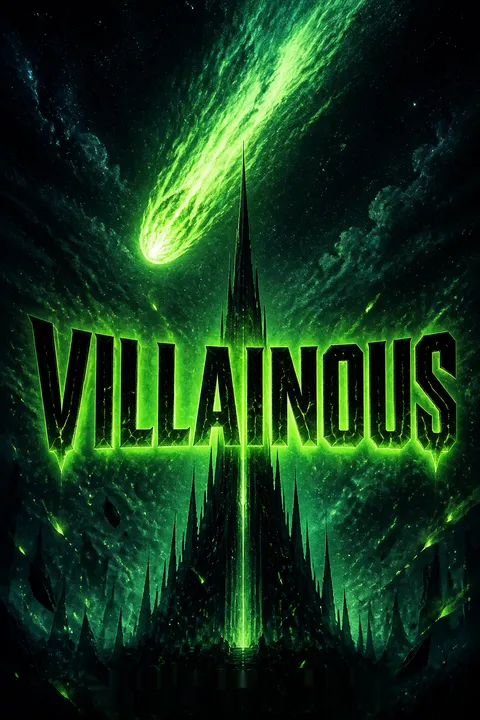
The returning sourceThe green celestial object first appears in the 1934 prologue, when its impact transforms the St. Alban’s children and Johnny Noble. In the present, its return gives Daniel the clue that explains the academy’s central spire and Herman’s urgency. The comet links the town’s origin story to the final danger, while its effects remain uncertain enough that characters must act without full scientific proof. Its role in the climax reveals that extraordinary power may carry consequences no one can control.
The Noble Academy
School as hidden machineryThe academy presents itself as a boarding school where powered children can learn control, ethics, and practical skills. Its specialized classrooms show that the need for such an institution is real, while its recruitment drive benefits from public anxiety about young Supers. Daniel’s tour, Theo’s family disclosures, and the mysterious spire gradually change the school from a possible refuge into a place whose design must be investigated.
Daniel's clue board
Evidence made visibleDaniel uses photographs, notes, and thread to compare the bridge attack, the tree fort fire, vandalism, the mansion blaze, and the people who could have caused them. The board externalizes his reasoning, making it easier to spot both false leads and missing connections. It is not a magical detector: Daniel must revise it when Bud and Clay prove less likely suspects, and he still needs Theo’s testimony and the comet report to understand the larger plan.
The viral junkyard video
A spark for public panicA recording of Drake boasting about the Nobles’ superiority circulates online after the first junkyard fight. The footage makes the group’s threat vivid, but its abrupt ending encourages viewers to treat a boast as a larger criminal declaration. Police and politicians use the video to justify a highly visible response at the academy, while Rohan’s presence turns the public story into a personal accusation against his family. The recording demonstrates how a partial image can shape events before evidence is gathered.
Supers of Noble's Green Series
Download PDF
Download EPUB
.epub digital book format is ideal for reading ebooks on phones, tablets, and e-readers.








