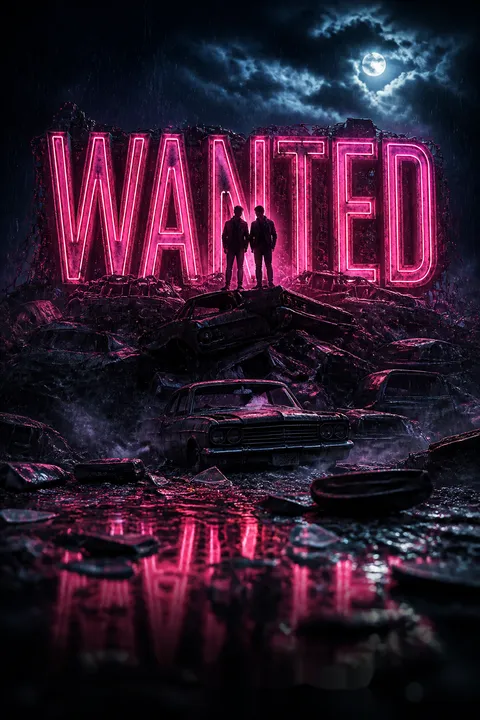


Plot Summary
The Ride That Never Comes
Liv, a reckless car enthusiast living in a trailer park, searches for his keys while Amanda complains that he is leaving to collect Knox instead of staying with her. Knox is Liv's lifelong best friend and housemate; their parents formed a couple years earlier and left the boys to raise themselves.
Liv slept with Amanda after seeing signs that she was cheating on Knox, hoping the betrayal would make Knox see her clearly. Instead, Knox turned against him. Liv drives to the construction site where Knox works for Vlad, a violent boss who pays him off the books. He finds Knox arguing over withheld wages and a broken cement mixer. When Vlad draws his machete, Liv moves to protect his friend.
Liv's decision to sleep with Amanda is both intervention and trespass. He believes that producing undeniable evidence will rescue Knox from a bad relationship, but he does so by taking Knox's choice away and damaging the friendship he means to protect. The scene establishes Liv's central habit: he acts first, then uses loyalty to justify the consequences. Their shared poverty makes this impulse feel understandable, even intimate. They have learned to depend on each other because the adults around them have failed, but that dependence also gives Liv a dangerous confidence that he knows what Knox needs better than Knox does.
A Fall Into Concrete
Vlad slashes Knox's forearm and knocks him toward an open foundation pit. Liv pulls Knox clear, wrestles the machete away, and kicks Vlad while they struggle at the edge. Vlad loses his balance and falls onto the steel reinforcing rods below, dying from his injuries. Liv is horrified, but Knox's bleeding arm and dangerous heart rhythm force him to act.
They bandage the wound, drag Vlad's body to his car, and sink the vehicle in a reservoir. Because the conspicuous Subaru is registered to Liv, they push that car over the same cliff rather than leave an obvious trail. They abandon their home and decide to disappear together, though Knox's medication is still there.
The death is accidental, but the cover-up is deliberate, which changes the friends' moral position. Liv's protective reflex saves Knox from Vlad and then commits both men to a shared crime. Knox's suggestion to conceal the body shows that he is not merely being carried along; he contributes to the decision and accepts its risks. Their beloved Subaru becomes the cost of survival, a physical version of the future they had imagined escaping toward. Destroying it is grief as well as strategy. The two friends leave with less than they need, but the choice confirms that neither can imagine safety without the other.
Northbound With One Another
After realizing they have left Knox's heart medication behind, the fugitives argue about Liv's behavior with women and Knox's low interest in sex. Liv wonders aloud whether Knox might be attracted to men; Knox reacts with anger and insists he is not. Their argument is cut short by a freight train, and Liv climbs aboard first, then reaches back to pull Knox into an open railcar.
They change trains after an older rail rider warns them to do so, and during the stop they break into a poorly secured pharmacy for Knox's medication and clean shirts. With their phones discarded, cash nearly gone, and no clear destination, they jump from the train near a remote junkyard in Pennsylvania, looking for shelter from the rain.
The train escape gives physical shape to a relationship already in motion: Liv reaches back, and Knox chooses not to be left behind. Their argument about sex is more than teasing. Knox's fierce denial suggests that the question touches an identity he has never felt safe examining, while Liv's casual openness comes from a life less governed by rigid rules. Neither understands the other's position yet. Their practical dependence, including Liv's concern about Knox's medication, keeps them moving through the crisis, while the stolen pills mark how precarious that care is. They have escaped one danger without gaining control of their circumstances.
The Acid Pit Welcome
The junkyard looks deserted until Liv and Knox glimpse men lowering a dead body into a pit beside barrels of acid. They try to slip away, but a masked guard on a roof blows a horn, bringing a truck and armed men after them. When Knox collapses from his heart condition, Liv refuses to flee alone. He shields Knox and claims they are boyfriends, having overheard that Frank, the junkyard's owner, protects gay men.
Frank finds their wanted notices and questions them about Vlad, the pharmacy theft, and their work skills. The friends admit enough to sound useful: Knox can operate construction machinery and repair things, while Liv knows cars and can drive. Frank keeps their IDs and allows them to stay on probation.
The lie works because it attaches their survival to an actual need for shelter, but it also places their friendship inside a new, intimate frame. Liv invents the relationship under pressure, yet his readiness to protect Knox is genuine. Frank's response complicates the expected image of a criminal lair: he is dangerous, suspicious, and capable of hospitality at once. The offer of work prevents the two fugitives from remaining passive victims. Their skills become a form of bargaining power, though their shelter depends on proving themselves useful. Survival here is neither innocence nor safety. It is a negotiated place within a community that has its own rules.
The First Unplanned Kiss
Frank's partner, Ezra, gives the exhausted fugitives clean clothes, a shower, and food, then objects to having strangers sleep in the house. Liv and Knox are sent to a warm office with one narrow bed. To sustain their cover, Liv kisses Knox in front of Frank and later keeps an arm around him at breakfast.
Each gesture feels increasingly charged, especially to Liv, who notices Knox's body in a new way. They fall asleep spooning, and Liv's morning arousal presses against Knox. Their wrestling turns into mutual dry-humping; both become aroused and reach orgasm without undressing. When Liv asks whether Knox likes men, Knox panics, leaves the room, and seeks food instead of answering.
The fake relationship supplies a socially acceptable excuse for touch, allowing desire to surface before either man has to name it. Liv is quick to treat the physical response as an invitation, while Knox experiences the same moment as both pleasure and threat. His retreat does not erase what happened; it shows how strongly his inherited rules compete with bodily knowledge. The single bed is a practical inconvenience that becomes a test of intimacy, and the meal Knox seeks afterward returns him to familiar ground. Their attraction begins not through a deliberate confession but through a breach in the habits that once made them feel safely like brothers.
The Rival at the Biker Party
At a party hosted by the Demon Brethren motorcycle club, Knox tries to make sense of his response to Liv by approaching Cy, a formidable club member who had examined his machete wound.
Knox flirts and considers using Cy as a test of whether he wants men, while Liv hears that Knox asked whether Cy was single and rushes to the party. When Liv confronts him, Knox admits that the morning with Liv has unsettled his understanding of himself.
He is afraid of experimenting with his best friend and losing him, but also recognizes that attraction to another man feels different with Liv. Knox tells Liv what he wants, and they leave for a private room. There, Liv guides him through their first sexual encounter, stopping to check that Knox is comfortable.
Cy functions less as a true romantic rival than as a safer experiment: a stranger can be rejected without endangering the relationship that anchors Knox's life. Liv's jealousy exposes his own desire, but Knox's choice matters more than the rivalry. He does not simply submit to Liv's confidence; he names what he wants and accepts the risk of wanting it. The scene transforms their friendship through consent and attention, not through a sudden new identity alone. For Knox, sex becomes evidence that his previous discomfort with women was not a personal failure. For Liv, desire becomes harder to dismiss as a passing reaction.
The Truck in the Dark
After their first night together, Knox leaves the workshop and hides in the cab of an abandoned truck, crying over his sexuality and his father's homophobic judgments. Liv searches the junkyard with Shane, Frank, Jag, and Shane's dog, Cerberus. Jag locates Knox before the dog does. When Knox calls himself a slur in self-disgust, Cerberus lunges because Shane has trained the dog to react to that language.
Liv pulls the dog away, and Shane rebukes Knox for using the insult even against himself. Away from the group, Liv tells Knox he can bring his fear to him rather than punish himself alone. Knox admits that sex with Liv felt unlike anything with women and chooses to continue exploring their relationship.
Knox's retreat is a response to the meaning he attaches to pleasure, not a rejection of Liv. The old insult gives his private shame a voice, and Cerberus makes the harm of that language immediate and physical. Shane's anger is severe, but it also treats Knox as accountable rather than fragile. Liv's reassurance matters because he offers a place for vulnerability without demanding that Knox resolve every question at once. Knox, in turn, stops treating desire as proof of weakness. He cannot undo the contempt taught by his father, but he begins to distinguish that inherited contempt from his own experience.
A Ring Through the Nose
Back at Frank and Ezra's table, Knox shares drinks with the household and their friends, including Shane and his partner Ros. Their stories about rejecting families help Knox see that the junkyard's residents have built kinship outside the homes that failed them.
With Liv's help, Knox gets the septum piercing his father once forbade, using a ring Ros provides. Later, the two men discover Frank's partly concealed mechanical sex toy and turn the discovery into another private joke.
The next morning Knox makes pancakes for Liv after Ezra teaches him, while Liv wakes from a nightmare about Vlad's death. Knox comforts him and listens as Liv admits his guilt. Frank discovers their tampering with the machine and decides they need separate quarters.
The piercing is a small act with unusually large emotional weight: Knox chooses a visible change his father once made him fear, and does so among people who do not demand that he perform conventional masculinity. The gathering gives his self-discovery a social context, since the others' stories show that family can be assembled rather than inherited. Meanwhile, Knox's pancakes reverse their usual caregiving pattern. Liv has often protected him, but Knox can now comfort Liv's guilt and fear. Their intimacy becomes reciprocal. Frank's irritation over the machine punctures the softness with comedy, but it also pushes the friends toward a more independent life.
The Trailer With Strings
Frank moves Liv and Knox into a neglected trailer inside the junkyard and offers them paid work, a car, and access to utilities if they help watch the property and assist with body disposal when needed. The arrangement gives them a home but ties them to the junkyard's criminal business. Liv and Knox settle into a sexual relationship, and Liv plans a first date at a small cinema.
Knox is still uneasy about being seen as a couple in public, though he eventually holds Liv's hand in the dark. During the film, Liv gives Knox oral sex in the back row. Afterward, at a secondhand shop, Liv flirts with the cashier. Knox punches him, hurt that Liv seems to treat their relationship as casual, and their argument draws police attention.
The trailer offers the first material version of the future the friends have wanted: a private place they can repair and call their own. Its price, however, is participation in Frank's dangerous economy, so refuge never becomes uncomplicated. The date reveals a different cost. Knox assumes their intimacy means commitment, while Liv has not yet examined what exclusivity would require of him. The cinema scene makes their desire visible to strangers, but Knox's withdrawal in public shows that physical confidence has not erased social fear. The cashier's flirtation turns that unresolved difference into a breach of trust, forcing both men to confront what their new relationship actually means.
The Bullet at Shane's
As police pursue them after the argument, Liv drives recklessly across town and narrowly beats a freight train across a crossing. Before they can resolve their fight, Frank calls: men connected to a gang whose dead were disposed of at the junkyard have attacked Shane and are holding him hostage. Liv and Knox take loaded handguns to cover the far side of Shane's house while the motorcycle club moves in.
A man fleeing the house ignores Liv's warning, so Liv shoots him in the leg. The wounded gunman fires back. Knox throws himself in front of Liv and takes the bullet in his shoulder. Cy arrives, kills the attacker, and identifies Knox's injury as serious. Knox resists going to hospital until Liv promises to stay beside him.
The hostage crisis interrupts a private argument with a threat that makes their dependence unmistakable. Liv and Knox are already fugitives, yet they choose to protect Shane because the junkyard community has begun to matter to them. Liv's shot is a new threshold in his relationship to violence: he acts deliberately, not through the accident that killed Vlad. Knox's choice to absorb the return fire is an act of loyalty, but it also reveals how readily he discounts his own life. His demand that Liv remain with him at the hospital turns their emotional conflict into a question of trust at the exact moment his body is most vulnerable.
A Heart Kept Secret
At the hospital, surgeons remove the bullet from Knox's shoulder. Liv waits outside, replaying his own failures and learning that Knox's congenital heart condition may require surgery, not medication alone. Knox had avoided telling him because he feared hospitals, costs, and becoming a burden.
When Liv finally visits, the two revisit their fight. Liv admits that he was wrong to treat their sex as casual and says Knox matters more to him than anyone. Knox admits that he wants Liv, but still resists the operation.
Liv tells him he cannot accept losing him to a problem they might treat. Knox agrees to face the medical question with Liv beside him. Frank supplies new identities, including the awkwardly spelled Kolin for Knox, and promises work and practical help.
The hidden heart condition turns a romantic misunderstanding into a confrontation with mortality. Knox has built self-reliance around concealment, because the adults who should have helped him treated care as inconvenience or weakness. Liv's response is loving but not entirely gentle: he insists that Knox can no longer make this decision alone. The scene also corrects Liv's earlier assumption that affection can remain undefined without consequence. Knox's fear is not solved by a declaration, but the two begin to share responsibility rather than letting one protect and the other silently endure. Their new identities offer legal concealment, while the medical problem demands openness.
A Family Makes Room
Knox recovers from his shoulder injury while Liv takes extra shifts and seeks a better-paying job at the motorcycle club. He clashes with Cy, who provokes him about Knox, but earns a place working nights at the club. Knox learns the junkyard with Jag, salvaging car parts and catching rabbits, while the pair rebuild a racing car with help from the club and Ros's paintwork.
Liv enters a winter race whose prize could help pay for Knox's heart surgery. On Thanksgiving, Knox secretly arranges a night off for Liv and gathers their friends around a bonfire for rabbit, turkey, and shared food. Liv initially resents losing the extra wages, then accepts Knox's reminder that survival cannot consume every hour they have together.
This stretch replaces the friends' old fantasy of escape with the harder work of belonging. Liv is motivated by both money and the need to be recognized in a new place; Knox is motivated by usefulness, learning practical skills and feeding the people who have helped them. Their roles begin to change. Knox cares for Liv emotionally, while Liv learns that providing is not the same as being present. Thanksgiving makes that lesson concrete: the meal costs time and foregone wages, but it gives Liv a place at a table where he is wanted. The race then concentrates their hope in a risky, measurable goal.
The Winter Race
Snow and freezing conditions turn the motorcycle club's December race into a threat, especially because Liv has little experience driving on ice. Knox wants him to withdraw, but Liv sees the prize as a chance to fund the heart operation and establish himself in the new community. Before the start, Knox fights the driver of a green Honda who has mocked their relationship, then gives Liv a good-luck kiss and oral sex beside their car.
Liv launches into the race, outmaneuvers the other drivers, and keeps pace with Blizzard, the celebrated racer from Nevada. The green Honda repeatedly crowds him and finally strikes his car near a steep rise. Liv chooses speed over braking, clears the hill, and watches the Honda spin off the track.
The race gathers several motives that have been pulling Liv in different directions. He wants the surgery money, but he also wants an audience for the skill that once made him somebody in his hometown. Knox's support gives the risk a personal meaning, while his fear exposes the cost of Liv's ambition. Their public affection before the start marks a change from the cautious couple at the cinema. Liv is no longer only proving himself to strangers; he is acting for a future they have begun to imagine together. The collision with the Honda is a literal test of whether he can resist provocation and still keep control.
The Finish Line Is Police
Liv reaches the final stretch close behind Blizzard, but police cars appear near the finish line and force Blizzard to abandon the race. Liv cannot stop in time, so he swerves off the track and crashes.
He escapes the wreck with cuts and bruises, but Knox rushes past an officer to reach him and is arrested too. In separate interrogation rooms, Liv refuses to implicate Knox, even when a detective claims Knox has confessed.
Frank arrives with Ross, a contact who offers them a route out: testify against a more powerful California criminal connected to Vlad's case, and enter witness protection. Liv accepts only if Knox is included. Frank also offers a loan for Knox's operation. The club rules that Liv would have won the race and gives him the prize money.
The crash denies Liv the clean triumph he wanted, but it does not erase the evidence of his commitment. Knox runs toward him despite the danger of arrest, repeating the same protective impulse that carried them through the first crisis. In custody, Liv refuses the usual calculation of saving himself at the other's expense. The witness-protection offer is not innocence restored; it is another bargain with compromised institutions and criminal networks. Still, it gives the men a chance to stop living under their old names. The prize money, Frank's loan, and Ross's deal converge on one practical promise: Knox's health may no longer have to wait.
A Future They Choose
Liv and Knox give matching testimony to Ross, leave the station together, and accept Frank's employment offer after the witness-protection arrangement is set in motion.
Blizzard, impressed by Liv's driving and the reason he entered the race, persuades the club to award Liv the prize pool despite the police stopping the competition. Frank will lend the remaining money for Knox's operation. The men return to the junkyard with a future that is still precarious but no longer entirely improvised.
Their relationship has survived the public argument, the shooting, and Liv's admission that he wants commitment. The immediate reward is not a wedding or a cure, but the chance to treat Knox and build a life without running from every knock at the door.
The resolution refuses a simple moral reset. Liv and Knox are still bound to a criminal community, and their safety depends on cooperation with a detective whose offer is itself politically messy. What changes is their capacity to choose their obligations. Liv no longer treats commitment as a trap that would reduce his freedom; he discovers that caring for Knox gives his energy a direction. Knox, meanwhile, accepts help without equating it with weakness. The race's unfinished result becomes a victory through recognition and money rather than a formal finish. Their future is secured not by escape from dependence, but by learning which dependencies can be mutual and sustaining.
Epilogue
One year later, Knox is recovering from heart surgery, with Liv staying at the hospital and keeping his fear at bay through jokes and constant company. Their trailer has become a home, and their junkyard friends bring food, flowers, and a growing Rottweiler puppy named California.
Two years later, Liv prepares to propose on his birthday, but Knox takes him to the fence where they first entered the junkyard. Liv kneels with a handmade ring; Knox produces one of his own and proposes back. They exchange rings and decide they can marry soon, with no need to wait for a grand ceremony.
The first epilogue measures recovery in acts of care rather than a sudden return to perfect health. Liv's presence helps Knox endure the hospital, while the friends who once held them at gunpoint now bring soup and flowers. The second epilogue returns them to the junkyard fence, the boundary they crossed as fugitives, and turns it into the site of a chosen future. Their simultaneous proposals matter: neither is simply rescued or claimed by the other. The handmade rings and modest plans suit a couple whose intimacy has always been built from improvised resources. They have not erased the past; they have made it part of the place they call home.
Analysis
The novel makes care visible through practical acts: Liv retrieves Knox from work, gives up their car, steals medication, and later risks his life on a track; Knox cooks for Liv, protects him from a bullet, and learns skills that allow him to contribute to their shared home. These gestures are loving, but the story also distinguishes care from control. Liv's early attempt to expose Amanda's betrayal violates Knox's agency, and his casual treatment of their new intimacy wounds Knox. Commitment becomes possible only when Liv stops assuming that loyalty speaks for itself and learns to name what he wants.
Knox's sexuality emerges through a conflict between bodily response and the rules imposed by his father and community. His uncertainty is not presented as a puzzle solved by one sexual encounter. It is a process of reinterpreting past discomfort, anger, and fear. The junkyard's queer residents matter because they make other lives imaginable through ordinary evidence: couples sharing a home, friends telling painful histories, and a community that offers meals and shelter without demanding heterosexual performance. Their presence gives Knox space to explore, while also holding him responsible when he uses homophobic language against himself.
The criminal plot keeps the romance from becoming a sealed refuge. Liv and Knox are implicated in Vlad's death, recruited into Frank's dangerous economy, and eventually offered legal protection through a morally compromised bargain. Their survival depends on accepting help from people who are not innocent, but the story does not treat that dependence as a failure. Instead, it contrasts the neglect of their biological parents with a chosen family that provides food, medical help, work, and emotional accountability.
The race brings these strands together. Liv wants money for Knox's surgery and recognition in a place where nobody knows him; Knox wants Liv alive and learns to support rather than simply restrain him. Their future is not earned through purity or perfect judgment. It is built through mutual care, honest commitment, and a willingness to let other people help.
Review Summary
Wanted received mostly positive reviews, with readers praising the friends-to-lovers romance, steamy scenes, and character development. Many enjoyed the found family aspect and interactions with characters from previous books in the series. Some critics felt the book was too long or had pacing issues. The main characters, Knox and Liv, were generally well-liked, though a few readers found Liv's actions frustrating at times. Overall, fans of the series and M/M romance appreciated the book's mix of humor, heart, and heat.
People Also Read






Characters
Liv
The reckless caretakerLiv is a fast-driving mechanic and habitual flirt who grew up with unreliable parents and learned to turn charm into a way of being noticed. He is impulsive, funny, and fiercely loyal to Knox, often acting on his behalf before asking what Knox wants. That protectiveness can become controlling, as his decision to expose Amanda's disloyalty shows. Liv is most at ease behind a steering wheel or solving a practical problem, but emotional uncertainty leaves him less sure of himself. His relationship with Knox forces him to examine what loyalty means when it must include honesty, commitment, and the willingness to be cared for in return.
Knox
The guarded fighterKnox is a kickboxer with a congenital heart condition, a quick temper, and a history of being treated as weak by his father. He wants to escape poverty and prove that he can stand on his own, so he hides how much help he needs and often turns vulnerability into anger. His lifelong bond with Liv is both a refuge and a source of confusion, especially when desire challenges the identity he has been taught to defend. Knox is observant, loyal, and more tender than his combative manner suggests. His growth depends not on becoming less strong, but on recognizing that accepting care does not make him powerless.
Amanda
Knox's first girlfriendAmanda is Knox's girlfriend at the story's opening and briefly dates Liv as well. She enjoys attention and expects sexual chemistry to keep a relationship engaging. Her presence exposes the strain between Liv's belief that he knows what is best for Knox and Knox's need to make his own choices.
Vlad
The violent foremanVlad employs Knox at an unsafe construction site and has a reputation for intimidation. He uses money and physical threat to control workers who have few alternatives. His presence brings the danger of the friends' former life into direct contact with their loyalty to each other.
Frank
The junkyard's hard gatekeeperFrank owns the Pennsylvania junkyard and runs a business that mixes ordinary salvage work with criminal services. Massive, direct, and quick to threaten violence, he is also capable of recognizing when desperate young men need a chance. He gives Liv and Knox shelter only after assessing their skills and their risk to his household. His relationship with Ezra reveals a more attentive side than his intimidating manner suggests. Frank acts as a stern employer and an unlikely source of practical support, but his generosity always carries expectations.
Ezra
The household's steady hostEzra is Frank's partner, a polished and perceptive presence in the rough junkyard. He values order, good food, and clear boundaries, and he initially resents having wanted fugitives brought into his home. He nevertheless gives Liv and Knox clean clothes, meals, and practical instruction. Ezra understands how social expectations shape gay relationships and becomes an informal guide for Knox as he tries to understand roles and intimacy without treating them as rules.
Shane
The wary dog trainerShane is a junkyard resident, dog trainer, and Ros's partner. His suspicion of Liv and Knox is grounded in the danger of the work around him, not simple cruelty. He is blunt about boundaries and about the harm of homophobic language, while also helping search for Knox and joining the effort to protect his friends. His dogs reflect his practical approach to safety.
Jag
The junkyard's wild guardianJag patrols the junkyard in improvised armor and knows its scrap-filled terrain better than anyone. His strange appearance and guarded manner come from a childhood in an isolated, controlling community that rejected his sexuality. He values survival skills and loyalty, and he is protective of the people he considers his pack. His blunt advice can sound severe, but it comes from experience rather than a desire to dominate.
Cy
The formidable club medicKnown as Cyborg, Cy is a towering member of the Demon Brethren motorcycle club with one artificial eye and medical experience. He treats Knox's injury and helps in the hostage crisis, but he also enjoys provoking Liv and testing the limits of their relationship. His practical competence makes him valuable, while his teasing manner ensures that Liv never quite relaxes around him.
Dex
The acid-joking nephewDex is Frank's nephew, a cheerful, irreverent presence who treats grim situations with jokes. His casual humor about the junkyard's work initially unsettles Liv and Knox, but he also helps them enter the motorcycle club's social world. Dex is generous with opportunities and resources, though his appetite for spectacle can make him an unpredictable ally.
Ros
The junkyard artistRos is Shane's long-haired partner and an artist who turns discarded metal and car parts into sculptures. He brings a gentler, creative energy to a community shaped by violence and practical work. Ros offers Knox a nose ring and later contributes to the racing car, showing how his art can become a concrete form of welcome.
Dane
Jag's grounded partnerDane is Jag's partner, an IT specialist with a calm, approachable manner. He helps Liv and Knox preserve their online accounts without exposing their identities and participates in the junkyard's social circle. His steadiness balances Jag's more intense, survivalist outlook.
Hammer
Dex's quiet fiancéHammer is a reserved Demon Brethren member and Dex's partner. His quiet authority contrasts with Dex's joking energy. He speaks little, but his place in the club and his loyalty to Dex make him a dependable presence in the group.
Blizzard
The celebrated racerBlizzard is a well-known Nevada racer whose skill and appetite for danger make him the event's most formidable competitor. He races for excitement and reputation, unlike Liv, who has a personal financial reason to compete. His respect for another driver's determination suggests that competition need not end in hostility.
Knox's father
The absent harsh fatherKnox's father taught him kickboxing but also framed illness and vulnerability as failures of character. His judgments shape Knox's anger, shame, and reluctance to seek medical care. Even in his absence, Knox continues to measure himself against the standards his father imposed.
Ross
The compromised detectiveRoss is a detective who has spent years pursuing a powerful criminal in California. Pragmatic and willing to bend procedure, he offers Liv and Knox a possible path out of their legal danger in exchange for testimony. His methods blur the line between justice and expediency.
Plot Devices
The Fake Boyfriend Cover
A lie that becomes intimacyLiv claims that he and Knox are a couple because the junkyard's owner is rumored to protect gay men. The cover helps the fugitives avoid immediate violence and gives them a reason to perform affection in front of Frank and his household. Those gestures expose an attraction neither man has faced directly. The device therefore serves both the criminal-survival plot and the romance, while creating tension when Knox begins to treat their physical relationship as a commitment Liv has not yet named.
The Lost Subaru
Their shared dream sacrificedThe customized Subaru represents the future Liv and Knox planned: a car they built together and hoped to drive out of the trailer park. Because it is registered to Liv and is too recognizable to keep after Vlad's death, they send it into the reservoir with Vlad's car. Its destruction raises the cost of their escape and severs them from the life they expected to leave behind. Later, they rebuild another vehicle together, turning their shared knowledge of cars into a new route toward stability.
Knox's Heart Condition
A hidden deadlineKnox's congenital condition shapes his stamina, his need for medication, and his vulnerability during the escape. For years he has treated medication as enough and avoided the possibility of surgery because hospitals and costs frighten him. After a bullet wound brings him to a discreet surgeon, Liv learns that Knox's heart needs more serious treatment. This revelation changes the stakes of their work and the winter race: earning money is no longer about comfort or escape, but about giving Knox a chance at a longer life.
The Junkyard Sanctuary
Shelter with a priceFrank's sprawling junkyard offers the fugitives food, shelter, work, and a community of men who have built lives outside conventional family structures. It also operates as a site for disposing of bodies, so safety there is inseparable from criminal obligation. The junkyard's maze of scrap, traps, workshops, and hidden roads repeatedly shapes the action. It gives Liv and Knox a place to belong, but belonging requires work, discretion, and acceptance of the danger surrounding Frank's business.
The Winter Race
Risk turned into a lifelineLiv enters the December race because its prize money could help pay for Knox's heart surgery. The competition also answers Liv's hunger to be recognized in a new community, making the stakes both practical and personal. Blizzard's fame, the treacherous icy track, and the aggressive green Honda establish the danger before the race begins. Police intervention prevents a conventional finish, but the club and Blizzard still award Liv the winnings because he had come closest to victory. The race thus funds the next stage of their future without pretending that Liv's risk was safe.
Download PDF
Download EPUB
.epub digital book format is ideal for reading ebooks on phones, tablets, and e-readers.








