

Key Takeaways
See war dogs as lifesaving partners, not furry equipment.
Their work saves lives. Dogs have served in war as sentries, trackers, rescuers, and messengers. In Iraq and Afghanistan, their most urgent role became finding improvised explosive devices, or IEDs. In 2004, Air Force handler Sean Lulofs watched his dog Aaslan investigate a suspicious coffee can on a base. It contained volatile rocket propellant, though the men had handled it the night before as harmless trash. Aaslan's nose caught what human eyes missed.
More than detection. The book also follows dogs who shielded handlers, steadied frightened soldiers, and gave lonely troops a feeling of home. Their value is not reducible to equipment or technique: the dog is a trained specialist and a companion whose presence changes how people endure war. Their stories offer civilians a human-scale way into conflicts that otherwise feel distant.
What's powerful here is the way a dog makes an abstract military capability visible: a nose catches a threat, a body stays beside a wounded person, and a relationship gives a soldier something familiar amid danger. This is a form of narrative translation, turning policy and battlefield risk into experiences readers can imagine. Yet emotional access has a limit. The warmth of a dog story can draw attention away from the political choices that create the battlefield. The strongest reading lets the bond sharpen concern about war without mistaking an intimate story for a complete account of the conflict.
Pair the dog's nose with a handler's eyes, judgment, and calm.
Different senses, shared task. A dog’s nose can distinguish odors at extraordinary levels. The book gives an estimate of roughly 220 million scent receptors in an average dog, compared with about 5 million in a human. A detection dog learns to connect particular explosive odors with a reward, then searches for those scents in changing conditions. Wind, heat, terrain, and nearby smells all affect where odor travels.
The handler completes the search. The human must read the dog’s cues, watch the ground for disturbed soil or suspicious objects, and help position the team where scent is strongest. Military certification required explosive-detection dogs to reach 95 percent accuracy, but the book cautions that field accuracy cannot be measured as cleanly. A dog may find what a person cannot smell, but a handler who is rushed or unsure can misread the search.
This partnership resembles distributed cognition: a team combines different kinds of perception instead of asking one agent to do everything. The dog detects chemical information, while the handler interprets context and scans visually. That division of labor is a useful model for human-machine teams, too. It also warns against treating a high certification score as a guarantee of battlefield performance. Controlled tests can count planted objects; combat cannot reliably count the bombs that remain undiscovered. The book’s account is strongest when it presents canine skill as exceptional but not magical, dependent on training, conditions, and human interpretation.
A strong bond can make a dog more effective, not less disciplined.
Trust is operational. Some handlers described dogs as weapons and argued that affection might weaken obedience. Others insisted that a working relationship depends on emotional closeness. Handler Jon Baer began with rapport-building, giving a new dog time to trust him before relying heavily on corrections. The book also discusses research showing dogs follow human pointing cues and attend to people’s facial expressions, evidence of unusual social attunement.
Love does not erase limits. Handler Sean Lulofs loved Aaslan, yet understood that human lives took priority in a rescue decision. That tension is central: a handler may love a dog and still accept the risks built into the job. Trust is not sentimental decoration. It helps a team cooperate under pressure, but it cannot make danger disappear or settle the ethical question of sending an animal into combat.
The account challenges a simple equation between emotional distance and professionalism. In many demanding jobs, trust improves coordination because each partner can act without constant explicit instruction. Attachment research in human relationships similarly connects secure bonds with exploration and reliable cooperation, although canine military teams are not interchangeable with human relationships. The caution is equally important: affection can encourage a handler to take reckless risks for a dog, just as detachment can make an animal easier to treat as expendable. Good judgment requires neither denying the bond nor letting the bond conceal the unequal power humans hold.
Train the individual dog, and stop before challenge becomes panic.
One method cannot fit every dog. Kennel master Chris Jakubin treated difficult dogs as individual cases. With Taint, an aggressive Belgian Malinois, he built a working relationship through patience and consistent handling. Taint eventually performed detection work successfully and stayed with Jakubin for ten years. Jakubin’s approach was to observe a dog’s weak points, understand them, and build confidence rather than demand a standard response from every animal.
Know the line. Handlers use the term “melting the dog” for pushing an animal past its capacity, potentially deepening fear instead of building courage. A demonstration in which a trainer kept advancing on a frightened dog showed the danger: the dog’s tucked tail and retreat signaled distress, not readiness. A dog who fails a patrol test may be suited to another role. Recognizing that is sound assessment, not handler failure.
This is a practical argument for individualized training, grounded in behavioral observation rather than trainer ego. It aligns with a broader principle in skill acquisition: productive difficulty can develop competence, while overwhelming stress can impair learning. The crucial distinction is whether the animal can recover, attend, and try again. The book’s vivid examples make that distinction legible, but judgments about a dog’s limits remain partly interpretive. Consistent assessment, careful records, and the willingness to change a dog’s assignment help keep “resilience” from becoming a flattering excuse for avoidable distress.
Count canine wounds and handler grief as part of war's cost.
The danger is shared. Dogs face the same explosions, heat, gunfire, and exhausting patrols as the people beside them. In Afghanistan, handler Marc Whittaker carried his wounded dog Anax toward a medevac after the dog was shot during an ambush. In another case, handler Christopher Wrinkle died trying to save Tosca, his dog, from a fire. Such accounts make clear that a working dog is not protected from war simply because the mission depends on him.
Loss leaves a community. Handlers mourn dogs as partners, and dogs can be left without their familiar handlers after a death. The book reports rough estimates of 30 handlers killed in action from 2004 to 2013 and 20 military working dogs killed, with two missing. These figures are not definitive. The uncertainty itself underscores how easily animal casualties and the grief surrounding them can be overlooked.
The book expands the moral accounting of war beyond human casualties without suggesting that human and animal lives are identical in every respect. It shows how loss travels through a working community: one death affects a handler, a unit, and sometimes a surviving dog suddenly assigned to someone new. This resembles occupational grief in emergency services, where repeated exposure can normalize what should remain significant. The incomplete casualty figures matter because institutions learn from patterns only when they record them. The challenge is to make animals visible in that accounting without using their suffering merely as an emotional device.
Dogs can steady traumatized people, yet combat can traumatize dogs too.
Comfort has a place in war. Army occupational therapist Cecilia Najera brought Boe, a trained therapy dog, to support soldiers in Iraq. Boe offered quiet company to withdrawn service members and helped one soldier begin exercising by taking the dog on runs. During the aftermath of a mass shooting at a Baghdad stress clinic, Boe’s relaxed presence briefly eased the room’s tension. The book also recounts how a wounded Iraqi girl slowly grew comfortable enough to walk Boe through the hospital.
Dogs need care, too. Some military dogs developed canine post-traumatic stress disorder, or CPTSD. In 2011, a veterinary behavioral specialist estimated that 5 percent of 650 deployed dogs were developing it, and that half of those affected might need to retire. Detection dog Ody became frightened after a chaotic mission and could not work confidently outside the base. He was returned home rather than pushed back into combat.
Boe’s work illustrates how animal-assisted support can lower the social barrier to seeking help: a dog offers contact without demanding a verbal explanation. Research cited in the book points to reduced anxiety and stress in some settings, but the wartime examples are not controlled trials. That limitation matters when programs compete for resources. The account is also unusually attentive to reciprocity. A therapy dog is not an inexhaustible treatment instrument, and a combat dog’s distress is not disobedience. Careful screening, rest, and the option to retire are part of responsible deployment, not obstacles to it.
Keep canine expertise alive between wars, or rebuild it under fire.
War programs rise and vanish. The United States officially organized military dogs during World War II, drawing heavily on civilian donations. More than 10,000 dogs served. Their successes did not prevent the program from shrinking after the war. Vietnam brought thousands of dogs back into service, including scout dogs that helped patrols detect ambushes and explosives. After the war, those capabilities were dismantled, and many handlers never learned what happened to their dogs.
The next war exposed the cost. When dog teams returned to combat in Iraq in 2004, they had not been prepared for the growing roadside IED threat. Handlers and dogs had to adapt in the field, building skills that should have been developed before deployment. The book describes this pattern as institutional amnesia: hard-won expertise is neglected during a drawdown, then urgently reconstructed when conflict returns.
The history is a case study in organizational learning. Institutions often preserve knowledge in manuals and budgets, but expertise also lives in experienced trainers, established schools, and routines that disappear when programs are cut. Rebuilding those capacities takes time, and wartime improvisation transfers the cost to people and animals operating under danger. The book’s historical pattern supports a strong preparedness argument, though it does not imply that every wartime capability should remain at peak scale indefinitely. The practical question is how to preserve a minimum training base, records, and expertise so that a future emergency does not begin at zero.
Track every dog and handler casualty, or hard-won lessons disappear.
The records were fragmented. The military had a central record of working dogs, but it was designed mainly to document service endings, such as retirement or adoption. It did not consistently record combat deaths, causes of death, or injuries. Each branch also kept its own records, making it difficult to assemble a reliable account of what happened to teams in the field.
Missing data means missed learning. The book’s estimates of 30 handlers killed and 20 dogs killed between 2004 and 2013 were assembled from sources rather than a complete official casualty system. More detailed records could show how teams were injured, what kind of explosive they encountered, and whether a dog was present. Memorials and handler communities preserve names and stories, but remembrance cannot substitute for data that helps protect future teams.
This is more than an administrative complaint. In safety-critical fields, incident reporting turns individual failures and near misses into organizational knowledge. Without standardized definitions and shared records, leaders cannot distinguish recurring hazards from isolated events, or evaluate whether training changes improve outcomes. The book also shows why numbers alone are insufficient: a database can count casualties while losing the relationships and circumstances that explain them. A useful system would preserve both structured injury data and the narrative of each event, while protecting privacy and avoiding the pressure to treat every loss as a performance failure.
Plan for a war dog's return before the final patrol.
Homecoming is part of service. Some handlers cannot adopt their dogs, even when the bond is strong. Lulofs could not take Aaslan home because the dog was not suited to life with his young child. Other reunions did happen. Marine Matt Hatala drove to South Carolina with fellow veterans to bring Chaney, his former bomb-detection partner, home to Iowa after the dog retired. Hatala said he slept better and felt less stressed once Chaney was with him.
Families inherit the bond. After Marine Colton Rusk was killed, his family adopted Eli, the dog who had served beside him. Eli comforted Rusk’s younger brother and became a gathering point for Marines from the unit. The Robby Law facilitated adoption of retired military dogs, but a good outcome still depended on planning, a suitable home, and a careful transition from military work to civilian life.
Retirement planning recognizes that a working dog has a life beyond operational usefulness. Continuity with a familiar handler can ease the transition, but adoption cannot be assumed: temperament, family circumstances, and the dog’s health all matter. The stories also show how a dog can carry a relationship into a bereaved family or veteran community, offering continuity without replacing the person who died. That role deserves care rather than sentimentality. A humane transition requires clear ownership rules, veterinary support, and realistic assessment of whether the proposed home suits the individual dog.
Analysis
War Dogs is literary reportage built from training-ground observation, military history, and intimate accounts of handlers and animals. Its structure moves from the practical question of what dogs do in combat toward a more difficult one: what happens to the bonds formed when war makes both partners vulnerable. The recurring tension between “weapon” and family member is not resolved, because the working relationship genuinely contains both. A dog is trained to perform dangerous labor, while the handler may experience the dog as a trusted companion whose loss can reshape a life.
The book’s most persuasive claims are grounded in scenes rather than abstractions. Aaslan detects volatile material that people mishandled; Dyngo’s alert helps a patrol avoid an ambush; Boe makes space for soldiers who struggle to speak. These examples show how canine ability and human interpretation work together. They do not, by themselves, establish how many lives dogs save across a conflict. The book acknowledges related limits: battlefield detection rates are difficult to calculate, casualty records are incomplete, and therapy-dog findings are often anecdotal or drawn from settings unlike combat.
That distinction strengthens the book’s institutional argument. The historical record shows that canine expertise can be built, used effectively, then reduced until a new conflict forces hurried reconstruction. The missing data on deaths, injuries, and performance compounds that cycle. The book therefore carries two claims at once: dogs matter operationally, and the military owes them and their handlers better preparation, documentation, and care. Its wider value lies in making that responsibility emotionally legible without pretending that affection removes the ethical problem of placing animals in war. The reader finishes with a fuller picture of military service: not a clean story of heroism, but a relationship shaped by skill, dependence, sacrifice, loss, and the obligation to remember.
Review Summary
War Dogs receives mostly positive reviews, with readers praising its emotional impact and insights into the bond between military dogs and handlers. Many appreciate the historical context and personal stories, though some find the writing disjointed or overly focused on handlers rather than dogs. Critics note a lack of depth in certain areas, such as training methods and ethical considerations. Overall, reviewers commend Frankel's research and ability to capture the unique relationship between humans and canines in military settings, despite occasional structural issues.
People Also Read
Glossary
Military Working Dog (MWD)
Military service dogA dog trained and employed by the armed forces for work such as explosive or drug detection, patrol, tracking, and security. Military working dogs serve alongside handlers, who are responsible for their training and care. In the book, the term includes dogs whose jobs and temperaments differ substantially, from explosive detectors to patrol dogs.
Inter-Service Advance Skills K-9 (ISAK)
Predeployment team courseA three-week course at the Yuma Proving Ground that prepares military dog teams from different service branches for combat deployment. Handlers and dogs practice tactical movement, night operations, explosives detection, and realistic mission scenarios. The course also evaluates whether a team is ready for deployment and gives instructors a chance to correct unsafe habits.
melting the dog
Overwhelming a dogA handler’s term for pushing a dog beyond its emotional limits, potentially intensifying fear or undermining confidence. A dog that retreats, freezes, or shows other signs of distress may not be ready for a particular challenge. The concept cautions trainers to distinguish useful difficulty from pressure that leaves the animal less capable of working.
opposition reflex
Pulling that fuels pursuitA tracking technique described in the book in which controlled tension on the leash encourages a dog to pull forward along a scent trail. The dog’s drive to pursue is reinforced by the resistance and by anticipation of a reward at the end of the track. The handler must maintain contact without giving corrections that could disrupt the scent work.
Combat and Operational Stress Control (COSC)
Combat stress support programAn Army program that placed trained therapy dogs with occupational therapists and combat stress-control units in Iraq and Afghanistan. The teams traveled among military bases to provide companionship and support to deployed personnel. The dogs were intended to complement existing care, helping create opportunities for interaction rather than replacing clinical treatment.
canine post-traumatic stress disorder (CPTSD)
Combat-related canine traumaA term used for persistent trauma-related behavioral changes in military dogs exposed to combat. Signs described in the book include fear, separation distress, withdrawal, and inability to perform confidently in environments associated with danger. Because research was limited, diagnosis and treatment were challenging, and some affected dogs had to leave combat service.
Robby Law
Retired dog adoption lawA 2000 amendment requiring the Department of Defense to maintain and report records on military working dogs whose service ends, including dogs retired, adopted, euthanized, or dead. It was designed to facilitate adoption of retired dogs by former handlers, law-enforcement agencies, and other suitable caregivers. The book notes that it did not provide a complete system for tracking combat injuries or deaths.
FAQ
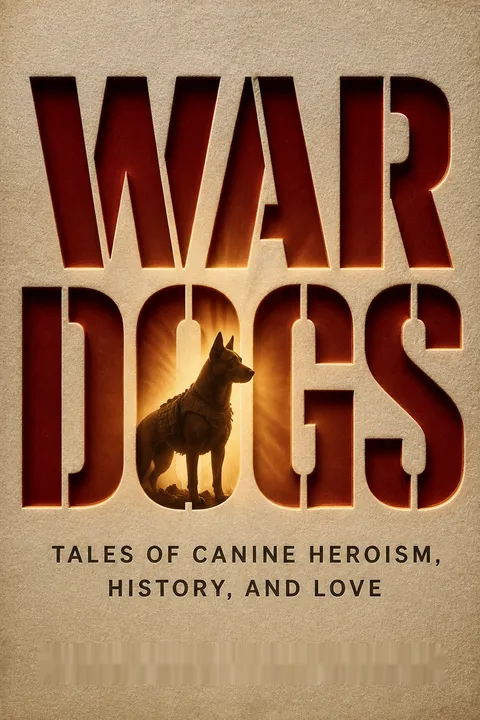
What’s War Dogs: Tales of Canine Heroism, History, and Love by Rebecca Frankel about?
- Comprehensive history and stories: The book explores the history, heroism, and emotional bonds of military working dogs (MWDs) and their handlers, from ancient times to modern wars like Iraq and Afghanistan.
- Focus on training and deployment: It details the rigorous training, deployment, and critical roles dogs play in combat, including bomb detection and tracking.
- Emotional and ethical exploration: Frankel delves into the deep relationships between handlers and dogs, the psychological toll of war, and the ethical complexities of using animals in warfare.
Why should I read War Dogs by Rebecca Frankel?
- Unique war perspective: The book offers a rarely told story of war through the eyes of military dogs and their handlers, providing a fresh, emotional, and humanizing perspective on combat.
- Insight into training and tactics: Readers interested in military operations and canine training will find detailed descriptions of how dogs are prepared for and used in combat zones.
- Emotional depth and tribute: Frankel pays tribute to the courage, loyalty, and sacrifices of both dogs and handlers, making it a moving testament to their bond and heroism.
What are the key takeaways from War Dogs by Rebecca Frankel?
- Dogs as vital assets: Military working dogs are irreplaceable in detecting explosives, saving lives, and supporting troops, often outperforming technology.
- Handler-dog bond: Trust, loyalty, and emotional connection between handlers and dogs are essential for success and survival in combat.
- Sacrifice and challenges: Both handlers and dogs face extreme risks, and the emotional toll of loss and trauma is a recurring theme throughout the book.
What types of military working dogs are featured in War Dogs by Rebecca Frankel?
- Combat tracker dogs: Specialize in tracking human scent to locate insurgents or missing persons, requiring close coordination with handlers.
- Patrol Explosive Detection Dogs (PEDD): Trained to detect explosives and alert handlers to hidden bombs, often working off-leash in dangerous environments.
- Specialized Search Dogs (SSD): Focused on advanced detection tasks, including explosives and narcotics, and operate in complex settings like urban villages.
How does Rebecca Frankel describe the training process for military working dogs in War Dogs?
- Rigorous and realistic training: Dogs and handlers undergo intense physical and tactical training, including obstacle courses and simulated combat conditions at places like Yuma Proving Ground.
- Use of combat villages: Training environments mimic real-world settings, such as Iraqi and Afghan villages, to prepare teams for deployment.
- Emphasis on communication: Handlers learn to interpret their dogs’ behavior and build seamless partnerships based on trust and clear commands.
How has the US military’s use of war dogs evolved, according to War Dogs by Rebecca Frankel?
- Late official adoption: The US formally integrated dogs into the military during World War II, with over 10,000 dogs serving, after informal use in earlier conflicts.
- Cyclical program history: War dog programs expand during conflicts and are often dismantled in peacetime, leading to repeated loss of expertise and the need to rebuild for each new war.
- Modern resurgence: After a decline post-Vietnam, dogs were reintroduced in Iraq and Afghanistan, becoming central to countering IED threats and modern military operations.
What are the emotional and psychological challenges faced by military working dogs and handlers in War Dogs by Rebecca Frankel?
- Canine PTSD: Dogs can develop post-traumatic stress disorder-like symptoms from combat exposure, sometimes requiring retraining or early retirement.
- Handler stress and fear: Handlers face immense pressure, knowing their lives and those of their comrades depend on their dog’s performance, and must manage fear and responsibility.
- Therapy and healing: Therapy dogs are deployed to help soldiers cope with combat stress and PTSD, providing emotional support and encouraging recovery.
How does War Dogs by Rebecca Frankel explain the bond between handlers and their dogs?
- Mutual trust and reliance: The mantra “Where I go, my dog goes. Where my dog goes, I go” encapsulates the inseparable bond essential for survival in combat.
- Emotional connection: Handlers often describe their dogs as family, sharing deep affection and loyalty that helps them cope with the stresses of war.
- Impact on performance: A strong bond improves communication and effectiveness, with handlers learning to read subtle cues and dogs responding to their handler’s guidance.
How effective are military dogs compared to technology in bomb detection, according to War Dogs by Rebecca Frankel?
- Dogs outperform technology: Despite billions spent on electronic devices, dogs remain the most effective at detecting explosives in complex environments.
- Limitations of machines: Devices like Fido sensors are sensitive to environmental factors and prone to failure, while dogs can adapt and respond dynamically.
- Complementary roles: Technology is used to supplement, not replace, canine teams, with handlers trusting their dogs’ instincts in life-or-death situations.
What are the ethical considerations of using dogs in war, as discussed in War Dogs by Rebecca Frankel?
- Acknowledges ethical complexity: The book recognizes legitimate arguments on both sides but emphasizes the reality that dogs are heavily relied upon in military operations.
- Focus on bond and sacrifice: Dogs are portrayed as sentient partners who share trauma and healing with handlers, complicating the ethical landscape.
- Historical and ongoing challenges: The fate of dogs after wars, including abandonment or euthanasia, and the emotional pain of handlers, are discussed as ongoing ethical issues.
How does War Dogs by Rebecca Frankel address the losses and sacrifices of military working dogs and handlers?
- Stories of fallen heroes: The book recounts the deaths of handlers and dogs in combat, honoring their memory through detailed narratives and memorial traditions.
- Memorials and rituals: Military units hold ceremonies, eulogies, and maintain memorial plaques to commemorate fallen dogs and handlers, treating them as comrades-in-arms.
- Record-keeping challenges: There is a lack of centralized records tracking casualties, highlighting the need for better recognition and support for these teams.
What are the best quotes from War Dogs by Rebecca Frankel and what do they mean?
- “Where I go, my dog goes. Where my dog goes, I go.” — Emphasizes the inseparable bond and mutual dependence between handler and dog.
- “The dog will often rather lay down life itself than betray its trust.” — Highlights the profound loyalty and willingness of dogs to sacrifice for their handlers.
- “If there are no dogs in heaven, then when I die I want to go where they went.” —Will Rogers — Captures the deep love and respect humans have for dogs, especially those who serve in war.
- “Shortcuts get people killed.” — Underscores the high stakes and necessity of thorough training and discipline in military dog work.
Download PDF
Download EPUB
.epub digital book format is ideal for reading ebooks on phones, tablets, and e-readers.








