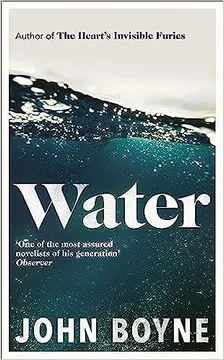


Plot Summary
A Name Left Behind
Vanessa comes from Dublin to a remote island after her husband, Brendan Carvin, has been convicted and imprisoned. She rents a bare cottage, calls herself Willow Hale, and cuts her blonde hair close so mainland visitors will not recognize her. The quiet is deliberate: strangers have spent a year condemning her alongside Brendan, and she wants space to understand what she knew and what she failed to see.
She throws away her make-up and removes the batteries from the radio, shutting out the public argument. A photograph of her daughters, Emma and Rebecca, remains on the table. When Rebecca reads her first message from the island, then blocks her again, Vanessa understands that distance has not yet repaired their relationship.
Vanessa’s reinvention is practical before it is emotional. A new name, a severe haircut, and the silence of the cottage give her control over how others encounter her, but they cannot erase her family’s history or her own uncertainty about it. The photograph is the counterweight to her attempted disappearance: she keeps her daughters visible even while one of them refuses contact. Her wish to become unrecognizable is therefore double-edged. She seeks freedom from public judgment, yet also fears that anonymity might become another way of avoiding the questions that brought her to the island.
The Island Takes Measure
Islanders quickly identify Willow as the mainland woman in Peadar Dooley’s cottage and worry that its poor insulation will kill her. Mrs Duggan barges in to demand that she stop feeding Bananas, then recounts how islanders drove two gay men from the same cottage. Willow challenges her prejudice but learns that resistance can tire as quickly as it arrives.
She also meets Ifechi, a Nigerian-born Catholic priest who offers the church as a quiet refuge. When she visits, she notices teenage Evan Keogh leaving confession and sees Tim Devlin, the new pub’s owner, striking his knee in distress. The island offers company, but each familiar face seems to carry a private history that Willow cannot yet read.
The island is neither a clean refuge nor a simple moral alternative to Dublin. Mrs Duggan’s bullying shows how a small community can enforce conformity at close range, while Ifechi’s welcome offers a different model of belonging, one based on invitation rather than inspection. Willow’s first instinct is to judge the islanders, but her own habits of silence make her wary of claiming easy moral superiority. The church scene quietly establishes a network of concealed distress: Evan’s private ritual and Tim’s visible agitation are clues, not explanations. Her exile begins to turn outward, toward other people’s stories.
The Warning She Buried
In memory, Vanessa describes a marriage that looked comfortable but gave Brendan the greater share of authority. He wanted children immediately, expected Vanessa to abandon contraception, and showed little interest in their daughters when they were young.
Emma became Rebecca’s trusted companion, while Vanessa kept herself busy with the polished routines of an affluent Dublin life. At fourteen, Emma asked for a lock on her bedroom door because Brendan woke her at night; Vanessa refused, fearing a fire and accepting his explanation that he was only saying goodnight.
Later, Peggy Hartman hinted that something was wrong around Brendan’s work, but he dismissed Peggy as a drinker and Vanessa let the matter drop. On holiday in Wexford, Emma disappeared. The Gardaí found her dead in the sea.
Vanessa’s failure is presented not as a single conscious decision but as a pattern of choosing the explanation that costs least in the moment. Emma’s request for a lock is concrete and intelligible, yet Vanessa treats it as a household inconvenience; Peggy’s warning is similarly neutralized by Brendan’s attack on her credibility. These scenes expose how a family’s ordinary comforts can become a defense system for the person who controls them. Vanessa’s polished social life is not the cause of the harm, but it helps her avoid attention to what might disturb it. The result is a guilt that cannot be settled by proving what she did or did not know.
The Arrest Rewrites Everything
Months after Emma’s death, Gardaí arrest Brendan on suspicion of sexually abusing girls in his care at the National Swimming Federation. Reporters descend on Vanessa, and, as complaints multiply, she learns that more than one girl has come forward.
She still insists that the accusations must be mistaken until Rebecca confronts her with the possibility that Brendan also abused Emma. At trial, eight former swimmers describe his crimes. Brendan is convicted and sentenced to twelve years, while his defense probes Vanessa’s marriage and casts doubt on women around him.
Gareth Wilson and Niamh Loomis also face questioning about what they knew. Vanessa sees how quickly a respected sports leader’s status becomes an argument for minimizing harm, even as Rebecca’s anger makes clear that the family’s private damage has not ended.
The arrest breaks the story Vanessa has used to organize her life: Brendan as a prominent professional, their marriage as secure, and herself as a wife with no reason to suspect him. The trial does more than establish criminal facts. It shows how institutions preserve a man’s reputation by treating women’s relationships, personalities, and credibility as evidence against them. Vanessa is not spared this machinery because she is his wife; she becomes another woman examined for signs of culpability. Rebecca’s accusation forces the larger question into the family, where public conviction cannot substitute for a reckoning with Emma’s experience.
The Sea Sees Her
One night, a noise on the cottage roof wakes Vanessa; the culprit is Bananas, the cat, but she cannot return to sleep. Remembering Emma’s death, she walks down to the shore and enters the cold water, sinking beneath the surface before forcing herself back up. On the path home, she sees Luke Duggan, Mrs Duggan’s youngest son, watching from the farm.
In defiance, she walks naked to her cottage. Luke later visits to apologize for seeing her and warns her that swimming alone is dangerous. Their conversation reveals his lonely life tending the family farm, though he does not ask her to solve it. Attraction grows between them, and they begin a casual, mutually chosen affair that gives Vanessa physical pleasure without demanding promises.
The sea draws Vanessa toward the grief she has tried to contain, but her return to the surface matters: she approaches the boundary between life and death without crossing it. Luke’s presence turns the moment from private despair into an encounter, though not a rescue. Their relationship gives Vanessa a kind of bodily agency she had long surrendered to marriage and social expectation. Its informality is important. Neither asks the other to become a cure, a future, or a moral reward. For Vanessa, pleasure becomes a limited but real way of inhabiting the present rather than rehearsing the past.
The Publican's Old Guilt
After months of exchanging little more than greetings, Tim Devlin approaches Vanessa in the old pub and admits that he recognized her from the news. He also reveals his own past: he spent six years in prison after driving drunk and causing his wife’s death, and his son will not see him. Tim describes a life of selfish choices, then frames his failure to grow up as part of his explanation.
Vanessa refuses the absolution he seems to expect. She tells him that naming immaturity does not excuse the harm he chose to do, and that men often leave women to carry the consequences of their actions. Her rebuke does not erase his grief, but it prevents his confession from becoming a request that she comfort him.
Tim’s story creates a sharp contrast with Brendan’s denial, but the novel refuses to treat remorse as automatic redemption. Tim can name his actions and their consequences, yet he still risks centering his own pain. Vanessa recognizes the familiar demand beneath that posture: the harmed person is asked to soothe the person who caused harm. Her refusal is a form of boundary-setting, not a claim that she has become morally pure. She speaks from experience, including her own history of accommodation, and tests whether honesty can mean more than a persuasive account of suffering.
Evan's Empty Boat
When teenager Evan Keogh takes his father Charlie’s boat toward Galway and vanishes, the island gathers on the beach while Luke and two friends search the water. Vanessa brings tea to Evan’s mother, Maggie, who admits that her son wants to paint rather than pursue the football career Charlie has planned for him.
Maggie has not left the island in eight years because Charlie will not let her, and she hopes Evan can escape the same confinement. The search party returns with Charlie aboard and Evan alive, but the boy has a black eye and refuses his mother’s embrace before running up the dunes. His return calms the crowd, yet confirms that home is not safe simply because it is familiar.
Evan’s disappearance makes the island’s limits visible in physical terms: the boat is an attempted route out, and the beach becomes a place where the community can watch him either return or vanish. Maggie’s account gives the crisis its emotional cause. Charlie’s ambition for Evan is not neutral encouragement; it crowds out the boy’s own desire and repeats the control that has narrowed Maggie’s life. Vanessa recognizes the cost of staying silent around family authority. Evan’s black eye supplies evidence the island cannot explain away, while his refusal of comfort suggests that affection alone cannot undo coercion.
A Minister's Convenient Conscience
During the general election, Minister Jack Sharkey visits the island and delivers a sweeping campaign speech in Ifechi’s church. Lucy Wood, a first-time voter who has experienced sexual abuse, asks him about his past support for Brendan’s appointment and his praise of Brendan’s professional record.
Sharkey admits his involvement but emphasizes the swimming medals and presents his regret as a burden he must carry. When Lucy insists that the victims were children, he retreats into careful phrasing and promises safeguards.
Vanessa, sitting in the audience, avoids revealing who she is. Sharkey eventually notices her and shifts the blame toward people who enabled Brendan, a line that earns applause even though he himself helped place Brendan in power.
Sharkey’s speech shows how public accountability can be converted into performance. He acknowledges a decision only after Lucy names it, then distributes responsibility across time, institutions, and unnamed enablers. His language lets him appear chastened without surrendering the prestige he gained from Brendan’s success. Lucy’s precision disrupts this maneuver: she insists on naming the victims as children, not as an abstraction or a regrettable footnote. Vanessa’s silence is complicated. She avoids exposure, but she also witnesses the same social mechanism that once protected her husband, now operating in front of her.
The Call Through Storm
A violent storm traps Vanessa in the cottage when the prison calls and puts Brendan on the line. He complains about prison, insists the conviction is a conspiracy, and asks her to protect the money he wants for an appeal. Vanessa finally tells him she believes he abused the eight girls and Emma, and that Emma’s death followed what he did to her.
Brendan calls her a traitor and attacks her for having depended on him. Vanessa hangs up, then goes outside into the storm, where the wind and rain overwhelm her. She stumbles over Bananas, who has died in the weather. His small body deepens her grief for Emma, Rebecca, Brendan, and the life she once thought she had, without offering the comfort of closure.
The prison call removes the last shelter of marital politeness. Vanessa no longer translates Brendan’s self-defense into a tolerable version of events; she names the harm and refuses to spend their shared savings sustaining his denial. His insult tries to restore the old economic hierarchy, in which dependence would obligate her loyalty. The storm externalizes the violence of that exchange but does not cleanse it. Finding Bananas dead gives her grief an immediate, physical object, one small enough to hold in her mind when the losses of her family remain too large and unresolved.
Two Sisters' Last Secret
Rebecca arrives at the cottage after months of distance, and mother and daughter cautiously begin to talk. Vanessa offers to sell the Dublin house and divide the proceeds with Rebecca, then admits that she still cannot decide whether she knew what Brendan was doing.
Rebecca reveals that Emma told her the night before her death that Brendan had abused her for years. Rebecca had called Emma a liar, rejected her from their room, and locked the door. Vanessa confesses that Emma had asked her for a lock before the holiday and she had refused.
Neither can absolve herself. They cry together, and Rebecca cuts her hair to match Vanessa’s before revealing that she has also taken the Hale name. Their shared surname marks a choice to separate their identities from Brendan’s.
This revelation changes guilt from a private suspicion into a shared, painfully specific memory. Rebecca had blamed Vanessa, but her confession shows that she too rejected Emma when Emma asked to be believed. The book does not use this symmetry to declare the two women equally responsible; their choices differed, and Brendan’s abuse remains the originating violence. Instead, the exchange breaks the isolating logic of blame. Vanessa and Rebecca can tell the truth without turning confession into a demand for instant forgiveness. Their matching hair and reclaimed surname make kinship an active decision, not a denial of what happened.
A Boat Toward Elsewhere
After a year on the island, Vanessa packs her few belongings and leaves the cottage, intending to sell the family home, find work, and build a life among people again. Luke drives her to the dock, while Ifechi comes to see her off. Evan arrives with a rucksack; Maggie gives him money and sends him away to pursue a future beyond Charlie’s farm.
On the boat, Evan says he plans to go to England and change his name. Vanessa tells him she is headed toward Dublin, carrying a past she cannot simply abandon but no longer willing to let define every choice. Their departures do not promise safety or happiness. They create room to choose, which is more than either had while trapped in place.
The ending places Vanessa and Evan beside one another as people leaving different forms of confinement. Evan’s departure is immediate and uncertain; Vanessa’s is measured, supported by the plans she has made with Rebecca and the island relationships she can carry away. Their chosen names connect private reinvention to the need for distance from inherited roles. Yet the novel avoids presenting departure as a clean escape. Vanessa returns toward the mainland that holds her family’s history, while Evan steps toward a place where he knows no one. Beginning again is not erasure. It is the decision to meet the next life without asking the past for permission.
Analysis
Water follows a woman trying to determine whether ignorance can be innocent when it is maintained by habit. Vanessa did not describe herself as a deliberate accomplice; she remembers refusing Emma a lock, accepting Brendan’s explanations, and allowing Peggy’s warning to be dismissed. The novel’s moral pressure lies in the gap between intention and attention. A person can love her children and still fail to hear what they are telling her.
The story also examines how power recruits ordinary virtues. Loyalty becomes silence, politeness becomes avoidance, and a public record of sporting success becomes an argument against taking victims seriously. Brendan’s authority depends not only on his own choices but on institutions and family members who find it easier to defend the familiar man than investigate the unsettling possibility. Jack Sharkey’s campaign speech repeats that pattern in miniature, turning accountability into a polished performance.
The island does not offer a simple cure. Its small community can shelter Vanessa, but it can also drive out outsiders and confine women to roles they did not choose. Luke and Tim provide contrasting encounters with men who carry loneliness and guilt, while Evan’s struggle shows how parental ambition can become another form of possession. These relationships complicate Vanessa’s judgments without making every person’s pain equivalent.
The final movement is not forgiveness so much as shared recognition. Rebecca tells Vanessa what Emma said and admits how she answered. Their failures are distinct, and neither cancels Brendan’s responsibility, but speaking them aloud breaks the family’s isolation. The Hale name becomes a chosen connection between mother and daughter, not a guarantee that the past has vanished. Vanessa leaves with no proof that she is innocent, only a stronger willingness to live without disguising the question.
Review Summary
Water is a powerful novella exploring themes of guilt, complicity, and redemption. Readers praise Boyne's masterful storytelling and character development, particularly his ability to create an authentic female protagonist. The story follows a woman seeking refuge on a remote Irish island after a family scandal. While some found the book too short, most appreciated its emotional impact and thought-provoking nature. Critics noted its exploration of misogyny, Catholicism, and family dynamics. Overall, reviewers found it a haunting and compelling read, eagerly anticipating the next installments in The Elements series.
Characters
Vanessa Hale, known as Willow Hale
A mother in self-exileVanessa is a fifty-two-year-old Dublin woman whose maiden name is Hale and whose married name is Carvin. On the island she adopts the name Willow, trying to create distance from public scrutiny and the life she shared with Brendan. She is observant, self-deprecating, and capable of sharp moral judgment, but she has spent years avoiding conflict when it threatens the household’s order. Her identity as a mother is central to her, even when she doubts her own capacity to understand her daughters. The island gives her time to examine the difference between what she intended and what her silences may have allowed. Her central drive is to find a way to live honestly with uncertainty rather than hide inside the role of the dutiful wife.
Rebecca Hale
The guarded younger daughterRebecca is Vanessa and Brendan’s younger daughter, an independent young woman who protects herself by controlling when and how she speaks to her mother. She is direct, politically alert, and more willing than Vanessa to challenge the stories adults use to preserve their comfort. Her closeness to her older sister Emma shapes her sense of family and her understanding of trust. Rebecca’s distance from Vanessa is not simple indifference; it reflects anger, grief, and the need to make her own judgments. She seeks a life beyond the Carvin family’s public identity and wants her choices, including her name, to belong to her.
Emma Carvin
Rebecca's older sisterEmma is Vanessa and Brendan’s elder daughter and Rebecca’s closest childhood companion. As a child, she is described as calm and receptive, while Rebecca is more demanding and difficult to soothe; the sisters nevertheless form a strong bond. Emma is thoughtful enough to seek privacy as she grows older, and her relationship with Rebecca makes her an important presence in the family even when she is absent from the island narrative. She represents the part of Vanessa’s past that cannot be reduced to public scandal: a daughter with her own needs, relationships, and inner life.
Brendan Carvin
The celebrated sports officialBrendan is Vanessa’s husband and the prominent director of Ireland’s National Swimming Federation. He is ambitious, image-conscious, and attached to traditional ideas about gender and family. Public recognition feeds his sense of importance, while at home he often expects Vanessa to adapt around his moods and plans. He can also behave attentively and generously, which helps explain why Vanessa experiences their marriage as more complicated than a simple portrait of cruelty. His authority in sport and domestic life shapes the choices available to the people around him, making his reputation an important force in the story.
Luke Duggan
The island's gentle farmerLuke is Mrs Duggan’s youngest son, a farmer in his mid-twenties who has remained on the island to help his parents. He is considerate, shy in conversation, and acutely aware of the smallness of his life, though he struggles to imagine a way beyond it. His former relationship with a mainland teacher hints at a world he has sampled but not chosen. With Vanessa, he offers companionship without trying to claim authority over her. His practical knowledge of the sea and his quiet response to other people’s distress distinguish him from the more controlling figures in his family.
Ifechi Onkin
The welcoming island priestIfechi, a Nigerian-born Catholic priest, is a warm and attentive presence on the island. Raised Protestant, he brings his own complicated relationship with faith to a community where religion is often inherited as much as chosen. He invites Vanessa into the church without insisting that she become a believer, offering the building as a place for quiet and reflection. His patience contrasts with the island’s more judgmental forms of social control. He respects the privacy of others, including those whose troubles he can see but will not disclose.
Tim Devlin
The guarded publicanTim runs the island’s newer pub and initially keeps a careful distance from Vanessa. He carries grief and a private history that make him seem unsettled even when he is serving customers. His impulse to talk reveals a man who wants to be understood, but who may still hope that telling his story will secure sympathy. Vanessa’s response forces a distinction between describing pain and accepting responsibility. Tim’s role helps the novel test whether remorse can be honest without becoming another demand placed on someone else.
Mrs Duggan
The island's hard gatekeeperMrs Duggan is Luke’s outspoken mother, a farmer’s wife who treats island customs as rules outsiders must learn quickly. She is abrasive, suspicious, and openly hostile to gay people, and she once helped drive two men away from the cottage Vanessa later rents. Her authority in the family is forceful, particularly in the way she speaks about Luke’s obligations. Yet she is more than a comic busybody: her confidence reflects a community where the same people can offer practical care and enforce damaging limits.
Evan Keogh
The restless young athleteEvan is a teenage islander known for his exceptional football ability, though the sport is not the future he wants. His father imagines a professional career for him, while Evan is drawn toward painting and a life beyond the island. Quiet and watchful, he has a private connection to the church and an intense need to make choices for himself. His friendship with Luke and his relationship with his mother offer glimpses of support, but he remains caught between the future others have planned and the one he hopes to make.
Maggie Keogh
Evan's protective motherMaggie is Evan’s mother, originally from Wicklow, who has spent years living under the constraints of island life and her husband’s authority. She understands the cost of having a future chosen for her, which makes her more sympathetic to Evan’s desire to leave than the island community expects. Her protection is imperfect and shaped by fear, but she wants her son to have options she did not claim for herself. Her quiet honesty with Vanessa creates an unexpected bond between two women who know what it means to be confined.
Charlie Keogh
Evan's ambitious fatherCharlie is Maggie’s husband and Evan’s father. He is determined that Evan use his football talent to pursue a professional future, despite Evan’s lack of interest in the sport. His ambitions reveal how parental hopes can become pressure when a child’s own desires are ignored.
Jack Sharkey
The practiced ministerJack Sharkey is a senior politician and government minister who supported Brendan’s appointment to the swimming federation. He is skilled at speaking to different audiences and smoothing over contradictions without appearing to retreat. His campaign visit to the island exposes the distance between public regret and meaningful accountability. He understands how to claim credit for success while distributing blame for failure.
Lucy Wood
The first-time voterLucy works at the island newsagent and is preparing to vote for the first time. Having experienced sexual abuse herself, she challenges Jack Sharkey about his support for Brendan and refuses to let him blur the distinction between harmed children and adults.
Peggy Hartman
The ignored warningPeggy is married to the director of a related sports organization. She tries to alert Vanessa that troubling information about Brendan may be circulating, but her concern is dismissed through a story that undermines her credibility. Her brief intervention becomes one of Vanessa’s remembered chances to ask more.
Gareth Wilson
Brendan's powerful sponsorGareth is a senior sports official who helped place Brendan in charge of the swimming federation. At trial, he presents himself as unaware of Brendan’s behavior and emphasizes his professional reputation, illustrating how institutional loyalty can protect a leader.
Niamh Loomis
The long-serving secretaryNiamh worked as Brendan’s secretary for fifteen years. During the trial, his defense questions her personal life as a way to imply that she should have noticed what was happening. Her experience shows how women near powerful men can be blamed for failing to uncover misconduct.
Dr Jennifer Soren
The fertility specialistDr Soren examines Vanessa and Brendan when they struggle to conceive. Her straightforward medical questions expose Brendan’s shame and defensiveness around sexuality, while Vanessa initially accepts her advice as practical and necessary.
Peadar Dooley
The absent landlordPeadar owns the austere island cottage Vanessa rents. Though he is absent from the island, his house becomes the protected space where she can withdraw from public scrutiny and begin rebuilding her life.
Mícheál Óg Ó’Ceallaigh
The island taxi driverMícheál Óg is the island’s taxi driver and the first local to take Vanessa from the dock to her cottage. His small practical role establishes how closely travel and daily life are tied to the island’s limited transport.
Plot Devices
Vanessa's assumed name
A shield from recognitionVanessa takes her maiden surname, Hale, and the middle name Willow when she settles on the island. She also cuts her hair and changes her appearance, hoping the combination will keep strangers from connecting her to Brendan’s trial. The disguise gives her control over first impressions and lets her move through island life without explaining her past. It cannot protect her from her own memories, and its meaning changes when Rebecca also chooses the Hale name. The device links anonymity with the harder question of whether a person can separate herself from a family identity shaped by someone else.
Water and the shore
Grief made physicalWater joins the story’s central losses to its ordinary geography. Vanessa drinks from the cottage tap, walks along cliffs, remembers swimming with Brendan, and returns repeatedly to the sea where Emma died. A night swim brings her close to her grief, while Evan’s missing boat turns the same water into a threat to the island community. The sea is not a symbol with one fixed meaning: it sustains life, enables escape, and can take people away. Its changing force reflects Vanessa’s movement between the wish to disappear and the effort to return to living.
The island refuge
Distance that exposes secretsThe remote island seems to offer Vanessa a way out of public scrutiny, with few roads, limited services, and no internet in her cottage. That isolation also puts her close to other people’s private lives. The islanders know who belongs where, recall previous tenants, and observe one another across farms and beaches. Vanessa finds company in Ifechi, Luke, and others, but also witnesses prejudice, family control, and political evasions. The setting therefore does not simply heal her. It makes escape difficult while giving her the time and human encounters needed to examine what happened.
Messages and profile pictures
Distance measured in signalsVanessa watches Rebecca’s online status, message ticks, and changing profile pictures because they are among the few signs of what her daughter is doing. A message can be read without receiving a reply; a photograph can vanish when Rebecca blocks her. These small digital signals sharpen Vanessa’s awareness of how little access she has to her daughter. The phone also carries a photograph of Emma and Rebecca, preserving a family image that Vanessa cannot recreate. When Rebecca eventually visits in person, the relationship moves beyond those partial, carefully controlled traces.
The storm and prison call
A confrontation without refugeThe storm confines Vanessa indoors just as Brendan’s prison call brings their marriage back into the cottage. His insistence that he is innocent collides with the truth she has come to face, and her words finally break the old pattern of protecting his feelings. The weather amplifies the physical cost of that confrontation, while Bananas’s death gives the night a second loss that Vanessa must absorb. The storm does not purify her or settle her guilt. It forces her to experience grief without the old distractions of public status, marital routine, or easy explanation.
About the Author
Other books by John Boyne




Download PDF
Download EPUB
.epub digital book format is ideal for reading ebooks on phones, tablets, and e-readers.








