

Plot Summary
The Flooded Graves
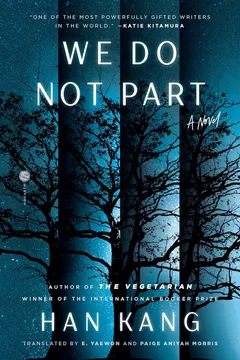
After researching a massacre for an earlier book, writer Kyungha dreams of black tree trunks rising from graves as the sea floods over them. Years later, living alone in Seoul, she sinks into near-starvation, writes a will she cannot address, and spends weeks in bed. A small act breaks the spell: she throws away the accumulated trash, walks outside, and eats porridge in a shop.
She has not made peace with living, but recognizes that death has passed close by. The dream returns as she struggles to write a farewell letter, and she finally understands that she must climb away from the bones already swallowed by the water if she is to keep living.
Kyungha’s crisis is not presented as a dramatic attempt so much as a gradual withdrawal from the conditions that sustain a body: food, movement, contact, and a future recipient for her belongings. The dream gives that withdrawal a physical geography. Some graves are already underwater, but others remain above the tide, so survival becomes a choice to move toward what can still be protected. This is also the novel’s first refusal of a clean division between private despair and public atrocity. The massacre enters Kyungha’s sleep, yet the dream also speaks to her immediate, individual danger.
Ninety-Nine Black Trees
Kyungha and Inseon, a documentary filmmaker she met early in her working life, have been close for decades, though distance and family obligations have thinned their contact.
After Kyungha describes the dream, they plan a film installation: ninety-nine upright logs, blackened like the dream’s trees, planted in Inseon’s Jeju field and filmed through winter. Inseon offers her inherited land and the practical knowledge to make it possible. The project waits through years of missed chances.
Then Kyungha, overwhelmed by her private collapse, tells Inseon to abandon it. Inseon has already gathered and dried more than a hundred logs, and has begun shaping them into human-sized forms. The promise has become real even as its originator tries to withdraw.
The project begins as an image Kyungha hopes to place outside herself, but Inseon turns it into labor: collecting timber, drying it, and preparing a site before the ground freezes. Their different responses reveal a quiet imbalance in the friendship. Kyungha can retract an idea when its meaning frightens her; Inseon has already accepted responsibility for what the idea demands. The logs are neither straightforward memorial markers nor representations of individual victims. Their human scale makes absence bodily, while their unfinished state leaves the work open. Inseon’s persistence is care expressed through material effort, not reassurance.
The Three-Minute Needles
In late December, Inseon summons Kyungha to a Seoul hospital and asks her to bring identification. Inseon has severed two fingertips with an electric saw in her Jeju workshop; surgeons have reattached them, but carers must prick the wounds every three minutes to keep blood flowing and the nerves alive. She faces weeks of pain and expense, with no close family to take over.
Snow begins falling outside the ward as the women confront how long they have let their friendship go unattended. Then Inseon asks Kyungha to reach her isolated Jeju house before nightfall and give water to Ama, the surviving budgie. The bird has food for only a short time. Kyungha agrees, though the storm makes the journey dangerous.
The hospital scene makes survival an unsentimental practice. Inseon’s fingers can be saved only through repeated injury, and the treatment turns care into a task performed on a punishing schedule. Kyungha initially feels relief that she is not the one administering the needles, then recognizes the distance that relief exposes. Inseon’s request about Ama converts that recognition into action. The bird is physically slight, dependent on routine, and unable to explain its needs. By making Kyungha responsible for it, Inseon asks her to cross the gap between sympathy and attendance.
Snow Over Jeju
Kyungha catches the last flight to Jeju, then rides buses through a storm that cancels air travel and threatens to close the upland roads. The falling snow recalls the story Inseon once shared about running away from home as a teenager. She hated her mother and her island so intensely that she fled to Seoul, fell from an icy embankment, and lay unconscious for ten days.
Her mother later explained that, as a child, she had seen snow cover the murdered faces of her own family in 1948. Snow therefore joins two moments of fear: the massacre and the daughter nearly lost decades later. Inseon survived the fall, returned to Jeju, and heard the history that transformed her understanding of her mother.
The memories prevent the journey from becoming a simple rescue mission. Snow is at once weather, a trace left on a body, and a trigger that carries Inseon’s family history into Kyungha’s present. The teenage flight also complicates filial love: Inseon did not leave because her mother mistreated her, but because ordinary closeness had become unbearable to a furious adolescent. The mother’s account of the massacre does not erase that anger. Instead, it gives it an origin outside the household, while leaving Inseon to live with feelings that cannot be sorted neatly into blame, gratitude, or reconciliation.
The Last Bus Uphill
In the coastal town nearest Inseon’s village, Kyungha cannot find a lantern or shovel before the shopkeeper locks up. At a bare bus stop she joins an elderly woman who is hard of hearing and waiting in the snow. Their brief encounter unsettles Kyungha, who recognizes something of Inseon’s mother in the woman’s muted kindness.
A final local bus carries them into the uplands. The elderly passenger gets off at a deserted stretch of road, leaving Kyungha with the driver as the storm intensifies. When the bus stops to chain its tires, Kyungha leaves it and tries to find Inseon’s house on foot. At a fork in the snow-covered paths, she chooses the wrong track and falls into a dry streambed.
The elderly woman is important partly because Kyungha cannot establish who she is or what she needs. Their contact is sparse, but Kyungha’s attention shifts from self-preservation toward a stranger whose vulnerability resembles the situation she has been sent to address. The bus driver’s routine knowledge contrasts with Kyungha’s dependence on fragments of memory: a tree, a shop, a path. Once she leaves the bus, that borrowed security disappears. The fall into the streambed makes the landscape more than a setting. It conceals the traces of both ordinary passage and historical destruction.
Ama Beneath the Snow
After climbing out of the streambed, Kyungha reaches Inseon’s house and finds Ama dead beside an empty water dish. She wraps the bird in a handkerchief, seals her in a tin, and buries her beneath the tree where Inseon had buried Ami, the other budgie. Exhausted and ill, Kyungha takes shelter as the power fails.
By the next afternoon, she hears a bird call and sees Ama alive in her cage. In the nearby workshop, Inseon appears uninjured, though she should still be in hospital in Seoul. They warm themselves by a woodstove and settle on the name We Do Not Part for the project. Kyungha cannot determine whether this is dream, visitation, or another kind of reality.
The impossible return of Ama does not cancel the grief of finding her dead. The bird’s altered state instead destabilizes Kyungha’s assumptions about sequence, time, and the boundary between the living and the dead. Inseon’s intact fingers carry the same uncertainty: the scene may be a wish, a memory, or a meeting that the novel refuses to classify. Naming the project in this unstable space makes its purpose more intimate. It is no longer only a memorial made for absent people. It also describes the stubborn persistence of connection when physical presence cannot be trusted.
The Sisters Find Home
Inseon recounts what her mother experienced as a girl in Jeju in 1948. Her mother and older sister were away carrying food when soldiers and police killed their family and burned their upland village. Returning, the sisters searched among the bodies for their parents and siblings. Their eight-year-old sister was missing, then they found her wounded in the family yard, alive but barely breathing.
The older girls carried her to a distant cousin’s home, where curfew kept them from seeking medical help. Inseon’s mother pricked her own finger so the child could suck blood and survive the night. Later, a woman who witnessed a separate execution on the coast described soldiers shooting civilians and throwing bodies into the sea.
The family story replaces the distant scale of a massacre with tasks carried out by children: wiping snow from faces, searching a burned yard, and keeping a wounded sister alive without a doctor. The mother’s remembered finger becomes a concrete measure of care, but also of how violence enters the body and remains there. The coastal witness extends the account beyond one family, describing a method of killing designed to erase evidence through the tide. The two testimonies resist historical simplification. They show both the intimate work of survival and the deliberate machinery that made survivors doubt whether anyone would ever know.
The Missing Brother's Papers
Inseon shows Kyungha the records her mother collected while searching for her missing brother. He had hidden in the hills after the 1948 killings, was captured, and later disappeared from prison records after a transfer marked as a handover to the military or police.
Documents connect him to prisoners likely killed at Gyeongsan’s cobalt mine, where thousands were shot and buried, but his remains were never identified. Inseon’s mother visited the mine and joined other bereaved families, yet the search failed to recover him.
The archive also reveals the fate of Inseon’s father: imprisoned after the village raids, he survived because he was transferred away before mass executions. After serving his sentence, he returned to Jeju and eventually met Inseon’s mother.
The archive does not deliver the certainty that a conventional mystery promises. It narrows possible routes and likely execution sites, but the brother remains without a confirmed grave. Records expose both what the state documented and what its euphemisms concealed: a transfer entry can mark the final step toward a killing. The mother’s years of research are therefore an act of resistance against imposed disappearance, even when they cannot restore a body. The father’s survival offers no neat counterweight. He returns with the consequences of imprisonment, while the family must build intimacy around lives shaped by violence and silence.
The Caregiver's Winter
Inseon explains that after her mother’s memory began failing, she returned to Jeju, left filmmaking, and cared for her in the family house. At night, her mother sometimes mistook her for a sister killed in childhood, clung to her, and begged for help. Inseon grew exhausted and wished to die, yet continued the daily work of feeding, washing, and keeping her mother safe.
After her mother died, Inseon began researching the massacre, gathering testimonies and documents while carving wood during the day. She found the land where her father’s childhood home had stood and began preparing the black-tree project there. The logs were not a commission or a return to filmmaking. They were the one work she could imagine doing with Kyungha.
Inseon’s account gives her self-sufficiency a cost. The woman who appears composed in the hospital and workshop has endured a form of caregiving that collapsed the boundaries between mother and daughter, past and present, sleep and vigilance. Her mother’s requests for rescue could not be answered by effort alone, yet Inseon kept answering them in practical ways. The research and the carved logs extend that labor beyond the household. Neither can recover the dead or undo the years of care. They provide forms for attention, allowing Inseon to remain with histories that official silence and personal exhaustion might otherwise leave unheld.
A Match Against Darkness
Inseon leads Kyungha through the snow toward the stream and the land where the project’s trees will stand. Kyungha follows her footprints as the candle dwindles. Along the way, Inseon remembers her mother’s overwhelming tenderness and the later years when dementia made that tenderness painful, intimate, and impossible to escape.
The women reach the snowbank near the old village, where Kyungha cannot tell whether Inseon is alive in the workshop or present with her in the storm. The candle goes out. Kyungha strikes matches, imagining she might find Inseon’s hand, or that Inseon may have awakened in hospital. On a final attempt, the match catches, leaving their meeting unresolved but briefly lit.
The ending does not settle whether Kyungha has survived, whether Inseon is a spirit, or whether the meeting is a dream shaped by grief. That uncertainty is not a puzzle withheld for a later solution. It places the reader inside the novel’s central problem: how to acknowledge the dead without pretending they can be restored, and how to continue caring for the living without guaranteeing that care will succeed. The footprints and failing flame make companionship temporary and physical. Kyungha’s repeated effort to relight the wick becomes a modest action against erasure, not a promise that darkness can be defeated.
Analysis
We Do Not Part makes remembrance a bodily practice. People search fields, preserve clippings, feed a bird, tend injured fingers, and try to identify remains, while the body repeatedly proves vulnerable to cold, hunger, illness, and violence. Historical atrocity is not kept safely in the past: it shapes family habits, silences, and the sensations through which later generations encounter snow, darkness, and touch.
The novel also refuses to equate testimony with recovery. The archive can expose patterns of imprisonment and execution, yet Jeonghun’s fate remains unconfirmed. Inseon’s mother can tell what she witnessed, but memory returns in fragments and is altered by dementia. The black-tree project offers a form for grief without pretending that art can replace the dead or close the record. Its value lies in making attention collective and material.
Kyungha and Inseon approach survival differently. Kyungha retreats until a friend’s request gives her a task; Inseon persists by converting care into repeated work. Neither method is presented as cure. Their connection matters because each keeps the other from being reduced to a solitary witness. The ending’s uncertain encounter preserves that relation without supplying proof of rescue. A match catches, briefly. The novel’s hope is similarly limited but real: not that the past can be undone, but that someone may continue looking, listening, and refusing to leave the dead entirely alone.
Review Summary
We Do Not Part is widely praised as a haunting, poetic masterpiece exploring the 1948 Jeju massacre, in which approximately 30,000 Koreans were killed. Reviewers highlight Han Kang's extraordinary prose, rich symbolism—particularly snow imagery—and the dreamlike narrative blending past and present. The deep friendship between protagonists Kyungha and Inseon resonates strongly, as does the novel's meditation on intergenerational trauma and collective memory. Some readers found the pacing slow or the surreal elements challenging, but most consider it among Kang's finest works, comparable to or surpassing Human Acts.
Characters
Kyungha
The grieving writerA writer in Seoul whose earlier book about a massacre has left her vulnerable to recurring nightmares. Kyungha is attentive to the body and to small sensory facts, but that precision does not protect her from depression, illness, or the temptation to withdraw from other people. She can be hesitant and self-accusing, especially when she fears that her work has burdened someone else. Her long friendship with Inseon gives her a reason to act when her own desire to live has weakened. The story follows her through an uncertain boundary between memory and present experience, where carrying out a practical favor becomes inseparable from facing historical suffering.
Inseon
The documentarian woodworkerKyungha’s longtime friend, a photographer and documentary filmmaker who later turns to carpentry and returns to Jeju to care for her mother. Inseon is resourceful, patient, and deliberate, able to keep working through setbacks without pretending they are easy. She tends to show feeling through sustained attention and practical acts rather than explanation. Her films focus on people whose lives have been crossed by history, while her own family’s past remains difficult to approach directly. She gives Kyungha’s dream a physical form through the black-tree project, demonstrating how a private image can become shared work.
Inseon's mother
The keeper of memoryA Jeju woman who survives the 1948 killings as a child and carries the memory of her murdered family into adulthood. She is both a devoted mother and a person shaped by grief that she rarely voices directly. Her care for Inseon is expressed through food, touch, and habits of protection; her memories surface unevenly, especially as dementia alters her sense of time and identity. She also undertakes a determined search for her missing brother, preserving documents and testimonies that connect her family’s loss to a wider history.
Inseon's father
The returned prisonerA quiet Jeju man who survives the destruction of his village, imprisonment, and torture. He lives with the physical and social consequences of being treated as politically suspect, even after returning to the island. His relationship with Inseon’s mother develops cautiously, under the pressure of surveillance and communal stigma. His survival does not make him untouched by history; it makes him a witness whose silences and habits carry its effects into family life.
Jeonghun
The missing brotherInseon’s maternal uncle, remembered by his sisters as affectionate, quick-witted, and fond of sharing food. After the village killings, he hides in the hills but is eventually captured and imprisoned. Records suggest that he was transferred into military or police custody, but they do not establish where his remains lie. His uncertain fate drives his sister’s long search and makes him a person both preserved in family memory and obscured by official paperwork.
Inseon's aunt
The elder sisterInseon’s mother’s older sister, who returns with her to the devastated village and helps search for their family. Practical and protective, she takes responsibility for the wounded youngest sister and helps carry her to safety. Her life later takes her away from Jeju, but her memories and family ties remain central to the history Inseon inherits.
The elderly witness
A reluctant eyewitnessA woman who saw civilians, including children and mothers with infants, gathered and shot on a Jeju beach. For years she avoids discussing what happened, then answers a researcher who asks whether children were among the victims. Her testimony conveys both the event’s physical horror and the long cost of being made to remember it aloud.
Ama
The white budgieInseon’s white budgie, quiet and observant, who echoes Inseon’s humming and depends on careful routines. Ama’s smallness makes her especially vulnerable to neglect, cold, and thirst. Her presence gives Kyungha a concrete responsibility during the storm.
Ami
The talking budgieAma’s companion, a budgie who can imitate words and participate in Inseon’s daily routines. His apparent conversational ease challenges Kyungha’s assumptions about what communication requires. Inseon treats him as a companion rather than a clever imitation machine.
The hospital carer
The steady attendantA hired carer who stays beside Inseon and repeatedly tends her reattached fingertips. Her calm, skilled movements make visible the demanding routine required to preserve Inseon’s nerves and healing tissue.
The bus driver
The last route guideA local driver who continues through the blizzard and warns Kyungha that service into the uplands is ending. He knows the route and its residents better than she does, but cannot remove the dangers of the journey.
Plot Devices
The snow dream
A warning that returnsKyungha’s vision of black trunks, buried bodies, and rising seawater first echoes her research into mass death, then becomes a personal image of the danger she faces during her depression. Snow repeatedly links the dream to Inseon’s family memories and the 1948 killings. The dream does not function as a coded prophecy with one stable meaning. It changes as Kyungha learns more, forcing her to reconsider whether she is seeing history, her own wish to disappear, or both.
The black-tree project
A memorial made by handKyungha’s proposal to plant ninety-nine blackened logs in a Jeju field turns an image from her dream into a shared act of making. Inseon gathers and shapes the timber even after Kyungha withdraws from the plan. The project connects art to physical labor and to the problem of representing people whose bodies were buried, scattered, or never identified. Its unfinished status matters: the work can preserve attention, but cannot claim to restore the dead.
The family archive
Evidence against disappearanceInseon’s mother preserves newspaper clippings, prison-transfer records, letters, photographs, and testimony related to her missing brother and the massacres. Inseon adds to this collection through her own research. The papers link family memory to public history, showing how official records can both reveal a likely fate and conceal the violence behind administrative language. The archive cannot identify every body or settle every question, but it gives the bereaved something concrete to examine, compare, and pass on.
Birds and shadows
A border between livesAma and Ami make care immediate through their dependence on water, food, warmth, and routine. Their shadows and calls also blur the border between the living and the dead, especially during Kyungha’s snowbound night. The birds are never reduced to simple symbols: they remain particular creatures whose vulnerability demands attention. Their appearances help the novel hold grief and daily responsibility together without deciding whether the uncanny events are supernatural, remembered, or imagined.
Download PDF
Download EPUB
.epub digital book format is ideal for reading ebooks on phones, tablets, and e-readers.








