

Key Takeaways
Read Native comedy through the history of land theft and forced performance.
The stage was never neutral. In the late 1800s, federal rules confined Native people to reservations and restricted their movement. Some performers joined Wild West shows to earn money or escape reservation surveillance, but others were coerced. Sitting Bull was made to choose between prison and performing with Buffalo Bill. Native children faced a different kind of forced performance in residential schools, institutions that separated children from families and suppressed their languages and cultures. The government also used blood quantum, arbitrary percentage labels for Native ancestry, to decide who qualified for rights and resources.
Choice existed within coercion. Some Wild West performers negotiated pay and conditions, while others faced mistreatment or punishment for refusing. The history is not simply a tale of helplessness or consent: it shows how control of land shaped the options available onstage.
What's striking is how the book makes performance part of the machinery of dispossession, rather than a colorful detour from political history. The same institutions that restricted movement could also stage Native people as spectacles or as evidence of successful assimilation. That connection helps explain why visibility alone is not necessarily liberation. At the same time, treating every performer as only a victim would erase the ways people sought wages, mobility, and room to maneuver inside coercive systems. The essential distinction is between agency and freedom: a person may make choices without having fair choices.
Ask who controls the image, not merely whether Native faces appear.
Visibility can distort. Vaudeville advertisements promised Native performers but often featured white actors in headdresses. Native students from the Carlisle school appeared in public as polished proof that forced assimilation worked, while the school concealed the deaths and abuse behind its performances. Film and television repeated invented costumes, accents, and histories, making stereotypes familiar to audiences who had little access to Native perspectives.
Native artists pushed back early. In 1911, Native delegations protested films that misrepresented their lives. Jim Thorpe later promoted Native casting, and the Indian Actors Association pressed studios for accurate roles, fair pay, and better treatment. These campaigns were not merely requests for more screen time. They challenged who had the authority to define Native identity and which stories the public was allowed to see.
The distinction between representation and self-representation is central here. A screen can contain Native faces while still denying Native people control over character, context, or employment. In media studies, this is a question of authorship as much as visibility: who selects the image, and who benefits from it? The historical protests also complicate the claim that audiences simply needed to become more enlightened. Native viewers and performers were identifying the harm from the beginning. The problem was not a lack of warning. It was an industry with little incentive to listen.
Let humor puncture imposed stories without reducing joy to survival.
Satire turns policy into material. Muscogee Creek writer Alexander Posey invented Fus Fixico, a fictional character whose newspaper letters mocked the government’s allotment policy. Allotment divided communal Native lands into individual parcels and opened remaining land to outside interests. Through a comic voice, Posey exposed the absurdity of policies that claimed to help Native people while taking their land and reshaping their lives.
Comedy can also be playful. The 1491s, a Native sketch troupe, made videos that mocked stereotypes and Native social habits alike. Their short film Smiling Indians countered the familiar image of Native people as solemn and frozen in the past. Their work made contemporary Native life visible through laughter, not only through accounts of harm. Humor here is both a way to criticize power and a form of cultural expression in its own right.
What's valuable is the refusal to make Native humor carry only one burden. Satire can expose policy and prejudice, but laughter also belongs to ordinary social life, play, and artistic experimentation. That matters because audiences often accept marginalized people as subjects of tragedy more readily than as comic authors. The 1491s' willingness to joke about their own communities also resists the idea that representation must be solemn to be truthful. Still, self-directed comedy is not a universal test of authenticity. No single comic style can stand in for the range of Native experience.
One visible Native comedian can make an unseen career imaginable.
Charlie Hill made possibility visible. Raised in Oneida, Wisconsin, Hill became the first Native American comedian to appear on The Tonight Show. His 1977 appearance on The Richard Pryor Show introduced his political stand-up to a national audience. He joked about Native identity and the theft of Native land in his own voice, without pretending to fit the old Western image.
The effect traveled beyond ratings. Native comedians in the book describe seeing Hill on television and realizing that stand-up could be a path for them, too. His influence reached performers who had never encountered a Native comic in a club or on television. Hill did not remove the barriers facing Native artists, and his career later lost momentum, but his breakthrough created a reference point that other comedians could build on.
A public example can change what people regard as a plausible future. That is different from simply inspiring an individual: Hill offered evidence that a Native comic could occupy a national stage while speaking from a Native point of view. In organizational terms, representation expands the imaginable applicant pool and can create informal mentorship across generations. Yet a breakthrough can also become a convenient substitute for deeper change. One successful appearance does not guarantee sustained hiring, fair access, or a durable career. The book's strongest implication is that visibility matters most when it opens doors for others.
Talent cannot erase an industry built around distance and access.
Geography sets the price of practice. Ojibwe comedian Jonny Roberts sometimes drove five hours from the Red Lake Nation to Minneapolis for a seven-minute open mic that paid nothing. The trip cost about $120 round-trip, and opportunities were scarce enough that he could go weeks without stage time. By contrast, Navajo-Hopi-Tohono O’odham comedian Brian Bahe could perform around twelve times a week in New York.
Family and travel compound the gap. Adrianne Chalepah, a mother of four, described doing only a few shows a month, each requiring multiple days of travel. Moving to Albuquerque made access easier without requiring her to uproot her children to Los Angeles. These careers show that experience depends not only on talent or persistence, but also on transportation, time, money, childcare, and proximity to comedy networks.
The contrast between Roberts and Bahe turns an abstract idea of opportunity into a measurable difference in rehearsal time. The usual story of an aspiring comic who simply works harder assumes that stage time is equally available. It is not. Geography, caregiving, and disposable income determine how often someone can test material and meet industry gatekeepers. This is a broader labor-market problem: institutions often mistake access to opportunity for individual merit. The book does not suggest that remote comedians lack ambition. It shows the hidden costs required to pursue it.
Treat community stages as real comedy infrastructure, not consolation prizes.
Comedy already had local stages. A powwow emcee, or master of ceremonies at a Native gathering, keeps events moving and often fills pauses with jokes, teasing, and crowd work. Comedians in the book describe learning public performance in these settings, as well as at reservation events and community halls. These stages can be far from the clubs and television networks that define mainstream comedy, but they develop timing, audience awareness, and trust.
Local humor can travel without becoming generic. Navajo comedian Vincent Craig sold more than twenty thousand copies of his homemade recordings across the Four Corners region. His jokes and songs drew on details familiar to Navajo listeners. Charlie Hill called this kind of work the private stash: comedy aimed especially at people who share the cultural context. Its value does not depend on whether an outside audience understands every reference.
The book expands the meaning of a comedy career by refusing to treat clubs and television as the only legitimate stages. Community performance can be infrastructure: it teaches craft, circulates local stories, and gathers audiences who may not be served by commercial venues. The private stash also challenges the assumption that successful humor must translate seamlessly to outsiders. At the same time, local scenes can be underfunded and difficult to sustain, as long drives and makeshift equipment show. Recognition should not require abandoning a community audience, but artists need resources to choose their reach.
Judge a joke by its effects, then make room for repair.
Intent does not end the argument. Comedy team Williams and Ree built a long career on jokes about their own ethnic difference, but their material drew anger when they hosted a memorial concert for young hockey players killed in a bus crash. The occasion and the audience changed how the routine landed. The pair said they had not considered the event's emotional weight; many attendees still found the jokes inappropriate.
Listening can change the outcome. Adrianne Chalepah challenged Ralphie May after a clip circulated of him insulting Native people. May initially defended himself, then spoke with Chalepah, acknowledged the harm, and apologized publicly. He later performed with her at a benefit for a Native charity. The episode does not make the original remarks harmless, but it shows a path from confrontation to accountability rather than denial.
This tension is useful because it avoids two easy answers: that a comedian's intent settles everything, or that one harmful performance defines a person forever. Context matters, including who is targeted, who is present, and whether the joke reinforces an existing public narrative. Repair also requires more than private reassurance; May acknowledged harm publicly and took action alongside Chalepah. The contrast with Williams and Ree suggests that longevity and a self-described anti-racist purpose do not immunize a routine from criticism. Accountability can preserve comedy while taking its consequences seriously.
Treat land rights as a living issue, not a finished chapter.
The title's joke points to a continuing dispute. Charlie Hill's family joke about coming from Wisconsin and once being from New York compressed a history of removal into a punchline. The book connects that history to the Doctrine of Discovery, a colonial legal idea used to claim lands inhabited by non-Christian peoples. The principle was not confined to the distant past: governments and industries continued to contest Native title and resource rights.
Standing Rock made that conflict visible. In 2016, Native water protectors and allies camped to oppose a pipeline routed through the Standing Rock Reservation after objections from residents near Bismarck. The camp grew to thousands of people and drew national attention. Comedians and artists were among those who supported, documented, and joked within the movement. The dispute linked humor to immediate concerns about land, water, sovereignty, and who bears environmental risk.
The book's historical sweep gains force when land is treated not as a settled backdrop but as an active legal and material question. The Doctrine of Discovery shows how abstract legal categories can authorize concrete decisions about ownership and extraction. Standing Rock, in turn, demonstrates the power of collective action and public storytelling to make those decisions harder to ignore. Media attention can still be selective: a dramatic protest may draw notice while everyday conditions receive less coverage. The challenge is to treat visibility as an opening for sustained attention, not as proof that the underlying conflict has been resolved.
Turn representation into hiring power, not a celebrated exception.
A breakthrough is stronger when it changes who gets hired. Native writers and performers in the book describe moving from isolated appearances toward building their own platforms. Joey Clift pushed for a Native comedy showcase at the Upright Citizens Brigade. The 1491s developed Between Two Knees, a full-length comedy about Native history that played to sold-out audiences at the Oregon Shakespeare Festival.
Sierra Ornelas turned access into a team. After finding work in television writers' rooms, she helped develop a sitcom and assembled a staff that included multiple Native writers. She also made a point of contacting newer Native creators and sharing advice. This is a shift from asking one person to represent an entire population to creating room for many voices, with different experiences, styles, and comic instincts.
The move from representation to hiring authority is a substantive change in power. A guest appearance can make a person visible, but writers' rooms and production roles shape which stories are developed, revised, and financed. Ornelas's approach also counters the scarcity mindset that turns the only person in a room into a competitor for a single seat. Multiple perspectives can make a work more specific rather than less coherent. Still, a larger staff is not a guarantee of control over final decisions. Durable inclusion depends on authority, resources, and the ability to keep creating beyond one project.
Analysis
The book is not simply a history of Native comedians. It is a history of who has been allowed to perform, who has controlled the image of Native people, and how artists have made room for their own voices. Its central narrative moves from coerced spectacles and assimilationist school performances through vaudeville, film, television, stand-up, and contemporary sketch comedy. Across those periods, humor is both evidence of survival and a creative practice that cannot be reduced to suffering.
The book's strongest structural choice is to braid archival history with present-day scenes. A long drive to an open mic or a crowded theater gives scale to the uneven access that historical accounts can make abstract. Charlie Hill supplies the narrative hinge: his television breakthrough offered a model, while the careers of later performers show how unevenly that opening was shared. The contrast between community-centered comedy and mainstream exposure also prevents a simple success story. Local audiences can provide artistic purpose and recognition even when commercial institutions remain inaccessible.
The book is especially persuasive when it distinguishes visibility from control. Native performers were present in Wild West shows, vaudeville, and television, yet their presence could reinforce stereotypes or demonstrate assimilation rather than communicate self-determined stories. The later work of the 1491s and Native writers changes the terms by giving artists more control over form, tone, and authorship.
Its range also creates a necessary caution. A cross-section of performers cannot represent the full diversity of Native nations, histories, or comic traditions, and the book does not claim otherwise. Nor does humor automatically heal trauma or make every joke harmless. The account is most nuanced when it holds those truths together: comedy can challenge dehumanization, create community, and offer joy, while remaining shaped by unequal institutions and contested audiences. The result is a cultural history in which the punchline is never separate from the question of who owns the stage.
Review Summary
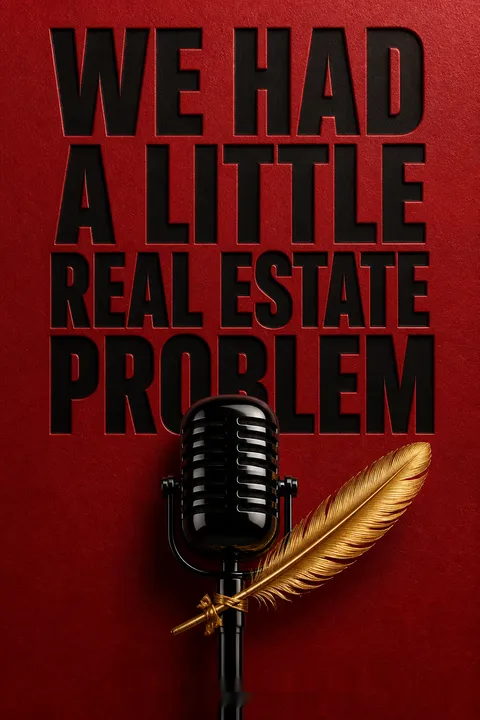
We Had a Little Real Estate Problem offers an insightful look into Native American comedy and representation in entertainment. Readers praised its educational value, highlighting forgotten history and contemporary Native voices. Many found it eye-opening and appreciated the balance of humor and serious topics. Some criticism focused on the author's non-Native perspective and occasional disjointed narrative. Overall, reviewers lauded the book for its unique subject matter and importance in addressing stereotypes, though some felt it could have benefited from tighter editing.
People Also Read

Glossary
Residential school
Forced assimilation schoolA government-funded or government-supported institution that removed Native children from their families and required them to live away from home. Schools in Canada and the United States sought to replace Indigenous languages, cultural practices, and identities with European ones. The book describes physical and sexual abuse, family separation, and lasting intergenerational harm.
blood quantum
Assigned ancestry percentageA system that assigns Native people a percentage of Indigenous ancestry, historically determined by government agents and used to regulate legal recognition, land claims, and benefits. The book emphasizes that these classifications were arbitrary rather than scientific, and that governments used them in ways that could reduce the number of people considered eligible for rights or resources.
Allotment
Division of communal landA government policy that broke up Native lands held collectively and assigned individual parcels to Native people, while making remaining land available for non-Native settlement and commercial interests. The General Allotment Act of 1887 advanced this approach. The book presents allotment as an attack on tribal landholding and autonomy, not simply a change in property administration.
powwow emcee
Native gathering hostA master of ceremonies who guides a powwow, announcing events, managing transitions, and addressing the crowd. As the book explains, emcees often use teasing, jokes, and improvised commentary to keep an audience engaged. Their work provides a community-based performance tradition and has served as an informal training ground for some Native comedians.
private stash
Community-centered comedyCharlie Hill's term for comedy intended especially for Native audiences or people familiar with Native community life. Such comedy may depend on shared language, local references, and experiences that an outside audience does not recognize. The term describes a different audience relationship, not a lesser form of comedy or a failure to reach mainstream viewers.
Doctrine of Discovery
Colonial land-claim doctrineA legal and religious principle used by European Christian powers to justify claiming lands inhabited by non-Christian peoples. As presented in the book, it treated discovery by a Christian explorer as a basis for colonial ownership despite the presence of Indigenous societies. The doctrine has been invoked in disputes over Indigenous land title and resource rights.
Download PDF
Download EPUB
.epub digital book format is ideal for reading ebooks on phones, tablets, and e-readers.








