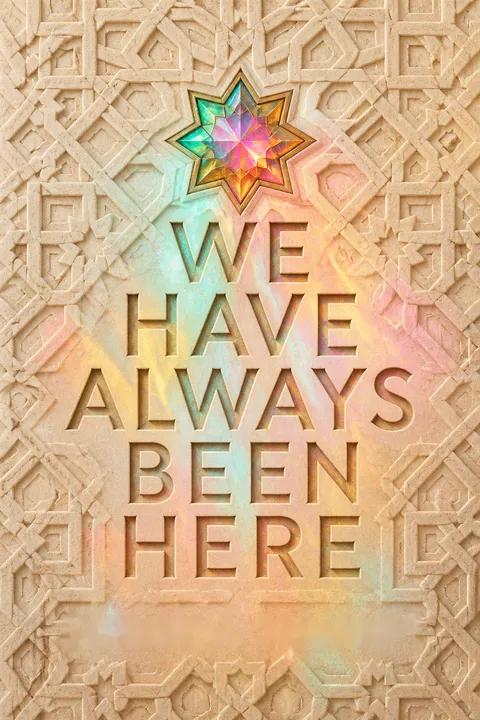


Key Takeaways
A queer Muslim life is whole, even when institutions call it impossible.
A life is not a contradiction. Samra Habib grows up Ahmadi, a member of a Muslim community persecuted in Pakistan, and later recognizes herself as queer. These identities are not competing explanations of who she is. They shape her family life, her sense of safety, her relationships, and her faith. The memoir’s central claim is that queer Muslims have always existed, even when public stories and religious authorities make them hard to see.
Belonging need not be granted. Habib’s story does not argue that every institution will accept her, or that religious exclusion is harmless. It insists that rejection cannot erase a person’s identity or their right to define their own relationship to faith.
What's striking is how the memoir refuses the demand to choose a single, simplified identity before a person can be understood. That refusal resonates with intersectional thinking: social categories interact in lived experience rather than taking turns. The distinction matters because visibility can challenge stereotypes, but it can also expose people to danger. Recognition should therefore expand the space to belong, not become a new obligation to disclose.
Silence can protect a child, then become the cage they carry.
Quiet was taught as safety. As a child, Habib is instructed to conceal that her family is Ahmadi because disclosure could invite hostility. After a man sexually abuses her, she focuses on seeming unaffected so her mother will not feel more fear or guilt. Her family responds with tighter supervision, and the child loses freedom while learning that the safest response is to hide what happened and how she feels.
Protection has a cost. At school, she keeps her head down to avoid bullies. Later, she hides her ambitions and desires from relatives and community members. Silence helps her navigate real threats, but it also makes it harder to ask for care or imagine a life beyond other people’s rules.
The memoir makes an important distinction between chosen privacy and enforced silence. In trauma-informed care, a response that once reduced danger can persist after circumstances change, even when it limits connection or self-trust. That does not make the response irrational: a child has few options and often adapts to the adults around her. The harder question is how families and institutions can make disclosure safer instead of praising children for appearing untouched.
Understand inherited rules without confusing their origins with their harmlessness.
Fear shaped family choices. Habib’s mother was raised amid abandonment, gender inequality, and the belief that a woman’s security depended on marriage and respectability. Those pressures help explain why she arranged for Habib to marry a cousin. They do not make the arrangement safe or fair. The book holds both truths at once: a mother can love her daughter and still pass on a harmful rule she has never been given the freedom to question.
Context is not absolution. Habib’s father also has moments of tenderness and later objects to the engagement, but family loyalty and the fear of rupture keep her from asking him to intervene. The memoir shows how inherited expectations can feel like protection to adults and like confinement to children.
This account resists the easy moral division between a cruel parent and an innocent child. Intergenerational patterns often transmit strategies that once helped someone endure, even when those strategies injure the next generation. Understanding that transmission can make accountability more precise: it explains how harm continues without pretending that explanation repairs it. The useful question is not only who intended what, but who had power to change the decision and whose future was being decided.
Find teachers and friends who recognize your future before you do.
A witness can widen possibility. After fleeing Pakistan for Canada, Habib faces poverty, racism, and bullying. Her ESL teacher gives her a safe classroom and helps her orient herself in the new city. Later, teachers encourage her writing and academic work, while friends such as Andrew and Abi help her imagine a more expressive life. Their support does not erase hardship, but it gives her evidence that her interests and abilities are worth taking seriously.
Recognition can be practical. Habib’s mentors offer books, friendship, creative opportunities, and examples of women living boldly. They do not simply praise her. They help create room for her to experiment, learn, and notice strengths that family expectations and school bullying had obscured.
The memoir treats encouragement as more than a pleasant feeling: it is access to models, information, and places where a person can try new roles without immediate punishment. That resembles the role of a supportive institution in education, where expectations can influence whether students take intellectual risks. Yet a mentor cannot substitute for material security or make every environment safe. The strongest support combines belief in someone’s potential with concrete help and respect for their choices.
Your no remains valid even when family calls compliance consent.
Compliance was not a choice. Habib is told she is engaged to her cousin at thirteen and married through an Islamic ceremony, or nikah, at sixteen. Years later, her mother treats the fact that she signed the papers without protest as evidence that she accepted the marriage. Habib internalizes that blame, although she was a teenager navigating family authority, isolation, and fear of damaging relationships.
Saying no changes the course. As the marriage becomes impossible to sustain, Habib tells her family she does not want to remain with her cousin. The relationship ends and the nikah is annulled. Leaving does not instantly make her life easy; her parents become more controlling, and she eventually leaves home. The memoir presents the decision as a beginning, not a painless escape.
Consent requires meaningful freedom to refuse, not merely the absence of a spoken objection. That principle is especially important where age, family hierarchy, and dependence limit what a person can safely say. The account also avoids turning refusal into a simple formula: Habib faces isolation, financial uncertainty, and intense distress. Respecting agency means taking both the right to leave and the real costs of leaving seriously, while helping people access support rather than demanding heroic self-sufficiency.
Let queer identity unfold through experience, not somebody else's test.
Self-understanding took time. Habib first experimented with the word queer in conversations with friends, then said it aloud to a stranger in a Tokyo gay bar. For years, she had assumed her lack of desire for men meant something was wrong with her. Later experiences with women helped her understand her attraction more clearly. The journey is gradual: curiosity, tentative labels, relationships, uncertainty, and a growing ability to speak honestly.
A label is not a scorecard. Habib dates men and women, and eventually recognizes that having been with a man does not cancel her queerness. Travel, friendships, and new communities give her room to explore, but they do not provide a universal test for identity. The important change is that she stops treating other people’s expectations as the final authority on what she feels.
The memoir offers a useful distinction between a label as a tool for recognition and a label as a verdict. Research and clinical practice often describe identity development as variable rather than identical for everyone; people may name themselves at different points, or revise language as understanding changes. That flexibility should not be mistaken for uncertainty imposed from outside. A person does not owe others a fixed timeline, a particular relationship history, or proof of identity.
Build kinship with people who can hold your whole story.
Chosen family offered steadiness. Friends such as Andrew and Abi, along with Abi’s wife Megan, help Habib imagine relationships based on encouragement rather than control. They share creative work, listen, and offer care during difficult moments. These bonds matter especially when she is estranged from family and isolated from the mosque community. Her memoir presents chosen family as a real form of care, not merely a replacement for biological relatives.
Old ties can change, too. Habib’s relationship with her mother slowly shifts. When she finally says she is queer, her mother accepts her, says she still loves her, and begins asking about the people she dates. The acceptance does not undo the harm of the arranged marriage, but it opens a new relationship between them, based on greater honesty.
Kinship is shown here as something sustained through repeated acts of attention: listening, making room, and remembering what matters to another person. That broadens the idea of family beyond legal or biological ties without making either kind of bond automatically good or bad. The mother-daughter reconciliation is particularly valuable because it is neither instant nor total. Affection can coexist with injury, and rebuilding trust requires more than a declaration of love.
Reclaim Muslim belonging without denying the harm done in its name.
A mosque made room. After years away from communal worship, Habib attends Unity Mosque, a queer-affirming Muslim community in Toronto. People of different genders pray alongside one another. The gathering includes queer Muslims, transgender refugees, and people with varied relationships to religious practice. Its rules discourage members from declaring one another’s faith invalid, reflecting the fact that Muslim life is shaped by different histories and traditions.
Practice can be personally meaningful. Familiar prayers return to Habib, and she begins rebuilding a relationship with Islam that is not dictated by the community that shunned her. Her faith offers spiritual grounding and a language for kindness and reflection. This return does not erase persecution of Ahmadis or the rejection she experienced; it makes room for faith and pain to be true at the same time.
The scene demonstrates how communities can change the conditions under which people participate in a tradition. A welcoming prayer space does not settle every theological disagreement, but it can replace gatekeeping with conversation and shared practice. That distinction is important: inclusion need not mean pretending that exclusion never happened. At the same time, one affirming congregation cannot stand for all Muslim communities. The book’s account is strongest when it makes room for varied, situated experiences rather than a single definition of Islam.
Photograph lives stereotypes erase, while letting subjects control their exposure.
Visibility became a project. After finding a queer Muslim community, Habib begins photographing queer Muslims to show lives missing from common portrayals of Islam. She meets subjects in their own environments, listens to their stories, and works with them on how they want to appear. When a person fears being identified, she finds ways to protect their identity. The portraits are not meant to make one person represent every Muslim; they make individual lives visible.
Access shapes understanding. Habib sees photography as a way to communicate across language barriers and to reach people who may not connect with academic writing. She cites a Media Tenor review of American television coverage from 2007 to 2013, which found that more than 80 percent of NBC and CBS coverage of Muslims was negative. Her project responds by showing complexity, not by claiming to tell every story.
Representation is most useful when it changes who gets to speak, not merely who appears in the frame. Habib’s attention to consent and concealment recognizes that visibility can carry unequal risks, especially for refugees and people living under hostile laws. Portraits still select, frame, and edit; no image can contain a community. The ethical strength of the project lies in treating each subject as a collaborator with specific boundaries, rather than as evidence for a predetermined argument.
Make solidarity answer to race, geography, and unequal risk.
Shared identity does not erase difference. As Habib photographs and meets queer Muslims in Canada, Europe, the United States, and Turkey, she sees how local politics and personal histories shape people’s relationship to Islam. Some face racism alongside homophobia and transphobia; others have different experiences of racial discrimination or religious authority. In Turkey, people’s rights and safety are shaped by political restrictions that differ from those Habib encounters in Canada.
Listening sharpens solidarity. In North Carolina, Habib meets queer Muslim artists and organizers who connect their faith with resistance to racism and support for others facing injustice. She also describes a refugee who understands persecution related to sexuality but has not recognized racial harms experienced by Black people. The example shows why coalition requires learning about one another’s realities, not assuming that one shared label creates identical politics.
The memoir treats solidarity as a practice of noticing asymmetry. People can share one form of vulnerability while benefiting from, or overlooking, another hierarchy. This is a more demanding account than simple identification: it asks communities to listen across differences and to act on what they learn. The caution is that no individual should be expected to master every injustice before joining a coalition. A more workable standard is continued curiosity, correction, and willingness to share power.
Analysis
This memoir is not a straight march from oppression to liberation. Its more revealing pattern is a series of places where Habib’s understanding of safety changes: Lahore, where family and religious identity are threatened; Canada, where physical danger gives way to poverty and racism; school, where teachers offer shelter; a queer community, where desire becomes legible; and a welcoming mosque, where faith becomes possible again. Each setting gives her some forms of freedom while withholding others.
That structure matters because the book resists a familiar migration narrative in which arrival in a liberal country solves the central problem. Canada offers refuge, education, and legal possibilities, but it also brings economic precarity, bullying, and an often invisible queer Muslim presence. The memoir similarly refuses to flatten Islam into either a source of oppression or a private comfort. Religious persecution, family control, spiritual longing, and a queer-affirming congregation all belong to the same account.
Habib’s choices are often made under constraint. Her silence, her marriages, and her delays in naming her desire should not be read as simple failures of courage. The memoir shows how a child learns to preserve relationships and reduce danger before she has the resources to imagine alternatives. That attention to circumstance strengthens its insistence on agency: agency is not the freedom to choose from unlimited options, but the gradual ability to recognize and act on the options that become available.
The photography project extends this personal narrative into public work. Rather than treating visibility as a cure, it asks who controls representation and who might be endangered by it. The resulting argument is modest but forceful: people pushed outside a community’s official image are not new arrivals to history. They have been present, even when institutions and media have failed to make space for their stories.
Review Summary
We Have Always Been Here is a powerful memoir exploring the author's journey as a queer Muslim woman. Readers praise Habib's vulnerable storytelling, highlighting her experiences as an Ahmadi Muslim in Pakistan and a refugee in Canada. Many appreciate the representation and insight into reconciling faith with queer identity. Some critics note the writing feels surface-level at times, lacking deeper introspection. Overall, reviewers find the book important and inspiring, though opinions vary on its depth and emotional impact.
People Also Read



Glossary
Ahmadiyya
Muslim reform movementThe Ahmadiyya Movement was founded in 1889 by Mirza Ghulam Ahmad, who sought to reform Islam and emphasized non-violence and tolerance. Ahmadis believe Ahmad was the Promised Messiah. Many other Muslims reject that claim, and the book describes legal discrimination and violence against Ahmadis in Pakistan, including restrictions on publicly identifying as Muslim.
nikah
Islamic marriage ceremonyA nikah is an Islamic marriage ceremony. In Habib’s memoir, her family arranges a nikah between her and her cousin while she is a teenager. The marriage is later annulled by the mosque after she says she does not want to remain married. The account distinguishes the religious ceremony from her own free and informed consent.
hijra
South Asian third-gender identityHijra is a South Asian gender identity and community. Habib describes the hijra she encounters as a person assigned male at birth who does not identify as male and is understood as third-gender. The term refers to a culturally specific identity and community, not simply a synonym for transgender, and individual hijra experiences and identities vary.
Unity Mosque
Queer-affirming Muslim congregationUnity Mosque is a queer-affirming Muslim congregation in Toronto, co-founded by El-Farouk Khaki and Troy Jackson. Habib describes a prayer gathering where people of different genders worship side by side and members are discouraged from disputing one another’s validity as Muslims. The community offers her a way to reconnect with Islam after rejection elsewhere.
chosen family
Self-formed network of careChosen family refers to relationships built with people who provide the care, recognition, and belonging often associated with relatives. Habib connects the idea to queer communities, where friends can support people who have been rejected by biological families. In her account, chosen kinship coexists with the possibility that family relationships of origin may also change.
FAQ
What's "We Have Always Been Here" about?
- Memoir of Identity: "We Have Always Been Here" is a memoir by Samra Habib that explores her journey as a queer Muslim woman navigating her identity across different cultures and societies.
- Themes of Belonging: The book delves into themes of belonging, faith, and the intersectionality of being both queer and Muslim, highlighting the challenges and triumphs of living authentically.
- Cultural and Personal Exploration: Habib shares her experiences from her childhood in Pakistan to her immigration to Canada, and her eventual self-discovery and acceptance of her queer identity.
- Community and Acceptance: The memoir also focuses on the importance of community and finding spaces where one can be accepted for who they are, particularly within the context of religious and cultural expectations.
Why should I read "We Have Always Been Here"?
- Unique Perspective: The book offers a unique perspective on the intersection of queerness and Islam, providing insights into a rarely discussed experience.
- Inspiring Journey: Samra Habib's journey of self-discovery and acceptance is both inspiring and relatable, offering hope to those struggling with their own identities.
- Cultural Insight: Readers gain a deeper understanding of the cultural and religious challenges faced by queer Muslims, fostering empathy and awareness.
- Empowerment and Resilience: The memoir is a testament to resilience and empowerment, encouraging readers to embrace their true selves despite societal pressures.
What are the key takeaways of "We Have Always Been Here"?
- Intersectionality Matters: The book highlights the importance of understanding intersectionality, particularly how different aspects of identity, such as religion and sexuality, can coexist and influence one's life.
- Community is Crucial: Finding and building a supportive community is essential for personal growth and acceptance, as demonstrated by Habib's experiences with Unity Mosque and other queer Muslims.
- Self-Acceptance: The memoir emphasizes the journey towards self-acceptance and the courage it takes to live authentically in the face of adversity.
- Challenging Norms: Habib's story encourages readers to challenge societal and cultural norms that restrict personal freedom and expression.
How does Samra Habib describe her journey of self-discovery in "We Have Always Been Here"?
- Early Struggles: Habib describes her early struggles with identity, growing up in Pakistan and later immigrating to Canada, where she faced cultural and religious expectations.
- Queer Identity: Her journey of self-discovery involves coming to terms with her queer identity, which was initially at odds with her Muslim upbringing.
- Finding Community: A significant part of her journey is finding a community that accepts her for who she is, particularly through Unity Mosque, which welcomes queer Muslims.
- Embracing Complexity: Habib learns to embrace the complexity of her identity, understanding that being queer and Muslim are not mutually exclusive.
What role does Unity Mosque play in "We Have Always Been Here"?
- Safe Space: Unity Mosque provides a safe space for queer Muslims to practice their faith without judgment, offering a sense of belonging and acceptance.
- Community Building: The mosque is a place where Habib and others can connect with like-minded individuals, fostering a supportive community.
- Spiritual Reconnection: For Habib, Unity Mosque is instrumental in her spiritual reconnection, allowing her to reconcile her faith with her queer identity.
- Symbol of Hope: The mosque symbolizes hope and the possibility of creating inclusive religious spaces that honor diverse identities.
How does Samra Habib address the concept of intersectionality in "We Have Always Been Here"?
- Multiple Identities: Habib explores how her multiple identities as a queer, Muslim, immigrant woman intersect and shape her experiences.
- Cultural and Religious Challenges: She discusses the challenges of navigating cultural and religious expectations while embracing her queer identity.
- Empathy and Understanding: The memoir encourages empathy and understanding for those who live at the intersection of different identities, highlighting the complexity of their experiences.
- Advocacy for Inclusivity: Habib advocates for more inclusive spaces that recognize and honor the diverse identities within communities.
What are the best quotes from "We Have Always Been Here" and what do they mean?
- "We have always been here...": This quote emphasizes the enduring presence and resilience of queer Muslims, challenging the notion that they are a new or emerging group.
- "Being surrounded by people who fuel you is intentional.": It highlights the importance of intentionally building a supportive community that nurtures and empowers individuals.
- "You have everything you need.": A message of self-sufficiency and empowerment, encouraging readers to trust in their own strength and capabilities.
- "Love for all, hatred for none.": A reminder of the core values of compassion and acceptance, central to both Habib's personal philosophy and the Ahmadiyya community.
How does Samra Habib's family background influence her story in "We Have Always Been Here"?
- Cultural Expectations: Habib's family background, rooted in Pakistani and Muslim traditions, sets the stage for the cultural and religious expectations she navigates throughout her life.
- Parental Influence: Her parents' decisions, such as arranging her marriage at a young age, significantly impact her journey of self-discovery and rebellion.
- Complex Relationships: The memoir explores the complex relationships within her family, particularly with her mother, as they both evolve and come to terms with Habib's identity.
- Legacy of Resilience: Her family's history of resilience and survival in the face of adversity influences Habib's own determination to live authentically.
What challenges does Samra Habib face as a queer Muslim in "We Have Always Been Here"?
- Cultural and Religious Conflict: Habib faces the challenge of reconciling her queer identity with her Muslim faith, which traditionally does not accept homosexuality.
- Isolation and Rejection: She experiences isolation and rejection from both her religious community and mainstream queer spaces, which often lack diversity.
- Identity Struggles: The memoir details her struggles with identity, as she navigates societal expectations and seeks acceptance for her true self.
- Safety Concerns: Habib also faces safety concerns, both personally and for the subjects of her photo project, due to the potential backlash against queer Muslims.
How does "We Have Always Been Here" explore the theme of belonging?
- Search for Community: The memoir highlights Habib's search for a community where she feels accepted and understood, both as a queer person and a Muslim.
- Unity Mosque's Role: Unity Mosque plays a crucial role in providing a sense of belonging, offering a space where diverse identities are celebrated.
- Cultural Displacement: Habib's experiences of cultural displacement, from Pakistan to Canada, underscore her ongoing quest for belonging and identity.
- Redefining Home: The book explores the idea of redefining home and belonging, not as a physical place, but as a community of supportive and like-minded individuals.
What impact does "We Have Always Been Here" aim to have on its readers?
- Increased Awareness: The memoir aims to increase awareness of the unique challenges faced by queer Muslims, fostering empathy and understanding.
- Empowerment and Inspiration: Habib's story serves as an empowering and inspiring narrative for those struggling with their own identities, encouraging them to live authentically.
- Challenging Stereotypes: The book challenges stereotypes about Muslims and queers, presenting a more nuanced and diverse portrayal of these communities.
- Advocacy for Inclusivity: It advocates for more inclusive spaces and dialogues that honor the intersectionality of identities, promoting acceptance and diversity.
How does Samra Habib's journey in "We Have Always Been Here" reflect broader societal issues?
- Intersectionality and Identity: Habib's journey reflects broader societal issues of intersectionality and the challenges faced by individuals with multiple marginalized identities.
- Cultural and Religious Tensions: The memoir highlights cultural and religious tensions, particularly within immigrant communities, and the impact on personal identity.
- Queer Representation: It addresses the lack of representation and visibility for queer Muslims, advocating for more inclusive narratives in media and society.
- Social Justice and Activism: Habib's story underscores the importance of social justice and activism in creating spaces where diverse identities can thrive and be celebrated.
Download PDF
Download EPUB
.epub digital book format is ideal for reading ebooks on phones, tablets, and e-readers.








