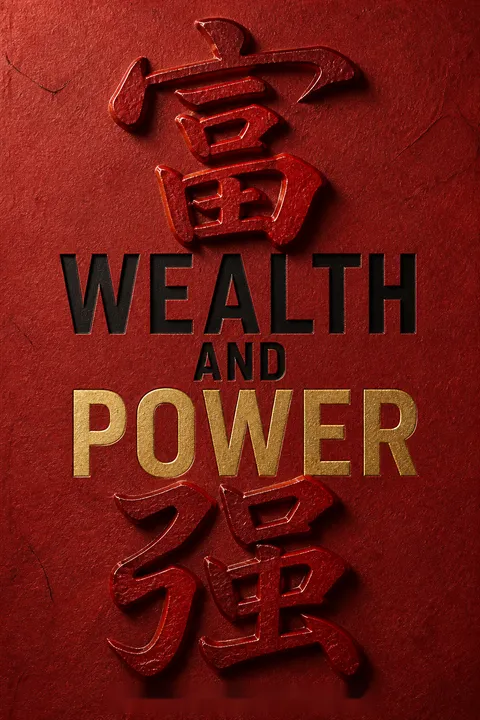


Key Takeaways
Turn defeat into a national project, but remember what the project serves
Defeat became a beginning. The book opens at the 1842 Treaty of Nanjing, where Qing officials accepted foreign demands after Britain’s victory in the Opium War. The treaty and later concessions became symbols of lost sovereignty. Reformers recast the humiliation as a reason to rebuild, not merely a wound to mourn. Wei Yuan revived fuqiang, or prosperity and strength, as a goal focused chiefly on defending China from foreign coercion.
Shame had two faces. The story follows generations who used national grievance to mobilize reform, from learning foreign military methods to remaking the state. This helped a weakened country imagine recovery when defeat made confidence hard to sustain. But the same story could also turn injury into permanent suspicion, and make national strength seem more important than the welfare or rights of individuals.
What's striking is how collective memory works here as both political fuel and a potential trap. Shared injury can help people coordinate around long-term investments that are difficult to justify one household at a time, such as education, infrastructure, or defense. Yet a permanent victim narrative can make leaders less accountable: hardship is blamed outward, while coercion at home is framed as necessary protection. The useful distinction is between remembering past aggression and treating grievance as a standing license. A society can honor historical loss without making revenge, conformity, or state power the measure of recovery.
Borrow foreign tools, then build the institutions that make them work
Technology was not enough. After the Opium Wars, Wei Yuan urged Chinese officials to study foreign ships, weapons, and diplomacy. A generation later, Feng Guifen argued that Western strength also rested on education, economic development, public accountability, and systematic inquiry. He proposed Chinese-run arsenals and schools for foreign languages and science, so borrowing would build domestic capacity rather than permanent dependence.
Coordination mattered. Empress Dowager Cixi supported some reforms, including modern military and industrial projects, but they remained fragmented across provinces. Japan’s Meiji leaders coordinated military, educational, political, and economic changes nationally, and Japan defeated China in 1894-95. The contrast suggests that importing useful techniques is only a start. Reform needs institutions able to connect separate changes, train people to maintain them, and sustain them when political factions resist.
This is a sharp distinction between acquiring technology and acquiring the capacity to use it. In organizational terms, equipment is a resource, while trained people, reliable budgets, and coordinated authority are capabilities. A new arsenal cannot compensate for divided command, just as a new software system cannot repair a failing organization by itself. The comparison with Japan is persuasive as a lesson about coordination, though it is not a controlled experiment: the countries differed in political structure and circumstances. The broader point still holds. Borrowing succeeds when institutions translate imported knowledge into local competence.
A nation cannot modernize without changing who counts as a citizen
Reform turned inward. Liang Qichao concluded that China’s weakness could not be fixed by weapons or institutions alone. He called for xinmin, or new citizens: people who saw themselves as participants in a nation, rather than subjects defined chiefly by family, village, or ruler. His journals spread political ideas to a broad readership, helping create a public conversation beyond the examination-trained elite.
His answer kept changing. A visit to San Francisco’s Chinatown convinced Liang that Chinese migrants carried old social habits even inside a democratic society. He briefly argued that strict rule might be needed before self-government. After World War I, however, the destruction in Europe weakened his faith in copying the West wholesale. He returned to Chinese traditions as possible sources of humane modern life. His intellectual journey shows that rejecting tradition and recovering it can be parts of the same search.
Liang’s changing views expose a problem common to political reform: institutions depend on habits of participation, but those habits are also shaped by institutions. A citizenry is not simply produced by announcing rights; people need practice in organizing, debating, and holding officials to account. At the same time, blaming cultural character for political failure can mistake the effects of exclusion for innate incapacity. Liang’s later openness to more than one intellectual tradition is a useful corrective. Modernity need not mean cultural self-erasure, but cultural continuity cannot substitute for civic agency.
National unity can empower citizens, or become an excuse to silence them
Sun sought cohesion. Sun Yat-sen’s Three People’s Principles joined nationalism, popular rights, and people’s livelihood. He feared that China’s immense population remained politically fragmented, vulnerable to both foreign pressure and domestic warlords. Yet he proposed a staged transition: first revolution, then political tutelage under a strong party, and only after stability, constitutional government. Democracy mattered, but he treated it partly as a means to national strength.
Chiang made unity the test. As Nationalist leader, he briefly reunified much of China and pursued modernization during the 1920s and 1930s. Japanese aggression, internal conflict, and corruption overwhelmed those gains. Chiang’s insistence that the Communists posed the more urgent threat delayed resistance to Japan. His career shows the risk in treating political unity as a precondition that must always come before rights: the promised transition can be postponed whenever leaders declare the country unready.
Sun’s framework captures a genuine state-building dilemma. Fragmented authority can prevent a government from protecting people or delivering public goods, so central coordination may be necessary. But the claim that citizens must first be trained by rulers creates a circular test: people are denied political practice because they lack experience, then judged unprepared because they have been denied practice. The history here also makes national security politically ambiguous. External threats are real, yet leaders can use them to justify concentrating power or misjudging which danger is most immediate.
Mao broke old constraints, then made upheaval a governing method
The countryside changed the revolution. Mao rejected the Communist Party’s initial focus on urban workers after seeing poor peasants organize against landlords in Hunan. He made rural farmers central to the revolution, helping the party build power where its opponents were weakest. His belief that conflict could generate change also shaped his rule: he repeatedly launched campaigns to disrupt institutions and keep political life in motion.
Destruction carried a terrible price. The Great Leap Forward forced rural life into huge communes and set unrealistic production drives. The resulting famine killed tens of millions. During the Cultural Revolution, Red Guards attacked officials, teachers, and cultural institutions, while Mao encouraged upheaval to defeat perceived political enemies. The authors argue that this destruction weakened old social constraints and left Deng a society more open to rapid economic change. That unintended consequence does not make the suffering a necessary or justified price.
The book’s most provocative causal claim is that Mao’s attacks on inherited structures helped clear space for Deng’s reforms. This is plausible as a story of path dependence: dismantling institutions can make some future choices easier even when the dismantling was disastrous. But a before-and-after sequence is not proof that catastrophe was required. Mao’s campaigns also destroyed skills, trust, and lives, and the reforms relied on later political decisions, not on destruction alone. The distinction matters because societies often romanticize upheaval when its eventual beneficiaries are visible and its immediate victims are not.
Replace revolutionary fervor with measurable development, not political accountability
Deng changed the priority. After surviving repeated purges, including years of exile during the Cultural Revolution, Deng returned to leadership with a practical focus on production and economic growth. His 1978 program of reform and opening drew on an older self-strengthening idea: learn from more advanced economies, adapt their methods, and use them to improve China’s material conditions. Rural households gained control over production decisions, while Special Economic Zones tested foreign investment and export-led growth.
The political boundary remained. Deng encouraged experimentation and allowed some people and regions to prosper first, but he opposed independent political challenges. Democracy Wall activist Wei Jingsheng called democracy essential to modernization; Deng had him imprisoned. The 1989 protest movement ended in a military crackdown. Deng’s achievement was to redirect the party from mass campaigns toward development, while preserving its political monopoly.
Deng’s approach separates economic learning from political pluralism, a combination that challenges assumptions that markets automatically produce democracy. It also shows the appeal of experimentation: local trials can reveal what works without requiring a full national redesign. But growth metrics do not capture voice, security, or the distribution of gains. A system can become highly effective at producing output while remaining weak at correcting abuses that its own leaders do not recognize. The distinction between adapting economic tools and allowing political accountability is central to understanding both the model’s success and its limits.
Let local markets experiment, while the center guards the financial system
Zhu joined flexibility to control. As premier, Zhu Rongji carried Deng’s reforms further but also rebuilt central oversight. He restored Beijing’s share of tax revenue, tightened control over bank lending, and restructured state-owned companies. He allowed some firms to fail rather than guaranteeing every loss. Meanwhile, rural household production, town and village enterprises, and coastal investment zones created new routes for growth. China entered the World Trade Organization in 2001 after prolonged negotiations.
Growth had unequal costs. Zhu’s centralization helped coordinate a sprawling economy and curb inflation, but restructuring also cost workers secure jobs and benefits. Rural residents did not share equally in the gains, and critics argued that shifting revenue upward left local governments short of funds for services. The resulting system was neither simple privatization nor old-style planning: markets expanded under a party-state that kept command of key sectors and political authority.
Zhu’s reforms illustrate a productive tension between decentralization and coordination. Local experiments can generate information that central planners lack, while national oversight can restrain reckless lending and prevent every province from building its own unsustainable boom. The balance is difficult because the center may capture revenue without taking responsibility for the services local governments must provide. This is a reminder that market reform is also a redesign of fiscal relationships and social obligations. Efficiency gains can be real while their costs fall unevenly, especially on workers and rural communities with little bargaining power.
Wealth earns attention; justice and openness earn durable respect
Liu challenged the destination. Dissident writer Liu Xiaobo argued that human rights and free expression are not rewards a state grants after it becomes rich. He joined the 1989 democracy movement, later helped draft Charter 08, and was imprisoned after calling for constitutional government. His principle of rejecting hatred did not soften his criticism of repression; it framed opposition as a refusal to reproduce the violence and dehumanization he condemned.
Growth did not settle the question. China’s economic rise brought global influence, but the book notes widening inequality, social unrest, censorship, and the detention of critics. Its final argument is that national strength cannot guarantee admiration if a government denies its people a meaningful voice. The authors leave the political outcome unresolved: the drive for prosperity and power has dominated modern history, while the demand for rights remains a parallel current.
Liu’s position shifts the measure of national success from external status to the treatment of people within the state. That move is analytically useful because reputation depends not only on material capability but also on whether a country’s practices seem legitimate and worth emulating. Rights are not a simple public-relations asset, however; they can constrain leaders and expose disagreement, which may feel destabilizing in the short term. The challenge is to distinguish genuine social cohesion from silence enforced by fear. Prosperity can buy time and attention, but it cannot by itself answer who has the right to speak.
Analysis
The book’s central achievement is to turn a century and a half of political reversals into a recognizable argument: Chinese leaders repeatedly pursued prosperity and strength as remedies for weakness, foreign coercion, and national humiliation. The biographical structure makes abstract changes in political thought legible. Wei Yuan and Feng Guifen make selective borrowing imaginable; Liang Qichao and Chen Duxiu move the diagnosis from machinery to culture and civic identity; Sun Yat-sen and Chiang Kai-shek make unity and tutelage central; Mao transforms destruction into a governing practice; Deng and Zhu redirect state capacity toward markets and growth; Liu Xiaobo asks whether those gains can substitute for rights.
The narrative is strongest when it treats ideas as tools that leaders adapt under pressure, not as sealed doctrines. The same language of national rescue can justify learning abroad, centralized planning, revolutionary violence, or market reform. This flexibility helps explain political continuity across dramatic ideological shifts. It also complicates claims that China followed one coherent blueprint: several reforms were improvised, contested, and later reinterpreted as stages in a purposeful national journey.
The book’s most debatable suggestion is that Mao’s destruction helped prepare the ground for Deng’s success. The sequence is compelling, but it risks turning contingent catastrophe into an apparent prerequisite. Economic reform also depended on political choices, local experiments, administrative competence, and favorable connections to global markets. Further, the national humiliation narrative is both historical memory and political framing. It records real coercion, yet its selective use can obscure domestic causes of failure or authorize control in the name of defense.
The unresolved tension is therefore not simply growth versus democracy. It is whether a state can preserve the adaptive capacity that enabled reform while permitting independent criticism capable of correcting official mistakes. The book suggests that prosperity has been the dominant motor of modern Chinese politics, but it does not establish that this motor can meet every demand for legitimacy, dignity, and respect.
Review Summary
Wealth and Power is praised for its insightful exploration of China's rise through key historical figures. Readers appreciate the book's accessible approach to complex history, highlighting China's pursuit of wealth and power as a response to past humiliations. Many find it enlightening about modern China's motivations. Some criticize its brevity on certain topics and Western bias. Overall, reviewers recommend it for those seeking to understand China's historical trajectory and current global position, though a few suggest supplementing with other sources for a more comprehensive view.
People Also Read





Glossary
fuqiang
prosperity and strengthA political ideal meaning wealth and power, revived by modern Chinese reformers as a response to national weakness and foreign pressure. In this account, its primary modern purpose is defensive: to protect sovereignty and restore China’s standing. Leaders disagreed sharply over how to reach it, but the goal endured across dynastic reform, revolution, and market-led development.
jingshi
practical statecraftA tradition of political thought concerned with ordering the world through practical government and economic measures. Wei Yuan used statecraft writings to argue that officials should address revenue, transport, social order, and military capacity, rather than rely only on moral instruction or classical scholarship. It provided a language for reform within the Confucian establishment.
ziqiang
self-strengtheningA late Qing reform program seeking to strengthen China by learning foreign techniques while developing the capacity to use them independently. Its advocates promoted modern weapons, arsenals, schools, and technical training, but disagreed over how far reforms should reach. The effort often remained piecemeal, revealing that imported technology could not compensate for weak coordination.
xinmin
new citizensLiang Qichao’s idea that national revival required people to understand themselves as citizens of a modern nation, not only as members of families, villages, or local communities. The term joined personal consciousness to collective political life. Liang saw a new citizenry as essential to national strength, though his own views on democracy and authoritarian preparation changed over time.
Three People's Principles
Sun's national programSun Yat-sen’s political program organized around nationalism, the rights of the people, and people’s livelihood. It aimed to unite China, establish popular political rights, and improve material welfare. Sun paired these aspirations with a staged transition, arguing that a period of political tutelage should precede constitutional government.
political tutelage
guided transition to constitutional ruleSun Yat-sen’s proposed intermediate stage between revolutionary upheaval and constitutional government. A strong party and central leadership would govern while preparing the population and institutions for self-government. The idea became influential because it promised eventual democracy while allowing rulers to defer it until stability and national strength were deemed sufficient.
permanent revolution
continuous political upheavalMao Zedong’s belief that political struggle must continue even after a revolution wins power, because new contradictions and opponents can emerge within the state and party. Mao used campaigns to disrupt bureaucratic routines and mobilize the masses. This approach helped him retain political initiative, but it also produced enormous social and economic damage.
household responsibility system
household-managed farm productionA rural reform that shifted agricultural production decisions from collective units toward individual households. Families could make more decisions about their assigned land and benefit from surplus production. First tested locally and later adopted more broadly, the system raised agricultural output and weakened the commune structure without requiring immediate privatization of land.
Special Economic Zones
zones for foreign-backed growthDesignated areas, including Shenzhen, Zhuhai, Shantou, and Xiamen, where special rules and incentives encouraged foreign investment and export-oriented production. Deng Xiaoping treated them as experiments for importing capital, technology, and management practices. They expanded market activity while remaining under Chinese political authority and helped connect domestic development to global trade.
Charter 08
call for political reformA 2008 public declaration associated with Liu Xiaobo and other Chinese critics that called for constitutional government, the rule of law, and political liberties. Distributed online, it gathered thousands of signatories despite the risks. The state blocked its circulation and imprisoned Liu, making the document a prominent expression of the liberal-democratic current in modern Chinese history.
Download PDF
Download EPUB
.epub digital book format is ideal for reading ebooks on phones, tablets, and e-readers.








