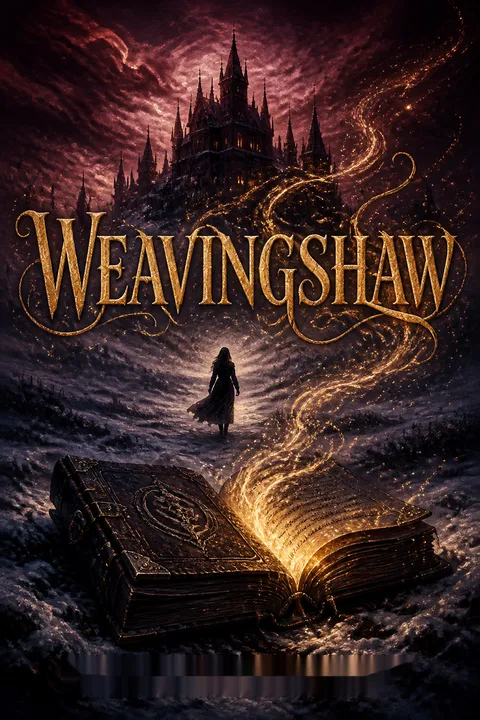


Plot Summary
A Secret for Medicine
When Rami Al-Sayer3 falls gravely ill with Sweeper’s Cough, his sister Leena1 has no money for the medicine that might save him. She seeks Bram St. Silas,2 the feared merchant of secrets, despite warnings that his clients can emerge mutilated or broken. At his shop, Leena1 admits that she sees ghosts, a truth that has cost her work and left her isolated.
St. Silas2 doubts her claim and takes her to Newtorn Prison, where a dead man points not at the emaciated prisoner St. Silas2 is visiting, but at St. Silas2 himself. The test proves Leena’s ability and exposes the Saint’s2 lethal history. She has made her confession, but the promised medicine will come at a price.
Leena’s first bargain is both an act of love and an act of self-erasure: she turns a source of shame into currency because Rami’s survival matters more than her own safety. The prison test makes her gift legible to another person, but not comforting. It gives her evidence that she is not delusional while placing her inside St. Silas’s sphere of power. His name and reputation promise a brutal system, yet Leena approaches him because ordinary institutions have already failed her family. The scene establishes the novel’s central moral pressure: necessity can make a choice voluntary in form and coercive in substance.
The Second Patient
After Leena1 identifies the ghost in Colson’s cell, St. Silas2 supplies Rami’s3 medicine, then reveals that Leena1 has Sweeper’s Cough too. Her blue nails confirm his diagnosis, and he offers a second course only if she becomes his secretary and finds the ghost of Percival Avon,12 a dead marquess.
Leena1 negotiates food, lodging, safety, rent for her home, and release from service once the search is complete. She also insists that St. Silas2 never return as a ghost to haunt her. Too ill to press every advantage, she signs. He has secured her labor through the very desperation that brought her to him, and her search for freedom now depends on finding a stranger among the dead.
The contract gives Leena a measure of agency without disguising the imbalance between the parties. She negotiates carefully, but illness narrows her alternatives until refusal means risking both her life and Rami’s. St. Silas understands that distinction and exploits it openly. Leena’s insistence on a future home and a finite term is psychologically important: even while accepting dependence, she protects an image of herself beyond the bargain. The secret she sold becomes less a confession than a practical tool, while the contract turns intimacy into labor and makes the search for a ghost the condition of her autonomy.
The Wake in Dreams
As Leena1 and Rami3 endure the fever, Leena1 dreams that her dead mother warns her about the Wake and Weavingshaw, though she cannot tell whether the message is memory or prophecy. Their family history presses into the present: their father, Ali,6 was imprisoned for organizing a union, and Leena1 fled a promising position as a lady’s companion after ghosts began appearing.
She and Rami3 learned to protect her with salt circles, humming, and clashing copper coins, because spirits sometimes try to take control of her body. Once she recovers, Leena1 researches Lord Avon12 and his fortress estate, finding a family crest that pairs a wolf with the poisonous Deathgrip flower. The clues suggest her contract reaches far beyond one missing ghost.
The fever does not simply weaken Leena; it breaks the boundary between private memory and public danger. Her mother’s warning connects family loss, aristocratic power, and supernatural threat before Leena has enough information to interpret any of them. Meanwhile, the practical rituals she and Rami devised show a kind of knowledge built from repeated exposure rather than authority: salt, sound, and metal are their hard-won technologies of survival. The contrast between those household defenses and the aristocratic heraldry of Weavingshaw hints that both families inhabit systems of inherited danger, though only one possesses the wealth to call its burdens tradition.
Confessions Become Fuel
At St. Silas’s2 consultations, Leena1 watches clients confess for money while the Saint2 uses silence to force them deeper into painful truths. A former factory owner admits that he locked workers inside to prevent theft; when St. Silas2 records the confession, the man leaves visibly aged and the burned ghost following him disappears.
Leena1 realizes the black ledgers do more than preserve secrets: touching one floods her with concentrated grief and shame. St. Silas2 threatens to burn pages from her beloved botany book if she interrupts again, using the book’s importance to control her. As Leena1 observes the consultations, she also notices that he sometimes spares vulnerable clients from having their confessions entered.
The confession room turns economic exchange into a ritual of exposure. Clients appear to consent, but hunger and illness shape what consent can mean, much as they shaped Leena’s signature. The ledgers make this coercion material: private pain becomes a substance that can be stored, transferred, and apparently consumed. Leena’s sensitivity to the clients’ suffering challenges St. Silas’s detached method, but her book threat reveals that he is capable of reading her attachments as precisely as he reads a lie. His occasional restraint complicates her judgment without absolving him; the novel makes ethical character visible in the exceptions a powerful person chooses to make.
A Gun in the Study
One of St. Silas’s2 clients, a Black Coat who betrayed fellow rebels to the King’s soldiers, returns weeks later with a pistol and accuses the Saint2 of cursing him. Leena1 has already learned that the ledgers inflict unbearable emotional consequences, but the armed man’s terror makes the danger immediate.
St. Silas2 crosses the room and cuts his throat before he can fire. Leena1 watches the body fall beside the cursed ledger, then refuses the Saint’s2 offered hand. The killing confirms that St. Silas’s2 power is not only social or supernatural; he can act with sudden, practiced violence. Leena’s1 employment now places her within reach of the people who come to punish him.
The returning client exposes the cost of St. Silas’s business after the moment of payment has passed. The man’s distress may be intensified by the ledgers, but he is also responsible for betraying his comrades, so the scene refuses a simple division between victim and villain. St. Silas responds to danger with efficiency rather than hesitation, a survival strategy that also keeps him in control of the room. Leena’s refusal of his hand marks an important limit: proximity does not yet mean trust. She has seen what his power can do, and understands that working beside him will require her to judge him continually.
The Saint Faces a Gun
At the Festival of Demons, St. Silas2 confronts Basil Richards, a Black Coat secretly serving several masters. A murdered prisoner’s ghost lets Leena1 identify the Wake’s brand, and Basil admits that Percival Avon12 once ran the organization, which traded prisoners for profit. When Rami3 appears, furious that Leena1 concealed her employment, he draws his sword on St. Silas.2
Leena1 steps between them, then turns the Saint’s2 own pistol against him and demands answers. St. Silas2 admits that Avon12 took something from him and altered his life, but refuses to explain further. The brothers part without reconciliation, and Leena1 has gained one fragment of the truth while making her personal danger impossible to ignore.
The festival’s masks allow the city’s political violence to surface in public, while its abandoned cathedral gives that violence an older religious frame. Leena’s ability to read the dead exposes the human cost concealed by the Wake’s name and transactions. Her confrontation with Rami is equally revealing: she has kept him ignorant to protect him, but secrecy reproduces the very powerlessness she resents. Pointing a gun at St. Silas reverses their usual arrangement for a moment, yet he does not yield the information she wants. Their exchange establishes that knowledge is the real weapon between them, and that neither affection nor threat can easily make him surrender it.
Revolution Reaches Golborne
The next morning, news arrives that Commander Yosif has captured the Algaraan capital and the Malik is in chains. Riots in Morland’s factory district follow, unsettling St. Silas2 less than the opportunity for profit. He takes Leena1 to Lord Avon’s12 former townhouse, where their search finds no ghost, then explains that Avon12 created the Wake to keep his debt-ridden estate, Weavingshaw.
Its current owner, tradesman John Martin,10 has invited them to an annual hunting party. The plan gives Leena1 a route toward Avon’s12 ghost and the truth about the Wake. At the same time, the victory abroad sharpens hopes among Morland’s workers, making the northern estate a meeting point for private crimes and an approaching public revolt.
The revolution in Algaraa functions as more than distant news: it gives Morland’s dispossessed a visible example of political change, while exposing how quickly elites translate upheaval into a business forecast. St. Silas’s response is commercially calculating, but Leena hears what the news means for a homeland her family lost. The visit to Avon’s townhouse connects two kinds of inheritance. Martin has acquired the physical estate, while the Wake preserves the old aristocratic methods that financed it. Weavingshaw therefore promises to answer Leena’s supernatural question and confront her with a political order that treats people as transferable assets.
Rami’s Missing Fight
Rami3 fails to return from a Black Coat fight, so Leena1 asks St. Silas2 where to look. He takes her to gang leader Orley,9 who reveals that Rami3 refused to throw a match fixed for Martin10 and has been imprisoned in a cottage near Bromley Forest. St. Silas2 and Leena1 find Rami3 tied up, then face Mackenzie Crane, the hungry young Burr, and a third attacker.
Leena1 stabs the hidden man; St. Silas2 shoots him, and the survivors surrender Rami’s3 sword before fleeing. Leena1 insists on burying the dead boy, despite St. Silas’s2 wish to leave him. As they dig, the boy’s ghost appears, and St. Silas2 admits he buried his first body at twelve.
Rami’s defiance is morally legible but materially dangerous. By refusing a fixed fight, he protects the integrity of his skill while risking the household’s already fragile security. Leena’s rescue depends on St. Silas’s violence, a fact that complicates her wish to treat him only as an exploiter. Her demand for a burial refuses the logic that gang members, poor boys, or immigrants can simply be discarded. St. Silas’s confession about his childhood does not erase his present brutality, but it reveals its genealogy: he learned survival through premature contact with death. The shared grave begins to shift their relationship from employer and captive toward witnesses to one another’s damage.
The Ghost Named Theodore
While Rami3 recovers, Leena1 discovers that Theodore Daye,8 the ghost who has begun guarding her sleep, can communicate by pointing to written letters. Mrs. Van5 confirms that she is a demon and an old servant of St. Silas’s2 family, though she withholds more.
Leena1 later finds Theodore8 studying Avon’s12 portrait; he indicates that the marquess’s missing red diary can summon his ghost and spells out St. Silas’s2 given name, Bram,2 followed by Weavingshaw. Bram2 reacts as if the boy has reopened a buried wound. He allows Rami3 to join his staff as a bruiser, then prepares to travel north with Leena,1 Rami,3 Mrs. Van,5 and Theodore.8 The ghost hunt finally has a practical direction.
Theodore’s alphabet makes communication possible without granting the dead a conventional voice. Leena must attend to gestures, patience, and context, a form of listening that contrasts with St. Silas’s interrogations. The clue also personalizes the quest: Bram’s reaction suggests that the ghost is not simply a missing source of information but part of his own history. Mrs. Van’s revelation broadens Leena’s world without making the supernatural instantly comprehensible. Her willingness to accept the demon as a caregiver grows from lived evidence, especially the help she gave Rami. Trust in this story accumulates through repeated acts, not declarations.
Letters Beneath the Willow
On the journey north, Leena1 follows the ghost of Gemma Hargreaves13 from an inn to a willow beside the sea, where she finds a hidden tin holding old letters. Gemma’s13 surviving message condemns Weavingshaw and all who have been drawn into its secrets. St. Silas2 confirms that Mrs. Van5 is a demon, but will not explain his own connection to the estate.
At Weavingshaw, a ghostly woman named Moira14 attacks Leena1 through possession, forcing her to experience memories of Percival Avon’s12 seduction and murder of her. Leena1 wakes with Bram2 beside her and conceals how completely the dead can take control of her. The fortress has made the search personal and physically dangerous.
Gemma’s letters turn haunting into delayed testimony: the dead woman cannot explain her past directly, but leaves material evidence that Leena must interpret. Her message echoes Leena’s mother’s warning and suggests that Weavingshaw exerts power beyond its walls. Moira’s possession makes that power intimate, forcing Leena to experience a murder from inside the victim’s fear. The event sharpens the distinction between seeing the dead and being invaded by them, a boundary Leena has guarded through improvised rituals. Her decision to hide the full extent of her vulnerability shows how survival sometimes requires secrecy even from a person who has become her protector.
A Lake Beneath the Crypts
Leena,1 Bram,2 Rami,3 and Mrs. Van5 search Weavingshaw’s library, attics, caves, and crypts for the diary. In the crypts, an old trap explodes, and they discover Martin10 and Lord Kilworth11 storing a huge supply of Tar inside a tomb. Rami3 destroys it with his sword, ensuring Martin10 will retaliate. They find Percival Avon’s12 empty tomb but no diary.
On their return, a demon attacks Leena1 and forces its memories into her: the First Marquess bound Weavingshaw to a creature beneath the estate, and Percival12 later begged it to stop feeding on him. Leena1 escapes possession and reaches the Hall of the Lake, where she understands that the estate and the Avon12 bloodline are bound by a dangerous bargain.
The crypt brings together the estate’s competing economies: old family relics, illicit drugs, and human lives are all stored underground as if they were inventory. Rami’s destruction of the Tar is an impulsive act of resistance, but it also turns the group’s hidden trespass into an immediate threat. The demon’s memories reveal that the Avon legacy is not merely a social fiction; it is a supernatural contract that extracts mental life from its heirs. Leena’s successful resistance marks a change in her relationship to her gift. She is no longer only a target of the dead and demons; she can fight back, though the victory gives her no control over the wider bargain.
The Seventeenth Avon
Seeking clues in Lytham, Leena1 visits Percival’s12 former housekeeper, Mrs. Graham, whose failing memory reveals that Avon12 had a son. A timepiece engraved with the message that Avons can cross confirms that Bram St. Silas2 is the current Marquess. Leena1 confronts him on the shore; he acknowledges his identity and explains that he has returned to reclaim Weavingshaw and confront the demon bound to it.
Gemma’s13 memories further reveal that Lord Hargreaves4 and Percival12 traded the young Bram2 to the Duke of Fray,15 then concealed his disappearance. Before the hunting party ends, Bram2 crosses the Hall of the Lake and retrieves the red diary. Leena1 now knows his title, but not yet the full terms of his captivity.
The watch functions as a piece of evidence that survives where official records and public memory have failed. It links Margery, Mrs. Graham, and the Avon family, showing how ordinary objects can carry histories that powerful people tried to suppress. Bram’s identity changes the meaning of his pursuit: he is not merely investigating a dead aristocrat but returning to the land and lineage from which he was severed. Gemma’s memories expose the personal cost beneath elite arrangements, particularly the ease with which a child can be converted into payment. The red diary’s recovery does not settle the past; it makes the hidden history portable and therefore newly dangerous.
A Duel in the Snow
After Rami’s3 ruined Tar is discovered, Martin10 confines him and demands an execution. Bram2 offers to duel Martin10 instead, intending to protect his wards and reclaim control of Weavingshaw. Lord Hargreaves,4 secretly seeking the red diary and its information about the Limitless Vessel, attacks Bram2 from behind and cuts him with demon poison.
Bram2 shoots Martin,10 but Hargreaves4 reveals that only he holds the antidote. Back at the house, Kilworth11 tries to hunt Mrs. Van;5 Leena1 fires once, misses, then kills him with her second shot in the Hall of the Lake. Rami3 escapes his confinement, and he, Mrs. Van,5 Leena,1 and the wounded Bram2 flee as the Black Coats pursue them.
The duel strips away the language of honor that Martin and Hargreaves use to disguise coercion. Hargreaves violates the contest precisely when Bram appears capable of winning, converting a public test of skill into an ambush. Leena’s confrontation with Kilworth makes the same moral problem bodily: she must use violence to prevent a demon-born caregiver from becoming prey. Her first missed shot and second deliberate aim show learning under pressure, not sudden ease with killing. Across both conflicts, protection is inseparable from danger. The characters escape the estate, but the poison turns their victory into a countdown and leaves Hargreaves holding leverage.
The Vessel Within Leena
With Bram’s2 wound infected by Detritus Poison, Rami3 and Mrs. Van5 ride toward Golborne to fetch a cure while Leena1 hides Bram2 near Lytham. A broken carriage and a rising workers’ revolt force them into a crowded inn, where Orley’s9 men seize them.
Orley9 explains that he manipulated Theodore8 into leading them to the diary and believes Leena1 carries a vessel that lets demons cross between worlds. With soldiers breaking in, Leena1 bargains for Bram’s2 safety and the antidote, then enters a mirror that opens into Bastmore.
Orley9 gives her the cure, steals it back, and throws it away before leaving them stranded. Bram2 wakes, and Leena1 finally learns that he was sold to the Duke of Fray15 as a child and remains bound by a contract that outlasts ordinary life.
Orley’s trap reveals how easily the same capacity for trust that helped Leena survive can be weaponized. Theodore’s betrayal wounds her because she had treated him as a companion rather than a tool, and Orley’s manipulation exposes the unequal power behind that bond. The mirror crossing makes Leena’s body the contested gateway between worlds, shifting her supernatural gift from a private affliction into a political resource. In Bastmore, Orley’s broken promise mirrors the coercive bargains that structure both realms. Bram’s disclosure finally reframes his secrecy: he is not only a collector of other people’s confessions, but a captive trying to learn what his own life was traded for.
Freedom Becomes the Bargain
In the demon-world refuge, Leena1 tends Bram2 with almost no supplies while the antidote remains lost. He shows her his Fray timepiece, whose hand counts down a contract extending beyond his natural lifespan, and explains that his father and Hargreaves4 exchanged him for an unknown object. Leena1 connects the bargain to the Limitless Vessel, the device that could open the passage between worlds and give its owner control over a demon army.
She suspects the red diary contains the route to it; Hargreaves4 will therefore hunt anyone carrying the book. Leena1 admits that she can be possessed and recounts Moira’s14 memories. Bram2 responds by releasing her from their contract, insisting she leave before the Wake can use her against him.
The timepiece turns an abstract contract into a visible measure of stolen future. Bram’s captivity is not simply a memory of childhood abuse; it is an ongoing legal and supernatural condition that denies him even the ordinary limit of death. Leena’s confession about possession is an act of trust, but it also gives Bram a clearer view of the danger surrounding her. His release of her contract is therefore both care and self-sacrifice: he refuses to reproduce the coercion that has shaped his life, even when keeping her close might help him survive. The ending offers no resolution of the larger conflict, only a newly chosen freedom whose cost remains uncertain.
Analysis
Weavingshaw treats secrets as both intimate truths and extractable resources. St. Silas2 has built a business around confession, but the people who approach him are often sick, hungry, frightened, or cornered by institutions that offer no remedy. Their signatures establish consent on paper while the circumstances expose its limits. Leena’s1 own bargain makes that contradiction impossible to dismiss: she chooses the Saint2 because every other option is worse, then tries to preserve agency by negotiating terms and watching him closely.
The supernatural plot extends this economic logic into inheritance. The Wake trades prisoners; the Fray contracts15 bind children; the Avon12 covenant makes bloodline itself a payment to a demon. Each system claims to preserve something valuable, whether a fortune, a household, a political order, or a life. Yet those abstractions survive by consuming people who have little power to refuse. Weavingshaw’s grandeur is therefore not separate from its violence. The estate is built to endure, and its endurance depends on a bargain that turns descendants into fuel.
Leena’s1 gift challenges the erasure that these systems require. She sees the dead whom prisons, factories, gangs, and aristocratic households leave uncounted. Because ghosts cannot explain themselves, she must interpret their wounds without pretending that interpretation makes her omniscient. Her compassion can lead to dangerous choices, but it also resists the conversion of a person into a label such as criminal, immigrant, servant, or commodity. The burials she insists upon restore a minimal human recognition where institutions have refused it.
Bram2 and Leena1 are bound first by unequal contracts, then by a developing trust neither can safely take for granted. Their attraction matters because it grows inside an imbalance of power: Bram2 controls her employment, while Leena1 can see truths he cannot access. The final release of her contract is therefore more than a romantic gesture. It is Bram’s2 attempt to make care different from possession, even as the danger surrounding them remains unresolved. The novel ends by shifting the central question from what Leena1 must give to survive toward whether either character can choose freely in a world built to price every life.
Review Summary
Weavingshaw receives an overall rating of 4.17/5, with most readers praising its atmospheric gothic setting, slow-burn romance, and beautifully layered writing. Reviewers consistently highlight the aching yearning between leads Leena and St. Silas, the richly immersive worldbuilding, and thoughtful themes around immigration and displacement. Critical reviews cite scattered plotting, a slow start, and familiar romantasy tropes as weaknesses. Many readers were surprised to discover it's the first book in a trilogy, left desperate for the sequel after its gripping cliffhanger ending.
Characters
Leena Al-Sayer
A witness to the deadAn Algaraan refugee’s daughter, Leena is resourceful, observant, and unwilling to let deprivation decide what counts as a life worth saving. She works, studies languages, cares for her brother3, and has learned practical defenses against the ghosts that others cannot see. Her honesty is both a strength and a vulnerability, since emotion often appears plainly on her face. Leena’s compassion extends beyond family to the dead and the poor, but it does not make her passive: she bargains, questions authority, and takes decisive action when people are threatened. She longs to become a translator and to reclaim a future larger than survival, even as her gift draws her into other people’s secrets.
Bram St. Silas
The feared secret-merchantKnown publicly as the Saint of Silence, Bram is an elegant, controlled interrogator who buys confessions and builds influence from information. He studies people with unnerving precision, protects his business through contracts, and hides his own history behind formality and calculated cruelty. His discipline is not simple coldness: it is a survival method shaped by coercive systems and long practice at suppressing emotion. Bram can be ruthless, yet his actions toward employees and vulnerable people reveal a capacity for fairness that unsettles Leena’s1 first judgment of him. He is driven by a private debt and an attachment to a lost home, but he resists allowing either need to make him appear weak.
Rami Al-Sayer
Leena’s stubborn brotherLeena’s1 younger brother is a gifted sword fighter whose missing arm never defines his sense of himself. Since their father’s6 imprisonment, Rami has sought income and belonging among the Black Coats, where skill can earn money but loyalty is often demanded at a price. He is impulsive, proud, and quick to answer threats with anger, especially when he believes Leena1 is being controlled. Beneath his defiance sits a deep dependence on his sister1 and an understanding of the sacrifices she makes for him. Rami wants to protect his family, but his insistence on acting alone can place them in greater danger.
Charles Hargreaves
The Wake’s calculating lordA powerful aristocrat with Algaraan heritage, Hargreaves is politically astute and skilled at presenting self-interest as stability or mercy. He maintains influence through debts, alliances, and an ability to understand what other people fear losing. His friendship with Percival Avon12 carries a long history of shared schemes, while his marriage to Gemma13 gives him a more intimate moral witness than he is willing to accept. Hargreaves tells himself that his choices prevent chaos, especially as revolution threatens the ruling class. That rationale makes him more dangerous, not less: he can recognize injustice and still decide that preserving his world matters more.
Mrs. Van
The housekeeper with two worldsBram’s2 severe, long-serving housekeeper is an expert at managing a household and caring for the injured. Her unnaturally long fingers and ageless appearance mark her as more than human, but her loyalty is expressed through practical work rather than sentiment. She helps Leena1 nurse Rami3 and gradually becomes a source of knowledge about Bram’s2 history. Mrs. Van is disciplined and watchful, accustomed to withholding what she knows until disclosure is safe. Her attachment to Bram2 is profound, though she rarely speaks of it directly.
Ali Al-Sayer
A jailed union organizerLeena1 and Rami’s3 father is an Algaraan history lecturer and labor organizer imprisoned for attempting to form a union. His political convictions brought danger to his family, but his education and care helped his children imagine lives beyond factory labor. Ali’s influence persists through Leena’s1 language studies, Rami’s3 sword, and their shared belief that workers deserve safer conditions. He is principled, loving, and capable of making choices whose costs his children must carry.
Margery
The neighbor who warns LeenaAn elderly Morish neighbor dependent on Tar, Margery is one of the few people willing to speak plainly about St. Silas’s2 dangers. Her warnings come from experience rather than rumor, though addiction and poverty have narrowed her world. She shares a fragile bond with Leena1, offering directions, caution, and an unusual keepsake when Leena1 leaves home. Margery’s guarded kindness reflects how compassion can survive even in a life crowded by regret.
Theodore Daye
A ghost with a messageA dead boy in servant’s livery, Theodore cannot speak aloud, so Leena1 learns to communicate with him through letters and gestures. He appears frightened, watchful, and drawn to Bram’s2 portrait and history. His presence gives Leena1 companionship when the other ghosts overwhelm her, and his ability to keep spirits at bay makes him unusual among the dead. Theodore’s limited communication leaves his intentions difficult to judge, forcing Leena1 to decide how much trust can rest on a nod.
Orley
The demon gang leaderThe leader of the Black Coats is a demon who deals in secrets, prisoners, and favors. Orley’s crowded rooms and theatrical manner disguise a calculating mind that treats human distress as a resource. He can communicate with the dead, but his interests are governed by opportunity rather than loyalty. He enjoys bargaining because it lets him make dependence look like choice. His relationship with Bram2 is marked by old dealings and mutual caution, while Leena1 interests him as a possible means of crossing between worlds.
John Martin
The tradesman who owns WeavingshawA former poor boy who has become a wealthy factory owner, Martin bought Weavingshaw after the Avon12 line appeared to end. He is practical, ambitious, and eager for social legitimacy, but his fortune rests on harsh labor and the exploitation of people with less power. He treats reputation as an asset and resents anyone who can threaten it. Martin’s ownership of the estate places him at the center of the conflict between inherited authority and newly acquired wealth.
Lord Kilworth
A resentful aristocratic hunterKilworth inherited a title after his twin brother’s death and carries the resentment of a younger son who believes he was denied what he deserved. He drinks heavily, hunts animals, and regards social hierarchy as a natural order. His contempt for Mrs. Van5 and Leena1 reflects a broader fear of people and beings who do not fit the categories that preserve his privilege. He is volatile when challenged and comfortable using status to excuse cruelty.
Percival Avon
The dead marquessThe last publicly known Lord Avon was a charismatic aristocrat whose attachment to Weavingshaw shaped his choices and those of the people around him. His striking charm could make devotion feel like safety, while his concern for family legacy eclipsed the needs of others. He is remembered through portraits, letters, and the memories of those who knew him, each source offering a different version of the same man. His influence continues to structure the living world even before Leena1 can find his ghost.
Gemma Hargreaves
A drowned witnessCharles Hargreaves’s4 wife, Gemma is a perceptive, compassionate woman whose concern for Bram2 develops into a maternal bond. She sees the menace gathering around Weavingshaw and tries to understand the secretive dealings between her husband4 and Percival Avon12. Her memories reveal a person who recognizes harm even when she lacks the power to stop it. As a ghost, she is driven by unfinished business and communicates through the fragments she can leave behind.
Moira
The young Lady AvonA gifted pianist drawn into Percival Avon’s12 orbit, Moira is young, impressionable, and eager to be cherished by a powerful man. Leena1 encounters her through an intense, involuntary memory that reveals how affection and danger can occupy the same relationship. Moira’s ghost carries anger that cannot be conveyed in words, making her a difficult but consequential presence.
The Duke of Fray
A demon who binds childrenA demon noble of Bastmore, the Duke of Fray survives by feeding on human emotion and by binding people through contracts. He exercises power through ritual, debt, and the control of children taken into his household. His court represents a supernatural version of the coercive institutions that exist in Morland, where the vulnerable can be made to serve systems they did not choose.
Adam
A young Black CoatA young Algaraan caught in the Black Coats’ violence, Adam is one of the boys whose brief life becomes visible to Leena1 through the dead. His vulnerability complicates easy judgments about gang members, since many are children shaped by poverty, displacement, and the need to survive.
Plot Devices
Leena’s ghost sight
Makes hidden crimes visibleLeena1 sees restless dead who cannot speak, so she reads their injuries, gestures, and reactions to the living. This allows her to identify murderers, expose the Wake’s brand, and recognize truths that clients have concealed from St. Silas2. The ability also has a cost: ghosts can overwhelm or possess her, and their memories can force her to relive another person’s suffering. Salt circles, humming, and copper coins offer imperfect protection. The power makes Leena1 an invaluable witness, but it also turns her into a potential route between worlds and leaves her vulnerable to anyone who learns what she can do.
Contracts and black ledgers
Turn desperation into currencySt. Silas’s2 business is built on signed agreements that exchange secrets for money, medicine, or other assistance. Some confessions are recorded in black ledgers that hold emotional force and leave clients devastated after their secrets are written down. The system resembles a marketplace, but the people who enter it often do so under pressure from poverty, illness, or fear. Leena’s1 own contract makes this imbalance personal: she negotiates terms but must work while her survival depends on the employer who set them. The device links supernatural extraction to ordinary economic coercion.
Salt and copper defenses
Keep possession at bayLeena1 and Rami3 discover through trial and error that ghosts cannot cross an unbroken ring of salt, while humming and the clash of two copper coins can disrupt a spirit’s attempt to possess her. These protections are practical tools, not complete solutions. A broken circle leaves Leena1 exposed, and stronger supernatural forces can overwhelm the coins. The rituals give Leena1 some control over a gift that otherwise makes her body feel unsafe, while their dependence on ordinary household objects keeps the supernatural grounded in the material realities of poverty.
The Fray timepieces
Measure hidden bargainsSeveral gold timepieces bear the Fray name and display unusual faces with a single hand. At first Leena1 assumes the broken mechanisms are mistakes or worthless curiosities. Their repeated appearance connects Margery7, Percival Avon’s12 former housekeeper, and Bram2 to a larger history of contracts and exchanged lives. Bram’s2 watch counts down the years remaining in his indenture, making his captivity visible at a glance. The watches function as portable clues, showing how a secret can survive through objects passed between people who do not understand the full story.
The red Avon diary
Draws the factions togetherThe red diary appears in Percival Avon’s12 portrait and becomes the object needed to summon his ghost. Theodore Daye8 points Leena1 toward it, while Bram2 and Hargreaves4 both search for it for different reasons. The diary is tied to Weavingshaw, the Avon12 family, and the hidden history of the Limitless Vessel. Its apparent contents are disputed: Bram2 initially believes most pages are blank, while Leena1 later finds writing throughout. The book makes the private past tangible, and its possession places Leena1 and Bram2 in the path of rival human and demonic interests.
Download PDF
Download EPUB
.epub digital book format is ideal for reading ebooks on phones, tablets, and e-readers.








