

Plot Summary
Prologue
As her husband Mike lies dying at home, Rosie races from supermarket to supermarket searching for the pineapple yoghurt he has asked for. She returns with the wrong flavour, afraid he may have died while she was gone, and sits beside him with their daughters, Anna and Isobel.
Mike has been her steady companion for decades, but Rosie admits to herself that he was not her first love. His approaching death leaves her facing grief, guilt, and a past she has never quite put away.
The search for yoghurt makes care tangible: Rosie cannot halt Mike’s illness, so she tries to answer one small request as if love could be packed into a shopping bag. Her panic at leaving him exposes grief before death has even occurred, while her admission about her first love complicates the image of a marriage defined by devotion. The scene does not diminish Mike. Instead, it establishes that a person can cherish one life while carrying another unfinished story, and that Rosie’s next chapter will have to hold both truths.
Rosie Reopens the Shop
A year after Mike’s death, Rosie struggles to imagine a future beyond the flower shop she built with him. Her daughters give her Lily, a limping rescue dog, and Rosie returns to work to help Anna prepare for an extravagant wedding. Handling flowers brings pleasure back, but sorting a tin of family photographs brings something more unsettling: a picture of the handsome art student she once loved.
Rosie remembers that she was a painter with plans beyond Salford, though grief and family life gradually pushed those ambitions aside. She begins to wonder whether she can make room for her own desires again. The past is no longer only a place she mourns; it is beginning to ask something of her.
Rosie’s return to work is not simply a recovery milestone. Flowers reconnect her to a skill that survived the year of grief, while the photographs recover a self that her later roles had crowded out. The contrast between a practical business and a discarded artistic ambition matters: neither is false, but Rosie has treated the second as expendable. Lily offers companionship without demanding explanation, and the shop gives Rosie a manageable route back into public life. The old photograph unsettles that gradual adjustment because it makes her former identity visible. Her question is not whether her marriage mattered, but whether love and responsibility exhausted every possible version of her.
The Boy at Art College
In 1968, sixteen-year-old Rosie enters Salford College of Art, nervous among easels, life models, and students who seem more worldly than she feels. Peter Moreton, a confident classmate who calls himself Pierre, draws Rosie and makes her feel both attractive and talented. He encourages her to picture a life beyond her working-class home, while she is drawn to his ease, ambition, and talk of Paris.
Their romance grows through cinema outings, walks, photographs, and plans to make art together abroad. Rosie’s mother, Margaret, distrusts the match and fears her daughter will leave the life she knows. Rosie interprets that caution as control. To her, Peter represents freedom; to Peter, she is a gifted young woman whose future seems limitless.
The young couple’s attraction is also a meeting between two imagined futures. Peter’s confidence gives Rosie permission to see herself as an artist, but his freedom rests on advantages she does not share, including money and parental support. Rosie mistakes his ease for certainty that he will remain beside her; Peter enjoys the shared fantasy without yet confronting what it would require. Margaret’s resistance is both protective and restrictive, shaped by her own narrow choices. The romance therefore begins with unequal stakes: Rosie sees art and love as a route out of confinement, while Peter can treat departure as another adventure. Their dreams are sincere, but sincerity alone cannot make them compatible.
The Wedding Bar Reunion
Rosie’s return to the shop leads her and her daughters into the preparations for a grand Cheshire wedding. The bride’s grandmother, Pamela Parker, pushes for lavish arrangements, and Rosie designs a towering wall of white flowers that transforms the reception room.
At the celebration, Pamela introduces her brother, Peter. Rosie recognizes the boy whose absence shaped her youth, now a successful photographer with grey hair and a life spent travelling. He is divorced, and the sight of him unsettles her despite her recent bereavement.
Peter asks to speak privately, and they walk through the rose gardens, trading news and old memories. He suggests meeting again, and Rosie gives him her number, unable to decide whether she is reopening a door or simply looking inside.
The reunion arrives through Rosie’s work, not through a deliberate search, so her past enters the ordinary life she has only just rebuilt. The floral wall makes her competence visible before Peter appears, establishing that she has made something substantial in the years apart. Yet his presence instantly alters her sense of time: the old attraction returns alongside memories of injury, and neither feeling cancels the other. Rosie’s daughters see a former boyfriend; she experiences a whole abandoned future pressing into the present. Giving Peter her number is a small action with large emotional weight because it allows curiosity to outrun the caution she has built around grief.
Letters Lost to Time
Rosie meets Peter in Birmingham, where their conversation moves from their present lives to the love they lost. He speaks of his travels, his marriage to Camille, and the regret that has followed him. Rosie resists his easy talk of second chances, reminding him that he left her when she needed him.
Then Peter reveals that, after returning from Italy, he visited her family home and wrote to her, but Margaret told him Rosie wanted no contact. Rosie never received those letters. The news alters her memory of the years after their breakup: she had believed Peter simply forgot her. She still cannot know whether she would have answered, but the revelation gives their separation a new cause and leaves her with more questions.
The letters do not erase Peter’s choices or restore the future Rosie lost. Instead, they disrupt the clean story she built to survive: that he left and never looked back. Margaret’s intervention emerges from a protective impulse, but protection here also means controlling what Rosie could know and decide. The revelation makes the past morally less simple without making it harmless. Rosie must hold Peter’s later regret beside his original abandonment, and her mother’s love beside her interference. That complexity helps shift their meeting away from a verdict on who was to blame and toward a harder question: what can two older people honestly build from a history neither remembers in quite the same way?
The Fairground Secret
As their meetings become more intimate, Rosie agrees to spend the night with Peter in Manchester. In the dark, she finally describes the day he returned from Italy in 1968. She had discovered she was pregnant and expected them to marry, but Peter rejected the baby, announced he was leaving again, and urged her to end the pregnancy.
Rosie miscarried that night, grieving the child and the future she had imagined. She had kept the loss largely to herself, then gradually leaned on Mike, who offered the dependable love Peter could not give her. Hearing the whole story, Peter weeps and acknowledges the child. Rosie names the baby Daisy and explains that the loss helped her understand how deeply she wanted a family.
This disclosure changes the meaning of their reunion. Rosie is not merely asking Peter to apologize for a youthful breakup; she is making him witness a loss he once refused to face. Naming Daisy gives the pregnancy a place in their shared history, while Peter’s grief recognizes that the child mattered even though she never lived outside Rosie’s body. The scene also distinguishes remorse from repair. Peter can finally hear what his actions cost, but he cannot reverse them or reclaim the life Rosie made afterward. Rosie’s account places Mike in the story not as a consolation prize, but as the person whose reliable love helped her survive a rupture she could not resolve with Peter.
A Second Chance, With Boundaries
After sharing the truth, Rosie and Peter agree to try again, and their renewed closeness brings back her appetite for art, travel, and pleasure. Peter invites her to an Oxford hotel break, but she refuses when she realizes it overlaps with daughter Isobel’s fortieth birthday. He is disappointed, then recognizes that loving Rosie means accepting the family commitments that shape her life.
At her home, the two enjoy lunch and ice cream until Anna walks in and finds them laughing together on the sofa. Rosie tells her daughters that Peter is no longer just an old friend and asks them to respect her privacy. Anna struggles with the change, but Rosie insists that loving Mike and beginning again are not mutually exclusive.
The central test is not whether Rosie still desires Peter, but whether their relationship can accommodate lives that were formed separately. Peter’s spontaneous plans reflect the freedom he has always valued; Rosie’s refusal reflects a bond to her daughters that she will not treat as an inconvenience. Their friction reveals a real mismatch, not a misunderstanding that romance alone can solve. Rosie also begins correcting a family pattern: Anna’s concern has become supervision, and Rosie has often surrendered decisions to keep others comfortable. By telling her daughters the truth, she makes her private life visible without asking them to approve every choice.
The Garden Table Fractures
Rosie hosts a summer buffet so Peter can meet her family as her partner. Before he arrives, Anna challenges her about dating him and worries that he may displace Mike or take advantage of the family home. Rosie answers that Peter has his own life and that she will not let her daughters decide whether she may love again.
The meal begins warmly enough, with Peter talking easily to Richard about home renovations, but tension returns when Anna tries to rush him away after dinner. Rosie publicly states that Peter is staying the night, then confronts Anna privately for using her father’s memory to pressure her. Anna leaves hurt, while Rosie remains with Peter beneath the garden stars, resolved to stop hiding their relationship.
The gathering exposes how grief can turn a family home into contested territory. Anna’s fear is understandable: Peter’s arrival seems to alter the place where Mike’s presence remains emotionally vivid. But her attempt to manage Rosie’s choices reproduces the protective control Margaret once used, a pattern Rosie can now recognize because she has occupied both sides of it. The public announcement that Peter will stay is clumsy, yet it marks Rosie’s refusal to retreat when her daughter disapproves. The scene avoids an easy reconciliation: Anna leaves, and Rosie must accept that asserting adulthood may cause real hurt before it creates a more honest relationship.
Pencils Beside the Croissants
The morning after the gathering, Peter receives an offer from Camille to photograph concrete architecture for a French magazine. Rosie encourages him to take the assignment rather than stay out of guilt. Before leaving, he gives her pencils and drawing paper. While he is away, Rosie sketches in the garden and realizes she has treated her artistic self as a closed chapter.
When she later visits Peter in Oxford, he tells her that he and Camille wanted children but could not conceive despite years of IVF. He admits the child he and Rosie lost has remained part of his regret. Peter then draws Rosie as she poses for him, and she recognizes that his view of her helps her accept her own changing body and unfinished ambitions.
Peter’s departure repeats the shape of an old wound, but Rosie’s response is different: she supports his work without making his attention the measure of her worth. The pencils turn encouragement into something she can use alone, and her sketches show that artistic renewal does not depend on being rescued by romance. Peter’s infertility disclosure adds another dimension to his earlier rejection of fatherhood; the loss he dismissed has become part of the life he mourns. His portrait offers Rosie a generous gaze, but its importance lies in her response. She begins to see herself not as a younger woman’s faded remainder, but as a person whose body and history can still be represented with tenderness.
Peter Takes the Camera
Anna excludes Rosie from Katie’s recital so her new partner, James, can attend, leaving Rosie feeling punished for her relationship with Peter. On the evening of the performance, James falls from a roof in Wales and Anna rushes to the hospital. Peter cancels their dinner plans, takes Rosie to the recital, and films it so Anna can watch.
He picks wildflowers for Katie, then helps Rosie bring both granddaughters home. The girls welcome his attention, and he listens to Emma’s photography ideas, even letting her handle his prized camera. By morning, Peter is making pancakes for them. Anna thanks him for taking care of her daughters and begins to see that he is not trying to replace Mike; he is choosing to show up for the family Rosie loves.
The emergency gives Peter a chance to demonstrate what abstract promises cannot: he can respond to another person’s crisis without resenting the interruption. His care is practical and specific, from recording Katie’s performance to engaging Emma’s interest in photography and feeding the girls the next morning. He does not claim Mike’s role; he contributes in his own way. Anna’s shift begins not with an argument she loses, but with evidence she can observe. Meanwhile, Rosie’s hurt over the recital exclusion reveals how badly she wants both her family and Peter to belong in the same life. The night makes that possibility feel less theoretical.
Rosie Books Her Own Sky
As Anna begins accepting Peter and the family grows more comfortable with him, Rosie confronts the question she has postponed for years: what does she want when she is not meeting everyone else’s needs? She decides to retire from the flower shop, leaving Anna and Isobel to run the business, and announces at Christmas that she has booked a long solo journey through New Zealand, Thailand, Vietnam, India, and beyond.
She does not plan the trip as a test of Peter’s love or a prelude to marriage. Although she loves him, she wants time to discover her own preferences and confidence before sharing a home again. Peter supports her departure, agrees to care for Lily, and promises to meet her in Paris when she is ready.
Rosie’s final choice is not a rejection of romance but a refusal to make romance the new structure that defines her. Marriage, motherhood, business, and widowhood have all organized her days around other people; the solo journey creates space for preference to become audible. Her route also returns to the places and experiences she once imagined with Peter, but she now chooses them for herself. The family’s support matters because autonomy is not achieved by severing attachment. Peter’s willingness to wait, and to look after Lily, shows a more reciprocal relationship than the one they had as teenagers. Rosie can love him without handing him the authorship of her future.
Epilogue
After travelling, Rosie meets Peter in a park with coffee and fresh croissants. She tells him about the stars in New Zealand and the landscapes she has seen, while he listens without trying to hurry her home. They missed Paris because Isobel gave birth to a son, and Peter supported Rosie’s daughters and grandchildren while Rosie was away.
Rosie loves Peter but still wants time to know the woman she has rediscovered. Peter accepts that, then suggests they finally visit Paris together. They walk off with Lily, carrying the old dream into a future Rosie has chosen for herself.
The ending gives Rosie the adventure she once imagined, but changes its terms: Paris is no longer proof that Peter’s youthful promise has been restored. She has already travelled alone, experienced the night sky Mike loved, and returned with a clearer sense of her own capacity. Isobel’s baby also draws Peter into the family through sustained care rather than a formal claim to belonging. Rosie’s hesitation about settling down keeps the resolution open without making it uncertain. Love now means allowing each person room to become more fully themselves, then choosing what to share.
Analysis
The novel treats grief as a change in the structure of daily life, not as a single emotional crisis that ends when Rosie accepts Mike’s death. The prologue’s frantic search for yoghurt shows how care persists when cure is impossible. Later, returning to the flower shop gives Rosie routine, but routine alone cannot answer the question of who she is when no one needs her every hour.
Peter’s return tests the difference between remembered love and a viable present relationship. Their youthful romance was real, but it was also shaped by class, age, and unequal freedom. Peter could leave for Italy; Rosie would have faced pregnancy, family judgment, and material limits at home. The hidden letters complicate blame without absolving him. The more consequential revelation is the lost pregnancy, because Rosie makes Peter witness a grief he had once tried to dismiss. Their reconciliation becomes credible only after he hears the cost of his choices.
Mike is not displaced by Peter. He represents another form of love, built through reliability, parenting, work, and shared time. The book resists the comforting idea that a person has only one true partner. Instead, Rosie’s two relationships meet different needs at different stages, and her enduring love for Mike does not invalidate the affection she feels now.
The family plot extends this question of love into autonomy. Anna’s protectiveness echoes Margaret’s, but Rosie is no longer the teenager who can only rebel or comply. She can set boundaries, keep her daughters close, and still make decisions they dislike. Peter’s place in the family is earned through concrete care, especially during James’s accident and Katie’s recital, rather than through a romantic claim.
Rosie’s final journey completes the movement from being seen by Peter to seeing herself. Art, travel, and choosing her own ice cream are small and large forms of the same act: attention to her own life. Paris remains a shared possibility, but it no longer has to carry the whole burden of her future.
Review Summary
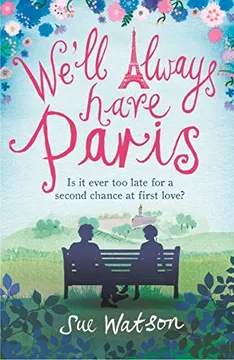
We'll Always Have Paris is a heartwarming novel about second chances and finding love later in life. Readers praise Watson's relatable characters, especially 64-year-old widow Rosie, and the exploration of family dynamics. Many appreciate the focus on older protagonists and the blend of humor and poignancy. While some found the plot predictable, most enjoyed the uplifting story of rekindled romance. The book resonates with readers of all ages, offering a refreshing take on love and self-discovery. Some criticism includes slow pacing and minimal Paris content despite the title.
Characters
Rosie Carter
The late-blooming artistRosie is a florist, mother, and grandmother whose quick humour often keeps other people at ease. She is loving and capable, but years of caring for her family have made it difficult for her to separate duty from desire. Her artistic talent and teenage plans remain part of her identity even when she stops drawing. She values steadiness, shared history, and the practical work of showing up, yet she is also drawn to risk and discovery. Rosie’s central psychological tension is not between family and selfishness, but between belonging to others and being allowed a self of her own. Her resilience appears as a willingness to revise her life without denying the people and commitments that shaped it.
Peter Moreton
The restless photographerPeter is an artist and photographer who has spent much of his life travelling, observing, and pursuing whatever captures his imagination. As a young man, he is charming, confident, and insufficiently aware of the consequences his choices carry for Rosie. In later life he is more reflective, though still spontaneous and inclined to follow creative opportunity. Photography lets him attend closely to other people while keeping parts of himself private. He admires Rosie’s talent and sees her as more than the roles she performs for others, but he must learn that loving her means respecting the family commitments and decisions that are hers. His longing for connection coexists with a deep habit of independence.
Mike Carter
The dependable family anchorMike is Rosie’s husband and the father of Anna and Isobel. Practical, patient, and quietly generous, he supports Rosie’s ambitions by helping her build the flower shop and encourages his daughters without needing to command the family’s attention. His love is expressed through reliable acts: fixing what is broken, helping with the business, and being present when someone needs him. He is drawn to the stars and finds perspective in their vastness, a private source of comfort rooted in curiosity rather than religion. Mike’s steady temperament contrasts with Peter’s restlessness, but the two men share an imaginative interest in the world. Rosie’s family life is shaped by Mike’s care and by the habits they created together.
Anna
The protective eldest daughterAnna is Rosie’s elder daughter, a mother who often converts anxiety into organization, instructions, and attempts to manage the people she loves. She is competent at the flower shop and devoted to her daughters, but her protective instincts can make her controlling, particularly when family routines are changing. Her concern for Rosie comes from love and from fear of losing the dependable family structure she knows. Anna is also capable of humour and self-awareness, traits that help her reconsider her first reactions. Her relationship with Rosie carries a recurring tension between care and authority: Anna wants to keep her mother safe, while Rosie needs her to recognize that safety cannot mean surrendering adulthood.
Isobel
The gentler younger daughterIsobel is Rosie’s younger daughter, a former teacher whose thoughtful, emotionally perceptive manner often steadies tense family moments. She is married to Richard and is especially attuned to other people’s feelings, though she can hesitate to state her own needs directly. Her relationship with Rosie is affectionate and open, and she often provides a softer counterpoint to Anna’s more forceful approach. Isobel’s hopes for motherhood and her private grief make her sensitive to the difference between what a family can celebrate and what it struggles to say aloud.
Margaret
The anxious family matriarchMargaret is Rosie’s mother, a religious, hardworking woman who distrusts the freedom and uncertainty represented by art college and Peter. She values security and fears that Rosie will be hurt or left without support. Her bluntness often sounds like judgment, especially to a daughter determined to escape her mother’s expectations. Yet Margaret’s strictness is rooted in her own thwarted ambitions and a powerful desire to protect Rosie. Their conflict reflects two generations of women trying to prevent the other from repeating a life of disappointment.
Corrine
Rosie’s blunt best friendCorrine is Rosie’s longtime friend, lively, candid, and impatient with self-pity. She brings humour into grief and pushes Rosie to consider what she might regret not doing. Her directness can be startling, but it also cuts through the excuses Rosie makes when fear disguises itself as prudence. Corrine represents the friendships Rosie must rebuild as her life changes.
Emma
The sharp-eyed granddaughterEmma is Anna’s elder daughter, a teenager with artistic interests, a quick wit, and an independent streak. She understands more about Rosie’s feelings than Rosie expects and is willing to defend her grandmother’s right to make her own choices. Her interest in photography creates a natural connection with Peter, while her own first love lets her recognize how intensely young people can feel.
Katie
The young dancerKatie is Anna’s younger daughter, a lively child who loves dancing and values having her family in the audience. She responds warmly to Peter’s attention, especially when he records her recital and gives her flowers. Her uncomplicated enthusiasm helps reveal how a new adult can become welcome through small, thoughtful acts.
James
Anna’s easygoing partnerJames is Anna’s partner, a builder whose relaxed nature contrasts with her tendency to plan and manage. He is kind to Rosie and becomes part of the family’s ordinary routines. His relationship with Anna raises questions about how quickly two people should combine their lives, and his construction work links him to the family’s recurring jokes about endless home projects.
Richard
Isobel’s devoted husbandRichard is Isobel’s husband, a good-natured man absorbed in home improvements, especially a loft conversion. His practical enthusiasm can dominate conversation, but his attachment to Isobel and their shared life is clear. He belongs to Rosie’s family circle and helps show the ordinary domestic bonds that matter as much as grand gestures.
Camille
Peter’s artist ex-wifeCamille is Peter’s former wife, a talented artist with a strong eye for design and a connection to his professional world. She is polished and ambitious, but she is not merely an emblem of the glamorous life Rosie imagines Peter has led. Her history with him includes private disappointment and shared hopes, details that complicate Rosie’s assumptions about their marriage.
Pamela Parker
The demanding wedding clientPamela is Peter’s sister and the grandmother of the bride whose lavish wedding brings Rosie’s family back to work. Elegant and exacting, she makes ambitious requests of the florists, but she also recognizes good work and treats Rosie warmly. Her event creates the accidental meeting that connects Rosie’s past to her present.
Greg
Emma’s teenage boyfriendGreg is Emma’s boyfriend, a young musician whose ambitions and relationship with her worry Anna. He is quiet around the adults but becomes part of the family’s gatherings, giving Rosie a chance to understand Emma’s feelings without dismissing them.
Paul
Anna’s absent ex-husbandPaul is Anna’s former husband and the father of Emma and Katie. His departure leaves Anna rebuilding family life and influences how fiercely she protects her daughters. Rosie continues to care for the girls through the disruption.
Lily
Rosie’s rescue companionLily is an older rescue dog with a slight limp and an affectionate temperament. Anna and Isobel give her to Rosie for company, and her eager greetings make the house feel less empty. Lily also becomes an uncomplicated source of daily routine and affection.
Plot Devices
The photograph tin
A door into memoryThe old tin gathers photographs and keepsakes from Rosie’s family life, including images of Peter and her youth at art college. When Rosie opens it after returning to the flower shop, the objects lead her into memories she had avoided and reconnect her to the artist she once hoped to become. The photographs do not provide a complete account of the past; instead, they prompt Rosie to question what she remembers and what remains unsaid. Later, Peter’s own photographs give Rosie and her granddaughters a way to see her younger self from outside her present identity.
Paris and the map
A dream carried forwardParis begins as the imagined destination of Rosie and Peter’s teenage life together. It holds their plans for making art, living simply, and building a future beyond Salford. For Rosie, the city becomes difficult to visit without Peter, so the dream remains suspended across decades. The old map, covered in repairs from repeated use, gives their youthful promise a physical form. It also changes meaning as Rosie grows older: the journey is no longer something she needs Peter to authorize, but a place she may choose to reach on her own terms and share with him if she wishes.
Flowers in rubble
Beauty surviving damageThe image of a small flower growing among broken bricks becomes a personal emblem for Rosie. Peter first uses it to describe her during their youth, when she is trying to imagine a life larger than her surroundings. Flowers also belong to Rosie’s work, so the image connects her professional skill with the vulnerable ambitions she set aside. Its force is not that hardship automatically makes someone stronger, but that possibility can persist without erasing what has been lost. When Rosie returns to drawing and begins planning her own future, the image helps her recognize that her earlier self has endured rather than disappeared.
Stars and stargazing
A wider measure of timeMike’s love of astronomy gives the family a language for thinking about time, mortality, and continuity. He shares constellations with Rosie and their daughters, and the night sky remains connected to his way of finding comfort in the scale of the universe. As Rosie grieves, memories of looking upward help her feel that life extends beyond a single loss. The stars do not provide certainty about what happens after death. Their narrative function is more intimate: they preserve a shared family practice and give Rosie a way to remember Mike without being trapped only in the final weeks of his illness.
Ice cream flavours
Small acts of self-discoveryThe recurring ice cream scenes turn choice into a playful exercise in knowing herself. Rosie has spent years eating the flavour her family prefers, so Peter’s insistence that she choose what she actually likes becomes a low-stakes challenge to habitual self-erasure. The joke works because the question is both trivial and revealing: she has to pause and notice her own preference. Trying unfamiliar flavours does not solve her grief or family conflicts, but it gives her a concrete way to practice choosing for herself. The motif keeps personal change grounded in everyday pleasure rather than grand declarations.
Download PDF
Download EPUB
.epub digital book format is ideal for reading ebooks on phones, tablets, and e-readers.








