

Key Takeaways
Name social anxiety without mistaking it for your character
A name changes the problem. Eastham describes years of blushing, avoiding ordinary encounters, and privately assuming she was weak or strange. The crisis came before a job interview: a panic attack sent her fleeing the room, and a doctor eventually identified acute social anxiety disorder. The diagnosis did not make the distress vanish, but it replaced self-blame with a problem she could address. Her central message is that social anxiety is real, common, and treatable, not evidence of personal failure.
Acceptance is a starting point. Eastham’s recovery took sustained effort rather than a sudden transformation. She tells readers to seek support and work with anxiety instead of demanding that it disappear on command. Naming the condition can make it easier to explain what is happening to a trusted person, clinician, or employer.
What's valuable here is the move from moral judgment to a workable description. Shame tends to make people conceal symptoms, while naming a condition can help them ask for specific support. That does not mean every painful social experience should be medicalized, or that a diagnosis defines someone. The useful distinction is whether fear is persistently restricting a person's life. A label can open a door to care, but it should remain a tool for understanding, not a verdict about identity.
Treat a social alarm as fear, not proof of danger
The body can sound an alarm. Eastham describes social anxiety as intense attention to how others might judge you, accompanied by symptoms such as shaking, blushing, nausea, breathlessness, and racing thoughts. Before a meeting, she might fear blushing, then monitor her face so closely that the worry itself made the moment harder. She explains this through the brain's threat response: a system designed to react quickly can mistake social scrutiny for danger.
Avoidance can strengthen fear. Skipping a party or escaping a meeting may bring immediate relief, but Eastham argues that this can teach the brain to flag similar situations as threats again. Her account makes symptoms less mysterious, though her use of a simple three-part brain model and serotonin as a kind of fuel should be understood as an accessible metaphor, not a complete account of neuroscience.
The alarm metaphor helps explain why reassurance alone may not work: a rapid bodily response can arrive before deliberate reasoning catches up. Contemporary neuroscience, however, describes emotion and cognition as interacting networks, not a neat hierarchy of separate brains. That correction does not undo the practical insight. A pounding heart is a real sensation, but it is not by itself proof of social catastrophe. Separating bodily intensity from evidence can create room for a more deliberate response.
Put anxious predictions on paper before obeying them
Thoughts are not evidence. Cognitive behavioural therapy, or CBT, is a talking treatment that examines how thoughts, feelings, and actions reinforce one another. Eastham recommends a thought chart when a prediction such as “they all thought I was stupid” feels certain. The chart asks the reader to record the thought, name the emotion, identify a possible thinking error, look for concrete evidence, and write a more balanced interpretation.
Catch the common distortions. Eastham highlights mind-reading, predicting disaster, all-or-nothing judgments, and dismissing positive evidence. After an awkward meeting, for example, a person might treat one pause as proof that colleagues disliked them, while overlooking that the meeting continued normally. She also applies the method to painful memories, writing down what happened and challenging the meaning attached to it.
The chart externalizes a thought that otherwise feels like a fact. That is a practical form of metacognition: noticing the mind's interpretation rather than being carried along by it. The courtroom-style demand for evidence is useful, but it should not become another perfectionist test. Some social harms are genuine, and not every fear is irrational. CBT is strongest when it distinguishes a prediction from an observable event, then helps the person choose a response that fits both.
Practise feared situations in steps small enough to repeat
Build a gradual ladder. Exposure therapy means approaching situations that provoke anxiety in manageable stages, so a person can learn from experience instead of relying only on avoidance. Eastham cautions against starting with the most frightening challenge. Her example begins with imagining a work meeting, progresses to sitting alone in the meeting room, then practising with a trusted person, and ends with attending a real meeting and contributing.
Stay, notice, and learn. During a difficult moment, she advises acknowledging the fear, pausing before fleeing, easing physical tension, returning attention to the surroundings, and repeating the process if anxiety rises again. The aim is not to prove that every situation feels pleasant. It is to discover that distress can be endured and that feared outcomes do not automatically occur. She recommends attempting exposure after becoming more stable, and building gradually rather than forcing a dramatic confrontation.
A graded ladder turns courage into a practice plan rather than a personality trait. It also resembles learning by prediction error: a person expects disaster, enters a manageable situation, and gathers information that can revise the expectation. The important nuance is that anxiety need not fall to zero for learning to happen. Exposure should be chosen carefully, especially when distress is severe; forcing someone into overwhelming situations can backfire. A clinician can help tailor the steps and distinguish therapeutic practice from unsafe pressure.
Use professional care as a toolkit, not a verdict
There is no universal fix. Eastham describes therapy as a place to speak openly with someone impartial, and names CBT and exposure therapy as approaches used for social anxiety. She encourages readers to discuss symptoms and treatment options with a doctor, ask questions, and look for a therapist who feels suitable. Her own first paid therapist was distracted and even confused her name, a reminder that a poor fit does not mean therapy itself is pointless.
Medication is a clinical decision. The book discusses longer-term antidepressants, beta blockers for some physical symptoms, and short-term medicines for sleep or acute anxiety. Eastham's practical message is to involve a prescriber, monitor effects, and never buy medication online or stop prescribed treatment abruptly. These are personal reflections, not individualized medical instructions. Treatment choices depend on the person, their health, and a qualified clinician's advice.
The toolkit framing avoids two common traps: treating medication as shameful, or treating any one treatment as a guaranteed cure. Shared decision-making matters because benefits, side effects, access, and personal preferences differ. The book's medication explanations simplify brain chemistry, so its claims should not replace current clinical guidance. Its strongest advice is more durable: raise concerns with a qualified professional, ask what a treatment is meant to change, and seek another provider when the relationship or plan is not working.
Notice when avoidance disguises itself as sensible rest
Anxiety can sound reasonable. Eastham gives avoidance a character called the Frenemy: the voice that urges someone to skip a party or meeting because they are tired, busy, or better off at home. Rest is necessary, but repeatedly using it to escape every feared situation can keep life narrowing. The distinction is not always obvious, so she asks readers to notice patterns rather than condemn themselves for taking a night off.
Expect resistance to change. She also personifies anxiety as a Tiger, which brings urgent physical fear, and a Bully, which attacks with self-criticism. A new routine may draw harsh inner objections, then subtler excuses. Eastham suggests planning actions in advance, using small incentives, and remembering how completing the activity may feel. Her account uses a three-week adjustment story, but that timetable is a personal guide, not a universal rule for habit formation.
Giving avoidance a recognizable voice can help someone spot a pattern without treating themselves as lazy. The key question is functional: does staying home restore energy for a fuller life, or repeatedly shrink the range of activities that feel possible? That distinction deserves care, since genuine exhaustion, disability, and unsafe settings are not anxiety tricks. The book's personifications are memorable prompts, not diagnoses. Their value lies in helping readers pause and ask what a choice is doing over time.
Build recovery with routines, not another perfectionist campaign
Overwork can hide distress. Before her breakdown, Eastham worked full time while completing a master's degree, took leave for an internship, and drove herself through an exhausting schedule. Later, preparing for a job interview, she rehearsed 33 possible questions and woke at five to practise. Her panic attack did not come from a lack of ambition, but from treating every goal as urgent and every performance as a test of worth.
Make care sustainable. She describes recovery as a slower process that included time off, support at work, therapy, and rebuilding everyday habits. She recommends exercise, adequate sleep, planned downtime, and moderating caffeine and alcohol as useful supports, not magic cures. She also notes that alcohol briefly eased her social fear but made anxiety and rumination worse afterward. A plan should make room for health, not turn wellness into one more demanding achievement project.
This is a useful correction to the familiar story that high achievement proves someone is thriving. Workload, perfectionism, and social pressure can combine until ordinary tasks feel like high-stakes auditions. Routine can reduce decision fatigue, but a rigid wellness checklist may reproduce the same self-punishing logic. Sustainable care is better judged by whether it supports functioning and recovery, not by perfect adherence. The book's lifestyle suggestions may help some readers, but they complement rather than replace appropriate mental health care.
Learn social confidence without performing as an extrovert
Quiet is not broken. At school, Eastham was criticized for speaking little and daydreaming, despite strong grades. She later recognized that preferring smaller groups and needing quiet time fit her introversion, not a lack of intelligence or character. Social anxiety can affect anyone, but it is not the same as introversion. A person can be reserved and still build friendships, speak in meetings, or give presentations.
Practise specific skills. Eastham suggests preparing a few conversation topics, arriving early to settle in, and starting with one person or a small group. She learned to speak publicly through repeated practice, eventually presenting to large audiences. She also warns that social media offers fragments without context: a colleague's outing or an ex's photo can prompt imagined stories of rejection, while follower counts and polished images invite comparison.
Separating temperament from impairment matters because social norms often mistake sociability for competence. A quieter person may need recovery time after interaction without needing to be fixed. Skills practice can widen choice, while the goal need not be constant performance. The discussion of social media adds an important epistemic point: feeds show selected signals, not the full relationships or circumstances behind them. Still, limiting online exposure is only part of the answer; the deeper task is resisting the urge to treat curated fragments as a reliable verdict on personal worth.
Give supporters a practical script for panic and recovery
Calm presence beats clever arguments. Eastham describes how loved ones tried to reassure her with statements that felt dismissive while she was overwhelmed. She advises caregivers to stay steady, avoid demanding that someone calm down, and refrain from firing questions at a person who cannot think clearly. Simple company, a familiar distraction, and reassurance that the person is not alone can be more useful than a lecture or forced positivity.
Support the recovery phase. After an episode, the person may need a quiet place, comfort, and time before discussing what happened. Eastham recounts her father taking her for a brief walk during a panic episode, followed by sitting together at home. She encourages caregivers to ask later whether the person wants to talk, respect harmless ways they find comfort, and seek professional guidance when needed.
The advice recognizes that caregiving is a form of co-regulation: a steady person can make a frightening moment feel less isolating. It also protects the sufferer from having to explain themselves while their attention and reasoning are strained. The caregiver's needs matter too; being consistently available can be exhausting, and no family member can serve as a substitute therapist. Clear agreements about what helps, when to seek urgent support, and how caregivers can get support themselves make the compassionate approach more sustainable.
Plan for setbacks as part of recovery, not proof it failed
Turn intentions into next steps. Eastham recommends making a personalized plan rather than trying to change everything at once. Her examples include booking a doctor's appointment, listing symptoms before the visit, researching therapy, scheduling exercise and downtime, and gradually reducing substances that seem to worsen anxiety. Writing dates into a plan can help prevent a good intention from being postponed indefinitely. The point is not to follow someone else's perfect routine, but to create a manageable starting structure.
Expect uneven progress. Eastham describes recovery as taking months, and acknowledges that old habits and symptoms can return. She argues that a difficult period does not erase what a person has learned; it is a reason to return to supports and strategies that helped before. In her own story, the person who once fled a job interview later became able to give presentations. Improvement meant a larger life, not a life with no anxiety at all.
A written plan converts a vague wish into a sequence of decisions, which is especially helpful when anxiety makes initiation difficult. The most useful plans are flexible enough to survive missed days and specific enough to restart after them. Progress should be measured by increased participation and recovery capacity, not by never feeling anxious. The book's personal timeline offers hope, but not a deadline: treatment access, symptoms, responsibilities, and pace differ. A sustainable plan makes room for that variation.
Analysis
Eastham's book is most effective as a hybrid of memoir and practical field guide. Its narrative gives the advice credibility without pretending that recovery is tidy: a young woman who once fled an interview gradually learns to name her condition, seek help, and take part in situations she had avoided. The change is not presented as a makeover or a personality transplant. That is central to the book's appeal for readers who fear that getting better means becoming louder, more polished, or permanently fearless.
Its most useful behavioral insight is that short-term relief can carry a long-term cost. Avoiding a party, meeting, or crowded train may lower distress at once, yet repeated escape can make the next encounter feel even more threatening. The counterproposal is neither brute-force exposure nor cheerful self-talk. It is supported, incremental practice, paired with a more accurate reading of anxious predictions. The book also extends its practical focus to work, education, dating, social media, and caregiving, where anxiety often hides behind ordinary routines.
The source's neuroscience and some health claims need more caution than its personal narrative. Its explanation of a layered three-brain system is an oversimplification; modern neuroscience does not divide emotional and rational control so cleanly. Serotonin is not simply a happiness fuel, and nutrition, supplements, or exercise should not be represented as direct cures for social anxiety. Likewise, medication choices require current professional advice, not reliance on a memoir's broad descriptions. The author openly says she is not a clinician, an important boundary for readers to retain.
Taken as lived experience rather than a medical manual, the book offers a humane core: stop treating symptoms as proof of weakness, ask for help, and make the next step small enough to attempt. Its strongest promise is not that fear disappears, but that fear need not remain in charge of a person's choices.
Review Summary
We're All Mad Here receives mostly positive reviews for its humorous, accessible approach to social anxiety. Readers appreciate the author's personal experiences and practical tips, finding it relatable and helpful. Many recommend it as a good starting point for those new to anxiety. Some criticize it as too basic or contradictory in places. The casual tone and British humor are praised, though a few find the writing style off-putting. Overall, reviewers value the book's empathy, wit, and useful advice for managing social anxiety.
People Also Read






Glossary
Social anxiety disorder
Fear of social scrutinyA mental health condition involving intense fear of being judged, embarrassed, or negatively evaluated in social situations. In Eastham's account, it can involve both distressing expectations and physical symptoms such as blushing, shaking, sweating, nausea, or a racing heart. The condition varies in severity and can interfere with school, work, relationships, and ordinary public activities.
Cognitive behavioural therapy (CBT)
A thought and behavior treatmentA talking therapy based on the relationship between thoughts, feelings, and behavior. The book describes using CBT to identify patterns such as catastrophizing, mind-reading, and all-or-nothing judgments, then examine the evidence and develop a more balanced interpretation. Eastham also presents a written thought chart as a practical exercise, while recommending therapist support for getting started.
Thought chart
A written thought checkA CBT exercise for examining a distressing prediction rather than automatically accepting it as true. The reader records the thought and associated feelings, identifies possible thinking errors, considers evidence for and against the prediction, and writes a more balanced response. Eastham also adapts the approach to difficult memories by recording what happened and questioning the conclusions drawn from it.
Exposure therapy
Gradual practice with feared situationsA therapeutic approach in which a person approaches feared situations in planned, manageable stages rather than avoiding them. Eastham's example progresses from imagining a work meeting to attending and contributing to one. The aim is to learn that anxiety can be tolerated and that feared outcomes are not inevitable. The book advises gradual practice and greater stability before attempting challenging steps.
The Tiger, the Bully and the Frenemy
Three faces of anxious avoidanceEastham's personification of three patterns associated with anxiety. The Tiger represents urgent physical fear and pressure to escape; the Bully represents harsh self-criticism and insecurity; the Frenemy represents avoidance presented as sensible self-care. The characters are memorable prompts for noticing different forms of anxiety, not clinical categories or separate conditions.
Triune brain
A simplified model of brain evolutionA model associated with neuroscientist Paul MacLean that describes the brain as three evolutionary layers, often framed as reptilian, mammalian, and human. Eastham uses it to explain how emotional threat responses can override deliberate reasoning. This model is historically influential but overly neat by current standards; contemporary neuroscience does not treat the brain as three independent stacked systems.
FAQ
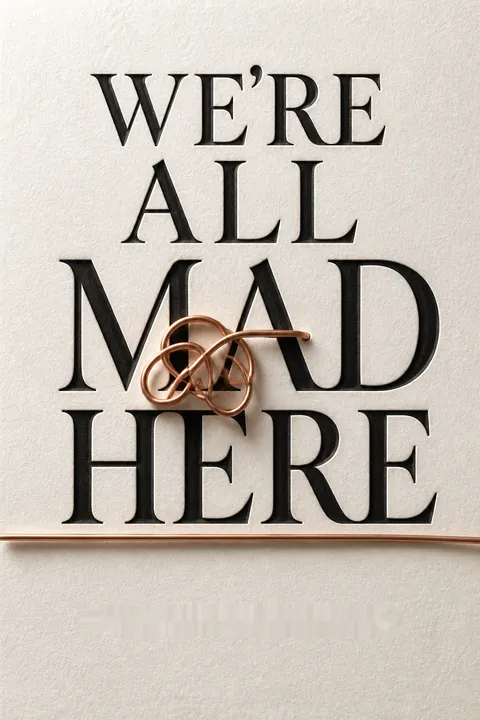
What’s "We’re All Mad Here: The No-Nonsense Guide to Living with Social Anxiety" by Claire Eastham about?
- Personal journey with social anxiety: The book is a candid, humorous, and practical account of Claire Eastham’s own experiences living with social anxiety, from childhood through adulthood.
- Practical advice and strategies: It offers straightforward, jargon-free guidance on understanding, managing, and recovering from social anxiety, including both medical and lifestyle approaches.
- Destigmatizing mental health: Eastham aims to normalize conversations about anxiety, emphasizing that it’s a common, treatable condition and not a sign of weakness.
- Support for sufferers and caregivers: The book provides tips not only for those with social anxiety but also for friends, family, and caregivers who want to help.
Why should I read "We’re All Mad Here" by Claire Eastham?
- Relatable and honest voice: Eastham’s writing is approachable, funny, and deeply personal, making readers feel understood and less alone.
- Actionable, no-nonsense advice: The book is packed with practical tips, exercises, and real-life examples that can be immediately applied.
- Destigmatization and empowerment: It helps readers accept their condition, take ownership, and move toward recovery without shame.
- Guidance for all stages: Whether you’re newly diagnosed, struggling for years, or supporting someone with anxiety, the book offers relevant insights and support.
What are the key takeaways from "We’re All Mad Here" by Claire Eastham?
- Acceptance is crucial: Recovery starts with accepting social anxiety as a real, medical condition, not a personal failing.
- Multiple treatment options: There’s no one-size-fits-all cure; medication, therapy, lifestyle changes, and self-care all play roles.
- Practical coping strategies: Techniques like CBT, exposure therapy, mindfulness, and self-compassion are emphasized throughout.
- Social anxiety is common and manageable: With the right tools and support, it’s possible to lead a fulfilling life despite anxiety.
How does Claire Eastham define social anxiety in "We’re All Mad Here"?
- Medical and personal definitions: Social anxiety is described as a fear or phobia related to social situations, often involving dread of embarrassment or judgment.
- Physical symptoms: Common signs include blushing, shaking, sweating, nausea, and a constant need to use the toilet.
- Mental and emotional symptoms: These include negative self-talk, overanalyzing interactions, fear of embarrassment, and self-criticism.
- Vicious cycle: Worrying about symptoms can trigger them, creating a self-perpetuating loop of anxiety.
What causes social anxiety according to "We’re All Mad Here" by Claire Eastham?
- Overactive nervous system: Eastham suggests some people are born with a more sensitive nervous system, making them prone to anxiety.
- Brain evolution: The book explains how the emotional (mammalian) brain can override rational thought, leading to anxiety in modern social situations.
- Hereditary and environmental factors: Genetics, upbringing, and life experiences all play a role, but pinpointing a single cause is often impossible.
- Amygdala’s role: The amygdala, or “smoke alarm” of the brain, can mistakenly flag social situations as dangerous, triggering anxiety responses.
What treatment options and practical advice does "We’re All Mad Here" by Claire Eastham offer for social anxiety?
- Medication: The book covers SSRIs, beta blockers, sleeping tablets, and tranquilizers, including their benefits, side effects, and when to consider them.
- Natural supplements and lifestyle: Omega-3, vitamin B, aromatherapy, exercise, and diet changes are recommended for supporting mental health.
- Therapy: Cognitive Behavioral Therapy (CBT), exposure therapy, and mindfulness meditation are explained with step-by-step guidance.
- Self-help strategies: Distraction techniques, positive refocusing, creative outlets, and building a personal “anxiety first-aid kit” are encouraged.
How does "We’re All Mad Here" by Claire Eastham explain Cognitive Behavioral Therapy (CBT) and exposure therapy for social anxiety?
- CBT basics: CBT helps identify and challenge negative thought patterns (like catastrophizing, mind-reading, and all-or-nothing thinking) that fuel anxiety.
- Thought chart exercise: Eastham provides a simple template for tracking negative thoughts, emotions, thinking errors, evidence, and reframing.
- Exposure therapy: This involves gradually facing feared situations in small, manageable steps to desensitize the brain and reduce avoidance.
- Acceptance and practice: Both therapies require patience, repeated practice, and a willingness to feel discomfort in order to achieve long-term change.
What are some unique challenges of social anxiety in school, university, and work, according to "We’re All Mad Here" by Claire Eastham?
- School and university: Group work, public speaking, and social pressures can be especially tough; Eastham shares personal stories of blushing, trembling, and feeling like an outsider.
- Work environment: Networking, meetings, and office politics can trigger anxiety, especially in competitive or extrovert-dominated workplaces.
- Social media: Platforms like Facebook and Instagram can amplify insecurities and the fear of missing out.
- Coping strategies: The book offers tips for managing these environments, including preparation, self-advocacy, and seeking support.
How does "We’re All Mad Here" by Claire Eastham address the role of caregivers and friends in supporting someone with social anxiety?
- Understanding is key: Caregivers should learn about social anxiety and avoid rationalizing or minimizing the sufferer’s feelings.
- Supportive actions: Remain calm, let attacks run their course, use distraction, and offer comfort without overwhelming with questions or solutions.
- Avoid common mistakes: Don’t panic, lose your temper, force positivity, or prevent the person from using their own coping mechanisms.
- Communication: Ask if the person wants to talk after an attack and respect their needs for space or comfort.
What are the main obstacles to recovery from social anxiety, as described in "We’re All Mad Here" by Claire Eastham?
- The “Tiger,” “Bully,” and “Frenemy”: These are metaphors for different aspects of anxiety—physical symptoms, negative self-talk, and avoidance disguised as self-care.
- Brain sabotage: The brain resists new routines with aggressive, sneaky, and even positive-sounding excuses to quit.
- Relapse and setbacks: Slipping back into old habits is normal and not a sign of failure; recovery is a process, not a one-time event.
- Procrastination: Taking action is essential; waiting for the “right time” only delays progress.
What are the best quotes from "We’re All Mad Here" by Claire Eastham and what do they mean?
- “You need to accept that you have a mental condition. You can’t heal if you don’t accept it, that’s just the way it is.” — Emphasizes the importance of self-acceptance as the foundation for recovery.
- “Social anxiety is a very treatable condition – one that you don’t have to be ashamed of, or deal with alone. I’m right there with you.” — Reassures readers that help is available and they are not alone.
- “We’re all mad here, I am, you are. But I’ll tell you a secret…all the best people are.” (Lewis Carroll, quoted) — Normalizes mental health struggles and celebrates individuality.
- “If you find something difficult and you do it anyway (whether it turns out the way you want or not), this is a success.” — Redefines success as effort and courage, not just outcomes.
What resources and further reading does "We’re All Mad Here" by Claire Eastham recommend for social anxiety?
- Books: Recommendations include "Quiet" by Susan Cain, "Panic Attacks Workbook" by David Carbonell, and "Reasons to Stay Alive" by Matt Haig.
- Apps and websites: Headspace, Mindpilot, Anxiety UK, Mind, and various blogs and YouTube channels are listed for additional support.
- Charities and organizations: Anxiety UK, Mind, ADAA, Beyond Blue, and others are highlighted for their resources and helplines.
- Community and peer support: The book encourages connecting with others through support groups, online communities, and mental health charities.
Download PDF
Download EPUB
.epub digital book format is ideal for reading ebooks on phones, tablets, and e-readers.








