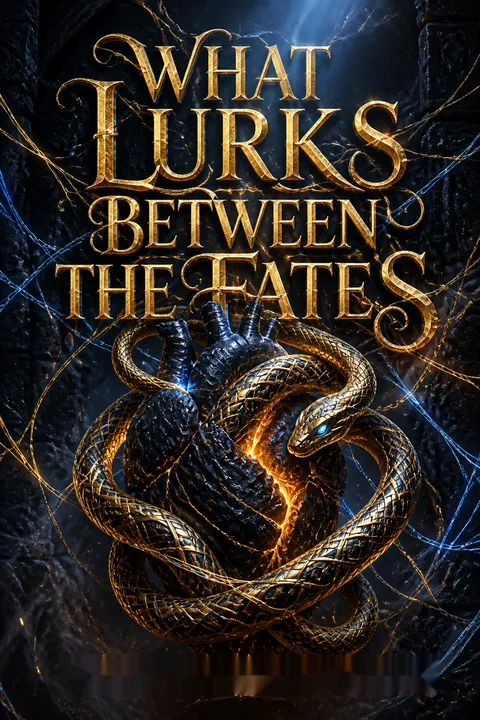


Plot Summary
Prologue
Caldris watches as Mab’s court carries Estrella unconscious into the Court of Shadows, then forces him to his knees and has Malachi cut off his hands. Iron daggers pin him to the frozen ground, stopping his wounds from healing while Estrella is taken beyond his reach.
Fallon is led away with Davorin, and Caldris makes sure Estrella’s human mother is escorted to safety. Left bleeding in the snow, he struggles toward the blades because he believes Estrella needs him alive beside her.
The opening makes captivity physical before it becomes political: iron holds Caldris still, while Mab’s power reaches through his body to command him. His first response is not to plot escape or preserve himself, but to crawl toward Estrella. That devotion is both the emotional engine of the story and the vulnerability Mab knows how to exploit. The prologue also plants two unanswered questions that shape the novel: why Estrella has been taken, and what her heritage means for Fallon.
Awake Above the Serpents
When Estrella wakes, iron chains suspend her over a pit of snakes in Mab’s throne room. Above the Queen of Air and Darkness, human and Fae prisoners hang in cages, including Adelphia, a kind woman Estrella once knew, whose ruined body makes the court’s cruelty unmistakable. Mab interrogates Fallon, expecting her supposed daughter to possess magic, but Fallon has none.
Estrella cannot find Caldris and senses his power fading through their bond. A golden thread reaches from Mab’s throne to a skull; when Estrella pulls it, the skull turns toward the Queen. After guards lower her, Estrella fights one who tries to chain her, using his momentum to impale him on a wall spike. Mab orders her restrained, still unsure what she is.
Estrella’s first resistance is physical and improvised, not a triumphant display of mastery. Her attention moves from Adelphia’s suffering to Fallon’s danger, then to the missing Caldris, establishing how care and fear drive her choices. The turning skull hints that she can affect forces the court assumes belong to Mab. Yet the Queen controls the room and quickly converts curiosity into confinement. Estrella’s courage is real, but it does not yet equal freedom.
The Whip Changes Hands
Mab prepares to lash Estrella, but Caldris reaches her first, injured from his own punishment and still strong enough to shield her with his body. He offers himself in her place. Estrella refuses to let him absorb the blows alone: she catches the shadow whip, takes its iron burn, and turns the weapon against Mab.
The lash cuts the Queen’s cheek before dissolving, while golden light knits Estrella’s damaged arm back together. Mab’s court falls silent. The Queen decides the pair are more useful alive and sends them to the dungeon. A guard knocks Estrella unconscious on the way, leaving Caldris and her separated in neighboring iron cells when she wakes.
The exchange reverses the expected roles of protector and protected. Caldris treats pain as a familiar price for keeping Estrella safe, while she sees his sacrifice as something she must refuse, even at cost to herself. Her healing and ability to seize Mab’s weapon transform her from an object of inspection into a political danger. But the result is not escape. Mab absorbs the new information and tightens control, showing that power discovered under captivity can still be folded into a captor’s plans.
A Ferryman Knows Her
During sleep, Estrella finds herself on a dark river crowded with lost spirits. A hooded ferryman drives away one creature before it can seize her, then warns her against seeking answers blindly. His words echo a familiar warning her dead father used when she was a curious child, and he addresses her by the nickname her father gave her.
Estrella wakes in her cell and shares the memory with Caldris, who explains that the ferryman is a collective guardian of souls, not one ordinary man. The spirit’s intervention breaks its own rules. Estrella begins to suspect her father had a connection to the Fates before his death, but neither of them knows why the ferryman recognized her.
The dream turns grief into evidence. Estrella has treated her father’s sayings as private memories, but the ferryman’s familiarity suggests that her childhood may have been shaped by a larger design. Caldris can explain the river’s rules, yet his knowledge cannot account for the exception made for her. The scene establishes the novel’s pattern of partial revelation: clues arrive with enough force to unsettle Estrella, but not enough context to make her safe.
Power Beneath Iron
In their cells, Estrella tests the new force she feels within her. The earth beneath the dungeon seems to reject her touch, and stone cracks when she presses it, leaving her unsure whether the sensations are magic or fear. When she asks what Mab’s guards did to Caldris, he refuses to describe it, trying to spare her the memory.
Estrella’s command breaks through his resistance and forces him to disclose how Malachi severed his hands and pinned him with iron blades. The memory floods their bond, and Estrella feels the pain he endured while dragging himself through the snow toward her. They argue over consent and protection, recognizing that each has used command to shield the other. Estrella realizes her power can overpower a god.
Estrella’s ability is not simply a weapon; it changes the ethics of her closest relationship. She crosses Caldris’s boundary because she cannot accept protection that leaves her ignorant, while he has repeatedly crossed hers for the same reason. Their love does not erase the imbalance created by command. Naming that imbalance gives them a chance to negotiate, but the discovery that she can compel a god also makes their bond a place of danger, not only comfort.
Ophir's Chain Noose
Mab eventually summons Estrella from the dungeon for a meal, insisting that she needs to understand the price of defying the court. She brings in Ophir, Malachi’s twin, whose mate Caldris killed centuries earlier, and lets him attack Estrella while she is weak from iron and hunger.
Estrella fights with the objects at hand: a broken wineglass, a bowl, and finally the chains fastening her wrists. She loops the iron around Ophir’s throat and pulls until he dies. His death makes Malachi her declared enemy and proves to Mab that Estrella will kill to survive. Afterward, Imelda tends Estrella’s wounds and confirms that her mother has found refuge in the Winter Court.
Estrella’s first killing is both self-defense and a rupture in her self-image. She does not enter the scene seeking violence, but Mab arranges a situation in which survival requires it. The chain that was meant to make her helpless becomes her means of resistance. The consequence is not moral clarity: Estrella has survived, but she must now carry responsibility for a death and face Malachi’s vengeance. Mab’s tests keep turning imposed victimhood into choices that stain her.
The Price of a Name
Imelda visits Estrella after the fight, heals her head injury with a witch’s potion, and explains that Estrella’s mother is safe with Queen Twyla. She warns her about Faerie customs: names, gifts, promises, and favors can all become tools of control. Mab soon tests those lessons by shackling Estrella to a chair and demanding her name.
When Estrella refuses, Mab’s thorned shadows pierce beneath her fingernails and then tear skin from her back. Caldris finally gives Mab Estrella’s full name and birthplace to stop the torture. Once released from the iron, Estrella heals in a golden glow. Mab locks an iron collar around her throat, limiting her magic while keeping her alive for further tests.
Imelda’s advice makes language and etiquette part of survival, but Mab demonstrates that knowing the rules does not neutralize a ruler who can force the stakes. Estrella’s silence protects her until Caldris decides her suffering has become intolerable. His disclosure is another act of love that also deprives her of control. The golden healing offers a glimpse of extraordinary capacity, while the collar shows how quickly the court can answer a new power with a new restraint.
The Llaidhe Bow First
Mab puts Estrella to work cleaning the cages and removing the remains of the prisoners who died there. Fallon and Imelda help her carry Adelphia’s body from its cage, and Estrella lays her gently among the other dead before the prisoners are buried. The care she shows a woman she barely knew draws the attention of the Llaidhe, the Fae Mab treats as lesser because they are not human-shaped.
When Malachi lashes a winged Fae for working too slowly, Estrella steps between them. He backs down rather than strike her in front of the watching court. The Llaidhe resume their labor, but now they look to Estrella as someone who recognizes their dignity.
Estrella’s influence begins with a practical act that costs her comfort, not a claim to authority. Carrying Adelphia’s remains and standing between Malachi and the winged Fae gives the marginalized community evidence that she will share risk rather than merely offer sympathy. The change is small but consequential: the Llaidhe begin to imagine a different relationship to power. Estrella’s emerging political role is rooted in attention to specific bodies and injuries, not in inherited rank.
The Courts Bring Their Dead
As the Winter Solstice approaches, Mab gathers the rulers of the other courts and displays Estrella as a chained prisoner, despite her growing connection to Caldris and the Winter Court. Rheaghan, Mab’s brother and King of Summer, challenges her treatment, while Caldris’s mother, Twyla, arrives from the Winter Court. Fallon is brought into the gathering, still resisting Mab’s attempt to rename and control her.
Estrella learns that the coming Tithe requires seven lives to reinforce the prison of Tartarus. Among the captives is Skye, a human woman from Estrella’s past, now among the intended sacrifices. Caldris stops Estrella from naming someone else to take Skye’s place, because doing so would make her complicit in Mab’s system.
The gathering turns private captivity into a public arrangement among rulers. Estrella’s collar announces that Mab believes she can define both her status and her future. The Tithe reveals the material cost of keeping Tartarus sealed, but Mab’s treatment of captives makes necessity difficult to separate from domination. Skye’s presence sharpens that conflict: Estrella’s compassion is genuine, yet acting on it without thought could expose her and others to even greater control.
The Tree Burns Bright
At the start of the Solstice observances, Mab lights a great holly tree and declares that it will burn for seven days as the courts prepare for the Tithe. The ceremony brings Estrella to the Cove, a place Caldris identifies as the entrance to Tartarus and the traditional site of a completed mate bond.
The water draws Estrella with a strange, intimate pull, though Caldris warns her away from it. The tree’s flames spread without consuming it, filling the cavern with light as the gathered rulers begin the ritual. Estrella and Caldris share a night together before the trials ahead, each aware that Mab can use their attachment against them.
The Cove brings together the novel’s most charged opposites: intimacy and danger, a place for union and a gateway to imprisonment. Estrella feels drawn to its water before she understands why, while Caldris knows enough of its history to fear it. The burning holly tree gives the ritual a visible clock, making the seven-day observance feel both ceremonial and threatening. Their private closeness offers relief, but it cannot remove the political conditions surrounding them.
The Minotaur Loses
Mab sends Estrella into a hedge labyrinth against its Minotaur, promising that victory will earn her a chance to complete her bond with Caldris. Estrella has no weapon and cannot reach her magic, so she uses the maze itself. She hides in the hedges, slips beneath the Minotaur, and steals the ring from its nose.
When it nearly strangles her, she drives the piercing into its eyes, then turns its own axe against it and cuts off its head. Estrella presents the head to Mab, but the Queen evades the promised reward, saying the bond can be completed later. Estrella has won the fight and gained no freedom, learning that a Faerie bargain is only as clear as its terms.
The labyrinth tests practical intelligence before supernatural power. Estrella survives by reading the Minotaur’s body, the terrain, and the openings created by its own aggression. The victory matters, but Mab’s evasive response makes the political lesson unmistakable: courage cannot compensate for a badly defined agreement. Estrella’s success therefore produces both confidence and a sharper understanding of how power hides inside language.
Threads of the World
Mab pressures Estrella to reveal her magic and threatens to marry Fallon to Etan if neither woman proves useful. Fallon urges Estrella to stop treating her power as a danger that must be buried. Estrella finally reaches the golden threads she has glimpsed before and pulls them from the sky. The moons and stars vanish, plunging the area outside Tar Mesa into darkness; when she releases the threads, they return.
Mab recognizes that Estrella can perceive the forces that shape the world, something she associates with the missing Primordials. Estrella, exhausted and frightened by the scale of what she has done, returns to Caldris with a new possibility about her nature and no certainty about how to control it.
Estrella’s power becomes accessible when another person helps her regard it without disgust. Fallon does not provide a technique so much as a relational condition: she treats Estrella as capable before Estrella believes it herself. The darkness over the sky makes this inner shift publicly legible, forcing Mab to revise her assumptions. Yet the revelation creates a new threat. A capacity that can alter the heavens is precisely the kind of resource a tyrant will try to possess.
The Aonnaigh Chooses Her
During a hunt through the Pillars, Estrella learns to form small lights from her own magic rather than borrowing Caldris’s power. At a carved pillar, a black, winged horse with a glowing horn approaches and accepts her touch. Mab’s hunters shoot at the creature, but Estrella drives it away and turns to fight the monsters loose in the forest.
Rheaghan explains that the aonnaigh is a legendary creature associated with the Primordials and the rightful queen of the world. Caldris helps Estrella dispatch the creatures, and their survival brings her closer to using her magic by choice rather than only in moments of terror. The horse’s recognition deepens the suspicion that her place in Alfheimr is more than accidental.
This hunt shifts Estrella from reactive power to experimentation. She makes light for its own sake, then chooses to protect a creature that Mab wants to capture. The aonnaigh’s response does not settle Estrella’s identity, but it gives her a form of recognition that the court cannot grant or withdraw. Rheaghan’s interpretation raises the stakes while remaining a hypothesis, leaving Estrella with a sign of possible belonging rather than a definitive answer.
The Tongue and Heart
After a courtier spits on Estrella, Caldris follows him through the palace and kills him, taking his tongue and heart as trophies for her. Mab recognizes the killing as an open challenge and sends Caldris away with Davorin to meet the visiting rulers, leaving Estrella in Tar Mesa. During his absence, Rheaghan tells Estrella that Caldris has accepted Mab’s punishments in her place.
Estrella understands that Caldris hid the cost to spare her and forgives him, though she remains furious that he decided for her. She then dances with Rheaghan and the other rulers, using the court’s own festivities to bring Fae and Llaidhe together and make Mab’s social order look less inevitable.
Caldris’s revenge gives Estrella a gift, but it also shows how easily protection becomes unilateral control. His silence has been meant as care, yet it repeats the deprivation of choice that shapes both their lives. Estrella’s forgiveness does not erase that conflict. Her public dancing offers a different response to Mab: instead of matching cruelty with fear, she builds relationships across the divisions that keep the Queen powerful.
Mab Makes Mates Disposable
During the Solstice gatherings, Mab brings human Fae-mates before her and offers to release one couple if the Fae swear allegiance to her. She chooses one pair, then has Malachi kill two other captives when their mates cannot secure their freedom. Estrella watches the remaining Fae hold their partners’ bodies, unable to undo Mab’s decision.
The contest among the Gods continues to determine who will serve as the powerful sacrifice required by the Tithe. Caldris fights through the rounds, but when Eryx defeats Ilaria and she faces death, Caldris and Kahlo lay down their weapons instead of turning her loss into a final contest. Their refusal cannot save Ilaria, but it denies Mab the spectacle of a clean victory.
Mab turns mate bonds into instruments of political coercion, making love a public vulnerability rather than a private refuge. The deaths expose the limits of Estrella’s influence: solidarity and protest cannot always interrupt violence in time. Caldris and Kahlo’s decision to stop fighting is not a rescue, but it changes the meaning of the contest. They refuse to make another being’s grief into entertainment, even when that refusal cannot reverse the outcome.
Malazan's Last Night
Rheaghan reveals that Malazan has tortured Caldris and used other people to make him watch, accepting the punishment Mab demanded in Estrella’s place. Estrella waits until night and enters Malazan’s room, killing her with the woman’s own knife. She then tries to reach the human captives, hoping to remove them before the Tithe.
Rheaghan stops her, explaining that Mab would replace them and that Estrella would expose her ability to cross the palace’s magical barriers. He sends her back to her room, where she burns with anger at being denied a rescue. The next day, Mab cannot prove Estrella left, and Estrella publicly denies responsibility for Malazan’s death, exposing a limit in Mab’s knowledge of what she is.
Estrella’s revenge is an attempt to answer an old injury, but it also marks a crossing into deliberate violence. Rheaghan’s intervention forces her to distinguish moral desire from effective action: freeing these captives would not stop the sacrifice system and could cost her strategic advantage. Her public denial then exploits a rule Mab assumes governs all Fae. Estrella learns that secrecy can be a weapon, but using it brings her closer to the very violence she fears becoming.
A Crown of Stolen Light
With Caldris and Nila’s help, Estrella kills Malachi, then uses her blood and magic to raise his body as a servant who obeys her. At the Solstice ball, she sends him ahead and enters beneath a crown from Twyla, presenting herself as a power Mab cannot simply dismiss. She pulls on the Queen’s shadow threads and severs one of Mab’s hands, a wound that does not heal.
As Estrella’s power surges beyond what her body can contain, a golden-eyed stranger appears in her vision and draws the excess away. He reveals that he is her father, but refuses to explain his identity or the purpose of her birth. Estrella returns to herself depleted, while Mab’s court has witnessed the first lasting injury inflicted on its ruler.
The spectacle is built from several forms of borrowed authority: Twyla’s crown, Caldris’s protection, Nila’s preparation, and Estrella’s own command of the dead. Yet the lasting wound is hers to make. Her power also threatens to consume her, showing that political liberation cannot rely on raw force alone. The stranger’s intervention adds a personal dimension to the cosmic mystery, but his refusal to explain keeps Estrella dependent on questions rather than answers.
The Daemon at the Cove
While Mab is distracted, Caldris leads Estrella to the Cove so they can attempt to complete their mate bond. The ritual requires Estrella to flee and Caldris to pursue her. Before he can reach her, a daemon attacks, drains her magic, and breaks Caldris’s body. Estrella fights with an iron dagger and a burning branch from the holly tree, helping Caldris destroy it before it can kill them both.
Mab arrives, finds them wounded, and summons another daemon to guard Estrella. She gives Estrella a new task: retrieve a serpent from Medusa’s crown in Tartarus within thirteen days, or Caldris will die. The failed bond leaves them together but still vulnerable to Mab’s commands.
The interrupted pursuit turns a ritual of chosen intimacy into another survival test. Estrella and Caldris enter the Cove seeking a bond that might strengthen them, but the daemon exploits the very vulnerability they are trying to overcome. Their cooperation saves them, while the damage leaves Estrella’s magic diminished. Mab’s deadline converts that near-death into renewed leverage, making the next separation not a matter of choice but an imposed mission.
Caldris Dies, Estrella Is Bound
At the Tithe, Mab’s shadows kill the human captives, including Skye, while Estrella watches helplessly. Mab then drives an iron blade into Caldris’s heart as the powerful sacrifice. Estrella feeds him her blood, restoring his life and intensifying their bond. Mab uses the moment to bind Estrella to her with a serpent around her heart, then kills Rheaghan when he objects.
Caldris cannot stop her. Mab orders Estrella to enter Tartarus and bring back a serpent from Medusa’s crown, giving her thirteen days before Caldris dies. As Estrella wades into the Cove, living tendrils seize her and the dead, dragging her underwater while Caldris is left on shore.
The climax joins the novel’s private and political stakes through the same act of coercion: Estrella saves Caldris by surrendering a measure of her autonomy. Mab makes that choice permanent by binding her, then kills the one ruler willing to oppose her openly. Estrella’s mission into Tartarus is both a deadline and a descent into the danger the Cove has represented all along. The final abduction leaves the immediate outcome unresolved, with Caldris alive but unable to follow.
Analysis
What Lurks Between the Fates makes captivity more than a setting. Mab controls bodies with iron, relationships with threats, and political imagination by making her rule seem permanent. Her power depends not only on force but on assigning people roles: Caldris is the obedient weapon, Fallon the failed heir, Estrella the curiosity, and the Llaidhe the lesser beings who should be grateful for survival. Estrella’s resistance matters because she refuses those assignments in practical ways. She protects prisoners, buries the dead, dances with people the court excludes, and finally acts on the threads that Mab only glimpses.
The novel’s central psychological conflict is the difference between care and control. Caldris loves Estrella by absorbing her pain and hiding its cost; Estrella loves him by refusing to be sent away or kept ignorant. Both acts arise from devotion, yet each can reproduce the helplessness they oppose. Their intimacy becomes meaningful not because it removes danger, but because they repeatedly negotiate agency under conditions designed to make choice impossible.
Estrella’s compassion is also a source of strategic vulnerability. Mab correctly understands that guilt can move Estrella where pain cannot, but mistakes compassion for weakness. Estrella’s care for the Llaidhe earns political trust precisely because it is visible in action, not declared as ideology. The story suggests that solidarity begins when a person treated as disposable is treated as fully human, even in a world where human and Fae status are unstable categories.
The ending refuses easy triumph. Estrella injures Mab and draws allies, but the Queen answers by binding her and separating her from Caldris. The unresolved descent into Tartarus leaves the revolt unfinished. It also makes the book’s deepest question concrete: can Estrella use immense power to break an unjust system without becoming another ruler who decides that other lives are expendable?
Review Summary
People Also Read
Characters
Estrella Barlowe
The captive starRaised as a human in Mistfell, Estrella enters the Fae realm with a lifetime of imposed obedience behind her and a stubborn instinct to protect people treated as disposable. She is curious, quick with a retort, and uncomfortable with the violence survival demands of her. Her love for Caldris is fierce, but she resists being reduced to a protected possession or political ornament. Estrella’s arc turns on learning to approach her own power without shame and to use influence as deliberately as force. Her compassion is not passivity: she challenges Mab, cares for the dead, and notices the people the court has trained itself to ignore.
Caldris
The imprisoned God of DeathThe God of the Dead and Estrella’s mate, Caldris has spent centuries under Mab’s control. He is formidable in battle, but long captivity has taught him to endure what he cannot immediately change. His instinct is to protect Estrella by taking pain onto himself and hiding its cost from her. That devotion gives their relationship its tenderness and its tension: he must learn that shielding her can also deny her agency. Caldris wants a life with Estrella beyond Mab’s reach, yet his sense of what is possible has been shaped by generations of obedience and punishment.
Mab
The Queen of Air and DarknessMab rules the Court of Shadows through fear, spectacle, and a relentless appetite for control. She is perceptive enough to recognize power quickly and patient enough to turn relationships into leverage. Her court’s cruelty is not random; she uses punishment to isolate people, test loyalties, and make resistance appear futile. Mab sees Estrella as both a threat and a possible instrument, while treating Fallon as a disappointing heir rather than a person with her own history. Beneath her command lies a ruler who cannot tolerate uncertainty or the possibility that another woman might gain authority without becoming like her.
Fallon
Estrella’s steadfast allyFallon shares a deep, chosen bond with Estrella, forged through their escape from the human realm and their journey into Alfheimr. Mab claims her as a daughter, but Fallon refuses to let that claim define her name or allegiance. She is observant, resourceful, and more cautious in public than Estrella, a difference that helps both women survive. Fallon’s apparent lack of magic makes her vulnerable to Mab’s expectations, but it does not make her passive. She supports Estrella through fear and uncertainty, reminding her that power can be accepted rather than suppressed.
Imelda
The witch who tends themImelda is a witch and a trusted companion to Estrella and Fallon. Practical and emotionally perceptive, she treats injuries, explains the traps hidden in Faerie customs, and tries to keep her friends from being isolated. Her care is active rather than sentimental: she gives Estrella rules that may keep her alive, even when there is little she can do to change their captivity. Imelda’s bond with the others makes her both a source of stability and a potential target for Mab.
Nila
Estrella’s courtly guideNila is assigned to attend Estrella in Mab’s court. She understands the rituals of dress, presentation, and survival that Estrella resents, and she quietly shares what she can about the rulers and their customs. Her advice is shaped by the need to stay alive under surveillance, but she does not mistake submission for loyalty. Nila’s careful kindness helps Estrella navigate court life without turning her into the sort of aristocrat who treats servants as invisible.
Rheaghan
Mab’s sunlit brotherRheaghan is the God of the Sun and King of the Summer Court, as well as Mab’s brother. His warmth and humor contrast with her severity, but he carries guilt over having failed to stop her rise. He understands Mab’s habits better than most and can offer Estrella strategic insight, though his choices are not always easy to trust. Rheaghan wants a more peaceful Alfheimr, but he must decide whether loyalty to family has become another excuse for tolerating tyranny.
Twyla
Caldris’s Winter Queen motherTwyla is the Goddess of the Moon and Queen of the Winter Court. She is Caldris’s mother, though their relationship has been strained by Mab’s long control over him and by the losses surrounding their family. Twyla is cautious about open resistance, knowing how heavily Mab can punish anyone who challenges her. Her reservations do not erase her concern for Caldris or Estrella, and she must weigh a parent’s fear against the possibility that caution has helped Mab remain in power.
Malachi
Mab’s iron-handed enforcerMalachi serves Mab as a guard and agent of punishment. He is Ophir’s twin and shares his brother’s capacity for cruelty, though he is more disciplined in carrying out the Queen’s orders. His hostility toward Estrella grows from personal grievance as well as his loyalty to Mab. Malachi represents the court’s practical machinery of violence: he locks the collars, escorts prisoners, and ensures that Mab’s threats become immediate physical consequences.
Soren
The God of TwilightSoren is Caldris’s cousin and the God of Twilight. Amused, perceptive, and comfortable around danger, he can needle Caldris without treating Estrella as a prize to be claimed. His presence offers a glimpse of family life beyond the power struggle at Tar Mesa. Soren watches Estrella closely, aware that her abilities and place in the court may alter the balance of power.
Ophir
Mab’s cruel twin enforcerOphir is Malachi’s twin and one of Mab’s favored instruments of intimidation. Unlike Fae whose cruelty is chiefly a result of Mab’s control, Ophir appears to take pleasure in harming others. His grievance against Caldris gives Mab a convenient reason to place him in Estrella’s path.
Adelphia
Estrella’s lost kindnessAdelphia is a woman Estrella met in the human realm and one of the first people to show her kindness outside the rigid life of Mistfell. Her fate in Mab’s prison makes the court’s cruelty immediate and personal to Estrella. Even after Adelphia can no longer speak for herself, Estrella’s care for her remains a measure of the person she is trying to preserve.
Skye
A captive from Estrella’s pastSkye is a human woman connected to the Resistance and to Estrella’s earlier life. She has endured captivity and carries a complicated history with Estrella, including distrust and anger. Her presence among Mab’s captives forces Estrella to confront the difference between personal forgiveness and the larger injustice of treating people as sacrifices.
The Ferryman
Keeper of the River StyxThe Ferryman is a spectral collective charged with guiding souls toward the afterlife. Its members are meant to remain impartial, yet one encounters Estrella and protects her from a lost spirit. The meeting connects her private memories to the strange rules governing death and the Fates. The Ferryman’s warnings offer atmosphere and clues, but not the explanations Estrella wants.
The Golden-Eyed Stranger
A visitor from Estrella’s visionsA mysterious man with golden eyes appears to Estrella in visions and moments when her power becomes too much for her to bear. He speaks as if he knows her nature and urges her to be cautious, but withholds the context she needs to understand him. His presence links her dreams, her father’s old warnings, and the larger mysteries of the Fates.
Kahlo
The Autumn God of BeastsKahlo is the God of Beasts and King of the Autumn Court. He is blunt, competitive, and accustomed to the rough politics among the Gods. His interactions with Estrella and Caldris show that he can recognize courage even when it comes from someone he has not yet learned to trust.
Eryx
The God of SleepEryx is the God of Sleep and a participant in Mab’s trials. He uses sleep dust in combat and must face the emotional cost of the court’s contest. His tenderness toward a defeated opponent complicates the image of the Gods as distant, invulnerable beings.
Ilaria
The Goddess of LoveIlaria is the Goddess of Love, drawn into the contest Mab uses to choose a sacrifice. Her presence makes the cost of the trials visible even among the Gods. She is not merely a title or a symbol in the arena; her fear and grief alter how the others respond.
Etan
A Summer Court political matchEtan is a Summer Court royal whom Mab considers a suitable husband for Fallon or Estrella. His role exposes how Mab treats marriage as a political arrangement and a tool for control. He appears uncomfortable with being used to claim someone else’s mate.
Monos
A Selkie shadeMonos is a Selkie shade who shares Estrella’s dungeon space. She is direct and protective despite her own history of confinement, offering Estrella a first glimpse of the forgotten dead who linger in Mab’s prison.
Lozu
A hungry gnome shadeLozu is a gnome shade with a blunt manner and an unsettling interest in tasting Estrella. His dark humor reflects the dungeon’s strange, long-established population, where even the dead have adapted their manners to survival.
Plot Devices
The Mate Bond
Love as leverageThe bond links Estrella and Caldris emotionally and physically, allowing each to sense the other’s pain, fear, and relief. It gives them comfort across the distance between their cells, but Mab understands that the connection can be turned against them. Their loyalty repeatedly becomes a reason to endure punishment or risk themselves for one another. The bond also raises a question that is larger than romance: how can two people protect each other without deciding for each other? Its incomplete state makes their desire for union inseparable from the political struggle over who controls their lives.
Iron Shackles and Collars
Power made captiveIron burns Fae and restricts their ability to use or heal with magic. Mab and her guards use it to imprison Caldris, restrain Estrella, and prevent her from exploring the strange force within her. The metal is not merely a physical obstacle: it makes control visible and turns a prisoner’s own body into the site of punishment. Removing the iron can restore strength, but doing so also exposes the captive to Mab’s scrutiny. The collar therefore functions as a portable prison, a reminder that even brief access to power may be granted or withdrawn by the Queen.
The Threads of Fate
Magic made visibleGolden threads appear to connect people, objects, and the forces that shape the world. Estrella first notices them around Mab’s throne and later learns she can draw on them to affect the sky and wound the Queen. They turn abstract destiny into something she can see and touch, but using them costs her strength and risks overwhelming her. Their relationship to the Primordials remains uncertain for much of the story. Because the threads can be manipulated, they also make power feel ethically dangerous: changing what is possible may have consequences Estrella cannot yet predict.
The Tithe
Sacrifice sustains the prisonThe Tithe is a ritual held at the Solstice to reinforce the boundary around Tartarus. It requires seven lives, including human Changelings and a powerful sacrifice selected from among the Gods. Mab uses the ritual to bring the courts together, turn captives into bargaining pieces, and remind the other rulers that the prison’s security depends on obedience. The Tithe gives the story a calendar and a concrete cost for political inaction. It also places Estrella’s instinct to save individual people against a system that claims mass suffering is necessary to contain something worse.
The Cove and Tartarus
A sanctuary hides a prisonThe Cove is a beautiful, secluded body of water inside the Court of Shadows, yet it is also the entrance to Tartarus. It draws Estrella with a mysterious sense of recognition, while Caldris knows that entering it can mean confronting the most dangerous beings in the realm. The Cove serves as the site of Solstice rites and the place where the novel’s final mission begins. Its contrast between luminous water and unseen threat captures the book’s recurring distrust of appearances: a place that promises belonging can also conceal captivity and irreversible danger.
Of Flesh & Bone Series

About the Author
Other books by Harper L. Woods


Download PDF
Download EPUB
.epub digital book format is ideal for reading ebooks on phones, tablets, and e-readers.








