

Key Takeaways
Treat marriage as a shared craft, not a secret formula
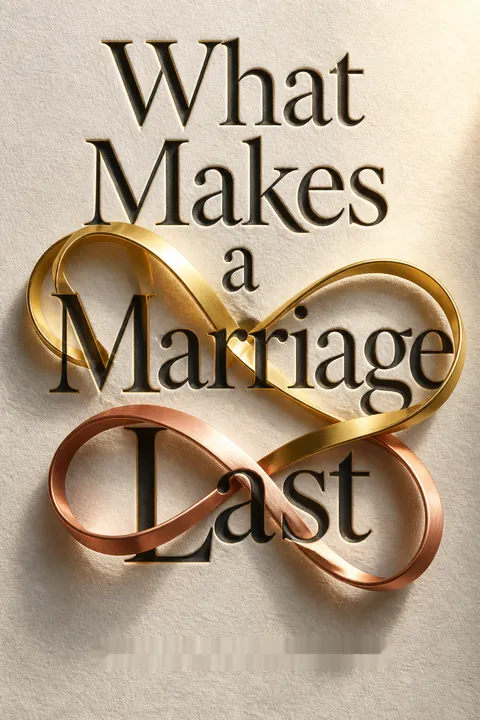
A question becomes a book. Marlo Thomas once doubted that lasting happiness with another person was possible. After a longtime couple they admired divorced, she and Phil Donahue began asking forty celebrated couples what had helped them stay together. Their interviews ranged from the Carters, married for more than seven decades, to couples whose relationships were newer, and included same-sex spouses whose marriages had only recently become legally recognized in the United States.
Different lives, recurring work. Their answers did not produce one recipe. Some couples relied on faith or humor, others on therapy, desire, friendship, or room to pursue separate interests. The authors’ conclusion is less a formula than a challenge: learn from other couples, but build a marriage that fits the two people in it.
The book’s interview form is its strength: memorable principles arrive attached to people who disagree, joke, and correct each other. That variety discourages the fantasy that a single rule can govern every household. It also limits what the stories can prove. These are couples selected for longevity and public accomplishment, not a representative sample, so their accounts offer possibilities rather than evidence that any one practice causes a marriage to last.
Choose the person in front of you, not a renovation project
Potential is not a plan. Patty Smyth warned against marrying someone for the person they might become. Judy and Jerry Sheindlin’s first marriage ended after thirteen years partly because Judy had taken on the job of reshaping Jerry. They reunited a year later with a clearer view of the habits each could and could not change. Their second marriage depended less on a personality makeover than on adjusting expectations.
Acceptance still has limits. Joanna Gaines learned to trust her husband’s instincts, while John McEnroe and Patty Smyth describe changing together without demanding that one partner become the other. But acceptance is not a command to tolerate every injury: Letty Pogrebin told Bert plainly that infidelity would end their marriage. The useful question is whether a flaw is an ordinary difference or a breach of safety and respect.
This principle echoes a distinction in behavioral science between traits that are relatively stable and behaviors that can change with effort and context. A spouse may learn new habits, but a partner cannot build a life around a hypothetical future version of someone else. The book’s strongest nuance is that acceptance need not mean passivity. Clear boundaries, like Letty’s, can coexist with patience about less consequential differences.
Make room for two full lives inside one commitment
Closeness needs breathing room. Jimmy and Rosalynn Carter began with sharply unequal roles: he made major decisions without consulting her, while she managed the household during his naval absences. Working together in their farm business changed the balance. Rosalynn kept the books, gained expertise, and became a partner whose judgment Jimmy sought. They also maintained separate interests and chose activities to share.
Independence can strengthen a bond. David Furnish and Elton John supported each other’s work rather than expecting one partner to orbit the other. Their children prompted a new division of labor and a change in Elton’s touring plans. Across these stories, commitment means coordinating lives, not merging identities. The fit is not always equal in every season, but it works best when both people’s ambitions and needs remain visible.
Relationship research often distinguishes autonomy from detachment: people can feel connected while retaining meaningful choice and identity. The couples’ stories make that distinction concrete. Yet the book also shows that space is easier to negotiate when a couple has money, childcare, or flexible work. For readers without those resources, autonomy may require practical agreements about time, labor, and support, not simply a shared belief in independence.
Disagree without making your partner unsafe
There is no universal fight rule. Jimmy and Rosalynn Carter tried to reconcile before bed. Billy and Janice Crystal sometimes slept on a disagreement and found it less urgent in the morning. James Carville favored postponing some conflicts, while other couples preferred to talk matters through. The common ground is not the timing. It is avoiding threats and degrading attacks that make it harder to return to one another.
Change the temperature. Ron and Cheryl Howard used recorded conversations, short speaking turns, and pauses when a discussion became unproductive. They found that listening to a recording could reveal that a conversation had been more balanced than it felt in the moment. Their method is a practical reminder: when tempers distort what each person thinks is happening, slow the exchange down before trying to solve it.
Conflict is not a single behavior that can be fixed with one slogan. A pause can prevent escalation, while a habit of postponing every difficult subject can turn avoidance into resentment. The relevant distinction is whether time apart helps partners return to the issue or helps them evade it. Recording a discussion may add perspective, but only if both people feel safe enough to speak honestly and neither uses the playback as evidence in a trial.
Ask what the complaint is really asking for
Listen beyond the words. Chesley Sullenberger learned that his wife, Lorrie, did not always want solutions when she described a problem. She wanted him to attend to her feelings. Rebecca Gupta similarly observed that resentment grew when partners assumed the other could read their minds. Saying directly that help, appreciation, or time together is needed gives a spouse something concrete to respond to.
Make repair practical. Ron and Cheryl Howard treated couples counseling as a tune-up rather than a last resort. Rodney and Holly Robinson Peete use a practice they call Same Page Love: each partner gets time to explain what they feel while the other listens. Neither technique guarantees agreement. Both make it easier to identify the real concern beneath a fight about schedules, chores, or a dog left outside.
The section’s useful insight is that communication involves more than transmitting facts. A partner may need empathy, attention, or a specific action, and advice can miss the request entirely. This resembles active listening in counseling and negotiation, where paraphrasing and checking understanding reduce mistaken assumptions. Still, clarity cannot do all the work: partners also need the time, goodwill, and practical capacity to act on what they hear.
Turn ordinary rituals into repeated proof of attention
Small acts carry meaning. Jimmy and Rosalynn Carter read the same Bible passage each night, even when traveling separately. Elton John and David Furnish exchanged handwritten cards every Saturday, building a personal record of their years together. These habits were not grand gestures. Their value came from being repeated and shaped to the couple’s own life.
Protect connection from routine. Ali Wentworth and George Stephanopoulos made family dinners and sexual intimacy priorities, while Marlo and Phil Donahue kept a private reference to a clarinetist whose joy they had noticed together. Such rituals can be words, touch, shared meals, or a private joke. The point is to keep noticing each other, rather than assuming that affection will remain obvious without being expressed.
Rituals act like reliable cues of belonging. In families, repeated meals or bedtime routines can create continuity; between partners, a small recurring gesture can make attention tangible during busy periods. The examples also resist a narrow definition of intimacy: handwritten notes, shared meaning, and sex may all matter, but not equally to every couple. A ritual should feel chosen, not become another duty used to measure a partner’s performance.
Face crises as a team, without romanticizing suffering
A crisis tests the partnership. When their son R.J. was diagnosed with autism, Holly Robinson Peete wanted immediate action, while Rodney initially struggled to accept the diagnosis. They nearly let that difference divide them. Rodney eventually joined the work of therapy and advocacy, and the HollyRod Foundation grew from their experience. Their story shows both the strain of a crisis and the value of finding a shared response.
Support can include outside help. Judy Woodruff and Al Hunt divided their time between work and caring for their son after a surgical error left him with serious disabilities. They later sought therapy as a family. Other couples faced cancer, Parkinson’s disease, addiction, or financial loss. In none of these cases was love a substitute for medical care, counseling, or practical support.
Shared adversity can create a sense of joint purpose, but it can also exhaust caregivers and expose unequal expectations. The Peetes’ different responses were not evidence of weaker love; they needed time and support to reach a common plan. The Woodruffs’ experience likewise cautions against presenting hardship as a relationship-building exercise. A couple’s resilience deserves recognition, while the burdens, losses, and outside resources involved should remain visible.
Nourish the marriage itself, not just each partner’s score
A relationship is more than a tally. Judith and Milton Viorst described marriage as a third entity alongside the two spouses: something they build and maintain together. That view helped them negotiate differences without treating every disagreement as a win-or-lose contest. It also explains why they learned to let some issues remain unresolved rather than turn daily irritation into a verdict on the whole relationship.
Keep updating the bargain. The Hendersons, married for eighty years, described a life of give-and-take and not insisting on having their own way. Ron and Cheryl Howard use counseling to revisit how they communicate as life changes. Their examples do not establish that longevity means perfection. They show that a durable partnership requires repeated choices about what deserves attention, what can be released, and what the couple wants to protect.
Thinking of marriage as a shared system can shift attention from scorekeeping to the quality of the relationship both people are creating. Family-systems theory similarly treats patterns between people as consequential, rather than reducing every problem to one person’s character. The metaphor has a limit: the marriage cannot become more important than either spouse’s safety or dignity. A healthy shared project requires two people who remain real participants in it.
Analysis
What Makes a Marriage Last is an interview anthology, not a manual built from controlled evidence. Its central achievement is to replace the idea of a single secret with a collection of workable practices. The couples differ in temperament, faith, sexuality, career, family history, conflict style, and how much time they spend together. Their accounts suggest that durability can rest on different combinations of affection, trust, autonomy, shared values, practical care, and a willingness to repair harm.
The narrative works because its interviewers become part of the inquiry. Marlo Thomas and Phil Donahue begin from personal uncertainty, prompted by a friend’s divorce, and reveal their own marriage as the conversations unfold. That makes the book less like a lecture and more like a series of candid visits. Humor matters: stories about a wedding ring thrown out a window, a ruined date over a ham sandwich, or a wife defending her quarterback on sports radio let couples show how they live together rather than merely describe an ideal.
The book’s strongest transferable lesson is not that couples must reconcile before sleep, attend therapy, keep separate interests, or share every detail. Its examples directly contradict any one-size-fits-all rule. The more general lesson is to discover which practices help these two people remain respectful, connected, and capable of change. Some couples need a shared ritual; others need space. Some talk through a conflict immediately; others need a pause.
There are limits to the evidence. The couples were chosen for longevity and public distinction, and many have unusual resources, supportive networks, or control over their work. Their stories cannot show that a particular habit caused success, nor do they represent marriages that ended. A few accounts also describe unequal sacrifice, especially around parenting and careers. The book is most useful when read as a rich set of examples, not as proof that endurance is always desirable or that hardship automatically strengthens love. Its most humane insight is that lasting marriage is neither effortless nor uniform: it is a relationship repeatedly shaped by the people inside it.
Review Summary
What Makes a Marriage Last received mostly positive reviews, with readers appreciating the diverse perspectives on long-lasting marriages. Many found it insightful and inspiring, praising the honest communication and effort showcased by the couples. Some readers noted repetition and felt the book was too long, while others appreciated the celebrity stories. The book was praised for its feel-good nature and valuable advice, though a few critics found it too focused on privileged couples. Overall, readers found it enjoyable and potentially helpful for their own relationships.
People Also Read





Glossary
Same Page Love
A structured listening practiceA communication practice named by Holly and Rodney Robinson Peete. Each partner takes time to describe what they are feeling while the other listens without interrupting or immediately responding. The purpose is to understand each other’s perspective and regain a sense of working together, especially when parenting or another major stress has strained the relationship.
The 20-Second Hug
A deliberate reconnecting hugA practice used by Holly and Rodney Robinson Peete: either partner can ask for a hug that lasts twenty seconds, even during a disagreement. They describe the sustained physical contact as a way to remember their connection while still angry. It does not resolve the argument, but it can interrupt the impulse to withdraw or escalate.
accelerated awakening
Growing insight into a partnerBob Woodward’s phrase for the way understanding of a spouse can deepen through repeated attention and reflection. He uses it to describe noticing Elsa Walsh’s empathy as she listens to a distressed friend, and recognizing how that quality shapes their own relationship. The term emphasizes ongoing discovery rather than assuming that familiarity means complete knowledge.
100/100
Full personal contributionViola Davis’s description of marriage as requiring each partner to bring full responsibility and effort, rather than dividing the relationship into two fixed half-shares. The idea is not that both people contribute identically at every moment. It emphasizes asking what each person is bringing to the partnership and what personal work remains theirs to do.
third thing
The marriage as shared creationJudith and Milton Viorst’s way of describing the marriage as something distinct from either spouse. It is created and sustained by both people, and may require compromise even when one partner would prefer to win a particular disagreement. The idea encourages couples to consider the health of their shared relationship without erasing either person’s needs.
Download PDF
Download EPUB
.epub digital book format is ideal for reading ebooks on phones, tablets, and e-readers.








