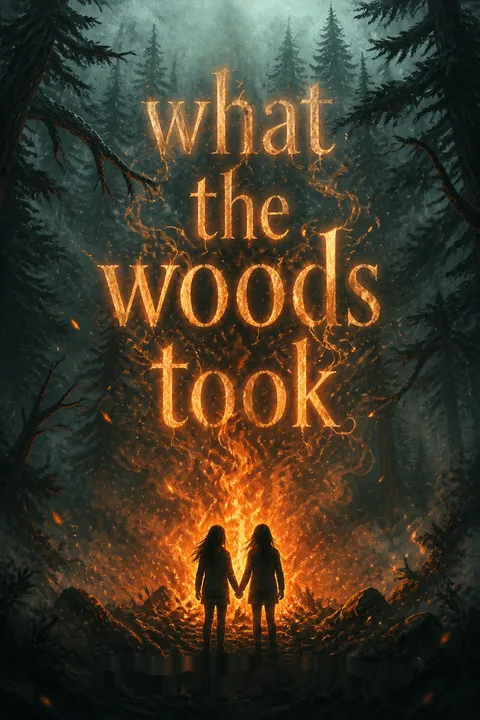


Plot Summary
Prologue
Before the story begins, REVIVE sends Devin’s foster parents a polished promise: fifty days in the wilderness will rebuild their troubled teen through discomfort, routine, and separation from modern life.
The letter presents forced removal as care and assures the family that resistance is expected. Its cheerful language conceals the program’s lack of meaningful safeguards, while its promise of a renewed teenager sets the standard against which the counselors and the wilderness will fail.
The letter establishes the story’s first horror before anything supernatural appears. REVIVE makes coercion sound therapeutic by borrowing the language of care, growth, and parental trust. Its promise to return a new teenager also treats identity as something adults can repair through pressure, rather than something a young person has a right to shape. The formal, reassuring voice matters because it shows how institutions can conceal harm without needing to look openly cruel. The wilderness will later expose the danger in this bargain, but the program has already made the teens vulnerable by framing their consent as unnecessary.
The Midnight Van
Seventeen-year-old Devin Green wakes to two men in her bedroom and fights them before her foster mother, Diane Patton, admits the abduction is meant to help. Her foster father, Henry, packs her things while the transporters force her into a van. There she meets Ollie Baker, a Portland teen whose father has also authorized his removal.
Ollie believes he has been sent away because his father suspects him of taking his dying grandmother’s pain medication. At a gas station, Devin tries to escape through a bathroom window, while Ollie nearly asks a cashier for help. The driver’s paperwork persuades the adults nearby that the teens are being transported legally. By midday, the van leaves them at a remote REVIVE camp in Idaho.
The opening gives Devin and Ollie different reasons to resist, but their shared helplessness begins to bind them before they choose one another. Devin has learned to treat escape as a practical skill because adults have repeatedly failed to protect her. Ollie, by contrast, has been trained to doubt that intervention will improve his life. The transporter’s authorization slip turns bystanders into passive witnesses: a document does what the men’s physical force alone could not. The scene also reframes parental permission as a source of danger. The teens arrive already carrying the central question of the novel: who gets to decide what help looks like?
Five Under Green Shirts
At the trailhead, Devin and Ollie meet the other teens: anxious Aidan, dutiful Hannah, and lavender-haired Sheridan, who refuses to cooperate with the counselors’ introductions. Coach Ethan presents REVIVE as a fifty-day summer camp, while Coach Liv explains the hiking, tarp shelters, and daily exercises.
Devin immediately distrusts the routine and clashes with Sheridan, who invents a tragic story to mock the group’s required sharing. Devin switches partners and discovers that Aidan’s earnestness is easier to bear.
Across the fire, Ollie listens as Hannah describes driving drunk after a party and crashing into a ditch. She is consumed by guilt, though no one was hurt. Ollie comforts her, while both teens begin to recognize how differently their families have taught them to understand mistakes.
The first camp builds the group through mismatched defenses rather than instant friendship. Devin uses defiance to retain control; Sheridan uses mockery to prevent anyone from getting close; Hannah confesses because guilt has already made her vulnerable; Aidan seeks reassurance through cheerful cooperation. Ollie’s first instinct is to comfort Hannah, which reveals an attentiveness he struggles to offer himself. The counselors’ exercises claim to create trust, but their coercive setting makes every disclosure suspect. The scene’s emotional progress comes instead from the teens choosing, in small ways, to listen to one another. Their tentative bonds begin outside the program’s official design.
Letters in the Fire
Near the end of the first week, Ethan hands letters from home to Aidan, Sheridan, and Ollie, but not to Devin or Hannah. Ollie’s father’s message feels clinical rather than intimate, while Sheridan burns her unopened letter and rejects Ethan’s demand that she reflect on it.
On a hike, Sheridan cruelly uses Hannah’s missing letter to deepen her fear that her father no longer loves her. Devin shoves Sheridan, then punches her when the provocation continues. Ethan reprimands Devin and reveals that her school fights, including a recent attack on Danielle, prompted state intervention after her foster parents ran out of options.
Devin realizes her placement was not simply Diane and Henry’s decision. Sheridan questions Ethan’s right to disclose Devin’s history, exposing the counselors’ careless handling of private information.
The letters make family attention a scarce resource, and the teens react according to what that scarcity means to them. Ollie receives contact but cannot feel its warmth; Sheridan refuses contact as a way to reclaim choice; Devin and Hannah are left to interpret silence. Sheridan’s cruelty toward Hannah repeats the very harm she claims to resist, while Devin’s punch protects Hannah and also repeats Devin’s learned method of making others stop. Ethan’s revelation complicates that method: Devin’s violence has consequences beyond individual fights, but the program discusses those consequences without earning her trust. Sheridan’s objection briefly interrupts the pattern of adults defining the teens for one another.
The River Crossing
At REVIVE’s first milestone, the group must cross a fast river using rope and harnesses. Devin swims first, then pulls the lightest teen, Sheridan, toward shore. Ollie follows, but Sheridan loses her footing and unclips her harness, tearing the rope free.
The current sweeps Ollie downstream. Devin plunges in, secures him to her own belt, and drags him to safety. Sheridan argues that the counselors created the danger, but Devin blames her for releasing the clip.
The group finishes the crossing, yet the forest beyond the river feels unnaturally silent. The next morning, the counselors are gone. Their empty camp and Ethan’s abandoned backpack leave the teens unable to tell whether the disappearance is an exercise, an accident, or a real emergency.
The river is both a physical test and the first point where the program’s manufactured risks spill into something the teens cannot interpret. Devin’s rescue of Ollie proves her strength, but it also reveals the cost of her automatic response to danger: she acts before she can assess who deserves blame. Sheridan’s release of the harness is reckless, yet her accusation about the adults is also true. The scene refuses to make trust a simple virtue. After the crossing, the missing counselors turn that ambiguity into a survival problem. The river marks a transition from controlled hardship to wilderness that may not obey REVIVE’s rules.
Maps and Separate Paths
Devin finds Ethan’s pack, maps, and food, but no counselors. Aidan argues they should follow REVIVE’s marked route, while Devin wants to search for the nearby structure Sheridan spots on the map. Ollie and Hannah side with Aidan, and a vote sends Devin and Sheridan toward the unmarked destination. The split exposes the group’s competing survival instincts: Devin cannot wait for a promised rescue, while Ollie needs a known endpoint.
The three on the trail lose their way when Aidan misreads the map. He spends the night searching alone and returns battered but with the route recovered. At the next food drop, they find supplies torn open and eaten. Ollie notices that the woods have gone eerily quiet and asks when they last heard an animal.
The vote turns a practical disagreement into a test of the group’s emotional loyalties. Devin hears caution as another attempt to keep her trapped; Ollie hears her urgency as a danger that could kill them all. Their disagreement hurts precisely because they have begun to care about one another. Aidan’s mistake and solitary recovery show that competence is uneven, not fixed by age or confidence. The ruined food drop and absence of animal sounds then undermine the group’s assumption that the mapped route is safe. The woods are not merely difficult terrain. They are a changing environment whose rules the teens have not been taught.
The Burned Cabin
Devin and Sheridan reach the mapped structure in worsening weather, only to find a lakeside cabin burned down to its stone foundation. Devin’s imagined escape collapses, and she lashes out at Sheridan for bringing her there.
That night, Devin wanders into the trees and sees a towering figure wearing the face of Mr. Atwood, a former foster caregiver she fears. She falls down a slope and wakes near the ruins. Sheridan has found a water-damaged journal belonging to an earlier hiker, Josiah Templeton.
She admits she has been withdrawing from oxycodone, explaining her exhaustion and frequent breaks. Devin apologizes for pushing her and agrees they should return to the marked route. At a campsite, they find a hidden message asking whoever finds it to send help, then follow its trail toward the others.
The burned cabin strips away Devin’s belief that sheer determination can guarantee a way out. Her anger at Sheridan is partly about the failed plan and partly about the terror of needing another person when she would rather rely only on herself. Sheridan’s disclosure of withdrawal gives Devin a new framework for behavior she had read as laziness or malice, without erasing the harm Sheridan has caused. Devin’s apology marks a real change: she can revise an interpretation instead of defending it at any cost. The vision of Mr. Atwood introduces a deeper wound the story has not yet named. The journal and rescue note make the wilderness feel inhabited by earlier failures.
Liv Comes Back
While Devin and Sheridan search the mountains, Ollie, Aidan, and Hannah struggle to recover from their lost day and dwindling food. A week after the counselors vanished, Liv staggers into camp, bloodied and scratched.
She claims a bear attacked her and says she has spent days searching for Ethan and the teens. Hannah doubts the account, especially when Liv’s wounds heal with startling speed, but Ollie wants to trust the adult who knows the forest. Liv leads them rapidly to the second milestone and climbs an oak to retrieve a food sack.
From above, she spots another campfire and immediately orders the teens away rather than investigate. Hannah and Ollie suspect danger; Aidan sides with Liv. Before leaving, Aidan hides a message asking anyone who finds the campsite to send help.
Liv’s return exploits a need the teens have been struggling to meet: someone older who can make decisions and promise a route out. Her injuries should make her vulnerable, but their rapid disappearance makes her less credible even as her confidence grows. Hannah’s suspicion is grounded in concrete inconsistencies, while Ollie’s trust reflects his exhaustion and desire to stop carrying responsibility alone. Aidan’s decision to leave a concealed message shows that loyalty and caution can coexist. The scene also reverses the program’s usual power structure. Liv had been their guide, but now the teens must decide whether her authority deserves obedience.
The Headless Father
At night, Liv draws Ollie into a private conversation about his father and begins pressing on his fear that he will never become the person his family wants. A shape-shifting creature appears behind him, wearing his father’s voice and face.
Liv’s questions keep Ollie frozen as the creature urges him to surrender his body. Devin and Sheridan arrive from the mountains and interrupt the attack. Devin fights Liv while Sheridan holds her back; the creature changes faces, including one that stops Devin cold.
Hannah tosses burning sticks into the struggle, and fire consumes both Liv and the creature. In the morning, the group compares what they saw. Aidan and Sheridan admit to earlier visions, and the teens begin to suspect that the forest’s figures imitate people they know.
The attack turns private shame into a weapon. The creature does not invent Ollie’s fears; it arranges his existing worries into a persuasive argument that he has no future. Liv’s apparent empathy makes that assault harder to resist because it arrives through a familiar therapeutic form. The teens survive through complementary actions rather than individual heroics: Devin confronts, Sheridan intervenes, and Hannah uses fire. Their later exchange of experiences begins the slow work of distinguishing shared reality from private fear. The scene also makes the program’s language newly sinister. A conversation about self-improvement can be caring, but it can also become a route into someone’s most vulnerable beliefs.
A Birthday Watchtower
After reuniting, the teens study Josiah Templeton’s journal and the map. On Devin’s eighteenth birthday, Sheridan finds coordinates for Magruder Point, a fire watchtower that may offer a place to signal rescuers.
Before they can celebrate, Aidan, Ollie, and Hannah return with burned paper they found near camp. The journal has several pages torn out, including the beginning of Josiah’s account of creatures he calls mimics. Aidan suspects Sheridan destroyed the evidence and joins Hannah and Ollie in tying her to a tree.
Devin questions Sheridan alone and believes her denial. She proposes a test: Sheridan will guide her and Aidan to the tower, while Ollie and Hannah stay on the marked route. The split gives Sheridan a chance to prove both her map and her loyalty.
The birthday briefly offers Devin a different kind of milestone, one the counselors did not control: her arrival at adulthood. Sheridan’s gift of the tower coordinates is practical care, a form of attention Devin has rarely trusted. The missing journal pages then turn that moment of alliance into suspicion. The group’s fear is understandable, but their impulse to restrain Sheridan repeats the institutional logic that brought them into the woods: uncertainty becomes justification for control. Devin’s decision to believe Sheridan does not rest on proof so much as accumulated knowledge of her. Trust here is risky precisely because it requires accepting that no test can settle every question.
The Fire Watchtower
On the way to Magruder Point, Devin tells Sheridan that Mr. Atwood abused her when she was ten; she had acted out at school to escape his foster home without explaining why. Sheridan listens and holds her as Devin finally cries. At the tower, the teens find food, beds, and a flare gun. A mimic targets Aidan while he stands watch, but Sheridan fires a flare and Devin burns the creature with a lighter.
Meanwhile, Ollie and Hannah encounter another mimic in the trees, one that takes the shape of Ollie’s father. Ollie cannot throw his spear, so Hannah attacks the creature with a knife. They flee, and Hannah kisses Ollie. He notices her cross necklace is missing, a small discrepancy that turns their reunion into a question.
The tower gives the teens material safety, but the emotional center of this stretch is Devin’s disclosure. She names an experience she had previously concealed even from adults tasked with protecting her, and Sheridan responds without making Devin perform or explain more than she can. Their intimacy grows from witnessing rather than rescue alone. The attacks test the emerging team in different ways: fire can destroy a mimic, while a knife only buys time. Ollie’s inability to act and Hannah’s decisive violence complicate their growing affection. The missing necklace is an ordinary detail with extraordinary weight, showing how careful attention can detect what fear and longing might otherwise obscure.
Hannah’s Missing Necklace
When Devin, Sheridan, and Aidan reunite with Ollie and Hannah, Ollie tells Devin he believes Hannah has changed. He recalls the mimic’s imitation of his father and notices that Hannah no longer wears her cross necklace. The group pretends to test everyone’s skin with a lighter, since mimics catch fire on contact. Hannah resists, then knocks the lighter away, injures Aidan and Sheridan, and escapes into the trees.
Devin pursues her, and Sheridan helps capture her after she knocks Ollie unconscious. Tied to a tree, the creature admits it has taken Hannah’s form. It killed the real Hannah three weeks earlier, when she was alone and emotionally vulnerable, and asks the teens to promise it freedom in exchange for guiding them out.
The reveal turns the group’s close relationships into evidence that can no longer be trusted at face value. The necklace matters because it is not a grand clue: it is a familiar object that Ollie notices after time spent paying attention to Hannah. The lighter test makes suspicion actionable, but its use also forces the teens to confront how quickly fear can become violence. Devin’s pursuit prevents the mimic from disappearing, while Sheridan’s help shows that their alliance has survived the group’s earlier suspicion. The creature’s confession makes the loss especially painful because the teens cannot separate the real Hannah’s memories from the mimic’s performance.
The Mimic’s Confession
As Ollie recovers from his head injury, the captive mimic reveals that becoming human requires consuming the person it imitates. It says it chose Hannah because she was close to giving up, and that after absorbing her memories it began to feel grief and tenderness as well as hunger.
The mimic claims it helped Ollie because Hannah’s kindness had changed it, though Ollie insists it still took her future from her. The teens identify the river as the boundary of mimic territory and decide to reach it.
With Ollie and Aidan injured, they cannot all travel safely at once. They prepare a fire trap to hold off the creatures while the strongest can make the crossing. Before it is ready, a mimic disguised as Sheridan knocks Devin down and drags her away.
The mimic’s account resists an easy moral resolution. Its growing capacity for feeling does not undo the fact that it killed Hannah and appropriated her life. Ollie’s response insists on the difference between becoming more humane and making restitution: compassion cannot restore what was taken. The river gives the group a concrete objective at last, but reaching it demands a painful division of labor. Their fire trap is a desperate attempt to convert earlier knowledge into strategy. Devin’s abduction just as the plan begins shows that knowledge and preparation can reduce danger without making the teens invulnerable.
A Trap in Ashes
The fire trap catches some of the mimics, but too many arrive at once. Ollie burns one that has pinned him, while Sheridan fights another and calls out when she recognizes the false Devin. Aidan sits in the open as bait, overwhelmed by creatures wearing the faces of family and friends. The captive Hannah mimic escapes its restraints, then pulls Aidan from the flames when Ollie asks it to help.
A burning mimic knocks Ollie and Hannah over a ledge; the fire consumes the creature as it holds his hand. Above, the camp is wrecked, Devin is missing, and Sheridan refuses to leave without searching. Ollie and Aidan agree to follow her back through the forest rather than abandon Devin for the river.
The trap’s failure does not erase what the teens have learned; it shows the limits of applying a rule to an overwhelming situation. Fire works, but the group cannot control how many mimics arrive or which faces they use. The captive mimic’s choice to save Aidan complicates the boundary between predator and person without redeeming its earlier violence. Its death repeats the novel’s central grief: even a being capable of change may not survive long enough to prove what that change could mean. Sheridan’s refusal to leave Devin also reverses her earlier isolation. She now accepts risk for another person, not because she expects a reward but because abandonment is no longer tolerable.
Out Beyond the River
A mimic carries Devin into a cave and uses the face of Mr. Atwood to convince her that no one outside the forest will want her. It reveals Ethan’s dead body nearby, then takes Sheridan’s shape to turn Devin’s new attachment into another reason to surrender. Devin nearly gives in, but hears the real Sheridan searching outside.
She bites the mimic, smashes it with a lantern, and finally burns it with her lighter. Ollie, Sheridan, and Aidan find her and lead the injured group to the river. Mimics crowd the opposite bank but do not cross. Sheridan and Aidan pull Devin and Ollie through the water, then Ollie runs toward lights beyond the trees and reaches a lodge full of people. He brings help back for his friends.
The cave attack concentrates the novel’s emotional and supernatural threats into one assault. The mimic does not merely borrow Mr. Atwood’s appearance; it uses Devin’s history of rejection to argue that survival is pointless. Its Sheridan imitation turns new intimacy into a vulnerability, but the real Sheridan’s voice helps interrupt the spell. Devin’s escape is not a sudden cure for trauma. She survives by insisting that her life remains hers, even when she cannot yet picture every part of the future. The river crossing converts that decision into collective action. Help arrives only after the teens carry one another to the boundary they have spent the story trying to reach.
A Home of Their Own
Three months after rescue, Ollie packs his things and leaves his father’s house for an apartment he will share with Devin. His father doubts the teens’ account of the mimics and treats their story as a consequence of brain damage and trauma.
Ollie remains unsure how to repair their relationship, but he no longer waits for his father to define home. Aidan, recovering with his mother and friends in Montana, stays in close contact. The public account of REVIVE focuses on its negligence, fake family check-ins, and missing counselors; Ethan, Liv, and the real Hannah remain unaccounted for.
Devin drives to Seattle to bring Sheridan to the apartment. Sheridan hesitates before leaving her parents, then chooses to continue. Devin takes her to a cliffside picnic, where they speak honestly about fear, relapse, and staying together.
The ending refuses to equate rescue with repair. Ollie leaves a house that remains emotionally constricted, while his father’s disbelief shows that survival does not guarantee recognition. The public story can condemn REVIVE’s negligence, but it cannot fully account for what the teens experienced or recover those still missing. The survivors therefore build a smaller, more immediate form of safety through chosen ties. Devin’s drive to collect Sheridan and the shared apartment with Ollie turn their earlier promises into practical acts. Sheridan’s uncertainty remains present, especially around relapse and family, but she is no longer required to resolve every fear before accepting connection.
Analysis
What the Woods Took builds its horror from two systems of predation that initially seem unrelated. REVIVE takes custody of teenagers through parental authorization and therapeutic language; the mimics take human forms through psychological pressure and physical consumption. The novel does not treat these threats as morally identical, but it makes their methods disturbingly adjacent. Both exploit an imbalance of power and insist that surrender is for the victim’s own good. The counselors’ failures make the teens question adult authority, while the creatures weaponize the private fears those adults often fail to hear.
The five teenagers respond to danger through different survival strategies. Devin fights because passivity once left her vulnerable. Ollie accommodates and cares for others while postponing his own needs. Hannah seeks forgiveness through obedience. Aidan uses optimism to maintain belonging. Sheridan uses cruelty and withdrawal to prevent others from having control over her. The wilderness does not erase these defenses; it makes their costs visible. Each character becomes more capable by borrowing from the others: Devin learns restraint, Ollie accepts responsibility, Aidan asserts himself, and Sheridan risks being known. Their growth is relational, not a product of REVIVE’s exercises.
The mimics’ imitations sharpen the novel’s interest in memory and identity. A face is not the same as a person, yet the creatures can reproduce enough remembered detail to make grief and affection dangerous. The mimic who becomes Hannah complicates the distinction further: acquiring human memories produces feeling, but feeling does not undo the violence that made that life available. The story refuses to let empathy serve as a substitute for accountability.
The ending offers no clean cure. The survivors leave with injuries, grief, unanswered disappearances, and relationships that must continue beyond crisis. Their new home is not a return to the families and institutions that failed them. It is a provisional structure made by choice: an apartment, a shared meal, a hand held without coercion. The woods take certainty, safety, and the imagined simplicity of going home. The teens answer by making a home that does not require them to be fixed first.
Review Summary
What the Woods Took is a gripping YA horror novel that follows a group of troubled teens in a wilderness therapy program. Readers praise Gould's atmospheric writing, character development, and ability to build tension. The story blends elements of survival, supernatural horror, and emotional growth as the teens confront both external threats and personal traumas. While some found the pacing slow at times, many appreciated the book's exploration of friendship, trust, and overcoming past experiences. The novel's creepy monsters and psychological depth kept readers engaged throughout.
Characters
Devin Green
The stubborn survivorA Portland teenager in foster care, Devin relies on alertness, physical courage, and a quick readiness to fight. She expects adults to disappoint her and treats self-reliance as protection, even when it leaves her isolated. Her anger has helped her resist people who tried to control or dismiss her, but it can also make her act before she understands what is happening. Devin is drawn toward people who seem impossible to read, especially Sheridan, and she gradually learns that trust does not require surrendering her judgment. Her guardedness grows from a life shaped by unstable homes and unspoken harm. What drives her is not simply escape, but the hope of having a place and people she does not have to flee.
Sheridan
The sharp-edged outsiderA Seattle teen with lavender hair and a habit of answering vulnerability with sarcasm, Sheridan refuses to perform gratitude for adults who have repeatedly sent her into treatment. Her cynicism is both a defense and a way to test whether anyone will remain when she is difficult. She carries grief connected to her twin sister, strained relationships with her parents, and a history of substance use. Those pressures affect her stamina and her ability to accept care, but they do not define all of her choices. Sheridan is observant, especially with maps and other people’s weaknesses, and she is more capable of loyalty than she wants anyone to expect. Her developing connection with Devin challenges her assumption that closeness always ends in loss.
Ollie Baker
The reluctant caretakerOllie arrives withdrawn, thin, and uncertain whether anyone can help him without making his life worse. His relationship with his father is strained by anger, grief, and mismatched expectations, while his grandmother’s terminal illness gives him a powerful reason to imagine leaving home. Ollie often notices what others need before he can admit his own needs. He becomes a mediator and organizer not through confidence, but because the group’s survival requires someone to keep track of food, maps, and fear. His quiet humor offers relief without erasing pain. Friendship with Devin and growing affection for Hannah draw him toward a future he had struggled to believe was available.
Hannah Kennedy
The guilt-burdened daughterHannah comes from Sacramento and enters REVIVE believing that her reckless drive after a party may have ruined her life. She is conscientious, religious, and deeply concerned with her father’s approval, which makes her guilt difficult to separate from fear of disappointing her family. At first she speaks cautiously and shrinks from conflict, but she is perceptive about danger and increasingly willing to act when someone is at risk. Her gentleness is not passivity: it is a deliberate way of attending to other people. Hannah’s bond with Ollie grows from mutual care and shared uncertainty about home, while the group gives her space to imagine a future not organized entirely around being forgiven.
Aidan
The hopeful youngestAidan is a Montana teen whose earnestness can look like naivety, though his optimism is also a conscious effort to stay connected to the people he loves. He wants to be accepted by his school friends and has hidden struggles with medication use and fitting in. In the woods, he initially trusts the counselors and tries to follow the rules, but experience forces him to question authority and speak up for himself. Aidan remembers useful outdoor skills and contributes practical knowledge even when fear undermines his confidence. His friendship with Ollie and the others gives him a community where he can be imperfect without losing his place.
Coach Ethan
REVIVE’s reassuring guideEthan is one of REVIVE’s young counselors, assigned to lead emotional exercises and frame the program as an opportunity for growth. He uses a warm, polished manner, but his reassurance often turns into pressure when teens resist or refuse to disclose personal information. Ethan believes in the program’s structure more than he understands the young people inside it. His interactions with Devin and Sheridan reveal how easily the language of support can become a demand for compliance.
Coach Liv
The field counselorLiv is REVIVE’s practical field guide, responsible for hiking, camp routines, and the teens’ physical safety. More attentive to logistics than emotional exercises, she initially seems the more capable of the two counselors in the wilderness. Her authority rests on knowing the route and managing supplies, which makes the teens’ dependence on her especially significant. Liv’s role exposes the gap between the program’s promise of safety and its actual preparation.
Ollie’s father
The demanding parentOllie’s father is a forceful parent whose expectations center on ambition, discipline, and a conventional version of success. Grief and financial strain have sharpened his temper, and he and Ollie often move from conflict to silence without resolving what caused it. He believes sending Ollie to REVIVE is an attempt to help, but he does not understand how his son experiences that decision. His relationship with Ollie is defined by genuine attachment that neither knows how to express safely.
Theda
Sheridan’s twinTheda is Sheridan’s twin sister and a central influence on how Sheridan understands her family, grief, and place in the world. Sheridan remembers her as someone who felt life intensely and whose presence shaped the family’s routines. Theda’s importance lies in the emotional space she continues to occupy in Sheridan’s choices and in the difficulty Sheridan has finding a self outside their shared history.
Diane and Henry Patton
Devin’s foster parentsDiane and Henry Patton have cared for Devin for six months and appear more considerate than some of her earlier foster placements. They offer ordinary kindnesses and a stable home, but ultimately consent to sending her to REVIVE. Their decision reflects both concern and the limits of a foster family that believes it has run out of options. For Devin, their betrayal hurts because she had begun to mistake stability for protection.
Sheridan’s parents
The anxious interventionistsSheridan’s wealthy parents have repeatedly sought programs intended to change her behavior, especially after her twin’s absence altered the family. They worry about Sheridan, but their concern often arrives as surveillance and intervention rather than ordinary closeness. Sheridan experiences their attention as pressure to improve quickly, even as she remains deeply invested in what they think of her.
Hannah’s father
The silent authorityHannah’s father sends her to REVIVE after her drunk-driving crash, and his silence afterward becomes a source of intense shame for her. Hannah interprets his approval as a measure of her worth and imagines that obedience might restore their relationship. His influence shapes her early reluctance to make choices independently.
Mr. Atwood
A former foster caregiverMr. Atwood was one of Devin’s former foster caregivers. The outward respectability of his home contrasts with the fear Devin associates with that period. His place in her history reflects how danger can hide behind the appearance of a stable household.
Josiah Templeton
The lost journal writerJosiah is a hiker from decades earlier whose water-damaged journal Sheridan finds in the burned cabin. His notes document an earlier struggle to navigate the forest and provide the teens with clues about the terrain. The journal turns his private record into a practical resource for people facing a similar isolation.
Landon
Aidan’s closest school friendLandon is Aidan’s older school friend, someone whose acceptance matters intensely to him. Aidan’s fear of losing Landon shapes his choices around medication and his desire to seem more confident among peers.
Danielle
Devin’s schoolmateDanielle is a schoolmate whose conflict with Devin becomes entangled with rumors, social pressure, and Devin’s fear of being pushed out of yet another school. She represents the peer environment in which Devin’s reputation begins to precede her.
Plot Devices
REVIVE
Care as coercionREVIVE is a fifty-day wilderness-therapy program that removes teens from their homes and places them under the authority of young, inexperienced counselors. Its scheduled hikes, milestones, food drops, and emotional exercises give the group an apparent route through the forest. The program also teaches them to accept discomfort as treatment and to treat parental consent as sufficient justification. When its planning fails and the counselors disappear, the structure that once contained the teens becomes a source of confusion. Its language of healing makes the characters question whether distress is evidence of progress or evidence that they are in danger.
The mimics
Fear made fleshThe forest creatures imitate people from the teens’ memories and use those familiar faces to draw them into surrender. They can move with unnatural strength, distort their bodies, and exert a hypnotic influence that makes resistance difficult. Their imitations are not perfect: familiar objects, remembered details, and behavior can expose a mismatch. The teens learn that fire can kill them, while ordinary weapons only injure or delay them. The mimics embody the characters’ private fears, but they are also physical predators with motives of their own.
Templeton’s journal
A map through dangerThe water-damaged journal found in the burned cabin records an earlier hiker’s attempts to survive in the same forest. Its descriptions of terrain, structures, and strange encounters help Sheridan interpret the map and identify Magruder Point as a possible refuge. Missing pages withhold important information and intensify the group’s suspicion of Sheridan. The journal does not provide a simple escape plan; its value comes from allowing the teens to compare their own experiences with someone else’s observations and make decisions from incomplete evidence.
Fire
The mimic’s weaknessFire begins as an ordinary survival tool used for warmth and cooking, then becomes the only reliable way the teens discover to kill mimics. Hannah first uses burning sticks to save the group from the creature attacking Ollie, and later encounters confirm the danger fire poses to the creatures. The teens build a trap from rope soaked in fuel, though the plan fails to control the number of mimics drawn to camp. Fire offers a concrete defense, but using it in the forest also creates new risks for the people caught in its path.
The river boundary
A contested way outThe teens cross the river early in the program as part of REVIVE’s first milestone. They later realize that the counselors vanished after the crossing and that the strange activity began in the same region. The captive mimic confirms that the river marks the edge of its territory, giving the group a geographic goal when the official trail no longer feels safe. Crossing again becomes the final test of cooperation: injured teens must use rope and each other’s strength to reach the far bank while mimics gather behind them.
Download PDF
Download EPUB
.epub digital book format is ideal for reading ebooks on phones, tablets, and e-readers.








