

Key Takeaways
Stop debating AI and redesign work around what it can do.
Practical AI beats prophecy. The book rejects both the miracle story and the robot-apocalypse story. Its central question is how organizations can apply the machines available now. The authors' AHEAD model offers five routes: automate routine processes, instrument products and operations to capture data, augment workers, use lower costs to serve larger markets, and explore new products or industries.
Efficiency is only the opening move. Automation can release money and time for better services, broader access, and invention. The right route depends on the business problem, not on which technology is currently fashionable. A company need not build AI itself to use it effectively. Its advantage comes from applying intelligent tools to problems it understands deeply.
The book's strongest move is to replace a speculative question, whether machines will triumph, with a managerial one: which work should change, and toward what end? That shift makes the subject usable without pretending the disruption is painless. It also places responsibility on leaders, rather than treating technology as weather. The framework is most useful as a menu, not a checklist. A firm that automates without considering who benefits may improve its accounts while damaging trust, capability, or service quality.
Judge automation by tasks, not job titles.
Jobs contain different kinds of work. A job is a bundle of tasks, and a machine may take over routine parts while leaving judgment, relationships, and exceptions to people. An accountant, for instance, might hand off transaction entry and reconciliation while continuing to advise managers and resolve unusual cases.
The forecast is about churn. The authors' 2017 estimate was that roughly 12% of existing jobs could disappear, about 75% could be changed or enhanced, and new-machine growth could create jobs equal to 13% of the current workforce. They contrasted this with much higher estimates that classified whole occupations as automatable. Even if total employment stays similar, workers can face painful transitions, mismatched skills, and unevenly distributed losses.
Task-level analysis is a better map of technological change than job-title predictions because it reveals where people may adapt within a role. It also prevents two opposite mistakes: declaring entire professions safe, or assuming one automated task eliminates a whole occupation. The book's employment figures are forecasts made in 2017, not settled outcomes. More importantly, a stable total number of jobs would not mean a stable workforce. Transition costs fall on particular people and places, so retraining and support matter alongside productivity.
Build narrow systems that learn from real business data.
A system of intelligence combines software, computing hardware, data, and human input to perform a business task and improve with use. Its AI is generally narrow: built for a defined purpose, such as matching a rider with a driver, recommending a film, or flagging a suspicious transaction. It is not a general-purpose mind that can handle any task.
The parts must work together. Netflix's recommendations are only one visible feature of a larger system that processes viewing behavior, content information, payments, and delivery across devices. The interface feels simple because complex machinery stays behind it. The practical lesson is to begin with a specific process or customer need, then connect the data and tools required to serve it.
This definition drains some mystique from AI without diminishing its power. The important unit is not an intelligent machine in isolation, but a sociotechnical system: software, data, infrastructure, people, and a task arranged to produce an outcome. That framing helps executives ask better questions than whether a product is truly intelligent. It also sets a useful boundary. Strong performance in one narrow domain should not be mistaken for broad understanding, and a polished interface can conceal limitations in the system beneath it.
Align data, intelligent tools, and a business model.
The Three M's are the book's name for the essential ingredients of digital value: raw materials, meaning data; new machines, meaning systems that analyze and act on it; and business models that turn the results into value. Data alone is not a strategy. It must be collected, interpreted, and connected to something customers or the organization need.
Traditional firms have assets. General Electric put sensors into industrial equipment, developed its Predix platform to analyze the resulting information, and began selling insights and services alongside machinery. The authors compare this alignment with Henry Ford's success in combining the materials and machinery of his era with a business model for mass production. Established companies may own valuable equipment and customer relationships, but that advantage fades if they fail to capture and use the data.
The Three M's expose a common digital blind spot: companies often buy analytical tools before deciding what business outcome they are meant to improve. The model also explains why industrial incumbents need not imitate a software start-up. Their machinery, operating histories, and customer relationships can generate distinctive data. Yet possession is not control. Data becomes an advantage only when it is accurate, usable, and connected to a repeatable decision or service. Otherwise, the company has merely built a more expensive archive.
Rebuild the process, not just the digital front door.
A digital surface can hide an old business. Adding an app to a slow, paper-heavy process may make the first interaction look modern while leaving the underlying delay and cost untouched. The book contrasts businesses designed around digital delivery with legacy services that simply added an online layer. Its preferred model is hybrid: keep the physical parts that matter, while digitizing the experiences and processes that can work better another way.
Begin with a pressure point. The authors warn against copying consumer technology giants, attempting a total overhaul at once, or dismissing digital threats as irrelevant. Instead, identify a specific bottleneck where a small project can show measurable value. Their research on targeted process changes reports average cost reductions near 8% and revenue growth near 10%, though outcomes depend on the company and implementation.
This distinction between appearance and operating design is especially valuable in organizations where visible apps are easier to fund than invisible process change. A customer experiences the whole service, however, not the interface alone. Small projects can create evidence and allies, but they should not become an excuse for permanent pilot culture. The test is whether a successful intervention changes a core measure and can be repeated. A polished digital channel attached to unchanged operations is renovation of the sign, not the business.
Automate repetitive work before it becomes your cost disadvantage.
Choose the right work. Strong automation candidates involve high volumes, repeated steps, clear rules, limited need for empathy, or large amounts of information. The authors suggest beginning with only a few processes and setting an ambitious early target: at least 25% lower cost and 25% higher productivity. That threshold is meant to prompt redesign rather than minor digitization.
A health-care example shows the scale. TriZetto described a payer operation that had used about 120 people to process a volume of claims that one person could handle with an automated system. Some jobs disappeared, while growing demand created other work. Managers should expect resistance from people whose authority or roles are threatened, and involve them where possible. Automation should be treated as a continuing capability, not a one-time project.
The operational advice is concrete: automate predictable work where volume makes the return meaningful, and reserve human attention for exceptions and judgment. The 120-to-one example is striking, but it also makes the human cost impossible to wave away. A business case measured only in labor savings leaves out the disruption borne by workers. A credible automation plan therefore needs a people plan: who will be retrained, reassigned, or supported, and how will managers prevent efficiency gains from becoming simply higher workloads?
Instrument assets, but make trust part of the product.
Code Halos are the digital traces and information gathered around people, products, and places as they interact with connected systems. Sensors can reveal how equipment performs, how goods move, or how customers use a service. The value comes not from collecting everything indiscriminately, but from converting relevant signals into better decisions or offers.
Discovery Health linked information to incentives. Members could share activity and health-related data through devices and apps, then receive rewards such as discounts for healthier behavior. The book reports that the insurer's costs had recently fallen by 14%. Such arrangements depend on a clear exchange: explain what is collected, what benefit follows, and how people can opt out or see what is known about them. Poorly handled data can turn a useful service into surveillance.
Instrumentation changes the relationship between a company and its customers. A product can become a continuing service, but the ongoing connection also gives the organization more power to observe and influence behavior. The book's emphasis on transparency and customer choice is therefore not a compliance footnote; it is part of the value proposition. The difficult question is whether the exchange is genuinely reciprocal. Rewards may encourage participation, but customers still need meaningful control over sensitive information and a clear account of how it affects them.
Use machines to give human workers more room to excel.
Enhancement means better work, not just faster work. A system can handle repetitive analysis or routine administration while a person focuses on explanation, judgment, care, or teaching. In the ALEKS learning system, software tracks what a student understands and helps shape the next lesson. Teachers gain timely information and can spend more effort guiding students rather than grading by hand.
People can also learn from machines. In the book's account of the Go champion Lee Sedol playing AlphaGo, a surprising machine move opened new strategic possibilities for the human player. The machine did not merely perform; its unfamiliar approach changed how a person saw the game. The authors argue that automation and enhancement can reinforce one another: routine work is removed so human skill can be applied where it matters.
The best case for augmentation is not that people are inherently superior at every remaining task. It is that certain work depends on context, accountability, empathy, or interpretation, and tools can help people perform it with better information. This distinction matters in education and medicine, where an accurate prediction is not the same as a wise decision or a humane interaction. Enhancement also depends on job design. If saved time is immediately filled with more quotas, workers may experience intensification rather than greater capability.
Lower prices can grow markets instead of simply cutting margins.
Abundance is access created by lower costs. The authors argue that when intelligent systems reduce the cost of delivering a service, a company can reach people who could not afford the old price. The goal is not merely to sell the same offer for less, but to redesign delivery so much larger demand becomes viable.
Narayana Health illustrates the possibility. The Indian hospital network applied digital systems to many processes surrounding heart surgery, including intensive-care monitoring. The book reports an average bypass-surgery cost near $1,200, compared with more than $100,000 in the United States, while mortality and infection rates were comparable to those in North America and Europe. The operating room remained physical and human-led. The surrounding processes changed enough to make specialized care available to many more patients.
This example makes the economic argument vivid because the benefit is not abstract efficiency but access to a life-saving procedure. It also shows why price reduction requires redesign, rather than simply asking workers to do more for less. The case should not be read as proof that every service can be made both dramatically cheaper and equally good. Outcomes depend on local systems, clinical practice, and the precise work being digitized. The useful question is where redesigned delivery can expand access without compromising quality.
Fund discovery as a portfolio, not a single moon shot.
New tools create unforeseen uses. Edwin Budding's 1827 lawn mower made it easier to create level grass fields. The book traces how those spaces helped make organized sports possible, an outcome far beyond the machine's immediate purpose. Its point is that foundational technologies often enable industries their inventors could not predict.
Balance small improvements with uncertain bets. The authors call incremental, data-guided improvement digital Kaizen. A university used student feedback and analytics to identify engagement problems and reported a 1.3% increase in freshman-to-sophomore retention. Alongside such practical work, organizations can place smaller bets on uncertain technologies, learn from failures, and scale promising ideas. They also need to retire outdated systems that consume the budget and attention required for new work.
The lawn-mower story is a memorable reminder that innovation often creates a platform for consequences nobody could specify in advance. That makes disciplined experimentation more sensible than either demanding certainty or funding every fashionable technology. Small improvements can produce dependable learning; larger bets preserve the chance of discovering a new market. The portfolio metaphor also makes failure easier to discuss without romanticizing it. Leaders still need limits, review points, and the willingness to stop projects that show no useful evidence.
Analysis
The book is best read as a field guide for executives confronting AI, not as a neutral forecast of the labor market. Its organizing claim is that competitive advantage comes from combining data, learning systems, and redesigned business models. The strongest parts are operational: distinguish tasks from jobs, start with repetitive bottlenecks, and treat automation as a means to improve service or create new demand. These moves replace broad speculation with questions a manager can actually investigate.
Its historical account of technological revolutions provides a useful frame for periods when visible innovation coexists with weak productivity or wage growth. But the S-curve analogy is a heuristic, not proof that a new growth boom arrives on schedule. The book was published in 2017, and its numerical employment estimates and adoption timelines should be understood as forecasts from that moment. The underlying distinction between job displacement, job transformation, and job creation remains more durable than the precise percentages.
The book's optimism is strongest when it shows how digital systems can widen access, as in the Narayana Health case. It is less developed on who captures the gains. A firm can become more productive while workers lose bargaining power, customers lose privacy, or savings fail to reach the people who need the service. Those outcomes are not automatic consequences of AI, but they are governance choices surrounding its use. The book's own emphasis on trust and human-machine partnership points toward this broader responsibility.
Its enduring advice is therefore neither to imitate Silicon Valley nor to wait for certainty. Organizations should identify meaningful problems, test narrow applications, measure both operating and human outcomes, and scale what works. The central strategic discipline is not buying more technology. It is deciding what should be automated, what should remain human-led, what new access lower costs can create, and what obsolete systems must be retired to make room for the answers.
Review Summary
What To Do When Machines Do Everything receives mixed reviews. Some praise its insights on AI's impact on business and provide practical advice for adapting to technological changes. Others criticize it for being overly optimistic, lacking depth, and primarily targeting high-level executives. Reviewers appreciate the book's balanced approach to AI's potential benefits and challenges, but some find it repetitive and lacking in novel ideas. The book's framework for automation and digital transformation is highlighted as useful, though some readers desire more concrete, actionable steps for implementation.
Glossary
AHEAD
Five routes for digital changeA framework for applying intelligent technology to business through five kinds of action: automating routine work, instrumenting products and operations to generate data, enhancing human performance, lowering prices to reach larger markets, and discovering new products or services. The framework encourages leaders to choose an approach based on the business problem rather than treating AI adoption as a goal in itself.
systems of intelligence
Learning business systemsA system combining software, hardware, data, and human input to perform or improve a specific process or customer experience. Its software can use patterns in data to make predictions or adapt its outputs. Unlike traditional systems that mainly record transactions, systems of intelligence use information to guide action, personalize services, or automate tasks.
Three M's
Data, machines, and modelsThe three elements the book says must be aligned to create digital business value: raw materials, meaning data; new machines, meaning systems that analyze and use data; and business models that turn the resulting capability into a service, revenue stream, or operating advantage. A company may possess data and technology but gain little if it lacks a model for applying them.
Code Halos
Digital traces around entitiesThe accumulated data associated with a person, product, place, or organization through connected devices and digital activity. These traces can reveal behavior, condition, preferences, and performance that are not apparent from the physical object alone. Companies can use them to personalize experiences, predict needs, or build services, while also taking responsibility for privacy and security.
narrow AI
AI for a specific taskArtificial intelligence designed to perform a defined task within a limited context, such as recommending media, analyzing an image, or detecting possible fraud. The book treats this as the practical form of AI in current business applications. Strong performance in one task does not mean the system has general human-like intelligence or can reliably perform unrelated tasks.
digital Kaizen
Data-guided continuous improvementA method of using connected systems and data to identify and make small, ongoing improvements to products, processes, or customer experiences. Rather than relying only on a major breakthrough, teams use information from actual operations to find bottlenecks, failures, or unmet needs. A series of modest improvements can change performance over time and reveal opportunities for larger innovation.
digital build-out
Economy-wide digital adoptionThe authors' term for the expected phase in which digital technologies spread beyond early technology companies into major industries and institutions. In this phase, organizations redesign operations and services around connected devices, data, and learning systems. The book presents it as a potential period of broad economic growth, while its precise timing is a forecast rather than a certainty.
FAQ
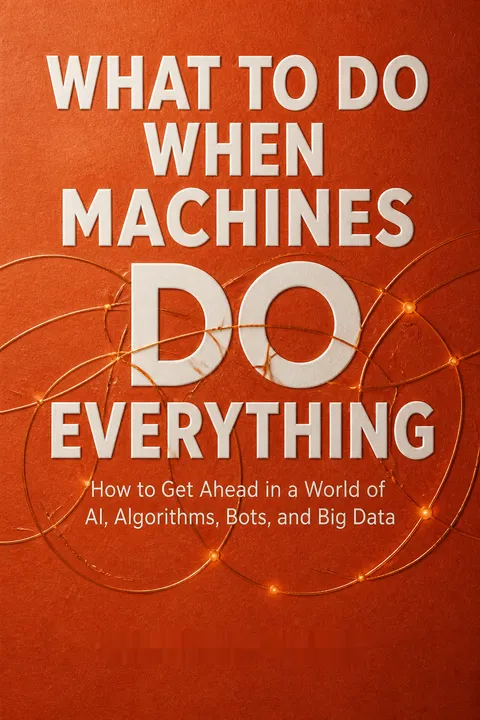
1. What is What To Do When Machines Do Everything by Malcolm Frank about?
- AI’s Transformative Impact: The book explores how artificial intelligence, algorithms, bots, and big data are fundamentally changing work, business, and society.
- Practical Roadmap: It introduces a structured approach (the AHEAD model) to help individuals and organizations adapt to and thrive in the AI era.
- Optimistic Perspective: The authors argue that, rather than just causing job loss, AI will drive a new industrial revolution, creating economic growth and new opportunities.
- Focus on Action: The book emphasizes separating hype from reality and provides actionable guidance for navigating the digital transformation.
2. Why should I read What To Do When Machines Do Everything by Malcolm Frank?
- Actionable Strategies: The book offers concrete, pragmatic advice for business leaders and workers facing immediate challenges from AI and automation.
- Comprehensive Framework: It presents the AHEAD model, a clear and actionable framework for understanding and implementing AI-driven change.
- Historical and Real-World Context: The authors ground their analysis in historical patterns and provide real-world case studies from companies like GE and Netflix.
- Balanced and Optimistic: The book balances optimism about AI’s potential with practical advice on managing change and overcoming resistance.
3. What are the key takeaways and main concepts from What To Do When Machines Do Everything by Malcolm Frank?
- AHEAD Model: The book’s central framework—Automate, Halo, Enhance, Abundance, Discovery—guides organizations through digital transformation.
- Systems of Intelligence: It highlights the rise of integrated AI and data-driven platforms that automate processes, generate valuable data, and enhance human performance.
- Data as a Strategic Asset: Data (“Code Halos”) is positioned as the new raw material, more valuable than physical assets in the digital economy.
- Call to Action: Leaders are urged to act decisively, automate, instrument everything, enhance human capabilities, drive down prices, and foster continuous innovation.
4. How does What To Do When Machines Do Everything by Malcolm Frank define artificial intelligence (AI)?
- Practical Definition: AI is defined as an area of computer science focused on machines that learn, with an emphasis on practical, narrow applications.
- Narrow vs. General AI: The book distinguishes between narrow AI (task-specific, business-focused) and general/super AI (human-level or beyond), noting that current AI is narrow.
- Business Value Focus: The authors stress that AI’s value lies in what machines do well, not in replicating human intelligence.
- Avoiding Hype: The book cautions against getting distracted by speculative fears about superintelligent AI.
5. What is the AHEAD model in What To Do When Machines Do Everything by Malcolm Frank, and how does it work?
- Automate: Outsource repetitive, rule-based tasks to AI and bots to improve efficiency and reduce costs.
- Halo (Code Halos): Instrument people, products, and processes to generate data “halos” that enable new customer experiences and business models.
- Enhance: Use AI to amplify human performance, making jobs more productive and satisfying.
- Abundance: Leverage AI to lower prices and democratize access, creating new markets and opportunities.
- Discovery: Employ AI to drive innovation, inventing new products, services, and industries.
6. What are “systems of intelligence” according to What To Do When Machines Do Everything by Malcolm Frank?
- Integrated Platforms: Systems of intelligence combine software (algorithms, machine learning), hardware (servers, sensors), data, and human input to create business value.
- Continuous Learning: These systems feature software that learns and improves over time, fueled by massive data and processing power.
- Business Disruption: They underpin companies like Uber, Netflix, and Facebook, enabling real-time, personalized, and scalable services.
- Redefining Competition: Systems of intelligence disrupt traditional industries and redefine how companies compete.
7. How does What To Do When Machines Do Everything by Malcolm Frank describe the impact of AI on jobs and the future of work?
- Job Automation and Enhancement: The book estimates about 12% of jobs may be automated away, 75% will be enhanced, and 13% new jobs will be created.
- Task-Based View: Jobs are made up of tasks; some will be automated, others enhanced, so entire jobs rarely disappear overnight.
- Historical Patterns: Automation has historically led to new abundance and employment, despite initial job losses.
- Churn and Opportunity: The authors predict significant job churn but overall opportunity and job creation if AI is managed wisely.
8. How does What To Do When Machines Do Everything by Malcolm Frank explain automation in the AI era?
- Targeting Automation: Focus on automating high-volume, repetitive, rule-based tasks with low need for human judgment or empathy.
- Overcoming Resistance: The “brass wall” of middle management often resists automation; leaders must engage skeptics and manage change proactively.
- Structured Approach: Set bold goals, start small, prototype, pilot, analyze, and repeat to build sustainable automation processes.
- Freeing Human Potential: Automation allows humans to focus on complex, nuanced, and creative work.
9. What are Code Halos in What To Do When Machines Do Everything by Malcolm Frank, and why are they important?
- Definition: Code Halos are digital “halos” of data generated by instrumenting people, products, and processes, creating a virtual twin of physical entities.
- Strategic Value: Mastering Code Halos enables highly personalized customer experiences, improved products, and new revenue streams.
- Competitive Rules: Instrumentation is now core, data is often more valuable than physical things, and always-on connections maximize value.
- Risk of Ignoring: Failing to leverage Code Halos is considered corporate malpractice in the digital economy.
10. How does What To Do When Machines Do Everything by Malcolm Frank describe the enhancement of human work with AI?
- Enhancement Over Replacement: AI will mostly enhance, not replace, human jobs, especially in knowledge work like teaching, nursing, and law.
- Human-Machine Synergy: AI tools act as “white-collar exoskeletons,” making workers more productive and creative.
- Doubling Down on Humanity: As machines take over routine work, humans can focus on empathy, relationships, and complex judgment.
- Competitive Advantage: Companies that invest in human-centric experiences, enabled by automation, gain a competitive edge.
11. What does What To Do When Machines Do Everything by Malcolm Frank say about creating abundance with AI and automation?
- Abundance Defined: Automation and digitization dramatically lower prices, increasing demand and democratizing access to products and services.
- Continuous Improvement: Digital products benefit from exponential improvements in cost and performance, requiring ongoing innovation.
- Strategic Approaches: The book recommends learning from startups, planning for “tomorrow it’s free” scenarios, and personalizing offerings.
- Unlocking Growth: Embracing abundance helps companies find new growth opportunities and expand markets.
12. How does What To Do When Machines Do Everything by Malcolm Frank recommend managing innovation and discovery in the digital economy?
- Discovery as Core Function: Innovation is central to survival and growth, not a side project.
- AI-Driven R&D: Use AI platforms to analyze data and uncover new product, process, and business model opportunities.
- Portfolio Approach: Balance incremental improvements (“digital Kaizen”) with bold moonshot projects, accepting failure as part of the process.
- Overcoming Inertia: Leaders must overcome legacy IT and organizational resistance to enable continuous innovation and discovery.
Download PDF
Download EPUB
.epub digital book format is ideal for reading ebooks on phones, tablets, and e-readers.








