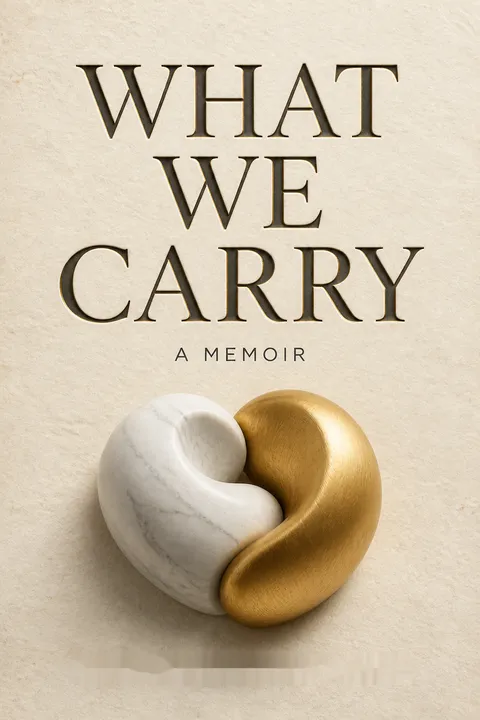


Key Takeaways
Stop treating maternal self-sacrifice as the only proof of love
A river without an easy answer. Soon after Maya’s daughter is born, her mother tells her about a woman caught in deep water with a child. Maya expects the woman to sacrifice herself. Her mother instead insists that no one can judge a choice made under such pressure. The story unsettles Maya because it challenges the familiar ideal of the mother who must always put herself last.
Choosing is not a verdict. The parable becomes the memoir’s guide to motherhood, caregiving, and guilt. Maya gradually sees how often women are judged whether they sacrifice themselves or choose their own survival. The point is not that every choice is harmless, but that a person’s burden cannot be measured from the shore, by someone who has not faced the same current.
The parable resists a powerful cultural shortcut: treating maternal devotion as proof of moral worth. Its strength is not that it excuses every decision, but that it makes context part of judgment. Feminist ethics often asks who bears the cost of care and whose needs count as legitimate; this story makes that question personal rather than abstract. Still, refusing to judge should not mean refusing to discuss consequences. Compassion and accountability can coexist, especially when a choice affects a child or another dependent person.
Ask what support a story leaves out before praising someone’s strength
An incomplete family story. Maya grows up believing her mother raised her older brother while completing medical training in America, largely on her own. The reality emerges decades later: Maya’s maternal grandparents came to help, then took the boy to India, where he lived until he was five. Maya had not known this; her brother had. The family’s past was not shared evenly, and silence made each sibling interpret it differently.
Hidden help distorts comparison. When Maya struggles as a new mother, she asks how her mother managed. Her mother describes endurance but leaves out the people who supported her. Maya concludes that needing help means she is weaker. The revelation changes the meaning of “doing it alone”: apparent self-sufficiency may depend on assistance that a family story has erased.
This is a sharp illustration of how family memory can turn survival into a misleading standard. In social science, resources are often described as infrastructure: the visible achievement depends on less visible labor, money, and relationships. The same principle applies inside families. A parent’s account may be shaped by shame or by a wish to appear capable, not simply by a plan to deceive. The useful question is therefore not only who endured, but who helped, what options existed, and which costs were left out.
When help fails, widen your circle instead of disappearing into shame
A crisis needs more than grit. After Zoe’s birth, Maya develops severe postpartum depression. She struggles to get out of bed, and thoughts of suicide make the danger unmistakable. When she asks her mother to come, her mother refuses, saying travel would be impossible. Maya feels abandoned, but her husband Noah, a psychiatrist, and a professional baby nurse named Caren respond with practical support. Medication begins to help after about two weeks.
Let anger open a door. The outrage of people around Maya helps her stop defending her mother long enough to accept their care. Anger is not the treatment; medication, clinical attention, and daily help matter. The episode also breaks Maya’s belief that support from one person must be enough, or that needing paid care proves she has failed as a mother.
The episode distinguishes emotional meaning from clinical care. A loved one’s refusal can intensify isolation, while dependable support can create room for treatment to work. The memoir’s account also complicates the idea that resilience means tolerating distress privately. Anger may interrupt shame, but it is an unreliable safety plan on its own. In a real crisis involving suicidal thoughts, professional assessment and immediate support are essential. The larger lesson is practical: build a network with more than one point of failure.
Protect the work that makes you more than somebody’s caretaker
A dream needs protected time. Maya has cycled through medicine, consulting, and academia partly because she wants to impress others, not because those paths fit. After Zoe is born, she begins writing a novel during late evenings at a café. She later finds an agent, survives rejections, rewrites the book, and sells it. Writing does not compete with loving her daughter; it restores a part of Maya that motherhood alone cannot supply.
Strength can be relearned. She also trains with Louis, a weightlifting coach, and eventually squats 365 pounds. His encouragement helps her notice how her father’s harshness taught her to ignore pain. At the gym and at home, she practices taking her own body and ambitions seriously. Her daughter becomes a reason to pursue a fuller life, not an excuse to postpone one.
The memoir treats identity as something practiced, not merely discovered. Writing and weightlifting give Maya evidence that conflicts with the old story of herself as unfit or unserious. This resembles a basic principle of learning: repeated action can change what feels possible. The caution is that individual determination cannot replace childcare, time, or money. Maya has a supportive spouse and enough flexibility to keep writing. Self-investment is vital, but access to it is unevenly distributed.
Separate a parent’s actual choices from the ideal parent you need
Love did not make her flawless. Maya had imagined her mother as a nearly infallible champion of vulnerable people. Their history is more complicated. Her mother was a gifted psychiatrist, yet could be aloof, prejudiced, and unwilling to discuss painful decisions. As Maya revisits childhood, she remembers that her father’s verbal abuse and control left her feeling trapped. At thirteen, she tried to kill herself; her mother’s response was limited, and boarding school became Maya’s escape.
The ideal can hide evidence. As an adult, Maya often explained her mother’s actions in the most comforting way. She also learned to minimize her father’s abuse by comparing it with worse cases. Naming what happened does not require ranking suffering or denying affection. It allows Maya to stop treating her own perceptions as unreliable and to set a boundary when her father asks to visit.
This section captures a familiar psychological defense: preserving attachment by interpreting a parent’s behavior in the most favorable possible light. That strategy can help a child maintain a relationship, but it can also make the child responsible for explaining away harm. The memoir’s balance matters: recognizing neglect does not erase a parent’s strengths, and recognizing strengths does not undo neglect. Retrospective interpretation remains uncertain, particularly when childhood memories are partial. That uncertainty is a reason for humility, not a reason to dismiss the experience.
Let daily care reveal the person in front of you
A mother becomes a dependent. As dementia worsens, Maya and her brother discover that their mother is losing weight despite saying she eats. At a specialist’s appointment, the scale reads 87 pounds. Maya brings her home, where she learns that the problem is more serious than the reassuring accounts suggested. Her mother forgets meals and medication, gets lost in the house, and needs help with ordinary routines.
Attention changes the relationship. Care is exhausting, but it also creates moments of closeness: Maya helps groom her mother, prepares food, and watches her bond with Zoe. Her daughter listens to Grandma’s stories without demanding that they be accurate. Maya begins to meet her mother as she is now, rather than measuring every interaction against the sharp, authoritative woman she remembers. This does not erase their earlier conflict; it makes room for a different kind of relationship.
Daily care can replace abstract assumptions with close observation. That is one reason person-centered dementia care emphasizes the individual’s routines, preferences, and present abilities rather than reducing a person to a diagnosis. Proximity can also soften resentment by revealing needs that were invisible at a distance. But closeness is not a universal cure: living with an abusive or unsafe relative may make distance necessary. Care can deepen connection when the relationship allows it, while boundaries remain part of responsible care.
Choose sustainable care over heroic care, even when family objects
Good intentions have limits. Maya initially thinks she can care for her mother at home indefinitely. For a time, her mother gains weight and the family finds unexpected pleasures in shared meals and games. But the work expands: Maya manages food, medication, safety, and company while trying to raise Zoe and write. She develops the signs of caregiver burnout and realizes the household has organized itself around her mother’s needs.
A facility is not abandonment. Maya’s mother had bought long-term care insurance, which covered assisted living costing thousands of dollars each month. Moving her is painful, but the nearby facility provides supervision, activities, peers, and eventually a social life. Maya feels relief at home, while her mother flourishes among residents. The decision does not prove that family care was a failure. It shows that care can be shared with people better equipped to provide it.
Caregiving is often praised as a private virtue, even though it is labor with real physical, emotional, and financial costs. A sustainable arrangement protects both the caregiver and the person receiving care. Residential care is not automatically better: quality, affordability, culture, and individual preference all matter. Yet the memoir challenges the assumption that keeping a parent at home is the only loving option. A useful test is whether the arrangement preserves safety and dignity without steadily consuming the rest of the family.
Use a gentle fiction when dementia makes literal truth needlessly cruel
A story can ease a transition. When Maya moves her mother to assisted living, she tells her that home renovations require a temporary stay. The explanation is not true, but it helps her mother manage a frightening change that she cannot consistently understand or remember. Maya’s daughter compares it to not spoiling the Easter Bunny for another child: a story can sometimes be an act of kindness.
Kindness still needs limits. The account changes from day to day. Maya’s mother sometimes remembers staying with her daughter for only a few days, and at other times invents details about the move. Maya has to decide when to correct her and when correction would only cause distress. The pretext is not a general license to deceive. It is a response to a specific cognitive decline, weighed against the person’s safety, dignity, and ability to make decisions.
Dementia care exposes a difficult conflict between truth-telling and reducing distress. A compassionate response may prioritize the person’s emotional reality, but deception can also become a shortcut that serves the caregiver’s convenience. The ethical distinction depends on purpose, risk, and available alternatives. Is the story preserving dignity and safety, or silencing a person who could still decide? The memoir makes that question vivid without offering a universal rule. Care decisions benefit from clinical guidance and continued attention to the person’s preferences.
Let children see struggle so love does not teach them to disappear
Honesty can interrupt inheritance. Maya once believed a good mother should appear capable and selfless. She now wants Zoe to know that becoming a writer took years, that fear delayed her, and that asking for help was worthwhile. She also lets Zoe see her cry after a painful exchange with Grandma, then explains that adults have feelings too. Zoe responds with greater understanding of her grandmother’s needs.
Letting go is not rejection. The river story eventually takes on a different ending: the woman chooses herself, and the child may still reach safety. Maya moves her mother into professional care, returns to writing and family life, and remains connected to her. Her mother’s listening lives on in Maya’s conversations with Zoe. The legacy is not perfect sacrifice, but love that can include limits, honest stories, and separate lives.
Children learn not only from what parents teach, but from the emotional rules they observe. A parent who hides every need may unintentionally present self-erasure as the price of love. Maya’s openness offers Zoe a more realistic model: care can include grief, frustration, help-seeking, and repair. There is a nuance here: children should not become confidants or caregivers for adults. The goal is age-appropriate honesty, not transferring adult burdens. A child can witness vulnerability while remaining securely a child.
Analysis
This memoir’s central subject is not simply motherhood or dementia. It is the way family members build stories to make painful choices bearable, then inherit those stories as rules. Maya’s mother presents endurance as if it were self-sufficient; Maya turns that version into a standard, and later discovers the grandparents, omissions, and private decisions behind it. The narrative shows how a loving story can still injure when it hides the support that made survival possible.
The book’s form enacts its argument. The river parable returns with altered meanings as Maya moves from new mother to daughter in crisis to caregiver. Each retelling changes the question from who sacrificed enough to what choice can be lived with. That structure resembles narrative identity, the idea that people organize experience into evolving accounts of who they are. Here, revision is not mere distortion: it can reveal shame, preserve dignity, or conceal harm, depending on who controls the story and what the listener is allowed to know.
The memoir’s most valuable tension is between care as intimacy and care as labor. Living with her mother makes affection concrete, but it also consumes time, space, and attention. The assisted living decision challenges a sentimental ideal of family care, while the mother’s later social life shows that professional settings can offer relationships a single household cannot. That outcome is not universal. Access, facility quality, money, and a person’s wishes matter, and the book’s unusually resourced options should not be mistaken for a standard available to every family.
The memoir also refuses a tidy reconciliation. Dementia changes the mother, but it does not retroactively erase her earlier choices; recognizing her failures does not cancel her love or the help she did provide. Its lasting proposition is more modest and more demanding: tell a truer story, allow people to choose themselves, and understand care as something that must be sustained rather than performed as martyrdom.
Review Summary
What We Carry: A Memoir is a deeply moving exploration of mother-daughter relationships, caregiving, and self-discovery. Maya Lang candidly recounts her experiences with postpartum depression, caring for her mother with Alzheimer's, and uncovering family secrets. Readers praise Lang's beautiful writing, honesty, and ability to capture complex emotions. The book resonates with many, particularly those who have cared for aging parents or struggled with their own parenting journey. While some found parts repetitive, most reviewers were deeply touched by Lang's insights on motherhood, identity, and the weight of family history.
People Also Read






Glossary
Hope Blockade
Avoiding painful future talkMaya’s name for a conversational strategy she uses to protect herself from disappointment. She avoids asking her mother about plans, visits, or the future because the answers may confirm that her mother does not want or cannot manage those things. The tactic reduces immediate hurt, but it also keeps Maya from addressing what is happening between them.
Mom Roulette
Unpredictable shifts in moodMaya’s informal name for the uncertainty of her mother’s moods, especially as dementia progresses. Her mother may be pleasant, withdrawn, suspicious, or angry, sometimes changing quickly. The phrase conveys how family members learn to anticipate emotional shifts without being able to control or reliably predict them.
spokesperson
A reassuring account of realityMaya’s metaphor for the version of her mother who reports that everything is fine, even when memory loss or physical decline suggests otherwise. The spokesperson may describe meals, medication, or events inaccurately, not necessarily as a deliberate lie. Maya eventually learns to distinguish these reports from her mother’s observable needs.
confabulating
Filling memory gaps unknowinglyA clinical term used by the specialist caring for Maya’s mother. Confabulation is the production of inaccurate or invented accounts to fill gaps in memory, without the person necessarily intending to deceive. In the memoir, recognizing the term helps Maya and her brother understand some of their mother’s puzzling stories as part of her cognitive impairment.
Mini-Mental State Examination
Brief cognitive screening testA short assessment used to screen aspects of cognitive function, with a maximum score of 30. In the memoir, a score below 24 is treated as a warning sign, though Maya’s mother performs better on the test than her daily functioning would suggest. The book illustrates why a screening score needs to be interpreted alongside observed behavior and clinical judgment.
FAQ
What's "What We Carry: A Memoir" about?
- Personal journey: "What We Carry" is a memoir by Maya Shanbhag Lang that explores her personal journey through motherhood, her relationship with her mother, and her own identity.
- Mother-daughter dynamics: The book delves into the complex dynamics between Lang and her mother, especially as her mother begins to suffer from dementia.
- Cultural and generational themes: It touches on themes of cultural identity, generational differences, and the expectations placed on women.
- Self-discovery: Lang's narrative is also about self-discovery and understanding the burdens and legacies we carry from our families.
Why should I read "What We Carry: A Memoir"?
- Emotional depth: The memoir offers a deeply emotional and honest exploration of family relationships and personal growth.
- Relatable themes: Many readers will find the themes of motherhood, identity, and caregiving relatable and thought-provoking.
- Cultural insights: It provides insights into the experiences of East Indian American women and the cultural expectations they navigate.
- Inspiring narrative: Lang's journey of self-discovery and resilience can be inspiring for anyone facing similar life challenges.
What are the key takeaways of "What We Carry: A Memoir"?
- Complex family dynamics: The memoir highlights the complexities of mother-daughter relationships and the impact of family legacies.
- Identity and self-worth: It emphasizes the importance of understanding one's identity and self-worth beyond familial roles and expectations.
- Caregiving challenges: Lang provides an honest look at the challenges and emotional toll of caregiving for a parent with dementia.
- Empowerment through choice: The narrative underscores the power of making choices for oneself and the liberation that can come from it.
How does Maya Shanbhag Lang portray her relationship with her mother?
- Evolving relationship: Lang portrays her relationship with her mother as evolving from dependence to a more complex dynamic as her mother ages and becomes ill.
- Cultural expectations: The memoir explores how cultural expectations influenced their relationship and Lang's perception of her mother.
- Role reversal: As her mother develops dementia, Lang experiences a role reversal, becoming the caregiver and decision-maker.
- Emotional honesty: Lang is emotionally honest about the challenges and disappointments she faces in her relationship with her mother.
What are the best quotes from "What We Carry: A Memoir" and what do they mean?
- "We tell stories in order to live." This quote, borrowed from Joan Didion, underscores the memoir's theme of storytelling as a means of understanding and coping with life.
- "The story is about the woman choosing herself." This reflects the memoir's message about the importance of self-care and making choices that prioritize one's well-being.
- "You are your best thing." A nod to Toni Morrison, this quote emphasizes self-worth and the idea that one's value is inherent and not defined by others.
- "Illusion is the first of all pleasures." This Voltaire quote highlights the theme of confronting illusions and the truths we often hide from ourselves.
How does "What We Carry: A Memoir" address cultural identity?
- East Indian American experience: Lang explores her identity as an East Indian American woman and the cultural expectations she faces.
- Generational differences: The memoir highlights the generational differences between Lang and her mother, particularly in terms of cultural assimilation and values.
- Cultural myths and realities: Lang examines the myths and realities of her cultural heritage and how they shape her understanding of herself and her family.
- Balancing identities: The narrative reflects Lang's journey in balancing her cultural identity with her personal aspirations and experiences.
What role does caregiving play in "What We Carry: A Memoir"?
- Central theme: Caregiving is a central theme, as Lang navigates the challenges of caring for her mother with dementia.
- Emotional impact: The memoir candidly discusses the emotional impact and stress of being a caregiver, including feelings of guilt and frustration.
- Role reversal: Lang experiences a role reversal, taking on the responsibilities her mother once held, which reshapes their relationship.
- Lessons learned: Through caregiving, Lang learns about resilience, patience, and the importance of self-care.
How does Maya Shanbhag Lang explore the concept of self-discovery in her memoir?
- Personal growth: Lang's journey is one of personal growth, as she learns to understand and accept herself beyond her roles as a daughter and mother.
- Breaking illusions: The memoir is about breaking down the illusions she held about her family and herself to find her true identity.
- Empowerment: Lang finds empowerment in making choices for herself and embracing her own desires and needs.
- Reflective narrative: The narrative is reflective, with Lang examining her past and present to understand her path forward.
What challenges does Maya Shanbhag Lang face in "What We Carry: A Memoir"?
- Motherhood: Lang faces the challenges of new motherhood, including postpartum depression and the pressure to be a perfect parent.
- Caregiving: She struggles with the demands of caregiving for her mother, who is suffering from dementia.
- Cultural expectations: Lang navigates the cultural expectations placed on her as an East Indian American woman.
- Identity crisis: Throughout the memoir, Lang grapples with her identity and self-worth, seeking to define herself on her own terms.
How does "What We Carry: A Memoir" depict the theme of letting go?
- Letting go of illusions: Lang learns to let go of the illusions she held about her mother and herself to embrace reality.
- Choosing oneself: The memoir emphasizes the importance of choosing oneself and letting go of guilt and societal expectations.
- Acceptance: Lang comes to accept her mother's decline and her own limitations, finding peace in the process.
- Moving forward: Letting go allows Lang to move forward with her life, embracing new possibilities and personal growth.
What is the significance of the title "What We Carry: A Memoir"?
- Emotional burdens: The title reflects the emotional burdens and legacies that Lang carries from her family and cultural background.
- Personal journey: It signifies Lang's personal journey of understanding what she carries within herself and how it shapes her identity.
- Caregiving responsibilities: The title also alludes to the physical and emotional responsibilities of caregiving for her mother.
- Universal themes: "What We Carry" speaks to the universal themes of family, identity, and the stories we inherit and create.
How does Maya Shanbhag Lang address the concept of storytelling in her memoir?
- Storytelling as survival: Lang views storytelling as a means of survival and understanding, both for herself and her family.
- Family narratives: The memoir explores the narratives passed down through her family and how they shape her identity.
- Rewriting stories: Lang learns to rewrite her own story, letting go of myths and embracing her truth.
- Power of stories: The narrative highlights the power of stories to heal, connect, and transform our understanding of ourselves and others.
Download PDF
Download EPUB
.epub digital book format is ideal for reading ebooks on phones, tablets, and e-readers.








