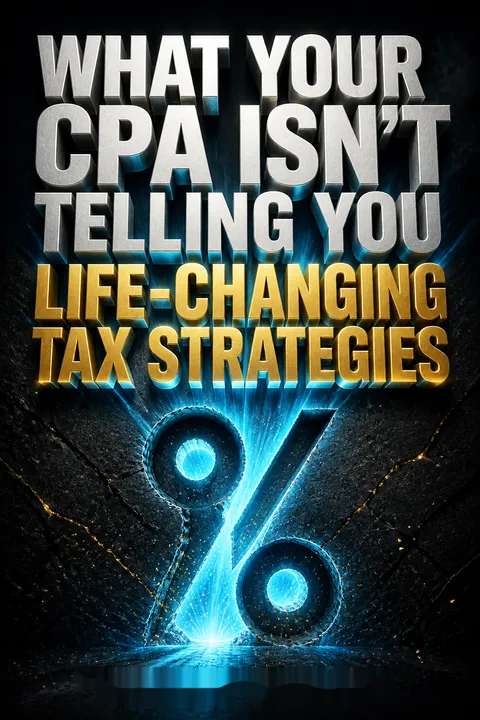


Key Takeaways
Treat the tax return as an outcome of planning, not a yearly surprise.
A different kind of meeting. The book opens with a couple’s familiar tax appointment: their CPA collects documents, mentions an IRA contribution, and offers little guidance for changing their financial picture. A chance encounter with a more communicative accountant reframes the problem. The amount owed is not always simply fixed; decisions made during the year can shape the eventual return and broader financial goals.
Planning needs a partner. The accountant’s role is not just to enter figures, but to discuss a client’s plans, explain tradeoffs, and help coordinate tax and business decisions. The couple learns that a useful advisor should raise options before filing season, not merely explain the result afterward. Their growing confidence comes from understanding the choices, not from a promise of a guaranteed refund.
The opening scene makes a strong case for replacing tax-season anxiety with year-round conversation. It also exposes a service-design problem: clients cannot act on advice they cannot understand or access. A good planning relationship should make assumptions, fees, and risks visible, not rely on jargon or a dramatic promise of savings. The book’s criticism of routine preparation is useful, though it should not imply that every CPA is unwilling or unable to plan. The more practical test is whether the advisor can explain relevant options, identify their limits, and connect recommendations to the client’s actual goals.
Build real income streams before expecting business deductions to change your tax bill.
More than a tax trick. The accountant urges the couple to consider a small business or rental property alongside their corporate jobs. His case is broader than deductions: a side venture could create income, build assets, provide a fallback if employment changes, and give the family a shared project. The couple initially resists, then develops two ideas: the wife’s gift-basket business and the husband’s interest in rental property.
Profit comes first. The book argues that business expenses may be deductible when they are genuinely connected to producing income. It does not make personal spending deductible simply because a business exists. The accountant warns against starting a venture solely to generate losses. A business should have a plausible route to revenue and fit the owners’ skills, resources, and appetite for the work.
The strongest version of this argument is about optionality: more than one source of income can make a household less dependent on a single employer. Entrepreneurship can also create learning and family involvement that a tax return cannot measure. But a business is not automatically a safer or wealthier choice than employment. It brings costs, uncertainty, and demands on time. A sound decision compares likely after-tax returns with the full economic cost, including unpaid labor and money at risk. Tax treatment should support a viable plan, not serve as the reason to invent one.
Learn, test, and record before turning a promising idea into a business.
Make uncertainty manageable. The couple fears they lack the experience to start a business. Their accountant recommends gradual learning, deliberate brainstorming, and patience rather than a rushed leap. He urges them to examine many possible ventures, seek practical instruction, and avoid treating a seminar or inspirational message as a substitute for operating knowledge. Support from relatives and other business owners also helps them persist when friends question their plans.
Track from the beginning. The accountant uses a lemonade stand to explain startup activity: buying supplies and preparing to sell happen before the first sale, but the related costs still need to be documented and classified correctly. He recommends a basic expense file or spreadsheet at first, then appropriate bookkeeping software as activity grows. Records help identify legitimate costs, prepare accounts, and reduce the scramble that can lead to missed information.
This combination of experimentation and record keeping is a practical antidote to both paralysis and impulsiveness. The couple does not need certainty before investigating an idea; it needs enough evidence to decide whether the next step is worthwhile. That resembles a small-scale pilot: test assumptions, observe costs, and revise. The caution is that tax law does not necessarily treat every preparatory expense as deductible in the same way, and an activity can be judged differently depending on its facts. Good records preserve evidence, but they do not make an otherwise personal or nonbusiness cost deductible.
Match the entity to the job, not to a sales pitch.
Different structures do different work. The book distinguishes a sole proprietorship, corporations, LLCs, and limited partnerships by their roles. A sole proprietorship can be a simple starting point. The author presents an S corporation as a possible fit for an operating business with earned income, where payroll and distributions require careful treatment. An LLC is described mainly as a structure for holding assets or organizing partners, not as a tax-saving device by itself. The author views C corporations as useful in narrower situations.
Get coordinated advice. Entity choice can affect administration, liability, and taxes, and the book warns against forming companies merely because a promoter advertises a favorable state or a supposedly superior deduction. An accountant and attorney should coordinate the plan. Rules on eligibility, payroll, filings, and state treatment can change, so the examples in this 2011 book are not a current compliance guide.
The useful mental model is functional: first identify the business problem, then choose a legal form that addresses it. That is clearer than treating an entity as a magic tax switch. The distinction also encourages collaboration between legal and tax professionals, whose advice addresses different risks. Still, an entity does not automatically protect personal assets; conduct, documentation, insurance, and jurisdiction matter. Nor does a general description settle a particular owner’s tax outcome. Readers should treat the book’s entity comparisons as a map of questions to ask, not as a recommendation to form a specific structure.
Turn the business plan into a monthly scorecard and daily priorities.
Three plans, three purposes. The book separates a Business Plan, which tests the idea and its economics, from a Strategic Plan, which turns it into dated tasks, and a Marketing Plan, which specifies how customers will be reached. Once the Business Plan has helped decide whether to proceed, the other two become working documents. The couple’s gift-basket venture, for example, tracks production goals and ties expansion decisions to actual sales capacity.
Measure what brings customers. The Marketing Plan should identify each strategy’s purpose, procedure, budget, and measurable goal. The author also recommends asking customers how they found the business instead of assuming which advertising works. For daily execution, a short list of a few essential tasks helps keep urgent interruptions from swallowing work that matters to longer-term plans. Advisors, friends, or family can provide feedback and accountability.
The distinction between a persuasive plan and an operating plan is valuable. A document written to test an idea or seek financing cannot, by itself, make the work happen. Regular measurement closes the gap between intention and action, while customer-source tracking helps separate activity from results. The framework also anticipates a familiar organizational failure: teams count outputs, such as posts or advertisements, instead of outcomes, such as qualified inquiries or sales. Metrics need interpretation, however. A simple count can mislead if customer quality, repeat business, or the cost of acquiring a sale is ignored.
Judge rentals by four returns, never by hoped-for appreciation alone.
Four sources of value. The author asks investors to evaluate rental property through appreciation, mortgage principal reduction, tax deductions, and cash flow. A renter’s payments may cover some ownership costs while reducing the loan balance; depreciation and interest may affect taxable income even when the property produces cash. The book’s example of a property that shows a paper loss but brings in cash highlights why tax profit and household cash flow are not identical.
Buy for the fundamentals. The author favors a property that can work as a rental if a planned resale fails, and warns against buying solely because prices are expected to rise. Rental losses may be limited or carried forward depending on the owner’s income, activity, and tax classification. Those rules are technical and have changed since publication. Each property also carries risks such as vacancy, repairs, borrowing costs, and a falling market.
The four-part lens improves on the common habit of judging property by price appreciation alone. It makes investors consider cash generation and debt reduction alongside tax effects, which can reveal whether an asset is economically useful before a sale. Yet tax deductions are not a fourth source of free wealth: they can soften costs, but they do not rescue a poor purchase. Leverage can magnify both gains and losses, and a property that breaks even on paper may still require cash for repairs or vacancies. The book’s enthusiasm for regular purchases should therefore be read as advocacy, not a universal rule.
Use family payroll to teach earned money, not manufacture deductions.
Make the work real. The author proposes involving children or other supported relatives in legitimate business tasks, such as organizing records or helping with production. In the family’s story, the parents want their children to learn that money is earned through useful work, not simply provided as an allowance. They also discuss saving part of the children’s pay and giving them responsibility for their own spending.
Document and follow the rules. The accountant emphasizes that family members must perform bona fide services, with appropriate records of the work and payments. The book describes special payroll and tax treatment for certain children working in a parent’s business, but those rules depend on age, ownership, business structure, and current law. It is not a license to relabel household support as wages. The tax plan is only defensible when the underlying job, pay, and records are genuine.
The educational case may be more durable than the tax benefit. A young person who earns, budgets, and pays some expenses receives practice in decision-making that a lecture about money cannot provide. The arrangement can also give a family a shared project, as the story suggests. But financial teaching should not depend on turning every household activity into paid labor. Clear roles, fair compensation, and age-appropriate expectations protect both the business and the relationship. If the business would not reasonably pay an unrelated worker for the task, family payroll deserves especially careful scrutiny.
Choose health coverage and tax accounts as one coordinated decision.
Compare the whole package. The book contrasts itemized medical deductions, flexible spending accounts, health reimbursement arrangements, and health savings accounts. It presents an FSA as an employer-linked account with use-it-or-lose-it features, an HRA as an employer reimbursement plan, and an HSA as a savings account available to eligible people with qualifying high-deductible coverage. The author sees the HSA as especially useful for people who can manage higher out-of-pocket costs and retain unused funds.
Fit matters more than labels. A small business may enable some reimbursement arrangements, while an HSA does not itself require business ownership. The author’s central advice is to coordinate insurance, account eligibility, and tax reporting rather than assume an insurance agent or tax preparer covers every issue. Eligibility, contribution limits, covered expenses, and plan rules change. Current federal and state requirements should be checked before adopting any approach described in this 2011 book.
This section treats health spending as both an insurance decision and a household cash-management decision. That broader view can help consumers notice the tradeoff between lower premiums and greater exposure to routine costs. An account with tax advantages is not automatically the best choice if a high deductible would be unaffordable or if the plan’s network and coverage are poor. The relevant comparison is total expected cost under several plausible health scenarios, not premium alone. The book’s emphasis on self-reliance is constructive, but it should not obscure the value of insurance against large, unpredictable expenses.
Direct some retirement money only into assets you understand and can supervise.
A wider investment menu. After her husband dies, the protagonist’s mother discovers that one retirement account was used for private lending, rather than only conventional market investments. The accountant explains self-directed retirement accounts, which allow eligible account holders to select certain alternative investments through a custodian, subject to tax and retirement-plan restrictions. The family sees this as an opportunity to invest in areas they know, including lending or real estate.
Control brings responsibility. The book warns readers to decide what they intend to invest in before moving funds and to involve qualified legal and tax professionals. Transactions involving the account holder or related parties can trigger serious consequences, and some assets are prohibited. A self-directed account does not guarantee higher returns or eliminate investment risk. Asset protection also depends on the account, applicable law, and circumstances, rather than being universal.
The story challenges the assumption that retirement investing must be confined to products offered by a familiar brokerage. Greater choice can be valuable when an investor has relevant knowledge and a disciplined process. But the same autonomy removes a layer of screening and can concentrate retirement wealth in assets that are difficult to value or sell. This is a governance problem as much as an investment problem: the owner must evaluate the asset, the custodian, liquidity, conflicts, and compliance. Diversification remains a risk-management tool, even when a particular opportunity feels more understandable than public markets.
Analysis
The book’s central move is to recast tax planning as a form of household agency. Its fictional couple begins as passive taxpayers, embarrassed by an opaque annual ritual, and gradually becomes more capable through business education, record keeping, professional advice, and shared decisions. The story format makes technical subjects feel connected: a side business introduces bookkeeping and entity choice; property investment leads to questions about losses and retirement; family employment becomes both a tax issue and a lesson in financial responsibility. The most useful contribution is not a single deduction. It is the insistence that tax decisions are entangled with how income is earned, assets are built, and risks are managed.
That breadth is also the source of the book’s main limitation. A lively narrative can make a strategy sound more broadly applicable than it is. The recurring recommendation to buy rental property, for example, is a strong personal philosophy, not a universal prescription. The same is true of entity choices, payroll treatment, health accounts, and alternative investments. The book was published in 2011, and tax law, contribution limits, insurance rules, and administrative requirements change. Its examples are best used to identify questions for current professional advice, not as instructions to implement unchanged.
A second distinction matters: tax savings are not the same as wealth creation. A deduction reduces the tax cost of a qualifying expense; it does not erase the expense or make an unprofitable venture successful. The book is strongest when it insists that businesses should make money, records should be accurate, and planning should be coordinated. It is less convincing when confident advocacy risks making entrepreneurship or rental ownership sound like the obvious answer for everyone. The durable lesson is to seek informed options, compare the full costs and risks, and understand the rules well enough to question both generic advice and appealing shortcuts.
Review Summary
Reviews of What Your CPA Isn't Telling You are mixed. Some readers find it inspirational and helpful for starting businesses and understanding tax strategies, praising its storytelling approach. Others criticize the audio quality, lack of depth in certain areas, and overuse of real estate examples. While some appreciate the basic tax planning advice, others feel misled by the title, expecting more specific deduction tips. Overall, the book seems to encourage entrepreneurship and real estate investment as tax-saving strategies, but opinions on its effectiveness vary widely.
People Also Read






Glossary
S-Corporation
Pass-through corporation electionA corporation that elects a particular federal tax treatment, generally passing income through to its shareholders rather than paying federal corporate income tax on that income. The book discusses it as a possible structure for operating businesses and payroll planning. Eligibility, required filings, reasonable compensation, and state treatment are technical matters that require current professional guidance.
Limited Liability Company (LLC)
Flexible liability structureA legal business structure formed under state law that can separate some business liabilities from owners, subject to proper operation and applicable law. The book presents LLCs as useful for holding assets and organizing partnerships, while emphasizing that forming one does not by itself create a tax saving. Its federal tax treatment depends on ownership and elections.
Real Estate Professional
Rental-loss tax classificationA federal tax classification discussed in the book that may affect whether rental real estate losses can offset other income. The author describes tests involving the taxpayer’s work in real estate and time spent in the activity, alongside participation in managing rentals. The actual requirements are detailed, fact-specific, and subject to current tax law.
Health Savings Account
Tax-favored medical savingsA tax-favored account for eligible individuals who have qualifying high-deductible health coverage. Contributions may receive favorable tax treatment, and money can be used for eligible medical expenses under applicable rules. The book emphasizes that unused balances may remain in the account. Eligibility, contribution limits, qualified expenses, and tax treatment must be verified under current law.
Health Reimbursement Arrangement
Employer medical reimbursement planAn employer-funded arrangement that reimburses eligible employees for qualifying medical expenses under the plan’s terms and applicable rules. The book presents it as a possible option for small-business owners with substantial out-of-pocket medical costs. It is not interchangeable with an HSA, and its design, eligibility, tax treatment, and reporting requirements depend on current law.
Flexible Spending Account
Workplace medical spending accountAn employer-sponsored arrangement that lets eligible employees set aside compensation for certain qualified expenses under plan rules. The book highlights the risk that unused funds may be forfeited, which is why it describes the account as use-it-or-lose-it. Actual deadlines, carryover provisions, eligible expenses, and participation rules depend on the plan and current regulations.
self-directing your retirement account
Selecting alternative account investmentsThe book’s term for choosing investments beyond the standard menu offered by many traditional retirement providers, often through a specialized custodian. Examples discussed include real estate and private lending. The account remains subject to retirement-plan law, prohibited-transaction restrictions, and investment risk. Greater investment choice does not guarantee better returns or protection from loss.
FAQ
What's "What Your CPA Isn't Telling You" about?
- Tax Strategies: The book focuses on life-changing tax strategies that are often overlooked by traditional CPAs. It aims to empower readers to take control of their tax planning.
- Storytelling Approach: Author Mark J. Kohler uses storytelling to illustrate tax strategies through the journey of a typical family's tax awakening.
- American Dream: The book ties tax planning to achieving greater wealth and the pursuit of the American Dream, emphasizing the impact of effective tax strategies on personal and financial success.
Why should I read "What Your CPA Isn't Telling You"?
- Empowerment: It provides readers with the knowledge to challenge conventional CPA advice and explore underutilized tax strategies.
- Practical Advice: The book offers actionable steps and resources, such as checklists and videos, to help implement the strategies discussed.
- Comprehensive Coverage: It covers a wide range of topics, from business planning and real estate to health care and retirement, making it a valuable resource for anyone looking to optimize their financial situation.
What are the key takeaways of "What Your CPA Isn't Telling You"?
- Small Business Ownership: Owning a small business or rental property is crucial for tax savings and financial security.
- Education and Planning: Continuous education and strategic planning are essential for successful tax and business management.
- Family Involvement: Involving family members in your business can provide tax benefits and teach valuable life skills.
How does Mark J. Kohler suggest using small businesses for tax savings?
- Business Deductions: Kohler emphasizes converting personal expenses into legitimate business deductions, such as home office and travel expenses.
- Income Diversification: He advocates for creating multiple income streams through small businesses to reduce tax liabilities.
- Risk Mitigation: Starting a small business is portrayed as a way to reduce financial risk by providing additional income sources.
What is the "Secret to Tax Planning" according to Mark J. Kohler?
- Entrepreneurship: Kohler suggests that having a small business or real estate investment is key to effective tax planning.
- Above-the-Line Thinking: He encourages thinking of ways to move personal expenses to business expenses to maximize deductions.
- Long-Term Strategy: Tax planning should be seen as a long-term strategy that requires patience and continuous learning.
What are the benefits of rental real estate as discussed in the book?
- Appreciation and Equity: Real estate typically appreciates over time, building equity that can be leveraged for future investments.
- Tax Deductions: Rental properties offer significant tax deductions, including depreciation and mortgage interest.
- Cash Flow: Properly managed rental properties can provide a steady stream of tax-free cash flow.
How does the book address health care and tax planning?
- Self-Insurance: Kohler advocates for self-insuring to control health care costs and maximize tax deductions.
- Health Savings Accounts (HSAs): He highlights the benefits of HSAs for tax-free growth and withdrawals for medical expenses.
- High-Deductible Plans: The book suggests using high-deductible insurance plans to reduce premiums and increase savings.
What does Mark J. Kohler say about involving family in your business?
- Tax Benefits: Hiring family members can convert personal expenses into business deductions, reducing overall tax liability.
- Life Skills: It provides an opportunity to teach family members about work ethic and financial management.
- Payroll Strategy: Kohler outlines strategies for paying family members through the business to maximize tax savings.
What are the best quotes from "What Your CPA Isn't Telling You" and what do they mean?
- "Taxes are the number-one cost in our lives." This quote emphasizes the importance of tax planning in financial management.
- "If you fail to plan, then plan to fail." It underscores the necessity of strategic planning in business and tax matters.
- "The American Dream is an elusive one to millions of Americans today." This highlights the book's focus on using tax strategies to achieve financial independence and success.
How does the book suggest handling retirement planning?
- Self-Directed IRAs: Kohler discusses the benefits of self-directing retirement accounts to invest in real estate and other non-traditional assets.
- Diversification: He emphasizes the importance of diversifying retirement investments beyond traditional stock market options.
- Asset Protection: Retirement accounts offer significant asset protection benefits, shielding them from most lawsuits and creditors.
What are the common misconceptions about tax planning addressed in the book?
- "Your tax return is what it is." Kohler challenges the notion that tax outcomes are fixed and unchangeable.
- Over-Reliance on CPAs: The book argues that many CPAs do not fully explore all available tax strategies for their clients.
- Complexity of Tax Code: Kohler simplifies the tax code through storytelling, making it more accessible and actionable for readers.
What resources does "What Your CPA Isn't Telling You" provide for further learning?
- Checklists and Charts: The book includes practical tools like checklists and charts to help implement tax strategies.
- Online Videos: Kohler offers additional support through online videos that expand on the book's concepts.
- Workshops and Seminars: Readers are encouraged to attend workshops and seminars for hands-on learning and networking opportunities.
About the Author


Download PDF
Download EPUB
.epub digital book format is ideal for reading ebooks on phones, tablets, and e-readers.








