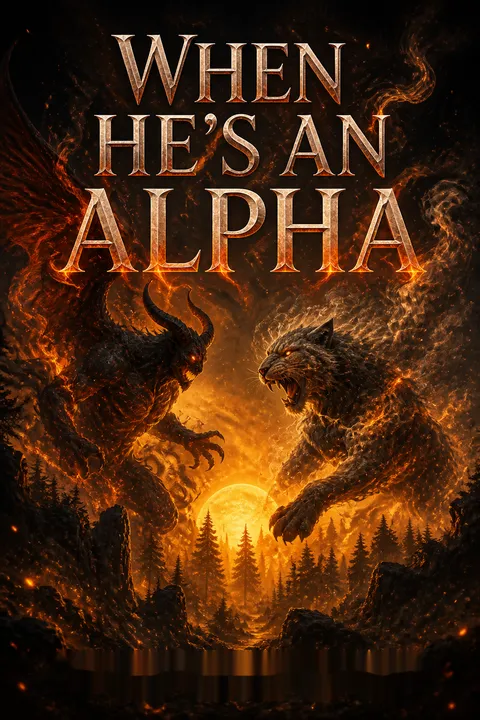


Plot Summary
The Dead-End Visit
Havana Ramos, a devil shifter living among lone shifters, has spent four months in an exclusive but deliberately casual affair with Tate Devereaux, the powerful pallas-cat Alpha who owns her apartment building. She has begun wanting more, then overhears Tate tell his brother Luke that their relationship will never become serious.
Rather than expose how much the news hurts, Havana goes to Tate's house to end things face to face. His anger at her decision surprises her, but he still cannot offer the future she wants. When his instinct to bite and mark her rises, Tate stops himself and lets her leave. Havana walks away believing that their attraction has only made a dead end harder to reach.
The opening conflict is not a misunderstanding but an arrangement whose terms have become emotionally unequal. Havana has honored Tate's stated limits, yet the length and exclusivity of the affair have made those limits feel less neutral with time. Her choice to leave protects her from bargaining for affection, while Tate's shock exposes the distance between his declared detachment and his actual attachment. The scene establishes their central problem: desire makes them seek closeness, but fear makes Tate define closeness as temporary. Havana's self-respect gives the story its first decisive action.
Darts in the Parking Lot
A week later, Havana is closing the lone-shifter recreation center with her friends Aspen, Bailey, and Camden. The center offers vulnerable shifters work, shelter, and a place to belong, and its manager, Corbin, has helped Havana rebuild her life. Outside, a cougar shoots her with tranquilizer darts while a second man waits in a van.
Devil shifters are immune to the drugs, so Havana charges the shooter, takes his weapon, and fights the driver before the van escapes. She and her friends bind the unconscious cougar in the center's basement. When he refuses to explain himself, Bailey's black mamba bites him with venom that causes hours of severe illness. Havana waits until morning, prepared to question him again.
The attack transforms Havana's private heartbreak into a public danger, and it does so through the very vulnerability that shapes her everyday life. The recreation center is more than a workplace: it is a substitute kinship network for people whom established prides and clans often overlook. Havana's quick defense reveals both her physical competence and her instinct to take responsibility for the group. Her response to the captive is unsentimental, but not arbitrary. She offers him a chance to cooperate, then uses the skills and resources her friends possess. The scene makes clear that the loners are not helpless, even when someone has decided they are easy prey.
The Loner Auction
The cougar identifies himself as Rupert Merchant and admits that an unknown employer has paid him to abduct lone shifters. He has delivered men, women, and children to masked jaguars, who spoke of auctions and selling a captive for a high price.
Havana learns that fifteen-year-old Keziah Crompton, once a resident at the shelter, is among the missing. Tate connects the jaguars' references to a family patriarch with Gideon York, a hybrid presumed dead after a massacre years earlier.
Havana alerts her former employer, the Movement, while Bailey warns the shelter and Aspen spreads the danger among lone-shifter networks. Tate promises to use his pride's contacts. Their search begins as a joint effort, though Havana still refuses to treat Tate as her partner.
The kidnapping operation takes advantage of a social blind spot: when a lone shifter disappears, there may be no clan or pride powerful enough to demand answers. Rupert's own status as a loner does not make him sympathetic; instead, he has adopted the same fatalism used to excuse exploitation. Havana rejects his assumption that vulnerable people are already doomed, and Keziah's absence gives the investigation a human scale. The emerging alliance with Tate is practical before it is intimate. Their skills and networks complement each other, but the emotional boundary between them remains unresolved.
Ashlynn Comes Home
Tate's father, Vinnie, tells him that Ashlynn, the woman he once nearly imprinted on, wants to return to the pride. Years earlier, she left Tate to pursue Koby, her true mate, after Koby's partner died; Tate has never fully trusted himself to risk another deep attachment since. When Ashlynn returns, she asks Tate to meet privately, but he refuses.
Havana sees them together and learns the history from Tate's aunt Valentina, then hears from her former lover Dieter, who is now committed to someone else. Tate visits Havana to discuss the kidnapping, and their familiar chemistry overwhelms her caution. She chooses one last night with him, hoping sex will give her closure, but Tate leaves intending to see her again.
Ashlynn and Dieter function as mirrors rather than simple romantic rivals. Each represents a past in which someone kept affection at arm's length until the other person had already been hurt. Havana's jealousy is sharpened by incomplete knowledge, but the deeper pain is the fear that she is repeating an old pattern: accepting intimacy without being chosen. Tate's reluctance to discuss Ashlynn shows how betrayal has become a policy of emotional risk management. Their night together offers bodily reassurance without resolving the question that brought Havana to end the affair.
No More Half-Truths
After their night together, Havana tells Aspen and Bailey that sex has not loosened her feelings for Tate. Her friends urge her to state plainly what she wants. When Tate later presses her for the full reason she ended things, Havana admits that she once hoped Dieter would choose her, then made the same mistake with Tate. She refuses to remain a casual partner while wanting a lasting relationship.
Tate says she matters to him, but cannot promise his cat will not eventually withdraw from her, as it has from other women since Ashlynn. He tries to offer friendship; Havana says she needs real space instead. At the Tavern, Ashlynn provokes a confrontation, and Havana defeats her with such ease that the pride sees her strength firsthand.
Havana's confession is an act of clarity, not a bid to persuade Tate. She names the cost of the arrangement and stops treating her own desire as a flaw that must be hidden to preserve access to him. Tate's explanation is sincere, but it also demonstrates how fear can present itself as concern for another person. He would rather withdraw first than risk becoming the cause of pain again. The fight with Ashlynn shifts the social balance: Havana's worth is no longer an abstract question of whether she belongs beside Tate. Her competence is visible to the pride.
Bullets at the Shelter
While Havana is teaching self-defense at the shelter, a black Charger drives past and its passenger shoots her three times. Two of Tate's enforcers and Aspen get her inside, where a nearby healer stops the bleeding and repairs the wounds.
Watching the security footage, Tate sees how close the bullet to Havana's throat came to killing her. His carefully maintained emotional defenses collapse, and he finally understands that Havana is his true mate. He tells her while she recovers in her apartment.
Havana cannot yet feel the bond, but she accepts that it may be real and agrees to let them try. When Dieter arrives, his anger and possessiveness reveal that he wants more than friendship; Havana turns him down, and Tate makes clear that he will not tolerate anyone mistreating his mate.
The revelation arrives through fear rather than courtship. Tate has interpreted his resistance to commitment as a protective discipline, but the near-loss of Havana makes that discipline impossible to maintain. His recognition does not erase the harm caused by his earlier choices; it gives him a reason to change them. Havana's response is deliberately cautious. She is willing to test the possibility without pretending that certainty has arrived on command. Dieter's late confession reinforces her growth: she no longer mistakes being wanted after someone else claims her for the same thing as being valued all along.
A Family Built Twice
As Tate and Havana begin rebuilding their relationship, she meets more of his family and hears that his pride expects her to become its Alpha female. She is uneasy about joining a group after the clan that raised her failed her.
In Vancouver, Havana's former Alpha, Yasiel, forced her brother Rolando's girlfriend into an arranged mating. Rolando challenged him and submitted, but Yasiel killed him anyway. Havana's father and relatives attacked Yasiel, who killed them too. Her mother and Havana were shunned; her mother died weeks later, leaving twelve-year-old Havana alone.
Tate listens without trying to excuse what happened. He invites Havana's close friends Aspen and Bailey, and their friend Camden, to join his pride as well, so belonging will not require her to abandon her chosen family.
Havana's past explains why a formal community can feel more threatening than isolation. Her childhood clan used unity as a tool of control, not mutual care, and the people who challenged that system paid with their lives. Her caution about joining Tate's pride is therefore not resistance to intimacy for its own sake; it is an informed response to a history in which authority became lethal. Tate's invitation matters because it does not ask her to choose between a mate and her friends. He offers a different model of belonging, one that can include the family she built herself.
The Second Charger
The black Charger attacks again near Tate's territory, but Tate shoves Havana behind a parked car before the bullets reach her. His enforcer Farrell follows the fleeing vehicle to a house, where Tate's team captures Malcolm Taggart; Luke kills Taggart's accomplice during the struggle.
Havana, Aspen, and Bailey help subdue Taggart, revealing their combat experience. Under questioning, he admits he was paid to kill Havana and describes two jaguar associates, including Enrique, who work for the same hidden boss.
Dieter later comes to Havana and says he loves her and wants a committed relationship. She refuses, explaining that she has chosen Tate. Dieter challenges Tate and lunges at him; Tate knocks him down and has him removed. Havana then tells Tate that she and her friends once served eight years with the Movement.
The second attack turns protection from a symbolic promise into a tested practice. Tate does not ask Havana to surrender her agency; he acts quickly, then accepts that she will participate in the hunt. Taggart's capture also exposes the extent of the friends' hidden competence, suggesting that their ordinary community work rests on a more dangerous history. Dieter's return arrives too late to become a genuine alternative. His declaration may be sincere, but it asks Havana to reopen a wound after she has already chosen a future. Her refusal marks a decisive break from waiting to be selected.
The Door Opens
The Movement trained Havana, Aspen, Bailey, and Camden in covert work and interrogation, though its members must retire after eight years. Havana asks Tate to keep that history private. Soon afterward, her former employer reports that Yasiel has been found murdered.
Tate admits he traveled to Vancouver with Luke and the wolverine Alex and killed the man who destroyed Havana's family. His act convinces Havana's devil that Tate will protect her without trying to control her.
The mental barrier she had placed between her animal and Tate gives way, and their true-mate bond fully awakens. Tate and Havana claim each other, and she moves into his home. Their bond is now mutual, while Havana's friends accept places in his pride and Aspen and Bailey take roles as her bodyguards.
Tate's revenge is not a grand gesture designed to purchase forgiveness; he undertakes it without using it to bargain for Havana's affection. That distinction allows her to read the act as care rather than possession. The bond becomes possible only after both have changed their terms: Tate accepts vulnerability, while Havana's animal no longer needs to guard her against him. Their claiming therefore resolves an emotional conflict as well as a supernatural one. The story also treats family as plural. Havana's new household does not replace her chosen kin; it makes room for them.
A Devil's Challenge
The morning after Tate and Havana claim each other, Ashlynn appears at their home. She says she is leaving the pride, then challenges Havana before she goes, still angry about their earlier clash at the Tavern.
Tate wants to intervene, but Havana insists that refusing would make her look weak as a new Alpha female. She shifts into her devil form and fights Ashlynn's pallas cat in front of the pride. Both are wounded, but Havana's speed and crushing bite eventually force Ashlynn to submit.
Tate banishes Ashlynn, who must leave the territory. Pride members then swear loyalty to Havana. She and Tate begin planning a ceremony, while Aspen and Bailey settle into the pride's ranks and Camden joins them, though his closeness to Aspen remains complicated.
The challenge tests whether Havana's place in the pride depends on Tate's protection or on her own authority. Tate's restraint is meaningful because he lets her answer the threat herself, even while the mating bond makes his protectiveness acute. Havana's victory does not make leadership effortless, but it gives the pride a concrete reason to trust her strength. Ashlynn's departure closes a past that Tate had already rejected emotionally, though it cannot erase the damage she caused. The remaining uncertainty around Aspen and Camden keeps the wider social world open beyond the central romance.
The Jaguar's Address
Tate's enforcers spot Enrique and another jaguar at the casino where they once encountered a singer named Lola. The pride follows them to their home and captures them before they can alert Gideon.
Under pressure, Enrique refuses to give up his leader, but Gavin breaks when Tate threatens to keep questioning him. Gavin reveals that Gideon is no longer entirely hidden: he has changed his appearance and personally hosts an auction that night aboard his yacht, the Pollyanna.
He explains that the captives are kept in converted crew quarters while wealthy bidders inspect them on the decks above. The team now has a location, a deadline, and a clear division of labor. Tate prepares the pride to attack and Havana insists on helping free the prisoners.
The investigation reaches its turning point when a vague rumor becomes a place and a time. Gavin's testimony matters not only because it provides intelligence, but because Havana forces him to reconsider the story Gideon has used to bind his followers. His identity as a rejected hybrid does not justify his complicity in the sale of other rejected shifters. The yacht's polished setting sharpens the moral ugliness of the operation: the bidders treat human beings as a discreet luxury. The approaching deadline shifts the group from careful pursuit to coordinated rescue.
The Pollyanna Raid
Tate's pride attacks the yacht while the auction is underway. Havana, Aspen, Bailey, and two enforcers reach the converted cells and free eight captives, including Keziah and a frightened young boy named Robbie. A fight breaks out as they escort the survivors toward safety.
Havana returns when Aspen and Bailey fall behind, only to meet Gideon with a gun aimed at her. He shoots her shoulder, and Aspen's bearcat takes a bullet while knocking Havana clear. Bailey's mamba attacks Gideon's companion, giving Tate and Luke time to reach them.
Havana shoots Gideon before the pride overwhelms him. The surviving captives escape, and records recovered aboard the yacht help the allies locate shifters sold in earlier auctions. The pride burns the yacht after the operation, ending the trafficking ring.
The rescue succeeds because the group divides its strength rather than making the Alpha the sole instrument of justice. Havana's return to the corridor is a choice rooted in responsibility for the captives and her friends, not a desire to prove she can fight. Gideon's use of her as leverage briefly reverses the power dynamic, but it fails because the people around her act together. Keziah's rescue also answers the story's earlier fear that no one would notice her disappearance. Violence remains part of the resolution, but its purpose is specific: stop the sale, free the prisoners, and recover those already taken.
A Pride of Her Own
Two months later, Havana and Tate hold their mating ceremony and celebrate with the pride at the Tavern. The shifters sold at earlier auctions have been found and returned to their families or communities, while the people rescued from the Pollyanna receive support through the lone-shifter shelter.
Havana now shares leadership of the Olympus Pride with Tate, and Aspen and Bailey serve as her trusted enforcers. Camden has joined the pride too, staying close to Aspen despite their unresolved feelings.
Tate and Havana move easily between their old friends and new relatives, though the mamba and bearcat still sneak into the couple's home and brawl. Their last private moment turns into a playful chase, confirming that their life together will be affectionate, chaotic, and very much their own.
The ending completes the opening's question about whether intimacy must remain temporary. Havana receives not only Tate's commitment but a social place she can shape on her own terms. The rescue's aftermath matters as much as Gideon's defeat: the story does not treat the captive shifters as solved problems once the danger passes. Their return and support repair, as far as possible, the isolation the auction depended upon. The comic disturbance at home preserves the couple's independence and rough humor within the new bond. Their happiness is not a polished escape from conflict; it is a shared life sturdy enough to contain disorder.
Analysis
The novel binds its romance to a procedural hunt, and the two plots ask the same question in different forms: who is responsible for another person's safety, and what does that responsibility permit? Gideon treats protection as ownership. He gathers rejected hybrids under the language of family, then uses them as labor and sells lone shifters as commodities. Tate begins from a more benevolent position, building housing for loners and actively guarding his pride, yet his first instinct with Havana is still to set the terms of closeness himself. His growth requires learning that care cannot substitute for consent or honesty.
Havana's history makes her resistance to authority psychologically specific. Her childhood clan was not merely imperfect; its leader used control to arrange a young woman's future and killed Havana's brother after he submitted. The tragedy teaches her that collective identity can become a weapon when loyalty flows upward but protection does not flow back. The recreation center and her friendships with Aspen and Bailey offer an alternative: belonging formed through daily acts of care, humor, work, and mutual defense. Tate's pride becomes a viable home only when it makes room for those relationships rather than demanding that Havana trade them away.
The romance also complicates the fantasy of destiny. The true-mate bond does not resolve the couple's conflict by itself. Tate first has to confront the fear created by Ashlynn and by his parents' grief, while Havana has to state what she wants instead of accepting a lesser arrangement to avoid rejection. Their eventual bond confirms a choice they have already begun making. In parallel, the rescue plot refuses to let community end at the moment of escape. The abducted shifters need to be found, returned, and supported, because Gideon's power depended on isolation as much as force. The book's final home is therefore both intimate and social: a couple, a pride, and a network that notices when someone is missing.
Review Summary
When He's an Alpha received mixed reviews. Many readers enjoyed the steamy romance and humor, praising the strong female lead and unique shifter types. However, some felt it was formulaic and lacked character development. The secondary characters were particularly popular. Critics noted repetitive plot elements and inconsistencies in world-building. Despite these issues, fans of Wright's work generally found it entertaining, while others struggled to connect with the main characters. Overall, it was considered a typical installment in Wright's shifter romance series.
People Also Read




Characters
Havana Ramos
The ungovernable devilHavana is a devil shifter, a lone shifter, and the emotional center of the story. Direct, observant, and physically formidable, she protects her friends without pretending she is gentle or easy to manage. Her childhood taught her that belonging can be used to control people, so she is wary of powerful leaders and unwilling to trade self-respect for security. She also has a private, whimsical faith in signs, which contrasts with her practical instincts. Havana wants to be known as a whole person, not simply desired for her body or sheltered as someone else's responsibility. Her growth comes through learning that accepting care need not mean giving up her autonomy.
Tate Devereaux
The guarded pallas-cat AlphaTate leads the Olympus Pride with an active, protective style and takes responsibility for the people who live and work under his care. He is self-possessed, decisive, and accustomed to solving problems through action, but his confidence conceals a deep fear of emotional loss. A previous relationship taught him to distrust the possibility of lasting attachment, and he uses casual boundaries to keep that fear manageable. Havana challenges him because she treats him as a man rather than a title and refuses to accept intimacy without honesty. Tate's development depends on recognizing that restraint can become avoidance, and that protecting someone also requires allowing them to choose him.
Aspen
The watchful bearcatAspen is Havana's closest friend, an aloof and capable bearcat shifter who shows tenderness most readily toward children and the people she considers family. She is dry, composed, and skilled in a fight, but her apparent detachment can disguise how deeply she relies on Camden. She helps Havana assess emotional choices without forcing her to make them. Aspen's friendship is grounded in loyalty and respect for boundaries, though her animal's habit of collecting things and her clashes with Bailey's mamba bring comic disorder to their shared life.
Bailey
The irrepressible mambaBailey is Havana's roommate and chosen sister, a black mamba shifter whose sweet appearance conceals a taste for mischief and confrontation. Her attention jumps rapidly between subjects, and she often turns revenge into an elaborate performance. Beneath the chaos, she is perceptive about other people's feelings and fiercely protective of Havana and Aspen. She can inject venom, move quietly, and use her combat skills when danger becomes real. Bailey's humor keeps the group's hardships from defining every moment of their lives.
Camden
Aspen's quiet anchorCamden is a tiger shifter and a longtime friend of Aspen's, emotionally restrained with most people but intensely attentive to her. His history has left him difficult to read, and he often seems to stand just outside the wider circle Havana, Aspen, and Bailey have built. He is dependable in danger and respects the women as family, even when he struggles to express warmth. His closeness to Aspen raises questions neither is eager to answer, while his preference for independence makes belonging to a pride a complicated choice.
Corbin
The sheltering grizzlyCorbin, a grizzly shifter, owns and manages the recreation center for lone shifters. He created it in memory of his sister, whose death followed the neglect and danger they faced as homeless children. Gruff and practical on the surface, he gives people jobs, shelter, and chances to build safer lives. He becomes a steady adult presence for Havana and her friends, while his shy affection for Dawn offers a quieter counterpoint to the central romance.
Ashlynn
The pride's unresolved pastAshlynn is a natural-born alpha and Tate's former partner, whose history remains painful for him and influential in how he approaches relationships. She is capable of loyalty and courage, but when she becomes fixed on a desired outcome, she struggles to recognize other people's limits. Her return to the pride forces old tensions into the open. Ashlynn's character is shaped by the pull between instinct and responsibility, and by the difficulty of accepting that sincere feelings do not entitle anyone to another person's future.
Dieter Lincoln
The belated suitorDieter is an eagle shifter who shared an on-and-off sexual relationship with Havana before pursuing a different life. He longs to belong to a flock, and that desire influences his choices more than he understands at first. Protective and sometimes entitled, he mistakes concern for a right to direct Havana. His history with her makes him a meaningful contrast to Tate: both men have to confront what they want, but Dieter's timing and assumptions complicate his attempt to reconnect.
Gideon York
The hidden patriarchGideon is a hybrid shifter whose history of rejection has hardened into hatred of the shifter world. He presents himself as a provider and guide to other hybrids who feel they belong nowhere, but his leadership is built on secrecy, obedience, and exploitation. Patient and calculating, he relies on intermediaries so that few people understand the whole operation. Gideon represents the danger of turning real grievance into permission to harm others.
Luke Devereaux
Tate's blunt BetaLuke is Tate's younger brother and Beta, a natural-born alpha who has no desire to lead the pride. He is impatient, sharp-tongued, and loyal, often speaking plainly when Tate is avoiding an emotional truth. His teasing manner masks a serious commitment to the pride and to his family. Luke also carries his own private strain around protecting someone important to him, which makes him more understanding of Tate's instinct to guard the people he loves.
Vinnie Devereaux
The seasoned former AlphaVinnie is Tate's father and the former Alpha of the Olympus Pride. Cunning beneath an easygoing manner, he remains involved in the pride's affairs and advises Tate without trying to reclaim authority. His enduring grief for his late mate shapes his understanding of the cost of love, but he does not use that pain to tell his son how to live. Vinnie offers a model of leadership that combines strategy, patience, and affection.
Alex
The formidable wolverineAlex is a wolverine shifter, an experienced interrogator, and a trusted ally of Tate's pride. He is blunt, physically dangerous, and openly devoted to Bree, while remaining largely indifferent to the opinions of strangers. Alex brings practical force to the investigation and stands beside Tate when action is required. His fierce loyalty makes him an effective protector, though his methods are not always gentle.
Dawn
The shelter's steady heartDawn is a former lone shifter who works at the shelter and understands how easily residents can disappear from notice. She cares deeply about the people she serves and takes responsibility when someone is missing, even when the blame is not hers. Her kindness gives the shelter its human warmth. She is also the person Corbin quietly hopes to build a life with.
Keziah Crompton
The missing shelter teenKeziah is a fifteen-year-old lone shifter who once stayed at Dawn's shelter. Kind and resilient, she has learned not to assume that adults will notice when she is gone. Her disappearance gives the trafficking investigation a face and a personal connection to the community Havana is trying to protect.
Rupert Merchant
The hired kidnapperRupert is a lone cougar shifter who accepts jobs transporting other lone shifters to unknown buyers. He tells himself that the captives' lives were already difficult, using fatalism to avoid responsibility for what happens to them. His willingness to cooperate is driven less by remorse than by fear of suffering.
Malcolm Taggart
The hired gunMalcolm is a cheetah shifter hired to kill people for an anonymous employer. Fast and capable, he treats violence as a means of survival and attempts to separate the job from its victims. His connection to Gideon's operation shows how the hidden patriarch recruits workers who know only fragments of the larger scheme.
Gavin Wheeler
The conflicted jaguarGavin is a jaguar hybrid who has felt rejected by both his human family and the shifter community. Gideon's promise of family gives him a sense of place, but it also draws him into work that harms people with histories much like his own. His conflict centers on whether loyalty can survive a clearer understanding of what it serves.
Yasiel
Havana's former clan AlphaYasiel once led the clan where Havana grew up. He treats leadership as authority to arrange other people's lives and punish challenges to his rule. His decisions form the defining trauma of Havana's childhood and explain her suspicion of communities that demand obedience without offering care.
Cesário
The Movement's hard mentorCesário is Havana's former superior in the Movement, a secretive organization that protects shifters from human extremists. Gruff and demanding, he nonetheless cares about the agents who have served under him. His contact keeps Havana connected to the life she left behind and provides intelligence without casually exposing the Movement's resources.
Valentina Devereaux
The candid family elderValentina is Tate's aunt, a sharp-tongued wolverine shifter who speaks freely about pride politics and family history. She dislikes weakness and has little patience for evasions, but she wants Tate to be happy. Her directness gives Havana useful context about Ashlynn and a welcoming first connection to the Devereaux family.
Plot Devices
The true-mate bond
Makes intimacy instinctiveShifters can sense a deep, metaphysical connection to a true mate, but grief and fear can obscure that recognition. Tate's past experience makes him distrust the risks of such a bond, while Havana's hurt leads her devil to shut him out. The bond's delayed recognition gives their romance a supernatural dimension without removing the need for honest choices. It becomes fully perceptible only after Tate commits himself and Havana's animal stops treating him as a threat.
The lone-shifter network
Exposes the unprotectedLone shifters often lack the protection of a pride, clan, or flock, making it difficult for others to notice when they disappear. The recreation center, Dawn's shelter, and word-of-mouth networks counter that isolation by offering work, self-defense, housing, and mutual warning. Gideon's operation exploits the same vulnerability. These social structures turn Havana's investigation into a collective effort and show that protection can be built through chosen ties rather than inherited rank alone.
The Movement's training
Hides lethal expertiseHavana, Aspen, Bailey, and Camden spent eight years working for the Movement, which targets violent human anti-shifter extremists. Their training in combat, covert entry, and interrogation explains why they can support Tate's investigation with professional skill. The Movement also gives them a history of chosen family and service beyond the rec center. Its secrecy creates limits: Havana protects the organization's identity even when Tate wants to know more.
The auction operation
Turns loners into targetsGideon arranges abductions through intermediaries, keeping most hired workers ignorant of the full scheme. Captives are transported to private locations and sold to buyers who may want them for exploitation, experiments, forced labor, or worse. The fragmented chain of people and false leads delays the investigation. The yacht and its records eventually connect Gideon's current auction to shifters sold in earlier events, allowing rescuers to locate survivors after the immediate raid.
Havana's signs
Turns coincidence into cluesHavana believes repeated images, songs, and phrases are warnings from the universe. Her friends sometimes take these patterns seriously, while Tate tends to dismiss them as coincidence. Motel imagery precedes the discovery of Sinclair, and repeated references to Pollyanna point toward Gideon's yacht. The device adds a playful tension between intuition and evidence: Havana's pattern-reading does not replace investigation, but it encourages the others to notice details they might otherwise overlook.
The Olympus Pride Series






About the Author










Download PDF
Download EPUB
.epub digital book format is ideal for reading ebooks on phones, tablets, and e-readers.








