

Plot Summary
Body in Chorlton Ees
During lockdown, Shirley Burgess and Jon Morgan arrange their dog walks in Chorlton Ees so they can meet in secret. Their dogs find a naked boy beneath the trees, his clothes folded beside him and a rope tight around his neck. Shirley leaves quickly, afraid her husband will learn she was with Jon; Jon waits alone and calls the police.
DCI Paul Turnbull arrives to take charge, while the pathologist insists the detectives leave the scene until it is properly examined. A missing-child report soon identifies the victim as David Carsley, seven, last seen two days earlier in Wythenshawe. His discovery turns a private affair into a murder investigation, while the neat arrangement of his clothes makes the killing look deliberate.
The opening binds concealment to exposure. Shirley and Jon have built a small private world inside the restrictions of lockdown, but the dogs lead them to a crime that cannot be hidden or politely explained away. Shirley’s hurried departure protects her marriage only in the narrowest sense, while Jon’s decision to call the police places him at the center of an inquiry. The carefully folded clothes and posed body suggest control, yet the discovery itself is accidental. That tension between a killer’s apparent design and chance discovery becomes the investigation’s central problem.
Ridpath Comes Back
Two weeks later, DI Thomas Ridpath prepares to return after six months away from work. His wife, Polly, appears beside him in the service apartment, though he knows she died after being shot in their home; he still hides these visions from his therapist. Their daughter, Eve, is living with her grandparents, and Ridpath misses the ordinary family routines that vanished with Polly.
At the coroner’s office, colleagues welcome him cautiously, and his assistant Sophia Rahman has grown more confident during his absence. When the Carsley family asks for David’s body to be released for burial, Ridpath volunteers to handle the case. He believes his own experience of grief may help the boy’s father, Michael, navigate the funeral.
Ridpath’s return is not a clean recovery but a negotiated re-entry into ordinary life. He can name Polly’s death, yet continues to experience her as a companion, an intimate form of denial that also helps him endure the day. His choice of the Carsley case joins professional duty to personal identification: he wants to make another bereaved parent’s burden lighter. That motive is humane, but it also makes the work dangerous for him. Grief gives him insight into Michael’s silence while threatening to blur the line between evidence and empathy.
A Case Within the Case
Michael Carsley sits numbly in a darkened living room, blaming himself for letting his sons go to the park and insisting he has nobody else to arrange David’s funeral. Ridpath finds the surviving boy, Daniel, withdrawn upstairs and senses that the family is withholding something.
At police headquarters, Claire Trent, head of the Major Investigation Team, reveals that Turnbull is considering Michael as a suspect because he has no convincing account of what he watched while David was missing.
Trent asks Ridpath to review the investigation privately, without Turnbull’s knowledge, and gives him three days to find overlooked evidence. Ridpath recruits DS Emily Parkinson, who knows the family, and civilian researcher Chrissy Wright. Their review begins under pressure: the profiler expects another killing.
The parallel inquiry begins because institutional procedure has started to harden into a suspect theory. Trent does not ask Ridpath to replace Turnbull, but to test the assumptions that his formal investigation may have made invisible. Ridpath’s dual position, police detective and coroner’s officer, gives him access to both the investigation and the family’s practical needs. His team is small, unofficial, and divided by workplace loyalties. The three-day deadline sharpens the book’s moral question: when a police process appears orderly, who is responsible for noticing that it may still be wrong?
Morgan's Missing Witness
Ridpath visits Jon Morgan at home and asks him to repeat how he found David. Morgan claims he was walking alone, but his wife remembers that he had once mentioned a woman with a Jack Russell and a stolen dog toy. Pressed for her contact information, Morgan reluctantly gives Ridpath Shirley Burgess’s number.
He later admits that Shirley was beside him when they found the body and that he waited until she had gone before calling the police. Their secret relationship explains why the woman in a police photofit never came forward, but it does not place either lover at the killing. Ridpath asks Morgan to give Turnbull a voluntary statement, preserving the distinction between an embarrassing lie and evidence of murder.
Morgan’s deception is emotionally legible but investigatively costly. He fears the damage an affair could do to his marriage, so he converts a shared discovery into a solitary one. The lie creates a false mystery, drawing attention toward an absent woman who is not the killer. Ridpath’s handling of the confession shows his instinct for proportion: he wants the truth on record without treating shame as proof of violence. Yet the episode also warns that witnesses do not simply report events. They edit them to protect the lives they hope to keep.
What the Body Knows
At the mortuary, Dr Schofield walks Ridpath through David’s post-mortem. The boy had been heavily sedated, washed with strong soap, and sexually assaulted over the period after his abduction. Injuries suggest he was first suspended by the neck, then killed with a chokehold when the hanging did not finish the job.
Schofield places the death in the hours before the body was found and notes older bruising on David’s arm, possibly caused during the abduction. The boy had eaten spaghetti before his death, with drugs in both his food and bloodstream. The findings point to a killer who kept David somewhere for a time and took steps to erase forensic traces, raising the urgency of the search.
The autopsy turns a public image into a sequence of private acts. Sedation, feeding, washing, assault, and the two-stage killing imply that David was held and handled rather than attacked and abandoned in a single burst of violence. The body also resists tidy certainty: the pathologist can establish injuries and approximate timing, but cannot explain why the killer chose these methods. That limit matters. Forensic detail narrows possibilities without supplying motive, leaving Ridpath to combine material evidence with close attention to human behavior.
Trophies Behind the Drawer
In scenes away from the investigation, an unnamed man keeps small objects taken from boys he has harmed or killed: a saint’s medal, a sock, a hat, a tennis ball, and a child’s underwear. He remembers drowning one victim and admits that the boy in the United shirt took a long time to die.
His private history reaches back to childhood, when his mother locked him in a cellar after he asked about his absent father. There he developed imaginary companions who encouraged his cruelty toward other boys. Now he drugs his mother’s drinks to keep her asleep and considers increasing the dose. The trophies and the cellar voices reveal a practiced predator whose next attack is already becoming a need.
The killer’s interior life is presented as a system of possession. He converts victims into objects he can store, revisit, and control, while his childhood companions provide a fantasy audience for acts he chooses as an adult. His abusive upbringing helps explain his fixation on humiliation and dominance, but it does not absolve him; the narrative makes clear that memory and choice coexist. The drugged mother is both a source of his original injury and the last person he controls before turning outward again. His trophies make private repetition the engine of an expanding threat.
The Park's False Story
Ridpath and Emily revisit Wythenshawe Park, where David vanished while Daniel played basketball. Daniel has said he saw a stranger talking to his brother and warned the man away, but Ridpath notices that the court’s layout makes the account difficult to reconcile with what the other players remember. He questions Daniel again and takes the boy’s phone for a data check.
When the team interviews Tony Greene, one of Daniel’s friends, Tony says Daniel never left the court and that the boys had arranged their game by text. His messages place the meeting around one o’clock, as Daniel had said, but contradict the dramatic encounter with a stranger. Ridpath now suspects Daniel invented a witness, though he does not yet know why.
Daniel’s story begins as a plausible response to a frightening disappearance, but its details carry the shape of a child’s attempt to manage blame. The invented stranger gives the police a visible culprit and lets Daniel describe himself as someone who acted protectively. Ridpath’s work is not simply to catch a lie; it is to understand what emotional task the lie performs. The distinction is crucial because Daniel is both a witness and a bereaved child, not a miniature suspect. By checking the geometry of the park and the friends’ messages, Ridpath tests the story without assuming what the boy intended.
A Father Under Arrest
The review uncovers Michael’s history in Scotland: he was cautioned after domestic incidents, and a workplace assault complaint was withdrawn. Police Scotland also confirms an earlier child-abuse investigation involving Daniel, though the case was dropped because officials could not establish which parent caused the injuries.
Irene, now using her maiden name, tells Ridpath that she left Michael after years of conflict and fears seeing him. Turnbull treats the history as a pattern pointing toward the father.
A neighbor places Michael outside the house around the time David disappeared, and investigators report a fingerprint on the boy’s clothing. They find David’s missing underwear hidden in the Carsley home. Turnbull arrests Michael, convinced the combined clues will force a confession.
The evidence against Michael is potent because it is not fabricated; it is misread. Past violence, a fearful former partner, a disputed fingerprint, and concealed clothing make a coherent story of guilt, especially to investigators under public pressure. But coherence is not proof. The Scotland record is ambiguous, and Ridpath has already seen how grief can make a person appear vacant or evasive. Irene’s fear deserves attention without automatically settling who harmed the children. The section exposes how a case can become persuasive through accumulation even when each piece remains open to another explanation.
The Clock Runs Wrong
Emily’s search for overlooked cameras yields footage from an ATM near the park. It appears to show David approaching a white car and getting inside, but the timestamp puts the encounter half an hour before the family says he left home. The contradiction threatens to discredit the lead.
A second image, recorded from a tram near Chorlton Ees on the morning the body was found, shows a similar white car close to the path across the Mersey. The team learns that the ATM camera was separate from the bank system and may have been left an hour behind after the clocks changed. The images connect the abduction route to the body’s disposal site, while their uncertain timing forces Ridpath to seek independent confirmation.
The camera evidence makes technology less an oracle than a witness with a faulty memory. Its image is vivid enough to redirect the investigation, yet its clock is wrong because maintenance failed. Ridpath must distinguish what the footage can establish, a boy resembling David entering a car, from what it cannot establish on its own, the exact time. The second camera expands the geography across the Mersey, challenging Turnbull’s assumption that the river formed a natural boundary. The clue matters precisely because it is imperfect: it demands human judgment rather than mechanical certainty.
Daniel Tells the Truth
In a recorded interview at the children’s home, Daniel admits he never confronted a stranger at the park. He had stayed with the basketball game and invented the encounter because he blamed himself for losing sight of David.
He also reveals that their mother, not Michael, had hit the boys in Scotland, which explains Daniel’s refusal to live with her. Ridpath shows him the ATM footage, and Daniel identifies David; he explains that the underwear found at home may have been removed by the boys because their father did not keep up with laundry.
Claire Trent orders Michael released pending further inquiries. Daniel is devastated to learn his father may still be charged, but his confirmation breaks the case against Michael and restores the investigation’s real question.
Daniel’s confession does not make him a reliable witness by magic; it makes his unreliability intelligible. He lied to escape a child’s impossible burden of responsibility, then maintained the story under repeated questioning. The adults’ duty is to hear the truth without punishing him for having tried to survive his guilt. His account also unsettles the easy domestic narrative: Michael’s past raised legitimate questions, but the children’s experience was more complicated than the police file suggested. Clearing the father is a necessary correction, not a solution. The actual killer remains free, and the cost of the false accusation is not erased.
Liverpool's Unfinished Murder
With Michael released, Ridpath travels to Liverpool to examine the recent murder of seven-year-old Alan McCarthy. DI Fitzgerald describes a boy stabbed near Festival Gardens, with a suspect, Lawrence Scully, already in custody after confessing.
The method differs sharply from David’s assault, and Liverpool’s pathologist finds no sexual injuries or signs that Alan was posed. Yet both children were seven, both bodies were left in parks near the Mersey, and both had been washed.
Ridpath cannot prove the cases are linked, and the local investigation has a suspect, but he remains uneasy about treating the similarities as coincidence. On his return to Manchester, he joins the team briefing just as coroner Margaret Challinor reports that her grandson Ben has disappeared from a cinema.
Ridpath’s trip to Liverpool tests the boundary between pattern recognition and obsession. The cases share disturbing contours, but the forensic differences are substantial, and Fitzgerald has a confession and a suspect. Ridpath’s intuition may be right, yet intuition can also become a refuge from the frustration of an unsolved case. The novel refuses to resolve that tension immediately. Instead, the new disappearance gives the question practical force: whether or not the crimes are connected, a child may be in immediate danger. The transition from retrospective investigation to live emergency turns uncertainty into a demand for action.
A Birthday Vanishing
Ben, Margaret Challinor’s seven-year-old grandson, vanishes from the cinema toilet while his mother waits with Ben’s younger sister. Police find his Gryffindor badge and a handkerchief that smells of chloroform. As Ridpath and Emily coordinate the search, the cinema’s ticket footage shows a solitary man buying a seat for the same screening.
Emily recognizes him as Matthew Oram, the owner of the Wythenshawe convenience store whose ATM recorded David getting into a car. Oram has used the cinema’s side exit to carry Ben to a car park and drug him. At the same time, police radio reports identify a white Vauxhall Corsa in the area. The camera trail has finally supplied a name, but the child is already in Oram’s hands.
The new abduction makes the earlier investigation terrifyingly immediate. Ben’s ordinary birthday outing repeats the vulnerability of David’s disappearance, while the badge and chloroform convert a family celebration into a crime scene. The route to Oram is built from details gathered earlier: Emily remembers the shopkeeper she questioned, and the team connects him to the white car. This payoff rewards patient observation rather than a sudden revelation. The killer’s method also shows adaptation. He exploits a familiar public space, a service exit, and the assumption that a child walking alone is merely taking care of himself.
The Shop Above the Street
Police tactical officers raid Oram’s registered home and find a wall covered in photographs of naked boys, but Oram and Ben are elsewhere. Ridpath and Emily go to the convenience store, where the clerk says Oram may be upstairs. When Emily presses him at the flat door, Oram swings a baseball bat and knocks her unconscious.
Ridpath tackles him, but Oram beats him down and chokes him until he begins to lose consciousness. Molly Wright, who has followed the officers, enters with her photographer and strikes Oram with the bat, breaking his grip. Tactical officers then secure the scene and recover Ben. Oram is taken for psychiatric evaluation, and the man who had been hidden behind a faulty timestamp is finally in custody.
The climax brings the book’s competing kinds of witness into the same room. Emily’s persistence gets the door open, Ridpath’s physical intervention puts him in danger, and Molly’s opportunistic reporting places her where she can act rather than merely observe. Her blow saves the detective, although her motives include the story as well as the people involved. The raid’s photographs expose the scale of Oram’s fixation, turning private trophies into public evidence. The rescue is a concrete victory, but not a clean moral ending: the children already harmed cannot be restored, and Oram’s illness complicates how the state will judge him.
Epilogue
Two weeks later, Ben is recovering and Margaret’s daughter has returned to her mother’s home for support. Ridpath visits Polly’s grave with Eve and agrees that Eve will move back in with him; he plans to sell the house filled with painful memories and make a new home with his daughter. Oram remains in a high-security psychiatric hospital and faces possible charges for four child murders, including David and Alan.
The Carsley family is still fractured: Irene misses David’s funeral, Daniel is in care, and Michael withdraws from callers who condemn him. Jon Morgan has left his wife to live with Shirley. Ridpath no longer sees Polly, but he carries her memory forward as he walks beside Eve and the Mersey.
The ending refuses to equate solving a crime with repairing everyone it has damaged. Ben survives, Oram is confined, and the investigation can move forward, but the Carsleys remain caught in grief, suspicion, and separation. Ridpath’s resolution is more intimate: he stops organizing his life around Polly’s imagined presence and accepts the practical work of parenting Eve. Their walk beside the Mersey makes continuity physical rather than sentimental; the river does not erase loss, but keeps moving. The final image shifts the novel’s measure of recovery from emotional closure to renewed responsibility and shared movement.
Analysis
When the Evil Waits is built around the dangerous gap between a coherent story and a true one. The police initially assemble a persuasive case against Michael Carsley from his history, his silence, and physical traces in the home. None of those details is meaningless, but none independently proves that he killed David. Ridpath’s parallel review matters because he asks whether each fact has been interpreted correctly, not merely whether it fits the existing theory. Daniel’s invented stranger demonstrates how a child’s guilt can generate false evidence, while the camera’s wrong clock shows that technology also requires interpretation.
The novel’s treatment of grief is similarly concrete. Ridpath recognizes Michael’s emotional numbness because he has lived through his own bereavement, yet his continuing conversations with Polly show that insight does not equal recovery. His work gives him structure, but his attachment to the case risks turning professional responsibility into self-punishment. Eve repeatedly draws him back to the difference between being busy and being present. Their eventual return to life together is modest, practical, and therefore convincing.
The antagonist’s childhood abuse and imagined companions explain the shape of his cruelty without making it inevitable. He repeats the logic of control that once confined him, but as an adult he chooses victims and methods. The police procedural’s strongest ethical claim is that compassion and rigor are not opposites. Ridpath must care enough to understand Daniel and Michael, and remain skeptical enough to test what they say. The book’s resolution catches the predator and rescues Ben, but leaves a wider social aftermath: a family fractured, a mother’s history unresolved, and children whose safety depended on people noticing what a routine investigation missed.
Review Summary
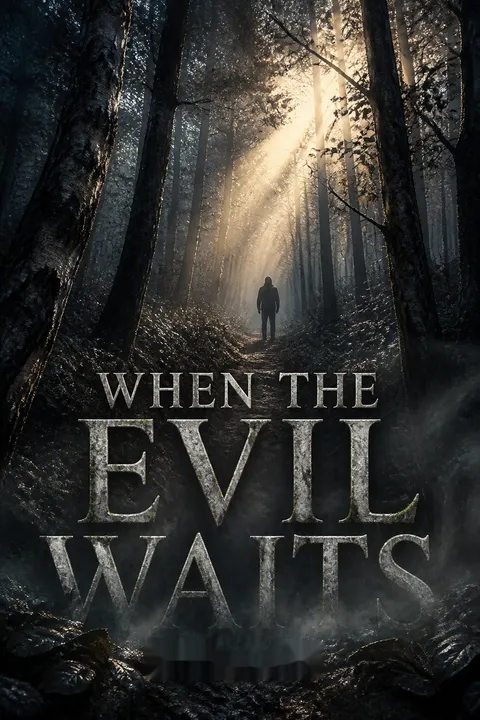
When the Evil Waits is a gripping police procedural featuring DI Thomas Ridpath. Returning to work after his wife's death, Ridpath investigates the murder of a young boy. The novel is praised for its complex plot, well-developed characters, and authentic portrayal of police work. Readers appreciate the balance between Ridpath's personal struggles and the investigation. While some find the COVID-19 references distracting, most consider it a strong addition to the series. The book is described as fast-paced, intense, and difficult to put down.
Characters
Thomas Ridpath
Grieving investigatorA Greater Manchester detective seconded to the coroner’s office, Ridpath returns to work after his wife Polly’s violent death and a period of PTSD. He is observant, stubborn, and more willing than his colleagues to treat intuition as a prompt for further checking rather than as proof. His experience of bereavement helps him recognize Michael Carsley’s grief, though it also pulls him toward emotional overinvestment. Ridpath’s most persistent struggle is not a lack of courage but a reluctance to let other people see how badly he is hurting. His bond with his daughter Eve and his loyalty to the dead keep drawing him back toward responsibilities he sometimes fears he cannot bear.
Polly Ridpath
Absent wife and anchorRidpath’s wife and Eve’s mother, Polly is present in the story through memory and through the conversations Ridpath imagines having with her. Their marriage was affectionate and playful, shaped by a shared family life and her ability to challenge his evasions. Ridpath remembers her as a person who could bring humor into his self-pity and insist that he care for Eve as well as himself. The imagined Polly reflects both his grief and his need for an internal voice that can counter guilt. Her Chinese heritage and family traditions also connect Eve to a broader inheritance beyond the immediate loss.
Eve Ridpath
Daughter seeking homeRidpath and Polly’s eleven-year-old daughter, Eve is staying with her maternal grandparents while her father attempts to recover. She is bright, frank, and increasingly unwilling to let adults disguise their grief as protection. She misses her father’s cooking and family routines, but also understands that her mother’s death affects them differently. Eve asks directly when she can come home and reminds Ridpath that promises require action. Her humor, curiosity, and ability to move between cultural traditions give her an identity independent of her parents’ loss. She is both a reason for Ridpath to return to life and a person with her own needs and timetable.
Emily Parkinson
Persistent detectiveA detective sergeant who has served as family liaison in the Carsley case, Emily knows the family and treats Daniel with care. She is practical, direct, and skilled at patient investigative work, from canvassing streets for cameras to handling a sensitive recorded interview. Her loyalty to Ridpath is balanced by an independent sense of duty; when he is taken off the case, she continues pursuing the evidence. Emily resists Turnbull’s pressure and knows that a witness’s emotional state matters as much as the formal record. Her work is essential to uncovering the camera trail and identifying the man connected to David’s disappearance.
Claire Trent
Strategic police chiefThe superintendent leading Manchester’s Major Investigation Team, Claire Trent is under intense political and media pressure to solve David’s murder. She is disciplined, ambitious, and willing to use unconventional management when a formal inquiry stalls. By commissioning Ridpath’s parallel review, she accepts the risk of challenging her own senior investigator. Claire expects evidence and results, but can revise her position when new information warrants it. Her authority both enables Ridpath’s work and limits it, especially when she must balance public confidence, prosecutorial standards, and the urgent need to prevent another child from being harmed.
Matthew Oram
Reclusive shopkeeperA quiet convenience-store owner in Wythenshawe, Oram lives a private life that appears organized around work and caring for his mother. He is difficult to read from the brief encounters others have with him, and his ordinary presence in the neighborhood makes him easy to overlook. The story places him within a history of isolation and disturbed thought, without treating that history as an excuse for his choices. Oram’s attention to children and his fascination with control form a chilling contrast with his outwardly unremarkable role. His connection to the local shop, the ATM, and the neighborhood provides investigators with the trail they need to pursue.
Michael Carsley
Bereaved fatherA laid-off single father from Scotland, Michael is left to care for Daniel and David after his wife Irene leaves. He is withdrawn and numb after David’s murder, often unable to answer questions that investigators consider important. His past includes domestic conflict and a child-abuse inquiry that did not establish which parent was responsible, making him a complicated figure rather than an uncomplicated victim. Michael’s love for his sons is visible in the family photograph he keeps and in his desperation to find David’s killer. His inability to communicate clearly allows others to mistake grief and shame for guilt.
Daniel Carsley
Guilty older brotherDavid’s ten-year-old brother, Daniel is a sports-loving boy who has been told to look after his younger sibling. After David disappears, he retreats from the adults around him and carries a heavy sense of responsibility. Daniel’s account changes under scrutiny, but his behavior is rooted in a child’s effort to manage blame, not in adult calculation. He is caught between loyalty to his father, fear of what may happen next, and the consequences of his own choices. His recollections and willingness to identify David on camera become important to the inquiry, while his need for care remains more important than his usefulness as a witness.
Molly Wright
Ambitious crime reporterA freelance reporter covering the Carsley murder, Molly is resourceful, sharp-tongued, and driven by the need to sell stories in a precarious profession. She understands how newspapers turn grief into a narrative and initially pursues the angles most likely to keep editors interested. Her cynicism coexists with a journalist’s appetite for access and a capacity to act decisively when events become immediate. Molly’s coverage shapes public pressure on the police, sometimes irresponsibly, but she is more than a media antagonist. Her ambition, financial anxiety, and lingering belief in good reporting make her motives mixed and human.
Chrissy Wright
Resourceful case researcherA civilian researcher with the Major Investigation Team, Chrissy brings database skill, persistence, and dry humor to Ridpath’s review. Though injured and using a walking stick, she tracks down witnesses, records, and links that the larger investigation has missed. Chrissy is less comfortable with the emotional demands of interviewing a grieving child, but she still supports the team and understands the value of careful evidence gathering.
Paul Turnbull
Rigid lead investigatorThe DCI initially in charge of David’s murder investigation, Turnbull follows procedure and expects his authority to be respected. His confidence in Michael’s guilt grows from a collection of troubling but ambiguous clues. Turnbull’s impatience and rivalry with Ridpath make collaboration difficult, especially when the inquiry begins to stall. He is not careless in every respect, but his commitment to a theory narrows his attention at a critical moment.
Margaret Challinor
Steadfast coronerThe coroner who supervises Ridpath’s office, Margaret is strict about professional boundaries and the duty owed to bereaved families. She supports his return to work while watching for signs that he is taking on too much. Her own history of separation from her children gives her a particular understanding of family complexity, and she warns Ridpath against judging Irene before learning what drove her to leave. Her family’s vulnerability brings the cost of child abduction close to the institutions she serves.
Jon Morgan
Compromised witnessA married dog walker who discovers David’s body while secretly seeing Shirley, Jon initially hides her presence from police. He is anxious about the consequences of exposure and tries to reduce the discovery to something he can manage alone. His eventual decision to correct his statement shows that guilt can overcome self-protection, though his delay complicates the inquiry.
Shirley Burgess
Hidden witnessA married woman having a secret relationship with Jon Morgan, Shirley is present when their dogs find David’s body. Fear of being discovered drives her to leave before police arrive and avoid the investigation’s appeals. Her absence initially looks suspicious, but it grows from a private fear rather than involvement in the crime.
Dr Schofield
Forensic pathologistThe pathologist who examines David, Dr Schofield is exacting and protective of the integrity of his work. He resists pressure to make premature claims and explains what the injuries and toxicology can establish. His findings give Ridpath a clearer timeline while emphasizing the limits of forensic certainty.
Plot Devices
The False Photofit
Misleads the manhuntDaniel’s invented account of confronting a stranger leads police to create a photofit and solicit thousands of public responses. The resulting volume of tips consumes investigative time and lends false authority to a witness who does not exist. Ridpath and Emily dismantle the lead by comparing Daniel’s account with the park layout, Tony Greene’s recollection, and the boys’ text messages. The device shows how an understandable lie can become institutional fact once it enters a formal investigation, and how an appeal for public help can amplify an untested assumption.
The Mis-set Camera Clock
Turns footage into a clueAn overlooked ATM camera records a boy matching David getting into a white car, but its timestamp initially conflicts with the family’s account. The camera was separate from the ATM system and had not been adjusted after the change to British Summer Time, placing the recording an hour behind. Tram footage then places a similar car near the body’s disposal site. Together, the images redirect the investigation from Michael Carsley to the surrounding streets and eventually help Emily recognize Matthew Oram. Their value depends on verifying their limitations, not treating the footage as self-explanatory.
Ridpath's Split Appointment
Bridges family and policeRidpath’s secondment to the coroner’s office gives him a formal reason to contact the Carsley family while remaining a serving detective. The dual role lets him arrange David’s release and funeral, hear Michael’s account outside a conventional police interview, and review the murder inquiry from a different institutional position. It also creates friction with Margaret Challinor, who insists that investigating suspects must not displace the coroner’s responsibility to families. The device makes Ridpath’s compassion operational, but continually tests whether empathy is helping him see evidence or pulling him beyond his remit.
Daniel's Recorded Interviews
Separates guilt from factThe formal interview at Daniel’s children’s home gives the investigators a careful setting to test what the ten-year-old remembers. Emily establishes rapport, while Ridpath and Chrissy preserve the session on camera. Contradictions with Tony Greene’s account lead Daniel to admit that he invented the stranger, and a later interview lets him identify David in the CCTV footage. The recordings protect a vulnerable witness and make clear what he actually said, while the adults’ questions still carry ethical risk because Daniel believes his answers may determine his father’s fate.
The Killer's Keepsakes
Tracks a private patternThe killer stores objects taken from boys he has harmed, turning ordinary possessions into a private archive of control. His recollections of past attacks and his imagined voices from the cellar reveal a pattern that investigators do not initially know exists. The trophies also establish his escalating compulsion before the next abduction, while the evidence found in his home confirms the scale of his fixation. This device links memory, possession, and repetition: the objects let him revisit violence and prepare himself to commit it again.
Download PDF
Download EPUB
.epub digital book format is ideal for reading ebooks on phones, tablets, and e-readers.








