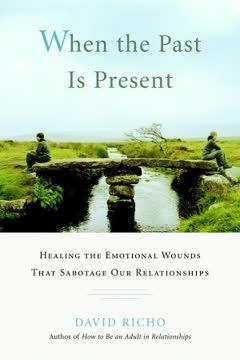
Key Takeaways
1. Transference: The Unseen Script of Our Lives
Freud called this phenomenon “transference.”
Unconscious displacement. Transference is the unconscious act of carrying over feelings, needs, expectations, and beliefs from past significant relationships, often from childhood, onto people in our present lives. We essentially cast new individuals into old roles, mistaking them for figures from our past, and then react to them as if they were those original people. This "case of mistaken identity" means we are often reliving old dramas without realizing it.
Distorted perceptions. This unconscious process distorts our perception of others, preventing us from seeing them "as we in-ly are," as Emerson noted. Instead, we view them through the "lenses of our own history," projecting our internal experiences onto external figures. This can manifest as strong, unexplainable attractions or aversions, where the intensity of our reaction far outweighs the present circumstance, signaling unresolved emotional baggage.
A crude mirror. Transference, though often destructive, serves as a crude but potent signal system from our psyche. It alerts us to the "untold drama inside us," revealing unfinished emotional business that yearns for resolution. By becoming aware of these patterns, we can begin to identify our emotional wounds, unpack them, and place them where they truly belong—in the past.
2. Unfinished Business: Why We Replay the Past
Unconscious transference is a hitching post to our past. As we make it conscious, it becomes a guidepost.
Seeking completion. We are "hardwired to replay the past," especially when it involves emotional pain or disappointment, because our psyche seeks completion for unresolved issues. Transference is a powerful, albeit often misdirected, attempt to "replicate and enact the unfinished business of our childhood or of our primary adult relationships." It's a "homing instinct" in the psyche, a yearning to return and resolve.
Positive compulsion. This inclination isn't inherently pathological; it's a "positive compulsion" driven by an inner "autopoiesis"—a self-making tendency to become our fullest selves. By unconsciously recreating past scenarios, we provide ourselves with opportunities to explore hidden issues and lay them to rest. It's a "useful shortcut" to confronting our past, but only if we bring it into conscious awareness.
The five A's. Our deepest longings for "attention, acceptance, appreciation, affection, and allowing us to be ourselves" (the five A's of adult love) often stem from childhood deficits. When these needs were unmet, we might compulsively seek their fulfillment from present partners, leading to demanding expectations. Recognizing this connection allows us to grieve past losses and take responsibility for healing ourselves, rather than burdening others with our "ancient hungers."
3. Mindfulness & Loving-kindness: The Antidote to Transference
Unconscious transference gives power to then. Awareness of our transference gives the power to now.
Presence over past. Mindfulness is the practice of "unconditional awareness of the present without the clutter, conditioning, or contaminations of the past." It's the antidote to transference because it allows us to perceive reality "as it is in this very moment," free from the "poster with a face from the past." This clarity is a "triumph of mindfulness," shifting power from the past to the present.
You-and-I intimacy. Authentic "you-and-I" (I-thou) relationships emerge when transference and projection vanish, allowing us to see the other person exactly as they are, and for them to see us. This requires intentional awareness and the courage to be "unguarded," letting go of past long enough to be truly present. Such moments, though often fleeting, are where genuine connection and mutual understanding flourish.
Cultivating compassion. Loving-kindness (metta) is a Buddhist practice of extending wishes of love, compassion, joy, and equanimity to ourselves and all beings. It frees us from separateness and helps us respond to others' pain with transformative empathy. By combining mindfulness (accurate perception) and loving-kindness (unconditional acceptance), we dismantle ego-driven mindsets like fear, desire, judgment, and control, paving the way for projection-free relating.
4. Beyond People: Transference in All Aspects of Life
Transference is not limited to persons. It can happen between us and any animal, event/ritual, place, or thing.
Objects as anchors. Just as a child's "transitional object" (like a blanket) provides comfort and connection, adults imbue pets, places, things, and even holidays with deep, feeling-laden meanings. These objects become metaphors for past caring and safety, serving to maintain connections we believe are "necessary to our existence." For example, "comfort food" can evoke warm childhood feelings, or a city can be associated with youthful liberation.
Workplace echoes. Transference extends into professional settings, where workers may project attitudes from childhood authority figures onto their bosses, leading to excessive approval-seeking or rebellion. Managers, too, might treat employees like children, reflecting their own upbringing. Recognizing these dynamics—like sibling rivalry or parental roles—can reduce workplace stress and foster more humanistic interactions, moving beyond "business is only business."
The inner critic. Our "inner critic" is often an introjected voice of past parental disparagements, shaming us with "global and timeless attribution" that we are "all bad." This internalized criticism, a form of transference, makes us fear our own impulses and seek external validation. Releasing ourselves from these "family myths" involves acknowledging the critic as a "stowaway in my mind," and replacing self-shaming with self-compassion and a commitment to our own integrity.
5. The Four Hurdles: Navigating Life's Core Fears
There are four tensions that impact all of us. Each is a given of life and a core issue in relationship. Each evokes fear and is a focus of transference.
Universal anxieties. Life presents four fundamental tensions that evoke deep-seated fears and become focal points for transference: "Comings and goings," "Giving and receiving," "Being accepted and being rejected," and "Letting go and moving on." These are "givens of life" that originate in our past and continue to impact our present, often triggering primitive survival instincts.
Comings and goings. Departures, no matter how innocent, can trigger fears of abandonment or being "cast adrift," especially if childhood experiences involved unreliable caregivers. Conversely, arrivals can evoke anxiety about new challenges or the loss of old comforts. Our reactions to these transitions, like saying something funny to release tension, often reveal unconscious fears that our adult minds might deny.
Giving and receiving. Our capacity to give and receive love (the five A's) is deeply shaped by past experiences. Disappointment in receiving can lead to an "I am supposed to get it all" entitlement or, conversely, a belief that "I always deserve less than others." Similarly, our relationship with money often mirrors parental patterns, becoming a source of transference that impacts our intimacy and sense of worth.
Acceptance and letting go. The fear of rejection or abandonment taps into an "ancestral level" dread of losing connection, which for primitive peoples meant a threat to survival. This can make us cling to unhealthy relationships or feel devastated by minor slights. Learning to "let go and move on" requires accepting impermanence and trusting our inner resources, transforming fear into a "yes" to life's unpredictable flow.
6. The Body Remembers: Physical Roots of Our Past
The truth about our childhood is stored up in our body and though we can repress it, we can never alter it.
Somatic unconscious. Our bodies are "incorruptible" record-keepers of our past, storing emotional reactions as "somatic unconscious" memories. Physical sensations like a "tightness in our breath" or "weakening of the knees" are signals that transference is occurring, revealing unprocessed or unfinished events from infancy. Our bodies "recall what our minds have forgotten," presenting us with an "invoice" for past experiences.
Brain's blueprint. Recent research shows that emotional memories are stored in the amygdala, a brain structure active from birth, meaning past experiences are "physically present in our body, mind, and behavior." Trauma and high stress can lead to cell loss in the hippocampus, causing past events to be revived as if they were happening "now," blurring the lines between then and now—the very definition of transference.
Healing through the body. Catharsis, the release of pent-up emotions, is a "bodily event." Somatic therapies, intuitive massage, or breathwork can help access these deeply stored feelings, allowing them to "erupt in highly charged ways" and then dissolve. This process of "opening in order to release" helps us "get past our past physically," transforming cellularly recorded information into conscious awareness and freedom from chronic stress.
7. Mirroring & Idealizing: Building a Coherent Self
Two key steps in our early psychological development are being mirrored by others and idealizing others.
Basic trust. Our capacity for "basic trust" in the world and others stems from consistent mirroring in childhood—parents attuning to our feelings and reliably fulfilling our needs. This builds "object constancy," the belief that loved ones remain connected even when absent. In adulthood, this translates into trusting ourselves to handle occasional betrayals without losing faith in humankind.
Internalizing ideals. We develop a stable sense of self by idealizing our parents' competence and gradually internalizing their caretaking skills. This "transmuting internalization" allows us to generate our own high ideals and self-nurturing abilities, reducing our desperate need for external validation. It's a process where we "assume/internalize the soothing, nurturing, and confidence-producing qualities of our caregivers."
Three forms of transference. Psychologist Heinz Kohut identified three forms of transference crucial for self-development:
- Mirroring transference: Seeking attunement and validation, hoping a partner will be a "new parent, this time truly giving and trustworthy."
- Idealizing transference: Admiring someone and believing we can share in their power, projecting our own potential onto them to internalize it.
- Twinship (alter-ego) transference: Progressing to a mature sense of communion and equality, seeing the idealized person as an equal.
These forms, though rooted in childhood needs, are "healthy narcissism" that help us build a coherent self.
8. Adult Love: Beyond Chemistry and Childhood Echoes
“I want a girl just like the girl that married dear old Dad,” the old song says. Indeed, relationship is more often reenactment than something truly new.
Chemistry's illusion. The "chemistry" we feel when falling in love often signals an unconscious recognition of a suitable candidate for repeating our past. It can be an "addictive form of chemistry," a restless compulsiveness rooted in neediness and fantasy-based projection, rather than a healthy, visceral responsiveness. This "blindness in love" can lead us to overlook "red flags" in pursuit of familiar patterns.
Erotic echoes. Erotic transference links sexual desire to unmet childhood needs, where sexual intent may represent a "long-standing yearning for a holding environment and for a trustworthy parent/partner." The physical intimacy of adult lovers can strikingly resemble mother-infant bonding, suggesting that sex can become a substitute for the unconditional nurturance missed in early life, or a way to heal those deficits.
Daring true intimacy. Adult love requires moving beyond these childhood echoes and daring to see a partner "just as he is rather than as an artifact from the vault of our familiar past." This means acknowledging ambivalence, recognizing that needs change over time, and committing to a relationship not out of compulsion or dependency, but from a daily renewed belief in mutual love and growth. It's a commitment to "no white knuckles, only warm hands that hold each other in the light and in the dark."
9. From Conflict to Clarity: Transforming Relationship Issues
“It’s not just you and me transacting here, but each of us is transacting with his parents through the other. This whole hassle has been about getting over what happened to us in childhood.”
Phantom presences. Conflicts in intimate relationships are often saturated with transference, where "our parents and former partners are phantom presences in every dispute." Recognizing this—e.g., "I see my mother in you"—can transform arguments from "name-calling our partner" into opportunities for conscious resolution. This means identifying the origin of our overreactions and presenting our needs directly to the present person, rather than reliving the past.
The APRI method. To transform conflict, we apply the "Address, Process, Resolve, and Integrate" (APRI) practice:
- Address: Name the issue and own our part in it.
- Process: Express feelings, acknowledging their connection to past patterns.
- Resolve: Take action, make new agreements, break dysfunctional patterns.
- Integrate: Reshape our lives in accordance with new awareness, living differently.
This systematic approach helps us move from being "caught in cycles of transference" to creating new, conscious experiences.
Good-enough relating. While total elimination of transference is impossible, "good-enough relating" occurs when "there are more you-and-I moments than there are transference moments." This involves an "observing ego" that can reflect on transference without succumbing to it. It means accepting that partners are not perfect, reconciling ourselves to their limitations, and finding ways to fulfill our needs ourselves, rather than demanding complete fulfillment from one person.
10. Embracing Wholeness: Integrating Personal & Archetypal Transference
This personal unconscious must always be dealt with first. . . . otherwise the gateway to the cosmic unconscious cannot be opened.
Beyond personal history. While Freud focused on the personal unconscious, Jung introduced the "collective unconscious," a shared reservoir of universal archetypes (hero, mother, villain, etc.). Transference can tap into these archetypal energies, making reactions seem "bigger than fits the situation" or evoking "inherited dread of death, judgment, and Armageddon." Recognizing this "archetypal transference" helps us understand the vast, transpersonal dimensions of our psyche.
The urge for wholeness. Deep within us is an "innate given, a thrust toward individuation," a drive to articulate our "wholeness"—the full spectrum of our light and dark potentials. When we project archetypal powers onto others (e.g., seeing a leader as a hero or a villain), we acknowledge this inner voice but fail to open it within ourselves. This prevents us from integrating our own "unacknowledged" greatness or shadow.
Psychological and spiritual synergy. Transformation involves integrating psychological work (making the ego healthy, free from fear and compulsion) with spiritual practice (letting go of self-centeredness for universal compassion). Psychological tools help "address, process, resolve, and integrate" past issues, while spiritual practices like mindfulness and loving-kindness cultivate "clear seeing" and "egolessness." This synergy allows us to move from "ego through the unconscious to fuller consciousness," transforming transference into a path of awakening.
Last updated:
Review Summary
When the Past Is Present receives generally positive reviews for its insights on transference and relationships. Readers appreciate the Buddhist perspective and practical advice, though some find it repetitive or too spiritual. Many highlight its value for self-awareness and improving relationships. Critics note the writing style can be dry and the religious references excessive. Overall, reviewers find the book thought-provoking and helpful for understanding how past experiences influence present relationships, despite some shortcomings in presentation and structure.
Similar Books