

Key Takeaways
Let blank pages carry possibility without claiming to know their author
An inheritance of absence. At fifty-four, the age her mother was when she died, Williams opens the journals her mother left her and finds every page empty. The discovery feels like a second loss. In a Mormon culture where women are encouraged to keep records and raise children, the blank books seem to refuse an expected role. Williams cannot know whether her mother meant the emptiness as secrecy, resistance, or something else. She makes that uncertainty the beginning of her own story.
A page becomes a meeting place. Williams writes into the journals, using the blankness to explore her mother’s choices, her own voice, and the histories women may keep private. The books become less an archive than an invitation to imagine. The memoir’s central question is not solved: the daughter can write toward her mother without claiming to speak for her.
The book’s force comes from refusing the easy comfort of a revealed secret. In family history, gaps invite projection, and projection can quietly harden into false certainty. Williams keeps the distinction visible: her interpretations are attempts to meet her mother, not proof of what her mother intended. That restraint makes the blank pages ethically interesting. They are both a limit on knowledge and room for creation. The approach also raises a useful question for any inherited story: can a person honor what remains unknown without turning silence into either a wound or a virtue?
Learn to speak by listening for the particular voice in each room
Listening changes speech. As a child, Williams fears reading aloud because of her lisp. Her speech therapist, Mrs. Parkinson, teaches her to hear how sounds are made and to practice them through poems. The work turns a source of shame into a pleasure in language. Williams does not become fearless; she learns to speak while afraid, attending to the words rather than monitoring herself.
Voice is relational. Her mother and grandmother also teach through listening: they share music, bird calls, and conversation. As an adult teacher, Williams tries to make ecology understandable through stories and experiments that invite children’s questions. Across these experiences, voice is not simply volume or confidence. It develops when someone listens closely enough to recognize what another person, or child, is trying to say.
This account makes voice a learned social capacity, not a personality trait some people possess and others lack. The therapist’s attention matters because it gives Williams both technique and a reason to value what she wants to express. That distinction is useful in education and public speaking: encouragement without skill can feel hollow, while technique without regard can reinforce shame. The emphasis on listening also resists the idea that speaking up always means speaking more. In some settings, the first task is to understand what kind of attention would make honest speech possible.
Treat each creature's distinct signal as an invitation to pay attention
Nature is a conversation. Williams learns birds through her grandmother’s field guides, which record where and when each bird was seen. At a childhood party, she spots a rare white robin and calls her grandmother, who comes so the other children can see it. An Audubon leader later dismisses the sighting because of Williams’s age. Her grandmother’s response affirms the value of careful observation even when an institution refuses to certify it.
Attention widens belonging. Birdsong recordings, field walks, and ecology lessons teach Williams that species have different calls and ways of life. At the Teton Science School, teacher Ted Major links fire, lodgepole pines, and regeneration, while admitting what he does not know. Nature becomes both a source of wonder and a lesson in interdependence, connecting scientific inquiry to responsibility for land.
The bird stories join two forms of knowledge: patient firsthand attention and organized scientific description. Neither is sufficient alone. A field guide can sharpen observation, while an individual encounter may reveal what a checklist or authority overlooks. This is a productive model for ecological thinking, which depends on noticing relationships across scales, from a bird’s call to habitat change. The memoir also avoids making wonder a substitute for evidence. Its strongest moments hold curiosity and discipline together, though a personal sighting still benefits from verification when claims have consequences beyond the observer.
Inherit women's courage without inheriting every role assigned to them
Family is influence, not destiny. Williams grows up among four generations of women, each with a different relationship to faith, privacy, and independence. Her mother supports women’s education and the Equal Rights Amendment, yet also describes a wife’s duty in language of service and self-sacrifice. Williams inherits both the encouragement and the contradiction. Her declaration that she resembles her mother without being her becomes a way to honor family while choosing a distinct life.
Agency has a body. Williams connects women’s freedom to control over reproduction. Her mother chooses to have her tubes tied and calls the decision freedom. Williams uses birth control and questions whether motherhood must define her future. These decisions are set against a community where women’s roles are often prescribed. The point is not that every woman should make the same choice, but that the choice should belong to her.
Intergenerational inheritance is rarely a clean transfer of values. Families pass down permission and constraint together, often through the same person. Williams’s account is strong because it does not reduce her mother to either a feminist model or a traditional figure. Her mother’s choices and beliefs remain in tension, as do the daughter’s. This resembles the broader idea of relational autonomy: freedom develops within relationships and inherited conditions, but it need not mean repeating them. The memoir’s emphasis on reproductive choice is especially concrete, though it also leaves room for readers whose own choices center on becoming parents.
Trust bodily alarms before politeness edits them into silence
A warning ignored. In the Sawtooth Wilderness, Williams agrees to walk with a man whose persistence already makes her uneasy. When he appears later in strange clothing, she still follows him. On a remote trail, he raises an ax and lunges; he slips, and she escapes. She tells no one what happened, doubts her own memory, and feels responsible. The discovery of an ax and a hidden shelter confirms the danger, but she remains silent.
Silence has consequences. Williams later sees her silence as a failure to warn others, and asks why she distrusted her instincts. The episode is not a claim that people can always predict danger or prevent harm. It shows how social training to be agreeable can override a person’s own sense that something is wrong, and how shame can make speaking afterward even harder.
The episode is powerful partly because it refuses a tidy lesson in which intuition reliably prevents harm. Williams’s warning signs were real, but danger is not always legible, and responsibility for an assault belongs to the person who threatens violence. Trauma responses can include freezing, appeasing, or remaining silent; none proves consent or culpability. That nuance matters because a story about trusting instincts can accidentally become another demand placed on survivors. The more useful lesson is to take discomfort seriously, create conditions where people can leave safely, and listen without making disclosure a test of credibility.
When institutions ignore one witness, build a chorus
Local action connects struggles. In Kenya, Williams hears Wangari Maathai describe how deforestation burdens rural women who must search for fuel and how tree planting can restore land and livelihoods. Williams helps bring that work to Utah, raising ten thousand dollars for the Green Belt Movement and connecting Kenyan forest loss with erosion in the Great Basin.
Many voices gain reach. When Utah officials propose protecting far less wilderness than citizens support, Williams and fellow writer Stephen Trimble ask western writers for essays. Their chapbook, Testimony, brings together twenty pieces and reaches members of Congress. During a Senate filibuster, senators read from it aloud. The bill was defeated, and President Clinton later established the nearly two-million-acre Grand Staircase-Escalante National Monument. Williams presents collaboration, not solitary eloquence, as the source of public force.
The shift from individual testimony to a coalition is both practical and symbolic. Institutions often filter speech through access, expertise, and political convenience; a chorus can make dismissal more costly and provide multiple forms of authority. The tree-planting work also illustrates how environmental damage is tied to labor and gender, rather than being a separate concern for conservationists. Still, the memoir does not offer a universal recipe: the political opening, allies, and timing mattered. Collective voice increases influence, but it cannot guarantee that institutions will listen or that every campaign will win.
Use art and ritual to stay present with grief and uncertainty
Symbols make feeling visible. After her mother and grandmother die, Williams turns to writing, birds, desert walks, and ritual to approach grief that ordinary explanation cannot contain. In a drought-struck canyon, she and a friend rub orange algae between their fingers and mark their bodies with the color. The act does not solve loss or drought; it gives attention a form when words feel inadequate.
Uncertainty remains part of life. Years later, doctors find a small vascular malformation in the part of Williams’s brain associated with language. They offer surgery or watchful waiting, and she chooses to live with uncertainty. Artworks made from medical scans help her see herself beyond a diagnosis. The book treats creative practice as a way to remain responsive, not as a cure for illness, bereavement, or fear.
Ritual can organize attention without pretending to control events. That makes Williams’s use of color, landscape, and art more than decorative: each gives grief a temporary shape that can be approached and shared. Narrative medicine similarly recognizes that illness is experienced not only as pathology but as disruption to identity and time. Yet symbolic meaning should not displace medical care or practical action. Williams keeps that boundary by presenting her choice as personal and uncertain. The most valuable claim is modest: art can help a person inhabit an unanswered question without letting the question become the whole of life.
Let love protect two selves, not dissolve them into one
Closeness needs space. Williams’s mother gives her a wedding letter urging a wife to create harmony through giving. Williams later discovers a different balance in her marriage to Brooke: they need time apart as well as shared conversation, wilderness, and work. She describes their relationship as something shaped by change, not a fixed arrangement that guarantees permanent understanding.
Attention can restore connection. During a rainy visit to Big Sur, Brooke suggests that each make a collage representing their inner life. They work separately, then explain their images to one another. The exercise reveals parts of Brooke’s experience Williams had not known. Their intimacy comes not from assuming they are one person, but from making room for each to change and then choosing to meet again.
The memoir’s account of marriage resists both fusion and detached independence. The collage exercise is a small, useful example of how indirect expression can open conversation when ordinary updates miss what matters. Its logic resembles the distinction between autonomy and isolation: maintaining a self can strengthen connection rather than threaten it. At the same time, the book’s language of solitude should not be taken as a formula for every partnership. Space is sustaining only when both people can negotiate it and when distance does not become a substitute for addressing conflict.
Keep some truths private without mistaking privacy for muteness
Silence has different meanings. Williams argues that imposed silence can censor, while chosen silence may protect a person’s inner life. Her mother’s blank journals do not mean she had no voice: she wrote letters, gave talks in church, and urged women to pursue education. The daughter’s effort to understand the journals therefore cannot reduce the mother to either a silent victim or a hidden rebel.
The ending stays open. At the Spiral Jetty, Williams realizes that speaking truth does not require making every private experience public. She hears her mother inwardly and accepts the journals as a mystery she can approach, but never solve. The book closes not with an answer about why her mother left empty pages, but with the writer returning to the possibility of beginning again.
This distinction offers a needed counterweight to the memoir’s urgent calls for women to speak. Disclosure can create recognition and solidarity, but it can also expose people to harm or violate boundaries they have chosen. Privacy is not automatically empowerment, any more than silence is automatically oppression; context, agency, and audience matter. The ending respects that complexity by treating the mother’s unknown intention as hers to keep. It also leaves a demanding question for readers: when does telling a story serve others, and when does restraint better honor the person at its center?
Analysis
This memoir is built around a fact that cannot be converted into a reliable answer: a daughter receives her dying mother’s journals and finds them blank. The structure follows that uncertainty outward through family history, Mormon expectations, nature writing, feminism, ecological activism, sexual and bodily autonomy, grief, and the practice of writing. Its fifty-four variations work less like chapters in an argument than repeated approaches to a single absence. Birds, water, white pages, and the desert become ways of thinking, not merely scenery.
The central insight is deliberately double-edged. Women need language to resist erasure, name bodily experience, and enter public decisions. Yet speech is not automatically liberation. A mother may choose privacy; a daughter may mistake a boundary for a puzzle she is entitled to solve. The book’s final movement corrects any simple command to disclose everything: voice includes judgment about what to say, to whom, and when. That tension makes the title more than a metaphor for female expression. It asks whether a voice can be inherited without being copied, and whether love can sustain what it cannot know.
The memoir’s strongest evidence is narrative and embodied. A speech therapist turns a childhood lisp into attentive practice; an encounter with an armed man reveals how politeness can silence alarm; community writing helps put wilderness advocacy into public circulation. These scenes show voice operating at intimate, physical, and political scales. The account of the blank journals, however, also exposes a limit: imaginative readings of another person’s silence can become projection. Williams recognizes this risk rather than resolving it.
The book’s associative style can feel repetitive, but repetition performs a real function. Each return changes the meaning of the blank page, much as a bird call sounds different across a landscape. The result is not a universal method for finding one’s voice. It is a portrait of voice as attention, agency, relationship, and the courage to act while some questions remain unanswered.
Review Summary
When Women Were Birds is a lyrical memoir exploring voice, silence, and womanhood through 54 variations inspired by the author's mother's blank journals. Readers appreciate Williams' poetic prose, insights on nature and feminism, and reflections on Mormon culture. Some find the fragmented structure challenging, while others praise its meditative quality. The book resonates deeply with many women, offering profound reflections on finding one's voice and place in the world. Critics note its occasionally New Age-like tone but admire Williams' graceful writing and ability to weave disparate themes into a cohesive whole.
Glossary
Cartographies of Silence
Maps made from what is unspokenWilliams uses this phrase for the territory opened by her mother’s blank journals. The journals do not supply a written account of the mother’s inner life, so the daughter traces possibilities through memory, letters, family history, and imagination. The metaphor emphasizes both the shape of an absence and the limits of what can be known.
Mother Tongue
A voice grounded in women's experienceIn the book, this term names a way of speaking that draws on women’s own language and lived experience rather than disappearing from public speech or simply adopting the dominant language of men. Williams invokes it while describing how women’s voices can be forceful and compassionate without abandoning their own perspective.
repetations
Layered, unreadable handwritingWilliams’s name for writing one sentence over another until several lines occupy the same space and become difficult to decipher. She uses the practice privately, sometimes on scraps of paper, as a way to think and uncover feeling without aiming at a readable public text. The act matters as much as the words it obscures.
Clan of One-breasted Women
A family shaped by breast cancerWilliams’s name for the women in her family affected by breast cancer and mastectomy. The phrase reframes them as a community with strength and shared history rather than only as victims of illness. It also becomes a way for Williams to connect family loss to her public concern about environmental harm and nuclear testing.
Nushu
A women's script from JiangyongNushu is a writing system associated with women in rural Jiangyong, China. As Williams describes it, women used the script in autobiographical writing and in messages shared with daughters and close friends, at a time when women were often excluded from formal schooling. Its history shows how writing can create private forms of communication and solidarity.
Green Belt Movement
Women's tree-planting movementThe Green Belt Movement is the Kenyan initiative Williams encounters through Wangari Maathai. It organizes women to collect seeds, grow seedlings, and plant trees, linking environmental restoration with community livelihoods. Williams helps create a Utah effort inspired by this work and raises funds for the movement through local women and groups.
FAQ
What's "When Women Were Birds" about?
- Exploration of Voice: "When Women Were Birds" by Terry Tempest Williams is a reflective exploration of voice, identity, and the legacy of silence passed down through generations of women.
- Mother's Blank Journals: The narrative begins with the discovery of the author's mother's journals, which are all blank, prompting a deep dive into the meaning of voice and silence.
- Fifty-four Variations: The book is structured into fifty-four chapters, each offering a variation on the theme of voice, drawing from personal experiences, family history, and cultural observations.
- Themes of Nature and Feminism: Williams intertwines themes of nature, feminism, and spirituality, using her personal story to address broader societal issues.
Why should I read "When Women Were Birds"?
- Unique Narrative Style: The book offers a unique narrative style that blends memoir, poetry, and philosophical musings, providing a rich and engaging reading experience.
- Insight into Feminine Silence: It provides profound insights into the concept of feminine silence and the power of voice, making it a compelling read for those interested in gender studies.
- Connection to Nature: Williams' deep connection to nature and her ability to draw parallels between the natural world and human experience offer a refreshing perspective.
- Empowerment and Reflection: The book encourages readers to reflect on their own voices and the silences they may have inherited, offering a sense of empowerment and self-discovery.
What are the key takeaways of "When Women Were Birds"?
- Power of Silence: The book emphasizes the power and complexity of silence, suggesting that it can be both a form of oppression and a source of strength.
- Legacy of Voice: Williams explores the idea that voice is a legacy passed down through generations, and that finding one's voice is a personal and transformative journey.
- Interconnection with Nature: The narrative highlights the interconnection between human life and the natural world, suggesting that understanding this relationship can lead to greater self-awareness.
- Embracing Uncertainty: The book encourages embracing uncertainty and the unknown as a path to personal growth and understanding.
How does Terry Tempest Williams use her mother's journals in "When Women Were Birds"?
- Symbol of Silence: The blank journals serve as a powerful symbol of silence and the unspoken stories of women, prompting Williams to explore what it means to have a voice.
- Catalyst for Reflection: They act as a catalyst for Williams' reflections on her own life, her relationship with her mother, and the broader implications of silence in women's lives.
- Metaphor for Possibility: The empty pages are seen as a metaphor for possibility and the potential for creating one's own narrative and legacy.
- Exploration of Identity: The journals lead Williams to question her identity and the ways in which women are often defined by what they do not say.
What role does nature play in "When Women Were Birds"?
- Source of Inspiration: Nature serves as a source of inspiration and a metaphor for the themes of voice and silence throughout the book.
- Connection to Identity: Williams uses her connection to the natural world to explore her own identity and the identities of the women in her family.
- Symbol of Freedom: Birds and other elements of nature symbolize freedom and the ability to transcend societal constraints.
- Reflection of Inner Life: The natural world reflects Williams' inner life and emotions, providing a backdrop for her personal journey and insights.
How does "When Women Were Birds" address the theme of feminism?
- Exploration of Women's Voices: The book delves into the historical silencing of women's voices and the importance of reclaiming them.
- Critique of Gender Roles: Williams critiques traditional gender roles and the expectations placed on women, using her own experiences as a lens.
- Empowerment Through Storytelling: The narrative emphasizes the power of storytelling as a means of empowerment and resistance against patriarchal structures.
- Intergenerational Dialogue: Williams engages in an intergenerational dialogue with the women in her family, exploring how their experiences shape her understanding of feminism.
What are some of the best quotes from "When Women Were Birds" and what do they mean?
- "I am leaving you all my journals...": This quote sets the stage for the exploration of silence and voice, highlighting the mystery and potential of the blank journals.
- "To withhold words is power.": This reflects the book's theme that silence can be a form of power and control, as well as a source of strength.
- "When women were birds, we knew otherwise.": This metaphor suggests a time when women were free and unburdened by societal constraints, emphasizing the theme of liberation.
- "The world is meant to be celebrated.": This quote encapsulates the book's message of finding joy and meaning in life, despite its challenges and uncertainties.
How does Terry Tempest Williams explore the concept of voice in "When Women Were Birds"?
- Personal Journey: Williams shares her personal journey of finding her voice, using her mother's silence as a starting point for exploration.
- Cultural and Historical Context: She places her story within a broader cultural and historical context, examining how women's voices have been silenced over time.
- Metaphorical Language: The use of metaphor and poetic language enriches the exploration of voice, making it both a literal and symbolic journey.
- Interplay of Silence and Sound: Williams examines the interplay between silence and sound, suggesting that both are essential to understanding and expressing one's true self.
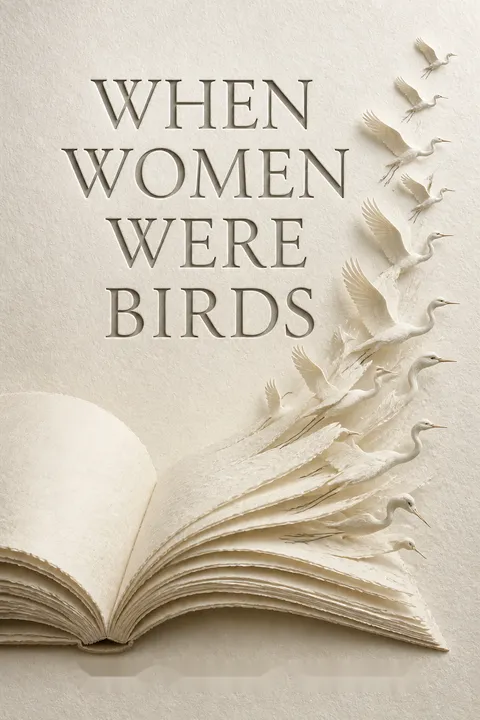
What is the significance of the title "When Women Were Birds"?
- Metaphor for Freedom: The title suggests a metaphor for freedom and the ability to transcend limitations, drawing on the imagery of birds as symbols of liberation.
- Historical Reflection: It reflects on a time when women may have been more connected to their true selves and voices, unencumbered by societal expectations.
- Connection to Nature: The title emphasizes the book's connection to nature and the natural world as a source of inspiration and understanding.
- Invitation to Imagine: It invites readers to imagine a world where women are free to express themselves fully and authentically.
How does "When Women Were Birds" address the theme of legacy?
- Inheritance of Silence: Williams explores the idea of inheriting silence from previous generations and the impact it has on one's own voice and identity.
- Creation of Personal Legacy: The book encourages readers to create their own legacy by finding and using their voice, rather than being defined by the past.
- Intergenerational Influence: Williams examines how the experiences and choices of her mother and grandmother influence her own understanding of legacy.
- Legacy of Nature: The narrative also considers the legacy of nature and the responsibility to preserve and protect the natural world for future generations.
What is the structure of "When Women Were Birds" and how does it contribute to the book's themes?
- Fifty-four Variations: The book is divided into fifty-four chapters, each offering a variation on the theme of voice, allowing for a multifaceted exploration.
- Non-linear Narrative: The non-linear structure reflects the complexity of the themes and the interconnectedness of personal and cultural narratives.
- Blend of Genres: Williams blends memoir, poetry, and philosophical musings, creating a rich tapestry that enhances the exploration of voice and silence.
- Reflective and Meditative: The structure allows for a reflective and meditative reading experience, encouraging readers to engage deeply with the themes.
How does Terry Tempest Williams use personal anecdotes in "When Women Were Birds"?
- Illustration of Themes: Personal anecdotes illustrate the book's themes, providing concrete examples of the abstract concepts of voice and silence.
- Emotional Connection: Williams' personal stories create an emotional connection with readers, making the exploration of complex themes more relatable.
- Insight into Family Dynamics: Anecdotes about her family offer insight into the dynamics and relationships that shape her understanding of voice and identity.
- Invitation to Reflect: By sharing her own experiences, Williams invites readers to reflect on their own lives and the silences they may have inherited or chosen.
Download PDF
Download EPUB
.epub digital book format is ideal for reading ebooks on phones, tablets, and e-readers.








