

Key Takeaways
Stop copying rival agents; give sellers a reason to choose you.
Competition hides sameness. In his first estate agency job, Burgess remembers negotiators matching buyers to new listings from paper cards in personal boxes. The technology has changed, but many agencies still use similar processes and offer much the same service. In his example, a search within three miles of his old office returned more than 500 agents. In that crowded market, copying a competitor's latest offer is not a strategy. It makes the business easier to compare, usually on price.
Find an unsolved problem. Step back and ask what customers would lose if the agency disappeared. Burgess suggests looking beyond the sale itself: could the agency coordinate removals, help prepare a property, or provide landlords with clearer inspection updates? The point is not to adopt every idea, but to create a distinctive reason to exist.
The valuable shift is from competitor-centered thinking to customer-centered design. Strategy research often distinguishes between competing on existing terms and changing what customers can compare. An agency that bundles practical help may make the stressful process feel more manageable, not merely more feature-rich. Still, differentiation must matter to customers and be deliverable at a sustainable cost. An unusual service that no one values is not a strategic advantage. Testing ideas with sellers and landlords before building them keeps invention tied to real demand.
Explain your fee through the problems your service actually solves.
Price exposes the offer. Burgess compares two sales charged at 1.5 percent: £3,750 on a £250,000 apartment, and £22,500 on a £1.5 million house. The percentage makes the fee differ sixfold, although the service may look much the same. Generic claims about extra effort or fewer buyers do not explain that difference. His point is not that high fees are wrong, but that an agency should be able to explain its pricing clearly and confidently.
Sell the whole job. A seller may need help with preparation, viewings, legal communication, the chain, cleaning, and removals, not just a listing. An agency can define and price the work it actually takes responsibility for. Burgess offers an illustrative target: 100 sales at £6,000 each would generate £600,000 in branch turnover.
This is a useful application of value-based pricing: the fee becomes easier to defend when it corresponds to a clearly understood outcome rather than an inherited percentage. It also disciplines the business to specify what is included and where responsibility ends. The caution is that a broader promise increases operational demands. A service package only differentiates an agency if the team can consistently deliver it, and customers can see the difference between the promise and a competitor's cheaper, narrower offer.
Publish useful material that earns attention instead of interrupting people.
Make attention voluntary. Burgess calls traditional adverts, leaflets, and cold calls forms of interruption marketing: they compete for attention while people are doing something else. He argues that audiences can increasingly filter or skip these messages. Content marketing takes another route by offering material people choose to read or watch, with no immediate sales pitch. The content should educate, entertain, or engage the intended audience.
Give before asking. A gym might share practical fat-loss advice rather than promote a temporary discount. An estate agency could publish local guides, advice on preparing a home, or tips for families moving into the area. The content is still associated with the business, but it first gives the audience something useful. That voluntary interaction can help establish familiarity and expertise before someone needs to hire an agent.
The distinction is not simply old media versus digital media. A targeted advert can interrupt someone, while a useful article can also be distributed in print. The deeper question is whether the message earns attention through relevance or merely demands it. This resembles permission-based communication: the audience's choice is part of the value. Yet attention is not automatically trust. Content needs to be accurate, locally useful, and connected to a service the business can genuinely provide.
Build trust before prospects enter the market and start comparing fees.
Reach beyond active shoppers. Burgess separates active markets, people currently looking for a service, from dormant markets, people who could need it but are not shopping now. Active prospects may already compare several agents, so the conversation can quickly become a contest over fees. Reaching dormant prospects with helpful information gives them a reason to remember the agency before they begin shopping.
Discover the real motivation. During a valuation meeting, an owner may first give a simple reason for moving. Burgess recommends asking what prompted the decision and what the person hopes to achieve. In a one-hour meeting, he suggests aiming for the potential client to do most of the talking. Those questions can reveal concerns about timing, workload, or the move itself, which helps the agent explain relevant support rather than recite a generic sales pitch.
This approach treats marketing as relationship-building across time, rather than a hunt for people ready to buy today. It also improves the sales conversation by replacing assumptions with questions. In practice, dormant audiences are difficult to identify precisely, and educational material cannot guarantee future preference. The approach is strongest when it builds a recognizable, useful local presence without pretending that every reader is a lead. Listening carefully then matters as much as the content that brought someone through the door.
Run marketing as a five-part loop, not a string of disconnected campaigns.
Connect the moving parts. Burgess organizes the process as the 5Cs: Content, Communicate, Connect, Constant, and Convert. Create useful material, distribute it to suitable audiences, learn from their interests, maintain a consistent rhythm, and guide prospects toward becoming customers. Each part supports the others. A blog post that is never distributed has little reach; a large mailing list that receives irrelevant messages may damage the relationship.
Make it repeatable. An agency might publish local advice, share it through social media and email, notice which topics a reader explores, and then send more relevant material. The goal is a continuing system, not a one-off promotion that appears only when new business slows. Burgess recommends making the parts work together across online and print channels, with regular review of how the process performs.
The strength of this framework is its operational logic: it links creation, distribution, feedback, and conversion instead of treating marketing as an isolated creative task. It resembles a feedback-control system, where results inform the next action. The important qualification is that a loop can efficiently repeat bad assumptions. Teams need to check whether their audience is actually benefiting, whether the data are meaningful, and whether the conversion measures reflect durable customer value rather than a short-lived spike.
Map the seller's journey, then make follow-up timely and consistent.
See the process as customers do. Burgess asks agencies to map each step from first contact through a completed transaction and ongoing loyalty. At each step, consider the customer's goal, the agency's goal, and what action or resource helps both. This can expose gaps hidden by a sales team's familiar routine, such as a website that describes the service without showing how it addresses a seller's concerns.
Use technology with purpose. For market appraisals, he contrasts a basic routine of visiting, sending a presentation, and relying on a callback diary with a tracked online report and planned follow-up. A system can record when a prospect views the report or website, then prompt an agent or send relevant messages. The book invokes seven touchpoints as a useful marketing principle, but the practical lesson is to plan contact rather than leave it to memory.
Journey mapping makes an intangible service visible by locating moments of uncertainty, delay, or unnecessary effort. Automation can reduce forgotten follow-ups and give staff timely context, much as a checklist supports work in high-stakes settings. But more contact is not always better. Automated messages should be helpful, proportionate, and easy to stop. The map should also include human judgment: a prospect's repeated page visits may signal interest, confusion, or simple browsing, not necessarily readiness to instruct an agent.
Make every customer touchpoint reinforce the same level of service.
Brand is a service signal. Burgess tells the story of Chris, a hairdresser who moved from a worn, inconsistent shop called Chop Chop to a refurbished Toni & Guy. The staff received guidance on welcoming customers and conducting consultations. The book says Chris's men's haircut price rose from £12 to £40, even though the staff were the same and the service became more consistent. The new setting and experience changed what customers expected from the business.
Consistency builds recognition. Burgess applies the lesson to estate agencies: the website, printed material, office details, and customer communications should look and feel like they belong to the same business. A coherent brand helps customers understand the kind of experience being offered. The aim is not identical, robotic interactions, but a reliable standard that staff can deliver in their own voices.
The story illustrates how people infer quality from cues around a service they cannot fully evaluate in advance. Design, staff behavior, and the consultation process can make a price feel more credible by reducing uncertainty. That does not prove refurbishment alone creates lasting value; the experience also has to meet expectations after the first impression. The broader lesson is that branding is not decoration. It is a promise communicated through repeated details, and inconsistency can quietly contradict that promise.
Outsource specialized marketing rather than quietly adding it to someone's workload.
Hidden work still costs. Burgess illustrates the difficulty with John, a gym owner, and Mary, his administrator. Mary tries to write weekly content alongside her existing duties, while John reviews it when he can. Ideas stall, publication becomes irregular, and neither can easily tell whether the effort is working. Assigning a task to an existing employee may look free, but it uses time that already has a job to do.
Compare the real options. In another version of the example, hiring an internal content team brings recruitment, salaries, management, and the risk of losing key staff. Burgess recommends using specialists when a business lacks the skills or capacity to produce and distribute content consistently. That is not a rule that outsourcing always wins. The decision should compare total costs, quality, continuity, and the time owners and staff must contribute.
This is an argument about organizational design, not just writing. Effective marketing requires coordinated skills in research, production, distribution, and measurement, so treating it as a spare-time chore can make the whole system fragile. Outsourcing may provide expertise without building a full department, but it also creates dependency on a supplier. A sound arrangement keeps strategy and customer knowledge inside the agency while making responsibilities, reporting, ownership of materials, and exit plans clear.
Measure long-term relationships, not just immediate enquiries from each campaign.
Count both gains and damage. Burgess asks agencies to look beyond the one or two responses to a leaflet campaign. If 30,000 households receive an irrelevant sales pitch, the business should also consider how many people it has annoyed or made less receptive. Useful content may not produce an immediate phone call, so measuring only direct enquiries can undervalue the audience's growing familiarity with the brand.
Keep the old pipeline alive. A past valuation that did not convert is not necessarily worthless. Burgess imagines communicating with previous prospects for years, using relevant content and alerts when they return to the agency's website. The business should track where leads came from and how far they progressed, then review each stage for weak messages or poor-fit prospects. This turns marketing from guesswork into a process that can be adjusted.
The wider measurement lens corrects a common attribution error: immediate response is observable, while trust and future preference are harder to see. Tracking can reveal useful patterns, but it can also overstate causation. A site visit after an email does not prove the email caused a sale. Long-term contact also raises questions of consent, data retention, and relevance. Measurement is most valuable when it improves service and learning, not when it simply produces more surveillance or more messages.
Analysis
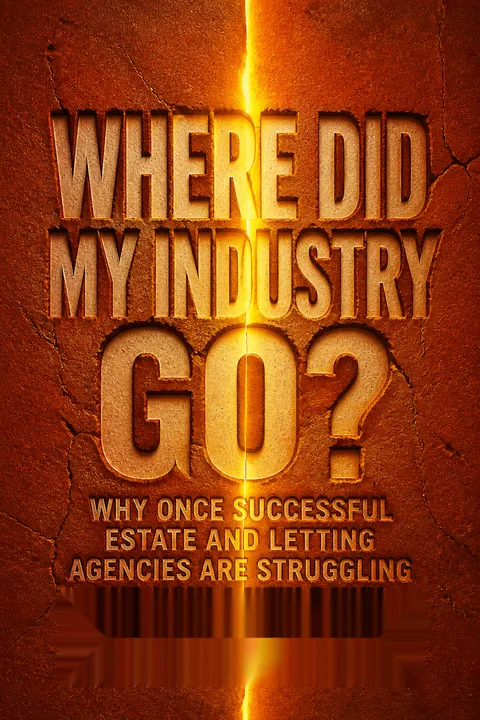
Where Did My Industry Go? is a practical business book aimed at estate and letting agency owners who recognize that familiar methods are losing force but lack a clear replacement. Its structure moves from Burgess's early experience as a negotiator, through a diagnosis of sameness and interruption-based advertising, toward a connected marketing process and operational recommendations. The central claim is that agencies should stop relying on occasional promotions and instead build distinction, publish useful material, learn from audience behavior, and systematize follow-up.
The book's strongest contribution is its translation of digital marketing into the local service context. Physical applicant cards make the old relationship-based agency vivid; the modern challenge is not that relationships no longer matter, but that the number of competing agencies and channels has grown. Its 5Cs framework links content, distribution, audience learning, consistency, and conversion into one coherent workflow. The examples of pricing, brand presentation, appraisal follow-up, and outsourced content make the strategy concrete rather than purely aspirational.
Its limitations are also important. The proposed systems can be costly, the examples of successful firms are not controlled evidence, and the book's suggested seven touchpoints should be treated as a rule of thumb, not a universal law. Burgess is the CEO of Iceberg Digital, which sells services and tools discussed in the book. That commercial perspective does not negate the advice, but it means readers should assess providers independently and compare the cost with in-house alternatives. Automation also makes customer data and permission central concerns, although those issues receive little attention here.
The most durable reading is therefore not that every agency needs a particular platform. It is that an agency needs a clear reason to be chosen, a repeatable way to demonstrate its value, and honest measures of whether its marketing improves customer experience and business results.
Review Summary
Where did my industry go? has received an overall rating of 4.5 out of 5 from 12 reviews. Most readers found it highly valuable, praising its clear insights into why Estate and Letting Agencies are struggling in the modern era, along with practical hints and ideas for business progression. One reviewer found it compelling enough to order the paperback after reading digitally. However, one critic felt the content was dry and overly basic, focusing too heavily on simple marketing and content creation formulas.
Glossary
The 5Cs
Five-part marketing processThe book's framework for organizing content marketing: Content, Communicate, Connect, Constant, and Convert. A business creates useful material, distributes it, learns what audiences care about, maintains a consistent presence, and guides prospects toward becoming customers. The framework treats these activities as connected parts of an ongoing process rather than separate promotional tasks.
Content Marketing Loop
Connected marketing cycleBurgess's description of a repeatable system that uses relevant content to attract an audience, distributes it through appropriate channels, tracks audience interests, and nurtures prospects toward a sale. The process is intended to replace sporadic campaigns with ongoing communication and feedback. It is closely associated with the five activities named in The 5Cs.
Interruption marketing
Unrequested promotional messageMarketing that inserts a sales message into an activity the audience was already engaged in. Burgess uses television commercials, leaflets, and cold calls as examples. He argues that such advertising has become less effective as people gain more ways to avoid or filter it, though he does not claim that it has no useful role.
Active markets
People shopping nowPotential customers who are currently considering or using the kind of service a business offers. Because they may already be comparing providers, price can become a central part of the conversation. The book contrasts these prospects with people who could need the service but are not currently looking for it.
Dormant markets
Future potential customersPeople who could use a business's product or service but are not presently shopping for it. Burgess recommends reaching them with helpful, relevant material before they begin actively comparing providers. The aim is to build familiarity and demonstrate expertise so the business is considered when a need arises.
Nurture journey
Automated follow-up sequenceA planned series of communications that changes according to a prospect's actions or interests. For example, viewing a service page might trigger a relevant email, while further engagement could prompt a staff notification or a different sequence. The book presents this as a way to follow up consistently rather than relying entirely on manual reminders.
FRAGRA
Marketing tracking platformA branded marketing automation and tracking system described in the book. It records prospect activity across communications and websites, associates activity with areas of interest, and supports targeted follow-up. Burgess presents it as a tool for managing nurture journeys and alerting staff to potential opportunities. The summary's advice about tracking does not depend on using this particular product.
Bait
Tracked appraisal presentationA branded tool described for creating a web-based presentation after a property market appraisal. The agent enters valuation details, comparable properties, and other insights; the system builds a presentation and tracks when the prospect views it. The book presents this as a more polished and measurable alternative to sending a static letter or printed presentation.
Download PDF
Download EPUB
.epub digital book format is ideal for reading ebooks on phones, tablets, and e-readers.








