

Key Takeaways
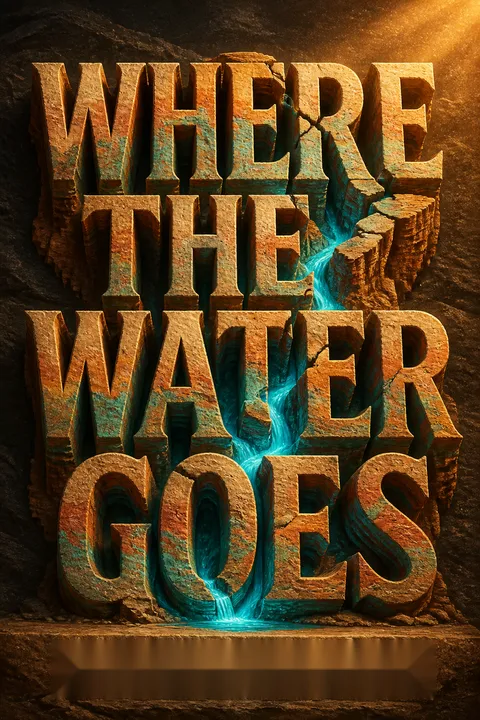
Follow the Colorado downstream, and watch a river become a ledger.
A river with many jobs. David Owen follows the Colorado from snowy headwaters in the Rockies to the Mexican delta. Along the way, water is diverted through ditches, reservoirs, tunnels, and aqueducts to cities and farms hundreds of miles away. The river supports more than 36 million people, irrigates nearly six million acres, and generates electricity. Its water is claimed repeatedly, often before it reaches the next user.
The journey ends in sand. By the time the Colorado reaches the border, diversions have usually left little or no surface flow to continue toward the Gulf of California. Owen’s trip ends where the river dwindles to a shallow trickle in Mexico. The book’s central question is not simply how much water exists, but who gets it, what counts as a legitimate use, and what is lost along the way.
What's striking is how a travel narrative makes infrastructure visible as a chain of choices. A glass of tap water in Denver or Los Angeles is connected to distant snow, legal claims, power plants, and landscapes transformed to deliver it. That perspective resembles supply-chain analysis: tracing a familiar product backward reveals costs that disappear at the point of use. The river metaphor can still mislead, because the Colorado is also a legal and engineered system, not a single undivided stream. The book’s route helps readers see both realities at once.
Do not confuse legal water with water the river can actually supply.
A compact built on abundance. In 1922, the seven river states divided the watershed into upper and lower basins, each assigned an average 7.5 million acre-feet a year. Negotiators believed the river’s natural flow was at least 17 million acre-feet annually. Later tree-ring research showed that their estimates relied on unusually wet years, and that the river’s long-term supply was lower than they assumed.
Claims exceed the flow. Owen distinguishes paper water, the amount users are legally entitled to claim, from wet water, the amount physically available. The gap is compounded by reservoirs that have buffered shortages while draining. In 2014, federal officials described a structural deficit of 1.2 million acre-feet per year, and the book reports that scheduled withdrawals were not sustainable. Even a return to wetter weather would not erase the original over-allocation.
The compact illustrates a classic planning error: treating a variable natural system as if it were a stable budget. Fixed commitments can make sense for coordination, but only if the underlying estimate is robust and the rules include a way to adjust when reality diverges. Here, the agreement’s durability helped avoid constant renegotiation, yet it also made a mistaken forecast part of the operating system. This is a useful warning for any institution that turns uncertain forecasts into enforceable promises. Precision in a contract cannot create precision in nature.
Water rights reward early claims, not necessarily the greatest public need.
Priority decides shortage. Much of the West uses prior appropriation: the first person to put water to a legally recognized beneficial use receives a senior right, regardless of distance from the river. During scarcity, junior users lose access first rather than sharing cuts evenly. A ranch near a stream can therefore be forced to shut its headgate because a downstream neighbor has an older claim.
Old uses hold power. Colorado’s Shoshone hydroelectric plant has a 1902 water-right date, decades older than Denver Water’s major reservoir system. It can claim a large flow before junior users, even though nearly all the water returns to the river after passing through its turbines. Environmental protections, by contrast, usually have much newer priority dates, so they can be overridden precisely when low flows make them most valuable.
Priority rules solve a real coordination problem: users need to know who may take water when supply is tight, and predictable rights can reduce conflict. But a system that treats historical use as permanent entitlement can mistake longevity for social value. The Shoshone example sharpens the distinction between withdrawal and consumption: a large diversion may have a small net effect if water returns, while a smaller use may remove water from the system. Fairer decisions therefore require more than ranking claims by age. They require transparent measures of impact and public purpose.
Measure water returned to the system, not only water withdrawn.
Efficiency can change the accounting. Water use is consumptive when it evaporates or enters crops and cannot be used again soon. Non-consumed water may run off a field, recharge groundwater, or return to a river. In Colorado, river water can be used more than six times before leaving the state. A farm that looks wasteful at field level may help sustain downstream flows or wetlands through runoff and seepage.
Savings can shift demand. A more efficient irrigation system may let a farmer grow more crops with the same allotment, increasing the share actually consumed. Likewise, indoor water savings can reduce wastewater that would otherwise be treated and returned to a river. Conservation can still reduce pressure, as Las Vegas demonstrates with reuse and restrictions on outdoor watering, but results depend on where the saved water goes.
This is a challenge to the familiar idea that efficiency automatically equals conservation. In systems terms, efficiency improves output per unit of input, while conservation lowers total use. Those are different goals. The distinction matters wherever water supports connected users and habitats: removing a leak may help one user while reducing another’s supply. The book does not argue that inefficiency should be protected for its own sake. Rather, it shows why policy must track whole-system effects and specify who receives the savings, instead of assuming they remain available to nature.
Treat agricultural water cuts as community choices, not simple savings.
Farms use most of the water. Agriculture accounts for roughly 80 percent of Colorado River water consumption across the basin, so major reductions cannot come from household conservation alone. Yet cutting irrigation can affect more than crops. In the Imperial Valley, farmers grow winter vegetables and other produce for markets across the country, employ workers year-round, and support businesses that depend on agriculture.
Transfers have consequences. Under agreements intended to shift water from farms to cities, the Palo Verde district can fallow fields in exchange for payment. That may compensate landowners, but farm workers and local suppliers can lose income. More efficient irrigation can also reduce runoff that feeds the shrinking Salton Sea. Water transfers and conservation may be necessary, but their costs fall unevenly, and what seems like unused farm water may already support downstream people or ecosystems.
Agricultural policy is difficult because water is simultaneously an input, a legal asset, a source of employment, and part of a regional ecosystem. A transfer that is efficient in a market sense can still hollow out a community if payments go to landowners while workers and local businesses bear the loss. Conversely, preserving every existing farm use can lock in unsustainable consumption. The relevant question is not whether agriculture or cities deserve water in the abstract, but how to reduce demand while making the distribution of costs visible and negotiable.
Every new water supply trades water for energy, habitat, or risk.
Infrastructure moves the burden. Dams store water and generate electricity, but alter river flows and inundate valleys. The Colorado River Aqueduct moves water toward Los Angeles through five pumping stations, consuming electricity along its route. The Central Arizona Project lifts water nearly 3,000 feet to reach Phoenix and Tucson, using power from the coal-fired Navajo Generating Station. What appears to be a water solution is also an energy system.
Technology is no escape hatch. Desalination can produce drinking water, but its complex equipment requires substantial energy. Salt-removal operations in Paradox Valley protect downstream agriculture, yet the injection process has triggered thousands of small earthquakes. Each intervention solves a particular problem while creating costs elsewhere. Owen’s account of an ill-fated nuclear experiment to stimulate gas production near the river offers an extreme example of confidence in engineering outrunning attention to consequences.
The book’s strongest systems insight is that environmental interventions rarely remove a problem; they relocate it, alter its scale, or exchange it for another. This resembles life-cycle analysis, which evaluates a product or project from resource extraction through operation and disposal rather than judging it at the point of use. The trade-off framing discourages easy claims that a technology is simply clean or harmful. It also has a limit: recognizing trade-offs does not make every option equally acceptable. Decision-makers still need evidence about who benefits, who bears risk, and which harms are reversible.
Regulate groundwater as part of the river before wells run dry.
Underground is not separate. The Rule of Capture traditionally allowed landowners to pump as much groundwater as they could from their property, even if nearby wells dried up. But groundwater and surface water often connect. Pumping creates a cone of depression in the aquifer, and heavy extraction can lower water tables, weaken streams, or draw saltwater into freshwater wells.
An invisible reserve can vanish. The book cites USGS estimates that pumping from the Ogallala Aquifer has removed more than 300 million acre-feet since large-scale withdrawals began, much of it fossil water that recharges too slowly to matter on human timescales. Colorado treats most groundwater connected to streams as part of the same legal system as surface water. The contrast shows why groundwater needs measurement and limits before depletion becomes obvious at the tap.
Groundwater exposes a governance problem common to invisible resources: users experience their own well as private, while the consequences of pumping spread across neighbors and ecosystems. The same mismatch appears in air pollution and fisheries, where individual extraction can seem harmless until many users act on the same incentive. Regulation can correct that mismatch, but it needs local data and rules people regard as legitimate. The book’s examples also caution against treating every aquifer alike. Some recharge quickly; others are effectively finite stores, so policy should reflect the geology.
Keep water moving for ecosystems, even when no customer claims it.
A river has more than one use. The Colorado once sustained a vast delta in Mexico, but dams and diversions left much of it dry. In 2014, an agreement between the United States and Mexico enabled a temporary pulse flow of more than 100,000 acre-feet through the river’s old channel. People gathered to see water return to places where many had not known a river still existed. Even a brief release helped native vegetation and wildlife.
Small flows can matter. The Ciénega de Santa Clara, a major wetland in Mexico, survives largely on salty drainage water diverted from Arizona, showing that water unsuitable for crops can still support habitat. The Salton Sea presents the opposite predicament: agricultural runoff helped sustain a major bird refuge, but more efficient irrigation threatens to reduce those inflows. These cases expose a blind spot in accounting that treats water not delivered to a human user as wasted.
Ecological flows are often described as a competing use, but the distinction between human and environmental benefit is too neat. Wetlands support wildlife, absorb floods, and shape the landscapes people value; their benefits are diffuse, so they are easily excluded from markets and legal ledgers. The pulse flow demonstrates that environmental restoration can be negotiated rather than framed as an all-or-nothing demand. Still, a short release cannot substitute for a dependable flow regime. The deeper challenge is to grant ecosystems standing in the allocation process, not merely occasional access when other users have surplus.
Negotiate basin-wide, because no state can win a connected river.
The system crosses borders. Water from the Colorado is moved across the Continental Divide, carried hundreds of miles to Arizona cities, and diverted toward California. The river also crosses into Mexico, while tribal nations hold significant rights that were largely absent from the original compact negotiations. These connections make simple claims of state-by-state ownership inadequate to the physical system.
Cooperation can bend old rules. After a 2010 earthquake damaged Mexican irrigation infrastructure, the United States and Mexico negotiated agreements that allowed Mexico to store water in Lake Mead and share some shortage risks. The 2014 pulse flow for the delta grew from this cooperation. Such deals did not erase the Law of the River, the accumulated rules and precedents governing use. They showed, instead, that negotiation can adapt those rules without attempting a politically destabilizing wholesale reset.
The basin-wide perspective resembles collective-action theory: each party has incentives to protect its own share, yet unilateral protection can undermine the shared system on which all depend. Trust and repeated negotiation can make cooperation more practical than litigation, especially when the formal rules are too rigid for changing conditions. But cooperation is not automatically fairness. Tribal rights, Mexican interests, farm workers, and ecological needs can remain marginal when the negotiating table is dominated by established water agencies. Durable agreements need both flexibility and meaningful representation for those with less institutional power.
Analysis
Where the Water Goes is a reported journey that doubles as an argument about systems. Owen’s route supplies the narrative spine: the reader moves from snowpack, through dams and pumping plants, past farms and cities, and into a delta where the main river nearly disappears. That structure turns an abstract allocation problem into a physical one. The same water is repeatedly claimed, measured, diverted, stored, and described as waste or savings, depending on whose account is being used.
The book’s most valuable corrective is its insistence that water policy cannot be judged by local efficiency alone. An irrigation upgrade may increase crop consumption; household conservation may reduce return flows; canal lining may transfer water from one community or wetland to another. These examples complicate easy environmental slogans without collapsing into cynicism. The recurring lesson is that outcomes depend on system boundaries, time horizons, and the distribution of costs.
Its account of the Law of the River also shows how institutions can be both dysfunctional and useful. The 1922 compact rests on mistaken flow estimates and grants claims that exceed dependable supply. Yet the legal structure has proved adaptable through negotiated agreements, including cooperation with Mexico. A complete legal reset might appear rational on paper but would unsettle entrenched rights and livelihoods. The book therefore favors practical accommodation over fantasies of beginning again.
That emphasis leaves a hard question unresolved: who should decide which uses count as valuable when scarcity becomes unavoidable? Agriculture, cities, tribal nations, hydropower, recreation, and wetlands all have plausible claims, but their bargaining power differs sharply. The book maps those conflicts more fully than it offers a formula for resolving them. Its achievement is to show why no single fix, whether conservation, desalination, or a new pipeline, can substitute for an honest basin-wide accounting of actual supply, ecological needs, and human consequences.
Review Summary
Where the Water Goes offers a fascinating exploration of the Colorado River's complex water rights and usage issues. Readers appreciate Owen's accessible writing style and interesting anecdotes, though some criticize his outsider perspective. The book provides valuable insights into Western water law, infrastructure projects, and environmental challenges. While some found it engaging and informative, others felt it lacked depth or scientific rigor. Overall, it serves as a thought-provoking introduction to water management in the American West, garnering mixed but generally positive reviews.
People Also Read

Glossary
Law of the River
Rules governing Colorado waterA loose body of compacts, statutes, court decisions, treaties, customs, and precedents governing water use in the Colorado River basin. It is not contained in one document. Its layered rules allocate water among states and users, but many provisions were created under assumptions that later proved inaccurate and can be difficult to reconcile with current shortages.
prior appropriation
Earlier claims receive priorityA western water-rights doctrine based on the principle that the first person to put water to a recognized beneficial use receives priority over later users. Rights are generally tied to a specified quantity and purpose, not to ownership of land beside a stream. During shortages, junior rights are curtailed before senior rights.
paper water
Claimed legal waterWater users’ theoretical legal entitlements, as distinct from the water physically present in the river system. In the Colorado basin, accumulated claims exceed the river’s reliable supply. The difference between paper water and actual flow helps explain why compliance with existing allocations cannot ensure that all users receive the quantities they expect.
return-flow credit
Credit for water returnedAn accounting credit given when diverted water that was not consumed flows back into a river or other water system. The credit can affect how much a user or state may legally divert. Because runoff and wastewater may support downstream users or habitats, reducing return flows can change the supply available to others even when the first user becomes more efficient.
Rule of Capture
Landowners pump groundwater freelyA traditional groundwater doctrine that permits a landowner to pump water from a well on their property, even if the pumping harms neighboring wells. The rule reflects an older view of underground water as separate from surface streams and private to the landowner. Hydrologic connections make that separation unreliable, and unrestricted pumping can deplete aquifers or affect streams.
water banking
Store water for future useA practice of storing unused water for later use, often by allowing it to recharge an aquifer or by arranging for another state to hold an equivalent amount in its reservoir system. Groundwater storage can reduce evaporation compared with surface reservoirs. Some programs also use indirect accounting, crediting water as stored even when it was not physically injected into the ground.
pulse flow
Temporary river releaseA deliberately timed release of water into a river channel that has received little or no flow. In 2014, the United States and Mexico arranged a temporary release below Morelos Dam into the Colorado River delta. The event brought surface water to parts of the channel and supported ecological response, though it did not establish a permanent river flow.
FAQ
What's Where the Water Goes about?
- Exploration of the Colorado River: The book traces the Colorado River from its headwaters to its delta, highlighting its role as a crucial water source for millions.
- Human and Environmental Impact: It examines how human activities like agriculture and urban development have shaped the river and its ecosystem.
- Legal and Historical Context: The narrative delves into the history of water rights and legal frameworks, such as the Colorado River Compact and the doctrine of prior appropriation.
Why should I read Where the Water Goes?
- Insightful Water Management Issues: The book offers a detailed look at the complexities of water management in the American West, relevant for those interested in environmental issues.
- Engaging Storytelling: David Owen combines personal narrative with factual reporting, making the book both informative and engaging.
- Awareness of Water Scarcity: It raises awareness about water scarcity challenges and the implications of climate change on water resources.
What are the key takeaways of Where the Water Goes?
- Water is a Finite Resource: The book emphasizes the limited nature of water and the importance of its management for sustaining life in arid regions.
- Interconnectedness of Water Systems: Owen illustrates how water systems are interconnected, affecting local and distant communities reliant on the same sources.
- Legal Frameworks Shape Access: The legal rights to water usage significantly influence who gets access to water and how it is used.
What are the best quotes from Where the Water Goes and what do they mean?
- “Climate change is water change.”: This quote highlights how shifts in climate patterns directly affect water availability and management.
- “The Colorado is a crucial resource for a surprisingly large part of the United States.”: It underscores the river's importance as a lifeline for millions, emphasizing sustainable management.
- “We haven’t had much success with that sort of thing in the past.”: Reflects the historical challenges in balancing human needs with environmental sustainability.
How does Where the Water Goes address climate change?
- Effects on Water Supply: Owen discusses how climate change alters precipitation patterns, reducing snowpack and water availability in the Colorado River basin.
- Increased Competition for Resources: As water becomes scarcer, competition among states and users intensifies, complicating management efforts.
- Call for Sustainable Practices: Owen advocates for sustainable water management practices to adapt to climate change realities.
What is the Colorado River Compact, as discussed in Where the Water Goes?
- Legal Framework for Water Rights: Established in 1922, it allocates water rights among the seven U.S. states relying on the Colorado River.
- Senior and Junior Rights: California has senior water rights, leading to tensions with states like Arizona, which have junior rights.
- Impact on Water Management: The compact influences water distribution, affecting agricultural practices and urban planning.
What is the Law of the River in Where the Water Goes?
- Complex Legal System: Refers to the laws, treaties, and agreements governing Colorado River water allocation and use.
- Prior Appropriation Doctrine: Establishes that the first user of a water source has the right to continue using it, creating competition.
- Impact on Management: Shapes water distribution and management, influencing agricultural and urban water supply.
How does Where the Water Goes illustrate the interconnectedness of water systems?
- Surface and Groundwater Link: Emphasizes the hydrological connection between surface water and groundwater, complicating management.
- Regional Dependencies: Water decisions in one state can affect the entire Colorado River basin, necessitating a holistic approach.
- Ecosystem Health: Maintaining healthy ecosystems is crucial for biodiversity and the overall health of water systems.
What role does agriculture play in the water issues discussed in Where the Water Goes?
- Major Water Consumer: Agriculture uses about eighty percent of Colorado River water, raising sustainability questions.
- Economic vs. Environmental Concerns: Highlights the tension between agricultural needs and environmental conservation.
- Innovative Solutions: Farmers are adapting to scarcity with efficient irrigation and water-sharing agreements.
How does David Owen’s personal journey enhance the narrative in Where the Water Goes?
- Personal Connection to the River: Owen shares his experiences, providing a relatable perspective on broader issues.
- Engaging Storytelling: Combines personal anecdotes with factual information, making complex topics accessible.
- Illustration of Broader Themes: His journey illustrates the human element of water management and emotional connections to the river.
What innovative water management practices are suggested in Where the Water Goes?
- Water Banking: Storing excess water underground for future use helps mitigate shortages.
- Collaborative Agreements: Successful efforts like Minute 319 show how diverse stakeholders can create beneficial solutions.
- Desalination and Cloud-Seeding: Explores these methods as innovative approaches to addressing water scarcity.
What are the main challenges facing the Colorado River today?
- Over-allocation of Water Rights: Legal rights exceed the actual flow, leading to conflicts among states.
- Environmental Degradation: Human activities have caused habitat loss and water quality issues.
- Drought and Climate Variability: Ongoing drought and climate variability threaten the river's flow, exacerbating scarcity issues.
About the Author

Download PDF
Download EPUB
.epub digital book format is ideal for reading ebooks on phones, tablets, and e-readers.








