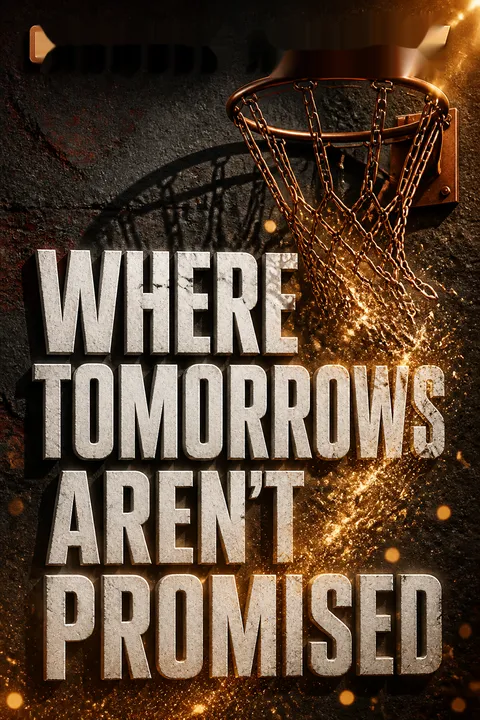


Key Takeaways
Build a future without pretending the present is safe
Success never felt guaranteed. At the 2003 NBA draft, Carmelo Anthony stood among the most promising players in the country, yet he could not relax into the celebration. He had grown up amid poverty, violence, and repeated loss, where even a long-awaited reunion could be undone overnight. Basketball offered a route toward security, including the chance to support his mother, but no achievement could promise that the next day would arrive intact.
The destination was unexpected. Anthony says the NBA was not his childhood dream. He was grateful to reach it, but the draft-night question that mattered most was how a boy who had learned not to trust happy endings had made it there. His memoir traces that answer through family, neighborhood, mentors, and work.
What's compelling is the refusal to turn survival into a neat origin story. The draft is a milestone, but the emotional center is the uncertainty that preceded it. That distinction matters: resilience is often celebrated as an individual trait, even when the conditions demanding it are social and preventable. The memoir makes ambition feel less like confident visualization and more like continuing to act without a guarantee. That framing is powerful, though it should not be mistaken for a prescription to accept danger. Hope helps people navigate risk; it does not excuse institutions from reducing it.
Let a neighborhood's care and danger remain visible at once
Red Hook was not one story. Anthony remembers his family apartment as a place where neighbors could find food, advice, and company. From its windows, he watched basketball, games, hustling, police, and children at play. The same block could hold affection and violence, so neither romanticizing the community nor describing it only as a crime scene could capture his childhood.
History shaped the surroundings. Anthony connects Red Hook's racial isolation to housing discrimination after World War II. Black veterans were often denied the education benefits and mortgages promised by the GI Bill, while white families gained access to homes and wealth-building opportunities. As port jobs left, unemployment and disinvestment deepened. The neighborhood's resilience was real, but it was not proof that the unequal conditions were harmless.
The memoir's strongest social insight is its refusal to make residents either villains or symbols of resilience. A household that feeds neighbors can exist beside gunfire, and both facts matter. This resembles the sociological idea of collective efficacy: people create safety through relationships and shared responsibility, even when formal systems fail them. Yet community care should not become an excuse to celebrate deprivation. The historical account matters because it locates neighborhood hardship in policy and exclusion, not in some supposed deficiency among its residents. Care sustains people, but it cannot replace fair housing, employment, or public investment.
Give young talent a place to go before the streets claim its hours
A recreation center changed the day's options. After moving from Red Hook to Baltimore, Anthony found Robert C., a busy neighborhood recreation center where kids could play basketball, football, and baseball. The gym gave him structure, peers, and a reason to return each day. His mother and coaches backed that routine, while friends helped him find his footing in a new city.
The need was urgent. In 1992, Public School 15 principal Patrick Daily was killed in crossfire while searching for a student in Red Hook. Anthony recalls that the neighborhood had recorded 20 murders, 10 rapes, 526 robberies, and 364 assaults the previous year. Those numbers describe a place where positive activities mattered, but basketball alone could not make a young person safe. A center gave children somewhere to spend time, not immunity from violence.
The rec center functions as more than a sports venue. It is a protective setting where adult attention, peer belonging, and repeated routines can compete with the pull of street activity. Developmental research broadly supports the importance of safe, structured spaces and reliable adult relationships in adolescence. The memoir also wisely qualifies the role of sport: being good at basketball did not make Anthony invulnerable. That nuance prevents an appealing but dangerous myth, that talent alone rescues children. Programs can widen the available choices, but their reach depends on funding, access, and safety beyond the gym doors.
Choose mentors who teach survival and insist you outgrow their world
Guidance came from unlikely places. Anthony learned from his cousin Luck, who challenged him fiercely on the court, and from Big Hand Wood, an older neighborhood figure who protected him from street activity and urged him to focus on sports. Robert Bay Frazier connected him with players, games, and the broader basketball world. Each man offered a different kind of instruction: skill, street awareness, or opportunity.
Their examples were complicated. Luck's toughness could become destructive, and Wood remained part of a dangerous environment even as he tried to steer Anthony away from it. Bay's support was unusually practical: rides, meals, money, and advice about basketball's hidden politics. Their value was not that they lived flawless lives. They recognized Anthony's potential and helped him see choices beyond the immediate block.
This account expands the usual picture of mentorship beyond formal titles. A mentor can teach through access, attention, and a candid reading of local risks, not only through polished advice. The most valuable guidance here also contains a tension: some mentors understood the streets because they were embedded in them, yet wanted the young person to avoid repeating their path. That makes their care credible, but not automatically safe or universally transferable. Good mentorship is less about copying a role model's life than receiving enough trust and perspective to make a different choice.
Treat grief as something to speak about, not simply outrun
Loss accumulated in silence. Anthony's father died when he was two. Later, his stepfather Deek died after illness and drug use, his cousin Luck was murdered, and Wood was killed while Anthony was away at school. He describes feeling depressed but hiding it, partly because vulnerability was discouraged and grief was common around him. Basketball and music, especially the songs of DMX, helped him get through the day.
Coping was not the same as healing. He wrote lyrics and questions on his bedroom wall, but adults rarely asked what those words revealed. His account shows how a young person can appear cheerful, perform well, and still carry unresolved pain. Shared hardship gave him a sense that he was not alone, but it did not provide a safe language for processing what had happened.
The memoir offers a useful distinction between distraction and recovery. Sports and music helped Anthony regulate his attention and keep moving, which can be genuinely protective. But the same strategies can also leave pain unnamed when a community has little access to mental health support or treats emotional openness as weakness. Contemporary trauma-informed practice stresses both safety and choice: a person should not be forced to disclose, but should have a trusted opportunity to do so. The lesson is not that toughness is false. It is that visible competence cannot reliably tell others whether someone is well.
Turn competition into craft, without mistaking punishment for progress
Repetition built the player. Luck's punishing one-on-one games sharpened Anthony's resilience, and Coach Darrell Corbett taught him tactics, discipline, and how to read a game. When Anthony grew rapidly from about 6 feet 1 inch to 6 feet 5 or 6 inches, he had to rebuild coordination as his body changed. He kept working through the discomfort and became a stronger, more versatile player.
Rivalry became evidence. In a game against highly regarded James White, Anthony scored about 30 points and realized his skills could hold up against a nationally known player. At Towson Catholic, he and teammate Darnell pushed each other through a successful season. Anthony averaged 14 points, 5 rebounds, 4 assists, and 2 steals, then earned major local honors. The progress came through practice and competition, not confidence alone.
Competition gives effort a visible test. It can reveal weaknesses, make improvement concrete, and turn a vague ambition into a skill someone can practice. Anthony's story also shows the costs of equating pain with development. His cousin's rough methods and the era's hard-nosed coaching sometimes helped him persist, but humiliation and physical punishment are not necessary ingredients of learning. A stronger model keeps the high standards while adding feedback, recovery, and psychological safety. The useful principle is disciplined challenge, not suffering for its own sake.
Protect your education and identity when institutions demand one-sided obedience
School opened doors and imposed limits. At Towson Catholic, Anthony struggled with a theology class, questioned the school's religious teaching, and faced rules about hair and dress that did not fit his background. He says the vice principal singled him out and that accumulated detentions ultimately blocked his transcript. The memoir presents the conflict as more than a bad grade: it was a fight over who could ask questions and who was expected to conform.
His mother's sacrifice reset his focus. After leaving the school, Anthony attended summer classes at Frederick Douglass to recover credits. There he discovered that his mother, whom he had assumed held an office job, worked as a janitor at the University of Baltimore. Seeing her labor strengthened his determination to finish school and reach college. The transcript came through a difficult route, but education remained a family priority.
This episode shows how institutional rules can look neutral while being applied in ways that make some students feel less welcome or less legible. Anthony's account is personal testimony, not a full audit of the school's policies, but the contrast between his curiosity and the demand for unquestioning compliance is sharply drawn. His mother's work also reveals education's hidden infrastructure: a student's opportunity may rest on a caregiver's exhausting labor. Resisting unfair treatment matters, yet so does preserving practical options. His route through summer school demonstrates that dignity and strategic adaptation can coexist.
Leave home when the people who know the streets say staying is riskier
Leaving was a form of protection. Anthony resisted attending Oak Hill, a boarding school in Virginia, because he wanted to stay in Baltimore with friends and family. His mother, Bay, and Wood believed the city had become too dangerous for a rising player. Wood's blunt encouragement to go carried weight because he knew the neighborhood's risks and had watched other talented players lose their opportunities.
Distance hurt before it helped. Anthony arrived homesick, unsure of the school, and eager to return. Basketball, teammates, and coach Steve Smith gradually made the campus more familiar. Oak Hill gave him elite competition and national exposure. He won major tournaments and played LeBron James on national television, scoring 34 points and collecting 11 rebounds in a 72-66 victory. The move demanded sacrifice, but it expanded his arena.
Leaving home is often framed as either abandonment or triumph. This story makes it a more difficult decision: Anthony loved the people and streets he left, while people rooted in that same place urged him to get distance. In migration and education research, opportunity often depends on access to new networks, but separation can carry real emotional costs. The lesson is not that ambitious young people should always leave. It is that loyalty does not require refusing every opportunity elsewhere, especially when trusted people identify risks that affection can make hard to see.
Choose the next step for yourself, even when success changes the pressure
Syracuse was his choice. Anthony chose the school because he wanted to help build something there, not simply because it looked like the safest route to the NBA. As a freshman, he averaged 22.2 points and 10 rebounds, led Syracuse to its first NCAA championship, and earned the tournament's Most Outstanding Player award. He wanted to return for another season, but coach Jim Boeheim urged him to leave for the NBA draft.
The outcome was not the plan. At the 2003 draft, Detroit selected Darko Miličić second, despite Anthony believing he had been promised that pick. Denver chose Anthony third. The result fulfilled a path he had not originally set out to pursue. He reached the stage with family and community in mind, carrying their hopes, while recognizing that the decision belonged to him.
The ending complicates the familiar sports narrative in which every childhood goal points cleanly toward professional success. Anthony did not begin with the NBA as his central dream, and even after winning a national title, he wanted more college life. Coaches, family expectations, financial risk, and professional opportunity all pressed on the choice. His experience illustrates a broader problem of agency under unequal stakes: a decision can be personally chosen while heavily shaped by poverty and the possibility of lost income. The achievement is real, but so is the pressure surrounding it.
Analysis
This memoir is not chiefly a manual for escaping hardship. Its central achievement is to show how a life is made from overlapping systems of care: a mother who creates a welcoming home, a recreation center that absorbs a child's hours, coaches who demand more, and neighborhood mentors who use their local knowledge to open paths beyond the neighborhood. Basketball matters because it supplies a language of effort and a route into institutions that might otherwise remain inaccessible. It does not erase the risks around it.
The book's account of Red Hook and Baltimore pushes against the simplistic contrast between a dangerous place and a heroic individual. Anthony's childhood included affection, humor, resourcefulness, and collective protection, alongside economic exclusion, drug markets, violence, and grief. The historical discussion of housing and GI Bill access places those conditions in a political frame. That is essential: a narrative of personal achievement can otherwise imply that other young people failed because they lacked discipline, when their access to mentors, programs, schooling, and safety may differ dramatically.
The memoir also resists a tidy transformation story. Music, sport, humor, and loyalty help Anthony endure, yet depression and bereavement remain largely unspoken. The story makes visible a common cost of masculine toughness: people may be praised for functioning while receiving little support for healing. Its most useful implication is not that pain creates excellence, but that talent needs relationships and opportunities sturdy enough to survive pain.
There is a limit to the example. Anthony is an exceptional athlete whose uncommon ability created doors unavailable to most children, and the narrative ends at the threshold of his NBA career. Readers should not treat his route as a universal formula. They can, however, recognize the more transferable lesson beneath it: individual drive is powerful, but it becomes consequential when other people and institutions help turn it into a real choice.
Review Summary
Where Tomorrows Aren't Promised receives mostly positive reviews, with readers praising Anthony's storytelling and vulnerability. Many appreciate the focus on his early life and struggles growing up in tough neighborhoods. The book's ending at the NBA draft surprises some, but most find it fitting. Readers commend Anthony's resilience, positive outlook, and the impact of his support system. Some criticize the writing style or wish for more NBA content, but overall, the memoir is seen as inspiring and insightful.
People Also Read






Glossary
Five Percent Nation
Knowledge-of-self movementA religious and cultural movement that Carmelo Anthony learns about from his brother Justice. As described in the memoir, its teaching divides people into 85 percent who are misled, 10 percent who manipulate others, and 5 percent who possess and share knowledge of self. Anthony presents this as the framework his brother taught him, not as a universal account of religion.
Supreme Mathematics
Number-based teaching systemA numerological system associated with the Five Percent Nation and taught to Anthony by his brother. Each number carries a concept, and dates can be interpreted by combining those meanings. In the example Anthony gives, 2 represents wisdom and 6 represents equality, making the 26th a day associated with wisdom and equality.
50 putout
Basketball game to fiftyAn informal street basketball format in which players play to a target score of 50, as contrasted in the memoir with games to 21. Anthony uses the term while describing the pickup basketball culture he encountered in Baltimore and the different habits he and his cousin brought from New York.
Baltimore bump
Physical Baltimore playAnthony's informal label for the hard, physical contact he experienced in Baltimore basketball. The phrase describes a style of play that tested a player's balance and toughness, especially in neighborhood and recreation-center games. It is a local basketball expression in the memoir rather than a formal coaching system.
FAQ
1. What is "Where Tomorrows Aren't Promised" by Carmelo Anthony about?
- Memoir of Survival and Hope: The book is Carmelo Anthony’s memoir, chronicling his journey from the housing projects of Red Hook, Brooklyn, and Baltimore to becoming an NBA All-Star.
- Explores Poverty and Violence: It delves into the harsh realities of growing up amid poverty, racism, drugs, and violence, and how these shaped his worldview and ambitions.
- Focus on Family and Community: Anthony shares intimate stories about his family, mentors, and the communities that influenced him, highlighting both the struggles and the support systems that helped him survive.
- Beyond Basketball: While basketball is a central theme, the memoir is more about personal growth, resilience, and the search for hope in environments where the future is never guaranteed.
2. Why should I read "Where Tomorrows Aren't Promised" by Carmelo Anthony?
- Raw and Honest Storytelling: Anthony offers an unfiltered look at his upbringing, providing insights into the challenges faced by many young people in marginalized communities.
- Inspiration and Motivation: The memoir is a testament to overcoming adversity, making it a powerful read for anyone seeking motivation or understanding of resilience.
- Unique Perspective: Readers gain a deeper understanding of the intersection between sports, race, poverty, and opportunity in America, told from the perspective of a major sports figure.
- Broader Social Commentary: The book goes beyond Anthony’s personal story, touching on systemic issues like racism, the failures of the education system, and generational trauma.
3. What are the key takeaways from "Where Tomorrows Aren't Promised"?
- Resilience is Essential: Surviving and thriving in difficult circumstances requires mental toughness, adaptability, and the ability to find hope even when tomorrow isn’t promised.
- Community and Family Matter: Support from family, friends, and mentors can be the difference between falling victim to your environment and rising above it.
- Systemic Barriers Exist: The memoir highlights how racism, poverty, and institutional failures create obstacles for Black and Brown youth, but also how individuals can navigate and challenge these systems.
- Success is Not Linear: Anthony’s journey was filled with setbacks, losses, and moments of doubt, showing that success often comes from perseverance through hardship.
4. How does Carmelo Anthony describe his childhood in Red Hook and Baltimore in "Where Tomorrows Aren't Promised"?
- Red Hook: Beauty and Danger: Anthony describes Red Hook as a place of both community warmth and constant threat, where beauty and violence were inseparable.
- Baltimore: New Challenges: Moving to Baltimore introduced new dangers and required him to adapt quickly, but also offered fresh opportunities and friendships.
- Family as a Lifeline: His mother, siblings, and extended family provided stability and love, even as they struggled with poverty and loss.
- Early Lessons: The streets, the projects, and the people around him taught him crucial lessons about loyalty, survival, and the importance of staying alert.
5. What role did family and mentors play in Carmelo Anthony’s life according to "Where Tomorrows Aren't Promised"?
- Mother’s Strength: His mother, Mary Anthony, is portrayed as the backbone of the family, working multiple jobs and instilling values of independence and education.
- Siblings and Cousins: His siblings and cousin Luck were both role models and protectors, teaching him about toughness, loyalty, and street smarts.
- Mentors and Coaches: Coaches like Mr. Wise, Jim Black, and Bay provided guidance, discipline, and opportunities, helping him channel his energy into sports.
- Community Elders: Figures like Big Hand Wood in Baltimore acted as surrogate father figures, offering advice, protection, and real-world wisdom.
6. How does "Where Tomorrows Aren't Promised" by Carmelo Anthony address issues of race, poverty, and systemic injustice?
- Historical Context: Anthony explains how policies like the G.I. Bill and housing projects were used to segregate and disadvantage Black and Brown communities.
- Personal Experiences: He shares firsthand accounts of racism, police brutality, and the daily struggles of living in under-resourced neighborhoods.
- Generational Impact: The book discusses how systemic barriers affect not just individuals but entire families and communities across generations.
- Call for Change: Anthony’s story is both a critique of these injustices and a call to recognize and address the root causes of inequality.
7. What are the most significant challenges Carmelo Anthony faced on his path to the NBA, as described in "Where Tomorrows Aren't Promised"?
- Loss and Trauma: He endured the deaths of close family members and friends, including his cousin Luck and mentor Wood, as well as the absence of his father.
- Violence and Crime: Growing up in environments plagued by drugs, shootings, and instability, he constantly had to navigate danger.
- Educational Barriers: Anthony struggled with school transitions, academic expectations, and cultural clashes, especially at Towson Catholic and Oak Hill.
- Self-Doubt and Pressure: He faced moments of depression, self-doubt, and the immense pressure of being seen as a ticket out for his family and community.
8. How did basketball serve as a means of survival and hope for Carmelo Anthony in "Where Tomorrows Aren't Promised"?
- Safe Haven: Basketball provided a refuge from the chaos and violence of his surroundings, keeping him focused and out of trouble.
- Pathway to Opportunity: Excelling at basketball opened doors to better schools, travel, and eventually a college scholarship and NBA career.
- Community and Identity: The sport helped him build relationships, earn respect, and develop a sense of identity and purpose.
- Coping Mechanism: Basketball was a way to channel pain, anger, and loss into something positive and productive.
9. What specific advice or life lessons does Carmelo Anthony share in "Where Tomorrows Aren't Promised"?
- Stay Alert and Adapt: Always be aware of your surroundings and be ready to adapt to new challenges, as danger can come from anywhere.
- Value Loyalty and Integrity: Loyalty to family, friends, and self is paramount, but it’s also important to recognize when to move on for your own growth.
- Don’t Let Others Define You: Anthony emphasizes the importance of self-worth and not letting others’ expectations or prejudices dictate your path.
- Embrace Vulnerability: While his environment discouraged showing emotion, he acknowledges the importance of confronting pain and seeking healing.
10. How does Carmelo Anthony portray the importance of education and mentorship in "Where Tomorrows Aren't Promised"?
- Education as Escape: His mother’s insistence on education was a key factor in keeping him focused and providing alternatives to street life.
- Mentorship’s Lasting Impact: Coaches and mentors not only taught him sports skills but also life lessons about discipline, teamwork, and resilience.
- Navigating Institutions: Anthony discusses the challenges of fitting into predominantly white institutions and the need for supportive mentors in those spaces.
- Learning Beyond the Classroom: He highlights the value of learning from experience, community elders, and self-education, not just formal schooling.
11. What are some of the most powerful quotes from "Where Tomorrows Aren't Promised" and what do they mean?
- “A place where danger was tangled up with beauty, and you couldn’t untie one from the other.” – Reflects the complexity of growing up in Red Hook, where love and threat coexisted.
- “Resilience is a muscle you build by surviving.” – Emphasizes that strength comes from enduring and overcoming hardship.
- “I never allowed myself to be lost in a dream that could be easily snatched away.” – Shows his guarded optimism and the reality of having hopes repeatedly dashed.
- “If you are not going fight every single day, boy, you going to cry every single day.” – His mother’s tough love, teaching him to stand up for himself in a harsh world.
12. How does "Where Tomorrows Aren't Promised" by Carmelo Anthony redefine the idea of success and the American Dream?
- Success as Survival: For Anthony, making it out alive and intact from Red Hook and Baltimore was already a form of success, regardless of fame or wealth.
- Redefining the Dream: The book challenges the traditional American Dream narrative, showing how systemic barriers make it inaccessible for many.
- Giving Back: True success, in Anthony’s view, involves using one’s platform and resources to uplift others and fight for justice.
- Ongoing Journey: The memoir ends with the understanding that success is not a final destination but a continuous process of growth, healing, and giving hope to others.
Download PDF
Download EPUB
.epub digital book format is ideal for reading ebooks on phones, tablets, and e-readers.








