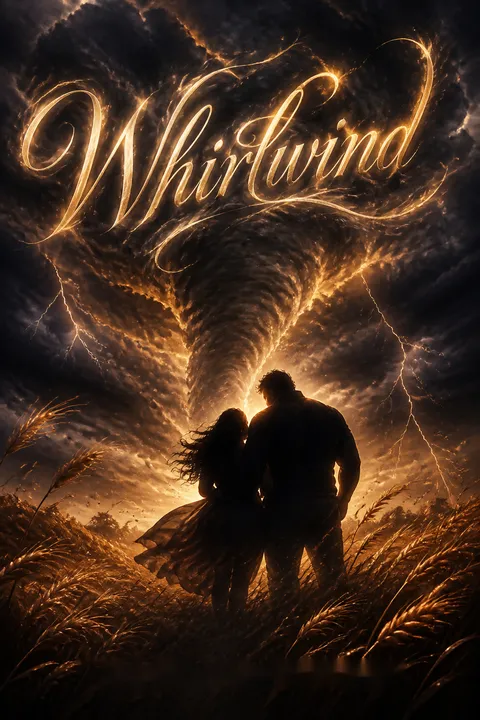


Plot Summary
The Photograph in Office Hours
Nine months before the main events, Finley Buckley arrives at Midland Springs University to study atmospheric science under Ryker West, a celebrated storm chaser whose work inspired her. During office hours, she shows him photographs she has taken of storms.
Ryker recognizes her eye for detail and praises her work, then listens as she questions data from one of his team’s reports. Finley’s willingness to challenge him marks her as more than a devoted fan: she is an observant young scientist with judgment of her own.
Ryker, forty-two to Finley’s twenty-five, feels an attraction he knows his university forbids him to pursue while she remains his student. He keeps their growing rapport within professional bounds, but the boundary is already under pressure.
The first meeting establishes an imbalance that is institutional as well as personal: Ryker holds authority over Finley’s academic life, while she admires him as both teacher and public figure. Yet the scene also complicates a simple mentor-and-fan dynamic. Finley earns his attention through technical skepticism and photographic skill, not through admiration alone. Her ability to question his findings gives their connection an intellectual basis, while his response reveals that attraction and respect are already difficult for him to separate. The university rule becomes more than background policy. It names the conflict before either character admits how much they want to cross that line.
Finals, Forecasts, and Collision
At the end of the school year, Ryker catches himself watching Finley during her final and reminds himself that faculty-student relationships are prohibited. She has been selected for his team’s Oklahoma research trip because of her grades and field experience, not favoritism, though neither can ignore their attraction.
Before leaving campus, Finley tells her cousin Jake that the expedition may send a specially built vehicle into a tornado. Jake urges caution, especially where Ryker is concerned.
Finley spots a nearby storm and heads for her car; Ryker, tracking the same cell, collides with her and knocks her phone aside. Their charged closeness nearly becomes a kiss. When a tornado warning appears, Ryker offers to chase with her, and Finley accepts, putting them alone together before the team assembles.
The trip is both a professional opportunity and a pressure chamber. Finley wants the research credit and a possible future place on Ryker’s team; Ryker knows her selection is justified but fears that others will interpret it through their attraction. Jake’s warning makes the consequences legible from outside their private orbit. The collision then turns an abstract concern into physical proximity, forcing each to confront what they have been managing through glances and flirtation. Their decision to chase together is not simply a romantic impulse: they believe they are safer in company. Still, the choice leaves them without the social buffer that could have helped them maintain their boundaries.
The Ditch Beneath the Tornado
Finley drives toward a developing supercell while Ryker reads the storm and chooses their position. The pair initially stop to observe a rotating wall cloud, but its speed and direction change faster than Ryker expects. When the tornado forms and bears down on them, he orders Finley to flee along the road. Flying debris nearly strikes the car, and the growing vortex makes it clear they cannot outrun it.
Ryker spots a ditch, directs Finley off the road, and runs with her through wind and rain. They drop into the muddy trench as the tornado passes directly overhead. Ryker covers Finley with his body while both brace against the force. When the noise recedes, they emerge battered but alive, and Finley’s car is destroyed.
The danger exposes the cost of Ryker’s divided attention. He has the greater experience and accepts responsibility when his choice of position leaves them in the tornado’s path, while Finley’s driving and quick response help them reach shelter. Their survival is shared labor, not a rescue that leaves one character passive. The ditch also strips away their familiar roles: professor and student become two vulnerable bodies relying on one another. For Finley, the storm she has pursued since adolescence becomes a physical threat rather than a photographic subject. For Ryker, protecting her cannot erase the fact that he led them into danger.
After the Storm, He Retreats
Still shaken and pressed close after the tornado passes, Finley and Ryker finally act on the attraction they have restrained for a year. They kiss and have sex in the grass beside the damaged road. Once the adrenaline fades, Ryker fixates on his role as her professor and mentor, as well as the danger he put her in. He tells Finley he regrets what happened, claiming he took advantage of her.
Finley rejects that account: she chose him, and she will not accept being treated as though she had no agency. Ryker insists on the regret anyway, and Finley leaves the exchange hurt and angry. Her ruined car and camera leave her dependent on the ride he has offered to Oklahoma, so the two must continue the trip together.
Ryker’s retreat is an attempt to convert guilt into moral certainty. By describing their sex as something he did to Finley, he avoids acknowledging her agency and makes distance seem like the only responsible choice. That response wounds her precisely because she has trusted him as a teacher who recognizes her judgment. Finley’s anger resists being cast as a passive student, but her practical dependence on Ryker complicates her ability to leave the situation. The scene therefore makes consent and power distinct questions: mutual desire does not erase the professional imbalance, yet the imbalance does not justify rewriting Finley’s choice for her.
A Team, and a New Camera
The next morning, Ryker collects Finley for the Oklahoma trip. She keeps her distance, then softens when they pick up Joey Jensen, her old college friend and fellow chaser, who will pilot a drone and help analyze data.
Joey’s teasing reconnects Finley to someone who knew her before Ryker became her professor. At the rendezvous, Ryker introduces her to his longtime friend and analyst, Hawk, and communications lead, Ezra. They welcome her into the team and prepare Thor, their armored storm vehicle, for the planned research.
Ryker also gives Finley a replacement camera for the one destroyed in the tornado. The gift is considerate, but it intensifies her concern that their relationship may have influenced her selection. Ryker’s jealousy of Joey adds another strain to the cramped journey.
The team changes the emotional geometry of the story. Joey gives Finley familiarity and comic ease, while Hawk and Ezra provide professional witnesses who can judge her contribution independently of Ryker. Their welcome begins to answer her fear that she does not belong, although Ryker’s replacement camera complicates that reassurance by making his personal care visible in a workplace setting. His jealousy of Joey exposes the possessiveness he cannot openly claim while also refusing to define the relationship. The crowded expedition offers practical safety and social cover, but it cannot make their power difference disappear. Instead, it makes their private tension more visible to the people around them.
The Rocket Falls Short
As the team chases a promising Oklahoma storm, Ryker invites Finley to help choose their route, and she identifies a position that keeps several cells within reach. The group launches one of its specially designed rockets, meant to carry a sensor into the tornado’s inflow, but Hawk’s last-minute adjustment fails.
The rocket rises and then drops into a field, leaving the team without the planned readings. Finley’s confidence falters for a different reason: she fears that Ryker chose her because he desired her, not because she earned the spot, and that accepting the new camera makes the suspicion worse.
At a diner, Ryker follows her into a bathroom to apologize for his cold behavior and makes clear that her grades, skill, and place on the expedition are hers by merit.
The failed launch gives the expedition a concrete setback, but the deeper failure is Finley’s trust in her own achievements. She begins to reinterpret success as possible favoritism, a familiar risk for someone entering a male-dominated research field under a professor’s authority. Ryker’s reassurance matters because he does not merely tell her she is talented; he points to the work and selection criteria that justify her place. His apology also marks a change from withdrawal toward accountability. Still, private reassurance cannot settle the larger institutional question. Finley needs to know that she belongs even when Ryker is not the person affirming it.
One Dance, One Truth
At a nearby country bar, Finley dances with Joey and Hawk while Ryker watches from the sidelines. Joey confronts Ryker about his jealousy and reveals that his closeness with Finley is friendship; he is interested in Hawk, not pursuing her.
Ryker finally approaches Finley and asks her to dance. In a quieter moment outside, he admits that he lied when he said he regretted their night together. He had been afraid of losing his job and damaging her future, but fear made him hurt her instead. Finley does not immediately forgive him.
She lets him explain, then chooses to kiss him after he promises not to take back his feelings. They return to the motel together, where their renewed intimacy is accompanied by the tenderness and openness missing after the first encounter.
Joey’s intervention punctures the story Ryker has been telling himself: that restraint requires acting indifferent and that jealousy is safer than commitment. His clarification also reveals how easily Ryker has mistaken other people’s intimacy for a threat while refusing to name his own desire. Finley’s forgiveness is not automatic; she requires him to acknowledge the lie and accept that she may still reject him. The dance creates a public bridge between his private regret and a deliberate repair. Their renewed intimacy matters less as proof of passion than as a choice made after a conversation, when Finley has regained the power to say yes or no.
Thor Enters the Funnel
On the next chase, the team tracks a powerful wedge tornado. Joey keeps the drone airborne, Hawk monitors the research, and Finley navigates beside Ryker in Thor, the steel-armored vehicle built to withstand a direct intercept.
After their earlier rocket failure, the team prepares another launch with a sensor designed to report conditions inside the tornado. This time the rocket enters the storm’s inflow, and Hawk confirms that it is transmitting readings.
Ryker and Finley then drive Thor into the tornado’s path, secure the vehicle’s ground spikes, and collect measurements with a second sensor as debris strikes the armor. The tornado passes over them, leaving the vehicle intact and the instruments working. When they emerge, the team sees that their long-developed method has finally produced usable data.
The successful intercept is the novel’s professional climax because it converts years of design, repeated failure, and collective expertise into observable evidence. No single character can claim the result: Finley navigates, Joey supplies aerial footage, Hawk’s sensor work and monitoring matter, Ezra records and communicates, and Ryker leads the operation. Their coordination also contrasts sharply with the isolated, risky chase that nearly killed Finley and Ryker at the outset. This time, danger is approached through preparation and shared roles. The storm remains uncontrollable, but the team’s knowledge allows them to learn from it without confusing courage with recklessness.
Love Meets the Faculty Policy
After the successful intercept, the team retrieves the sensor and begins celebrating the data. Later, alone with Finley, Ryker says he will resign from Midland Springs so they can be together without a professor-student relationship.
Finley admits she wants him, but refuses to let him make a life-changing decision in the afterglow of one extraordinary weekend. She worries about his career, the university funding behind the research, and the paper they still need to publish.
Ryker argues that he can find other work and funding, but Finley asks him to wait and think through the consequences. They fall asleep holding one another without resolving the choice. The next morning, they part with their relationship suspended between commitment and caution.
The research success does not solve the ethical problem; it makes the stakes larger. Ryker’s offer sounds romantic, but Finley recognizes that a dramatic sacrifice can be another way of avoiding careful negotiation. She protects his autonomy as firmly as she protects her own, refusing to become the reason he abandons a career before he has considered alternatives. Her concern for the paper and team also shows that she sees the work as a shared responsibility, not merely a backdrop to romance. The unresolved night gives both characters space to distinguish enduring desire from adrenaline-driven certainty.
Two Weeks of Weatherless Silence
For two weeks after the trip, Finley and Ryker communicate only about the research paper. Ryker’s frustration becomes obvious to Hawk and Ezra, who remind him that the funding can be replaced and urge him to choose a life he can stand behind.
He decides to resign, rather than leave the choice resting on Finley, and contacts the university. Meanwhile, Jake encourages Finley to pursue what she wants, and Joey reminds her that her place on the team came from her skill.
Finley drafts a request to defer her degree, hoping to remove the professor-student complication without forcing Ryker to quit, but hesitates before sending it. Joey then sends her a photograph of Ryker holding her on the dance floor. Seeing his tenderness, Finley decides she wants to chase a future with him, not retreat from it.
The separation tests whether the couple can make choices without the storm’s adrenaline supplying momentum. Their friends do not make the decision for them; they expose the ways fear is disguising itself as prudence. Ryker must stop waiting for Finley to authorize his resignation, while Finley must stop assuming that protecting her future requires surrendering the relationship. Her unsent deferral request embodies a compromise that would preserve appearances while postponing her own desire. Joey’s photograph gives her no new evidence about Ryker’s feelings, but it lets her see the relationship from outside her anxious internal argument. The decision becomes hers when she recognizes what she wants.
A Resignation at Her Door
Ryker arrives at Finley’s apartment and tells her he has resigned from teaching. He explains that he made the decision for himself, has spoken with the university about keeping the research paper on track, and is exploring private funding and grants for future chases.
He also admits he loves her. Finley reveals that she had been preparing to defer her degree, but the photograph Joey sent made her reconsider. Rather than delay her education, she chooses to stay in school and build a relationship with Ryker after he has left his supervisory role.
They kiss, reconnect, and head out together to pursue a storm cell nearby. Their first chase as a couple does not settle every future difficulty, but it replaces secrecy and retreat with a choice they make side by side.
The apartment scene resolves the romance through reciprocal agency rather than one grand gesture alone. Ryker’s resignation removes the direct academic authority that made their relationship untenable, while his practical steps toward preserving the paper show that he has not treated love and responsibility as mutually exclusive. Finley, in turn, refuses to solve the problem by postponing her own education. Their reunion is meaningful because she has decided to pursue him, not because his sacrifice obliges her to accept. Ending with a chase returns them to the activity that first drew them together, now with a more equal partnership and a clearer understanding of what each has chosen.
Epilogue
One year later, Ryker and Finley are established members of the same storm-chasing team, and their research paper on the successful tornado probe has been published. Finley has completed her degree with a new professor taking over Ryker’s former role. Private donors, grants, and sales of the team’s merchandise now help fund their work.
At Joey’s monthly dinner, the team celebrates the paper and their chosen-family closeness. Emergency alerts soon report a storm turning severe nearby. The friends put down their plates, gather their gear, and head out together, carrying the research and relationships they built into another chase.
The epilogue measures a happy ending through infrastructure, not simply romance. Finley completes her degree under a different professor, the research survives Ryker’s resignation, and the team finds funding beyond the university. These concrete changes answer the fears that once made the couple hesitate. Joey’s dinner ritual adds another kind of stability: the chasers have become a chosen family with room for domestic comfort as well as danger. The final alert returns them to the field, but the work no longer depends on one person’s authority or one institution’s approval. Their shared future is presented as something sustained through practical adjustments and continuing collaboration.
Analysis
Whirlwind makes romance inseparable from professional authority. Ryker’s attraction to Finley is not treated as harmless simply because she is an adult or reciprocates it. He evaluates her work, selects her for a funded expedition, and can influence her future, so their desire unfolds inside a real institutional imbalance. The story’s solution is not to pretend that love cancels this structure. Ryker must leave his teaching role, and Finley must preserve her own education rather than make herself smaller to accommodate his decision.
The novel also distinguishes protection from control. Ryker’s first response to guilt is to tell Finley that he regrets their encounter, recasting her as someone acted upon. His later growth begins when he admits that fear, not lack of desire, drove the lie. Finley’s insistence on being treated as a capable scientist parallels her resistance to being defined by Ryker’s attention. She needs the team to recognize her observations and work, and she needs Ryker to hear her before making decisions supposedly for her benefit.
Storm chasing gives these conflicts a material language. A tornado cannot be persuaded to slow down, and proximity without preparation becomes lethal. The first chase places two people alone in a car, where attraction and overconfidence distort judgment. The later intercept succeeds because several people contribute distinct skills, instruments are tested, and the team plans for risk. That contrast binds the romantic and scientific plots: intimacy also requires more than intensity. It requires communication, boundaries, and a willingness to revise a dangerous plan.
The resolution makes commitment practical. Ryker resigns, the research finds a path beyond university funding, and Finley completes her degree under another professor. The ending’s warmth comes from these arrangements, not from an assumption that love solves every problem. By turning the chase team into a chosen family, the novel gives its couple a future sustained by work, friendship, and shared accountability.
Review Summary
Whirlwind receives mostly positive reviews, with readers praising its exciting storm-chasing scenes, steamy romance, and likable characters. Many compare it to the movie Twister but with added spice. The professor-student relationship and age gap are appealing to some readers but off-putting to others. Reviewers appreciate the plus-size representation and the author's writing style. The audiobook narration and production are highly praised. Some criticisms include a lack of build-up in the relationship and occasional unrealistic elements.
People Also Read









Characters
Finley Buckley
Storm-chasing photographerFinley is a twenty-five-year-old master’s student whose love of storms grew from her late mother’s photographs. She chases independently, sells her own images, and brings a practiced eye to field observation. Her admiration for Ryker is real, but so is her scientific judgment: she challenges data, navigates dangerous conditions, and contributes to the team through skill rather than proximity to him. Finley is generous and emotionally candid, yet she can turn caution into self-doubt when she fears others will question her merit. Her central need is to pursue both meaningful work and intimacy without allowing either to erase her independence. The story’s ethical tension is clearest through her insistence that her choices and accomplishments be recognized as her own.
Ryker West
Professor and storm chaserRyker is a forty-two-year-old atmospheric scientist, professor, and celebrated storm-chasing team leader. His public persona is confident and theatrical, while his private habits include late nights, old rock music, and a deep attachment to his friends. A childhood encounter with a devastating tornado shaped his drive to understand extreme weather and improve the knowledge that can protect people. Ryker respects Finley’s intelligence and talent, but his attraction to her collides with his professional authority and fear of harming her future. He tends to react to guilt by withdrawing or trying to decide what is best for others. His development depends on learning that responsibility requires honesty and listening, not simply self-denial or sacrifice.
Joey Jensen
Drone pilot and instigatorJoey is Finley’s former college friend, a skilled drone pilot, and an exuberant presence on the chase team. His teasing nicknames and custom shirts puncture tense silences, but his humor does not make him careless about his friends. He sees the attraction between Finley and Ryker clearly and pushes Ryker to confront his jealousy rather than hide behind formal distance. Joey’s social ease contrasts with his capacity for direct emotional support, especially when he reminds Finley that she earned her place through talent. He is also exploring a connection with Hawk, though he keeps his feelings wrapped in jokes and theatrical bravado.
Diego, called Hawk
Researcher and steady friendHawk, whose given name is Diego, is Ryker’s longtime friend and the team’s researcher and data analyst. He contributes crucial technical work, including the sensors and rocket experiments central to the team’s research. Direct and observant, he warns Ryker when personal feelings threaten professional judgment, then offers support when Ryker must decide what kind of life he wants. Hawk tends to keep his private relationships out of view, even among close friends. His growing closeness with Joey adds a quieter romantic thread to the team’s lively group dynamic.
Ezra
Communications leadEzra manages communications for Tempest Trackers, tracking storms, coordinating updates, and recording material for the team’s public channels. His quick wit helps keep the group’s energy buoyant, but he also takes the research and its safety requirements seriously. Ezra helps monitor the chase when Ryker and Finley lose contact and later backs Ryker as he considers leaving his university post. He is a practical friend who can tease without losing sight of what the team needs.
Jake
Finley’s cousin and confidantJake is Finley’s cousin and closest confidant, living in Texas and running his family’s bar. Their weekly calls let them share personal worries as well as milestones. Protective of Finley, he is concerned both about the danger of storm chasing and the consequences of a relationship with her professor. Jake’s own romantic disappointment gives him a tender understanding of what it means to hesitate over love. He can challenge Finley sharply, but his loyalty ultimately means supporting her judgment rather than choosing for her.
Finley’s father
Family anchorFinley’s father is part of the family life she returns to between school and storm chases. He worries about her safety and remains a steady presence alongside her cousin Jake. His concern reflects the ordinary human cost of Finley’s high-risk ambitions.
Finley’s mother
First storm inspirationFinley’s late mother appears through the storm photographs she left behind. Those images helped awaken Finley’s interest in photography and weather, linking her professional ambitions to a personal inheritance.
Plot Devices
Faculty-student policy
Names the power imbalanceThe university’s rule prohibits intimate relationships when a faculty member teaches, advises, supervises, or evaluates a student. Ryker repeatedly recalls the policy because he teaches Finley and can affect her academic and professional prospects. It gives his attraction real consequences beyond gossip, while Finley’s worries about grades, team selection, and future colleagues show how the imbalance could affect her even when she acts freely. The policy frames the central practical question: whether desire can become an ethical relationship while Ryker retains authority over her. His resignation eventually removes the direct supervisory conflict, though their decisions still have implications for funding and research.
Thor
Makes direct intercepts possibleThor is a heavily modified, armored vehicle designed to enter a tornado’s path while protecting its occupants and carrying instruments. Its steel shell, reinforced windows, harnesses, and ground spikes allow the team to stay in position as debris strikes and the vortex passes overhead. The vehicle turns the team’s research plan into a physical experiment: they can collect measurements from within the storm rather than relying only on remote observation. It also stands in sharp contrast to Finley’s compact car and a roadside ditch, the unsafe shelter used during her first chase with Ryker.
Rocket-borne sensor
Carries instruments into rotationRyker and Hawk have spent years developing rockets that can carry specialized sensors into a tornado’s inflow and toward its center. The team hopes the instruments will gather readings unavailable from ordinary roadside measurements. An early launch fails after Hawk makes a last-minute adjustment, leaving the group with a visible setback and no useful result from that attempt. A later launch succeeds, and a separate sensor inside Thor captures measurements near the tornado’s base. The device links repeated technical failure to the story’s research climax, showing that scientific progress depends on design, timing, teamwork, and the ability to revise a plan.
Finley’s storm camera
Turns weather into evidencePhotography is both Finley’s personal art and a practical part of her storm-chasing work. She began taking pictures after finding images made by her late mother, then developed her own skill and sold photographs online. Her images help her study cloud structure and document what the team cannot fully observe from instruments alone. When the first tornado destroys her camera, Ryker replaces it, an act that supports her work but also makes her question whether personal affection has influenced his professional decisions. The camera therefore carries two kinds of weight: it is a tool Finley has earned through her craft and a test of trust between the two leads.
The Tempest Trackers
Turns romance into teamworkRyker’s storm-chasing group supplies the practical and social structure that neither lead has on the first dangerous chase. Hawk analyzes data, Ezra coordinates communications, Joey pilots a drone, and Finley navigates and photographs storms beside Ryker. Their complementary roles create the conditions for the successful research intercept, while their friendships expose Ryker’s jealousy and help both leads reconsider their choices. The group is not merely a backdrop: it provides independent witnesses to Finley’s competence, emotional counsel to Ryker, and alternative funding paths when the university connection becomes a problem. Its banter and later shared meals make professional collaboration feel like a chosen family.
FAQ
0. Synopsis & Basic Details
What is Whirlwind about?
- Forbidden Romance Ignites: Whirlwind follows Ryker West, a renowned storm-chasing meteorology professor, and Finley Buckley, his brilliant master's student, as their undeniable mutual attraction clashes with university policy and professional boundaries. The story explores their burgeoning romance amidst the high-stakes world of extreme weather.
- High-Stakes Storm Chasing: The narrative is set against a backdrop of intense storm chases across Kansas and Oklahoma, where Ryker's team, Tempest Trackers, aims to deploy innovative rockets into tornadoes for scientific data. This dangerous pursuit serves as both a literal and metaphorical stage for Ryker and Finley's emotional journey.
- Navigating Personal & Professional: As their connection deepens, Ryker and Finley must confront the ethical implications of their relationship, the judgment of their peers, and the potential impact on their careers and the groundbreaking research they are undertaking. Their story is a quest for love and professional fulfillment in a world of unpredictable forces.
Why should I read Whirlwind?
- Electrifying Age-Gap Romance: Readers seeking a passionate, high-stakes romance will be drawn to the intense chemistry and emotional depth between Ryker (42) and Finley (25), exploring themes of forbidden love and power dynamics. The author's note explicitly highlights "age gap," "student and professor relationship," and "possessive behavior" for those interested in these tropes.
- Adrenaline-Pumping Action & Science: Beyond the romance, the book offers thrilling, well-researched storm-chasing sequences, providing a unique blend of action-adventure and scientific exploration. The detailed descriptions of supercells, mesocyclones, and rocket deployments immerse readers in the world of extreme meteorology.
- Deep Character & Relationship Exploration: The story delves into the psychological complexities of its characters, their unspoken motivations, and the evolution of their relationships, both romantic and platonic. It's a journey of self-discovery, challenging societal norms and personal insecurities, making it a compelling read for those who enjoy character-driven narratives.
What is the background of Whirlwind?
- Midwestern Storm Alley Setting: The story is primarily set in the American Midwest, specifically Kansas and Oklahoma, regions renowned for their severe weather and frequent tornado outbreaks. This geographical context is crucial, providing the authentic, high-stakes environment for the storm-chasing plot.
- Academic & Professional Ethics: A core background element is the university's HR policy prohibiting intimate relationships between faculty and students, which Ryker constantly recites to himself. This institutional rule creates the central conflict, highlighting the power imbalance and ethical dilemmas inherent in their forbidden romance.
- Cutting-Edge Meteorology Research: The plot is grounded in the pursuit of advanced meteorological research, specifically the development and deployment of specialized rockets to collect data from inside tornadoes. This scientific ambition provides a compelling professional backdrop, emphasizing the characters' dedication to their field and the potential for life-saving discoveries.
What are the most memorable quotes in Whirlwind?
- "Romantic, sexual, or other intimate relationships between faculty and students are prohibited whenever a power imbalance exists...": This HR policy, repeated by Ryker in Chapter 1 and Chapter 7, is iconic because it encapsulates the central forbidden romance theme and Ryker's internal struggle, serving as a constant reminder of the professional line he's desperate not to cross.
- "We've got a twister to tame.": Ryker's internet-famous catchphrase, first uttered in Chapter 2 and repeated in the Epilogue, defines his public persona as "The Twister Tamer" and symbolizes his confident, almost arrogant, approach to storm chasing. It also becomes a playful, intimate phrase between him and Finley, signifying their shared passion.
- "I don't regret us, Finley. I can't regret you.": Spoken by Ryker in Chapter 18, this quote is a pivotal turning point, directly refuting his earlier lie and revealing the depth of his feelings. It marks his decision to fully commit to Finley, regardless of the consequences, and is central to the Whirlwind forbidden romance analysis.
What writing style, narrative choices, and literary techniques does Kayla Grosse use?
- Dual POV & Intimate Internal Monologue: Kayla Grosse employs a dual first-person point of view, alternating between Ryker and Finley. This narrative choice provides deep insight into each character's thoughts, fears, and desires, allowing readers to experience their internal conflicts and the intense mutual attraction firsthand, enhancing the Whirlwind character analysis.
- Sensory-Rich & Adrenaline-Fueled Prose: The writing style is highly descriptive, particularly during storm-chasing scenes, immersing the reader in the visceral experience of extreme weather. Grosse uses vivid imagery and strong verbs to convey the sounds, sights, and feelings of tornadoes, creating an "action/adventure romance" as described in the author's note.
- Symbolism & Foreshadowing: Grosse subtly weaves in literary devices, using storms as a multifaceted metaphor for the characters' emotional turmoil and relationship dynamics. Foreshadowing, such as Ryker's constant mental recitation of the HR policy or Finley's wind chime association, builds tension and hints at future developments, enriching the Whirlwind symbolism explained.
1. Hidden Details & Subtle Connections
What are some minor details that add significant meaning?
- Finley's Wind Chime Foreshadowing: In Chapter 2, Finley notes the wind chime's "symphony of tinkling and jingling" as a "song I've come to associate with a shift in the weather—and a warning." This seemingly minor detail subtly foreshadows the emotional "whirlwind" and warnings she receives about her relationship with Ryker, connecting environmental cues to internal emotional states in Whirlwind analysis.
- Ryker's "Mullet Rock" Playlist: Ryker's chase team dubs his preferred music "mullet rock" (Chapter 1), and the book's soundtrack includes bands like Toto, Kansas, and Styx. This detail not only adds to his "over-the-top storm chaser" persona but also subtly hints at his age and a nostalgic, perhaps unchanging, core, contrasting with his evolving feelings for Finley.
- Finley's Mother's Influence: It's revealed in Chapter 2 that Finley's passion for storm photography began when she found her "late mom's old storm photos in the attic as a teen." This detail provides a deeper, emotional motivation for her career choice, linking her passion to a desire to connect with her deceased mother, adding a layer to Finley Buckley motivations.
What are some subtle foreshadowing and callbacks?
- Ryker's Scars and Finley's Fantasy: In Chapter 4, Finley notes Ryker's shallow cuts from a chase, thinking "they'd probably be sexy if they did [scar]." This subtly foreshadows their shared near-death experience in Chapter 6, where Finley also sustains a shallow cut, and Ryker notes, "It's shallow. I don't think it'll scar." This callback highlights their parallel experiences and the physical marks of their dangerous passion, deepening the Whirlwind themes.
- Joey's "Tornado Daddy" Nickname: Joey's immediate and persistent use of "Tornado Daddy" for Ryker, starting in Chapter 8, initially seems like playful teasing. However, it subtly foreshadows Ryker's eventual embrace of a paternal, protective role for Finley, and later, his willingness to "father" a family with her, adding a layer of meaning to Ryker West character arc.
- Ryker's Secret Photo Collection: In Chapter 11, Ryker reveals he secretly bought several of Finley's largest storm prints under a friend's name and hung them in his home office. This detail, hidden from Finley and even Hawk, foreshadows the depth of his hidden obsession and admiration for her, long before their physical relationship, revealing a possessive yet appreciative side of Ryker West motivations.
Who are the most significant supporting characters?
- Joey, the Catalyst for Honesty: Joey, Finley's college friend and a new addition to Tempest Trackers, is crucial not just for comic relief but as a direct catalyst for Ryker and Finley's emotional breakthroughs. His blunt observations ("I smelled you on her a mile away," Chapter 17) and playful prodding force Ryker to confront his jealousy and true feelings, making him essential to the Whirlwind relationship dynamics.
- Hawk, the Voice of Reason and Parallel: Hawk (Diego), Ryker's best friend and colleague, serves as Ryker's confidant and moral compass, consistently warning him about Finley. His own developing, subtly "forbidden" (socially, due to age/professional context) relationship with Joey provides a parallel arc, normalizing aspects of Ryker and Finley's situation and influencing Ryker's eventual decision to prioritize love over his job.
- Ezra, the Team's Unifying Force: Ezra, the communications lead, acts as the pragmatic and supportive glue of the team. While less directly involved in the romantic drama, his unwavering support for Ryker's personal happiness and professional ambitions (Chapter 25) helps Ryker make the difficult decision to quit his job, ensuring the team's continued cohesion and success, highlighting themes in Whirlwind about chosen family.
2. Psychological, Emotional, & Relational Analysis
What are some unspoken motivations of the characters?
- Ryker's Fear of Vulnerability: Beyond the HR policy, Ryker's initial regret and push-pull behavior are driven by a deep-seated fear of vulnerability and the disruption Finley represents to his carefully constructed, adrenaline-fueled life. His internal monologue reveals a man who finds peace in the chaos of storms but struggles with the emotional turbulence of a genuine, intimate connection, a key aspect of Ryker West motivations.
- Finley's Quest for Validation: Finley's initial self-doubt and questioning of her worth (Chapter 12, 15) stem from an unspoken desire for professional validation, separate from her attraction to Ryker. Her drive to prove herself as a "shark" in meteorology is motivated by a need to honor her late mother's legacy and establish her own identity, rather than being seen as merely "the professor's girlfriend," adding depth to Finley Buckley motivations.
- Joey's Role as Emotional Mirror: Joey's constant teasing and "Tornado Daddy" nicknames, while seemingly superficial, are an unspoken way of pushing Ryker and Finley to acknowledge their feelings. His own hidden relationship with Hawk (Chapter 17) suggests an understanding of "forbidden" connections, making him a subtle emotional mirror for the main couple, encouraging them to embrace their desires.
What psychological complexities do the characters exhibit?
- Ryker's Adrenaline Addiction & Control: Ryker exhibits a complex psychological profile, finding "peace" in the extreme danger of storm chasing (Chapter 11), suggesting an adrenaline addiction that masks deeper emotional needs. His struggle to maintain control over his feelings for Finley, despite his internal HR policy recitation, highlights a conflict between his rational, professional self and his primal, emotional desires, central to Ryker West character arc.
- Finley's Imposter Syndrome & Resilience: Finley grapples with imposter syndrome, questioning if her achievements are truly earned or influenced by Ryker's attraction (Chapter 12). This internal conflict, juxtaposed with her fierce resilience and determination to chase storms even after a near-death experience, showcases her complex blend of vulnerability and strength, a key element of Finley Buckley psychological analysis.
- The Paradox of "Forbidden" Attraction: Both characters are drawn to the "forbidden" nature of their relationship, which paradoxically intensifies their desire. The university's policy, while a barrier, also creates a heightened sense of excitement and urgency, making their connection feel more profound and destined, exploring the psychological allure of breaking rules in Whirlwind forbidden romance.
What are the major emotional turning points?
- The Ditch Confession & Kiss: The most significant emotional turning point occurs in Chapter 6, after Ryker and Finley survive the tornado in a ditch. Ryker's raw confession, "Tell me not to kiss you, Finley," and her reciprocal "And if I don't want to?" shatters their professional facade, leading to their first passionate kiss. This moment, born from shared trauma and adrenaline, irrevocably changes their relationship, a crucial part of Whirlwind emotional analysis.
- Ryker's "Regret" and Finley's Hurt: Ryker's immediate post-sex declaration of regret in Chapter 7, driven by guilt and fear for Finley's future, is a major emotional setback. This lie deeply wounds Finley, leading to her emotional withdrawal and self-doubt (Chapter 8, 12), forcing both characters into a period of painful introspection and highlighting the consequences of miscommunication in Whirlwind relationship dynamics.
- Ryker's Decision to Quit His Job: Ryker's decision to quit his teaching job for Finley (Chapter 23, 25) is a monumental emotional turning point. It signifies his complete commitment to her, prioritizing their relationship over his career and public image. This act of sacrifice, though initially met with Finley's concern, ultimately solidifies their bond and paves the way for their future together, defining Ryker West motivations.
How do relationship dynamics evolve?
- From Mentor-Mentee to Mutual Obsession: The relationship evolves from a professional mentor-mentee dynamic, characterized by mutual respect and intellectual admiration (Chapter 4), into a deeply personal and obsessive attraction. Ryker's internal monologues reveal his "crush" and "starry-eyed ass" (Chapter 1), while Finley's "fangirl" past (Chapter 2) shows a long-standing admiration that morphs into reciprocal desire, a core aspect of Whirlwind relationship dynamics.
- Post-Trauma Intimacy & Retreat: The shared trauma of the tornado (Chapter 6) accelerates their intimacy, leading to a raw, passionate encounter. However, Ryker's subsequent "regret" (Chapter 7) causes a retreat into formality and tension, creating a period of emotional distance and miscommunication. This push-pull dynamic highlights the fragility of their nascent connection under pressure.
- Reconciliation & Redefined Partnership: Their relationship is redefined through Ryker's apologies, his grand gesture of quitting his job, and Finley's eventual acceptance. They move from a "forbidden" dynamic to an open, committed partnership, both personally and professionally, as seen in the Epilogue where they are a cohesive storm-chasing team, demonstrating the full Ryker and Finley character development.
4. Interpretation & Debate
Which parts of the story remain ambiguous or open-ended?
- The Long-Term Impact of Ryker's Resignation: While the Epilogue shows Ryker and Finley thriving professionally and personally, the full, long-term impact of Ryker's resignation on his academic standing and the university's perception of his research remains somewhat open-ended. The story focuses on their immediate success and happiness, but the potential for lingering professional repercussions or gossip in the broader academic community is not fully explored, leaving room for Whirlwind interpretation.
- The Nuances of Joey and Hawk's Relationship: The nature and progression of Joey and Hawk's relationship, while clearly romantic and sexual, are presented with a playful ambiguity. Joey's flirtatious nature and Hawk's initial reticence (Chapter 17) suggest a dynamic that is still evolving, and the details of their "official" status are only briefly touched upon in the Epilogue, inviting reader speculation on their journey.
- The Future of Tempest Trackers' Funding Model: The shift from university funding to private donors and grants (Epilogue) is presented as a successful solution, but the inherent challenges and pressures of this new model are not deeply explored. The long-term sustainability and ethical considerations of private funding for high-stakes scientific research could be debated, offering a subtle layer to the themes in Whirlwind.
What are some debatable, controversial scenes or moments in Whirlwind?
- The Post-Tornado Sexual Encounter: The most controversial moment is the sexual encounter between Ryker and Finley immediately after surviving the tornado in a ditch (Chapter 6-7). While framed as a mutual, adrenaline-fueled release, the context of shared trauma and Ryker's position of authority could be debated as a potential exploitation of a power imbalance, sparking discussion on Whirlwind controversial scenes.
- Ryker's Initial "Regret": Ryker's immediate declaration of regret after their first sexual encounter (Chapter 7), despite his true feelings, is a debatable moment. Readers might question the sincerity of his regret versus his self-preservation instincts, and whether his actions were truly for Finley's benefit or primarily to protect his own career, fueling Ryker West motivations debate.
- The Ethics of Ryker's Camera Gift: Ryker's gift of a brand-new, expensive camera to Finley (Chapter 10) after hers was destroyed is a generous gesture but also debatable given their student-professor dynamic. It could be seen as an attempt to assuage guilt or exert influence, even if his stated motivation is her talent, adding a layer to the Whirlwind ethical dilemmas.
Whirlwind Ending Explained: How It Ends & What It Means
- Ryker's Ultimate Sacrifice & Commitment: The ending of Whirlwind sees Ryker making the ultimate sacrifice for his love for Finley: he resigns from his teaching position at Midland Springs University (Chapter 25). This act removes the "forbidden" aspect of their relationship, demonstrating his unwavering commitment and prioritizing Finley over his established career, a key part of Whirlwind ending explained.
- Finley's Self-Acceptance & Partnership: Finley, initially contemplating deferring her degree, ultimately embraces her worth and her relationship with Ryker. She joins Tempest Trackers as a permanent member, continuing her passion for storm chasing and photography alongside Ryker and the team. This signifies her journey of self-discovery and her acceptance of a partnership where her talents are valued independently, completing Finley Buckley character arc.
- A New Beginning for Tempest Trackers: The Epilogue, set one year later, reveals that Tempest Trackers has flourished, securing private funding and successfully publishing their groundbreaking research. Ryker and Finley are a loving, openly committed couple, and Joey and Hawk are also in a stable relationship. The team, now a "found family," continues to chase storms, symbolizing a future where personal happiness and professional ambition are harmoniously intertwined, reinforcing the themes in Whirlwind of love, family, and chasing dreams.
Download PDF
Download EPUB
.epub digital book format is ideal for reading ebooks on phones, tablets, and e-readers.








